Fuel taxes would rise, whilst parking spaces would be steadily reduced and frequent driving tests mandated in accordance with the plans.
New plans from the Green Party show measures to significantly reduce motorway speed limits from 70mph down to just 55mph.
The move has sparked criticism from the Conservatives, who said Green leader Zack Polanski is waging a “war on drivers”.
Other Green Party measures proposed for motorists would see taxes on driving “increased incrementally”, whilst parking spaces would be “steadily reduced” to discourage their use.
According to reports, drivers would also be expected to re-take their driving test every five years, with driving considered “not a right, but a privilege”.
The reported plans would see speed limits on motorways and dual carriageways reduced to 55mph, down from their current 70mph. Picture: Alamy
The official Green Party transport policy reads: “On major roads outside built up areas, the maximum speed limit allowed would be 55mph, to maximise the efficiency of fuel use as well as improving safety.”
They add that the speed limits on motorways and dual carriageways would be dropped by 15mph, and 20mph limits would be imposed on all built up areas.
Green Party MP for Brighton Pavilion Siân Berry. Image by Kelly Hill, Wikimedia CC BY-SA 4.0.
Responding to the government’s new Road Safety Strategy, which was announced on 7th January, Green MP, Siân Berry, said
“The only target for the number of people killed on the road should be zero. With this strategy, the Government has massively overlooked key actions to cut traffic and achieve safer and slower vehicle speeds, which are truly effective at saving lives and essential to reaching this goal.
“The Government should follow the example of Wales, where the national default 20mph limit reduced road casualties on 20mph and 30mph roads by 26 per cent in the first 12 months of its introduction. That represents 630 people in Wales who made it home safely.”
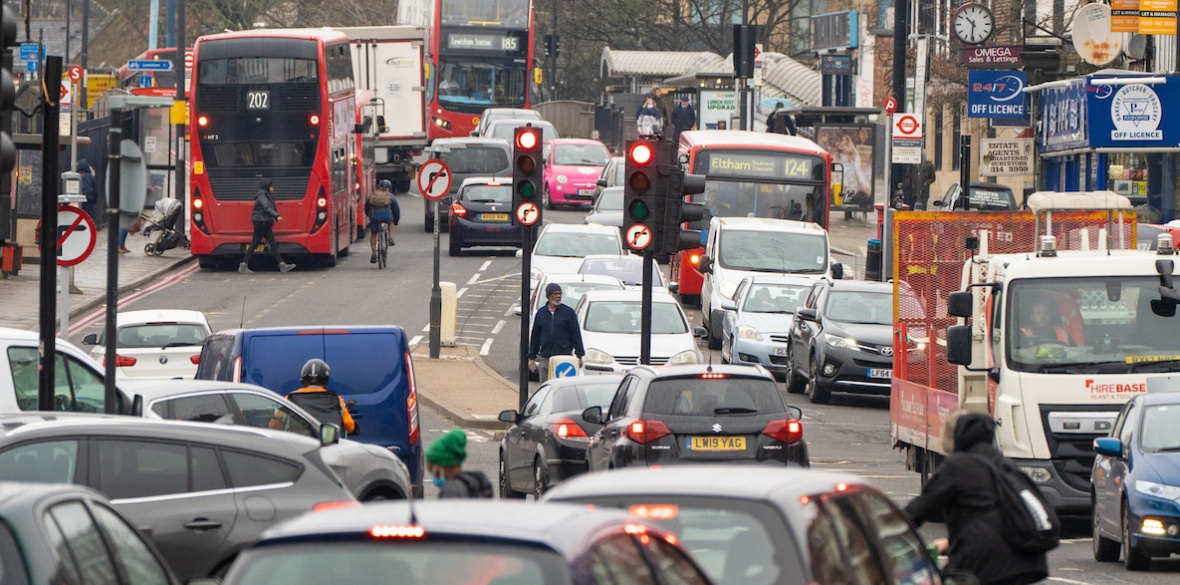
Study found evidence that 20mph zones also improve walking and cycling in areas. Traffic in South London.
Study in 2018 found most drivers backed plans despite PM’s claim they ‘don’t reflect people’s priorities’
The majority of drivers support 20mph speed limits, according to the government’s own research, despite Rishi Sunak claiming they are an “attack on motorists”.
The prime minister is reportedly set to announce a number of new policies aimed at drivers during the Conservative Party conference that begins this weekend, including possible limits on the powers of councils in England to impose 20mph speed limits.
Sunak today criticised Wales’ new default 20mph speed limit, describing it as “absolutely not right” and saying: “It doesn’t reflect people’s priorities.” Commons leader Penny Mordaunt had previously called the scheme “absolutely insane”.
But research commissioned by the Department for Transport in 2018 found that “20mph limits are supported by the majority of residents and drivers”.
The study, produced by the consultancy firms Atkins and AECOM and professor Mike Maher of University College London, combined “evidence from 12 case study schemes” and “feedback from over 5,400 questionnaires with a range of road users”.
It found that in areas that had introduced 20mph zones: “The majority of residents (78%) and non-resident drivers (67%) felt that 20mph was an appropriate speed for the area.
“There is little call for the limit to be changed back to 30mph (12% support amongst residents and 21% amongst non-resident drivers).”
The study also found evidence that the introduction of 20mph zones encouraged residents to use other forms of transportation or walk more often.
Lowering speed limits to 20mph was at one point Conservative Party policy: the Department for Transport commissioned the study in 2014 to “evaluate the effectiveness of 20mph” limits after publishing guidelines the previous year “encouraging traffic authorities to consider introducing more 20mph limits over time”.
Sunak has sought to present himself as being on the side of motorists following the Conservative Party’s surprise win in a July by-election in Uxbridge. The result came after the Tories campaigned heavily against the expansion of the Ultra Low Emission Zone charge to the most polluting vehicles to outer London.
Following the party’s victory, Sunak ordered a review of low-traffic neighbourhoods (LTNs) and claimed that the Labour Party was “anti-driver”.
The proposals to limit 20mph would come just weeks after the prime minister U-turned on key net zero pledges by pushing back the deadlines for banning the sale of new petrol and diesel cars and the phasing out of gas boilers.