The Israeli professor that the BBC won’t interview


Original article by Julia Conley republished from Common Dreams under Creative Commons (CC BY-NC-ND 3.0).

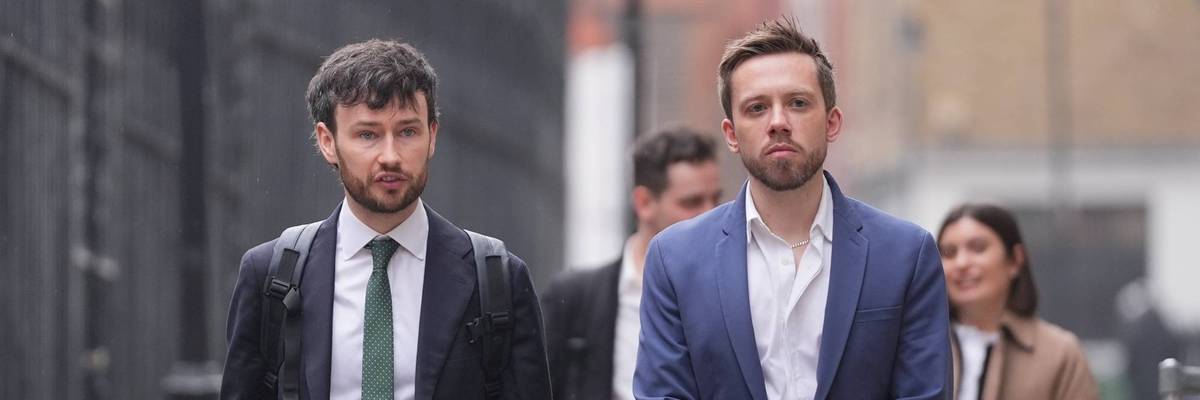
British journalist Owen Jones on Thursday celebrated a UK High Court judge’s ruling in his favor in a libel lawsuit that a BBC editor brought against him—and said that should the editor choose to move forward with his case despite the decision, he was looking forward “to defending my article in court.”
The High Court ruled that Jones was expressing an opinion when he wrote an article for Drop Site News in December 2024 titled “The BBC’s Civil War Over Gaza,” in which he spoke to BBC staffers about Middle East online editor Raffi Berg’s influence over the news outlet’s coverage of Israel and Palestine.
RECOMMENDED…


The court also said Jones had expressed his opinion and that of his sources based on concrete examples of Berg’s editorial role and journalism.
Jones’ article described staffers’ allegations that “internal complaints about how the BBC covers Gaza have been repeatedly brushed aside” as Berg “sets the tone” for the outlet’s online coverage of Israel’s onslaught in the exclave, where more than 75,000 Palestinians have been killed since October 2023 in what’s been called a genocide by top Holocaust scholars and human rights groups.
It noted that the BBC failed to report on Amnesty International’s finding that Israel was committing genocide in Gaza and displayed an on-screen chyron reading, “Israel rejects ‘fabricated’ claims of genocide.’”
“Journalists expressed concerns over bias in the shaping of the Middle East index of the BBC news website,” wrote Jones. “Several allege that Berg ‘micromanages’ this section, ensuring that it fails to uphold impartiality.”
The BBC has long been criticized for centering Israel and “dehumanizing” Palestinians, as more than 1,000 artists said in a letter last year when they condemned the network for refusing to air a documentary about the impact of Israel’s attacks on children in Gaza, on the grounds that it featured the child of the exclave’s deputy minister of agriculture—suggesting “that Palestinians holding administrative roles are inherently complicit in violence.”
The article also pointed to Berg’s own history of pro-Israel coverage, including a 2002 story “that presented young [Israel Defense Forces] soldiers as courageous defenders of their country while failing to mention the occupation and settlement of Palestinian land or the widespread allegations of crimes” documented by human rights groups and the US government.
Berg also presented Israeli settlers in the West Bank as “victims seeking ‘a better quality of life’ and did not mention the fact that the settlements have been repeatedly deemed illegal,” and wrote about the Mossad “in glowing terms” in a book he wrote with extensive cooperation from the Israeli intelligence agency.
He also posted a photo on social media showing Prime Minister Benjamin Netanyahu with a copy of Berg’s book on his bookshelf, Jones reported.
Berg’s lawyer said last year that Jones’ reporting attacked Berg’s “professional reputation as a journalist and editor,” and led to death threats.
In order for his case against Jones to proceed, Berg would now need to prove in court that “Jones did not genuinely hold the opinion he expressed in his reporting, or demonstrate that the opinion is not one an honest person could hold on the basis of any fact that existed at the time of its publication,” Middle East Eye reported.
“I am proud to stand by my journalism,” said Jones Thursday.
Original article by Julia Conley republished from Common Dreams under Creative Commons (CC BY-NC-ND 3.0).


Maxwell Modell, Cardiff University; Matt Walsh, Cardiff University, and Stephen Cushion, Cardiff University
The victory of the Greens in the Gorton and Denton parliamentary byelection is a landmark for the party. But our new research reveals the Greens have received limited airtime over the last year despite almost doubling their support in the polls and in party membership.
While Reform UK has seen a spike in media coverage since it took a commanding lead in the polls, our research shows the Greens have not received more airtime in recognition of their growing popularity.
Broadcasters have to abide by due impartiality rules, but they have the editorial freedom to balance the airtime of political parties. They consider factors such as a party’s vote share at the last UK general election or a party’s electoral performance at the most recent devolved, regional and local election. Other factors to consider include the latest trends in opinion polls tracking voting intention, and whether what a party is saying the news organisation considers significant or, as the BBC says, whether they are “making the political weather” by setting the agenda.
After winning the byelection, this raises the question: should the Greens now be given more airtime?
Our Impartiality project team has been tracking coverage of UK opposition parties on BBC News at Ten and ITV News at Ten, the UK’s most-watched nightly TV news bulletins.
In 2025, we found the Greens were the sixth most covered opposition party, being referenced in just 32 items, behind the Conservatives (375), Reform UK (213), the Liberal Democrats (116), the Scottish National Party or SNP (46) and ahead of Plaid Cymru (10).

We also tracked how often a party was the leading focus of a broadcaster’s report. The Greens led four items – three on BBC and one on ITV. These stories related to the Greens’ May local election campaign, Zack Polanski winning the party leadership in September and the party conference in October. But neither BBC News at Ten and ITV News at Ten covered the announcement or build-up to the leadership contest.
In contrast, Reform UK led 69 items, Conservatives led 45 items, the Liberal Democrats led 14 items and the SNP led 13 items.
The Greens also appeared on only four episodes of BBC Question Time during 2025. That was about a third as often as the Liberal Democrats and Reform UK. Despite the leadership change, the subsequent surge in membership and the sustained rise in poll ratings (from 11% in August 2025 to 17% in December 2025), broadcast coverage of Greens did not increase at the end of 2025.
This shows a potential inequality in the treatment of the rising left and right parties. The BBC cited improvements in opinion polling as one of the factors behind the increased coverage of Reform UK, but the Green party’s popularity has not received anywhere near the same recognition.
In May 2025, news coverage of Reform UK increased substantially following its victories in local and mayoral elections, which broadcasters considered a sign that the party was now a major player in UK electoral politics. Our research even showed in September 2025 Reform UK was referenced on TV news more than the Conservatives, the party that is supposed to be the UK’s parliamentary official opposition.

The question now is whether broadcasters will take the Green party’s victory in Gorton and Denton as a similar sign of its electoral significance and increase media coverage of the party.
While broadcasters have not broken any of the UK’s rules on due impartiality, our new research raises questions about how they have been interpreting impartiality in a new multi-party system.
Traditionally they have relied on allocating airtime according to parties with the largest number of MPs and total vote at the last general election. They have also factored in performances at the latest local, regional or devolved elections. But they now appear to making more subjective judgements about allocating airtime according to the opinion polls or the newsworthiness of parties.
Given the Greens’ growing popularity, their distinctive set of policies, charismatic leader and byelection victory, they might now look set to receive more media attention and scrutiny over the coming months.
Maxwell Modell, Research associate, Cardiff University; Matt Walsh, Head of the School of Journalism, Media and Culture, Cardiff University, and Stephen Cushion, Professor, Cardiff School of Journalism, Media and Culture, Cardiff University
This article is republished from The Conversation under a Creative Commons license. Read the original article.


https://morningstaronline.co.uk/article/right-protest-trial-westminster-court

ON MONDAY, protesters will rally outside Westminster Magistrates’ Court at 9am calling for all charges against Chris Nineham and Ben Jamal to be dropped.
The Defend the Right to Protest rally will be addressed by MPs including Jeremy Corbyn and John McDonnell, trade union leaders including Fran Heathcote and Maryam Eslamdoust, and leading voices from the arts and entertainment world such as Brian Eno, Juliet Stevenson and Khalid Abdalla.
It’s the morning Nineham and Jamal face trial on charges relating to a protest over a year ago — the January 18 2025 national march for Palestine.
Police had imposed restrictions on the march, saying it could not proceed to lay flowers in memory of Gaza’s murdered children outside the BBC as planned. Instructions were confusing, with demonstrators told they could and could not be in certain parts of central London depending on the time. Mass arrests followed alleged breaches of these conditions and Jamal, the director of the Palestine Solidarity Campaign, and Nineham, the chief steward of the march, found themselves charged with public order offences.
“This is only happening because of the restrictions put on this demonstration in particular and on Palestine demonstrations more generally,” Nineham explains.
“Since October 2023, we’ve seen an unprecedented change in the way peaceful protests are policed.
“I’ve been involved in organising demonstrations since the beginning of the century, and we’ve never had every single demo slapped with restrictions on where people can and can’t go.
“We’ve never had a situation where police are so intrusive on demos — looking not just at what placards people are holding but the T-shirts they’re wearing, the books that are on the stalls.
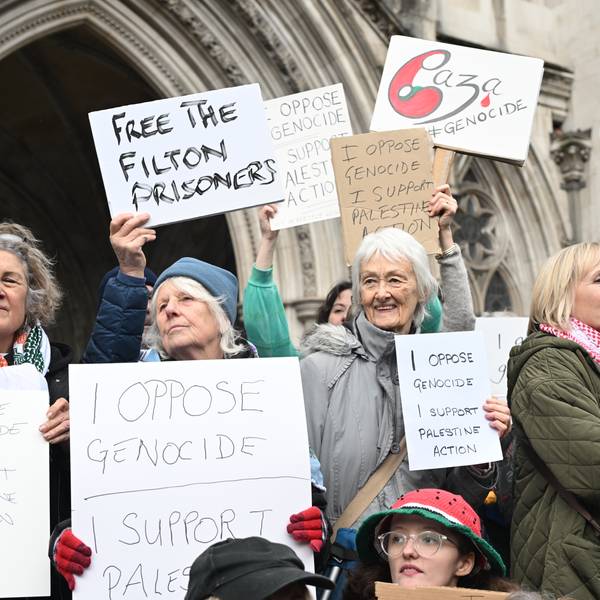
“This is political policing. And if police are the arbiters of where you can march, when you can march, how often you can march, which is in the pipeline — then you need state permission to demonstrate, and are approaching a situation where this isn’t a democracy at all, especially in association with all the cases around Palestine Action and the arrests there of people for holding the wrong placard and so on.”
…
See the original article at https://morningstaronline.co.uk/article/right-protest-trial-westminster-court


https://morningstaronline.co.uk/article/campaigners-urge-bbc-boycott-eurovision

THE BBC was called on yesterday to follow a host of national broadcasters and boycott the Eurovision Song Contest, after organisers voted to include Israel despite its ongoing slaughter in Gaza.
The European Broadcasting Union’s (EBU) initiative has already led to Spain, Slovenia and the Netherlands withdrawing, with Ireland’s national broadcaster RTE the latest to join the boycott.
Ireland premier Micheal Martin said he “fully understands” RTE’s boycott as “an act of solidarity with those journalists who were killed in breach of international humanitarian law during the war in Gaza.”
Noting RTE’s editorial independence, Tanaiste Simon Harris said: “By way of context, we’ve seen hundreds of journalists killed throughout this horrific conflict.
“We still today see a situation where there’s not free access by Israel for the media to get in to actually see the atrocities that have happened in Gaza and you can’t just forget or ignore the fact that a genocide has taken place in relation to Palestine.”
The decision split Northern Ireland’s leaders as they joined the British-Irish Council in Wales yesterday, with First Minister Michelle O’Neill making clear she “absolutely agrees with the decision.”
“I think it’s a right and appropriate decision to take,” she said.
“This is the biggest humanitarian crisis of our time, when genocide prevails — and I think countries need to take action that actually sends a very strong message, and I think this is another one of those messages.”
…
Adding his voice to the chorus calling for the BBC to withdraw from the contest, Scottish Greens culture spokesman Patrick Harvie, said: “This is a shameful decision and a dark day for the European Broadcasting Union.
“Once a symbol of unity and hope across Europe, they have turned the Eurovision Song Contest into a pink-washing front for war criminals in Israel.
“There can be no place for genocide enablers on the Eurovision stage, which is supposed to celebrate love and diversity.
“The atrocities inflicted against Palestinians in Gaza are among the worst crimes of this century and cannot be ignored and discarded in the name of entertainment.
…
Original article at https://morningstaronline.co.uk/article/campaigners-urge-bbc-boycott-eurovision