Palestinians carry the bodies of those who were killed by an overnight Israeli air strike, during their funeral in Khan Younis, Gaza Strip, May 11, 2025
HISTORY will record British military support for Israel as “complicity with genocide,” Communist Party international secretary Kevan Nelson said at the weekend.
Recent reports indicate that Britain has sent 14 shipments of bombs, grenades, torpedoes, mines and F-35 fighter jet parts to Israel since October 2023, while the RAF has carried out more than 500 surveillance flights across Gaza, defended Israeli installations from retaliatory missile attacks and bombed Houthi targets on land and sea.
“The stated intention of the Israeli cabinet is to launch a full-scale offensive to occupy the whole of Gaza permanently, while settler extremists and the misnamed Israeli Defence Force wage war against native Palestinians on the West Bank,” Mr Nelson told his party’s executive committee.
“Israel appears exempt from all international and humanitarian law, while the US, EU states and Britain lecture the rest of the world about human and maritime rights, sending warships and warplanes to enforce Western interests from the Mediterranean to the Indian Ocean and South China Sea.
”He called on the Labour government to follow the example of the Irish Republic, Spain and 145 other countries and recognise Palestine as a sovereign state.
The Communist Party leadership branded Prime Minister Keir Starmer’s refusal to condemn Israeli genocide as “one of the most shameful episodes in Labour’s long and bloody record of supporting British and US imperialism around the world.”
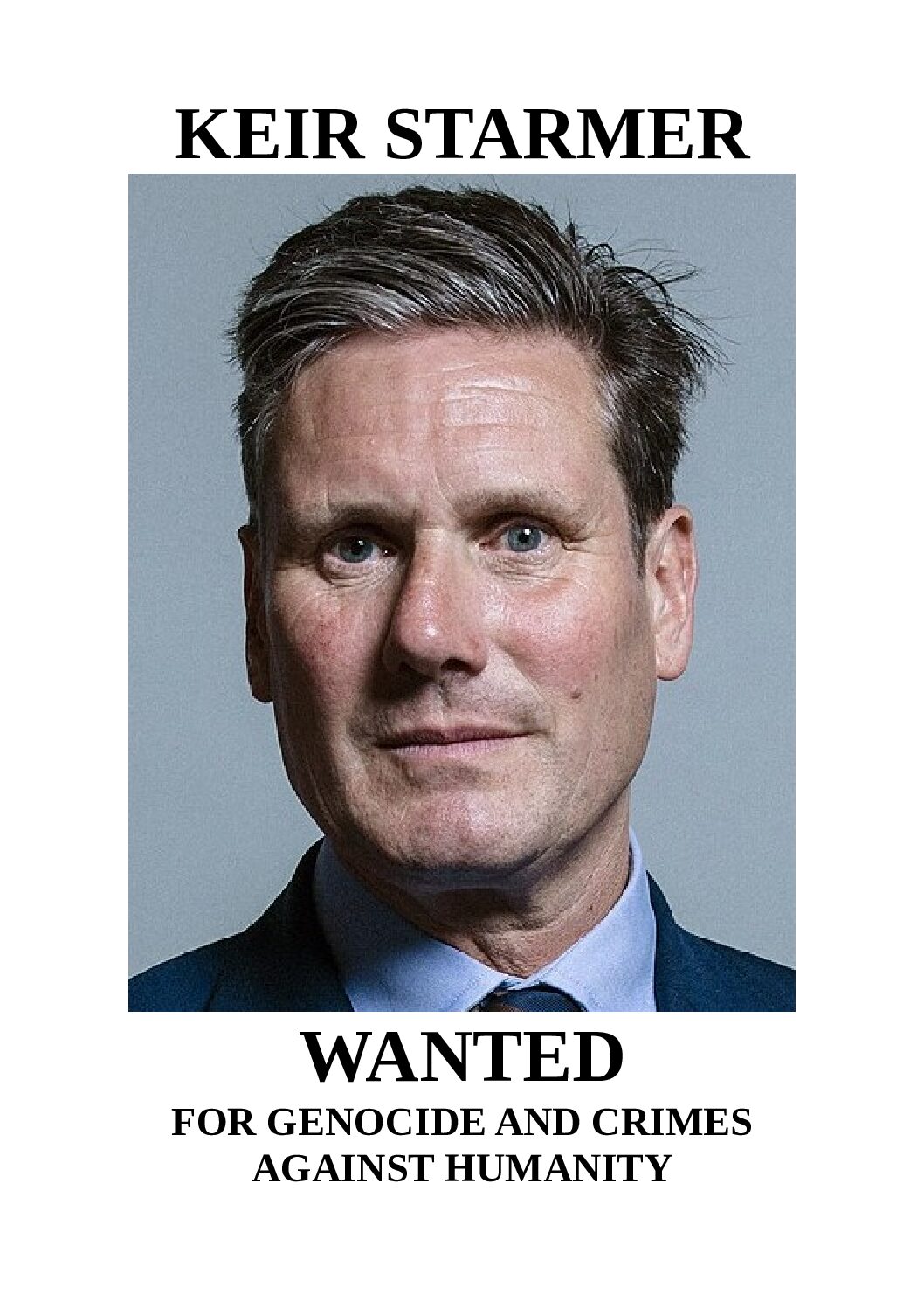
Keir Starmer wanted for genocide and crimes against humanityUK Labour Party government Keir Starmer, Angela Rayner and Rachel Reeves explain that they are participants and complicit in Israel’s Gaza genocide providing Israel with army and air force support. They explain that they don’t do gas chambers but do do forced marches, starvation, destroy hospitals, mass-murders of journalists and healthcare workers.
A view of damage to several buildings at Sana’a International Airport following an airstrike carried out by the Israeli army last night in the Houthi-controlled capital of Yemen on December 27, 2024. [Mohammed Hamoud – Anadolu Agency]
Israel, the US and Britain, on Friday, carried out their first coordinated attack on Houthi targets in Yemen, the Israeli Public Broadcasting Corporation reported.
Houthi-affiliated Al-Masirah TV also reported that a series of air strikes targeted the vicinity of the Al-Sabeen Square in the Yemeni capital, Sana’a, Anadolu Agency reports.
The attack coincided with a rally in support of Palestine amid Israel’s 16-month-old continuing genocidal war on Gaza.
Additionally, the Houthis reported six air strikes on the port city of Al-Hudaydah in western Yemen.
The report did not provide additional details on the impact of the strikes.
The escalation came after the Houthis said, on Monday, that they had attacked the US aircraft carrier, “USS Harry Truman” in the northern Red Sea and claimed missile and drone attacks on targets in southern and central Israel.
The Houthis have targeted Israeli cargo ships or ones linked with Tel Aviv in the Red Sea with missiles and drones in a show of support with the Gaza Strip, where over 46,000 people have been killed in Israel’s genocidal war since October 2023.
Since early 2024, a coalition led by the US has been carrying out air strikes that it said target Houthi locations in Yemen in response to the group’s Red Sea attacks, with occasional retaliation from the Houthis.
A Palestinian girl is in shock after surviving an Israeli bombing of an UNRWA school in the Nuseirat refugee camp in Gaza, Palestine on July 14, 2024. (Photo: Salama Nabeel Eaid Younes/Anadolu via Getty Images)
“The world’s failure to protect Gaza’s children is a moral failing on a monumental scale,” said one advocate.
Amid a relentless Israeli onslaught that has wrought monumental physical and psychological destruction in Gaza, a report published this week revealed that nearly all children in the embattled Palestinian enclave believe their death is imminent—and nearly half of them want to die.
The Gaza-based Community Training Center for Crisis Management, supported by War Child Alliance, surveyed more than 500 Palestinian children in Gaza last June and found that 96% of them fear imminent death, 92% are not accepting of reality, 79% suffer from nightmares, 77% avoid discussing traumatic events, 73% display signs of aggression, 49% wish to die because of the war, and many more “show signs of withdrawal and severe anxiety, alongside a pervasive sense of hopelessness.”
“This report lays bare that Gaza is one of the most horrifying places in the world to be a child,” War Child U.K. CEO Helen Pattinson said in a statement. “Alongside the leveling of hospitals, schools, and homes, a trail of psychological destruction has caused wounds unseen but no less destructive on children who hold no responsibility for this war.”
In a first of its kind report, our Gaza based partner Community Training Centre for Crisis Management asked injured, separated and disabled children and their caregivers about the toll of the ongoing war on their lives. Their answers are devastating but sadly not a surprise.1/5
Israel’s 434-day assault on Gaza—which is the subject of an International Court of Justice genocide case—has left tens of thousands of children dead, maimed, missing, or orphaned and hundreds of thousands more forcibly displaced, starved, or sickened. Doctors and others including volunteers from the United States have documented many cases in which they’ve concluded Israeli snipers and other troops have deliberately shot children in the head and chest.
“The harm caused to Gaza’s children goes beyond statistics. Behind every number is a name, a life, and a future that is being extinguished before it can even begin,” Iain Overton, executive director of the U.K.-based group Action on Armed Violence, said in response to the new report.
“The world’s failure to protect Gaza’s children is a moral failing on a monumental scale,” he added. “We must act decisively and compassionately to ensure that these children’s voices are heard and their futures protected.”
In October, the U.K.-based charity Oxfam International said that Israel’s yearlong assault on Gaza has been the deadliest year of conflict for women and children anywhere in the world over the past two decades. A year ago, the United Nations Children’s Fund called Gaza “the world’s most dangerous place to be a child.” Earlier this year, U.N. Secretary-General António Guterres for the first time added Israel to his so-called “List of Shame” of countries that kill and injure children during wars and other armed conflicts.
“The international community must act now before the child mental health catastrophe we are witnessing embeds itself into multi-generational trauma, the consequences of which the region will be dealing with for decades to come,” Pattinson stressed. “A cease-fire must be the immediate first step to allow War Child and other agencies to effectively respond to the intense psychological damage children are experiencing.”
Addressing the complicity of allies like the United States, Germany, and Britain, who provide weapons and diplomatic cover for Israel, progressive U.K. parliamentarian Jeremy Corbyn wrote on social media in response to the new report, “Every single supplier of arms to Israel has blood on its hands—and the world will never forgive them.”
Benjamin Netanyahu welcomes a delivery of F-35s at Nevatim. (Photo: Kobi Gideon / GPO)
Exclusive: Twice as many supplies for Israel’s “most lethal” fighter jets were sent from Britain than previously known.
F-35 components have been shipped from an RAF base to Israel fourteen times amid the Gaza genocide, it can be revealed.
At least two of the deliveries took place this summer shortly after Keir Starmer became UK prime minister.
The shipments were dispatched from a Royal Air Force base in Marham, Norfolk. They were transferred to Nevatim airbase which houses the Israeli air force’s squadrons of F-35 jets.
Declassified previously revealed that seven shipments of F-35 parts had been transported from RAF Marham to Israel since the Gaza bombing began.
The Ministry of Defence has now admitted that there were in fact “14 transfers of F-35 components from RAF Marham to Israel between October 2023 and August 2024”.
There have been no further “exports of F-35 parts direct to Israel via RAF Marham since the licensing suspension” announced by the Labour government in September 2024.
It released the data in response to a parliamentary question tabled by Clive Lewis, the MP for Norwich South.
The revelation could implicate British ministers in war crimes. An Israeli F-35 fighter jet was used to bomb a designated safe zone in Gaza, killing 90 people, in July.
Sam Perlo-Freeman of Campaign Against Arms Trade told Declassified: “The F-35 plays a key role in Israel’s genocidal war on Gaza. By not merely permitting but actively facilitating the supply of F-35 components to Israel from RAF bases, UK ministers have made themselves parties to war crimes, and risked making UK military personnel complicit”
France, German states use wiretaps, GPS to track activists
Bavaria tries to stop protests with preventative detention
Berlin police spend more than 400,000 hours on climate cases
France outlaws one group, German states consider ban
BERLIN, Aug 10 (Reuters) – Simon Lachner had plans to glue himself to a German city thoroughfare in June to call public attention to climate change. Instead, he ended up in police custody before he’d even left his home.
Lachner, 28, is one of thousands of activists caught up in a European crackdown on a wave of direct action protests that gathered pace last year demanding urgent government action against climate change.
Roadblocks on major motorways in Britain have caused traffic chaos, protests at oil installations in Germany have disrupted supplies, and in France, thousands of activists and police clashed over water usage, leaving dozens injured.
Determined to prevent such protests from strengthening further, states in Germany and national authorities in France are invoking legal powers often used against organised crime and extremist groups to wiretap and track activists, Reuters found, based on conversations with four prosecutors, police in both countries and more than a dozen protesters.
In Berlin alone, police have spent hundreds of thousands of hours working on more than 4,500 incidents registered against the “The Last Generation” and “Extinction Rebellion” groups, according to previously unreported data from police.
State authorities in Germany are widely using preventative detention to stop people from protesting, including holding at least one person for as long as 30 days without charge, which is permissible under Bavarian law, the prosecutors consulted by Reuters said.
Lawmakers passed new surveillance and detention laws in France in July and in Britain in May, with Britain making it illegal to lock, or glue, yourself to property.

 Palestinians carry the bodies of those who were killed by an overnight Israeli air strike, during their funeral in Khan Younis, Gaza Strip, May 11, 2025