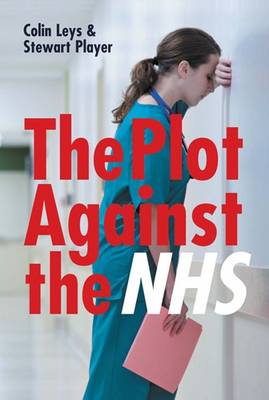
The Plot Against the NHS #1

Spread the love
The plot against the NHS

Selected excerpts from ‘The Plot Against the NHS’ by Colin Leys and Stewart Player. Chapter One is available here. I highly recommend this book available from Merlin Press for £10.

I got my copy yesterday so I have yet to complete it. The book identifies intense lobbying by commercial interests resulting in the privatisation of ancilliary NHS services under Thatcher, covert privatisation of the NHS under Blair’s New Labour administration and Andrew Lansley’s overt privatisation under the current Conservative and Liberal-Democrat coalition government. It draws a picture of the private sector unable to compete with the NHS in terms of cost or quality and the private sector being given excessive, hugely favourable terms. Patricia Hewitt, Alan Milburn and John Reid are identified as covert privateers ‘marketers’ under the Blair administration.

p51

By late 2008 the crisis was at it’s height. Lehmann Brothers was history, Northern Rock had been nationalized along with Lloyds and the Royal Bank of Scotland, and the government’s debt was on course to reach 70 per cent of national income, up from around 40 per cent for most of the decade. In this situation it was obvious that public spending was going to suffer. How would this affect the NHS?

According to the Department of Health, the management consultants McKinsley (where Dr Dash was by now a partner in the company’s London office) were instructed in February 2009 ‘to provide advice on how commissioners might achieve world class NHS productivity to inform the second year of the world class commissioning assurance system and future commissioner development. The advice from McKinsley … was provided in March 2009.’ But the advice McKinsley gave actually tells a different story.

We don’t know what assumptions they were told to make but it looks as if they were told or at least encouraged to assume that NHS spending would remain constant for the next five years, and asked how productivity could be increased to cope with the rise in demand over that time. Their conclusion was that in order to find enough savings to meet the rising cost of providing health care over those years the NHS might have to shed ten per cent of it’s staff. When the press got  hold of the  report in September 2009 there was a furious reaction from the NHS workforce.

Health ministers then said that the report had been rejected, and even then it had been commissioned without their authority.

p54

In October 2010 the coalition government announced that it would continue to raise NHS spending in real terms (based on the general consumer price index) over the next four years – the figure actually claimed was an annual rise of 0.1 per cent. As a result most people outside the NHS assumed that the cuts would now stop. But the reality was different. For one thing, the NHS was told to transfer £2.1 billion to local authorities over the next five years as part of a drive to move patients out of hospitals and into more ‘cost-effective’ social or community care. So the NHS budget was actually being cut. And the NHS’s costs (for drugs, equipment, electricity, etc) would go on rising faster than the general cost of living, so that even if its budget stayed more or less constant it would soon be too small to cover all the bills.

On top of this, people’s healthcare needs (or ‘patient demand’, as today’s policy-makers call patients’ needs) would also go on rising as  people got older, or more obese, or more depressed – and as more of them became unemployed. The economic crisis was thus also a healthcare crisis, in which drastic measures could be presented as being unavoidable, measures of ‘last-resort’ – even if they implied the end of a high-quality health service equally available to all.
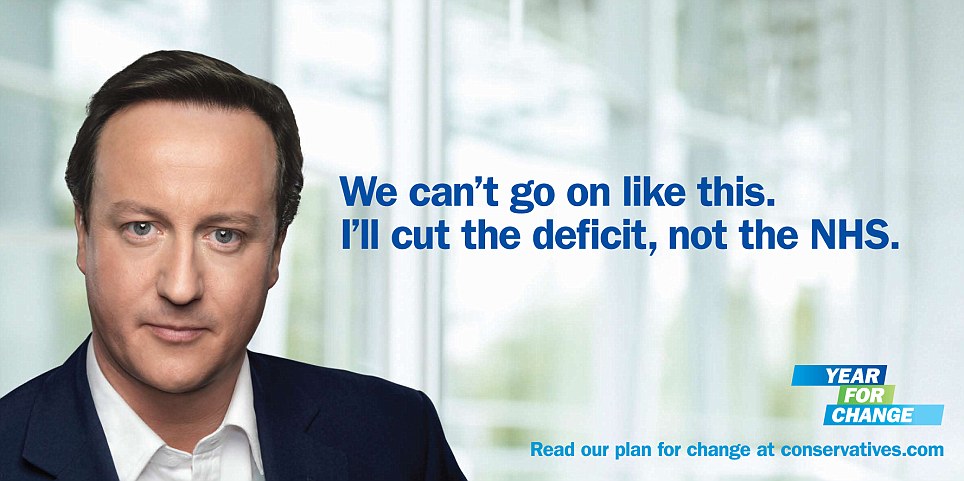
Which was pretty much what the new Secretary of State for Health, Andrew Lansley, decided to do, with proposals for yet another NHS reorganization – a reorganization not only un-mentioned in the election campaign, but one that flatly contradicted David Cameron’s pledge not to undertake any more ‘top-down reorganizations’ in the NHS. Everyone noticed, of course: but the coalition’s argument that the financial crisis meant that all previous bets were off proved effective – even if at first most people couldn’t quite see what Lansley was driving at. All comentators agreed in calling his proposals the most important changes in the NHS since it was set up – but what exactly did the changes mean? And were they really so different from what had been covertly planned for ten years or more under New Labour?

p68

By the time of the 2010 election a fairly clear picture of what the future NHS market would be like had emerged amoung health policy insiders. Influenced by a decade of exposure to US policy advice, and especially by the link with Kaiser Permanente, they envisaged an NHS that was already much closer to being a kitemark attached to a wide variety of provider organizations and systems than people outside the policy-making circle realized.

They imagined a radically reduced NHS hospital sector, with the surviving NHS foundation trusts focused intently on financial success. They envisaged the bulk of outpatient care being transferred out of hospitals into local, cheaper settings, which would be privately built and owned (as so many NHS hospitals already were, through PFI), or jointly owned with ‘entrepreneurial’ clinicians. They envisaged a growing number of the remaining NHS hospitals being run by private companies. They imagined specialist clinicians becoming increasingly self-employed, rather than working on a salary for a single foundation trust, and selling their services to a mix of public and private organizations.

They expected a growing proportion of patients with chronic illnesses to have fixed budgets for their care, and they accepted that top-ups, for which insurance companies would provide insurance plans, would become a normal form of co-payment, as they already were for some life-prolonging cancer drugs. They expected PCTs to be using private healthcare corporations to help them commission services in a more sophisticated way, or doing it for them, and so driving foundation trusts to become more focused on economy and driving more work to private providers. Fundamentally, they anticipated a replication of many of the structures and values of US managed care.

No one who was familiar with this imagined future could have been surprised by the contents of Lansley’s White Paper of July 2010, or the Health and Social Care Bill of January 2011. The only people likely to be surprised were the public, with whom the marketizers had chosen not to share their vision.

Continue ReadingThe Plot Against the NHS #1

NHS news review

Spread the love

NHS news: PM Cameron takes responsibility, unpersuasive claims that Clegg is demanding reforms and that “substantive” reforms will be made, a report on Dept of Health publishing misleading and biased figures to persuade of the need for reform, opposition to privatisation of the blood service and nurses are backing strikes over further errorsion of their wages. There is also a strange story about Lansley that I haven’t linked to. I can’t see the logic of the argument but the argument is

  1. Lansley suffered a stroke
  2. His wife – a trained medical practitioner demanded further tests
  3. As a result of the demanded further tests, it was recognised that Lansley had suffered a stroke
  4. [Here’s the really strange abandoning of logic] It was only because of the intervention of his wife that his stroke was recognised “My case illustrates a problem with the NHS. If you are articulate and know what you want you can argue your way through to it.”If you’re not, then you just get what you’re given.”so control of a large part of the NHS should be given over to GPs – the very people that did not identify the stroke without the insistence of the wife that further tests were needed?

Conservative election poster 2010

A few recent news articles concerning the UK’s Conservative and Liberal-Democrat coalition government – the ConDem’s – brutal attack on the National Health Service.

Nurses vote for strike ballot over pay freeze – Health News, Health & Families – The Independent

Nursing leaders dealt another blow to ministers yesterday by voting overwhelmingly to ballot for industrial action if the Government attempted to freeze their pay.

Delegates at the Royal College of Nursing (RCN) conference also voted massively in favour of a motion saying Health Secretary Andrew Lansley’s reforms of the NHS would not benefit patient care.

Health minister Anne Milton infuriated nurses earlier in the week when she said an offer was still on the table for no compulsory redundancies in return for nurses accepting a two-year pay freeze when they move up pay bands.

The proposal, made by NHS Employers last year, was rejected by all major health unions including Unison, the British Medical Association and the RCN.

The Operating Theatre Journal : Independent poll shows massive opposition to privatisation of the NHS blood service

Unite, Britain’s biggest union, will meet with Linda Hamlyn, chief executive, of the NHS Blood Service today (Friday 15 April), as the union releases an independent poll of 18,000 people showing that 74 per cent oppose the privatisation of any part of the blood service.

Unite will tell Linda Hamlyn that: “Whether it is the frontline or the back office, privatisation of any part of the blood service contaminates the whole of the blood service.”

The union will demand that the chief executive gives a ‘copper bottomed’ guarantee that there will be no further privatisation of the service. The poll also showed that 70 per cent of those who opposed privatisation had either given blood or had considered giving blood.

The Department of Health is currently leading a review into ways the NHS Blood Service could cut costs. As part of the review the DoH are talking to private providers. Unite has repeatedly asked for clarity on the future of the blood service, but both the National Blood Service and the Department of Health have failed to rule-out privatisation of parts of the blood service despite massive public opposition.

NHS leaflet mixes past and present | Ben Goldacre | Comment is free | The Guardian

HM Government has issued a new leaflet to justify its NHS reforms: Working Together for a Stronger NHS. It was produced by No 10, appears on the Department of Health website, and many of the figures it contains are misleading, out of date or flatly incorrect.

It begins, like much pseudoscience, with uncontroversial truths: the number of people over 85 will double, and the cost of drugs is rising.

Then the trouble starts. In large letters, alone on one entire page, you see: “If the NHS was performing at truly world-class levels we would save an extra 5,000 lives from cancer every year.” The reference for this is a paper in the British Journal of Cancer called “What if cancer survival in Britain were the same as in Europe: how many deaths are avoidable?”

This study does not aim to predict the future: in fact, it looks at data from 1985 to 1999 (seriously), which is a very long time ago. It finds that if we’d had the mean EU cancer survival rates in the 80s and 90s, we’d have had 7,000 fewer deaths then. Not 5,000 fewer. And to put the big number in context, by this study’s calculation 6%-7% of UK cancer deaths were avoidable in the 1990s. Since then, we’ve seen the massive 2000 NHS Cancer Plan, a new decade and a new century. This paper says nothing about the number of lives we “would save” now, and citing it in that context is bizarre.

BBC News – NHS bill to ‘substantively’ change, says Oliver Letwin

“Substantive” changes are to be made to the controversial NHS bill which is going through parliament, Cabinet Office minister Oliver Letwin says.

The amendments would be a result of discussions being held as part of the consultation, the Conservative MP said.

The government recently announced that ministers would take a “pause” to allow further talks to take place.

Labour wants the plans for the NHS in England, which encourage more private sector competition, to be scrapped.

Clegg to Lansley: Change NHS reforms or lose our support – Health News, Health & Families – The Independent

Nick Clegg issued a stark warning yesterday that the Liberal Democrats will not back Andrew Lansley’s controversial health shake-up without “substantial changes” to stamp out the threat of NHS privatisation.

In the clearest sign yet of a major coalition schism over the reforms, Mr Clegg set out five key demands which he insists are “non-negotiable”. They include blocking attempts by big business to “cherry-pick” services, giving doctors and nurses a greater say in contracting care, and delaying the handover of £60bn of health spending to groups of GPs beyond the planned 2013 deadline.

With the Lib Dems’ poll ratings dropping three points to 10 per cent in the latest Independent on Sunday/ComRes survey, Mr Clegg needs to prove his party is able to influence coalition policy ahead of elections on 5 May. The poll also reveals 41 per cent of people believe the Lib Dems should leave the coalition if they fail to secure changes on the health reforms.

The Deputy Prime Minister wrote to all 56 Lib Dem MPs in an attempt to counter claims that the Government’s decision to “pause” the progress of the Health and Social Care Bill was simply a PR stunt.

BBC News – NHS shake-up: I take responsibility, says David Cameron

Prime Minister David Cameron has said he takes “absolute responsibility” for a shake-up of the NHS in England.

He said Health Secretary Andrew Lansley was doing “an excellent job” but the government was considering “real changes” to the plans.

Last week a nurses’ union delivered an overwhelming vote of no confidence in Mr Lansley’s management of the plans.

Dr Grumble: The Plot Against the NHS

The plot against the NHS

If you detected an element of despair in Dr Grumble’s last post you would be right. Dr Grumble has just read The Plot Against the NHS. To be frank the picture on the cover says it all.

For years now poor old Grumble has been banging on about what he has seen being planned for the NHS. For years he has been incredulous at the disparity between the official position on the health service and what is clearly the intended direction of a multitude of policy documents that have emerged from our political masters. For years he has been wrestling to understand the real meanings of deliberately vague words such as contestability and plurality.

Grumble likes evidence. When data are massaged and the whole truth is kept secret, you do begin to wonder if perhaps you have misunderstood or are a victim of a pathological obsession. Can it really be that successive governments have deliberately kept their intentions for the health service a tight secret? Can it really be that the staff in the Department of Health no longer have the ethos of traditional British civil servants and do not ensure that the public know what is going on? Can it really be that we have a government that promises no top-down reorganisation of the NHS but is actually hell-bent on privatisation of our NHS?


27/11/13 Having received a takedown notice from the Independent newspaper for a different posting, I have reviewed this article which links to an article at the Independent’s website in order to attempt to ensure conformance with copyright laws.

I consider this posting to comply with copyright laws since
a. Only a small portion of the original article has been quoted satisfying the fair use criteria, and / or
b. This posting satisfies the requirements of a derivative work.

Please be assured that this blog is a non-commercial blog (weblog) which does not feature advertising and has not ever produced any income.

dizzy

Continue ReadingNHS news review

NHS news review

Spread the love

The Royal College of Nursing (RCN) has voted overwhelmingly that they have no confidence in Health Secretary Andrew Lansley’s proposed ‘reforms’ of the National Health Service.

Leader of the Opposition and Labour Party leader Ed Miliband has made a speech calling for the bill to destroy the NHS to be abandoned.

Conservative election poster 2010

A few recent news articles concerning the UK’s Conservative and Liberal-Democrat coalition government – the ConDem’s – brutal attack on the National Health Service.

Nurses ‘no confidence’ in Andrew Lansley – Health News, Health & Families – The Independent

Nurses today voted overwhelmingly in favour of a motion of “no confidence” in the Health Secretary Andrew Lansley and his management of NHS reforms.

Delegates at the Royal College of Nursing conference in Liverpool voted 99 per cent in favour of the motion, to 1 per cent against.

The RCN’s leadership had attempted to amend the motion to delay any no confidence vote until after the conclusion of the Government’s listening exercise.

But amid angry and passionate scenes on the conference floor the amendment was dropped when nurse after nurse took to the stage to condemn the Government.

Royal College of Nursing passes vote of no confidence in Andrew Lansley | Society | guardian.co.uk

Conference delegates vote 99% in favour of motion as health secretary struggles to persuade public of merits of NHS reforms

The Royal College of Nursing has overwhelmingly backed a motion of no confidence in Andrew Lansley’s handling of the NHS reforms.

Delegates at the RCN conference in Liverpool voted 99% in favour of the motion as the beleaguered health secretary struggles to persuade the public of the merits of his health reforms.

Nurses are angry that Lansley refused to deliver a keynote speech to the conference, opting instead to meet a group of around 60 nurses in Liverpool as part of the government’s “listening exercise” on the controversial reforms.

NHS reforms: Miliband urges government to scrap health bill | Society | guardian.co.uk

The Labour leader, Ed Miliband, has urged the government to “junk” its health bill, identifying five “largely concealed aspects” of the proposed reforms which he said undermined NHS principles.

“The answer to a bad bill is not to slow it down but it is to junk it,” Miliband said at a press conference on the NHS.

“He appears to believe that people don’t like his bill because his government haven’t explained it properly.

“But the opposite is true. The more people understand and hear about these proposals, the less they like them. It’s not a problem of public relations, it’s a problem of principle.

“The bill is actually a pandora’s box. The more people look at the detail, the more profound and worrying the implication appear to be for the NHS.


27/11/13 Having received a takedown notice from the Independent newspaper for a different posting, I have reviewed this article which links to an article at the Independent’s website in order to attempt to ensure conformance with copyright laws.

I consider this posting to comply with copyright laws since
a. Only a small portion of the original article has been quoted satisfying the fair use criteria, and / or
b. This posting satisfies the requirements of a derivative work.

Please be assured that this blog is a non-commercial blog (weblog) which does not feature advertising and has not ever produced any income.

dizzy

Continue ReadingNHS news review

NHS news review

Spread the love

NHS privatisation

Conservative election poster 2010

A few recent news articles concerning the UK’s Conservative and Liberal-Democrat coalition government – the ConDem’s – brutal attack on the National Health Service.

BBC News – Lansley faces confidence vote by nurses

Health Secretary Andrew Lansley is facing a confidence vote from nurses in reaction to his planned changes for the NHS in England.

After a “listening exercise” at Downing Street with the PM and voluntary sector representatives, Mr Lansley will go to the Royal College of Nursing Congress.

He will meet a group of 50 nurses – not the whole conference – which has prompted some to question his nerve.

Nurses accuse Lansley of ducking out of facing them – Health News, Health & Families – The Independent

Nurses’ leaders will today debate a motion of no-confidence in the Health Secretary, Andrew Lansley – just hours before he arrives at their annual congress to take part in a “listening exercise”.

In a sign that ministerial attempts to reassure nurses about their plans for NHS reform are failing, members of the Royal College of Nursing voted overwhelmingly to debate the emergency motion shortly after being addressed by the Health minister Anne Milton. If passed it will be the first such no-confidence motion in 30 years.

Tomorrow they will vote on plans for industrial action if the Government pushes ahead with proposals to allow trusts to implement incremental pay freezes for some staff. Members are particularly incensed that Mr Lansley will only be speaking to a selection of around 60 members, split up into tables of eight, for 45 minutes, and accused him of not having the “guts” to address the conference as a whole.

The NHS braces itself for privatisation | Society | The Guardian

Andrew Lansley‘s recent announcement that the government is embarking on a two-month “period of listening” about its NHS reform plans has been seen by some as a U-turn over a deeply flawed policy.

There are, however, some areas where the government is not prepared to listen: the commitment to abolish primary care trusts, to transfer major powers to commission services to GPs, and the ambition to vastly increase the participation of the private and, in theory, voluntary sectors in providing health services. In future, the NHS will continue to be funded from taxation and (for the time being) will be free at the point of delivery, but the government will step back from running the service.

Private sector involvement in the NHS is not new. Dentistry, worth £2.1bn, opticians and pharmacies are already in the private sector. GPs themselves are effectively private contractors, accounting for £8bn, or almost 10% of the entire NHS budget. Under Labour, private involvement was extended via independent sector treatment centres (ISTCs), handling mainly non-emergency elective treatments, as a way to bring down waiting lists.

But the current proposals are much more bold. Plans are under way to further outsource central services, such as workforce development (total budget £5bn) and procurement management. Even NHS Direct (worth £146m) is in the firing line.

The shift to create more than 200 GP consortiums in England will generate further opportunities for private firms. Notably, this will be in the management of commissioning, worth £1bn. Firms such as Tribal, Humana, United Health and Aetna already offer referral management services that promise to help consortiums slash their costs by as much as 15% and turn savings into profits.

London Ambulance Service axing 890 jobs in bid to cut budget by £53m | Metro.co.uk

Some 560 ‘frontline’ paramedic and technician posts will go in the capital as the service looks to slash its budget by £53million over five years.

A further 330 posts are to be removed from management and support services.

The cuts represent almost a fifth of the service’s 5,000 staff but the government insisted any savings made would be reinvested in patient care.

Pulse – GPs face bans on high-cost drugs

Exclusive: GPs are being banned from prescribing high-cost drugs approved by NICE as NHS managers seek drastic savings on prescribing budgets.

More than half of primary care organisations have brought in new blacklists within the past year, a Pulse investigation reveals.

PCOs are redrawing formularies in changes they estimate will slice £250m from this year’s drug budget. Responses from 134 PCOs under the Freedom of Information Act show that more than half have blacklists of drugs – in some trusts of more than 100 – that GPs are banned from prescribing.

Some 73 PCOs said they had added drugs to blacklists or placed additional restrictions on prescribing in primary care in the past year, as they strive to make average estimated savings in 2011/12 of £1.9m each.

Four-hour A&E waits rise by 65% (From Your Local Guardian)

The number of people waiting more than four hours in A&E has jumped 65% since the Government scrapped a target, NHS figures show.

Department of Health data on four-hour waits shows thousands more people waiting in A&E, walk-in centres and minor injury units in 2010 than in 2009.

Last June, Health Secretary Andrew Lansley relaxed a four-hour A&E target which has since been scrapped and replaced with a new set of quality indicators.

The data shows that, in the six months from July to December 2009, 176,522 people waited more than four hours, but this rose to 292,052 people from July to December 2010, a 65% increase.

NHS funding pressures hitting frontline, says A&E chief | Society | The Guardian

Hospital casualty departments are struggling to cope with growing demand for emergency care because they have too few staff and not enough beds, Britain’s top accident and emergency doctor has warned.

As new figures pointed to a steep rise in A&E waiting times and 890 ambulance jobs were lost, John Heyworth, president of the College of Emergency Medicine, joined a growing chorus of doctors warning that the NHS funding pressures are already hitting frontline services.

“The emergency care system is struggling to cope at the moment,” he said. “Many departments spend their time firefighting because of the number of patients coming in, the limited number of emergency department staff and limited availability of beds.”

David Cameron and the health secretary, Andrew Lansley, have insisted that the NHS will not be affected by the deep cuts to public spending elsewhere and that frontline services will be protected during their shakeup of the health service.

But medical organisations, health charities and patients’ groups are increasingly sceptical that the pledge can be kept as health spending fails to keep pace with the rising cost of treating Britain’s ageing population.


27/11/13 Having received a takedown notice from the Independent newspaper for a different posting, I have reviewed this article which links to an article at the Independent’s website in order to attempt to ensure conformance with copyright laws.

I consider this posting to comply with copyright laws since
a. Only a small portion of the original article has been quoted satisfying the fair use criteria, and / or
b. This posting satisfies the requirements of a derivative work.

Please be assured that this blog is a non-commercial blog (weblog) which does not feature advertising and has not ever produced any income.

dizzy

Continue ReadingNHS news review

NHS news review

Spread the love

Nurses appreciate the severity of Con-Dem government attacks on the NHS and there is a weak hint of possible strike action. Nurses are in a particularly awkward position being committed to provide care for patients under the NHS system while that system is getting destroyed around them. To strike runs the risk of appearing insensitive to the needs of patients while perhaps even the act of balloting could hugely raise awareness of the Con-Dems brutal attacks. We need a strong, unified defence and doctors and nurses deserve widespread support.

Norman Lamb doesn’t really disagree with Nick Clegg after all. What a surprise (Not!).

Conservative election poster 2010

A few recent news articles concerning the UK’s Conservative and Liberal-Democrat coalition government – the ConDem’s – brutal attack on the National Health Service.

BBC News – Nick Clegg: ‘Building blocks’ of NHS reform to remain

Deputy PM Nick Clegg says the “basic building blocks” of controversial NHS plans will remain, but changes could be made on how they work “in practice”.

His aide Norman Lamb threatened to quit over the “very risky” pace of change.

But Mr Clegg said Mr Lamb agreed with him and did not want to “reopen the Pandora’s Box” of the basic plan to give GPs more financial powers.

The plans would give GPs in England control of 60% of the NHS budget and let more private firms provide care.

What the cutbacks will mean on the NHS frontline | Society | guardian.co.uk

Don’t expect patients or hospital bosses to be happy as the cost of the NHS shake-up becomes clear, writes Denis Campbell

Andrew Lansley’s future prompts much speculation. Is the health secretary the Cabinet’s dead man walking or simply a well-intentioned NHS reformist who needs some presentational polish? Similarly, is the government’s hastily-conceived new “pause, listen and engage” approach to the planned NHS shake-up a prelude to a major overhaul or just a cynical exercise to keep the Lib Dems on board with warm words but minor changes? The answers, still unknowable, will help decide the fate of the health and social care bill – and perhaps the coalition itself.

But what keeps hospital bosses awake at night is not key elements of the bill such as GP-led commissioning, “any willing provider” or the exact remit of NHS economic regulator Monitor. Other, more pressing, matters do, almost all involving a pound sign. Like the “Nicholson challenge”, NHS chief executive Sir David Nicholson’s demand that the service in England saves £20bn by 2015 in “efficiency gains”, requiring 4% annual productivity gains every year – which all the evidence suggests is hopelessly unrealistic. Like the reality of the next four years bringing flat or slightly reduced budgets after Labour’s decade-long cash splurge. It also applies to the 150 or so NHS primary care trusts, which currently commission treatment, and indeed to every healthcare organisation in England. Both have to be contended with at a time when demand for healthcare is growing.

Then there are, as King’s Fund chief economist Professor John Appleby points out, other key financial challenges to be met. January’s VAT increase will cost the NHS £250m, pay increments another £1bn and demographic change a further £1bn a year. Another £200m is going into the populist Cancer Drugs Fund. The transition costs of Lansley’s radical restructuring will be £500m this year alone. Hospitals’ income via the “tariff” payments system is reducing slightly. “All this means that local health budgets are under severe pressure”, says Appleby.

The Nuffield Trust, another health think-tank, adds several other factors for good measure. Medical inflation – the cost of drugs and clinical supplies – is rising faster than general inflation. Many hospitals’ operating costs are running ahead of budget. Demand on them – more people are using A&E, for example – is growing too. You get the picture — which, for the NHS, is grim.

Andrew Lansley’s future prompts much speculation. Is the health secretary the Cabinet’s dead man walking or simply a well-intentioned NHS reformist who needs some presentational polish? Similarly, is the government’s hastily-conceived new “pause, listen and engage” approach to the planned NHS shake-up a prelude to a major overhaul or just a cynical exercise to keep the Lib Dems on board with warm words but minor changes? The answers, still unknowable, will help decide the fate of the health and social care bill – and perhaps the coalition itself.

But what keeps hospital bosses awake at night is not key elements of the bill such as GP-led commissioning, “any willing provider” or the exact remit of NHS economic regulator Monitor. Other, more pressing, matters do, almost all involving a pound sign. Like the “Nicholson challenge”, NHS chief executive Sir David Nicholson’s demand that the service in England saves £20bn by 2015 in “efficiency gains”, requiring 4% annual productivity gains every year – which all the evidence suggests is hopelessly unrealistic. Like the reality of the next four years bringing flat or slightly reduced budgets after Labour’s decade-long cash splurge. It also applies to the 150 or so NHS primary care trusts, which currently commission treatment, and indeed to every healthcare organisation in England. Both have to be contended with at a time when demand for healthcare is growing.

Then there are, as King’s Fund chief economist Professor John Appleby points out, other key financial challenges to be met. January’s VAT increase will cost the NHS £250m, pay increments another £1bn and demographic change a further £1bn a year. Another £200m is going into the populist Cancer Drugs Fund. The transition costs of Lansley’s radical restructuring will be £500m this year alone. Hospitals’ income via the “tariff” payments system is reducing slightly. “All this means that local health budgets are under severe pressure”, says Appleby.

The Nuffield Trust, another health think-tank, adds several other factors for good measure. Medical inflation – the cost of drugs and clinical supplies – is rising faster than general inflation. Many hospitals’ operating costs are running ahead of budget. Demand on them – more people are using A&E, for example – is growing too. You get the picture — which, for the NHS, is grim.

NHS shakeup could be biggest disaster in history of public services, says RCN | Society | The Guardian

The coalition government’s shakeup of the NHS could easily become “the biggest disaster in the history of our public services”, the leader of Britain’s 400,000 nurses has warned.

Dr Peter Carter, head of the Royal College of Nursing, made the claim in his address to the union’s annual congress on Monday as he set out a powerful critique of the planned radical restructuring in England.

While endorsing the health and social care bill’s key aims, Carter said “the reforms still have a huge number of areas that concern us”, despite recent government concessions on price competition between healthcare providers and its decision to invite a nurse to sit on the new NHS National Commissioning Board.

“Despite the honourable principles behind the bill, it could well turn out to be the biggest disaster in the history of our public services, if organisations like the RCN are not listened to now,” Carter told about 2,000 nurses’ representatives gathered in Liverpool.

NHS crisis looms say experts / Britain / Home – Morning Star

The Royal College of Nurses (RCN) warned today that the coalition’s NHS reforms could be the “biggest disaster in the history of our public services.”

RCN chief executive Peter Carter told delegates at the union’s annual conference in Liverpool that the reforms could be devastating if unions were not listened to.

“The Health and Social Care Bill is going through Parliament now and, from a government that promised no more top-down reorganisations, it certainly looks like one to me,” he said.

Mr Carter said that nurses were struggling due to the government’s two-year pay freeze, rising costs and increasing workloads.

He said “never before” had so many nurses talked to him about industrial action.

Speaking to journalists afterwards, Mr Carter said: “We are a long, long way away” from industrial action, and a process would need to be gone through, including balloting members.

He said nurses “would not damage patient care” by simply walking out of hospital wards.

NHS cuts push nursing union to the brink of industrial action – Health News, Health & Families – The Independent

Britain’s nurses yesterday raised the prospect of taking the first industrial action in their union’s history because of anger at government cuts to NHS services.

Nurses would refuse to work more than their contracted hours, take all their allotted meal breaks and decline to fill in paperwork outside their normal job description, under plans being discussed at the annual conference of the Royal College of Nursing (RCN) in Liverpool.

The RCN’s general secretary, Peter Carter, said the union did not have a no-strike agreement, although he played down the threat of a full-scale walkout among its 400,000 members.


27/11/13 Having received a takedown notice from the Independent newspaper for a different posting, I have reviewed this article which links to an article at the Independent’s website in order to attempt to ensure conformance with copyright laws.

I consider this posting to comply with copyright laws since
a. Only a small portion of the original article has been quoted satisfying the fair use criteria, and / or
b. This posting satisfies the requirements of a derivative work.

Please be assured that this blog is a non-commercial blog (weblog) which does not feature advertising and has not ever produced any income.

dizzy

Continue ReadingNHS news review