Alberta Premier Danielle Smith surveys damage after the Jasper wildfire. Credit: Danielle Smith / YouTube
Speaking at the UCP annual general meeting, the Premier took shots at the federal government and vowed not to “budge an inch.”
Alberta Premier Danielle Smith pledged to “triple down” on conservative principles, including energy extraction and anti-trans policies at the Alberta United Conservative Party’s annual general meeting in Red Deer today in front of an energetic crowd of 6,000 people.
“We will build new pipelines, oil and gas facilities, petrochemical plants, hydrogen plants, and more because Alberta is an energy superpower, and we will not apologize for it,” said the premier, who was defiant against the federal government and any attempts to regulate energy and greenhouse gas emissions.
Taking a shot at the federal government Smith decried federal attempts at regulating carbon emissions during her speech.
“Justin Trudeau, Steven Guilbeault and their band of woke MPs have done everything they can to shut down Canada’s and Alberta’s most economically important industry as quickly as possible,” said Smith.
In a particularly spicy moment, the Premier dismissed federal environment and climate change minister Guilbeault’s “tantrums” and “green schemes,” suggesting that Alberta would not “budge an inch … EVER.”
Smith threatened to continue to block any legislation that affects the energy industry.
“We have already invoked the Sovereignty Act against Justin Trudeau’s reckless and unaffordable 2035 net-zero electricity regulations, which we will not enforce in Alberta,” she said.
Premier Smith denounced federal attempts at regulating carbon emissions during her speech at the UCP’s annual general meeting. Credit: Danielle Paradis
Premier Smith is facing a leadership review as a part of the AGM and met with members at an accountability session where they discussed past policy proposals including the proposal to ban solar farms on agricultural land.
Last year, the Alberta government imposed a seven-month moratorium on renewable energy projects after this policy proposal passed.
According to the Canadian Press, a webinar used as a part of the government’s engagement process said that Alberta is looking to prohibit wind and solar farms on irrigated land.
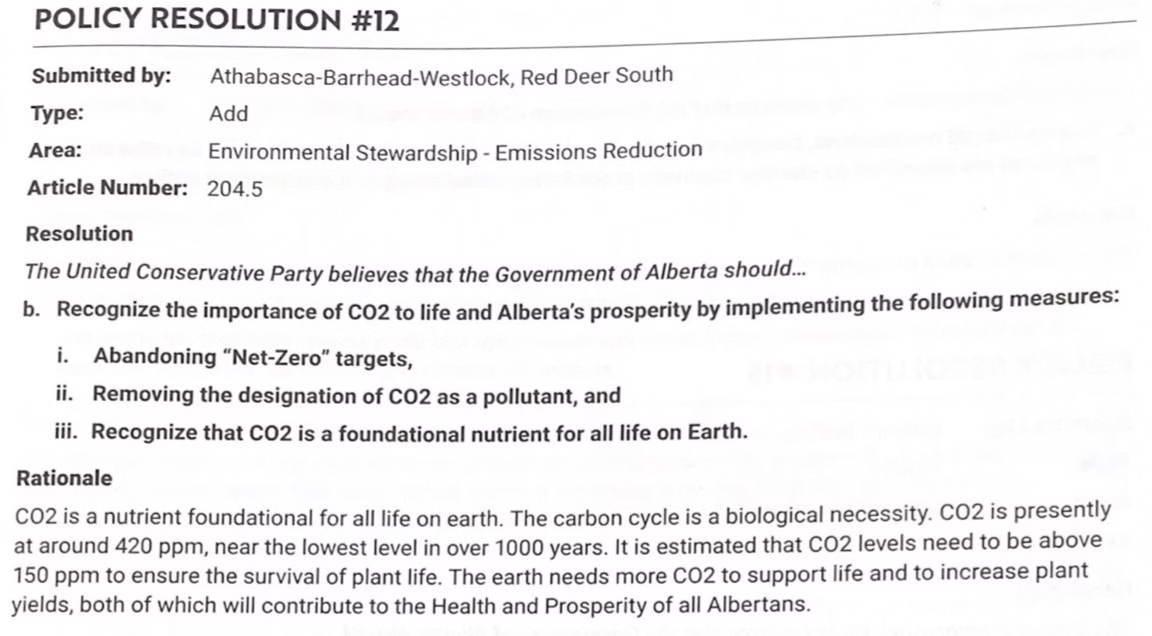
In the afternoon, the members will debate a policy resolution that would “recognize the importance of CO2 to life and Alberta’s prosperity” by abandoning “Net-Zero” targets and recognizing that CO2 is a “foundational nutrient to life.”
UCP members voted in favor of a resolution to “recognize the importance of CO2 to life and Alberta’s prosperity.” Credit: Danielle Paradis
Alberta’s United Conservative Party has passed a resolution to rebrand carbon dioxide — the chief gas whose overabundance in Earth’s atmosphere is causing the climate emergency — in a brazen display of climate science denial that harkens back to the 1990s fossil fuel industry playbook.
Resolution 12, which falls under the “environmental stewardship and emissions reduction” area of the policy discussion, will “recognize the importance of CO2 to life and Alberta’s prosperity.”
In approving the resolution, the UCP resolved to abandon the province’s net zero targets, remove the designation of CO2 as a pollutant, and further “recognize that CO2 is a foundational nutrient for all life on Earth.”
“We must prioritize policies that protect our economy and our way of life. CO2 is an essential nutrient for mass, driving growth and boosting plant production. According to the CO2 Coalition, higher CO2 levels have led to healthier crops and improved food security worldwide,” said a UCP member speaking in favour of the policy who cited the notorious CO2 Coalition.
The resolution passed by a wide majority.
UCP members vote in favor of Resolution 12. Credit: Danielle Paradis
A member who spoke against the bill, saying that just like like someone can drink too much water and experience water poisoning, too much CO2 can be bad. He was booed by the crowd.
The policy discussion took place in Red Deer, Alberta, where 6,085 UCP members and observers debated 33 policy resolutions at their annual general meeting. Earlier in the day, Alberta Premier Danielle Smith pledged to “triple down” on conservative priorities, including further expanding oil production and attacking Canadian climate policies.
As severaloutlets have reported previously, Resolution 12 flies in the face of the scientific consensus on climate change, and the party’s rationale for the resolution states a widely debunked claim that “the Earth needs more CO2 to support life and to increase plant yields.”
Carbon dioxide is the gas principally responsible for exacerbating the greenhouse effect, the consequence of which is global warming. Whereas carbon is a foundational building block of life on Earth, carbon dioxide is an asphyxiating gas whose atmospheric proportions are so high they’re disrupting the normal function of the carbon cycle.
The resolution was submitted by the members of the legislative assembly (MLA) representing the provincial ridings of Athabasca-Barrhead-Westlock (Glenn van Dijken), and Red Deer-South (Jason Stephan).
The argument that carbon dioxide is a “gas of life” has been a common yet easily refutable talking point popularized by climate change deniers and other right-wing extremists. One such group, the anti-wind energy group Wind Concerns, referred to carbon dioxide as a “gas of life” in an interview with DeSmog last year. Their leader, Mark Mallett, took credit for contributing to the anti-renewable energy moratorium instituted by Alberta UCP Premier Danielle Smith.
Climate scientists have long confirmed that increased CO2 in the atmosphere does not, as climate change deniers insist, create better growing conditions for plants.
The argument that carbon dioxide is beneficial for the environment appears to have first been made by the Greening Earth Society (GES) in the mid-late 1990s. GES was a creation of the Western Fuels Association, and it was later determined the two groups were one and the same. GES published the World Climate Report, a non-academic and non-peer-reviewed journal that served as a platform for climate change denial. They were transparent in acknowledging their funding from fossil fuel companies, and appear to have originated several talking points now common amongst climate change deniers, including those that advocate for increased atmospheric carbon dioxide, which would result in faster plant growth and greater agricultural yields.
In the “rationale” section of the resolution, the United Conservative Party document argues that “CO2 is a nutrient foundational to all life on Earth.”
While plants need both light and carbon dioxide to thrive, the over-supply of CO2 in recent decades is leading to plants being deprived of their nutrients. One biologist was quoted in a 2017 Politico article describing this as akin to “the greatest injection of carbohydrates into the biosphere in human history,” and that injection is diluting the nutrients in the food supply.
While the resolution notes that the “carbon cycle is a biological necessity,” it doesn’t appear the resolution’s sponsors are aware that increasing carbon dioxide in the atmosphere throws the carbon cycle off balance. This is precisely what’s causing the climate emergency: too much carbon dioxide in the atmosphere combined with the destruction of natural carbon storage is destroying the carbon cycle as we know it. The proposed resolution is as contradictory as it is scientifically illiterate.
The resolution also states that current CO2 levels are around 420 PPM, which is described as being “near the lowest level in over 1000 years.” Where this idea comes from is not clear, but it is not supported by verifiable scientific evidence. To the contrary, CO2 levels were 34 percent lower than today in the year 1024, at about 280 PPM. CO2 levels have climbed steadily since the beginning of the Industrial Revolution, though they have grown most aggressively since 1950. NASA estimates that, despite wide fluctuations over time, CO2 levels had not exceeded 300 PPM over the last 800,000 years, but have stayed above that level since 1950.
The argument that more CO2 will support life, increase yields, and “contribute to the health and prosperity of all Albertans” — as stated in the resolution — is not supported by scientific evidence. The opposite is a far likelier outcome. As the principal driver of the climate crisis and global warming, increasing CO2 levels will exacerbate droughts, wildfires, and floods, among other disasters, in turn resulting in loss of life and major disruptions to global supply chains. The consequent economic disturbances and their aftereffects will worsen the affordability crisis and result in increasingly negative economic outcomes for all, not just Albertans. Rather than stimulate Alberta’s agricultural sector, climate change will destroy it, and the evidence this is already happening is quite clear.
Another policy resolution is focused on the provincial government’s “scrap the cap” program. The policy builds on a previous resolution to repeal the carbon tax and instead: “Prohibit any consumer carbon tax or carbon pricing scheme or carbon cap and trade system from being implemented in Alberta.”
The resolution also proposes to support “any federal or interprovincial government’s efforts to “axe the tax” (the federal conservative campaign) by eliminating the federal carbon pricing backstop from being imposed on Albertans and Canadians.”
Other resolutions over the weekend have focused on print-based identification, and a requirement for in-person voting “to deal with all the voter fraud.”
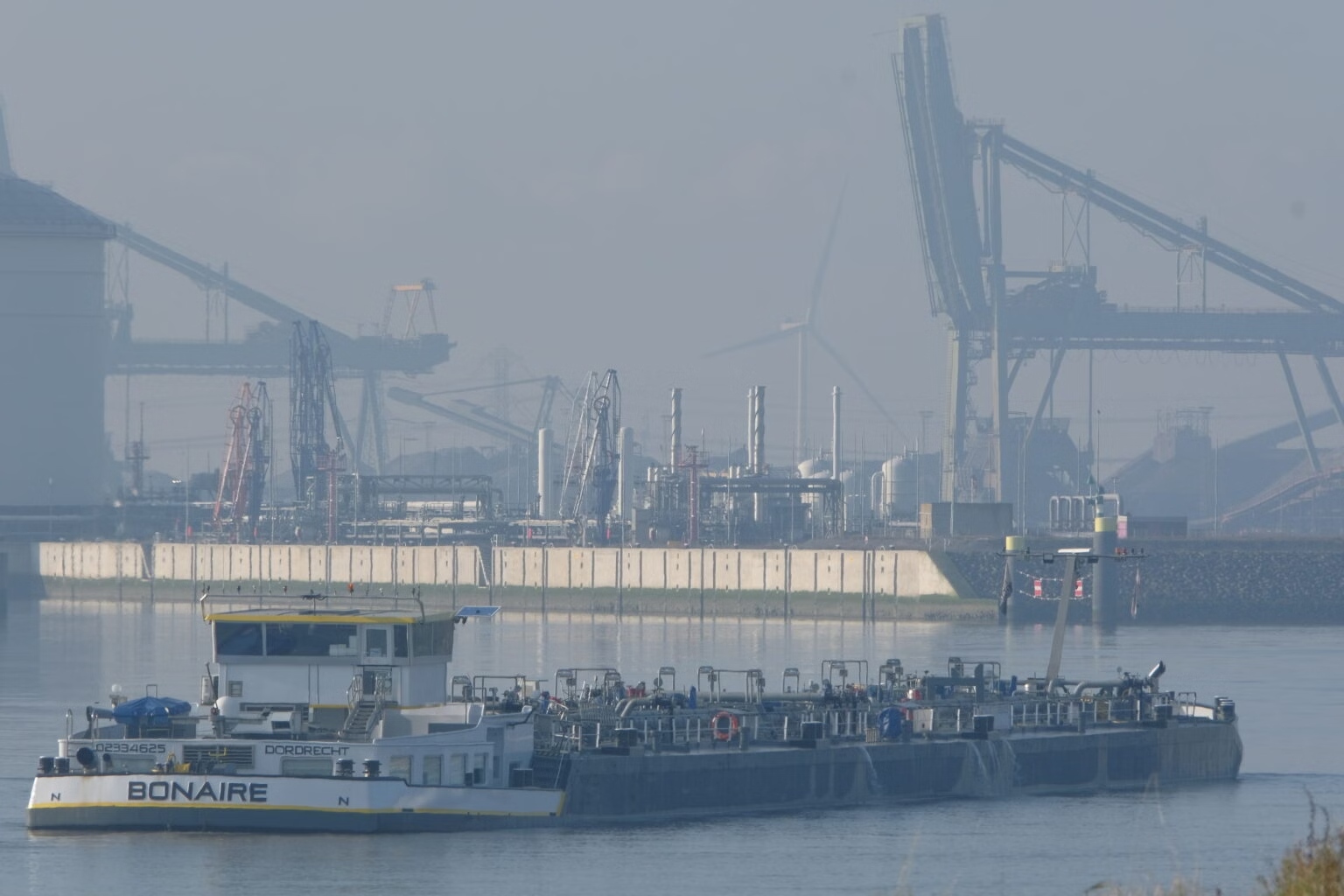
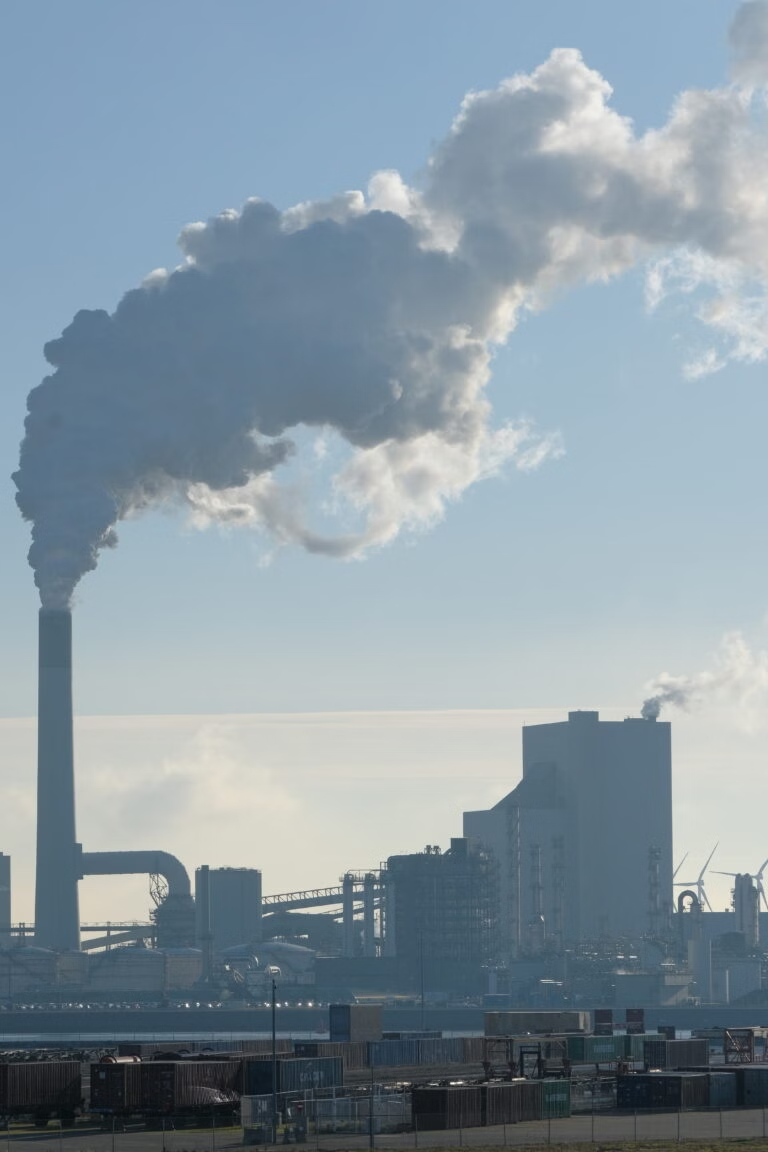
One Saturday in April, Dutch engineers manoeuvred a giant drill into position in the reclaimed, industrial extension of the Port of Rotterdam, and began boring a hole under the seawall. Nearby, sections of metal pipe waited to be lowered into the breach.
The operation was a step forward for Europe’s most advanced scheme to capture carbon dioxide (CO2) from industry, then bury the planet-heating gas under the North Sea.
After years of delay, a joint venture known as Porthos, an acronym for Port of Rotterdam CO2 Transport Hub and Offshore Storage, is due to begin operating in 2026. It’s a 1.3-billion-euro joint venture between state-owned gas companies Energie Beheer Nederland (EBN) and Gasunie, and the Port of Rotterdam Authority. The CEOs of these organisations are due to join Sophie Hermans, the Netherlands’ minister of climate policy and green growth, and senior European Union officials, for a ceremony on Monday to toast the start of construction work at the site.
At full capacity, Porthos is expected to handle 2.5 million tonnes of CO2 captured annually from facilities operated by its four dedicated customers: Shell, ExxonMobil, and the hydrogen producers Air Liquide and Air Products. That total is equivalent to roughly 10 percent of the port’s emissions, and 1.5 percent of the Netherlands’ current CO2 output. Once captured, the gas will be pumped under the North Sea throughout a 15-year period, or until the storage space reaches a maximum estimated capacity of 37.5 million tonnes.
The cost to the Dutch taxpayer: up to 4 billion euros in subsidies.
Credit: Leon de Korte/Follow the Money.
Porthos relies on a technology known as carbon capture and storage, or CCS, which uses a chemical process to capture some of the CO2 that spews from a customer’s industrial chimneys. This trapped gas is then condensed and pumped through pipelines to underground storage sites, such as certain kinds of geological formations, or disused oil and gas wells.
Nevertheless, the backers of Porthos, and its much larger sister project Aramis — also being developed by EBN and Gasunie, along with Shell and French oil giant TotalEnergies — see them as the first nodes in a planned network of pan-European CCS infrastructure. The aim is to eventually funnel CO2 captured in the industrial heartlands of Germany, as well as throughout the Netherlands, to hundreds of storage sites under the seabed.
To its critics, however, Porthos is emblematic of the way oil and gas companies are securing subsidies for CCS schemes that present an appearance of climate action — but are never likely to attain the massive scale needed to make a dent in global emissions.
As Europe’s flagship project, Porthos is emerging as a litmus test for a critical question in the fight against climate change: Will carbon capture actually help reduce the emissions fuelling the crisis? Or will government backing for these technologies instead serve to preserve the fossil fuel business models that caused it?
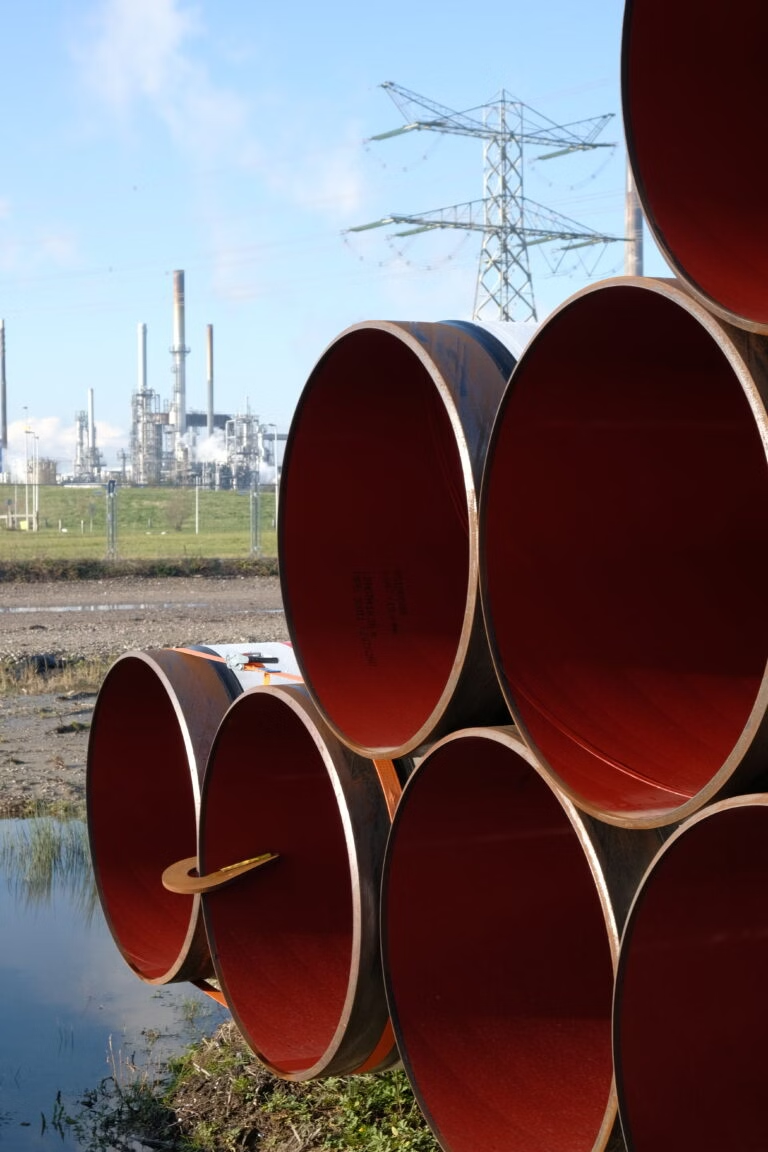
Sections of pipe for the Porthos CO2 pipeline, intended to take captured carbon emissions and inject them under the North Sea, await burial at the Port of Rotterdam. Credit: Michael Buchsbaum.
Ambitious Plans
With intensifying heatwaves, floods and fires underscoring the threat the climate crisis poses to Europe, the EU has agreed to slash its carbon emissions to net zero by 2050, with an interim target of a 90-percent reduction relative to 1990 levels by 2040. Given the scale of that challenge, and in line with lobbying by the fossil fuel industry, policy-makers have assumed a major role for carbon capture projects in cleaning up industry.
“Reducing emissions is not enough,” reads a European Commission website on CCS. “To achieve our climate ambitions, we will also need to capture, utilise and store carbon.”
Climate campaigners argue, however, that the technology has secured official backing in large part because it helps governments persuade voters they are taking climate action, while stopping short of the kind of rapid, fundamental transformation of economies needed to end the use of fossil fuels.
In May, the EU adopted the Net Zero Industry Act, obligating oil and gas producers to develop 50 million tonnes of annual CO2 storage capacity across the continent by 2030 — roughly equivalent to today’s global total. More ambitiously, the act targets approximately 280 million tonnes of annual CO2 storage capacity by 2040, increasing to a staggering 450 million tonnes by 2050.
Environmental groups such as E3G, the Institute for Energy Economics and Financial Analysis and European Environmental Bureau doubt such targets are feasible, given the thousands of kilometres of pipelines that would have to be built, and the dozens of projects that would have to be designed. A lack of technical and geological know-how combined with potential local opposition could also slow fossil fuel companies’ plans.
“The industry needs to commit to genuinely helping the world meet its energy needs and climate goals —which means letting go of the illusion that implausibly large amounts of carbon capture are the solution,” said Fatih Birol, executive director of the Paris-based International Energy Agency (IEA), in the introduction to a report on clean energy transitions for oil companies published in November.
Despite the oil industry often citing scenarios from the Intergovernmental Panel on Climate Change that include significant deployments of CCS, the U.N.-backed body also considers the technology the least efficient, and one of the most expensive, climate tools. In their Sixth Assessment report, the IPCC’s scientists wrote that “even if implemented at its full potential, CCS will account for only 2,4% of the world’s carbon mitigation by 2030 due to its low effectiveness and high cost.”
And Europe is nowhere near close to meeting its carbon capture targets. Today, only 2.7 million tonnes of CO2 is being captured annually across the continent, including in Norway and Iceland, according to the IEA. Porthos’ backers are therefore hailing the project as a crucial step towards fulfilling the continent’s decarbonisation plans — starting with its largest port.
“If we want to reach our climate target, we will need CCS,” Willemien Terpstra, CEO of Gasunie, told DeSmog.
Still, even backers of the technology acknowledge that deployment is lagging. To meet the EU’s target of capturing 280 million tonnes of CO2 annually by 2040 would require 651 projects, said Chris Davies, director of industry group CCS Europe. Each would have to capture more than 400,000 tonnes per year, he told DeSmog.
To date, 50 years after the first CCS projects were started in a Texas oilfield, only about 40 projects are operating globally, with the combined potential to capture just over 50 million tonnes of CO2 per year. However, almost 80 per cent of the CO2 being captured is injected underground to pump more oil — which when refined and burned, adds more CO2 into the atmosphere.
While there is no estimate as to how long it would take to construct hundreds of projects, it is clear that time is running out, Davies said.
Capturing this amount by 2040 requires that construction on all these projects begin no later than early 2038: “So we have less than 5,000 days,” said Davies.
Since Porthos’ backers took a final investment decision last year, no other CCS project “has been given the green light to put a shovel in the ground”, he added.
Cleaning up the Quayside
With docks and quays stretching from its old town centre to the ocean over 40 kilometres away, the Port of Rotterdam covers an area almost twice the size of Manhattan, and handles nearly 440 million tonnes of freight each year, roughly the equivalent of more than 1,200 Empire State Buildings stacked on top of each other.
Not only is Rotterdam a massive cargo port, it’s also one of the largest hubs for energy in Europe, including oil. Counting oil, coal, and liquefied natural gas, the port boasts that some 13 per cent of all the energy used throughout Europe passes through it.
Most of the oil is destined for one of the port’s four refineries, including the giant Shell Pernis facility, as well as sites run by BP and Exxon. (Reducing emissions from the refineries is one of Porthos’ key aims).
All this activity generates tremendous amounts of carbon pollution: The port emitted 20.3 million tonnes of CO2 in 2023.
The port intends to slash its emissions by 55 per cent by 2030, then achieve climate neutrality by 2050.
The port argues that it can reduce its emissions to its target of 9.3 million tonnes by 2030 by:
Storing up to 5.8 million tonnes of emissions annually by the end of the decade through its Porthos and Aramis projects
Reducing emissions by another 5.7 million tonnes by shutting down, as legally required, itsremaining coal-fired power plants by 2030, building on savings made by previous coal plant closures
Greening its operations with electrification, and “green” hydrogen made with wind and solar
“Porthos and Aramis by far contribute the most to the Netherlands’ CO2 reduction targets…the Dutch goals cannot be met without those projects,” Hans Coenen, Executive Board member of energy company Gasunie, told Follow the Money, the Dutch investigative journalism platform that co-published this story with DeSmog.
The Port of Rotterdam’s only real CO2 reductions so far stem from the shuttering of several coal-fired power plants . Credit: Michael Buchsbaum.
Taxpayers Foot the Bill
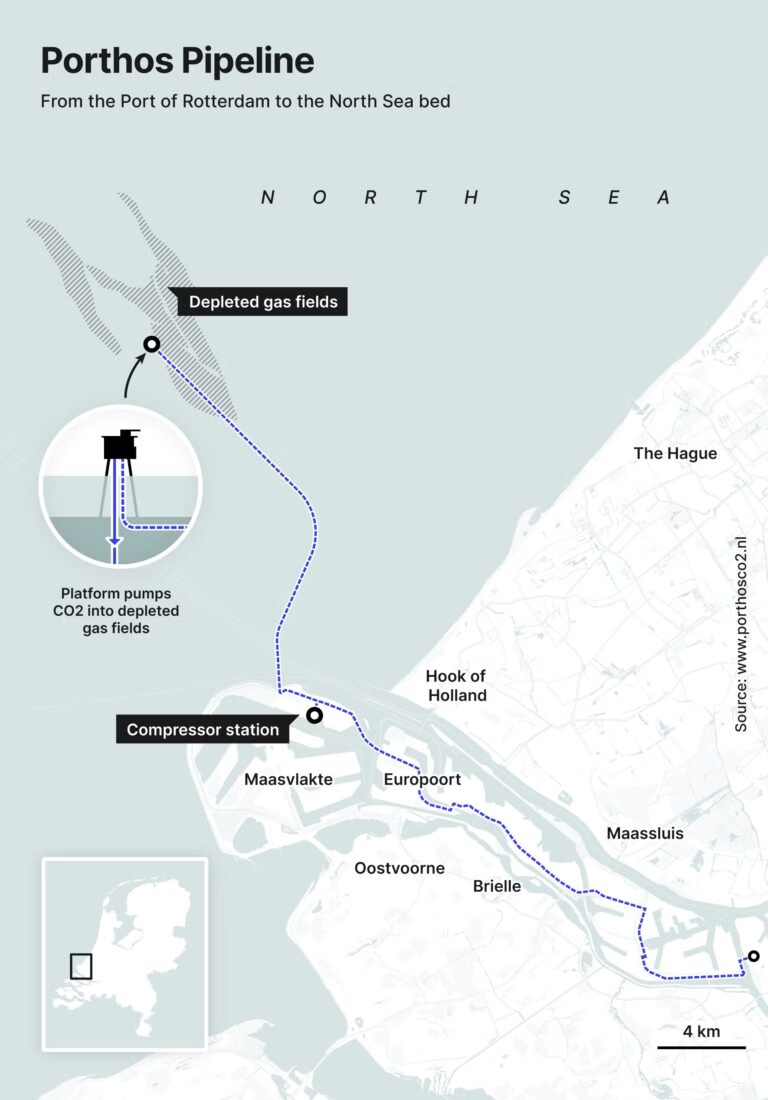
Crucially, Porthos will not be capturing any CO2 itself, instead handling and storing CO2 captured by Shell, Exxon, Air Liquide and Air Products. Porthos itself consists of a new 30-kilometre pipeline system leading to a compression station. From there, CO2 will be pumped to a repurposed gas drilling platform 20 kilometres offshore, and injected into a depleting gas field for final storage.
To ensure emissions are captured, in 2021, the Dutch government allocated Shell, Exxon, Air Liquide and Air Products a combined 2.1 billion euros via its SDE++ scheme to subsidise company decarbonisation projects.
As it stands, under a long-running scheme known as the European Emissions Trading System (ETS), these companies are already required to buy credits for each tonne of CO2 they emit.
Although the credits currently trade at just under 69 euros per tonne, the price could almost triple by 2035, according to BloombergNEF.
By disposing of some of their emissions via Porthos, its customers save money by having to purchase fewer credits.
But, if buying ETS “emission certificates” is cheaper for them than storing the gas via Porthos, then the Dutch government will make up the cost difference using up to 2.1 billion euros allocated under the SDE++ scheme.
This means that whatever happens, the companies face limited risk, and potentially large savings, if they capture emitted CO2 instead.
The port says this arrangement enables the companies “to cut back their carbon emissions without weakening their respective competitive positions.”
Alternatively, without state support, “Porthos would not have gotten off the ground and this project would not have been able to contribute to achieving the climate objectives,” Ellen Ehmen, Exxon’s community relations manager in the Netherlands, told DeSmog.
Combining various other EU and Dutch government subsidies associated with the project, with the 1.3 billion euro cost to state-owned companies to build it, and up to 2.1 billion in carbon capture subsidies, the overall cost to the state could approach or even exceed 4 billion euros.
In other words, Dutch and European taxpayers are picking up the bill for cleaning up these highly profitable companies’ carbon pollution.
In March, the Netherlands Court of Audit warned in a report that the way the project has been structured means that the state has assumed a disproportionate level of risk relative to industry.
Coenen, of Gasunie, says that he wasn’t surprised by these findings: “We decided deliberately to accept a low return on investment on Porthos, because we find it important to kickstart the project.”
Experimental Projects
Many climate advocacy groups, academics and policy experts have long warned of the dangers of relying on carbon capture projects, arguing that they provide fossil fuel companies with a justification for pumping ever more oil and gas.
Seeking to allay those fears, the European Commission advised in February that carbon capture should only be used in sectors where industry argues that emissions are particularly difficult or costly to cut, for example steel, cement, aluminium, chemicals and waste-to-energy.
But Porthos’ customers are using carbon capture for very different purposes: they’re either developing never-before attempted “low-carbon” projects that may be deployed at some point in future, or capturing a portion of the emissions now being generated by producing hydrogen used in the port’s oil refineries.
Shell, the first company to agree to partner with Porthos, is slated to become the project’s largest single customer, having committed to deliver 1.2 million tonnes of CO2 annually — captured mainly from its sprawling Pernis refinery complex, Rotterdam’s biggest. Shell also pledged to capture 820,000 tonnes a year from its to-be constructed biofuels facility, which is designed to produce so-called sustainable aviation fuel, as well as renewable diesel made from waste oil.
This so-called HEFA (hydroprocessed esters and fatty acids) plant is “essentially where the Porthos project starts,” said Nico van Dooren, director new business, hydrogen infrastructure, transport and storage with the Port of Rotterdam, during a media tour of the Porthos project in May.
Carbon capture “is the low hanging fruit,” Shell spokesperson Marc Potma said during the tour. “We have always said we believe in CCS for the future, but it’s never going to be the only answer. One must also invest in renewable sources, which is why we invested in the biofuels factory.”
Fellow oil and gas major Exxon’s CCS plans at Porthos are also highly experimental. Exxon says it plans to capture CO2 from a pilot project to test a new technology known as carbonate fuel cells — which the company says could help capture CO2 from industry more efficiently than existing methods, while also generating electricity, heat and hydrogen. This technology has never been proved at scale.
Also the recipient of EU funds, Exxon’s pilot plant is expected to be constructed in 2025, and start operations in 2026. Unlike Shell, Exxon has not announced any plans to use Porthos to capture emissions from its own oil refinery at the port.
Porthos’ two other customers are both large-scale hydrogen manufacturers who are producing the gas for use in oil refining — today one of hydrogen’s main uses.
As part of its participation in Porthos, U.S.-based Air Products announced in November it would build a carbon capture project at its existing hydrogen production facility in Rotterdam. Billed as the largest such facility in Europe, the project aims to help the company more than halve its CO2 emissions within the Port, while supplying most of the resulting hydrogen (known as “blue” hydrogen since some of the CO2 generated during the production process will be captured) for use in the nearby Exxon refinery.
Just weeks later, in December 2023, French rival Air Liquide announced it would also retrofit the company’s existing hydrogen facility in Rotterdam with carbon capture, using a proprietary technology that has only been tested at a smaller facility in Port-Jérôme-sur-Seine, France.
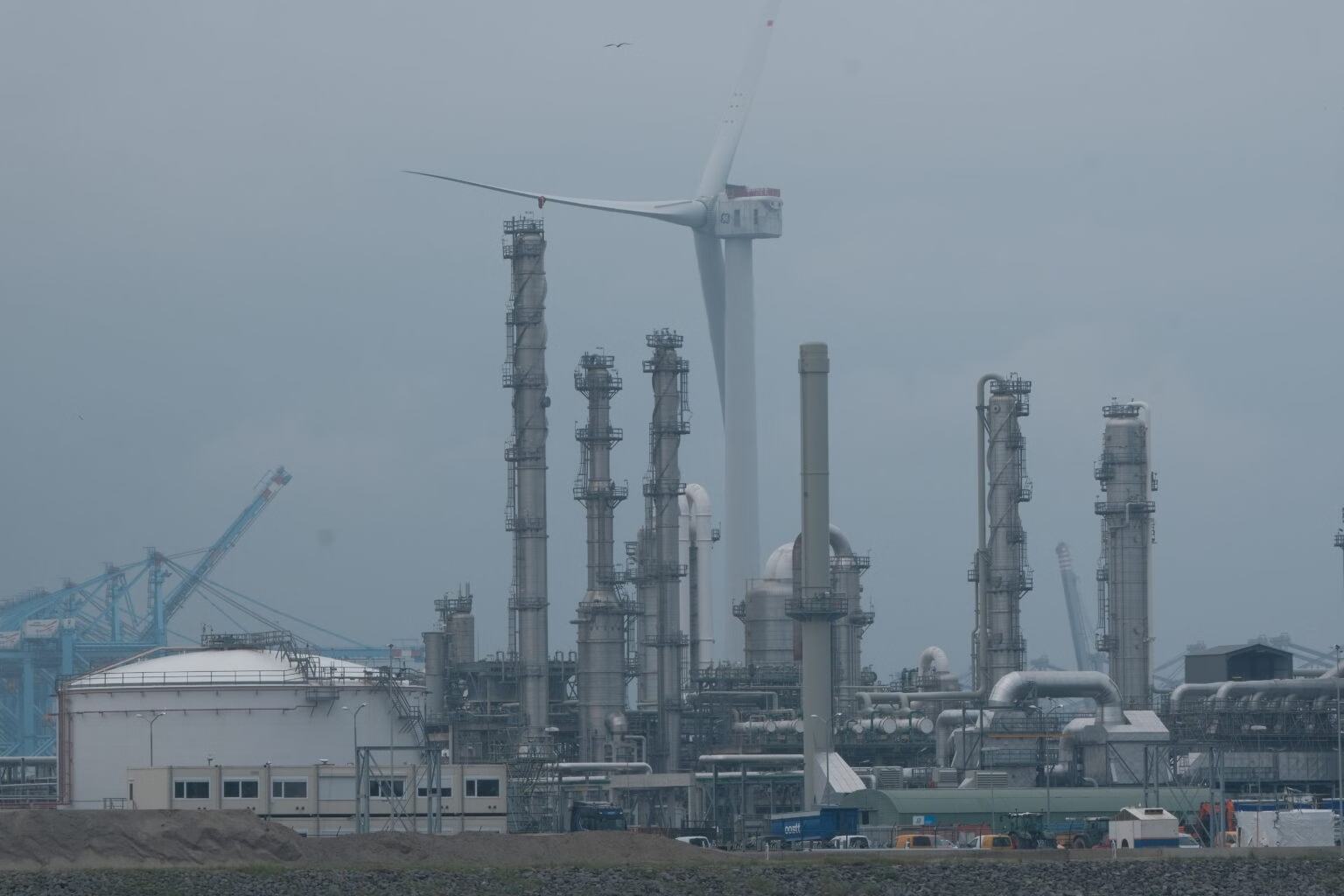
Giant new wind turbines tower over Rotterdam’s oil refineries, holding out the promise of an emissions-free future as they replace coal-fired power. Credit: Michael Buchsbaum.
Aramis Following Porthos
As workers dig trenches and bury Porthos’ pipelines around Rotterdam’s port, Shell and TotalEnergies — together with Gasunie and EBN — are working on the larger Aramis project. They want to funnel and bury CO2 emissions captured in Germany, Europe’s biggest emitter, and send them via a yet-to-be-built pipeline project known as the Delta Rhine Corridor.
By 2028, two years after Porthos is due to come online, the first phase of Aramis is scheduled to transport up to 7.5 million tonnes of CO2 for storage — also thanks in part to EU subsidies.
To connect Rotterdam to Belgium, Gasunie is also working on a so-called Delta Schelde Corridor. “It’s going to be one interconnected system in order to help our industry,” Gasunie’s Coenen told Follow the Money.
Signalling EU support, in mid-June, the European Climate, Infrastructure and Environment Executive Agency, or CINEA, awarded Aramis 124 million euros in subsidies under the CEF Energy fund. CINEA also granted 33 million euros in funds to another planned Rotterdam CCS hub, known as CO2next.
The bigger question, however, is whether these projects will be completed on time.
At the end of June, the then Dutch Minister of economic affairs and climate policy, Rob Jetten, told parliament that the Delta Rhine Corridor pipelines wouldn’t be completed before 2032 — dealing a blow to the pace of CCS development.
In early July, Shell “temporarily” paused construction of its crucial biofuels plant that is supposed to produce 820,000 tonnes a year. Shell now says production will only begin “towards the end of the decade,” said Shell spokesperson Wendel Broere.
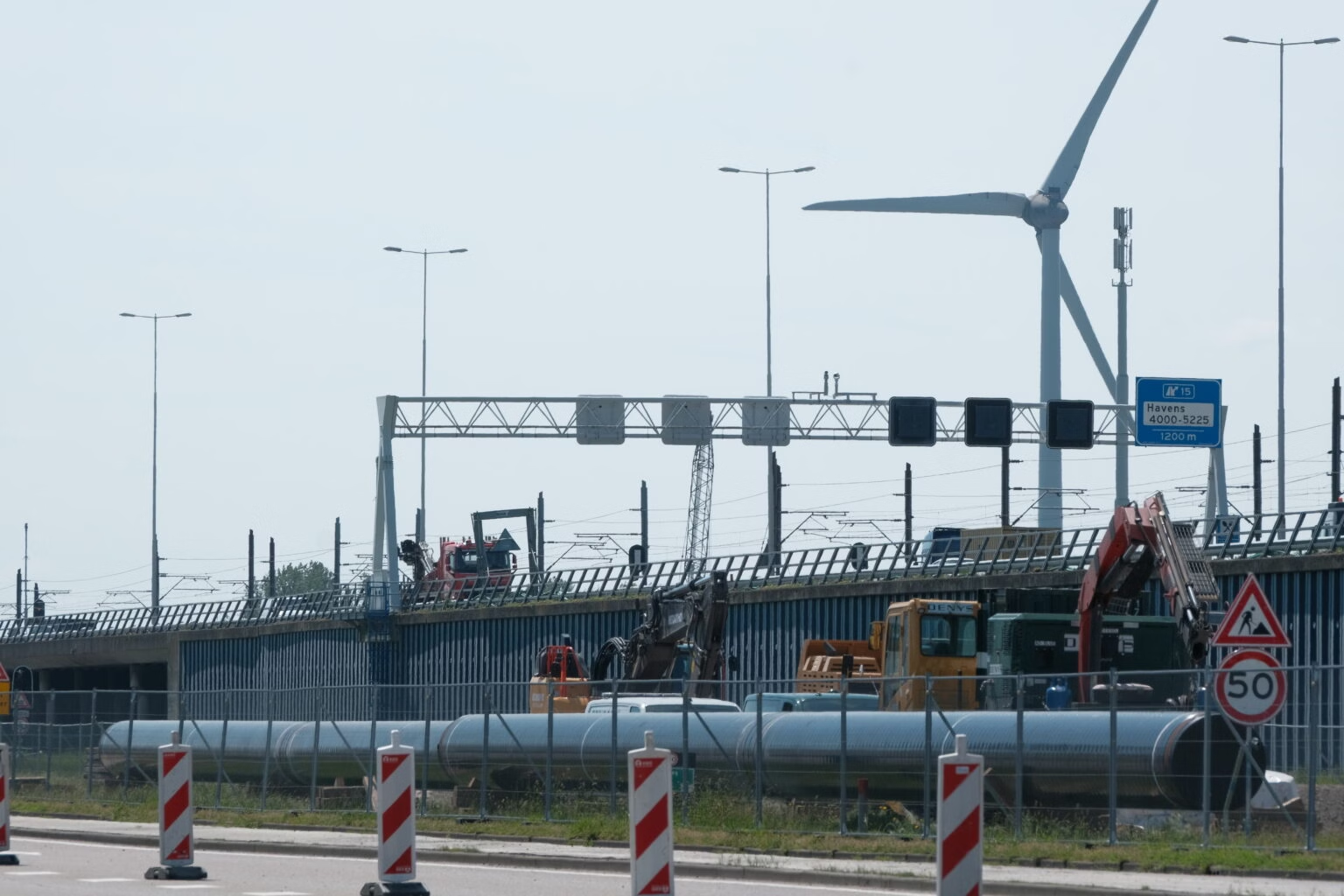
Sections of the Porthos CO2 pipeline are now being buried around Rotterdam’s industrial port. Credit: Michael Buchsbaum.
A Temporary Solution?
Regardless of when they come online, Porthos and the other planned Dutch CCS projects are generally presented as temporary solutions giving industry time to wean itself off fossil fuels — but how long that transformation will take remains unclear.
With billions of euros being invested, “you just have to count on a few decades,” Gasunie’s Coenen said.
Even as Porthos, Aramis and similar projects inch forward, further questions loom: Who will pay the enormous cost of rolling out the network of carbon capture facilities and pipelines needed to ferry CO2 from Europe’s industry to disposal sites in the North Sea via Rotterdam? And can such a project be completed in anything like the timeline demanded by the EU’s carbon capture targets?
Another unknown is how investing in these and other CCS projects will lead to a reduction in overall emissions — particularly since so many planned CCS projects involve building new fossil fuel infrastructure, such as gas-fired power stations or blue hydrogen facilities, rather than retrofitting existing industries. It is also unclear how subsidising industries to adopt CCS will compel fossil fuel companies to accelerate the shift to renewables.
Berte Simons, business unit director of CO2 transport and storage systems at EBN, the Dutch state-owned gas company, said that companies not only have to start capturing emissions, but stop producing them.
“There needs to be an end date to using CCS from fossil sources,” she said. “The sooner [fossil fuel companies] are able to green their portfolio, the quicker they can start with that, the better.”
For many climate advocates, the danger is that carbon capture will simply prolong business as usual — while soaking up billions of euros in subsidies.
Relying on CCS “isn’t a sensible climate mitigation strategy or even a proper carbon management strategy,” Lili Fuhr, deputy director of the Washington D.C.-based Center for International Environmental Law’s Climate and Energy Program, told DeSmog. “It’s really an escape hatch for an industry with its back against the wall faced with an energy transition that is gaining support and is becoming a reality because renewable energies are so cheap.”
This story was corrected on August 29, 2024 to clarify that the cost to taxpayers could be “up to” 4 billion euros (rather than “at least”), and show the various forms of subsidy included in that figure.
The ability of governments to implement climate policies effectively is the “most important” factor in the feasibility of limiting global warming to 1.5C, a new study says.
The future warming pathways used by the Intergovernmental Panel on Climate Change (IPCC) suggest that holding warming to 1.5C is unlikely, but still possible, when considering the technological feasibility and project-level economic costs of reaching net-zero emissions.
However, the new study, published in Nature Climate Change, warns that adding in political and institutional constraints on mitigation make limiting warming to 1.5C even more challenging.
They find that the most ambitious climate mitigation trajectories give the world a 50% chance of limiting peak global warming to below 1.6C above pre-industrial temperatures. However, adding ”feasibility constraints” – particularly those involving the effectiveness of governments – reduces this likelihood to 5-45%.
The study shows that, thanks to advances such as solar, wind or electric vehicles, “the technological feasibility of climate-neutrality is no longer the most crucial issue”, according to an author on the study.
Instead, he says, “it is much more about how fast climate policy ambition can be ramped up by governments”.
Emissions scenarios
In 2015, almost every country in the world signed the Paris Agreement – with the aim to limit global warming to “well below” 2C above pre-industrial levels, with a preference for keeping warming below 1.5C.
Since then, most countries have set net-zero targets and many are making progress towards achieving them. However, as the planet continues to warm, some scientists are questioning whether it is still possible to limit warming to 1.5C, the new study says.
The IPCC’s special report on 1.5C, published in 2018, included a cross chapter box on the “feasibility” of this temperature limit. The report says there are six components of feasibility that could inhibit the world’s ability to limit warming to 1.5C, as shown in the image below.
The six components of feasibility that could inhibit the world’s ability to limit warming to 1.5C, according to the IPCC”s special report on 1.5C. Source: IPCC SR1.5, cross chapter box 3.
The IPCC’s working group three report from its sixth assessment cycle explores thousands of different future warming scenarios. These scenarios are mainly generated by integrated assessment models (IAMs) that examine the energy technologies, energy use choices, land-use changes and societal trends that cause – or prevent – greenhouse gas emissions.
Fewer than 100 of these scenarios result in warming of below 1.5C with limited or no overshoot, defined as more than a 50% chance of seeing a peak temperature below 1.6C. These are known as the “C1 scenarios”. However, these scenarios do not consider all of the feasibility constraints outlined by the IPCC.
(Furthermore, these scenarios – which run from 2019 – assume that rapid decarbonisation began almost immediately. However, in reality, emissions have continued to rise since 2020, eating into the remaining “carbon budget” for warming to be limited to 1.5C more quickly than the models assume.)
The new study investigates five constraints. The first two – geophysical and technological – focus on the constraints presented by technologies, such as the growth of carbon capture and storage, nuclear power and solar generation, and the Earth’s total geological carbon storage capacity.
For sociocultural constraints, the study explores behavioural changes that can accelerate decarbonisation, such as reduced energy demand. The authors refer to these as “enablers”. And the “economic constraint” focuses on carbon prices.
However, the authors say the “key innovation” of their study is the inclusion of “institutional constraints”, which measure a government’s ability to “effectively implement climate mitigation policies”.
Policy constraints
All countries have different “institutional capabilities” to enforce policies. Some countries are able to quickly and successfully implement policies, such as taxation changes or environmental regulation. Other countries – which are often less wealthy – have lower levels of governance, making it harder to implement these measures.
The indicator is based on the speed and success with which they have achieved their past “environmental goals” – for example, reductions in the sulphur emissions of power plants – he explains. Countries that were successful in achieving these targets in the past are given higher governance scores.
She tells Carbon Brief that the indicator is originally from the Worldwide Governance Indicators published by the World Bank. (See more on the indicators in the guest post Andrijevic and her co-authors wrote for Carbon Brief.)
The graph below, taken from the new study, shows how governance is expected to improve over the 21st century for countries with a population of more than 25 million in 2020, according to this indicator. Each colour indicates a different world region. The grey lines indicate a “pessimistic” scenario in which governance remains frozen at 2020 levels.
Expected increases in governance over the 21st century. Only countries with a population of more than 25 million in 2020 are shown. Each colour indicates a different world region. Source: Bertram et al (2024).
The authors use global average carbon prices as a “proxy” for the overall strength of a country’s climate policy, assuming that countries with higher levels of governance will implement higher carbon prices.
They develop a range of scenarios. In their optimistic scenario, carbon prices vary, but this does not explicitly constrain emissions reductions. In the “default” scenario, both carbon prices and emissions reductions are constrained.
In the pessimistic scenario, governance indicator values are “frozen” at their 2020 levels, meaning that governments’ ability to implement new climate mitigation policies does not improve over the 21st century.
Bertram tells Carbon Brief that the measure is “not perfect”, but says that it gives a good approximation of “how fast decarbonisation can happen in different countries”.
Is 1.5C ‘feasible’?
The authors used existing literature to quantify how much each of the five constraints might affect the world’s ability to limit global warming. They then produced a set of different “feasibility scenarios” and assessed their future CO2 emissions using eight IAMs.
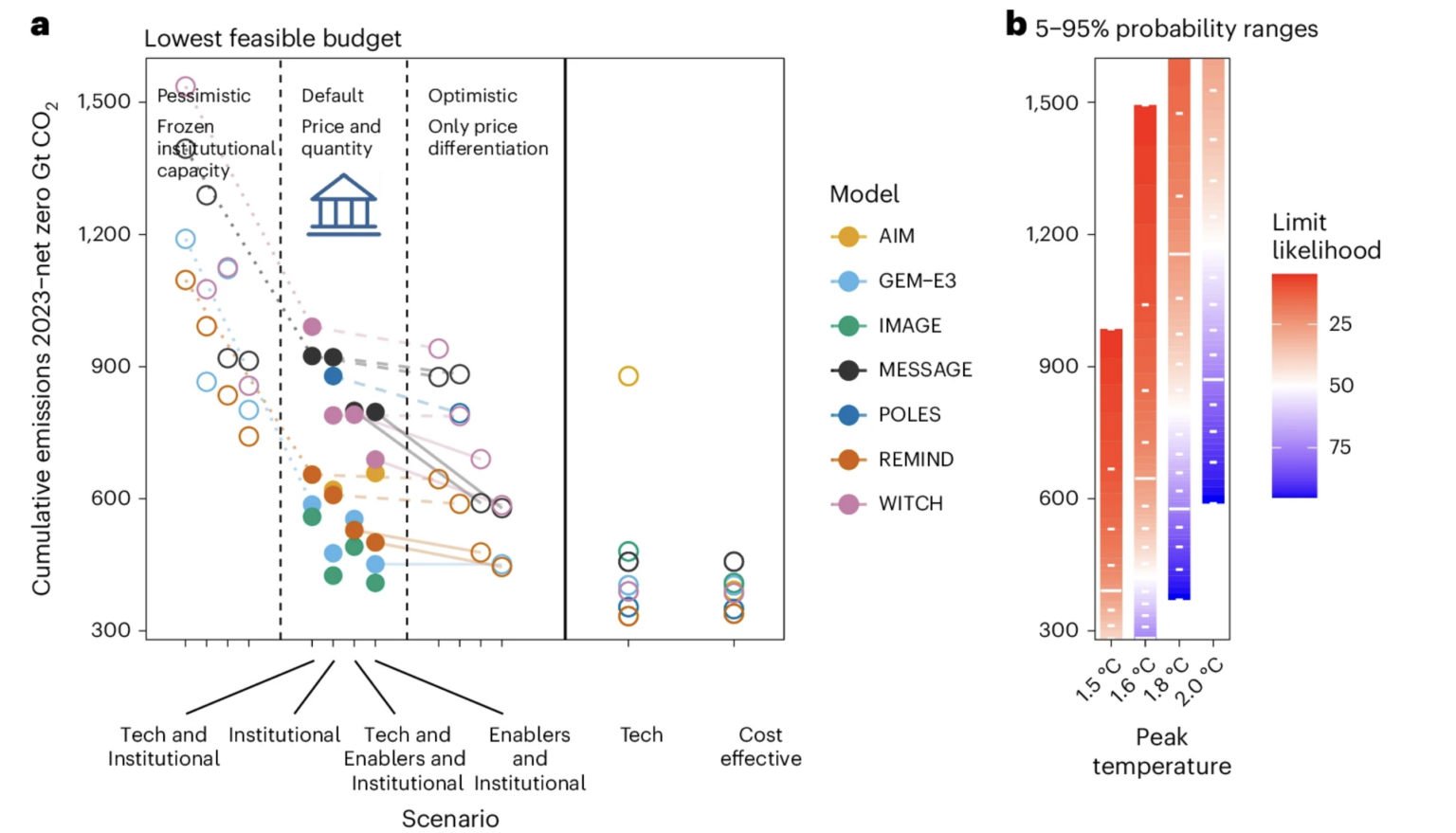
The plot below shows the minimum total global CO2 emissions that could be produced between 2023 and the date that net-zero CO2 is reached for these scenarios. In the panel “a”, on the left, each dot indicates a model result.
The column on the far left is a “pessimistic” institutional feasibility scenario, in which governance indicators do not improve beyond 2020 levels. Cumulative global CO2 emissions before net-zero here are the highest of any scenario explored.
The next column is the “default” assumption of carbon prices and emissions-reduction quantities, under four different combinations of constraints.
From left to right within this column, the combinations cover technological and institutional constraints, only institutional constraints, technological and institutional constraints with enablers and then institutional constraints with enablers.
The enablers include measures such as reduced energy demand in high income countries and increased electrification. This helps to “create more flexibility on the supply side and thus further improve the feasibility of implementation”, according to the paper.
The final column shows “optimistic” scenarios, divided between a scenario with technological constraints (left) and a “cost-effective” scenario, as used in the IPCC (right).
Panel “b” shows the likelihood, based on the 14 feasibility scenarios in panel a, of staying below 1.5C, 1.6C, 1.8C and 2.0C peak temperatures. Each bar indicates a different peak temperature. Red indicates a high likelihood of meeting the temperature target, given the level of emissions, and purple indicates a low likelihood.
Minimum achievable carbon budget from 2023 until net-zero CO2, across 14 different feasibility scenarios. Source: Bertram et al (2024).
In scenarios without any institutional constraints, nearly all models are able to produce scenarios which line up with the IPCC’s C1 scenarios, which have more than a 50% chance of seeing a peak temperature below 1.6C.
However, adding institutional constraints reduces this likelihood to 5-45%.
(A peak temperature of 1.6C would not necessarily breach the long-term goal of the Paris agreement, as long as temperatures were brought back down below the 1.5C threshold by the end of the century. However, there are risks associated with overshoot – such as crossing tipping points – and it relies more heavily on large-scale implementation of negative emissions technologies.)
Under the “pessimistic” institutional constraints, the ability of countries to cut emissions is “sharply curtailed”, the authors say, resulting in only a 30-50% chance of limiting warming even to 2C above pre-industrial levels.
The study shows that “technological constraints are not a crucial impediment to a fast transition to net-zero anymore,” Bertran tells Carbon Brief.
“Thanks to the latest advances in low-carbon technology deployment, such as solar, wind or electric vehicles, the technological feasibility of climate-neutrality is no longer the most crucial issue,” Prof Gunnar Luderer – a study author and lead of the energy systems group at the PIK – added in a press release.
Instead, he said, “it is much more about how fast climate policy ambition can be ramped up by governments”.
Future warming
The findings of this study have implications for meeting the Paris Agreement 1.5C limit. “Our study does not imply that the 1.5C target needs to be abandoned,” the study says. However, it adds:
“The world needs to be prepared for the possibility of an overshoot of the 1.5C limit by at least one and probably multiple tenths of a degree even under the highest possible ambition.”
“The 1.5C target was always something that, while theoretically possible, was very unlikely given the real-world technical, institutional, economic and political setting that determines climate policy,” says Prof Frances Moore from the department of environmental science and policy at UC Davis, who was not involved in the study.
However, she tells Carbon Brief, the finding that humanity could still limit warming to 2C is “a signal of the progress countries have made in committing to climate action”.
However, he says the results “need to be interpreted very cautiously”. For example, he notes that the study only considers CO2 emissions and not other greenhouse gases, such as methane.
In addition, he notes that “institutional capacities affect climate action in a myriad of different ways that are not easily representable in the modelling world”. As a result, the study authors had to “settle” on an approach that “may only be partly representative of ‘real world’ dynamics and is very sensitive to modelling assumptions”.
Moore says this is a “valuable initial study”, but makes a similar point, noting that the “implementation of institutional constraints and demand-side effects is somewhat arbitrary and ad-hoc”, such as using carbon prices as a governance indicator.
Dr William Lamb is a researcher at the Mercator Research Institute and was also not involved in the study. He tells Carbon Brief that the study results are “sobering” and says that “we need to start focusing research, policy and advocacy on the underlying institutions and politics that shape climate action”.
He adds that there are other aspects of feasibility that could be considered:
“We know that incumbent fossil fuel interests are politically powerful in many countries and are able to obstruct the implementation of climate policies, or even reverse those that are already in place. In other words, some governments may be capable, but do not want to implement ambitious climate action.”
A firefighter working to put out a fire in the Pantanal in Mato Grosso do Sul, Brazil on 7 July 2024. Credit: Xinhua / Alamy Stock Photo
Human-caused climate change made the “unprecedented” wildfires that spread across Brazil’s Pantanal wetlands in June 2024 between four and five times more likely, according to a new rapid attribution study.
South America’s Pantanal – the world’s largest tropical wetland – experienced exceptionally hot, dry and windy conditions in June, causing blazes in the region to soar.
The World Weather Attribution (WWA) service finds that the month was the hottest, driest and windiest year in the 45-year record.
The team conducted an attribution study to find the “fingerprint” of climate change on these weather conditions.
They find that, in a world without climate change, these conditions would be very rare – occurring only once every 161 years.
In today’s climate, which has already warmed by 1.2C above pre-industrial temperatures as a result of human-caused warming, these conditions are a one-in-35 year event.
The authors also explore how wildfires in the region could continue to worsen as the planet warms.
They find that if that planet reaches warming levels of 2C, the likelihood of these conditions could double, to once every 18 years.
Soaring fires
The vast Pantanal wetland extends across Brazil, Bolivia and Paraguay.
It is one of the most biodiverse places on earth, home to more than 4,700 plant and animal species.
Every year, hot and dry weather conditions make the wetland prone to wildfires – usually between July and September.
By June this year, intense wildfires were already soaring. The number of Pantanal fires increased by 1,500% in the first half of this year compared to the same period in 2023, according to data from Brazil’s National Institute for Space Research reported by the Brasil de Fato newspaper.
This amounts to more than 1.3m hectares of the wetland burned so far this year – an area around eight times the size of London.
A firefighter working to put out a fire in the Pantanal in Mato Grosso do Sul, Brazil on 7 July 2024. Credit: Xinhua / Alamy Stock Photo
Around 2,500 fires were identified in June, which is the highest number since 1998 and more than six times the level reported in 2020, which was “known as the ‘year of flames,’ when wildfires ravaged the area and sparked widespread outcry”, the Associated Press said.
The region is currently experiencing its worst drought in 70 years, which Brazil’s government has said is being “intensified by climate change and one of the strongest El Niño phenomena in history”.
Prolonged dry periods, high temperatures and land-use change all contribute to wildfire conditions, says Dr Maria Lucia Barbosa, a postdoctoral researcher at the Federal University of São Carlos in Brazil, who was not involved in the attribution study. She tells Carbon Brief:
“While fires are a natural part of the Pantanal ecosystem, the recurrence of extreme fire seasons – such as the current one, shortly after the devastating 2020 fires – suggests that, alongside climate change, a new fire regime may be emerging in the ecosystem, characterised by increased severity and frequency.”
Hot, dry and windy
Wildfire intensity and duration are influenced by a wide range of factors, including weather, vegetation and fire management strategies.
The authors of the new study focus on a metric called the “daily severity rating” (DSR), which combines information on maximum temperature, humidity, wind speed and precipitation. Dr Clair Barnes – a research associate at Imperial College London’s Grantham Institute and author on the study – told a press briefing that this metric “indicates how difficult it is likely to be to control the fire once it starts”.
High temperatures and wind speeds, as well as low humidity and rainfall, are very conducive to wildfires spreading and, therefore, produce a high DSR.
The map below shows the average DSR in the Pantanal in June 2024. It reveals that most of the Pantanal was experiencing wildfire risk above the 1990-2020 average over that month.
DSR in the Pantanal in June 2024. Light red indicates a low DSR and low fire risk conditions. Dark red indicates high DSR and high fire risk conditions. Source: WWA (2024)
The weather conditions in the Pantanal in June 2024 were “really unusual for the time of year”, Barnes said.
To investigate how atypical the weather conditions in June 2024 were, the authors analysed temperature, windiness, rainfall and humidity data from the past 45 years.
The chart below depicts annual average rainfall and annual average daily maximum temperature in the Pantanal over 1979-2024. It shows that over the past 45 years, the average temperature in the Pantanal has been steadily increasing and total rainfall has been decreasing.
Annual average rainfall and annual average daily maximum temperature in the Pantanal region over 1979-2024. Each dot indicates one year. Green indicates years between 1979-99, yellow indicates 2000-18, orange shows 2019-23 and dark red shows 2024. Source: WWA (2024)
The authors find that June 2024 was the hottest, least rainy and windiest June since records began. They also find that the relative humidity was the second lowest on record.
Annual rainfall across the Pantanal has been decreasing over the past 40 years, the authors note. They point out that natural variability and deforestation are known to impact rainfall patterns across South America, but add that climate change “may also be influencing the drying trend”.
Attribution
Attribution is a fast-growing field of climate science that aims to identify the “fingerprint” of climate change on extreme-weather events, such as heatwaves and droughts.
To conduct attribution studies, scientists use models to compare the world as it is today to a “counterfactual” world without human-caused climate change. In this study, the authors investigated the impact of climate change on DSR in the Pantanal region.
They find that in today’s climate – which has already warmed by 1.2C as a result of human activity – fire weather conditions like the ones that drove the wildfires in the Brazilian Pantanal during June 2024 are a “relatively rare event”, and would be expected to occur roughly once every 35 years.
However, they say, if the planet continues to warm, these events could become more likely. If the climate warms to 2C above pre-industrial levels, the likelihood of these fire conditions will double compared to today.
The graphic below shows how often June fire weather conditions, such as those seen in the Brazilian Pantanal in June 2024, could be expected under different warming levels.
The square on the left shows a world without climate change, in which these DSR levels would happen once every 161 years. The middle square shows that in today’s climate, the DSR is a one-in-35 year event. And the square on the right shows that in a 2C world, a June DSR like that of 2024 could be expected once every 18 years.
How often June fire weather conditions – such as those seen in the Brazilian Pantanal in June 2024 – could be expected under different climates: (from left to right) pre-human-caused climate change, today and under 2C warming. Each dot indicates one year, and pink dots indicate years in which June DSR matches or exceeds the levels seen in 2024 in the Brazilian Pantanal. Source: WWA (2024)
The authors also investigate how climate change affected DSR “intensity”. They find that human-induced warming from burning fossil fuels increased the June 2024 DSR by about 40%.
The authors add that as the climate continues to warm, this trend is likely to worsen. The authors warn that if warming reaches 2C above pre-industrial temperatures, similar June fire weather conditions will become 17% “more impactful”.
(These findings are yet to be published in a peer-reviewed journal. However, the methods used in the analysis have been published in previous attribution studies.)
Fire impacts
Wildfires have wide-ranging impacts on people and nature in the Pantanal. In one example, a 2021 study found that around 17m vertebrates were “killed immediately” by the fires in 2020.
Wildfires can “devastate [the] livelihoods” of people living in the Pantanal and “pose significant health risks” from the resulting smoke, Barbosa says.
She notes that wildfires release CO2 into the atmosphere, contributing to climate change, and they “lead to widespread loss of habitat, endanger wildlife and disrupt ecological balances”. She tells Carbon Brief:
“Species that are already threatened or have limited ranges are particularly vulnerable to habitat destruction caused by fires.
“Repeated fires can push fire-sensitive vegetation into a state of permanent degradation, further threatening the ecological integrity of the region.”
Some fires are permitted for agricultural purposes – such as to burn degraded pasture – during the rainy season, from around November to April. This practice is banned in the drier summer months, but a 2020 piece from Mongabay notes that “in reality, the ban is not always respected and enforcement is haphazard”.
A jaguar in an area scorched by wildfires at the Encontro das Aguas park in the Pantanal wetlands in Mato Grosso, Brazil on 17 November 2023. Credit: Associated Press / Alamy Stock Photo
Filippe Santos, a researcher at Portugal’s University of Évora and one of the authors of the study, told a press briefing that “fire is part of the dynamics” of the Pantanal – when it is controlled.
Low-intensity fires allow animals “time to leave” the area, he said, adding:
“What we see with wildfires, is that this does not happen, because the fire is so intense and on such a large scale that animals don’t have time to run away.”
The “highly intense” wildfires also “don’t give nature enough time to recover”, Santos says.
In June, Brazil’s environment minister, Marina Silva, told the government news agency Agencia Brasil that the country is “facing one of the worst situations ever seen in the Pantanal”, adding that the fires are heightened by climate extremes and criminal activities.
Most Pantanal fires are caused by human activity, a 2022 study found. Police in Brazil are investigating the “possible culprits” behind 18 fire outbreaks in the region, Silva said last month.
A plane dropping water as part of firefighting efforts in an area of the Pantanal affected by forest fire in Mato Grosso do Sul, Brazil on 5 July 2024. Credit: Xinhua / Alamy Stock Photo
In recent weeks, a law to improve coordination on tackling fires took effect in Brazil.
Barbosa says it will be a “challenge” to implement this policy. She would like to see a “comprehensive national early warning system for multiple hazards to ensure risk reduction” for a range of threats – including wildfires. She tells Carbon Brief:
“Collaboration with local communities, firefighters and brigades is crucial for prevention and response efforts…A coordinated approach that integrates all stakeholders, along with the establishment of a national fund dedicated to fire management, is essential for mitigating the impacts of future fire seasons.”