A man walks on a hot summer day in Srinagar, India-controlled Kashmir, July 25, 2024
SCIENTISTS say four billion people — about half the world’s population — experienced at least one extra month of extreme heat from May 2024 to May 2025 because of human-caused climate change.
The extreme heat caused illness, death, crop losses and strained energy and healthcare systems, according to the analysis from World Weather Attribution, Climate Central and the Red Cross.
“Although floods and cyclones often dominate headlines, heat is arguably the deadliest extreme event,” the report said.
Many heat-related deaths are unreported or are mislabelled by other conditions like heart disease or kidney failure.
The study shows how much climate change boosted temperatures in an extreme heat event and calculated how much more likely its occurrence was because of climate change.
Orcas comment on killer apes destroying the planet by continuing to burn fossil fuels.Neo-Fascist Climate Science Denier Donald Trump says Burn, Baby, Burn.Elon Musk urges you to be a Fascist like him, says that you can ignore facts and reality then.
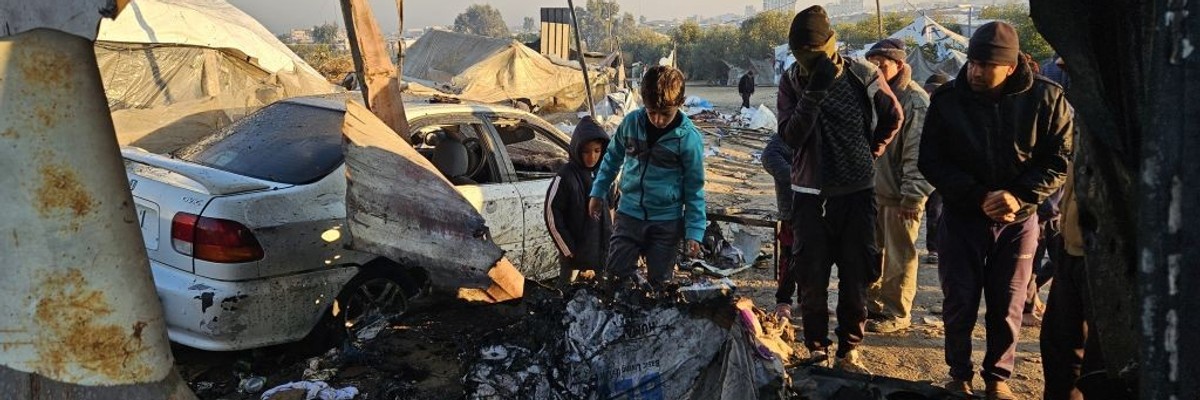
Palestinians survey damage after the Israeli military targeted Al-Mawasi, Gaza on January 2, 2025. (Photo: Hani Alshaer/Anadolu via Getty Images)
“Israel continues to bomb Gaza and restrict essential supplies from entering the strip,” said the emergency coordinator of Doctors Without Borders.
Israeli forces early Thursday carried out another attack on a so-called humanitarian “safe zone” in southern Gaza, killing at least 11 people—including three children—as the assault on the Palestinian enclave raged with no end in sight.
Reuters reported that at least 15 people were also wounded in the attack on Al-Mawasi, an overcrowded tent city on Gaza’s southern coast that Israel has repeatedly bombed. In one case late last year, the Israeli military used 2,000-pound bombs supplied by the United States to attack the camp filled with displaced families.
The Israel Defense Forces (IDF) confirmed in a social media post that it carried out the strike on the designated humanitarian zone, claiming it targeted Hassam Shahwan, whom the IDF described as the head of Hamas Internal Security Forces in southern Gaza.
Video footage shows people attempting to put out fires at the scene with buckets of water:
Thursday’s attack underscored humanitarian aid groups’ warning that nowhere is truly safe for Gazans as Israeli forces carry out deadly airstrikes across the besieged enclave. Al Jazeera reported early Thursday that in addition to the IDF’s attack on Al-Mawasi, “there has been a significant escalation of strikes in central Gaza.”
“Palestinians are mourning those killed in an Israeli strike on civilians in the suburb of central Deir el-Balah city,” the outlet reported. “The bodies—shredded into pieces—have been brought to Al-Aqsa Hospital.”
“In northern Gaza,” Al Jazeera added, “seven civilians were killed in Jabalia following an Israeli attack. In the Shati refugee camp, reports are emerging of three people killed in an attack at the central market.”
Israel’s incessant bombing is fueling a devastating humanitarian crisis worsened by falling temperatures. At least six Palestinian children—including several who were living in makeshift shelters in Al-Mawasi—have died of hypothermia in recent days.
“Last winter—although people were already displaced and the conditions were harsh—there were still some buildings to take shelter in,” Pascale Coissard, emergency coordinator at Doctors Without Borders, said Thursday. “Today, after 14 months of war and destruction of infrastructure, most of the people in Gaza are living in tents that barely isolate the cold wind and rain. Just in the past 12 hours, the rain hasn’t stopped.”
“Even before their lives have started outside the womb, babies are at risk of disease and death,” Coissard added. “Once born, babies face immediate and extreme challenges: displaced in the cold of winter, without adequate access to warmth, shelter, or healthcare, as Israel continues to bomb Gaza and restrict essential supplies from entering the strip, while looting of aid trucks within the enclave is making it difficult for that small amount of aid allowed by Israeli authorities to reach those in need.”
CNN noted earlier this week that “the cold weather has not only claimed the lives of children.”
“On Friday, the health ministry said a nurse was found dead in his tent in Al-Mawasi on Friday due to severe cold,” the outlet reported.
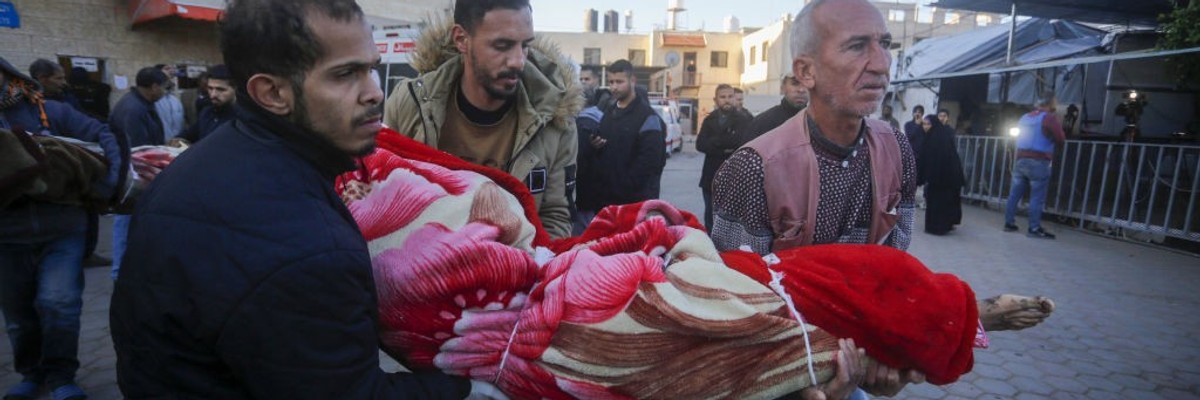
Bodies of Palestinian, who lost their lives in Israeli attacks on the family home of journalist Mohammed al-Qirrawi in the Bureij refugee camp in the central Gaza Strip, are taken from Al-Aqsa Martyrs Hospital for burial in Deir al-Balah, Gaza on December 15, 2024. (Photo by Ashraf Amra/Anadolu via Getty Images)
A relentless series of assaults in central and northern Gaza by Israeli forces, according to reports on the ground, have killed numerous civilians—including children, rescue workers, and journalist—in recent days with no end in sight.
Rescue workers, children, and journalists are among the civilians killed by Israeli attacks in Gaza on Sunday, as the death toll continues to mount in a military campaign Amnesty International earlier this month said has all the markings of an active and ongoing genocide.
“Due to the rising Israeli bombings and killings in northern Gaza, we have run out of body bags to bury the dead,” said Palestinian journalist Hossam Sabath, reporting from northern Gaza on Sunday. “Now we resort to using any piece of clothing or a blanket for their burial.”
On the ground in the town of Beit Hanoun, where Israeli troops reportedly killed at least 20 people—including civilians—in a series of raids in the area on Sunday, Sabath said the the “scenes of charred bodies are too distressing for us to broadcast. However, they are part of the documented evidence of genocide involving the burning of people alive. We are ready to hand them over to any human rights organization.”
Israeli troops killed at least 22 Palestinians, most of them in the northern Gaza Strip, on Sunday in airstrikes and other attacks on targets that included a school sheltering displaced Gazans, medics and residents said.
They said at least 11 of the dead were killed in three separate Israeli airstrikes on Gaza City houses, nine were killed in the towns of Beit Lahiya, Beit Hanoun and Jabalia camp and two were killed by drone fire in Rafah.
Residents said clusters of houses were bombed and some set ablaze in the three towns. The Israeli army has been operating in the towns for over two months.
In Beit Hanoun, Israeli forces besieged families sheltering in Khalil Aweida school before storming it and ordering them to head towards Gaza City, the medics and residents said.
Al Jazeera‘s Hani Mahmoud, reporting from Deir el-Balah in central Gaza, quoted witnesses who reported “severe injuries” among those who survived the attacks further north.
“They have nowhere to go because the Israeli military forces are encircling the area with tanks and armored vehicles, and hammering the school with heavy artillery,” Mahmoud reported.
A family of four were among those killed, including two children, after the classroom where they were sheltering took a “direct hit” from Israeli artillery fire that arrived without prior warning, the outlet reported.
“Many of the injured are in the courtyard of the school and inside the other classrooms,” according to Mahmoud. “They can’t get any treatment because none of the hospitals in Beit Hanoon are operational.”
Separately, Al-Jazeera reports Sunday that an Israeli bombing killed three members of the Palestinian civil defense search-and-rescue team in central Gaza’s Nuseirat refugee camp. The new agency also reported that one of its own staff, cameraman Ahmed al-Louh, was killed in the same attack.
In its first response to the incident, Gaza’s government media office condemned the killing of al-Louh and called on the international community to act against the systematic crimes against Palestinian journalists. “The number of martyred journalists has now risen to 195 with the martyrdom of colleague Ahmed al-Louh,” the office stated.
Al Jazeera reiterated its condemnation of the attack, describing al-Louh’s death as part of a broader assault on press freedom in Gaza. “Ahmed al-Louh was dedicated to documenting the realities of the ongoing conflict under the most dangerous conditions,” the network said.
“The unprecedented killing of journalists by the Israeli military continues with impunity,” said fellow reporter Sharif Kouddous.
On Dec. 5, Amnesty International released a 296-page report—featuring interviews with survivors and witnesses of Israel’s large-scale campaign of bombing, displacement, arbitrary detention, and destruction of Gaza’s agricultural land and civilian infrastructure—that conclude what Israel has been doing in Gaza amounts to genocide.
“Month after month, Israel has treated Palestinians in Gaza as a subhuman group unworthy of human rights and dignity, demonstrating its intent to physically destroy them,” said Agnès Callamard, Amnesty’s secretary-general, upon release of the document. “Our damning findings must serve as a wake-up call to the international community: this is genocide. It must stop now.”
As the weekend’s latest catalog of death and injuries suggests, it has not stopped.
New details have emerged in the case of the Palestinian surgeon who was tortured to death and sexually abused by Israeli forces. Meanwhile, the health situation in Gaza remains dire.
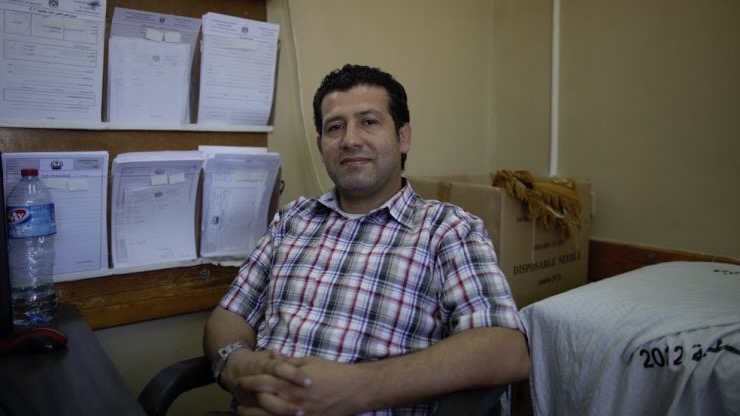
New reports have surfaced regarding the death of Palestinian surgeon Dr. Adnan Al-Bursh, who was abducted by Israeli armed forces in December 2023 during an attack on Al-Awda Hospital in northern Gaza. His case sheds further light on the abuse endured by health workers in Israeli prisons and detention camps. Palestinian prisoner associations had previously reported that Dr. Al-Bursh died as a result of torture. Now, testimonies from other detainees reveal that his abuse included sexual abuse.
These reports indicate that Israeli soldiers subjected Al-Bursh to exceptionally harsh treatment as soon as they identified him at Al-Awda Hospital. Dr. Khalid Hamouda, another physician detained by Israeli forces, recounted the severe injuries Dr. Al-Bursh sustained during his imprisonment in Sde Teiman concentration camp. At one point, Dr. Al-Bursh had difficulty walking or using the toilet without help, and feared his ribs had been broken in the beatings. Dr. Hamouda described meeting him in this state before Dr. Al-Bursh was transferred to Ofer prison.
When Dr. Al-Bursh was transferred to the new facility, fellow prisoners described his state as “deplorable.” They recounted visible injuries across his body, evidence of severe assault, and reported that he had been left naked “in the lower part of his body.” Soon after, he died.
“A doctor. A stellar surgeon. The embodiment of Palestinian ethics. Likely raped to death,” UN Special Rapporteur Francesca Albanese wrote on X following the release of the new reports. She condemned the lack of reaction to the atrocities committed by Israeli soldiers, stating, “The racism of Western media who are not covering this, and Western politicians who are not denouncing this, together with the thousand other testimonies and allegations of rape and other forms of mistreatment and torture that Palestinians have suffered in Israeli jails, is absolutely sickening.”
Accounts of torture and abuse similar to what Dr. Adnan Al-Bursh endured have been shared by other health workers recently released from Israeli detention. Many have highlighted that health workers represent a significant proportion—up to one quarter in some camps—of the total number of detainees held by Israeli Occupation Forces (IOF). This supports reports that the IOF systematically targets health workers in an effort to undermine Palestinian resistance and destroy any prospects for rebuilding.
Among those who described their imprisonment is Dr. Khaled Al Serr, a doctor originally employed at the Nasser Medical Complex, who spent six months in detention. He described following a similar path to Dr. Al-Bursh, being transferred from Sde Teiman to Ofer prison, where he endured regular beatings, including to intimate areas. “It was humiliating, but worse than that, they treated us like criminals,” he said in recent interviews. “We were just doctors trying to save lives.”
Despite targeted attacks and the acute shortage of medical supplies, nurses, doctors, and other health workers in Gaza continue to provide care under dire circumstances. Recent efforts by the World Health Organization (WHO) and other UN agencies finally succeeded in reaching the few remaining hospitals in northern Gaza to facilitate medical evacuations and deliver some essential supplies, including fuel, food, and medicine. However, these missions were obstructed by Israeli soldiers, who blocked parts of the deliveries. This has led to even more uncertainty about how much longer these facilities can remain operational.
The consequences of shortages and ongoing attacks in Gaza are escalating by the day. Hunger is spreading rapidly, with health and nutrition experts warning that signs of famine in the northern regions are becoming increasingly alarming. They are urgently calling for the immediate delivery of food across the Strip and an end to Israeli obstructions of humanitarian aid, emphasizing that delays will have fatal outcomes. People will die of hunger even before a famine is officially declared, and this would have “irreversible consequences that can last generations,” warned Rein Pulsen of the Food and Agriculture Organization.
The number of people hospitalized due to hunger, including many children, is rising, with their health further deteriorated by critical living conditions. Infectious diseases are spreading, compounded by the destruction of water and sanitation infrastructure. Most forcibly displaced people are living in makeshift tents and are forced to rely on improvised absorption trenches for sanitation. These trenches, mostly dug by the displaced themselves, pose severe risks: children have fallen into them, collapses caused by oversaturation are not uncommon, and they have become breeding grounds for diseases like cholera. “We relieve ourselves in a pit that smells and certainly causes us disease, but we have no choice but to use it,” Abdul Salam Al-Aswad, one of the displaced, told The Electronic Intifada.
The impact on chronic diseases in Gaza is equally worrying. Cancer patients are being denied access to lifesaving care, while Israeli bombardments have exposed thousands of pregnant women to toxic materials found in explosives. Doctors have noted a troubling increase in infants born with congenital conditions, such as underdeveloped lungs, limbs, and other severe abnormalities, warning of correlations with the use of white phosphorus. Without adequate medical care in Gaza and with medical evacuations systematically denied, many of these children die.
As an immediate ceasefire is the only true solution to the destruction of healthcare in Gaza, health workers and activists are urging more international pressure on Israel. This pressure is essential not only to stop the attacks, but also to ensure the entry of medical supplies and, critically, food into the besieged Strip, offering at least some immediate relief.
People’s Health Dispatchis a fortnightly bulletin published by thePeople’s Health Movementand Peoples Dispatch. For more articles and subscription to People’s Health Dispatch, clickhere.

 A man walks on a hot summer day in Srinagar, India-controlled Kashmir, July 25, 2024