NHS news review

Spread the love

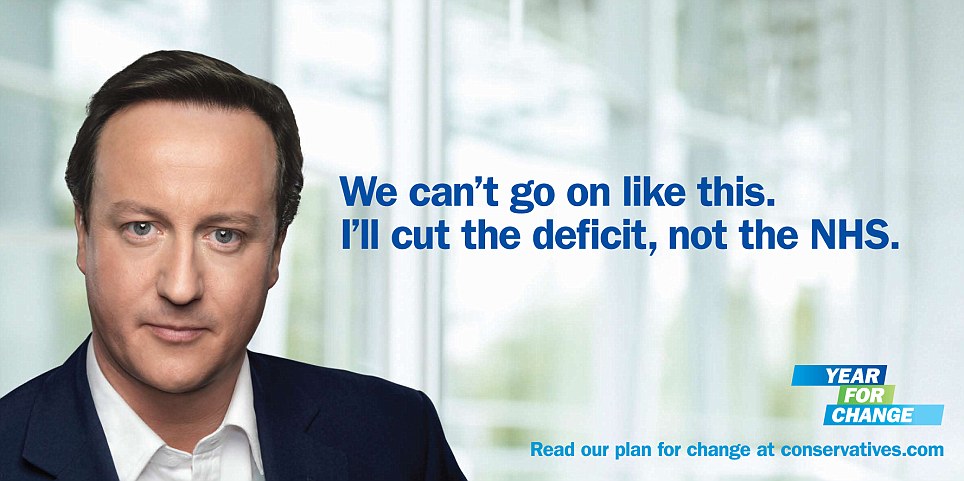
Conservative election poster 2010

A few recent news articles about the UK’s Conservative and Liberal-Democrat (Conservative) coalition government – the ConDem’s – brutal attack on the National Health Service.

Health bill in fresh trouble as first signs of cabinet dissent emerge

Plans being laid for call at Liberal Democrat spring conference for bill to be scrapped

The government’s beleaguered health bill has run into fresh trouble after it emerged that plans are being laid for a call for it to be scrapped at the Liberal Democrat spring conference.

It is also expected that the influential Conservative Home website, seen as the voice of the party grassroots, will publish an editorial on Friday calling for the bill to be dropped altogether. It is understood that Conservative Home has been urged to make the call by three cabinet members who believe David Cameron is not listening on the issue. One source said: “We have almost been instructed to write this.” It is extraordinary that cabinet members feel so frustrated at the political deadlock that they have resorted to urging Conservative Home to raise the flag of rebellion.

It has been widely canvassed within the government that non-contentious parts of the bill covering public health, social care and GP commissioning could be retained, while controversial parts dealing with an extension of the private sector could be abandoned altogether, something that would be a humiliation for the health secretary, Andrew Lansley.
… [informative article]


Lib Dem group launches in protest against Tory-led coalition

Liberal Left group aims to mobilise opposition against ‘drift to the right’, claiming the mood in the party is radicalising

The first Liberal Democrat group openly opposed to the coalition is to be launched at the party’s spring conference in Gateshead next month with a warning that the coalition has been a political disaster for the party, as well as a denial of its radical roots.

Launching a website on Wednesday, the group Liberal Left said it hoped to become a rallying point for members opposed to the coalition and those who see the party as a centre-left organisation seeking common cause with Labour, Greens and others on the centre left.

One of its founders, Richard Grayson, conceded that the vast majority of the party was committed to the coalition and denied the group would be working to put a motion to conference calling for the Liberal Democrats to withdraw from its partnership with the Conservatives. He said the focus was more on developing policies on the centre left, and creating a space for a coalition with Labour if necessary after a general election.

Most of the group’s founder members have long been opposed to the coalition, but it believes other party members will join, and the mood of the party is radicalising. Grayson said Liberal Left differed from the other well-established left group inside the party – the Social Liberal Forum – in that it opposed the coalition, and did not agree that the party should be politically equidistant between Conservatives and Labour.

In its strongly worded founding statement, Liberal Left asserts: “We articulate policy positions within the Liberal Democrats which should be central to a radical party. Such policies have informed recent general election manifestos which our candidates have stood, and on which our MPs have been elected.

“Those views are not being currently voiced effectively in a party whose radical traditions have become muted in government and whose leaders have taken the party’s policy positions to the right. We are now part of a government which is Eurosceptic, neo-liberal and socially conservative.”

NHS backs down in dramatic court battle over services

NHS bosses have backed down in their battle with campaigners fighting major changes in Gloucestershire.

This afternoon at the Royal Courts of Justice NHS Gloucestershire and claimant Michael Lloyd issued a joint statement.

It reads: “Both parties agree that the public of Gloucestershire deserve the best possible NHS services.

We recognise the need for efficient use of public funds and believe that an end to legal proceedings is in everyone’s interest – particularly patients.

NHS Gloucestershire is pleased to be able to report that it has agreed terms to settle the Judicial Review brought by Gloucestershire resident, Mr Michael Lloyd.

The PCT recognises that it is important to maintain the confidence of patients, public and staff in decisions made concerning NHS services in our county.

Accordingly, and in view of the matters raised in court and without in any way accepting that there is merit in the legal complaints made by Mr Lloyd, the PCT has agreed not to implement its decision to enter into a contract with GCS at this time.

The PCT has agreed that it will start a new process to explore the best option for providing community services in Gloucestershire. As part of that process, NHS Gloucestershire will advertise for expressions of interest for the provision of NHS services in Gloucestershire.

The PCT will take necessary steps to ensure an appropriate level of staff and public engagement.

Unite threatens new NHS pension strike ballot

The Unite trade union says it may hold a fresh strike ballot of its 100,000 members in the NHS over their continuing pension dispute.

The union’s leadership has already rejected a draft agreement proposed by the government in December.

In November, staff throughout the public sector staged a national one-day strike against the proposed changes.

Since then, union opposition has become divided, with some agreeing to further talks which others have rejected.

Meanwhile, leaders of the Fire Brigades Union are also threatening to strike over proposed changes to their pension scheme.

They said there would be a “rapid move” towards a strike ballot after finding the government’s proposals “unacceptable”.

Unite’s general secretary, Len McCluskey said: “There have been no substantive changes from what was on the table before Christmas – our hard-working members will still be expected to pay more, work longer and get less when they retire.”

“‘Our members are deeply unhappy at the government’s stance and we will be holding a consultative ballot to reaffirm our members’ position – the prospect of further strike action will be very real, unless ministers move on their hardline position.”

Continue ReadingNHS news review

NHS news review

Spread the love

Conservative election poster 2010

A few recent news articles about the UK’s Conservative and Liberal-Democrat (Conservative) coalition government – the ConDem’s – brutal attack on the National Health Service.

There is a huge amount of NHS news now that the Health and Socal Care / Destroy the NHS Bill is back in the Lords and discussed at Prime Minister’s Question time.

NHS bill faces fresh opposition ~ Channel4

David Cameron was barely on his feet at PMQs when the Faculty of Public Health announced it was calling for the Health and Social Care Bill to be withdrawn, writes Victoria Macdonald.

It was tricky timing. Prime Minister’s Questions (PMQs) was inevitably going to be dominated by the NHS reforms simply because it is back in the House of Lords today.

And sure enough, the Labour leader Ed Miliband attacked the PM for “breaking his word on no top-down reorganisation”. All Mr Cameron’s attention, he said, was on the reforms and this meant the front-line was suffering.

“He knows in his heart of hearts that this is a complete disaster,” Mr Miliband said.

“Why won’t you just give up and stop wasting billions and drop your bill?”

Mr Cameron repeated the claim that GPs were not just “supporting our reforms, they are implementing our reforms”.

But this is a claim that is becoming more difficult for the government to keep making. The list of organisations now calling for the bill to be scrapped is growing and pressure is growing on the Health Secretary, Andrew Lansley.

David Cameron and Ed Miliband clash over NHS reform in PMQs

Miliband tells Cameron to ‘stop wasting millions and drop the bill’ while Tory leader retorts that Miliband is an opportunist

David Cameron delivered a passionate defence of the government’s health reforms in the face of a challenge by Ed Miliband to “stop wasting millions and drop his bill”.

The prime minister made it clear his government intended to put the health and social care bill on to the statute book despite growing opposition within the NHS and the Conservative party.

Cameron cast the battle over the NHS shakeup as one between a bureaucrat-run NHS and a doctor-run NHS, insisting that the reforms were stripping billions of pounds in bureaucracy to “plough back” into patient care, and he attacked Labour’s refusal to fund increases in the NHS budget.

“They are not in favour of the money, they are not in favour of reform, they are just a bunch of opportunists,” Cameron told the Commons.

The premier also rallied to the defence of his beleaguered health secretary, Andrew Lansley, after a No 10 insider was quoted as saying he should be “taken out and shot”, raising doubts about his future in the cabinet.

The prime minister and the Labour leader clashed at prime minister’s question time on the day that the health and social care bill returns to the Lords for its report stage, where it is tipped to face staunch opposition from sections of the second chamber. In a heated exchange, Miliband told Cameron that “in his hearts of hearts” the prime minister knew that the bill was “a complete disaster”, and he cited opposition to the reforms from a long list of health care unions and associations.

David Cameron attacks Labour’s handling of NHS Wales

Prime Minister David Cameron has launched an attack on Labour’s handling of the health service in Wales.

Mr Cameron said people were waiting longer for operations and accused the Welsh government of cutting funding.

He made the claim while defending reforms of the NHS in England – plans which the Welsh government said were a “complete and utter shambles”.

The Welsh government said the prime minister’s figures were “totally wrong”.

At question time in the Commons on Wednesday, Mr Cameron said the NHS in Wales showed what happens “when you don’t put the money in and don’t do the reform”.

Prime Minister David Cameron compared to General Custer after attack on Welsh Government’s NHS policies

Prime Minister David Cameron was compared to General Custer by the Welsh Government yesterday after he launched a furious attack on the NHS in Wales.

In the latest burst of conflict between the two governments, Health Minister Lesley Griffiths blasted the UK Government’s plans for the NHS as a “complete and utter shambles” and accused Mr Cameron of lacking a mandate.

It came after Cameron lambasted the Labour Welsh Government’s management of the NHS as he fought back against calls to abandon his controversial health policies for England.

The BMA in Wales applauded the Welsh Government for remaining “loyal” to the vision of Labour NHS pioneer Aneurin Bevan and called on Mr Cameron to withdraw the legislation. The Royal College of Nursing also defended the record of the government in Cardiff.

The Welsh Government claimed the Prime Minister had his facts wrong and compared him to Custer – a US general remembered for the defeat he suffered when overwhelmed by Native American fighters in 1876 at the Battle of Little Bighorn, also known as Custer’s Last Stand.

The Prime Minister launched his attack on the Welsh Government as he came under sustained attack in the Commons from Labour leader Ed Miliband over the coalition’s NHS reforms.


NHS Reforms: Government Lacks Plan B, Lords Told

The coalition government has no “plan B” for its controversial proposals to reform the NHS, the House of Lords has heard.

Health secretary Andrew Lansley has seen his Health and Social Care Bill come under heavy fire, with calls for it to be dropped gaining momentum.

The bill, which centres around the responsiblity for the commissioning of health services passing from primary care trusts to GP consortia, is viewed by critics as privatisation of the NHS.

Parliamentary undersecretary of state for health Earl Howe told lords that the government was set on its bill as it was “the right thing to do”.

[“The right thing to do” is recognised as a Blairite argument whereby the divorced-from-reality fruitcake felt that it was unnecessary to justify His decision.]


NHS managers oppose Health Bill

The Institute of Healthcare Management (IHM) is ‘close to’ calling for the withdrawal of the Health and Social Care Bill.

An IHM member opinion poll found managers had experienced “worsening conditions” for both patients and NHS staff thanks to the reforms.

The official release of the survey is not due until 14 February but Sue Hodges, Chief Executive of IHM, told MiP that 87% of its members that have responded to the poll currently want to see the bill withdrawn.

Hodges said that within minutes of the request being posted online, the IHM was able to “confidently” say Health and Social Care managers do not support the Health Bill and the “inevitable consequences” of it.

She said it is “very likely” the IHM will make an official call for the withdrawal of the bill next week.

IHM leaders criticised the government’s almost “total disregard” for its advice given during its consultation period last year.

Continue ReadingNHS news review

NHS news review

Spread the love

Conservative election poster 2010

A few recent news articles about the UK’s Conservative and Liberal-Democrat (Conservative) coalition government – the ConDem’s – brutal attack on the National Health Service.

The debate on the Health and Social Care / Destroy the NHS Bill descended into tastelessness yesterday and today with an attack on a prominent doctor for being a successful, accomplished GP and mention of David Cameron’s sadly deceased son.


The Health and Social Care Bill is expected to receive a rough ride when it returns to the House of Lords today amid an ongoing row over the coalition’s planned reforms.

Prime Minister David Cameron has been forced to declare his “full support” of Health Secretary Andrew Lansley as criticism of the changes continues.

Downing Street tried to end speculation about Mr Lansley’s future after claims there had been discussions about bringing back Labour health secretary Alan Milburn to replace him.

A spokesman said on Tuesday: “The Prime Minister backs Andrew Lansley and he backs the reforms we are pushing through Parliament in order to deliver a better health service for the future.”

The Bill is back in the Lords less than a week after the Royal College of GPs wrote to Mr Cameron calling for it to be scrapped.

A new poll has shown more than 90% of readers of the British Medical Journal believe the Bill should be withdrawn.


CAMPAIGNERS and health bosses were facing each other in the High Court today.

Retired railwayman Michael Lloyd’s bid for a judicial review of the transfer of county NHS services to a community interest company could be granted.

If it is, a judge in London’s High Court will make a ruling tomorrow on whether NHS Gloucestershire can go ahead or be forced to backtrack.

Campaign group Stroud Against the Cuts fears the transfer of nine Gloucestershire community hospitals, 10 health clinics and 3,000 staff to a community interest company could lead to the privat-isation of the National Health Service.

“I’m worried that if local health services leave the NHS they will be more vulnerable to cuts, more fragmented, more bureaucratic and less accountable,” said Mr Lloyd, 75.

NHS Gloucestershire has said it wants timely resolution of outstanding legal matters and that concluding the arrangements for the transfer is in the interests of patients and staff and will ensure service continuity and stability.


Is reform of the NHS doomed to fail?

Andrew Lansley’s shakeup of the NHS won’t work, says Randeep Ramesh, because you can’t downsize healthcare

When Nigel Lawson, the former Conservative chancellor, remarked that the NHS was the closest thing to a national religion that the English have, he encapsulated an inconvenient truth: that challenging belief in the good of a state-financed, state-run health service could end in, as the editors of three medical journals put it last week, an “unholy mess”. The English are simply too heavily invested emotionally in the NHS to change it too much, too quickly.

This is the politics that has led Ed Miliband, the Labour leader, to proclaim that there are three months to save the health service from Andrew Lansley, the health secretary, and his radical shakeup.

No matter how much Lansley gives up of his original vision of a market-driven, patient-centred NHS, the bill – which is back in the Lords with some 100 amendments – is politically toxic. No party wants to go into the local elections in May saying it has not done enough to temper the worst excesses of the founding white paper. The bill gives vent to some pretty crazy ideas: such as getting credit rating agencies to vet hospitals.

Andrew Lansley came under more fire today as the crisis deepened over the Government’s NHS reforms.

London GPs, MPs and peers urged David Cameron to consider pulling the plug on the reforms, which face a barrage of opposition from health professionals.

Even Downing Street insiders were said to be aghast at the Health Secretary’s handling of the reforms. A No 10 source was quoted in The Times saying: “Andrew Lansley should be taken out and shot. He’s messed up both the communication and the substance of the policy.”

The Health and Social Care Bill returns to the Lords tomorrow where it faces a mauling by peers despite the Government already making a string of concessions.

Today Michelle Drage, chief executive of the Londonwide Local Medical Committees which represents 6,000 GPs, said: “We want to see the chaos that has arisen from the Bill stopped and a return to the original principle of GP-led commissioning and the removal of all the aspects that relate to privatisation which have caused all of the worries among all groups in the NHS.”


Juggling financial cuts with patient needs threatens quality of care

The Chartered Society of Physiotherapy’s (CSP) Annual Representative Conference, which begins in Manchester tomorrow (Wednesday), will hear how the combined effect of Government reforms of the NHS and cost cutting measures are leaving physiotherapy staff in an impossible position where they have to implement financial cutbacks yet still meet patient’s clinical needs.

A number of motions for debate, raised by the CSP’s National Group of Regional Stewards, East of England Regional Network, South Central, London and Yorkshire Stewards, will discuss the range of impacts the NHS reforms and measures to cut costs are having on physiotherapy services for patients.

Commenting, Alex MacKenzie, Chair of the CSP’s National Group of Regional Stewards, said: “Physiotherapists are between a rock and a hard place, where they are being forced to act against their professional clinical judgment because money for the right treatment is not there.

“More and more we’re hearing about rationing of services. In some cases, patients are having to see their GP twice, many weeks apart, before even getting a referral to a physio – and then they’re often only getting an assessment and exercise prescription, with limited hands-on treatment. The ability to offer the best professional care is being stripped away.”


Andrew Lansley has prime minister’s ‘full support’ over NHS reforms

Health and social care bill continues to come in for fierce criticism, but No 10 says health secretary has full backing

Downing Street has said the health secretary, Andrew Lansley, has the prime minister’s “full support”, as pressure on the coalition government mounts over its NHS reforms.

Speculation over Lansley’s future in the cabinet was sparked by an unnamed No 10 insider quoted saying he should be “taken out and shot”.

The comment in the Times came as the health secretary faced another embarrassing blow when the Guardian reported that two doctors who had previously been prominent supporters of the proposed health service structure had turned against the reforms.

However, the prime minister’s spokeswoman dismissed the anonymous briefings, saying she “did not recognise” the name of Labour’s former health secretary Alan Milburn being floated as a possible successor.

“The prime minister backs Andrew Lansley and he backs the reforms we are pushing through parliament in order to deliver a better health service for the future,” she said.

Lansley’s health and social care bill enters the crucial report stage in the House of Lords from Wednesday, where Labour and crossbench peers are hoping to defeat the government on a number of key issues.


Coalition will force NHS bill on to statute book, says David Cameron

PM to get behind Andrew Lansley as No 10 suggests it may have taken eye off ball, allowing opposition to reforms to grow

David Cameron is to rally behind his health secretary Andrew Lansley on Wednesday and insist that the coalition will force its health and social care bill on to the statute book despite growing opposition within the NHS and the Conservative party.

Speculation over Lansley’s future in the cabinet was sparked by an unnamed No 10 insider being quoted saying he should be “taken out and shot”.

The briefing was described as unauthorised, but No 10 acknowledged it may have taken its eye off the ball, allowing opposition to the bill to re-emerge.

Cameron and Lansley have met within the last 48 hours to discuss tactics. There is widespread frustration inside Downing Street at the way in which the professions were brought on side, but then slipped from the coalition’s grasp over the past two months.

Cameron is to undertake a series of NHS events next week, and is said to be confident that opposition to the bill in the Lords will be overcome. He is determined to set up the battle as one between a bureaucrat-run NHS and a doctor-run NHS.

Continue ReadingNHS news review

NHS news review

Spread the love

Conservative election poster 2010

A few recent news articles about the UK’s Conservative and Liberal-Democrat (Conservative) coalition government – the ConDem’s – brutal attack on the National Health Service.


Backers of NHS shake-up turn against Andrew Lansley’s plans

Leading doctors voice concerns that reforms will suffocate GPs and jeopardise promised freedom to commission care

Two prominent backers of the coalition’s NHS shake-up have joined the growing chorus of critics by claiming that GPs will be “suffocated rather than liberated” by the planned changes.

Dr Charles Alessi and Dr Michael Dixon have helped Andrew Lansley claim credibility for his plans among doctors over the past 18 months by strongly supporting his radical restructuring. They are leading lights in the NHS Alliance and the National Association of Primary Care, two key pro-reform organisations.

But they now fear that the new consortiums of local doctors, which will start commissioning healthcare for patients in England from next year, will not have the freedom that the health secretary has repeatedly pledged. Lansley has attempted to persuade sceptics that his reorganisation will put family doctors in charge of healthcare.

NHS primary care trusts (PCTs) and strategic health authorities (SHAs) are due to be abolished next year.

But the doctors are worried that the GP-led clinical commissioning groups (CCGs), which will replace PCTs, will find themselves unexpectedly under the control of another organisation, the NHA National Commissioning Board (NCB).

In July the NHS chief executive, Sir David Nicholson, said “CCGs will be the engine of the new system” and that the reformed NHS “gives pride of place to clinical leaders”. But the reality is that primary care doctors and clinical commissioners will not have the promised ability to make key decisions because the current bureaucracy is simply being replaced by another that is growing up around the NCB, the pair claim.


MP believes Prime Minister is pushing NHS to the brink of collapse

SLOUGH MP Fiona Mactaggart has claimed the Prime Minister is pushing the NHS to the brink of collapse – with patients waiting even longer for their treatments.

The latest data shows that 44 more patients were forced to wait longer than 18 weeks for treatment in the Berkshire East PCT area, between November 2010 and November 2011.

Waiting times are also up nationally with an increase of more than a third in the number of patients waiting more than four-and-a-half months for treatment.

Ms Mactaggart said “The chaos caused by the Health Bill is starting to take its toll. By the time Labour left office, waiting times had fallen to a historic low, but this Government is throwing that legacy away.

“It is hard to get this right and we have had some particular local challenges with our hospital, but we must keep our focus on patient care, and patients who are left to wait are not being cared for.

“If the Prime Minister succeeds in allowing hospitals to fill 49% of hospital beds with private patients, this will get worse.

Nurses at the first NHS general hospital to be run by the private sector risk shouldering the burden for deep financial problems that are out of their control, the Royal College of Nursing has warned.

Private company Circle was awarded a 10-year contract to run Hinchingbrooke Health Care Trust in November. Last week it unveiled a 16-point plan for turning round the financially troubled Cambridgeshire trust, with a major focus on nursing. The trust is in the red by around £40m.

The widely publicised plan included devoting two thirds of nurses’ time to contact with patients, a culture of “complete transparency” around patient harm, reducing rates of preventable falls and pressure sores to the lowest in the region. Staff will also be subject to “360 degree” performance reviews, with assessments from both their peers and line managers.

In addition, staff will be organised into “clinical units” each run by a nurse, a doctor and a manager. The three will have authority to take all decisions about a patient’s care and have responsibility for their own quality measures and costs.

But RCN director of policy Howard Catton warned that Circle’s “public relations strategy” was placing too much responsibility on nurses for overcoming the hospital’s huge financial challenges.

“Nursing could lead improvements, but it’s beyond nursing’s control to turn around all the cost pressures and [find] a £40m saving,” he told Nursing Times. He said: “What we’ve had this week is nursing and the workforce standing on their own at the front of this PR strategy.”

Mr Catton said the RCN wanted to see the same level of “transparency” expected of nurses placed on the work of Circle’s management team and the returns expected from the company’s shareholders.

Terminally ill care turmoil as NHS suspends company

THE care of dozens of terminally ill people in South Yorkshire has been thrown into turmoil after NHS chiefs yesterday suspended a contract with a care firm.

More than 30 people and their families, mainly in Rotherham and Sheffield, have been affected by the decision to suspend the services of care provider Abacus.

NHS officials are carrying out an investigation following allegations over patient safety and quality of care, believed to include claims staff have failed to attend home visits or cut them short.

Patients and their families were told only yesterday that the contract was being suspended.

Margaret Kitching, nurse director for the South Yorkshire and Bassetlaw cluster of primary care trusts, said: “An investigation is currently taking place into Abacus following a number of allegations.”

NHS reforms: the bill that will cost us dear

It is hard to think of a starker failure in domestic government since the poll tax

No one, but no one, thinks that the health and social care bill returning to parliament this week is any good. Nurses and doctors have lined up to denounce it – even GPs, whom the legislation claims to put in charge. Professional resistance can be dismissed as “producer interest”, but not so the joint editorial published by three specialist periodicals, including the Health Service Journal. The journal is generally supportive of exposing medicine to competition, yet it damns the particular market-based reforms on offer as “unnecessary, poorly conceived, badly communicated” and “a dangerous distraction”. Meanwhile, a committee dominated by coalition MPs has just concluded that the current upheaval “complicates” necessary cost-cutting, and displaces “truly effective” reforms.

Even the health secretary cannot any longer really believe in the watered-down product he is saddled with punting. The one hope for the bill which Andrew Lansley had originally articulated intelligibly was removing politics from healthcare. But, after a year of amendments and grudging stand-offs with the Liberal Democrats, he has utterly failed in this – as is underlined by the latest concession, which explicitly reaffirms that he will retain full political responsibility to parliament.

Having foolishly nodded the legislation through in the Commons, the Lib Dems blundered again by failing to kill the bill – as they could have done – when their members and peers revolted. Instead, they settled for fudge. The bill before parliament is littered with warm words such as “integrated”, which mean entirely different things to advocates of planning and cheerleaders for restructured competition. It may well fall to the courts to determine what on earth whole passages mean. And yet – carried along only by the crack of the government whip – this unloved legislation rolls towards the statute book. The strongest remaining argument for passing it is that the hard-to-manage mess of half-disbanded care trusts could descend into uncontrollable chaos if new rules and structures of some sort, however flawed, are not agreed on soon.

Mr Lansley’s great error was to allow the charged words “Tory”, “cuts”, “health” and above all “privatisation” to combine to become the story of the bill. The technocrat imagined that he could quietly impose a new healthcare market, and that England would soon bow to its logic. He not only misread opinion, but also mistook a well-founded concern to restrain medical profiteering for socialistic superstition. Last month the Guardian revealed that millions were being diverted to the likes of KPMG and McKinsey to teach “business skills” to GPs. On Friday, it emerged that a cash-strapped health department was having to stump up £1.5bn to trusts that cannot afford repayments under the PFI – the last great brainwave for getting the private sector involved. Public fear of racketeering is not boneheadedness. The medical marketplace will never be one where consumers (or, as they were once known, patients) can be sovereign – the knowledge gap with “producers” is too great.

The NHS bill could finish the health service – and David Cameron

NHS reforms: the plans and the results so far

in other news:

Treasury Wrote Off £11bn In Unpaid Tax

Revenue and Customs wrote off almost £11bn in unpaid tax in one year, according to the first joint audit of every government department.

The Treasury was not fully aware of the figure until it appeared in the Whole of Government Accounts (WGA) for 2009 to 2010, according to the Public Accounts Committee.

The PAC said it also had “no knowledge” of whether plans were in place to cut the taxpayer’s huge £15.7bn liability for clinical negligence claims.

PAC chair Margaret Hodge said the document also “currently falls short of giving a true and fair view of the UK’s financial position”.

“The Treasury has departed from accounting standards by leaving out of the accounts of such bodies as Network Rail and the publicly-owned banks,” the Labour MP said.

“This has led to the accounts being qualified by the Comptroller & Auditor General. We want the Government to provide the necessary information so that these accounts are comprehensive and credible.”

war of terrorism BS

‘Lone wolf’ terror threat warning

Continue ReadingNHS news review

NHS news review

Spread the love

Conservative election poster 2010

A few recent news articles about the UK’s Conservative and Liberal-Democrat (Conservative) coalition government – the ConDem’s – brutal attack on the National Health Service.

Hi-de-hi patients, it’s a private NHS / Britain / Home – Morning Star

Tax-dodging bosses at the first ever NHS hospital to be privatised set out their plans for its future today, prioritising “value for money” and “patient experience” but failing to commit to spending on quality public care.

Circle executives made the remarks as they officially started managing Hinchingbrooke Hospital in Cambridgeshire.

The firm won the management contract in November after the government decided to sell Hinchingbrooke rather than meet its £40m debt – a fraction of the billions authorised for bailing out the banks.

Circle chief executive and former Goldman Sachs banker Ali Parsa today unveiled plans to turn the “basket case” hospital into “one of the top 10” in the country – but made it sound more like a cut-price holiday camp than a quality institution.

He said that following “unprecedented sessions” with staff he had set four priorities – patient safety, patient experience, staff engagement and value for money.

“Like John Lewis, Circle are employee co-owned, and have a track record of creating best-in-class hospitals,” Mr Parsa boasted.

But in reality Circle is a joint venture between Circle Partnership and hedge fund firm Circle Holdings, both registered in the tax havens of the British Virgin Islands and Jersey respectively.

Health campaigners and unions condemned the takeover as a sign of things to come under government plans to shred the NHS into easy prey for profiteers.

New Statesman – Witney GP: “Nobody supports the NHS changes”

Senior GP in David Cameron’s own constituency tells New Statesman “things are going to fail, hospitals will close”.

In an exchange over the government’s controversial health reforms at Prime Minister’s Questions last Wednesday, David Cameron cited “a supportive GP . . . who hails from Doncaster [Ed Miliband’s constituency]”.

In this week’s New Statesman (on newsstands tomorrow), Sophie Elmhirst travels to David Cameron’s own Witney constituency in West Oxfordshire, where a senior partner of a local GP practice tells her:

“I would say very few GPs are happy with [the NHS reform] at all . . . Not a question of supporting it, it’s a question of going along with it.”

“In my practice, nobody supports the changes . . . people think there should be more clinical involvement in commissioning. But I don’t think many people think that GPs are the right people to commission. They need input into it – but if we wanted to be managers we would have trained to be managers, not doctors. “

The GP adds:

“Most GPs are incredibly worried about conflict of interest. How can you be a patient’s advocate and look after the money? A lot of people think the whole thing’s designed to fail so they can bring private providers in. It’s the one big bit of the economy that hasn’t got private money in it.”

Of the effects to patients from the health service overhaul, the Witney GP says:

“The public have just got no idea what’s hitting them . . . Things are going to fail, hospitals will close, because the money’s not going to be there. Things will get taken over. And if you’re going to have to make a profit out of it, you’re not going to have the same service.”

BBC News – NICE: Prostate cancer drug too costly for NHS

A drug that can extend the life of men with advanced prostate cancer by more than three months has provisionally been rejected for NHS use.

The health watchdog for England and Wales says the drug’s benefits are not enough to justify the price the NHS has been asked to pay.

Cancer charities have been angered by the decision about abiraterone, one of the few drugs available to men in the final stages of prostate cancer.

A final decision is yet to be made.

Prostate cancer is the most common cancer to affect men in the UK.

The chief executive of the National Institute for Health and Clinical Excellence (NICE), Sir Andrew Dillon, said the drug was effective, and one of its key benefits was that it could be taken orally in the patient’s own home.

“We are therefore disappointed not to be able to recommend it for use on the NHS, however it is an expensive drug,” Sir Andrew added.

There is an alternative: The case against cuts in public spending – PCS

The government’s cuts strategy – and why it’s wrong

Debt as % of GDP Firstly, we need to get the ‘debt crisis’ in perspective. The table opposite shows UK debt relative to other major economies.

From 1918 to 1961 the UK national debt was over 100% of GDP. During that period the government introduced the welfare state, the NHS, state pensions, comprehensive education, built millions of council houses, and nationalised a range of industries. The public sector grew and there was economic growth.

Today, the coalition government wants to turn back the clock. It is set on dismantling the NHS and comprehensive education, and it is attacking the welfare state. It is not doing this because the country is on the verge of economic collapse, it is doing it because it is ideologically opposed to public services and the welfare state, and committed to handing over more of our public assets to big business.

Cutting public sector jobs will increase unemployment. This would mean increased costs for government in benefit payments and lost tax revenue. If people’s incomes are taken away or cut through pay freezes they will spend less. Less consumer spending means cuts in the private sector, and lower VAT revenues.
Internal analysis by HM Treasury proves this to be the case. Leaked documents estimated that over the next six years 600,000 public sector jobs would be cut, and 700,000 private sector jobs would also be lost – based on the current government’s policies.

Job cuts are therefore counterproductive. Mass job cuts would worsen the economic situation by reducing demand in the economy, and providing less tax revenue.

The government claims it can make cuts of between 25% and 40%, and still “protect frontline public services”. This is impossible – not just because ‘frontline services’ are being cut, but because services rely on ‘back office’ support staff. For example, cutting support staff like NHS cleaners has meant an increase in healthcare acquired infections, costing the NHS £1 billion. All public services require tax revenues to fund them, yet HM Revenue & Customs has cut 25,000 staff in recent years, which has led to uncollected tax at record levels and a growing tax gap.

The impact is likely to be highly divisive too. There is evidence of this already in the UK. In areas where public sector workers have already been laid off, retail sales have fallen faster than the UK average. In nations and regions where public sector workers make up a high proportion of the workforce, major public sector cuts could destroy local economies. Any attack on the public sector will also disproportionately affect women, as 68% of the public sector workforce is female. The public sector also has a much better record of employing disabled workers too.

The global race to cut labour costs is central to the economic collapse we have seen around the world. Squeezed consumers are defaulting on mortgages and personal debts, and are less able to spend in the economy. In the UK, the value of wages has declined from nearly 65% of GDP in the mid-1970s to 55% today. Over the same period, the rate of corporate profit has increased from 13% to 21%. It is no coincidence that in this period trade union rights were severely restricted, large swathes of the economy privatised, markets deregulated and corporation tax slashed.

There is an urgent need to rebalance the economy in the interests of people over big business.

The experience of Ireland

Ireland shows how cutting public spending can damage the economy. The crisis in Ireland was caused by the collapse of its banking sector. The massive cuts in spending and public sector pay that followed have
increased unemployment and sapped demand, causing the economy to shrink further. Because of this, Ireland is now considered more at risk of sovereign default than before it started making cuts. Historical research clearly demonstrates that budget cuts actually provoke increases in the national debt by damaging the economy.


Economic growth and public investment

Investing in public services is the solution to the deficit crisis. Instead of cutting jobs, we should be creating them. Jobs are not created by bullying people on benefits into jobs that don’t exist. Instead there are several areas where public sector jobs urgently need to be created.

It has been estimated that over a million ‘climate jobs’ could be created if the government was serious about tackling both climate change and unemployment – these would include areas like housing, renewable energy and public transport investment including high speed rail, bus networks and electric car manufacture.

Today there are 1.8 million families (representing over 5 million people) on council house waiting lists. There is an urgent need to build affordable housing for these people, which would also help reduce housing benefit payments.

The UK lags behind much of the rest of Europe in the development of a high-speed rail network, which would have the potential to create thousands of jobs and reduce carbon emissions by shifting passengers and freight away from road and air travel. Much of the country outside of London also needs huge investment in bus services – and, just as we should invest in electric car technology, we should also invest in electric buses and tram networks.

Only 2.2% of UK energy comes from renewable sources compared with 8.9% in Germany, 11% in France, and an impressive 44.4% in Sweden. If we are committed to tackling climate change and ensuring domestic energy security there needs to be investment in renewable energy technology.

All of these industries would generate revenue – people are billed for electricity, buy tickets to travel on public transport, and pay rent for council housing.

Research by Richard Murphy (of Tax Research) has shown that the state recoups 92% of the cost of creating new public sector jobs – through lower benefit payments and increased tax revenues.

The banks

We should never forget that it was the banking sector that caused the recession, and is ultimately responsible for the huge debts that the UK has amassed. Despite causing the crisis, the banking sector has escaped any significant regulation, and bankers are again awarding themselves huge bonuses.

Government debt as of % gdb The table opposite clearly shows how UK debt accelerated after the banking crisis in 2008. As a result of the UK government’s £1.3 trillion bailout to the financial sector, the government still owns over £850 billion in bank assets. This figure is roughly equal to the total UK debt.

The UK has an 84% stake in RBS and a 41% stake in Lloyds TSB. In addition, the state also owns Northern Rock and Bradford & Bingley. Under public ownership and control these assets could yield significant annual income to the Government, and could be used to meet social needs and tackle financial exclusion.


The case against privatisation

As a result of the government’s agenda to slash the public sector, privatisation, outsourcing and the Private Finance Initiative (PFI) are a fast growing threat to civil and public services despite the many performance failures of past privatisations.

Privatisation is no solution to the national debt. Evidence confirms that after transfer to the private sector the terms and conditions of workers are worse than before, the public sector loses any revenue stream while ultimately keeping the risk, and services to the public decline or cost more:

  • In the DWP, welfare is now described as “an annual multi-billion pound market”, and despite the department’s own research showing that Jobcentre staff outperform the private sector in helping people back to work, all contracts for welfare programmes are now outsourced.
  • Qinetiq was a company formed from the privatisation of the Defence Evaluation and Research Agency (DERA). In 2007, the 10 most senior managers gained £107.5m on a total investment of £540,000 in the company’s shares. The return of 19,990% on their investment was described as “excessive” by the National Audit Office. In 2009, Qinetiq offered its staff a pay freeze.
  • Although the economic downturn has led to a drying up of bank finance for PFI projects, the government has got round this by funnelling public funds – through the Treasury’s Infrastructure Finance Unit – to state owned banks who then loan finance to PFI consortia (which then claim inflated returns to government for the next thirty years, greatly exceeding the money given to them). The journalist and antiprivatisation activist George Monbiot observed, “the Private Finance Initiative no longer requires much private finance or initiative”.

Public services were won by trade union struggles in an effort to establish the basis of a civilised society. Driven by the desire for maximum profits, the private sector fails to provide effective and efficient public services.


Tax justice

Addressing the ‘tax gap’ is a vital part of tackling the deficit. Figures produced for PCS by the Tax Justice Network show that £25 billion is lost annually in tax avoidance and a further £70 billion in tax evasion by large companies and wealthy individuals.

An additional £26 billion is going uncollected. Therefore PCS estimates the total annual tax gap at over £120 billion (more than three-quarters of the annual deficit!). It is not just PCS calculating this; leaked Treasury documents in 2006 estimated the tax gap at between £97 and £150 billion.

A comparison between levels of benefit fraud and the tax gap If we compare the PCS estimate of the tax gap with the DWP estimate of benefit fraud, we can see that benefit fraud is less than 1% of the total lost in the tax gap (see diagram opposite).

Employing more staff at HM Revenue & Customs would enable more tax to be collected, more investigations to take place and evasion reduced. Compliance officers in HMRC bring in over £658,000 in revenue per employee.

If the modest Robin Hood tax – a 0.05% tax on global financial transactions – was applied to UK financial institutions it would raise an estimated £20–30bn per year. This alone would reduce the annual deficit by between 12.5% and 20%.

Closing the tax gap, as part of overall economic strategy, would negate the need for devastating cuts – before even considering tax rises.

Our personal tax system is currently highly regressive. The poorest fifth of the population pay 39.9% of their income in tax, while the wealthiest fifth pays only 35.1%. We need tax justice in personal taxation – which would mean higher income tax rates for the richest and cutting regressive taxes like VAT and council tax.


Cut the real waste

While it is not necessary to cut a penny in public expenditure due to the ‘deficit crisis’, there are of course areas of public spending which could be redirected to meet social needs.

In the civil and public services, we know there are massive areas of waste – like the £1.8 billion the government spent on private sector consultants last year. The government could get better advice and ideas by engaging with its own staff and their trade unions.

There is also the waste of the government having 230 separate pay bargaining units, when we could have just one national pay bargaining structure.

There are also two other large areas where government costs could be cut.

Trident

The current Trident system costs the UK around £1.5 billion every year.

A private paper prepared for Nick Clegg (in 2009, when in opposition) estimated the total costs of Trident renewal amounting to between £94.7bn and £104.2bn over the lifetime of the system, estimated at 30 years. This equates to £3.3bn per year.

At the time Nick Clegg (now Deputy Prime Minister) said: “Given that we need to ask ourselves big questions about what our priorities are, we have arrived at the view that a like-forlike Trident replacement is not the right thing to do.”

The 2010 Liberal Democrat manifesto committed the Party to: “Saying no to the like-for-like replacement of the Trident nuclear weapons system, which could cost £100 billion.”

PCS policy is to oppose the renewal of Trident and invest the money saved in public services, whilst safeguarding Ministry of Defence staff jobs.

War in Afghanistan

The war in Afghanistan is currently costing £2.6 billion per year. The war is both unwinnable and is making the world less safe. More important than the financial cost are the countless Afghan and British lives that are being lost in this conflict.


The PCS alternative…

  • There is no need for cuts to public services or further privatisations
  • Creating jobs will boost the economy and cut the deficit. Cutting jobs will damage the economy and increase the deficit
  • We should invest in areas such as housing, renewable energy and public transport
  • The UK debt is lower than other major economies
  • There is a £120 billion tax gap of evaded, avoided and uncollected tax
  • The UK holds £850 billion in banking assets from the bailout – this is more than the national debt
  • We could free up billions by not renewing Trident
  • End the use of consultants

What you can do

  • Spread the word! Share this page with friends on social networking sites using the buttons below
  • Get involved in campaigns and events, and keep informed at our campaigns pages
  • Unite with other local trade unions and community groups
  • Recruit your colleagues to the union – there’s never been a more important time to join PCS
  • Lobby your local politicians against public service cuts and against the attack on our jobs and conditions
 

Continue ReadingNHS news review