When Israel Burned Refugees Alive, Establishment Media Called It a ‘Tragic Accident’

Spread the love

Original article by ROBIN ANDERSEN republished from FAIR under a Creative Commons Attribution-NonCommercial-NoDerivs 3.0 Unported License.

As the world watched on social media and responded in outrage, US corporate media, once again, provided cover for the perpetrators of Israel’s genocide. 

CounterPunch (5/31/24): “When the Israeli bombs strafed the safe zone, the plastic tents caught fire, sending flames leaping two meters high, before the melting, blazing structures collapsed on the people inside, many of them children who’d just been tucked in for the evening.”

Over the Memorial Day weekend, Israel bombed starving Gazan refugees crowded in tents in Rafah, where Israel had told them to go. As Jeffrey St. Clair (CounterPunch5/31/24) wrote, leaflets dropped in Rafah a few days before told them to go to “Tel al-Sultan through Beach Road,” an area set up by the UNRWA refugee agency and designated a UN humanitarian safe zone. The leaflet added, “Don’t blame us after we warned you.”

Nevertheless, without warning, Israel hit the camp with at least eight  missiles  spreading fire though the encampment of plastic tents (Quds News5/26/24). Some refugees burned to death, mostly women and children, leaving them dismembered and charred.

The world saw the terror of the massacre on international and social media. Images showed the area of the strike engulfed in flames as Palestinians screamed, cried, ran for safety and sought to help the injured. “They told people to move there then killed them,” Richard Medhurst (5/28/24) posted.

A boy cries in horror and fear as he watches his father’s tent burn with him inside. A man holds up the body of his charred, now-headless baby, wandering around, not knowing what to do or where to go. An injured, starving child convulses in pain as a medic struggles to find a vein for an IV in her emaciated arm (Al Jazeera5/27/24).

Al Jazeera (cited by Quds News5/26/24) quoted a Civil Defense source: “We believe that the occupation army used internationally prohibited weapons to target the displaced in Rafah, judging by the size of the fires that erupted at the targeted site.”

US news media reported the tent massacre, some more truthfully than others. But most establishment media repeated Israel’s false claims that it was an accident, weaving disinformation messaging into toned-down descriptions of the scene. With confused syntax, they omitted words like “genocide,” “massacre” and “starvation.” Most left out the language of international law that is best able to explain the unprecedented crimes against humanity that Israel is committing. Corporate reporting left the tent massacre devoid of context and empathy, ignored actions that need to be taken, and ultimately facilitated the ongoing Israeli genocide of Palestinians.

Embedded with an illegal invasion

By being embedded with Israeli forces, NBC (5/28/24) presented news literally from the IDF point of view.

When NBC News (5/28/24) reported from Gaza that “Israeli tanks reached the city center for the first time, according to NBC News‘ crew on the ground,” it failed to say that the NBC crew was embedded with Israel’s invading force.

The same sentence continued that Israel was “defying international pressure to halt an offensive that has sent nearly 1 million people fleeing Rafah.” But Israel was not just “defying…pressure”; it was in violation of a direct order from the International Court of Justice ICJ to halt its attack on Rafah. Yet NBC reporters rode into Rafah with an army that was ignoring international law to commit further genocide in Gaza.

Compare NBC’s words to those used by Ramy Abdu (5/26/24), chair of Euro-Med Human Rights Monitor, who posted: “In the deadliest response to the International Court of Justice’s decision, the Israeli army targeted a group of displaced persons’ tents in Rafah, killing approximately 60 innocent civilians so far.”

In a post, Francesca Albanese (5/26/24), UN special rapporteur for human rights in Palestine, included International actions that needed to be implemented:

The #GazaGenocide‌ will not easily end without external pressure: Israel must face sanctions, justice, suspension of agreements, trade, partnership and investments, as well as participation in int’l forums.

Such sanctions are rarely discussed in establishment media, but are becoming more urgent, given the New York Times report (5/29/24) that Israel intends to extend the genocide through the remainder of 2024. Though the Times reported on the global outrage and demonstrations against the Rafah massacre, the words “genocide” and “massacre” were not used, nor was there any mention of the possibility of sanctions against Israel.

Targeting ‘Hamas,’ not civilians

X (5/27/24)

Instead of sourcing the International Criminal Court, the International Court of Justice or any humanitarian actors in the region, NBC (5/28/24) quoted a UN Security Council spokesperson:

Israel has a right to go after Hamas, and we understand this strike killed two senior Hamas terrorists who are responsible for attacks against Israeli civilians…. But as we’ve been clear, Israel must take every precaution possible to protect civilians.

Israel’s claim that it killed two Hamas leaders became the rationale for the strike, which was repeated extensively on corporate media. Over NBC‘s images of burning tents and killing scenes, the header read, “Dozens killed in Gaza tent camp in an airstrike targeting two Hamas commanders.”

The dead were connected to Hamas whenever possible. At the bottom of the video, the subtitles listed numbers of dead, followed with, “according to the emergency services in Hamas-run Gaza.”

Human rights attorney and Rutgers academic Noura Erakat (5/27/24) exposed the attempt to link murdered children to Hamas. Over the picture of a burned baby, she posted these harsh words:

Have you ever seen a burnt baby? Can you imagine her final, gaping screams? And all Israel had to tell you was “Hamas,” so you look at her and shrug. Your willful ignorance is genocidal.

CounterPunch (5/31/24) quoted Jeremy Konyndyk, former head of disaster relief for US Agency for International Development, saying, “Bombing a tent camp full of displaced people is a clear-cut, full-on war crime” who added, “Even if Hamas troops were present, that does not absolve the IDF of the obligation to protect civilians. It does not turn a tent camp into a free fire zone.”

‘A tragic incident’

Al Jazeera+ media critic Sana Saeed (X5/27/24) called the writers of such headlines “propagandists for genocide masquerading as journalists.”

On NBC (5/28/24), under the footage of the burning horrors of Rafah, the chyron read, “Netanyahu: Deadly Strike a Tragic Incident.”

In response to Israel’s “accident” claim, journalists, activists and social media users, including Rep. Rashida Tlaib, reacted with incredulity and withering criticism of those who asserted it. That was the reaction Axios reporter and CNN analyst Barak Ravid (5/27/24) received when he posted, “Breaking: Netanyahu says the airstrike in Rafah on Sunday was ‘a tragic mistake,’ and adds that it will be investigated.” Katie Halper (5/27/24) replied to Ravid with, “Nice to see you using your position as a journalist to do comms for the Israeli government.”

And Tlaib (5/27/24) commented:

This was intentional. You don’t accidentally kill massive amounts of children and their families over and over again and get to say, “It was a mistake.” Genocidal maniac Netanyahu told us he wants to ethnically cleanse Palestinians.

She ended with the question, “When are you going to believe him?”

Sana Saeed (5/27/24), media critic for Al Jazeera+, posted the front pages of four print publications that repeated Netanyahu’s accident claim. The New York Times used “Tragic Accident,” while “Tragic Mistake” was preferred by Time magazine, Forbes and the AP. Over the headlines, she called them “propagandists for genocide masquerading as journalists.”

‘What Israel shared with us’

The second paragraph of CNN‘s report (5/28/24) featured Israeli Prime Minister Benjamin Netanyahu’s claim: “Despite our best effort not to harm those not involved, unfortunately a tragic error happened last night.”

But CNN (5/28/24) seemed to be vying for Most Valuable Propagandists by elaborating on the unlikely details offered by the IDF to describe the official Israeli version of what happened. It began with Netanyahu speaking to the Knesset: “Despite our best effort not to harm those not involved, unfortunately a tragic error happened last night. We are investigating the case.”

After four paragraphs of details of the massacre—“burned bodies, including those of children, could be seen being pulled by rescuers from the wreckage”—CNN returned to the justifications. The long, breathless chain of details began:

A US official told CNN Monday that Israel had told the Biden administration it used a precision munition to hit a target in Rafah, but that the explosion from the strike ignited a fuel tank nearby and started a fire that engulfed a camp for displaced Palestinians and led to dozens of deaths.

But the claims could not be confirmed; “It’s what Israel shared with us,” the official said.

But the attack on Rafah was in no way a single “precision” “hit,” as numerous sources reported that multiple bombs hit the camp. And Al Jazeera (5/27/24) reported that Israeli drone strikes also hit the Kuwaiti Hospital, the only functioning hospital in the area, killing two medics. It also pointed out that no notice to evacuate came before the strike.

Ever-changing disinformation

In an X post (5/27/24), Intercept co-founder Jeremy Scahill noted the shifting narrative coming from Israel:

Netanyahu now admits Israel carried out the horrifying bombings that incinerated human beings in Rafah last night and turned a refugee camp into hellfire. I assume all the people who claimed it was actually a failed Hamas rocket attack will now rush to correct themselves.

As we observed after the flour massacre (FAIR.org3/22/24), Israel’s string of differing false statements immediately following a massacre is an IDF propaganda strategy designed to confuse and delay. Focusing on changing falsities distracts from the massacre and turns the cameras away from the horrible images of US-supplied weapons slaughter. In this way, massacres become normalized.

Repeating and discussing the ever-changing Israeli disinformation of denial, discussing weapons and official statements, also allows US corporate media to avoid easily observed patterns of Israel’s ongoing massacres, in addition to drawing public attention away from the suffering. But on social media, the raw footage and cries of outrage by users indicate that the manufactured emotional distance collapses online.

Some users expressed extreme distress after prolonged viewing of such imagery. One Palestinian organizer (5/27/24) said:

I’m shaking uncontrollably since last night. I can’t get the beheaded baby that was burned alive. The woman’s screaming out of my head. The decomposed bodies of babies out of my head. The girl whose body was stuck to a wall. Hind’s final message to PRCS…. And now. How do you watch all this and not feel your soul dead?

The daughter of Palestinian refugees posted (5/27/24):

The flour massacre, the tents massacre, the hospital massacre, the refugee camp massacre, the “safe corridor” massacre, the endless massacres, in homes, on the streets, in tents, on foot— eight months of massacre after massacre after massacre.

Another user (5/27/24) asked, “Why do so many Israeli mistakes involve launching multiple missiles at people they’ve assured are in safe zones?”

‘Willful media blackout’

It was the Israeli newspaper Haaretz (2/29/24) that exposed US corporate media reporting as repeated propaganda in a piece titled, “In Netanyahu’s Israel, the Rafah Horror Was Neither ‘a Mishap’ nor Exceptional.” The editorial scoffed at the use of “tragic mishap” to describe the “horrific incident.” It observed that “it took Netanyahu 20 hours to produce the disgraceful statement, which, as usual, lacked any shred of regret over the death of ‘noncombatants.’”

Haaretz derided the “willful media blackout regarding the scope of death and destruction over the last eight months.” Skeptical about the assertion that “it was not expected to cause damage to noncombatant civilians,” the paper observed that, if true, “this involves an ongoing failure at the strategic level.”

LA Progressive (6/7/24): “In response to this massacre…the best US spokespeople could muster was to urge Israel to be ‘transparent’ about the assault.”

By May 29, US corporate media began to report extensively that the Israeli bombs dropped on Rafah that burned Palestinian refugees alive were made in the US. A  munitions fragment was filmed by Palestinian journalist Alam Sadeq, and was posted on X (5/27/24) by former US Army explosive expert Trevor Ball two days earlier. Much was made of the fact that the ordinance was smaller than the usual 2,000-pound bombs used to destroy Gaza, and were the preferred bombs the Biden administration had sent to Israel.

As the New York Times (5/29/24) put it, “US officials have been pushing Israel to use more of this type of bomb, which they say can reduce civilian casualties.” The lengthy report included a drawing of the bomb, the details of its manufacture, and assertions that its use by Israel indicated they tried to kill fewer civilians. Gone were any mention of the “tragic mistake,” and the “exploded fuel tank,” forgotten as yesterday’s fake news.

But a lengthy back-and-forth about how the fire could have started failed to point out the obvious, which comes only at the very end when a retired US Air Force sergeant observes, “When you use a weapon that’s intended as precision and low–collateral damage in an area where civilians are saturated, it really negates that intended use.”

As Israel’s atrocities continue to mount in Gaza, the LA Progressive (6/7/24) wrote that though Biden claimed to care about the loss of civilian life in Gaza, and that an Israeli attacked on Rafah would be a “red line,” “events of the past weeks have demonstrated that none of these claims are in fact true.” It added that a month ago, Hamas agreed to an Egyptian-brokered ceasefire agreement “that looked a lot like the ceasefire agreement now being promoted by the Biden administration,” but Israel responded by rejecting that agreement as well.

In addition, Israel closed off the border area between Israel and Egypt, cutting off any aid or supplies from coming into famine-ravaged Gaza. The authors concluded, “What has transpired is a horrifying series of massacres against civilians, which the Biden administration continues to try to downplay, excuse and explain away.”

Over the last eight months, US establishment media have helped Biden “explain away” such  atrocities. They have not stopped repeating Israel’s propaganda, and have acted as willing conduits for Israeli disinformation. It is past time they stopped doing so, and started reporting on what is actually happening on the ground in Gaza, not through the eyes of the IDF.

FAIR’s work is sustained by our generous contributors, who allow us to remain independent. Donate today to be a part of this important mission.

Original article by ROBIN ANDERSEN republished from FAIR under a Creative Commons Attribution-NonCommercial-NoDerivs 3.0 Unported License.

Continue ReadingWhen Israel Burned Refugees Alive, Establishment Media Called It a ‘Tragic Accident’

Climate Scientist Leaves ExxonMobil’s Board With Little to Show for It

Spread the love

Original article by Emily Sanders, ExxonKnews republished from DeSmog.

Susan Avery, the first climate scientist on ExxonMobil’s board, is stepping down. Credit: Tess Abbot/WHOItn (CC BY-SA 4.0).

Advocates had hoped Susan Avery’s nomination would be a turning-point moment for the company’s climate approach. It wasn’t.

This story was published in partnership with ExxonKnews

When Susan Avery was first nominated to ExxonMobil’s board in 2017 after pressure from shareholder advocates to bring on a climate scientist, many hoped that her expertise could help steer the oil major in a new direction. Avery — a physicist and atmospheric scientist — had spoken during her extensive career of the need to “get off fossil fuels as much as possible.” 

More than seven years later, Avery is set to exit her role as chair of Exxon’s Environment, Safety, and Public Policy Committee with those hopes seemingly dashed. Evidence continues to mount that the oil giant is still spreading climate disinformation to delay action on fossil fuels, and it recently sued shareholders who proposed that it pursue emissions cuts.

Avery’s decision not to stand for re-election to the board was “for reasons unrelated to the company,” according to a February filing with the U.S. Securities and Exchange Commission. Avery, 74, is just shy of Exxon’s mandatory retirement age, though that was not cited in the filing — directors can run for re-election until they’re 75

The end of her tenure has reignited debate about the role of a scientist on the board of a major oil company with a legacy of spreading science denial and ignoring internal expertise.

“People wanted to give her an opportunity to change things from within, and I think there was an expectation that she would take that responsibility seriously,” said Kathy Mulvey, accountability campaign director for the Union of Concerned Scientists, a nonprofit advocacy organization that supported Avery’s nomination at the time. But Avery’s ability or willingness to change the company “certainly has not borne out in reality,” Mulvey said.

Avery’s selection came after a shareholder proposal requested that Exxon nominate someone with a “high level of climate change expertise” for its board. The company’s unusual lawsuit against other shareholders could chill further attempts to sway its business model that way. Avery’s last day will be May 29, overlapping with the company’s annual shareholder meeting, where a growing number of outraged shareholder groups and state pension funds now plan to vote against prominent members of the board, including CEO Darren Woods. 

With climate lawsuits against the company moving closer to trial, a growing number of states exploring legislation to make companies like Exxon pay for climate damages, and tensions with investors so high, “serving on ExxonMobil’s board is a high-stakes poker game,” Mulvey said. As Avery closes out her tenure with more than $3.8 million in compensation and stock value from the company, Mulvey said, “it’s not surprising” if Avery “decided to cash in her chips and go home.”

Neither Avery nor Exxon responded to requests for an interview.

Business as Usual During Avery’s Tenure

Avery, the former president of the Woods Hole Oceanographic Institution in Massachusetts and  professor emeritus at the University of Colorado Boulder, was brought onto the board during Woods’ first month as CEO. “Avery’s leadership experience in multiple academic and scientific organizations, coupled with her breadth of scientific and research expertise, reinforce the corporation’s long-standing technical and scientific foundation,” the company said as it announced her appointment.

At the time, Exxon was battling subpoenas from attorneys general in New York and Massachusetts, both investigating the company for concealing its knowledge about the dangers of burning fossil fuels. The oil giant was just beginning to experience the fallout of early revelations about its historic climate deception; the tip of that iceberg was unearthed by Inside Climate News, the Los Angeles Times, and Columbia Journalism School in 2015. 

Behind the scenes, Exxon was taking a far less amenable tone in response to criticism of its climate approach.

Kill the story,” Exxon media relations manager Alan Jeffers told Reuters’ Houston bureau chief in a 2016 email, responding to a request for comment on a Center for Media and Democracy press release accusing the American Legislative Exchange Council of abusing its nonprofit status by lobbying against climate action on behalf of Exxon.

In the years to follow, Exxon would become the target of lawsuits from state and local governments alleging the company defrauded consumers, lawmakers, and the public in order to delay climate action and protect its oil and gas profits. Evidence shows the oil giant continued to spread anti-science disinformation and internally strategize to manipulate the public’s understanding of its role in the climate crisis well into Avery’s time on the board.

A congressional report released last month following a years-long investigation found that Exxon and other oil majors’ campaigns of deception “evolved from denying climate science to spreading disinformation and perpetuating doublespeak.” Avery is mentioned in more than a dozen of the documents that members of Congress obtained from Exxon — but they’re almost entirely redacted. 

The investigation found that while Exxon publicly touted its support for the Paris Agreement “since its adoption in 2015,” executives privately admitted that the company did not actually intend to meet the agreement’s goals. The oil giant’s plans are far afield from allowing it to hit those targets, according to a March analysis by think tank Carbon Tracker, which placed Exxon among the five lowest-ranking companies on its scorecard. Exxon’s climate pledges don’t align with its actions, according to one peer-reviewed study, and are “misleading at best, dishonest at worst,” according to Carly Phillips, a research scientist at the Union of Concerned Scientists.

During Avery’s tenure, the company also used advertising firms and funded partnerships with academic institutions to lend credibility to its climate pledges and promotion of “low-carbon solutions” like algae biofuels, which the company abandoned after spending millions advertising that as a climate fix. And Exxon worked to shift blame for its role in the climate crisis to consumers, according to a study of the company’s public communications by climate disinformation experts Naomi Oreskes and Geoffrey Supran. 

“The people who are generating those emissions need to be aware of and pay the price for generating those emissions,” Exxon’s Woods said in a recent Fortune interview.

A November report from the International Energy Agency found that oil and gas companies account for less than 1% of clean energy investment globally. “‘When the energy world changes, so will we’ is not an adequate response to the immense challenges at hand,” the report concludes.

But Exxon has vastly expanded its investments in fossil fuels, more than doubling its oil production in the Permian Basin after sealing a $60 billion deal to acquire Pioneer Natural Resources last year. Exxon and two other oil companies told Guyana that they plan to spend more than $12.9 billion on an offshore oil project there, the country said last summer. The company’s 2023 Global Outlook predicts an increase in methane gas use of more than 20% by midcentury. 

In a 2021 hearing as part of a House Oversight Committee investigation, Woods refused to pledge that the company would stop funding disinformation and lobbying against climate action. 

Exxon is expanding its investments in fossil fuels. Credit: Mike Mozart (CC BY-NC-ND 2.0)

Like a Cancer Doctor on the Board of a Tobacco Company’

The same committee asked Avery to testify at a later hearing, but she never did. Instead, Avery appeared to use her expertise and position to lend credibility to Exxon’s claims of climate leadership.

“I’m proud to work on key issues related to climate risk at ExxonMobil,” she said in Exxon’s 2023 “Advancing Climate Solutions” report. “With my experience as an atmospheric scientist and a leader at a global research organization, I am committed to helping to advise the Board on public issues of significance. … The members of the [Environment, Safety and Public Policy] Committee are united in our commitment to position ExxonMobil as an industry leader in pursuing sustainable solutions that improve quality of life and meet society’s evolving needs.”

Sarah Myhre, another climate scientist and program director for climate advocacy and democracy reform at the Glaser Progress Foundation, contends that Avery compromised her scientific integrity to “performatively greenwash one of the most horrifically damaging, nefarious, and fraudulent corporations that has ever existed.”

“It’s like a cancer doctor on the board of a tobacco company [promoting] tobacco as a health product, something that is helping people live healthier, more vibrant lives. They’re taking all of their scientific bona fides and accreditation, and they’re using it for this outcome, which ultimately protects the tobacco company [as it] continues to kill people or damage their lives irrevocably,” Myhre said.

Michael Mann, a climate scientist who was subject to years of attacks from climate denialists funded by Exxon, described Avery’s service to the company as a “betrayal.” 

Avery’s decision “comes across as entirely transactional: climate scientist lends their imprimatur to the world’s largest publicly-traded fossil fuel company, under fire for their history of promoting disinformation and delay tactics, for seven years, and gets 4 million dollars in return,” Mann said in an email. “What is there that doesn’t look bad here?” 

Silencing Dissent at Exxon

What’s not known is whether Avery ever advised Exxon to change course. The company has a history of concealing the warnings of its own scientists and retaliating against whistleblowers — even recently. 

“The ability of a board member to move a company forward partially depends on the multiple stakeholder voices that the company is hearing and whether they’re willing to listen to them,” said Timothy Smith, senior policy advisor at Interfaith Center on Corporate Responsibility, an organization that coordinates the work of shareholder groups. 

Exxon’s lawsuit against two shareholder groups, filed in January, came in response to the shareholders’ proposal asking the company to limit its Scope 3 emissions, which arise from the use of its products and make up about 85% of its total greenhouse gas emissions. (Exxon’s “net zero” ambitions and emissions reduction plans don’t account for Scope 3 emissions at all.) 

Shareholder resolutions such as these are intended for a vote by a company’s stockholders. When firms want to keep proposals off the ballot, the established process is to appeal to the Securities and Exchange Commission. Exxon, which sued instead, claimed the groups were driven by an “extreme agenda” that is “calculated to diminish the company’s existing business.”

That claim was “really duplicitous because they know full well that this same agenda has been raised with them by other investors over the decade,” said Smith, arguing that the company has “become more confrontational and defensive rather than be a leader in this space.” 

The shareholders, Arjuna Capital and Follow This, withdrew their proposal. But Exxon continued with its lawsuit, defending the decision in its 2024 proxy statement and arguing that the “proposal process is being abused by those who treat shareholder democracy as a venue for activism.” A judge ruled Wednesday that the case can proceed against one of the shareholders, U.S.-based Arjuna Capital, but not the Netherlands-based Follow This.

Mulvey, of the Union of Concerned Scientists, said Exxon would rather battle its own investors than consider transparency about or a change to its fossil fuel business.

“Not only do they continue to fight back against mandatory climate disclosure and public policies that would hold them accountable, but it is also trying to undermine the notion that those who own the company should have a say over its direction,” she said.

Tensions could come to a head at Exxon’s annual shareholder meeting as Avery steps aside. Shareholder advocacy groups like Majority Action have urged other investors to vote against the company’s entire board of directors, which CalPERS, America’s largest pension fund, has announced it will do. The Illinois State Treasurer and California State Treasurer have made similar recommendations to their state pension funds, and the New York state pension fund plans to vote against all but two of the board members.

“The [International Energy Agency] has laid out a plan to transform our energy system in line with the 1.5°C pathway. We’re at a critical juncture of how this is going to occur — and Exxon  appears to be hellbent on foreclosing on that urgent and necessary discussion,” said Majority Action’s senior research analyst, Bryant Sewell. “These directors have to be held accountable.”

Original article by Emily Sanders, ExxonKnews republished from DeSmog.

Continue ReadingClimate Scientist Leaves ExxonMobil’s Board With Little to Show for It

BP Was Warned Gas-Driven Climate Change Could Cause ‘Unprecedented Famine’

Spread the love

Original article by Geoff Dembicki republished from DeSmog.

Yet the oil and gas major led a campaign to present gas as a climate solution, new ‘confidential’ documents released by a U.S. Congressional investigation reveal.

Democrat Jamie Raskin appeared before a Senate hearing examining Big Oil’s efforts to avoid climate accountability. Credit: US Senate

BP was warned by Princeton University researchers in 2016 that climate change accelerated in part by new global supplies of shale gas could lead to catastrophic events such as “mass extinctions and unprecedented famine.” 

Yet despite acknowledging internally the concern that “gas doesn’t support climate goals,” the UK-headquartered oil and gas major embarked on a marketing campaign to “advance and protect the role of gas—and BP—in the energy transition.” 

That’s been accompanied by large new investments in gas, including a recent agreement to take nearly two million tonnes per year of liquefied natural gas shipments from a $5.1 billion export facility called Woodfibre LNG proposed for the west coast of British Columbia. 

Revelations concerning BP’s private knowledge about the dangers of gas expansion were contained in a trove of documents—some labelled “confidential”—released by Democrats in early May as part of a joint House and Senate investigation into the oil and gas industry’s climate obstruction. 

“The fossil fuel industry evolved from denying climate science to spreading disinformation and perpetuating doublespeak about the safety of natural gas and its commitment to reducing greenhouse gas emissions,” the Joint Staff Report argues.  

BP didn’t respond to questions from DeSmog related to the report. 

Documents contained in the report, which were obtained via federal subpoenas, suggest that the highest levels of BP leadership have been privately made aware of potential climate disruption caused by natural gas. Comments on a draft outline for a 2017 speech by BP’s then-CEO Robert Dudley articulate that fear explicitly.

“You don’t say anything about concerns about so-called lock-in, the idea that, once built, gas locks in future emissions above a level consistent with 2 degrees, at least without CCUS,” the comments read, referring to expensive and frequently underperforming carbon capture utilization and storage technologies. 

A confidential 2018 presentation from BP notes that while gas may release less emissions when burned than coal, those climate gains can be erased by leakages of the “potent” greenhouse gas methane. “Methane (CH₄) accounts for 20% of GHGs [greenhouse gas emissions],” a slide from the presentation notes. “Oil and gas accounts for nearly a quarter of this 20%.”

The presentation acknowledges the concern, widely reported in the media by that point, that “gas doesn’t support climate goals when you take methane emissions into account.” BP appears to have seen such worries as an “opportunity” for the company, however. 

The company intended to launch a communications campaign that could “position BP as [a] strong gas player” in part by “demonstrating leadership on methane challenge,” the slide reads.

Yet the oil and gas producer had been warned that a failure to limit global temperature rise to below 2 degrees could be catastrophic for humankind and the planet. During a 2016 town hall event for BP in Houston, Princeton researchers noted “innovation in the energy sector has been dramatically affected by the arrival of shale gas and oil and low energy prices.” 

One result, they noted, is that “fossil fuels are so abundant that, for even a weak climate target, attractive fossil fuel will be left in the ground.” But if the world fails to limit warming below 2 degrees, “the climate monsters begin to come into the room,” they noted. 

As warming approaches 3 degrees, their presentation explained, “we expect a rogue’s gallery, from the loss of all of our coastal cities because of >10 m of sea level rise, to cessation of the ocean’s circulation.”

Yet the company continues to publicly portray the fossil fuel as a climate solution. “As the world seeks secure, affordable and lower carbon energy, global demand for LNG is expected to continue to grow,” a BP executive said last year upon the company signing its latest off-take agreement with Woodfibre LNG in Canada. 

This is part of a years-long global campaign to spread “disinformation” about the role of gas “as a bridge fuel to a fossil-free future,” the Congressional report argues. “It is long past time to hold Big Oil accountable for its deception campaign and to take action to undo the harms it has perpetrated.”

Original article by Geoff Dembicki republished from DeSmog.

Continue ReadingBP Was Warned Gas-Driven Climate Change Could Cause ‘Unprecedented Famine’

Pro-Trump Platform Promotes Climate Science Denial Ads to Millions Across Europe

Spread the love

Original article by Joey Grostern republished from DeSmog.

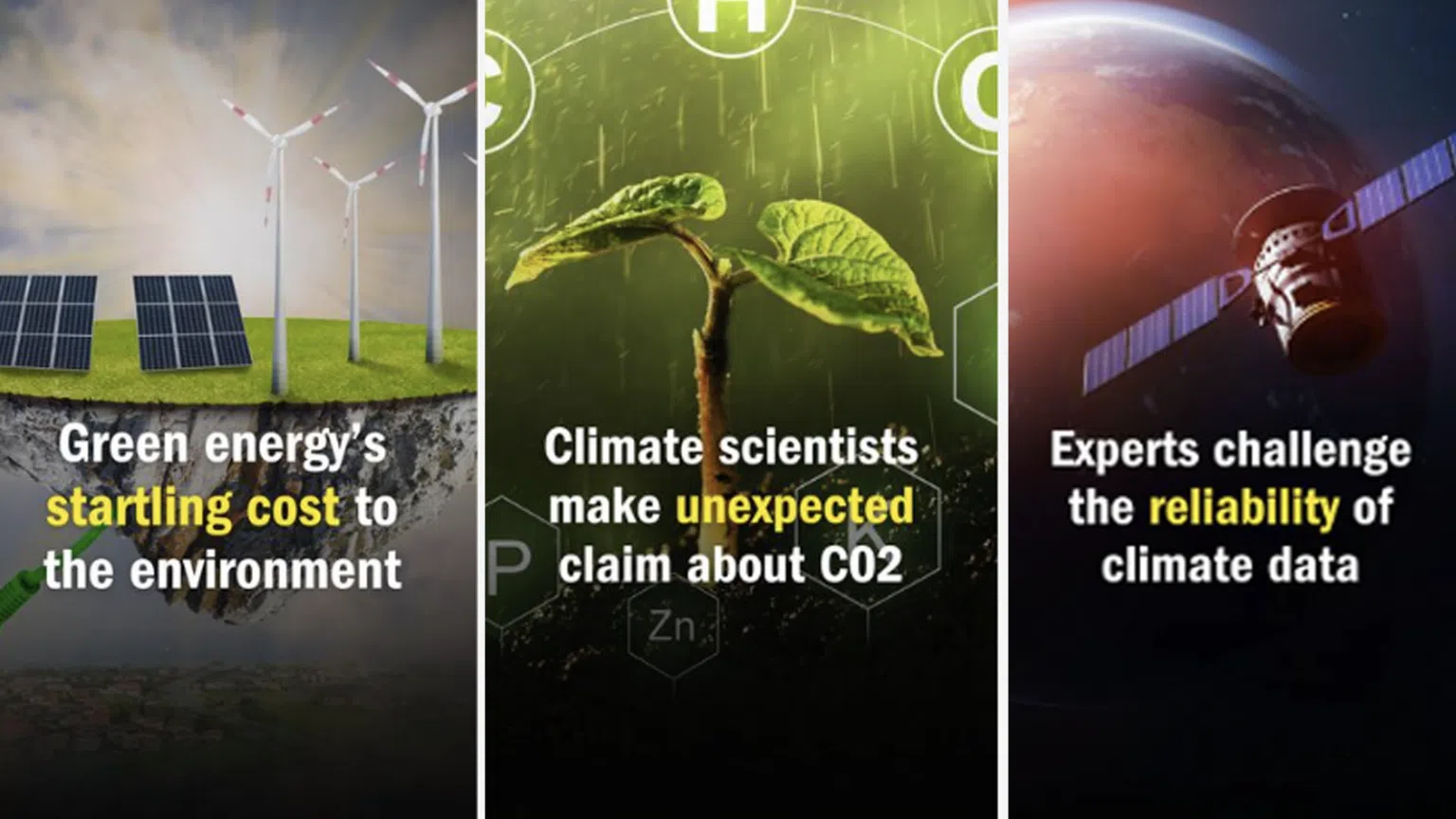
A mashup of three Epoch Times adverts posted on Meta. Credit: The Epoch Times / Meta

Campaigners have referred the Epoch Times to the UK advertising regulator for “stoking the climate culture war” on social media.

The pro-Trump Epoch Times has run hundreds of anti-climate social media adverts in Europe since the beginning of 2024 that have been seen millions of times, DeSmog can reveal. 

Epoch Times accounts in Europe have run 425 adverts on Facebook, Instagram, and X (formerly Twitter) that have attacked or undermined climate science, green energy, or climate action since the start of the year. These adverts have been run in the UK, Germany, Slovakia, and Bulgaria, appearing on social media feeds at least 2.3 million times across Facebook and Instagram, and 3.1 million times on X. 

These anti-climate ads were active for 22 days on average on Meta platforms (Facebook and Instagram), while they were displayed for 9.5 days on average on X.

Four of the adverts posted by Epoch Times on Meta have now been referred to the Advertising Standards Agency (ASA), a UK watchdog, by the campaign group Global Witness. The group is calling for the ASA to open an investigation into whether the Epoch Times breached the Committee of Advertising Practice (CAP) Code and, if so, to ban these adverts.

The Epoch Times claims to be the fastest growing independent news outlet in the United States. It claims to host websites across 22 languages in 35 countries, publishing online and in print. The publication has gained a substantial online following in recent years, amassing more than 10 million followers across its various Facebook accounts.

Based in New York, the Epoch Times is affiliated with the Falun Gong new religious movement in China and is staunchly anti-communist. Though the source of its income isn’t publicly declared, former employees told the New York Times that the publication was financed “by a combination of subscriptions, ads and donations from wealthy Falun Gong practitioners.”

The publication has propelled itself on Facebook by filling its feeds with viral, feel-good videos alongside its often partisan news coverage. 

According to NewsGuard, an independent company that rates the credibility of news sites, Epoch Times articles “frequently include distorted, misleading, or unsubstantiated claims.” The Epoch Times claims on its website that its reporters are “guided by the highest code of conduct and ethics”.

The Epoch Times spent at least $1.5 million on adverts in support of then Republican President Donald Trump from 2018 to 2019 – more than any group other than the Trump campaign. 

The publication was banned from advertising by Meta following these revelations, and the social media company told DeSmog that it ”continues to enforce this ban”. However, a number of Epoch Times offshoots have been allowed to promote climate science denial across Europe this year. 

Many of these adverts have explicitly questioned the contribution of carbon dioxide (CO2) to climate change. The adverts have featured statements including “Several climate scientists say CO2 is essential and higher levels are not a problem”, and “What if more CO2 is actually good for the environment?”

The UN’s Intergovernmental Panel on Climate Change (IPCC), the world’s foremost climate science body, has stated that carbon dioxide “is responsible for most of global warming” since the late 19th century, which has increased the “severity and frequency of weather and climate extremes, like heat waves, heavy rains, and drought”.

The adverts ran for months, and reached millions of people, despite Meta’s pledge to tackle climate misinformation. Ten were removed prior to DeSmog contacting Meta, of which six were removed over a failure to include an appropriate advertising disclaimer.

“After sowing division and disinformation in the U.S., everyone in the UK should be alarmed that the Epoch Times is using the same playbook here,” said Nienke Palstra, campaign strategy lead at Global Witness. “We have already seen politicians trying to stoke a climate culture war and the Epoch Times is spending big to tap into this sentiment. We cannot allow the future of our planet to be put at threat for the political gain of extremists and populists.”

A spokesperson for the Epoch Times told Global Witness that scientists have always differed in their opinion on climate change and that “To ban different opinions does not help a civilised open society and erodes freedom of speech.”

Climate Denial Content

The bulk of the anti-climate adverts seen by DeSmog were posted by Epoch Times London, a Facebook page created in October 2023 that has fewer than 600 followers. 

Many of the adverts posted by Epoch Times London questioned climate science, for example claiming that “the greenhouse effect is real but irrelevant”, and that “new studies undercut the ‘scientifically empty’ global warming narrative.”

One advert entitled “Scientists Expose Major Problems With Climate Change Data” was linked to an Epoch Times article that claimed climate change can be best explained by “natural variation”. The article also said that attempts to create a scientific consensus around human-caused climate change are the product of “deliberate fraud” according to “some experts.”

The same article quoted Willie Soon, a scientist who has cast doubt on climate science and who has openly admitted accepting research funding from fossil fuel interests.

A number of the Epoch Times London adverts suggested that the consensus on climate change is based on a wilful misinterpretation of evidence by the scientific community, asking questions such as “Climate change or data corruption? Experts question mainstream narrative.”

DeSmog’s analysis found that Epoch Times London ran at least 392 unique adverts on Meta since the start of the year that attacked or attempted to undermine climate science, green energy, or climate action.

Of those adverts, 146 were still active prior to DeSmog contacting Meta. According to an analysis of Meta’s ad archive, Epoch Times London has spent between £12,600 and £51,715 on its anti-climate advertising since the start of the year, with those adverts having been seen between 1.9 million and 2.5 million times. Meta has now blocked Epoch Times London’s ability to post adverts.

According to Companies House, Epoch Times London was incorporated in 2014. The publication drew criticism in the UK in 2020 for posting free editions of its paper to Brighton and Hove residents, the front page of which included claims that the Chinese Communist Party had deliberately covered up evidence of COVID-19’s existence. 

Following complaints from constituents, Lloyd Russell-Moyle, the Labour MP for Kemptown in Brighton, publicly criticised the Epoch Times in the House of Commons and called on Royal Mail to stop posting its print edition.

Epoch’s European Operations

Elsewhere in Europe, DeSmog has seen evidence of anti-climate advertising from Epoch Times-affiliated accounts. 

The most prolific source of these adverts has been the German Epoch Times account on X, which has run 61 anti-climate adverts since the beginning of the year, reaching at least 1.5 million people and appearing 3.2 million times on X feeds across the German-speaking world. 

Of the adverts that made a funding declaration, all stated that they were paid for Epoch Times Europe Gmbh, a company that has existed in Germany since at least 2009 according to the country’s company register. 

A number of these adverts directly questioned the role of CO2 on climate change, saying that “CO2, especially anthropogenic emissions, hardly play a role”, “Climate change: CO2 not to blame”, “Climate change is too complex to blame on CO2”, and “CO2 is the most expensive fraud in history.”

While there were fewer ads run on Meta in Germany than in the UK, they still generated at least 100,000 impressions, representing an ad spend of between €1,500 and €3,777. 

An account run by German Epoch Times journalist Erik Rusch has also run at least 24 anti-climate adverts since its creation in January – though the adverts state that they were paid for by Rusch. 

Some of the adverts run by Epoch Times Germany suggested that wind turbines produce nefarious health effects, including claims such as, “Don’t ignore the health effects: Doctor warns against wind turbines”, and “Wind energy under scrutiny: Dr Bellut-Staeck on the low-frequency risks to humans and animals.”

One of the German adverts quoted Fritz Vahrenholt, who is a scientific advisor to the UK’s leading climate science denial group, the Global Warming Policy Foundation (GWPF).

Other adverts promoted by the German Epoch Times, as well as Epoch Times London, quoted fellow GWPF advisor Richard Lindzen. In one of these adverts, Lindzen was quoted as saying: “If we could get rid of 60 percent of CO2, we would all be dead.” 

Germany Epoch Times adverts also linked back to articles on its website, directing readers to the claim by climate science denier John F. Clauser that the perceived climate threat is a “dangerous corruption of science.” 

Another advert quoted Lindzen as asking, “Is climate change the existential threat we’ve been led to believe?” and linked to an Epoch Times interview with Lindzen on its YouTube series “American Thought Leaders”. 

Former UK Prime Minister Liz Truss was recently interviewed on this series, while a parallel series, “British Thought Leaders”, has interviewed a number of climate science deniers. Since the beginning of March, this series has featured Martin DurkinRupert Darwall, and GWPF advisor Gwythian Prins. These interviews were headlined: “The Science Simply Does Not Support the Ridiculous Hysteria Around Climate At All”, “This Obsession With Carbon Dioxide Emissions Has Led to Tragedy”, and “The World Is at War – The West’s Green Policies Are Playing Into Our Enemy’s Hands”.

Epoch Times Bulgaria has posted three anti-climate ads since the beginning of the year, one of which was entitled “scientists alarmed that there is no real evidence that CO2 is causing climate change”.

Meta has pledged to take action against false narratives on climate change, and the platform has committing to using a “suite of tools, such as fact checking and labels, to help combat climate misinformation.”

In May 2021, Facebook said that it would begin attaching informational labels to posts about climate change, directing users to the platform’s new “Climate Science Information Center”.

However, research conducted in 2022 by the Center for Countering Digital Hate found that Facebook is failing to flag at least half of climate misinformation content.

“Despite claiming to take climate misinformation seriously, Meta has a history of allowing climate disinformation posts with high-engagement to go unchecked,” said Ilana Berger, senior climate and energy disinformation researcher at the misinformation watchdog Media Matters. “If Meta is committed to combating climate disinformation on its platform, it must at the very least consistently enforce its existing policies.”

Meanwhile, following his takeover of Twitter in 2022, Elon Musk has slashed the number of staff who identify harmful content and misinformation. X did not respond to DeSmog’s request for comment.

“Climate misinformation threatens all of our futures – and with elections pending across Europe, the stakes could not be higher,” said Richard Wilson, director of the campaign group Stop Funding Heat. “But the same money that is fuelling this problem could also be the key to a solution. If enough advertisers speak out, and urge Facebook and Twitter to stop climate lies being promoted through their platforms, they will have to clean up their act.”

Original article by Joey Grostern republished from DeSmog.

Continue ReadingPro-Trump Platform Promotes Climate Science Denial Ads to Millions Across Europe

Musk Is Consistent in His Opposition to Internet Democracy

Spread the love

Original article by ARI PAUL republished from FAIR under a Creative Commons Attribution-NonCommercial-NoDerivs 3.0 Unported License.

“We can’t go beyond the laws of a country,” Musk has said (Wall Street Journal4/8/24)—unless, of course, he doesn’t like the government making the laws.

Elon Musk, the right-wing anti-union billionaire owner of Twitter (recently rebranded as X), has cast his defiance of a Brazilian judicial ruling as a free speech crusade against censorship. Such framing is, of course, bullshit. It is instead a political campaign by a capitalist to use social media to reshape global politics in favor of the right. And it’s important that we all understand why that is.

As Reuters (4/7/24) reported, Brazilian Supreme Court Justice Alexandre de Moraes ordered “the blocking of certain accounts” on Twitter, prompting Musk to announce that Twitter would defy the judge’s orders “because they were unconstitutional.” He went on to call for Moraes’ resignation.

It isn’t clear which accounts are being targeted, but the judge is investigating “‘digital militias’ that have been accused of spreading fake news and hate messages during the government of former far-right President Jair Bolsonaro.” He’s also probing “an alleged coup attempt by Bolsonaro.”

The AP (4/8/24) then reported that the judge opened up an inquest into Musk directly, saying the media mogul “began waging a public ‘disinformation campaign’ regarding the top court’s actions.”

Musk claimed that he’s doing this in the name of free speech at the expense of profit, saying “we will probably lose all revenue in Brazil and have to shut down our office there” (Wall Street Journal4/8/24). He added that “principles matter more than profit.”

Michael Shellenberger (Public4/8/24), an enthusiastic pro-Musk pundit, was less restrained, saying the judge “has taken Brazil one step closer to being a dictatorship.” To Shellenberger, it’s “clear that Elon Musk is the only thing standing in the way of global totalitarianism.”

‘Par for the course’

Verge (1/25/23): “The documentary’s ban isn’t an example of Musk violating a vocal ‘free speech absolutist’ ethos. It’s a reminder that Musk has always been fine with government censorship.”

Anyone with a memory better than Shellenberger’s will recall that Musk’s Twitter has been all too eager to censor content at the request of the Indian government, including a BBC documentary that was critical of Prime Minister Narendra Modi (Verge1/25/23). India under Modi, who heads the right-wing Hindu nationalist BJP party, has seen a steep decline in press freedom, worrying journalists and free speech advocates (New York Times3/8/23NPR4/3/23Bloomberg2/25/24). At the same time Musk was pretending to defend free speech in Brazil, he was bragging about traveling to India to meet with Modi (Twitter4/10/24).

Musk suppressed Twitter content in the Turkish election in response to a request from Turkish President Recep Erdoğan, saying the “choice is have Twitter throttled in its entirety or limit access to some tweets. Which one do you want?” This move, he insisted, was “par for the course for all Internet companies” (Vanity Fair, 5/14/23). Turkey, with its laws against insulting the Turkish identity (Guardian11/16/21), is a country that is almost synonymous with the suppression of free speech—it ranks 165 out of 180 on Reporters Without Borders’ press freedom index. Yet Musk didn’t seem to feel the need to intervene to save democracy through his social media network.

The impact of Musk’s decision to censor Twitter when it comes to Turkey and India isn’t just that it exposes his duplicity when it comes to free speech, but it robs the global public of vital points of view when it comes to these geopolitically important countries. In essence, the crime is not so much that Musk is hypocritical, but that his administration of the social media site has kept readers in the dark rather than expanding their worldview.

Grappling with balance

AP (10/25/22) reported that Brazilian social media posts claimed that Lula “plan[ned] to close down churches if elected” and that Bolsonaro “confess[ed] to cannibalism and pedophilia.”

The context in Brazil is that in the last presidential election, in 2022, the leftist challenger Lula da Silva ousted the incumbent, Bolsonaro (NPR10/30/22), who has since been implicated in a failed coup attempt that closely resembled the January 6, 2021, riot at the US Capitol (Reuters3/15/24). Ever since, tech companies have bristled at Brazil’s attempt to curb the influence of fake news, such as a bill that would put “the onus on the internet companies, search engines and social messaging services to find and report illegal material” (Guardian5/3/23).

Brazil experienced a flurry of disinformation about the candidates in the run-up to the election, inspiring the country’s top electoral court to ban “false or seriously decontextualized” content that “affects the integrity of the electoral process” (AP10/25/22).

The Washington Post (1/9/23) reported that social media were “flooded with disinformation, along with calls in Portuguese to ‘Stop the Steal,’” and demands for “a military coup” in response to a possible Lula victory. And while these problems existed in various online media, a source told the Post that this occurred after Musk fired people in Brazil “who moderated content on the platform to catch posts that broke its rules against incitement to violence and misinformation.”

While Turkey and India are brazenly attempting to suppress opinions the government doesn’t like, a democratic Brazil is grappling with how to balance maintaining a free internet while protecting elections from malicious interference (openDemocracy1/3/23).

Despotic future

Brazilian Report (4/9/24): “Billionaire Elon Musk joined this week a campaign led by the Brazilian far-right to characterize Brazil as a dictatorship.”

Lula’s victory, in addition to being a source of hope for Brazil’s poor and working class (Bloomberg4/25/23), was seen as a blow to the kind of right-wing despotism espoused by people like Bolsonaro, who represents a past of US-aligned terror-states that use military force to protect US interests and suppress egalitarian movements in the Western Hemisphere (Human Rights Watch, 3/27/19). As Brazilian Report (4/9/24) put it, Musk has joined a “campaign led by the Brazilian far right.”

Indeed, the Wall Street Journal (4/10/24) noted that Musk’s tussle in the Brazilian judiciary was an extension of his alignment with the Brazilian right:

Supporters of former right-wing President Jair Bolsonaro, who gave Musk a medal during his visit in 2022 to announce plans to install satellites over the Amazon rainforest, have reveled in Musk’s defiance, declaring him a “hero,” as the dividing lines in Brazil’s culture wars deepen.

Erdoğan and Modi represent more successful iterations of neo-fascist ideology over liberal democracy. The dystopian societies they oversee make up the political model that the MAGA movement would like to impose in the United States, where a caudillo is unchecked by independent courts, the press and other civil institutions, while rights for workers and marginalized groups are eviscerated.

Musk isn’t simply displaying hypocrisy when he pretends to fight for free speech in Brazil while Twitter censors speech when it comes to India and Turkey. If anything, he is being consistent in his quest to use his corporate wealth to alter the political landscape against liberal democracy and toward a dark, despotic future.

Original article by ARI PAUL republished from FAIR under a Creative Commons Attribution-NonCommercial-NoDerivs 3.0 Unported License.
Continue ReadingMusk Is Consistent in His Opposition to Internet Democracy