Original article by Max Colbert republished from DeSmog. Makes more sense now why Just Stop Oil and Extinction Rebellion are campaigning at UK Universities.
Revealed: Fossil Fuel Giants Have Committed £40.4 Million to UK Universities Since 2022
Major oil and gas companies including Shell, BP, and ExxonMobil have pledged huge sums in the form of research agreements, scholarships and more.
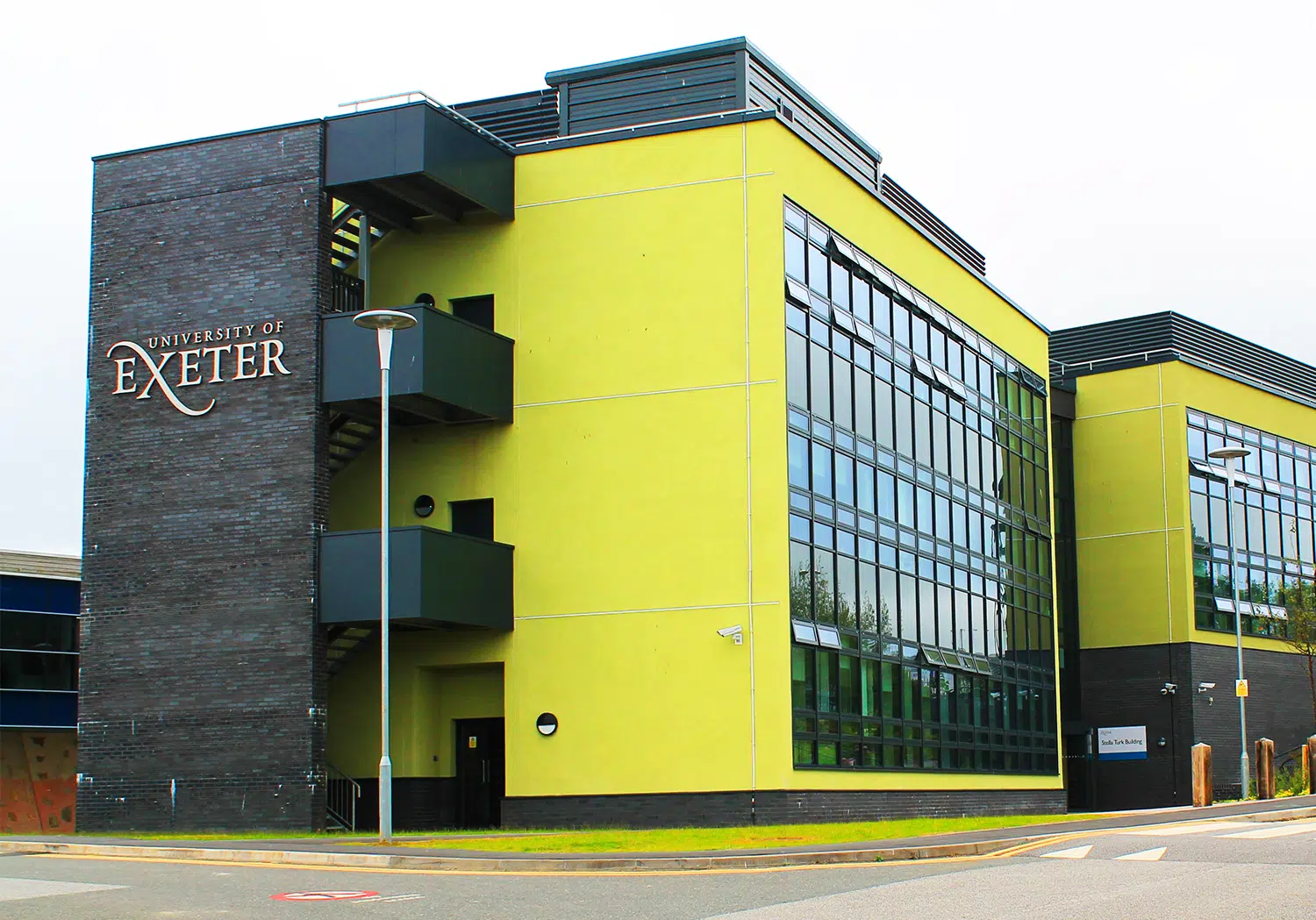
Major fossil fuel firms have committed tens of millions in finance to UK universities since 2022, DeSmog can reveal.
Many of these commitments have been accepted by institutions that have actively pledged to divest from oil and gas companies.
According to freedom of information requests submitted by DeSmog, more than £40.4 million has been pledged to 44 UK universities by 32 oil, coal and gas companies since 2022 in the form of research agreements, tuition fees, scholarships, grants, and consulting fees.
Most of the funding spans the current academic year, with a handful of projects running for a number years, up to as far as 2027.
The largest contributors were Shell, Malaysian state-owned oil company Petronas, and British Petroleum (BP). These three companies account for over 76 percent of the total figure awarded, having committed £20.98 million, £5.19 million, and £4.89 million respectively.
A further 10 companies made up nearly 20 percent of the remaining contributions during this period: Sinopec, Equinor, BHP Group, Total Energies, Eni SPA, Saudi Aramco, ExxonMobil, Kellas Midstream, Ithaca Energy, and Chevron.
Previous reporting from openDemocracy and the Guardian found that, between 2017 and December 2021, £89 million had been given to UK universities from some of the world’s biggest fossil fuel companies.
These partnerships have shown no sign of abating. DeSmog’s research shows an additional £40 million committed by fossil fuel firms since 2022, despite pledges from 102 higher education institutions to divest from the industry.
The universities in receipt of the most money were: Exeter, Imperial College London, Heriot-Watt, Manchester, Cambridge, Oxford, Royal Holloway, Queen Mary London, and Teesside.
“Young people care so deeply about protecting the planet because their futures are on the line,” said Green Party MP Caroline Lucas. “Yet fossil fuel giants are putting that future at risk with their planet-wrecking pollution, and then attempting to youthwash their reputation by handing over dirty money to universities”.
“If we’re going to tackle the climate emergency and secure a liveable future for the next generation, educational institutions should cut all ties with fossil fuel companies immediately.”
These figures do not include a total for Durham University, which declared that it had research agreements involving fossil fuel firms totalling £1.7 million but did not declare the sums that the oil and gas firms had contributed to these agreements.
These figures also do not include the amount held in fossil fuel investments by these universities. Our research indicates that at least 18 higher education institutions held direct investments in 25 fossil fuel companies over the relevant time period, collectively worth a further £8.1 million.
Many top universities also hold stakes in high-value pooled investment funds that are pouring hundreds of millions into fossil fuel giants. Research conducted by the student campaign group People & Planet estimates that, as of July 2022, as much as £319 million was still held in these funds by universities across the UK, including some institutions that have made promises to divest.
More than 65 percent of the country’s higher education institutions have refused to make further fossil fuel investments. This would potentially remove £17.7 billion from the reach of the industry, while 51 universities have yet to divest from oil and gas
Laura Clayson, climate campaigns manager at People & Planet, told DeSmog: “we say to those 51 universities left to divest: the student movement will remain unwavering in its demands for justice until our victory list includes every single one of you.”
The Leaderboard
The University of Exeter has received the most from fossil fuel firms since 2022, having signed a £14.7 million, five-year deal with Shell in November, as revealed by Byline Times. The project is to work on “carbon storage and sequestration”, and continues a 15-year relationship between the university and the oil giant.
According to the contract award notice, the project is part of a “wider Shell-led research programme focused on sequestration which aligns with Shell’s target to be a net-zero emissions energy business by 2050”.
Last year, Shell produced only 0.02 percent of its energy from renewable sources, analysis by Greenpeace has revealed. The company also recently abandoned plans to cut oil production by 1-2 percent each year until 2030, and will be investing £33 billion in oil and gas production between 2023 and 2035, compared to just £8-12 billion in “low-carbon” products.
Shell claims that it has reduced oil production more quickly than expected, though the company’s planned emissions between 2018 and 2030 are estimated to account for nearly 1.6 percent of the global carbon budget.
A spokesperson for the firm said: “We remain committed to becoming a net zero emissions energy business by 2050… It remains our view that global energy demand will continue to grow and be met by different types of energy – including oil and gas.”
New research from the University of Queensland shows that more than half of the world’s top fossil fuel producers will fail to meet climate targets unless they expand plans to decarbonise, while a major report from the UN has warned that the world will miss its climate targets unless it commits to “phasing out all unabated fossil fuels”.
A University of Exeter spokesperson said that its work with Shell will “contribute to the global race to net zero.”
Imperial College London has received the second most from fossil fuel firms since 2022. This follows a long association with oil and gas giants, which gave £54 million to the university between 2017 and 2021.
A spokesperson for Imperial told DeSmog that it pledged in 2020 it will only engage in research partnerships “with fossil fuel companies where the research forms part of their plans for decarbonisation, and only if the company demonstrates a credible strategic commitment to achieving net-zero by 2050”.
The university has maintained a working relationship with 13 fossil fuel companies since 2022.
The largest beneficiaries of fossil fuel financial commitments since 2022
| Exeter | £14,700,000 |
| Imperial College London | £6,725,769 |
| Heriot-Watt | £6,005,844 |
| Manchester | £3,077,268 |
| Cambridge | £2,821,437 |
| Oxford | £1,209,221 |
| Royal Holloway | £740,657 |
| Queen Mary London | £587,956 |
| Teesside | £500,000 |
The University of Manchester houses the BP Centre for Advanced Materials (ICAM) research unit, a collaboration between BP and leading universities in the UK and US, including Manchester, Cambridge, and Imperial. The ICAM website states that the centre supports “BP’s ambitions to become a net zero company by 2050”.
BP generated just 0.17 percent of its energy from renewable sources in 2022 and, in the first half of last year, the company spent more than 10 times more on new oil and gas projects than it did on “low carbon” energy. In 2022, 92.7 percent of all activity for both BP and Shell went into fossil fuel investment.
As with Shell, BP posted record profits in 2022 worth some £23 billion. At the same time, it scaled back plans to cut emissions by 2050 on the grounds that it needs to keep investing in new oil and gas to meet consumer demand. BP did not respond to our request for comment.
The University of Manchester’s funding agreements with BP stretch back to 2008, when it was selected by the fossil fuel giant to run its Projects and Engineering College.
Hundreds of people have subsequently completed BP’s courses at the university, with Manchester describing the partnership as a “strategic alliance that has a major impact on both organisations”. The university has also received money from Shell and TotalEnergies.
A spokesperson for Manchester told DeSmog: “Since 2019 all new research funded in the BP ICAM has been focused on topics in materials sciences that support the energy transition, providing research to support BP’s goal to become a net zero company by 2050.”
Since 2022, Durham University’s research projects have included contributions and commitments from BP, ExxonMobil, and the China Petroleum and Chemical Corporation (Sinopec).
The university also previously partnered with the universities of Edinburgh and Leeds to form the Engineering and Physical Sciences Research Council’s Centre for Doctoral Training in Soft Matter and Functional Interfaces (SOFI CDT), which has been sponsored by industrial partners including Infineum, a joint venture between ExxonMobil and Shell.
Durham University is also a sponsor of the GeoNetZero CDT, a PhD research and training programme focused on geoscience and the energy transition, which has 11 other university partners; Heriot-Watt, Aberdeen, Birmingham, Dundee, Exeter’s ‘Camborne School of Mines’, Keele, Newcastle, Nottingham, Plymouth, Royal Holloway and Strathclyde.
From 2020 to 2022, CDT recruited 16 PhD students per year, funded in part by the oil and gas firm NEO Energy, which pledged £2.5 million alongside academic partners.
The centre is based out of the Shell Building at Heriot-Watt University’s School of Energy, Geoscience, Infrastructure and Society, and has nine core industry partners: BP, Cairn Energy, Chrysaor, China National Offshore Oil Corporation (CNOOC), Equinor, ExxonMobil, NEO Energy, Shell, and Total Energy.
A spokesperson for Heriot-Watt told DeSmog: “Heriot-Watt University and our Centres for Doctoral Training (CDTs) are committed to a rapid and just energy transition, led by our world-class research and teaching… The GeoNetZero CDT is a new programme of PhD research and training set up to address key areas in geoscience and their role in the low carbon energy transition and challenge of net zero.
“We work in collaboration with the energy sector to develop education and research opportunities related to net zero, responsible consumption of oil and gas, and the transition to renewable energy sources.”
Studentships
Fossil fuel companies pledged to fund scholarships and tuition fees across at least 17 universities in 2022.
The Italian multinational Eni funded a scholarship programme at the University of Oxford’s Saïd Business School in 2022 called the Africa Scholarship, as well as a scholarship programme with St Anthony’s College, Oxford.
Oxford has previously said that it “receives funding from and donations from companies and organisations from the fossil fuel sector” typically at an average of £3 million a year in research funding and £2 million in philanthropic donations. It says that the research funding is equivalent to less than 1 percent of the university’s research turnover.
Kellas Midstream also funds a set of scholarships at Teesside University, while Cardiff receives over £870,000 from TotalEnergies for its OneTech Futures graduate programme, which began in 2018 and runs through to 2025.
Shell has given the University of Aberdeen £150,000 for new “Transition Scholarships” for the coming academic year, funding research into “key challenges around net zero and reducing emissions”.
The university, based in Europe’s “oil capital” on the coastline of the UK’s North Sea oil and gas fields, pledged to divest from fossil fuels in 2021 – saying that it planned on excluding fossil fuel extraction companies from its £52.7 million investment portfolio by 2025.
A report commissioned by the University of Cambridge and led by Nigel Topping, a former UN climate action champion, last year recommended that the institution halt all funding from fossil fuel companies, including for research or philanthropic purposes. Cambridge itself took £2.8 million from Shell, BP, and BHP Billiton in 2022, and has reportedly received around £3.3 million per year from the industry since 2017.
A spokesperson told DeSmog: “The University of Cambridge only accepts funding from energy companies where it is sure that the resulting collaboration will help the UK and global society move to renewable or decarbonised energy. An enhanced set of criteria created in 2021 includes a written assessment from non-conflicted experts on whether the purpose of the proposed collaboration contributes meaningfully to the energy transition.”
A spokesperson for the University of Strathclyde said: “The University of Strathclyde is committed to supporting the energy transition to a sustainable, renewable energy system and the delivery of net zero targets by 2050. Much of the University’s work in the achievement of a sustainable and zero carbon economy is carried out in collaboration with industrial partners in the energy sector.”
A spokesperson for Royal Holloway, University of London, said: “At Royal Holloway, University of London, we are committed to developing and implementing activities that support environmental sustainability and a solution-based approach to net zero.”
The University of Bradford refused to reveal how much it received in partnerships with both Sinopec and the Saudi chemicals company SABIC, citing the commercial interests of the companies.
A deal struck between the University of Surrey and BP, running from 2019-2022, was also withheld because of a non-disclosure agreement in place.
A number of other universities refused our freedom of information requests or failed to respond to repeated requests for comment. This included the universities of East Anglia, Nottingham, Birmingham, Plymouth, Loughborough, Bishop Grosseteste, and Oxford Brookes.
Additional reporting by Joey Grostern and Sam Bright
UPDATE: 5 October 2023 – This article previously erroneously listed Scottish Power as a fossil fuel company. The firm has now been removed from the article and Strathclyde University removed from the largest recipients of fossil fuel funding.
Original article by Max Colbert republished from DeSmog. Makes more sense now why Just Stop Oil and Extinction Rebellion are campaigning at UK Universities.