US Urged to Condemn Israel’s ‘Summary Execution’ of Two Journalists

Spread the love

Original article by EDWARD CARVER republished from Common Dreams under Creative Commons (CC BY-NC-ND 3.0). 

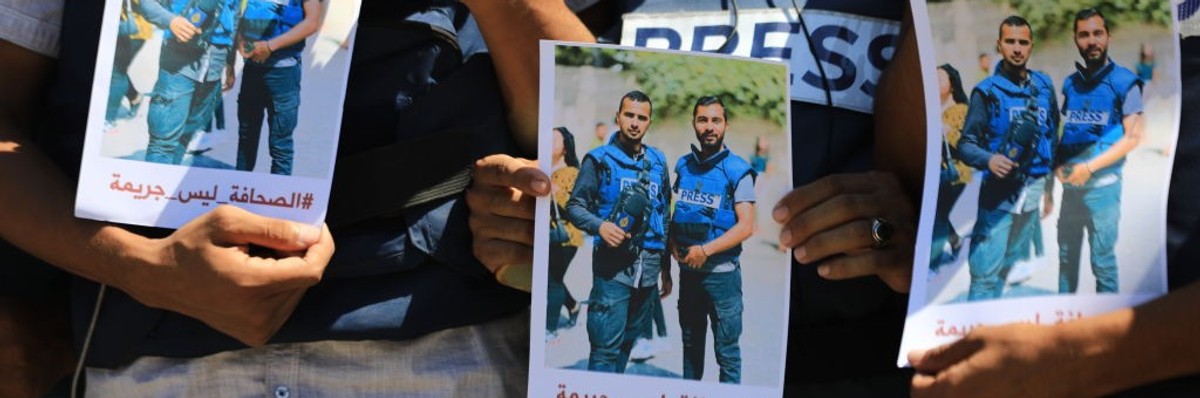
Palestinian Al Jazeera journalist Ismail al-Ghoul and cameraman Rami al-Rifee were killed by Israeli forces on July 31, 2024. (Photo: Dawoud Abo Alkas/Anadolu via Getty Images)

International outcry and a reporter’s pointed questions weren’t enough to get the State Department to denounce the killings of Al Jazeera journalists.

A Palestinian journalist on Thursday pressed a U.S. State Department spokesperson to characterize the killings of two Al Jazeera journalists by Israeli forces as summary execution.

The heated press briefing followed an airstrike on Wednesday that killed Al Jazeera reporter Ismail al-Ghoul and cameraman Rami al-Rifee, and sparked global outrage. Israel’s military acknowledged targeting al-Ghoul, saying he was “eliminated” because he was a Hamas “terrorist,” an allegation the Qatar-based network said was “baseless.”

The death toll of Palestinian journalists and media workers now stands at least 108, including several intentionally targeted by Israel forces, according to the Committee to Protect Journalists (CPJ).

Said Arikat, the Washington bureau chief of Al-Quds, an Arabic-language newspaper based in Jerusalem, called the strike a “premeditated crime to kill a journalist for doing their job” and a “summary execution” in the press briefing, but State Department spokesperson Vedant Patel declined to affirm the characterizations or condemn the airstrike.

Al-Ghoul and al-Rifee were killed in northern Gaza after reporting from near the home of Ismail Haniyeh, the Hamas political leader who was assassinated in Tehran earlier on Wednesday. They wore press vests and had signs on their vehicle identifying them as journalists; they had last contacted their news desk just 15 minutes before the strike, Al Jazeera reported.

The Israel Defense Forces (IDF) presented no evidence in a social media post claiming that al-Ghoul was a terrorist and Hamas operative. In March, al-Ghoul reported being stripped, handcuffed, and blindfolded during the course of a 12-hour detainment by Israeli forces; he had been covering an Israeli attack on al-Shifa hospital in Gaza City. Witnesses said Israeli forces severely beat al-Ghoul at the hospital before arresting him.

Anas al-Sharif, another Al Jazeera reporter in Gaza, was on site at a different hospital on Wednesday when his colleagues’ bodies were brought in, and he spoke about the role al-Ghoul had played in the outlet’s war coverage.

“Ismail was conveying the suffering of the displaced Palestinians and the suffering of the wounded and the massacres committed by the [Israeli] occupation against the innocent people in Gaza,” he told his own news outlet.

“The feeling—no words can describe what happened,” he added.

In protest of the killings, Palestinian journalists gathered to throw off their press vests and vowed to continue showing the suffering of Gazans through their work, despite the dangers they faced.

Condemnation of the killings of the two Al Jazeera journalists came not just from Gaza but all over the world.

CPJ CEO Jodie Ginsberg said in a statement that she was “dismayed” by the killings and that journalists are civilians who should never be targeted.

Defending Rights & Dissent, a U.S.-based civil liberties nonprofit, also condemned the killing of al-Ghoul and said the reasons for it were clear.

“When you ‘eliminate’ journalists, it’s much easier to hide war crimes, it’s easier to spread lies, it’s easier to commit genocide,” Sue Udry, the group’s executive director, said in a statement.

In response to the killing, the International Committee of the Red Cross (ICRC) said that journalists “must be protected, and we decry attacks against them.”

William Schomburg, head of the ICRC’s sub-delegation in Gaza, said in a statement that his team had just met with al-Ghoul the previous week to get an update on the humanitarian situation in Gaza. “Journalists in all wars play a central role in highlighting the plight of civilians and in speaking for the voiceless,” Schomburg said.

Reporters Without Borders (RSF, in French), a Paris-based nonprofit, wrote in unequivocal terms about the need for Israel to stop killing journalists.

“RSF is deeply disturbed to see the Israel Defense Forces using social media to justify their targeted killing of Al Jazeera journalist Ismail al-Ghoul,” the organization wrote on social media. “Journalists are not terrorists. This campaign of violence against media in Gaza must stop now.”

The Freedom of the Press Foundation also responded forcefully to the IDF’s claim about al-Ghoul.

“Documenting a war isn’t terrorism, it’s journalism,” the group wrote on social media. “If the IDF can prove al-Ghoul was working for Hamas’ military, it should do so immediately. If not, this looks like a flimsy excuse for intentionally murdering a journalist from an outlet Israel dislikes.”

Israeli forces have killed at seven journalists or media workers affiliated with Al Jazeera during the war, and Israel shut down the network’s local operations in May, citing a security threat, though critics said it was a case of censorship—an attempt to hide the brutality of the assault on Gaza.

In total, 113 journalists and media workers have died since the war began, including two Israelis and three Lebanese, according to CPJ, which says this has been the deadliest period for journalists anywhere in the world since it began collecting data in 1992.

The international outcry over all of the killings has ramped up pressure on the U.S.—which has backed the Israeli assault with weapons and diplomatic support— to condemn them, and Wednesday’s strike on al-Ghoul and al-Rifee has only increased that pressure. Still, Patel, the spokesperson, wouldn’t issue any such condemnation on Thursday.

Arikat also pressed Patel to call for the release of Palestinian journalists being held in Israeli detention centers without charges, but Patel didn’t do so.

Original article by EDWARD CARVER republished from Common Dreams under Creative Commons (CC BY-NC-ND 3.0). 

Continue ReadingUS Urged to Condemn Israel’s ‘Summary Execution’ of Two Journalists

Netanyahu Accused of Sabotaging Cease-Fire Talks With Assassination of Hamas Leader

Spread the love

Original article by JAKE JOHNSON republished from Common Dreams under Creative Commons (CC BY-NC-ND 3.0). 

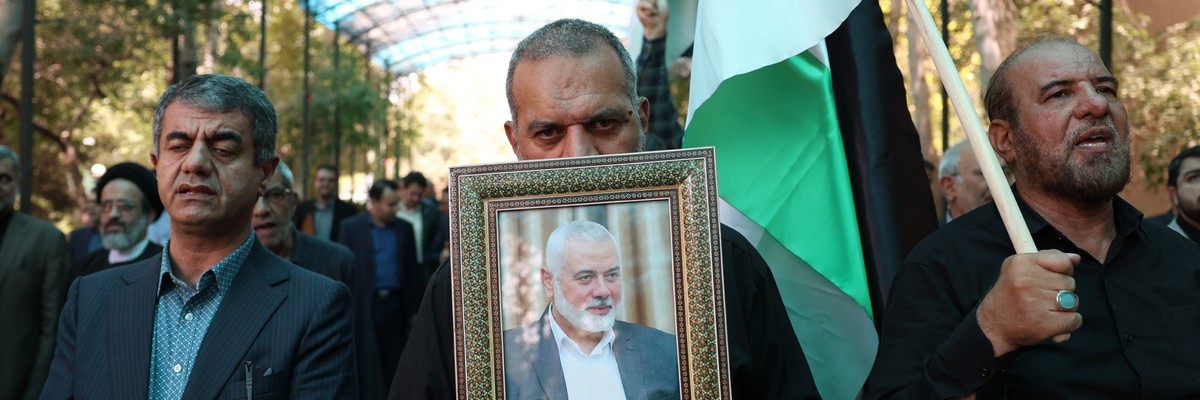
People hold up a portrait of assassinated Hamas political chief Ismail Haniyeh in Tehran, Iran on July 31, 2024. (Photo: AFP via Getty Images)

“Netanyahu isn’t playing chicken, he wants to crash the car,” said one observer.

The political leader of Hamas was assassinated early Wednesday in what the group said was an Israeli attack on his residence in the Iranian capital of Tehran, which he was visiting to attend the inauguration of the country’s newly elected president.

The killing of Ismail Haniyeh, who became the head of Hamas’ political arm in 2017, sparked warnings that Israeli Prime Minister Benjamin Netanyahu is doing all he can to undermine cease-fire talks with the Palestinian group after they showed signs of progress in recent weeks.

“Netanyahu has systematically sabotaged cease-fire talks because ending the war will likely end his political career,” Trita Parsi, executive vice president of the Quincy Institute for Responsible Statecraft, said following the assassination of Haniyeh, a key figure in the negotiations.

“The assassination buys Netanyahu several weeks, if not months, in which there will be no serious expectation of a cease-fire deal,” Parsi argued. “Thus, the war will continue, as will Netanyahu’s reign as prime minister.”

Haniyeh’s killing prompted fury from Iran, whose supreme leader vowed a “harsh response”—heightening the chances of a long-feared all-out war between Israel and Iran. Earlier this year, Israel killed several Iranian commanders in a strike on Tehran’s consulate in Syria’s capital, prompting Iran to retaliate with a drone attack.

Iranian lawmakers are expected to hold an emergency meeting about Haniyeh’s assassination later Wednesday. As of this writing, the Israel Defense Forces (IDF) has yet to comment on the killing.

The International Criminal Court’s (ICC) top prosecutor, Karim Khan, was seeking an arrest warrant against Haniyeh for war crimes committed on October 7. Khan has also applied for an arrest warrant against Netanyahu and Israeli Defense Minister Yoav Gallant.

“How can mediation succeed when one party assassinates the negotiator on the other side?”

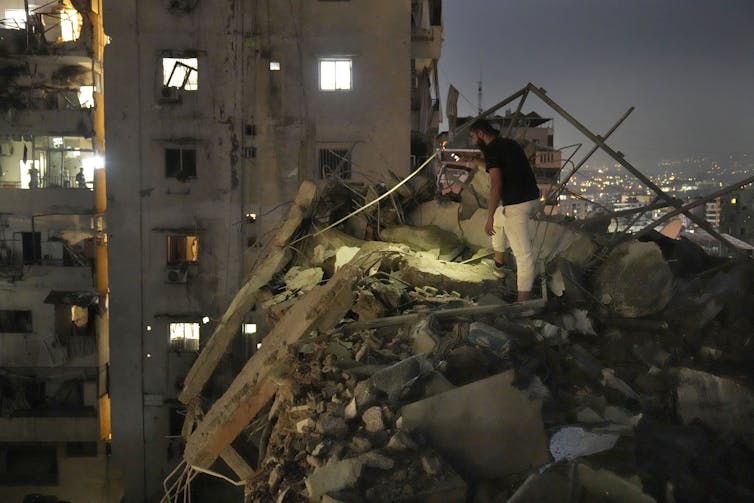
The suspected Israeli strike in Tehran on Wednesday was launched just hours after Israel’s military bombed the Lebanese capital of Beirut, killing several people—including two children—in retaliation for a deadly attack on the occupied Golan Heights. Israel claimed its attack on Beirut killed Hezbollah commander Fouad Shukur, but subsequent reporting suggested he may have survived the strike.

News of Haniyeh’s assassination in Tehran came days after top officials from Israel, Egypt, Qatar, and the United States met in Rome over the weekend to continue negotiating a possible deal to end Israel’s assault on the Gaza Strip.

The New York Times reported that “despite progress in recent weeks, the monthslong negotiations remain stalled over several critical issues, particularly the extent to which Israeli forces would remain in Gaza during a truce.”

“Earlier in July, Israel hardened its position on maintaining checkpoints along a strategic highway south of Gaza City, weeks after suggesting that it could compromise,” the Times added. “It was unclear on Sunday if Mr. Netanyahu had allowed negotiators to show greater flexibility on the matter during the talks. Mr. Netanyahu faces pressure from members of his right-wing government to stick to a tougher line. The length of the truce is also a source of dispute: Hamas wants a permanent truce, while Israel wants the option to resume fighting.”

Egypt said Haniyeh’s killing is a signal from Israel that it lacks “political will for deescalation,” according toAl Jazeera.

Qatar’s prime minister, meanwhile, wrote on social media: “Political assassinations and continued targeting of civilians in Gaza while talks continue leads us to ask, how can mediation succeed when one party assassinates the negotiator on the other side?”

Jamal Abdi, president of the National Iranian American Council, warned that with the assassination of Haniyeh, “Netanyahu isn’t playing chicken, he wants to crash the car.”

U.S. Secretary of State Antony Blinken said Wednesday that the United States was “not aware of or involved in” the assassination of Haniyeh.

Belén Fernández, a contributing editor at Jacobin, wrote in an op-ed for Al Jazeera that “Israel made its intention to continue and expand the war clear” by killing Haniyeh.

“By assassinating Haniyeh in Tehran, Israel is literally playing with fire,” Fernández wrote. “In order to derail cease-fire prospects and keep up the killing in Gaza, then, it seems Israel is going to end up with a whole lot more regional blood on its hands.”

This story has been updated to include new comment from U.S. Secretary of State Antony Blinken.

Original article by JAKE JOHNSON republished from Common Dreams under Creative Commons (CC BY-NC-ND 3.0). 

Continue ReadingNetanyahu Accused of Sabotaging Cease-Fire Talks With Assassination of Hamas Leader

UN Probe Finds ‘Appalling Acts’ of Torture Against Palestinians Detained by Israel

Spread the love

Original article by EDWARD CARVER republished from Common Dreams under Creative Commons (CC BY-NC-ND 3.0).
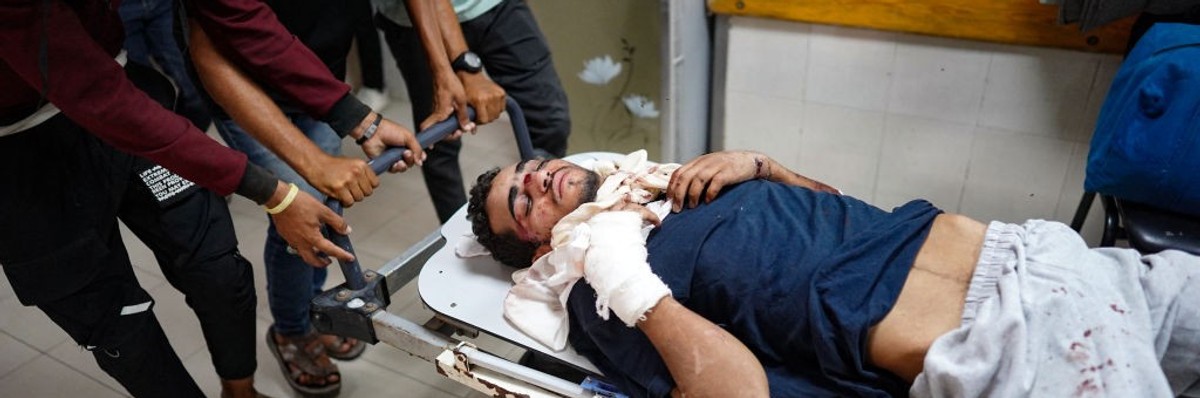
Palestinian Faouzi Abdel Aal, 21, is rushed to Nasser hospital in the southern Gaza Strip to receive treatment for his injuries, after being reportedly released from an Israeli detention center on July 25, 2024. (Photo: Bashar Taleb/AFP via Getty Images)

The U.N. report found evidence of sexual violence, waterboarding, and the use of dogs against detainees, many of whom were deprived of food, water, sleep, and toilet access.

The Office of the United Nations High Commissioner for Human Rights on Wednesday released a report detailing torture and abuse of Palestinians at Israeli detention centers, including sexual violence, waterboarding, and the use of dogs.

Israeli security forces have also used electric shocks, burned detainees with cigarettes, and deprived them of food, water, sleep, and toilet access, according to the 23-page OHCHR report, based largely on interviews with released detainees. Some detainees said they were held with their arms suspended from the ceiling; were forced to be naked for prolonged periods, wearing only diapers; and were blindfolded for extended periods.

Israel security forces have arrested thousands of Palestinians from the West Bank and Gaza since October, many of them arbitrarily; they held more than 9,400 “security detainees” as of the end of June, often in secret and incommunicado, without providing a reason for the detainment, the report says.

“The testimonies gathered by my office and other entities indicate a range of appalling acts, such as waterboarding and the release of dogs on detainees, amongst other acts, in flagrant violation of international human rights law and international humanitarian law,” U.N. Human Rights chief Volker Türk said in a statement accompanying the report.

Most of the detainees have been men and adolescent boys, though some are also women and adolescent girls, and there are many reported instances of sexual and gender-based violence, the report says, including “the forced nudity of both men and women; beatings while naked, including on the genitals; electrocution of the genitals and anus; being forced to undergo repeated humiliating strip searches; widespread sexual slurs and threats of rape; and the inappropriate touching of women by both male and female soldiers.”

OHCHR also said it had video evidence of detainees filmed in “deliberately humiliating positions” while handcuffed and blindfolded, and noted it received “consistent reports” of Israeli security forces “inserting objects into detainees’ anuses.”

Some detainees also reported “cage-like” facilities and overcrowding. The report says that 13 to 20 male detainees were kept in cells designed for five people, forcing many to sleep on the floor. There were “poor living, hygiene, and health conditions, with reports of water running only one hour per day over several weeks” and detainees faced “exposure to cold temperatures due to the confiscation of blankets and removal of windows panes in cold weather.”

At least 53 Palestinian detainees have died in Israeli detention centers since October, according to the report, which suggests that the detention system appears “to constitute a collectively punitive measure against Palestinians,” citing the words of Itamar Ben-Gvir, Israel’s minister of national security, who has said that “terrorists” deserve the most “stringent conditions.” Male detainees reported losing between about 55 and 120 pounds while in custody.

The OHCHR report comes as a highly controversial case involving detention abuse unfolds in Israel. The Israeli military is investigating nine soldiers for alleged “substantial abuse” of a Palestinian detainee who reportedly had to be hospitalized and could not walk after they attacked him. Far-right Israeli groups and political figures have protested the investigation.

Concern about Israeli detentions of Palestinians has been high for many months. In January, a Palestinian watchdog group issued a report condemning the forced disappearance of Gazans, and The New York Times found evidence of detainees being stripped and beaten.

Not all of the alarms about the situation in Israeli detentions centers have come from abroad. In February, Israeli’s public defender’s office issued a report calling for improved prison conditions, including for Palestinians. In April, local human rights groups called for a closure of the Sde Teiman military base detention center, due to its notorious conditions.

The calls were prompted in part by gruesome reports including amputations of detainees’ limbs due to handcuff injuries. The United Nations Relief and Works Agency for Palestine Refugees in the Near East then issued a damning report on detainee treatment, including of its own staff, some of whom had been detained and subjected to harsh interrogation.

Last week, Save the Children called for an end to the Israel’s arbitrary detainment of Palestinian minors, with a regional director saying that “these children are trapped, unable to move or see the sun, forced into crowded cells with appalling, unsanitary conditions, and subject to severe abuse and violence.”

Experts said Wednesday that the OHCHR report served mainly to confirm previous findings on Israeli detention centers. Neil Sammonds, a campaigner at the U.K.-based progressive advocacy group War on Want, said on social media that leaders of the new U.K. government haven’t spoken up about abuses at Israeli detention centers. He also said that the report could be used as evidence by the International Criminal Court, which has sought arrest warrants for both Israeli and Hamas leaders.

The new report also addresses abuses of Israelis held by Hamas and affiliated groups. The Palestinian militants killed roughly 1,200 people in a horrific set of attacks in southern Israel on October 7 and kidnapped about 250 Israelis, more than 100 of whom have since been released. Like Palestinian detainees, the released Israelis reported “appalling” conditions, the report says, including beatings, receiving surgery without anesthetic, and sexual and gender-based violence. The Israeli government has reported that 44 of the remaining hostages in Gaza have died.

Both Israel and Hamas have refused to allow the International Committee of the Red Cross to visit detainees or hostages. The OHCHR called for both sides to allow such independent monitoring.

Original article by EDWARD CARVER republished from Common Dreams under Creative Commons (CC BY-NC-ND 3.0).

Report From Gaza Aid Agencies Shows ‘Catastrophe on an Entirely New Level’

Iranian American Group Says Biden Must Change Course to Avert ‘Bloody Regional War’

Netanyahu Accused of Sabotaging Cease-Fire Talks With Assassination of Hamas Leader

Continue ReadingUN Probe Finds ‘Appalling Acts’ of Torture Against Palestinians Detained by Israel

Hamas leader’s killing in Tehran likely to further escalate violence in Middle East

Spread the love
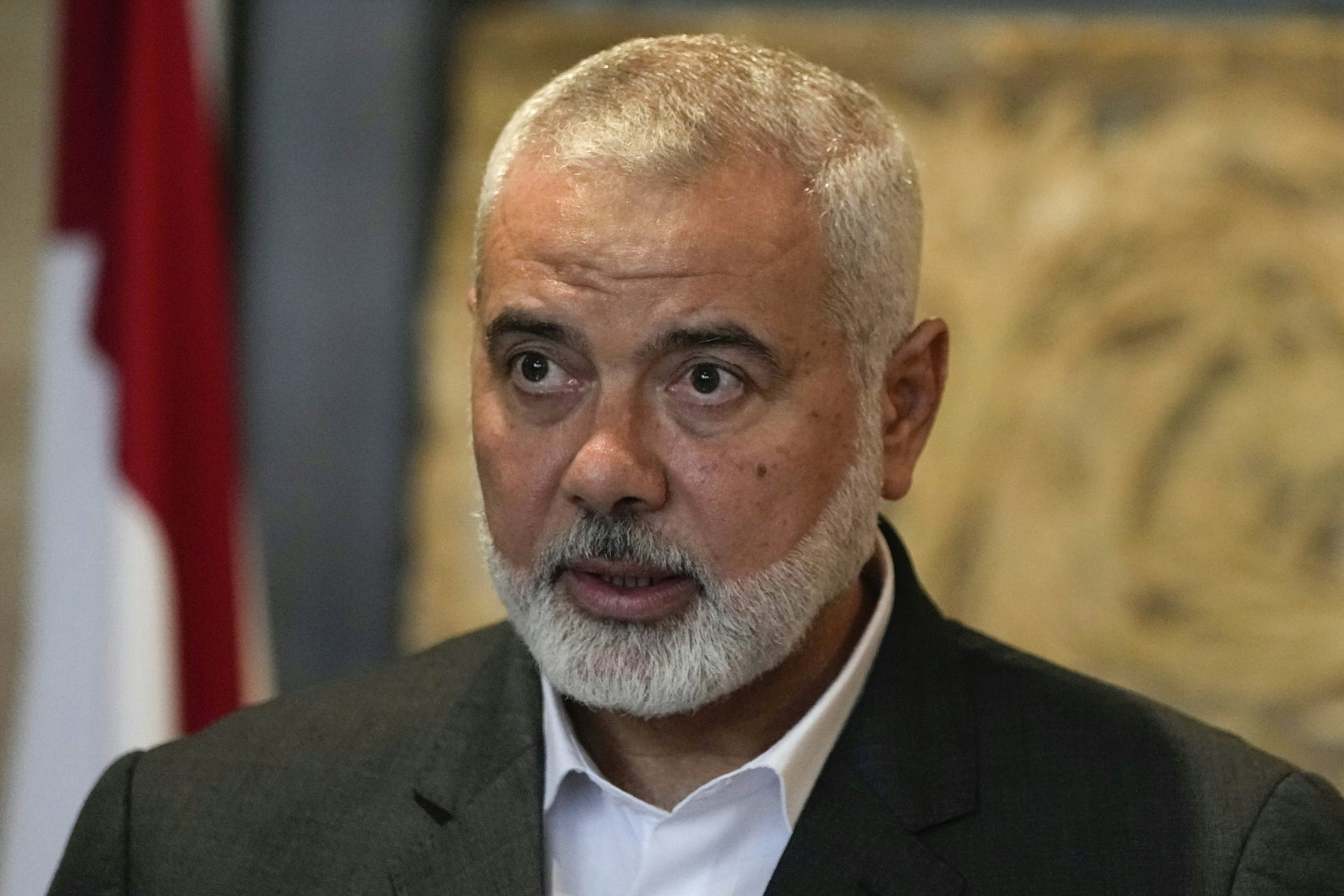
Hassan Ammar/AP

Palestinian militant group Hamas says its top political leader, Ismail Haniyeh, has been killed in his home in Tehran. It blames Israel for the attack, saying it was “a Zionist airstrike on his residence in Tehran after he participated in the inauguration of Iran’s new president”.

Iran has not yet given any details on how Haniyeh was killed, but says it is under investigation.

With the war in Gaza showing no sign of abating and the whole Middle East on a knife’s edge, the killing raises questions about whether it may spark a wider regional war.

Who is Ismail Haniyeh?

Haniyeh is the most senior political leader of Hamas, based in Doha, Qatar. He was essentially the Hamas leader for the ceasefire negotiations with Israel in the Gaza War, brokered by the United States, Egypt and Qatar. These negotiations will obviously now be on hold.

While Israel has not yet claimed responsibility for his death – and this is unlikely, given it does not typically claim responsibility for covert actions – Haniyeh has long been on its list of targets.

What is surprising, though, is where and how it was done. Haniyeh was in Tehran to attend the swearing-in ceremony of Iran’s new president, Masoud Pezeshkian. Details of exactly what happened are still sketchy, but it appears Haniyeh was killed along with one of his bodyguards by an explosion in his building. We do not yet know if the explosion was from a remotely controlled bomb or a missile attack.

Iran’s Islamic Revolutionary Guard Corps (IRGC) is investigating the killing.

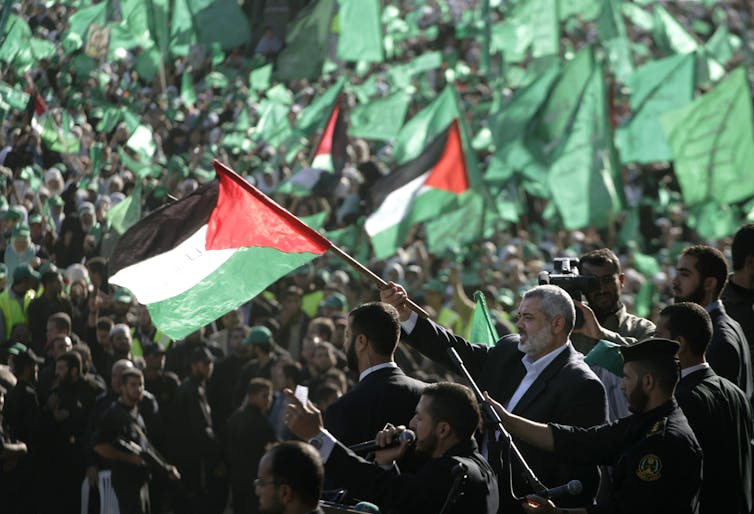
Haniyeh at a rally in 2007, when he was Palestine’s Prime Minister. EMILIO MORENATTI/AP

What does this mean for a wider regional war?

There are two important issues that will be under close scrutiny in the coming hours and days.

The first is that, assuming it was Israel that was responsible for Haniyeh’s killing, it raises the question of whether Iran will retaliate because Haniyeh was under the country’s protection when he was killed. His death is likely to cause enormous anger in Iran, and may in turn prompt retaliation against Israel on top of that from Hamas.

Tensions between Iran and Israel have been long been high. In April, Iran launched more than 300 missiles and drones at Israel in retaliation for an attack on the Iranian consulate in Damascus. The attack killed several senior IRGC leaders.

The attack on Haniyeh is indicative of a remarkable degree of intelligence and operational access that Israel seems to have in Iran at the moment. In recent years there has been a steady stream of Iranian scientists working on the nuclear program who have been killed. This includes the program’s “father”, Mohsen Fakhrizadeh, who was killed by a sophisticated remote-controlled machine gun in 2020.

However, there remain Hamas leaders on Israel’s list who, as far as can be discerned, are still alive. Gaza political leader Yahya Sinwar is apparently still directing the operations of militants there. In July, Israel carried out a strike that was believed to have killed the elusive military leader Mohammed Deif. However, Hamas has not acknowledged this, and Deif has survived several previous assassination attempts.

The second major question is whether Lebanon-based Hezbollah will launch an attack on Israel, at Iran’s behest.

The Haniyeh killing comes within hours of an Israeli airstrike in southern Beirut, in which Israeli officials believe they have killed senior Hezbollah commander Fuad Shukr.

An Israeli airstrike on Southern Beirut, Lebanon threatens to further increase tensions in the region. Hussein Malla/AP

If Iran were to retaliate, it might be through Hezbollah from Lebanon. A major missile barrage from Hezbollah could potentially overwhelm Israel’s Iron Dome missile defence system.

Iran also has other allies on which it can call, including Shia militant groups in Syria and Iraq, as well as the Houthis in Yemen who have already launched a drone strike on Tel Aviv last week. Israel quickly retaliated.

What happens now is difficult to say until there is more information. But what is certain is that the killing of Haniyeh is likely to cause a significant escalation in the Gaza War, and possibly in the wider Middle East.

Ian Parmeter, Research Scholar, Centre for Arab and Islamic Studies, Australian National University

This article is republished from The Conversation under a Creative Commons license. Read the original article.

Continue ReadingHamas leader’s killing in Tehran likely to further escalate violence in Middle East

Israeli air strikes destroy a school in Gaza, killing 30 people

Spread the love

https://morningstaronline.co.uk/article/israeli-air-strikes-destroy-school-gaza-killing-30-people

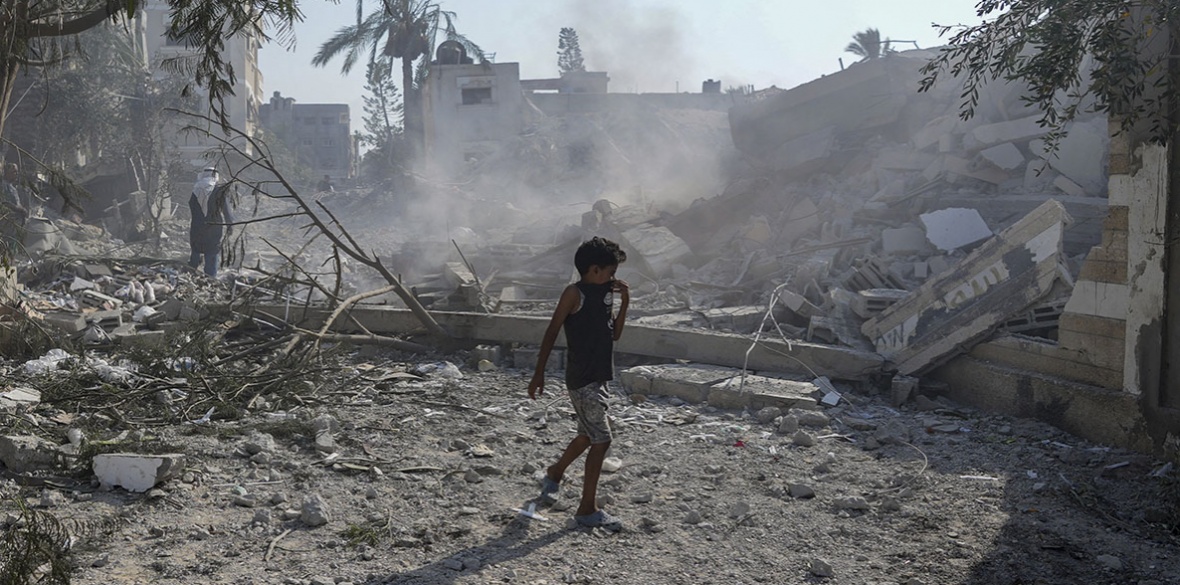
A Palestinian boy walks past the rubble of a school destroyed in an Israeli airstrike on Deir al-Balah, central Gaza Strip, July 27, 2024

ISRAELI air strikes destroyed a school used by displaced Palestinians in central Gaza on Saturday, killing at least 30 people, including several children.

Seven children and seven women were reportedly among the dead taken from the girls’ school in Deir al-Balah to al-Aqsa Hospital.

Israel’s military said that the air raid was targeted at a Hamas command centre used to direct attacks against Israeli troops and store “large quantities of weapons.”

Hamas slammed the Israeli claim as false.

Civil defence workers in Gaza said thousands had been sheltering in the school, which also contained a medical site.

Gaza’s Health Ministry said at least another 12 people were killed in other strikes on Saturday.

https://morningstaronline.co.uk/article/israeli-air-strikes-destroy-school-gaza-killing-30-people

Continue ReadingIsraeli air strikes destroy a school in Gaza, killing 30 people