“No treatment, no pain relief, no escape,” UN says on healthcare in Gaza

Spread the love

Original article by Ana Vračar republished from peoples dispatch under a Creative Commons Attribution-ShareAlike 4.0 (CC BY-SA) license.
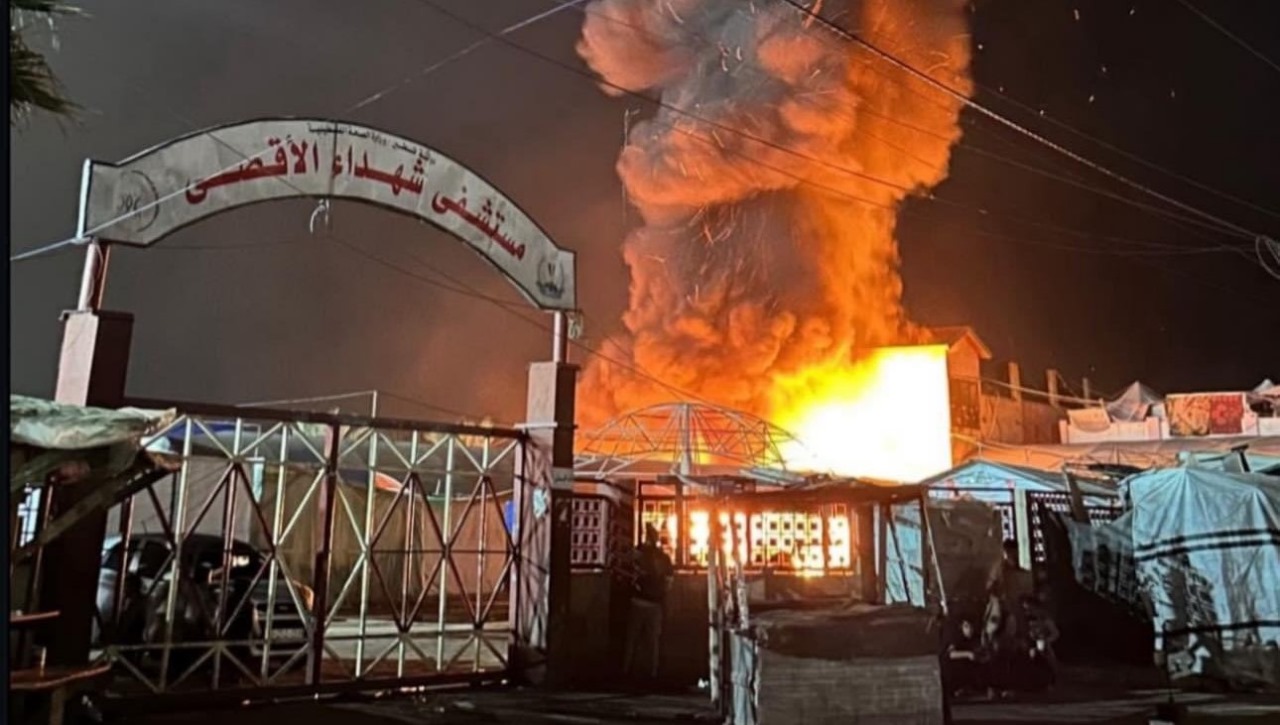
Source: Munir al-Bursh/X

Intensified Israeli attacks have devastated hospitals and healthcare in Gaza, with patients left to suffer amid a blockade of medical resources and repeated denials of evacuation permits

Conditions in Gaza’s healthcare system, already critical, have further deteriorated under Israeli Occupation Forces (IOF) attacks on hospitals in the north. Following the forced closure of the Indonesian Hospital, only two hospitals, Al-Awda and Kamal Adwan, remain partially functional. Al-Awda is difficult to access due to damaged road infrastructure, while Kamal Adwan endured a violent raid on October 25-26.

Both have in their care more patients than they can objectively provide care to. During the raid on Kamal Adwan, Israeli soldiers detained or disappeared 44 male staff members, with dozens still imprisoned. According to the UN, by October 29 only two doctors – the hospital director and a pediatrician – remained at Kamal Adwan to manage care for 150 patients without surgical, anesthesiology, or intensive care support. Despite appeals, Israel continues to block access for additional medical teams, supplies, and life-saving essentials.

Read more: 100,000 Palestinians trapped in northern Gaza amid ongoing Israeli massacres and siege

Medical evacuations remain practically non-existent. Since May, only 127 children have been permitted to leave Gaza for critical care. Thousands more injured children face indefinite waits for permits. UNICEF recently expressed what can only be described as desperation, calling out Israel’s bureaucratic “indifference” that leaves children suffering without relief or hope. And, while it is possible to know how few children were allowed to leave Gaza for medical care, Israel does not keep records of how many were denied. “When a patient is denied, there is nothing that can be done,” the agency said. “Trapped in the grip of an indifferent bureaucracy, children’s pain is brutally compounded.”

The situation is far beyond agony for children like Elia, a four-year-old girl who suffered severe burns and multiple amputations after an Israeli rocket attack. Hospitalized for over 40 days, she was admitted along with her mother, Eslam, who sustained similar injuries. Eslam died as a result of the attack in which she and her daughter were hurt, and only then was Elia granted medical evacuation, but without a clear timeline.

Children including infants with cancer and malnutrition, as well as 12-year-olds in need of bone surgery, have been repeatedly denied the right to be transferred to a place where they can access adequate care. “No treatment, no pain relief, no escape,” Elder said of the situation.

Read more: Final phase of polio vaccination in Gaza suspended amid Israeli attacks

There are no healthy people left in the Gaza Strip: those not suffering physical injury are either going hungry or struggling with mental health effects of trauma. Respiratory diseases, jaundice, and diarrhea are rampant due to destroyed sanitation infrastructure and chronic malnutrition. Without an immediate and lasting ceasefire, conditions are expected to worsen further.

Concerns include missing the thresholds set for the polio vaccination campaign, after the World Health Organization (WHO) and partners were forced to suspend the final phase of a polio vaccination campaign in northern Gaza due to escalating IOF violence. While WHO has expressed hopes to resume vaccinations from November 2 to 4, it remains to be seen if Israeli authorities will guarantee the necessary safety assurances.

People’s Health Dispatch is a fortnightly bulletin published by the People’s Health Movement and Peoples Dispatch. For more articles and to subscribe to People’s Health Dispatch, click here.

Original article by Ana Vračar republished from peoples dispatch under a Creative Commons Attribution-ShareAlike 4.0 (CC BY-SA) license.
Continue Reading“No treatment, no pain relief, no escape,” UN says on healthcare in Gaza

‘The Entire Population of North Gaza Is at Risk of Dying’: UN Relief Official

Spread the love

Original article by Olivia Rosane republished from Common Dreams under Creative Commons (CC BY-NC-ND 3.0). 

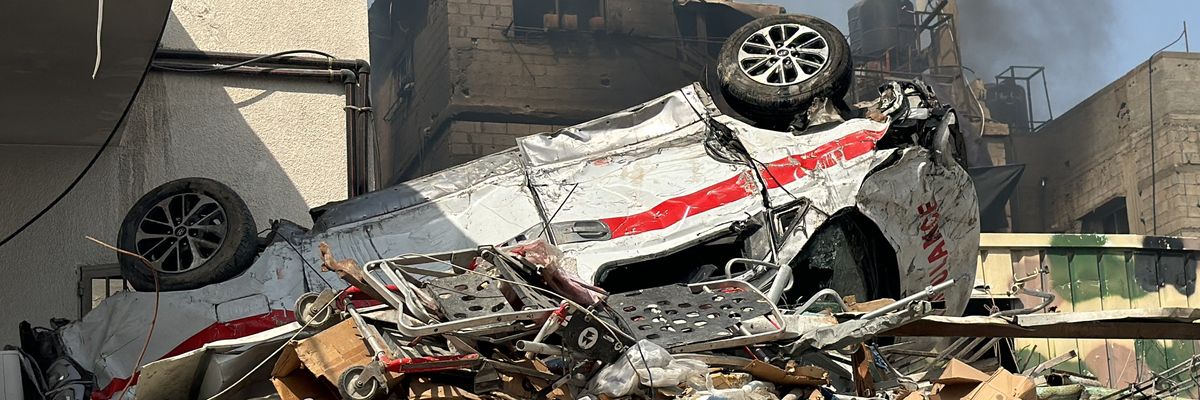
A picture shows the damage to an ambulance at the Kamal Adwan Hospital in Beit Lahia in the northern Gaza Strip on October 26, 2024. (Photo: /AFP via Getty Images)

“Such blatant disregard for basic humanity and for the laws of war must stop,” the official said.

Israel could kill everyone left in Northern Gaza if its assault on the enclave continues, a United Nations relief official warned on Saturday.

U.N. Acting Under-Secretary-General for Humanitarian Affairs and Emergency Relief Coordinator Joyce Msuya also called for an end to the Israeli attack.

“What Israeli forces are doing in besieged North Gaza cannot be allowed to continue,” Msuya said.

“Instead of receiving aid, we are receiving tanks.”

In particular, Msuya emphasized Israel’s targeting of hospitals and shelters and interference with relief work.

“Hospitals have been hit, and health workers have been detained. Shelters have been emptied and burned down. First responders have been prevented from saving people from under the rubble. Families have been separated, and men and boys are being taken away by the truckload,” she said.

Msuya estimated that Israel’s actions in the north had killed hundreds and displaced tens of thousands. According to Al Jazeera, an Israeli siege on the north that began earlier in October has killed around 640.

“The entire population of North Gaza is at risk of dying,” Msuya said. “Such blatant disregard for basic humanity and for the laws of war must stop.”

The U.N. official’s remarks came as Israeli troops withdrew from a deadly attack on Kamal Adwan Hospital in Beit Lahia, which Al Jazeera correspondent Tareq Abu Azzoum said “is considered a medical lifeline for the two-thirds of Palestinians in northern Gaza.”

https://twitter.com/QudsNen/status/1850191254006407261?ref_src=twsrc%5Etfw%7Ctwcamp%5Etweetembed%7Ctwterm%5E1850191254006407261%7Ctwgr%5E8396be47ecdaf06e57c3b08a76ea9f7817e09eb3%7Ctwcon%5Es1_c10&ref_url=https%3A%2F%2Fwww.commondreams.org%2Fnews%2Fnorthern-gaza-risk-dying

The Israel Defense Forces (IDF) had surrounded the hospital for days before entering and opening fire on Thursday and Friday, the Gaza Health Ministry and the hospital’s director told CNN.

“Instead of receiving aid, we are receiving tanks,” hospital director Dr. Hussam Abu Safiya said in a video.

Medics told Al Jazeera that the IDF had detained 44 members of the hospital team, later releasing 14 of them. The director of field hospitals in Gaza, Marwan Al-Hams, said that soldiers had also destroyed medications as they left, “preventing us from saving the wounded.”

https://twitter.com/QudsNen/status/1850205360654569827?ref_src=twsrc%5Etfw%7Ctwcamp%5Etweetembed%7Ctwterm%5E1850205360654569827%7Ctwgr%5E8396be47ecdaf06e57c3b08a76ea9f7817e09eb3%7Ctwcon%5Es1_c10&ref_url=https%3A%2F%2Fwww.commondreams.org%2Fnews%2Fnorthern-gaza-risk-dying

“It is a catastrophic situation as patients and the wounded are left on the floor without any medical attention,” hospital spokesperson Hisham Sakani told Al Jazeera. “We are facing grave dangers, and here I am once again sending an SOS to the whole world. We pray to God almighty our plight comes to an end and Israeli massacres [are] ceased.”

“The entire population north of Gaza Strip are now without any medical service after all the hospitals have been destroyed and forced out of operation,” Sahani continued.

Msuya’s statement also came a day after U.N. High Commissioner for Human Rights Volker Türk called Friday’s attacks on northern Gaza the “darkest moment” of the war.

“The Israeli Government’s policies and practices in northern Gaza risk emptying the area of all Palestinians,” Türk said. “We are facing what could amount to atrocity crimes, including potentially extending to crimes against humanity.”

Msuya and Türk’s statements reflect the opinion of human rights experts that Israel is committing genocide in Gaza. The International Court of Justice is still considering the genocide case brought by South Africa against Israel. To date, the Israeli assault has killed at least 42,924 people and wounded 100,833, but the true numbers could be much higher.

Emergency medical doctor Mads Gilbert, who has volunteered in both Gaza and Lebanon, criticized Western governments for allowing the raid on Kamal Adwan, as well as Israel’s systematic attacks on healthcare workers and facilities in Gaza.

“We need an additional factor to understand why this has been allowed to go on, and that is actually that the Palestinian people are defined as under-humans,” Gilbert told Al Jazeera. “We would never have allowed this to happen, for example, in Ukraine. Almost 250,000 people in the northern part of Gaza have now no healthcare, and that in itself is part of the genocide.”

The Institute for Middle East Understanding called on both the international community and the U.S. government to respond to Israel’s violations of international law.

“The Biden-Harris administration must stop the flow of U.S. weapons to Israel which constitutes a necessary step to halting Israel’s ongoing war crimes,” IMEU wrote on social media Saturday. “It’s time for an arms embargo now.”

Original article by Olivia Rosane republished from Common Dreams under Creative Commons (CC BY-NC-ND 3.0). 

Continue Reading‘The Entire Population of North Gaza Is at Risk of Dying’: UN Relief Official

One year of Israel’s war on Gaza’s health system

Spread the love

Original article by Ana Vračar republished from peoples dispatch under a Creative Commons Attribution-ShareAlike 4.0 (CC BY-SA) license.
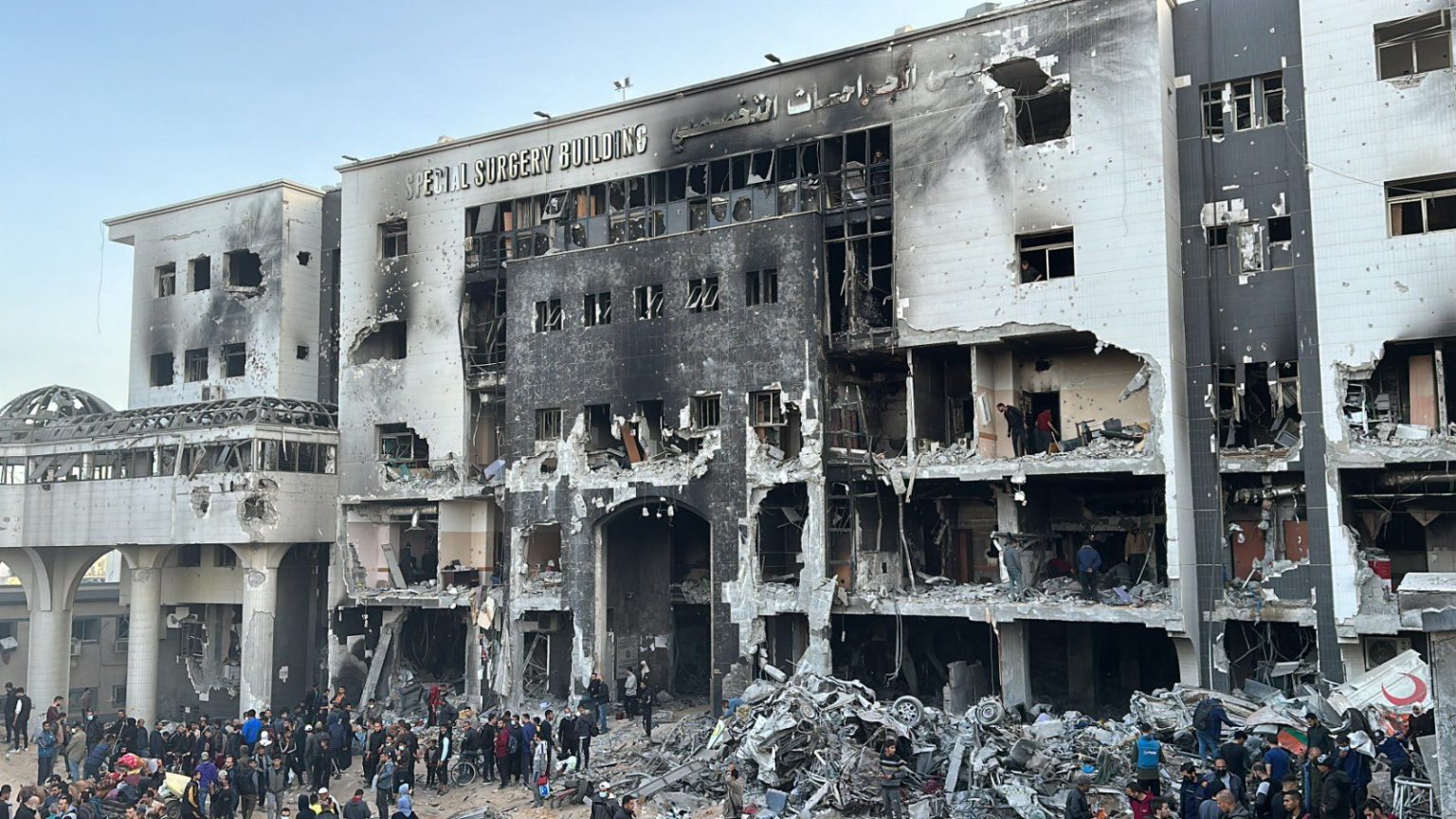
Al Shifa Hospital after a two-week Israeli siege, April 2024.

After a year of unrelenting Israeli attacks, Gaza’s healthcare system lies in ruins. Yet, health workers continue their steadfast efforts to provide care

After a year of relentless bombardment, Gaza’s healthcare system lies in ruins, and the warnings Palestinians have issued for decades are being confirmed: hospitals, clinics, and health workers are deliberate targets of Israeli Occupation Forces (IOF). What was once a systematic campaign against healthcare has escalated into an all-out assault, resulting in the decimation of most of the infrastructure. As the one-year anniversary of this ongoing genocide approached, Israeli forces continued their siege on northern Gaza, intensifying their attacks on health facilities.

Three hospitals still barely functioning in the area — including Al-Awda and Kamal Adwan — were just issued so-called “evacuation orders,” which, as pointed out by Medical Aid for Palestinians (MAP), are nothing short of forced removal orders. Kamal Adwan’s director, Hussam Abu Safiya, stressed the impossible position the hospital faced soon after the orders were issued. With critically injured children in their care, no means to safely evacuate them, and no other facility able to accept them, health staff are faced with the excruciating decision of either abandoning their patients or staying at the risk of their own lives.

“In between the constant bombardment occurring on the hospital and the surrounding buildings, the healthcare staff have become terrorized to a point where they are struggling to do their jobs,” Abu Safiya stated. Their situation is similar to that faced in other health facilities. Around the same time Abu Safiya recorded his statement, medics in Al-Awda were also issued forced removal orders—for the third time in a year—says Matilde De Cooman from Viva Salud, a Belgian organization partnering with the hospital.

The risks health workers face are all too real. Israeli forces have systematically besieged and destroyed healthcare infrastructure over the past 12 months, including Gaza’s largest hospitals, such as Al-Shifa. Under the pretext of searching for resistance fighters, the IOF raided operating rooms, destroyed medical equipment, and abducted patients and medical staff. In the aftermath of the attacks, civil defense teams discovered seven mass graves containing 520 bodies on hospital grounds.

Read more: Remember the Palestinian doctors killed by Israel

Over 1,000 health workers have been killed since the genocide began, with hundreds more kidnapped and held in Israeli concentration camps. Those who have been released share harrowing accounts of torture: shackles, electric shocks, broken limbs, and sexual violence. Families of those still missing, like Dr. Ahmed Muhanna, the director of Al-Awda Hospital in northern Gaza, are not granted any official information about prisoners’ conditions. Dr. Muhanna was abducted in December 2023. Since then, no official word has emerged about his mental or physical condition, says De Cooman.

International campaigns to secure the release of Dr. Muhanna and other abducted health workers are ongoing, though disturbing reports of their treatment in Israeli camps have sparked both outrage and fear about what the future holds. Despite these developments, Gaza’s health workers remain resolute, refusing to abandon their patients. Their unwavering commitmentsumud (steadfastness), has been lauded by global health workers since the beginning of the genocide. Operating without pay or essential supplies due to the blockade, they have continued their work tirelessly since last October. “Even with Dr. Muhanna’s fate in mind, Al-Awda’s operating director, Mohammed Salha, never once considered abandoning the hospital,” says De Cooman. “As long as there is even one person left in the area, the hospital will remain open and stand by its people.”

Read more: Fears of flooding add to Gaza’s health crisis

The health suffering in Gaza extends far beyond the hospitals. With more than two million people pushed into poverty by the attacks and the aid blockade, food and clean water are scarce. Recent reports reveal that 35% of children and 40% of pregnant or breastfeeding women in Gaza are surviving on just one type of food. Malnutrition is rampant, and the World Health Organization (WHO) has documented cases of children starving to death as humanitarian aid convoys are blocked at Israeli-controlled checkpoints.

Hunger and disease go hand-in-hand, as the WHO continues to repeat. Gaza is witnessing a hard-to-imagine surge in infectious diseases—respiratory infections, skin diseases, Hepatitis A, and even polio, a virus that had been eradicated decades ago but resurfaced, paralyzing a 10-month-old child. The shortage of basic hygiene products, such as soap and clean water, only adds to the crisis.

The spread of diseases is anything but collateral damage: it is a calculated weapon in Israel’s strategy. As Jewish Voice for Peace remarked, in prisons, “skin diseases are a method of punishment. Prison authorities are allowing scabies to spread by restricting Palestinian inmates’ water supply and depriving them of clean clothes and medical care.”

Read more: Palestinian health workers in Gaza describe torture and abuse in Israeli detention

On top of it all, Gaza’s whole environment is contaminated with asbestos dust raised by the constant bombardment. An estimated 800,000 tonnes of debris in Gaza could contain asbestos particles, as reported by Al Jazeera, raising the prospect of soaring cancer rates in the coming years.

“After a year, the occupying forces continue to practice an unprecedented genocide in modern history. What is particularly painful is the disgusting silence of the international community,” stated Hani Serag, Co-Chair of the People’s Health Movement. “We hope that activists across the world will continue expressing their solidarity to Palestinian people and refuse the barbaric practices of the occupying forces.”

Israeli crimes against healthcare are not confined to Gaza. In less than a month, Israeli forces have killed over 100 health workers in Lebanon and forced the closure of dozens of health centers. The destruction unfolding in Gaza serves as a blueprint for the invasion of Lebanon, raising the question: how long will the West look away while Israel continues its rampage?

People’s Health Dispatch is a fortnightly bulletin published by the People’s Health Movement and Peoples Dispatch. For more articles and subscription to People’s Health Dispatch, click here.

Original article by Ana Vračar republished from peoples dispatch under a Creative Commons Attribution-ShareAlike 4.0 (CC BY-SA) license.
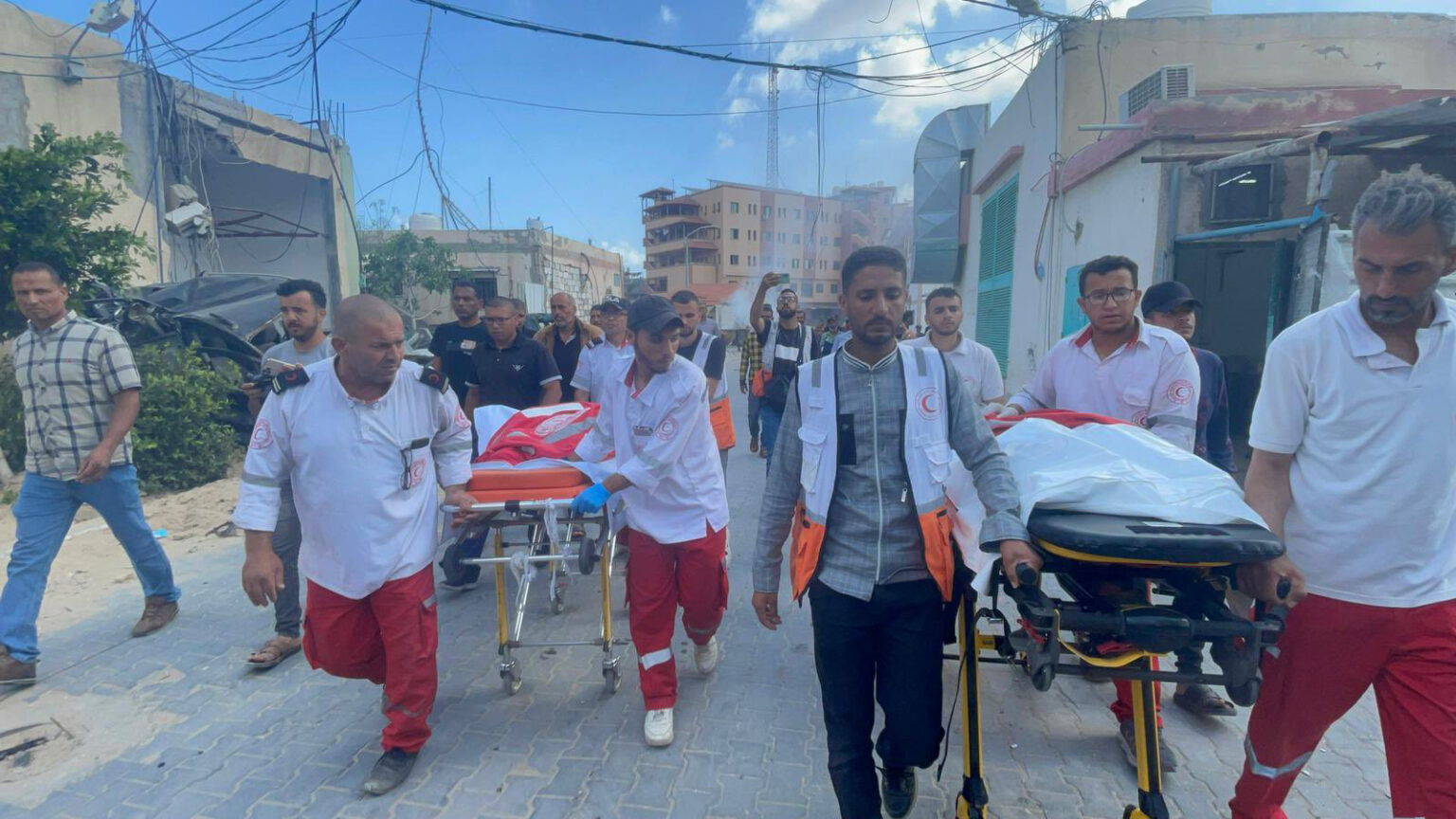
Continue ReadingOne year of Israel’s war on Gaza’s health system

Human rights lawyers renew calls for the release of 10,000 Palestinian prisoners

Spread the love

Original article by Ana Vračar republished from peoples dispatch under a Creative Commons Attribution-ShareAlike 4.0 (CC BY-SA) license.

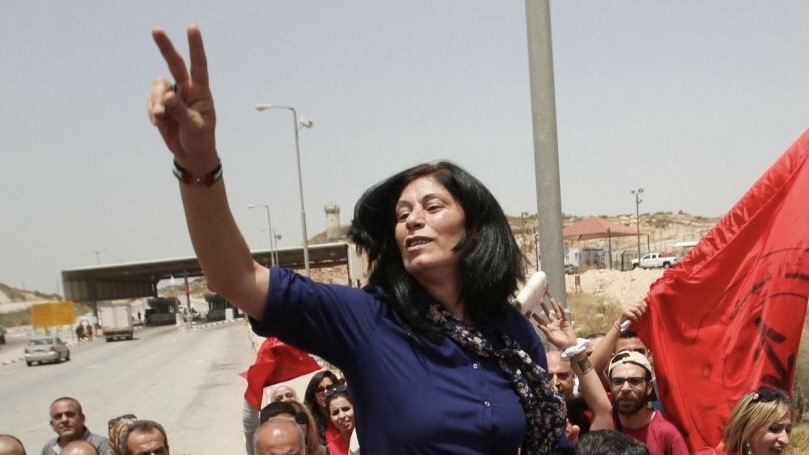
Khalida Jarrar is one of 10,000 Palestinians that has been arrested by Israel in the last year as part of a massive crackdown. Photo: Archive

Legal experts and human rights advocates renew their call for solidarity with Palestinian prisoners detained by Israel since October 2023

Since October 7, 2023, approximately 10,000 Palestinians from across the West Bank and other occupied territories have been imprisoned by Israeli Occupation Forces (IOF) in what human rights lawyers describe as an unprecedented assault on all branches of the resistance movement. Thousands more have been forcibly disappeared from the Gaza Strip, with little information available about their whereabouts.

Amid the increased use of torture and detention of the Palestinian people by Israel, international solidarity movements have intensified campaigns calling for their release.

Among those recently detained from the occupied West Bank is Khalida Jarrar, a prominent human and women’s rights activist, who has faced persecution by Israel on multiple occasions, and is now being held in Neve Tirza prison.

Watch: 11 months in Israeli prison: Shatha Odeh’s struggle for basic rights

At a briefing on Palestinian political prisoners, organized by the International Peoples’ Assembly (IPA), Tala Nasir from Addameer Association for Prisoner Support and Human Rights, along with human rights lawyer Bilal Naammeh, highlighted the IOF’s violations of basic human rights among prisoners. Nasir pointed out that many arrests in the past year have targeted specific groups of professionals who play an important role in building the material basis of the community, including engineers and health workers. However, anyone can face arrest for something as minor as posting on social media, which occupation forces often manipulate into allegations of supporting resistance groups, including Hamas.

Israel is attempting to practically ban all political participation by Palestinians, Naammeh noted, a threat reinforced through military courts and remote trials designed to instill fear in the population. Since October 2023, these practices have become even more severe than before. Naammeh described how, in court, Israeli lawyers often accuse defendants of being involved in the resistance. When defense lawyers challenge these accusations due to insufficient evidence, they can be sanctioned or temporarily barred from representing clients.

As lawyers are currently the only point of contact between prisoners and the outside world, restricting their access—whether through sanctions or lengthy delays—has profound consequences.

Conditions inside Israeli prisons have also worsened significantly. Access to prisoners is limited, even for representatives of the International Committee of the Red Cross (ICRC). Prisoners face severe shortages of food and water, which has led to weight loss of up to 30 kilograms per person, and are allowed only one hour outside their cells each day, leaving them isolated for the rest of the time, according to Nasir.

Read more: Creating life from a life sentence: Sana’ Daqqah on the Palestinian prisoners’ movement

The lack of water and hygiene has led to mass outbreaks of disease and infection, including scabies. According to Naammeh, some prisoners with scabies have been tied to their beds to prevent them from scratching. Other reports indicate that the IOF moves prisoners with scabies between sections in order to purposely exacerbate the contagion. Despite the widespread health crisis, medical care remains out of reach for most. Naammeh highlighted that even the most pressing health issues can take up to two months to receive basic medical attention, leaving prisoners in prolonged suffering.

Conditions in the camps where Palestinians from Gaza are held are even worse, the two advocates suggested, but up-to-date information is nearly impossible to obtain. The only reports come from Israeli media or the testimonies of those who have been released. Nasir recounted stories of prisoners enduring extreme torture, including rape. Witnesses described prisoners being forced to bark for food and given only thin mattresses for six hours a day, making proper rest impossible. This treatment extends even to those who are supposed to enjoy specific protection under international law, such as health workers. Nasir explained that dozens of health workers abducted from Gaza are being held under the Unlawful Combatants Law, meaning they could remain imprisoned until the end of the conflict under such conditions.

In response to Israel’s blatant disregard for human rights and international law, Addameer and the IPA renewed their call for the immediate release of all political prisoners and urged international activists to escalate solidarity efforts, including by insisting on adherence to recent International Court of Justice rulings. The organizers reminded participants that even the simplest acts of solidarity can contribute meaningfully to the broader struggle for liberation.

Original article by Ana Vračar republished from peoples dispatch under a Creative Commons Attribution-ShareAlike 4.0 (CC BY-SA) license.

Continue ReadingHuman rights lawyers renew calls for the release of 10,000 Palestinian prisoners

Death toll of Gaza’s health workers crosses 1,000

Spread the love

Original article by Peoples Health Dispatch republished from peoples dispatch under a Creative Commons Attribution-ShareAlike 4.0 (CC BY-SA) license.

Palestinian Red Crescent crews mourn fellow paramedics Haitham Tubasi and Suhail Hassouna, killed by Israeli forced (Photo via PRCS)

A new report from the Palestinian Ministry of Health warns that over 1,000 health workers in Gaza have been killed by Israeli forces since October 2023. Meanwhile, a severe shortage of essential hygiene supplies continues to exacerbate the health crisis

Israel has killed 1,151 workers in Gaza’s healthcare system since October 2023, according to the Palestinian Ministry of Health. Among the dead are 260 nurses, 184 health associates, 165 physicians, and 76 pharmacists, along with hundreds of management and support staff. While most of the victims’ names have been confirmed by health authorities, over 150 confirmations are still pending due to Israel’s refusal to release the martyrs’ bodies.

In addition to those killed, hundreds of health workers remain imprisoned, where they face abuse and torture, as documented by international organizations. Ziad Muhammad Al-Dalu, a physician from Al-Shifa Hospital, was among those who died in Israeli custody, as reported by the Ministry of Health. His death serves as yet another example of Israel’s deliberate targeting of Gaza’s healthcare workers and infrastructure, actions that violate international humanitarian law.

Read more: Palestinian health workers in Gaza describe torture and abuse in Israeli detention

The ongoing attacks on healthcare have left tens of thousands of people with life-altering injuries. According to the World Health Organization (WHO), approximately 25% of those injured between October 2023 and July 2024 have suffered burns, severe limb injuries, or amputations, with no access to rehabilitation services. Dozens of physiotherapists were killed in the attacks, and inpatient rehabilitation services have been shut down for months. “Even the most essential assistive devices, like wheelchairs and crutches, are lacking due to the restricted flow of aid,” the WHO said.

Israel’s blockade on humanitarian aid continues to choke Gaza’s healthcare system. At the moment, one of the most urgent problems is the shortage of soap and detergents. With the cost of a small bar of soap reaching USD 10—a price that could buy approximately 2 kilograms of soap in Germany—many families in Gaza are unable to afford basic hygiene supplies. “A family relying on cash-for-work income would spend 60% of the unskilled income on consumable hygiene products,” warned organizations monitoring water and sanitation in Gaza.

With soap being an omnipresent product, it might be difficult to imagine how severe the effects of a shortage might be, particularly for children. Health and hygiene officials estimate that adequate access to soap in the Gaza Strip could reduce respiratory infections by 20% and diarrheal diseases by up to 40%. This would potentially prevent illness in at least one in three children currently suffering from diarrhea. However, humanitarian organizations estimate that delivering the 5 million soap bars needed each month to meet demand in Gaza is basically impossible under the existing restrictions.

Read more: Israel targets health workers in the West Bank, obstructs polio campaign in Gaza

Despite this situation, Gaza recently completed the first phase of its polio vaccination campaign, with an 87% coverage rate among children—just below the 90% benchmark. The campaign is set to resume in the coming weeks, but incidents of Israeli forces obstructing access to those taking part in it persist, jeopardizing future public health efforts.

As winter approaches, the need for essential medicines, hygiene supplies, and nutritious food in Gaza becomes even more urgent. Concerns about potential floods and worsening living conditions highlight once again the critical need for an immediate ceasefire and rebuilding of the health system.

Original article by Peoples Health Dispatch republished from peoples dispatch under a Creative Commons Attribution-ShareAlike 4.0 (CC BY-SA) license.

Continue ReadingDeath toll of Gaza’s health workers crosses 1,000