This work by Middle East Monitor is licensed under a Creative Commons Attribution-NonCommercial-ShareAlike 4.0 International License.
Israeli Defence Minister Israel Katz. [SEBASTIAN SCHEINER/AFP via Getty Images]
Israeli Defence Minister Israel Katz vowed on Wednesday to continue military offensives in Lebanon, Syria, Gaza and Yemen despite regional and international efforts to de-escalate and restore regional stability, Anadolu reports.
Israel “will continue its operations in Lebanon, Syria, the Gaza Strip and Yemen,” Maariv daily quoted Katz as saying during a training course for Israeli Air Force pilots, attended by Prime Minister Benjamin Netanyahu and Chief of Staff Eyal Zamir.
“In Lebanon, we will continue to apply maximum force against Hezbollah; in Syria, Israel will not withdraw from Mount Hermon (Jabal al-Sheikh) and the security zone; and in the Gaza Strip, Israel remains committed to dismantling Hamas and disarming the territory,” he added.
“As for Yemen, Israel will continue its operations to prevent the Houthis from strengthening their capabilities,” he said.
Addressing its conflict with Tehran, Katz claimed that Israel had inflicted “significant damage on Iran’s nuclear and strategic capabilities.”
“I am following reports regarding Iran, which we struck strongly in cooperation with our American partners, and the security establishment is closely monitoring developments. Naturally, I cannot provide further details,” he added.
The Israeli army has launched a brutal offensive in Gaza, killing more than 71,000 people, mostly women and children, and injuring over 171,000 others since October 2023. The assault fueled regional tensions and sparked an exchange of attacks with Hezbollah in Lebanon and Yemen’s Houthis. The Israeli army also launched a 12-day war on Iran in June, which was halted under a US-sponsored ceasefire.
Tel Aviv also staged repeated cross-border raids into Syrian territory and launched airstrikes, killing civilians and destroying Syrian military sites, vehicles, weapons, and ammunition.
This work by Middle East Monitor is licensed under a Creative Commons Attribution-NonCommercial-ShareAlike 4.0 International License.
Genocide denier and Current UK Prime Minister Keir Starmer is quoted that he supports Zionism without qualification. He also confirms that UK air force support has been essential in Israel’s mass-murdering genocide. Includes URLs https://www.declassifieduk.org/keir-starmers-100-spy-flights-over-gaza-in-support-of-israel/ and https://youtu.be/O74hZCKKdpAKeir Starmer objects to criticism of the IDF. He asks how could anyone object to them starving people to death, forced marches like the Nazis did, bombing Gaza’s hospitals and universities, mass-murdering journalists, healthworkers and starving people queuing for food, killing and raping prisoners and murdering children. He calls for people to stop obstructing his genocide for Israel.Orcas discuss Genocide-supporting and complicit Zionists. Donald Trump, Keith Starmer, David Lammy, Rachel Reeves, Angela Rayner and Wes Streeting are acknowledged as evil genocide-complicit and supporting cnuts.
This work by Middle East Monitor is licensed under a Creative Commons Attribution-NonCommercial-ShareAlike 4.0 International License.
US Special Envoy for Syria, Tom Barrack in Damascus, Syria on September 16, 2025. [ Izz Aldien Alqasem – Anadolu Agency]
The Middle East is once again standing at the lip of an abyss. Hezbollah refuses to disarm. Israel vows it will force the issue. Washington, amplifying its threats through its envoy Tom Barrack, has delivered an ultimatum that sounds less like diplomacy and more like a loaded gun placed on the negotiating table. But beneath this geopolitical standoff lies another implosion—moral, not military: the sanctimonious unravelling of Tom Barrack himself, whose name now flickers through the sprawling Epstein files. In a region accustomed to hypocrisy, this one still manages to astound.
Hezbollah’s defiance, Israel’s fury
Barrack’s warning in Beirut was unambiguous: Hezbollah must surrender its weapons before the year’s end or “Israel will do it for them.” It was a performance of righteous American certitude—stern, paternal, condescending. Hezbollah’s answer was not diplomatic. Secretary-General Naim Qassem declared, “No force on earth can compel us to disarm. Resistance is our identity.”
Israel, meanwhile, continues pounding Hezbollah’s infrastructure, assassinating field commanders, striking convoys, and hitting southern Lebanon night after night. Yet military analysts admit what Israeli officials avoid saying publicly: Hezbollah’s arsenal remains formidable. Chatham House scholar Dr Lina Khatib noted, “Hezbollah has been weakened but not disarmed… the language of war is drowning out the language of diplomacy.”
And hovering behind it all is a grim warning from the Pentagon: a strike on Hezbollah could ignite a confrontation with Iran, pulling the United States into a regional inferno. “This would not be a contained war,” one US defence official cautioned.
The sanctimony of Tom Barrack
Then came the revelation that detonated whatever moral leverage Washington thought it possessed. Tom Barrack—lecturer-in-chief, dispenser of ethical sermons, the envoy who scolded Lebanese journalists to “behave properly and not like animals”—is now himself a featured name in the Epstein files. Newly surfaced emails show exchanges between Barrack and Epstein, including one chilling note from Epstein: “Send photos of you and child. Make me smile.”
The reaction across the Arab press was immediate and brutal. Lebanese columnist Ibrahim al-Amin wrote that Barrack “preached morality while lecturing us, yet his own name is tied to Epstein. He is the laughingstock of the region.” Egyptian political scientist Hassan Nafaa added, “American envoys demand accountability from Arabs, yet their own hands are stained. Barrack’s hypocrisy is a mirror of Western double standards.”
American outlets echoed the outrage. The New Arab reported the email trove “raised serious questions about the relationship between sex offender Jeffrey Epstein and ambassador Tom Barrack.” Newsweek and the New Republic detailed the widening circle of embarrassment. A Washington Post columnist summarised the mood: “Barrack’s sanctimony collapses under the weight of his own associations.”
This is the empire’s inevitable collapse into self-mythology. Those who thunder about order and virtue abroad often rot from within.
Barrack’s disgrace is not a footnote. It is a strategic wound. The United States cannot demand the disarmament of Hezbollah while its envoy is tainted by the shadow of a dead paedophile financier. It cannot preach morality while its representative embodies the very decadence it condemns. It cannot claim the ethical high ground while standing next to a man whose credibility is now radioactive.
“It compromises the entire American position,” Lebanese scholar Karim Makdisi said. “Hezbollah will use this hypocrisy as a weapon in the battle for legitimacy.”
He is already being proven right. Hezbollah’s media machine is having a field day: the saintly American envoy caught in the filth of Epstein’s orbit, lecturing Arabs on ethics while stumbling through his own mire.
Even inside Washington, the calls for resignation are growing louder. “His presence is untenable,” a congressional aide admitted. “How can he lecture Lebanon on morality when his own name is in Epstein’s files?”
A region on the Brink
All of this unfolds as Lebanon teeters on the brink of paralysis and implosion. The country cannot disarm Hezbollah without triggering civil war. Israel cannot tolerate Hezbollah’s arsenal without courting disaster. The United States cannot project moral authority with a tainted envoy. And the Arab world—long sceptical—now watches the hypocrisy made plain.
Tom Barrack once enjoyed the luxury of preaching from a mountaintop. Now the ground has collapsed beneath him. His sanctimony is rubble. His authority is ash. His presence mocks the very values he claimed to defend.
December may yet bring war. But humiliation has already arrived. Tom Barrack, once Washington’s holier-than-thou emissary, is now its hollow man—a symbol of imperial hypocrisy, a cautionary tale of moral decay, and a reminder that those who wield righteousness as a weapon must ensure their own hands are clean.
He did not. And the region, already aflame, sees it clearly.
The views expressed in this article belong to the author and do not necessarily reflect the editorial policy of Middle East Monitor.
This work by Middle East Monitor is licensed under a Creative Commons Attribution-NonCommercial-ShareAlike 4.0 International License.
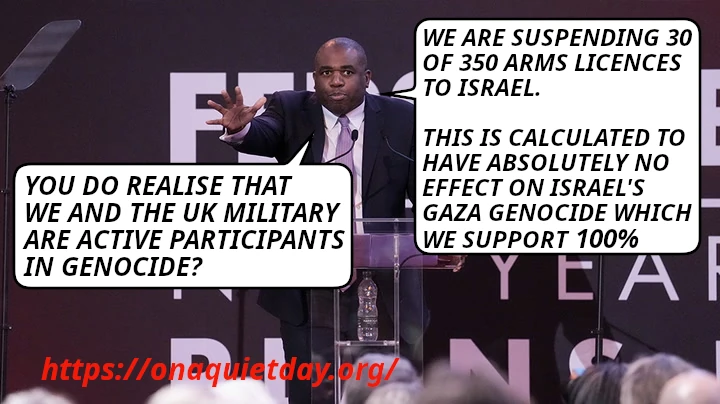
Keir Starmer objects to criticism of the IDF. He asks how could anyone object to them starving people to death, forced marches like the Nazis did, bombing Gaza’s hospitals and universities, mass-murdering journalists, healthworkers and starving people queuing for food, killing and raping prisoners and murdering children. He calls for people to stop obstructing his genocide for Israel.Orcas discuss Genocide-supporting and complicit Zionists. Donald Trump, Keith Starmer, David Lammy, Rachel Reeves, Angela Rayner and Wes Streeting are acknowledged as evil genocide-complicit and supporting cnuts.Genocide denying UK Foreign Secretary David Lammy says that UK is suspending 30 of 350 arms licences to Israel. He also confirms the UK government’s support for Israel’s Gaza genocide and the UK government and military’s active participation in genocide.
This work by Middle East Monitor is licensed under a Creative Commons Attribution-NonCommercial-ShareAlike 4.0 International License.
Smoke billows from the area following Israeli attacks on the town of Tayr Dibba in the southern Lebanese province of Tyre, Lebanon, on November 6, 2025. [Houssam Shbaro – Anadolu Agency]
The Israeli army launched a series of airstrikes in southern Lebanon on Thursday evening, shortly after warning residents to evacuate, despite a ceasefire agreement in place since November 2024, Anadolu reports.
Israeli fighter jets struck a building in Tayr Debba in the Tyre district, and another in Al-Taybeh in the Marjayoun district. Airstrikes also targeted a building in Aita al-Jabal in Bint Jbeil, and another in Zoutar al-Sharqiya in Nabatieh, the Lebanese news agency NNA reported.
No information was yet available about casualties.
Footage obtained by Anadolu and shared on social media showed powerful explosions and rising flames, and smoke following the strikes in the three towns.
According to NNA, Israeli drones flew at very low altitude over the capital, Beirut, and its southern suburbs.
The attacks came after the Israeli army ordered Lebanese residents in the three towns to evacuate before the attacks.
The army claimed that the strikes aimed to thwart Hezbollah’s attempts to rebuild its capabilities in Aita al-Jabal, al-Taybeh, and Tayr Debba.
There was no comment from Hezbollah on the Israeli attacks.
Tensions have been mounting in southern Lebanon for weeks, with the Israeli army intensifying near-daily air raids inside Lebanese territory despite the ceasefire, under the pretext of targeting Hezbollah members and infrastructure.
Israeli Channel 12 reported on Thursday that Tel Aviv is preparing for another possible round of fighting with Hezbollah.
The Israeli army has killed more than 4,000 people and injured nearly 17,000 in its attacks on Lebanon, which began in October 2023 and turned into a full-scale offensive in September 2024.
Genocide denier and Current UK Prime Minister Keir Starmer is quoted that he supports Zionism without qualification. He also confirms that UK air force support has been essential in Israel’s mass-murdering genocide. Includes URLs https://www.declassifieduk.org/keir-starmers-100-spy-flights-over-gaza-in-support-of-israel/ and https://youtu.be/O74hZCKKdpAKeir Starmer objects to criticism of the IDF. He asks how could anyone object to them starving people to death, forced marches like the Nazis did, bombing Gaza’s hospitals and universities, mass-murdering journalists, healthworkers and starving people queuing for food, killing and raping prisoners and murdering children. He calls for people to stop obstructing his genocide for Israel.Orcas discuss Genocide-supporting and complicit Zionists. Donald Trump, Keith Starmer, David Lammy, Rachel Reeves, Angela Rayner and Wes Streeting are acknowledged as evil genocide-complicit and supporting cnuts.
This work by Middle East Monitor is licensed under a Creative Commons Attribution-NonCommercial-ShareAlike 4.0 International License.
The Israeli army violated the ceasefire by launching more than ten airstrikes on the town of al-Musaylih in southern Lebanon, causing powerful explosions, extensive destruction at industrial facilities, and the burning of bulldozers that were rendered unusable on October 11, 2025. [Houssam Shbaro – Anadolu Agency]
The Israeli army on Saturday carried out airstrikes on six heavy machinery yards along the Al-Msayleh road in southern Lebanon, destroying more than 300 vehicles, according to local media, Anadolu reports.
Citing the Health Ministry, the state-run National News Agency reported that one Syrian national was killed in the attack, while another Syrian and six Lebanese citizens, including two women, were injured.
It said that more than 300 vehicles, including bulldozers and excavators, were destroyed, causing an estimated loss of hundreds of millions of dollars.
The facilities, including buildings and tents, in addition to a number of cars that were parked in the area were also destroyed.
“The exhibition sites that were completely destroyed are considered among the largest and most prominent heavy machinery exhibition sites in Lebanon,” the agency said.
It added that the airstrikes left the area engulfed in flames and Al-Msayleh road was closed due to significant damage.
The Israeli army claimed that it “struck and destroyed Hezbollah’s infrastructure in the area of southern Lebanon, where engineering equipment used to rebuild” its infrastructure in the area was located.
Lebanese President Joseph Aoun denounced the attack, calling it “a blatant act of aggression.”
“The seriousness of this assault lies in the fact that it comes after the ceasefire agreement in Gaza,” Aoun said, and warned against a possible Israeli attempt to transfer the conflict towards Lebanon.
Separately, Israeli drones were reported flying over Lebanon’s capital Beirut, and the southern suburbs since early Saturday, according to the agency.
A ceasefire was reached in November 2024 following a year-long cycle of cross-border attacks between Hezbollah and Israel that began in October 2023. The conflict escalated into a full-scale Israeli offensive by September 2024, resulting in more than 4,000 deaths and around 17,000 injuries.
Under the terms of the truce, Israel was supposed to fully withdraw from southern Lebanon by January. But it has so far only partially pulled out troops and continues to maintain a military presence at five border outposts.
This work by Middle East Monitor is licensed under a Creative Commons Attribution-NonCommercial-ShareAlike 4.0 International License.
This work by Middle East Monitor is licensed under a Creative Commons Attribution-NonCommercial-ShareAlike 4.0 International License.
Prime Minister of Israel Benjamin Netanyahu addresses the United Nations General Assembly (UNGA) at the United Nations headquarters on September 26, 2025 in New York City, United States. [Mostafa Bassim – Anadolu Agency]
It takes a lot to make UN delegates walk out from an address to the General Assembly. But this was precisely what Israel’s Prime Minister, Benjamin Netanyahu, managed to achieve in his September 26 speech. His address began by attempting to show his country as a guardian of law and civilisation, fighting a lonely, unsupported war against fiendish barbarians. “Last year I stood at this podium and I showed this map. It shows the curse of Iran’s terror axis.” Such an axis threatened “the peace of the entire world. It threatened the stability of our region and the very existence of my country, Israel. They were meant also to threaten the United States and blackmail nations everywhere.”
The speech then moved into a triumphant register. Hezbollah had been cowed. The Houthis had been “hammered”. The “bulk of Hamas’s terror machine” had been “crushed”. The armaments of Bashir al-Assad had been destroyed, Iran’s Shiite militias in Iraq deterred. “And most importantly, and above everything else that I could say to you or that we did in this past year, in this past decade, we devastated Iran’s atomic weapons and ballistic missile programs.” Israel’s assassination program – the slaying of Iranian nuclear scientists, the killing of Hamas and Hezbollah leaders, the slaughter of half of the Houthi leadership – were also points of celebration. Regarding Hamas, Netanyahu offered the following: “The final remnants of Hamas are holed up in Gaza City. They vow to repeat the atrocities of 7 October again and again. That is why Israeli must finish the job.”
Anyone familiar with Netanyahu’s streaky command of Disney cartography or predictive assessments on the military power of other states already knows the strained performance here. Vital to his argument is delegitimising the cause of Palestinian statehood, treating it as an annex of a foreign power and a foreign movement. He goes on to link with little effort Iran’s “massive nuclear weapons program and massive ballistic program” to the late Yahya Sinwar’s “dispatched” terrorists of Hamas as they made their way into Israel on 7 October 2023, to Hezbollah’s missiles and rockets in Lebanon, to Syria’s now deposed Assad regime, which “hosted Iran’s forces, tightening the noose of death around our throats.” For good measure, the Houthis in Yemen were also thrown in.
This shoddy reasoning shares the strain of paranoia US strategists demonstrated with feverish intensity during the Cold War. There was a stubborn refusal, at least till the Nixon administration, to see Communist insurgencies as the product of indigenous conditions rather than directed movements from Moscow and Peking. Assistance and aid to North Vietnam, for instance, was misconstrued as command and control.
Similarly, Netanyahu sees radical Islam as a monolithic bloc of obscurantism that has absorbed the Palestinian cause. Iran, Hamas, Hezbollah and the Houthis all shout “Death to America”. All had “murdered Americans and Europeans in cold blood.” Israel’s enemies were enemies of the West. “They want to drag the modern world back to the past… to a dark age of violence, fanaticism, and terror.” With demagogic purpose, he also pointed to “the radical Islamist surge” in the societies of Israel’s allies. Thank Israel, he declared, for having the capacity to supply the intelligence of five Central Intelligence Agencies, for doing, to quote German Chancellor Friedrich Merz, “the dirty work for all of us.”
The Israeli PM represents a country whose magistrates and representatives sneer and mock international law, treasuring an exceptionalism that have given it an increasingly roguish character. He is contemptuous of accusations that the IDF is not minimising harm to civilians, claiming that the ratio of non-combatant to combatant casualties is “less than two to one”, one much “lower than NATO’s wars in Afghanistan and Iraq”. This is an astonishing view, given that Israel’s own military data, as revealed by The Guardian, +972 magazine and Local Call, shows that 83 per cent of those killed in Gaza have been civilians.
Besides, even where civilians were killed, they only did so under coercion from Hamas. The oft repeated claim was made that the organisation “implants itself in mosques, schools, hospitals, apartment buildings and tries to force these civilians not to leave, to stay in harm’s way”. This is a convenient spread, justifying the destruction of critical infrastructure and the essential features of a functioning society. Unfortunately, evidence from the IDF on many of these claims has been skimpy.
The allegations of genocide, firmed up by the findings of an independent UN commission of inquiry, the International Association of Genocide Scholars, and numerous human rights groups including Israel’s own B’Tselem, were also swatted away as blood libels. Those wishing to commit genocide would never “plead with the civilian population it is supposedly targeting to get out of harm’s way.” The Nazis were never good enough to tell Jews to “kindly leave”.
As for the starvation policy, this was yet another lie. “There’s one ton of aid for every man, woman and child in Gaza” with each person receiving 3,000 calories per day. “Some starvation policy!” It takes some gumption to embrace such mendacity and self-imposed delusion, denying the militarisation of the aid model in the Strip, with necessaries drip-fed through a limited number of delivery points defended by private contractors and trigger-happy IDF personnel.
Regarding the latest round of countries recognising Palestinian statehood, Netanyahu could only hector. “Murdering Jews pays off.” The forces of antisemitism had been rewarded by France, Britain, Australia and Canada, along with other states. “Your disgraceful decision will encourage terrorism against Jews and against innocent people everywhere.”
On the issue of the two-state solution, the argument was slyly inverted. Israel did believe in the formula. It was those nasty, ungrateful Palestinians who never did. They were “given territory” only to then attack Israel in “totally unprovoked” circumstances. Absurdly, Netanyahu even called Gaza a proto-Palestinian state, a gift from the Jewish state. Never mind that it became the world’s largest open-air prison, its residents the convenient lab rats of Israeli surveillance, technology and military experimentation.
As long as Palestinians exist in Gaza and the West Bank, they are unsettling reminders of the colonial project, the thefts, the dispossessions, the habitual violence. As long as they have political representatives of any stripe, or any voice uttered through any form – literature, media, the podium, and even the gun – they are exercising the very same rights to self-determination that saw the creation of Israel. It is those rights that Netanyahu showed such withering contempt for in this indignant address.
The views expressed in this article belong to the author and do not necessarily reflect the editorial policy of Middle East Monitor.
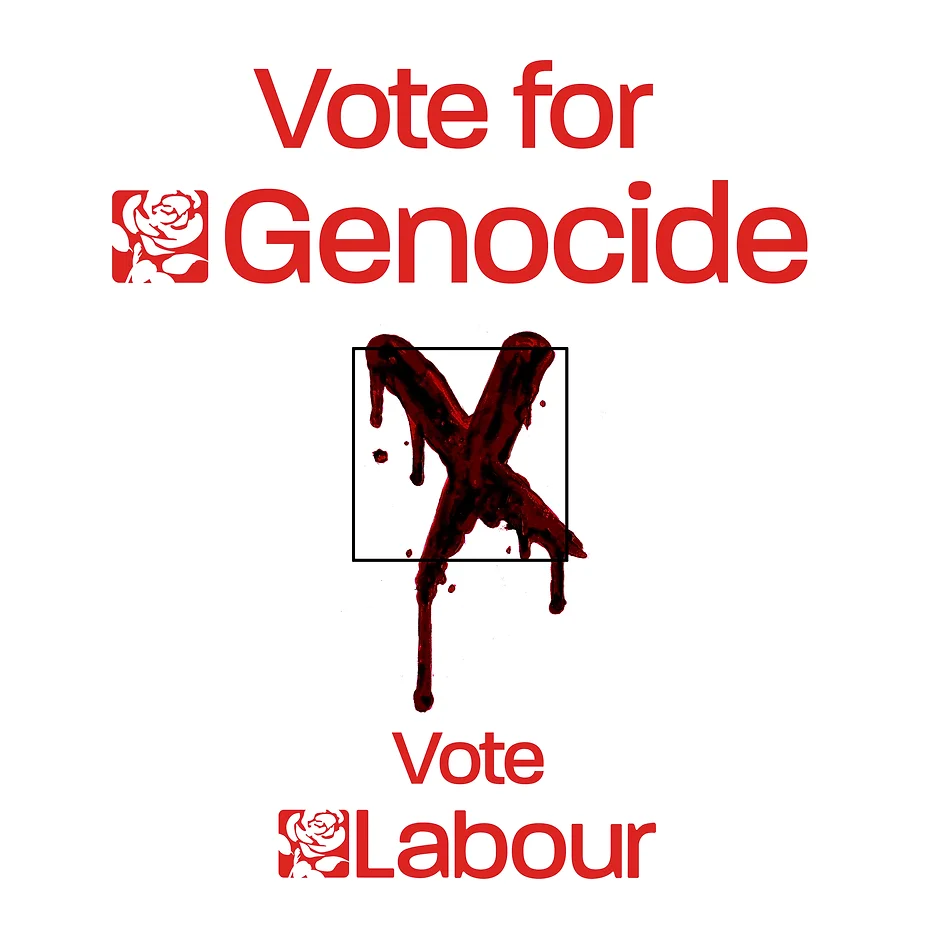
Genocide denier and Current UK Prime Minister Keir Starmer is quoted that he supports Zionism without qualification. He also confirms that UK air force support has been essential in Israel’s mass-murdering genocide. Includes URLs https://www.declassifieduk.org/keir-starmers-100-spy-flights-over-gaza-in-support-of-israel/ and https://youtu.be/O74hZCKKdpAKeir Starmer objects to criticism of the IDF. He asks how could anyone object to them starving people to death, forced marches like the Nazis did, bombing Gaza’s hospitals and universities, mass-murdering journalists, healthworkers and starving people queuing for food, killing and raping prisoners and murdering children. He calls for people to stop obstructing his genocide for Israel.Vote Labour for Genocide.