Report Details ‘Toxic’ Fossil Fuel Pollution in COP28 Host UAE

Spread the love
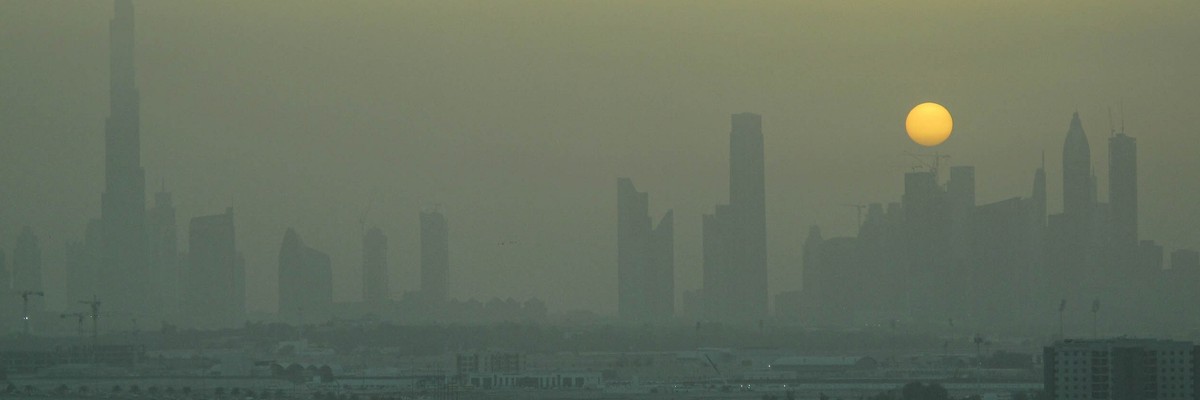
The sun sets amid heavy air pollution in Dubai. (Photo: Forbes Johnston/flickr/cc)

Original article by BRETT WILKINS republished from Common Dreams under Creative Commons (CC BY-NC-ND 3.0). 
“Nobody will ever hold the government to account publicly,” said one climate campaigner. “We do not have the privilege of speaking out against the government.”

Despite greenwashing efforts like hosting the ongoing United Nations Climate Change Conference, the United Arab Emirates—the world’s seventh-biggest oil producer and sixth-largest exporter—is contributing heavily to toxic air pollution, creating a “devastating impact on human health.”

That’s according to a Monday report from Human Rights Watch (HRW) report—entitled ‘You Can Smell Petrol in the Air’: UAE Fossil Fuels Feed Toxic Pollution —which “documents alarmingly high air pollution levels in the UAE” and how toxic air caused by oil and gas production creates “major health risks” for the country’s 9.4 million people.

As the report details:

The UAE government says that the country has poor air quality but mainly ascribes this to natural dust from sandstorms. However, academic studies have shown that natural causes are not the single, or in some cases even the major, factor in air pollution. A 2022 academic study found that, in addition to the dust, emissions including from fossil fuels contribute significantly to the problem in the UAE. Air pollution and climate change are directly linked, as the extraction and use of fossil fuels are the sources of air pollution and greenhouse gas emissions.

The report’s researchers analyzed levels of PM2.5 —fine particulate matter measuring 2.5 micrometers or smaller that can penetrate human lungs and blood—at 30 UAE government monitoring stations and found that they were, on average, three times higher than the World Health Organization’s (WHO) daily recommended exposure.

According to the latest available data from the World Bank, the UAE’s mean annual PM2.5 exposure is over eight times higher than what the WHO says is safe .

The WHO estimates that approximately 1,870 people die each year from outdoor air pollution in the UAE.

“Fossil fuels pollute the air people breathe in the UAE,” HRW environment director Richard Pearshouse said in a statement . “But the obliteration of civil society by UAE’s government means that no one can publicly express concerns, let alone criticize the government’s failure to prevent this harm.”

The report explains:

Those in the UAE wanting to report on, or speak out about, the risks of fossil fuel expansion and its links to air pollution face risks of unlawful surveillance, arrest, detention, and ill-treatment. Over the last decade, authorities in the UAE have embarked on a sustained assault on human rights and freedoms, including targeting human rights activists, enacting repressive laws, and using the criminal justice system as a tool to eliminate the human rights movement. These policies have led to the complete closure of civic space, severe restrictions on freedom of expression, both online and offline, and the criminalization of peaceful dissent.

“Nobody will ever hold the government to account publicly,” said one climate activist interviewed by HRW. “We do not have the privilege of speaking out against the government.”

Pearshouse argued: “Air pollution is a dirty secret in the UAE. If the government doesn’t allow civil society to scrutinize and speak freely about the connection between air pollution and its fossil fuel industry, people will keep experiencing health conditions that are entirely preventable.”

Most of those affected by air pollution in the UAE are migrant workers, who make up nearly 90% of the country’s population. In addition to enduring widespread serious labor abuses, these workers—many of whom hail from some of the world’s most climate-vulnerable countries—face deadly dangers from air pollution.

Migrant workers interviewed by HRW said they breathe air that burns their lungs, are often short of breath at work, and suffer from skin and other ailments they believe could be caused by pollution. However, migrant workers told HRW that they were given no information about the risks of air pollution or how to protect themselves.

One migrant worker told HRW: “Sometimes, the environment becomes dark and murky. We discuss among friends why it is that way… The conversation ends there. During such times friends also fall sick.”

While the UAE government has submitted a recently revised domestic climate action plan as required by the 2015 Paris agreement, the plan has been criticized for its continued reliance upon fossil fuel production.

“Sometimes, the environment becomes dark and murky. We discuss among friends why it is that way.”

The choice of the UAE and the CEO of its national oil company— Sultan Ahmed Al Jaber —as host and president of the U.N. Climate Change Conference also stunned and angered many climate campaigners around the world. In the United States, climate activists were also outraged after U.S. climate envoy John Kerry glowingly endorsed Al Jaber as “a terrific choice” for the COP28 presidency.

Late last month, internal records leaked by a whistleblower showed that Al Jaber used meetings about COP28 to push foreign governments for fossil fuel deals. In response to the allegation, former Marshallese President Hilda Heine resigned from COP28’s advisory board.

Al Jaber stoked further controversy over the weekend when he insisted there is “no science” supporting the effort to rapidly phase out planet-heating fossil fuels.

Original article by BRETT WILKINS republished from Common Dreams under Creative Commons (CC BY-NC-ND 3.0). 
Continue ReadingReport Details ‘Toxic’ Fossil Fuel Pollution in COP28 Host UAE

Amid War Crimes Charges, Human Rights Watch Says Israel Must ‘End Attacks on Hospitals’

Spread the love

Original article by JAKE JOHNSON republished from Common Dreams under Creative Commons (CC BY-NC-ND 3.0). 

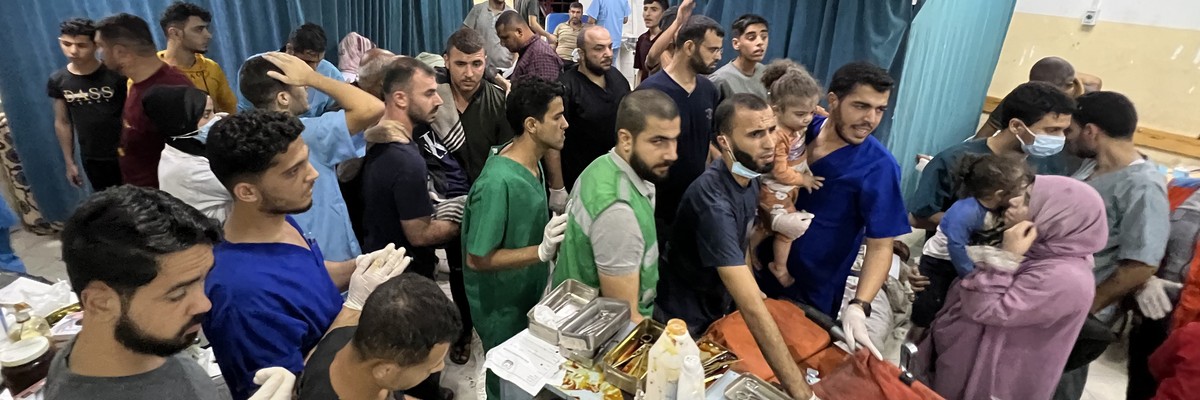
Wounded people receive treatment at the Aqsa Indonesia Hospital after an Israeli attack on the Jibalia refugee camp on November 13, 2023. (Photo: Fadi Alwhidi/Anadolu via Getty Images)

“Israel’s broad-based attack on Gaza’s healthcare system is an attack on the sick and the injured, on babies in incubators, on pregnant people, on cancer patients. These actions need to be investigated as war crimes.”

Human Rights Watch on Tuesday demanded that the Israeli government immediately cease its deadly attacks on Gaza’s hospitals, arguing they’re part of a far-reaching and unlawful assault on the territory’s crumbling healthcare system.

In a new report, HRW examines the impacts of the Israeli bombing campaign, ground invasion, and siege on Gaza’s medical personnel and facilities, a majority of which have stopped functioning due to airstrike damage or lack of critical supplies, from fuel to anesthetics.

“Israel’s repeated attacks damaging hospitals and harming healthcare workers, already hard hit by an unlawful blockade, have devastated Gaza’s healthcare infrastructure,” said A. Kayum Ahmed, special adviser on the right to health at Human Rights Watch. “The strikes on hospitals have killed hundreds of people and put many patients at grave risk because they’re unable to receive proper medical care.”

Over the past week, Israeli forces have surrounded and intensified their bombardment of several hospitals in northern Gaza including al-Shifa, the enclave’s largest medical facility. Israel has also bombed ambulances and people desperately attempting to flee hospitals as they’ve come under attack.

“On November 3, the Israeli military struck a marked ambulance just outside of Gaza City’s al-Shifa hospital,” HRW said. “Video footage and photographs taken shortly after the strike and verified by Human Rights Watch show a woman on a stretcher in the ambulance and at least 21 dead or injured people in the area surrounding the ambulance, including at least 5 children.”

“An IDF spokesperson said in a televised interview that day: ‘Our forces saw terrorists using ambulances as a vehicle to move around. They perceived a threat and accordingly we struck that ambulance,'” the group added. “Human Rights Watch did not find evidence that the ambulance was being used for military purposes.”

HRW similarly questioned Israeli assertions that Hamas is using Gaza’s hospitals, including al-Shifa, for military operations.

Targeting hospitals is a war crime under international law, but medical facilities can lose their protected status if they’re used to commit an “act harmful to the enemy,” according to the International Committee of the Red Cross (ICRC).

HRW argued that Tuesday that “no evidence put forward” by the Israeli government thus far “would justify depriving hospitals and ambulances of their protected status under international humanitarian law.”

“When a journalist at a news conference showing video footage of damage to the Qatar Hospital sought additional information to verify voice recordings and images presented, the Israeli spokesperson said, ‘Our strikes are based on intelligence,'” HRW said. “Even if accurate, Israel has not demonstrated that the ensuing hospital attacks were proportionate.”

The group said Israel “should end attacks on hospitals” and urged the United Nations’ Independent International Commission of Inquiry on the Occupied Palestinian Territory and the International Criminal Court to investigate.

“Israel’s broad-based attack on Gaza’s healthcare system is an attack on the sick and the injured, on babies in incubators, on pregnant people, on cancer patients,” said Ahmed. “These actions need to be investigated as war crimes.”

The new analysis came amid horrific reports of the impact that Israel’s assault is having on healthcare workers, patients, and displaced people seeking refuge from near-constant airstrikes.

Reuters reported that people trapped inside al-Shifa Hospital “plan to start burying bodies within the hospital compound” on Tuesday “because the situation has become untenable.” The World Health Organization said over the weekend that the facility is “not functioning as a hospital anymore” due to power outages and a lack of supplies, which have caused the deaths of a number of patients—including premature babies.

Dr. Ahmed Al Mokhallalati, a surgeon at al-Shifa, told Reuters that “the bodies were generating an unbearable stench and posing a risk of infection.”

“Unfortunately there is no approval from the Israelis to even bury the bodies within the hospital area,” he said. “Today … civilians started digging within the hospital to try and bury the bodies on their own responsibility without any arrangements by the Israeli side. Burying 120 bodies needs a lot of equipment, it can’t be by hand efforts and by single-person efforts. It will take hours and hours to be able to bury all these bodies.”

Doctors Without Borders, known internationally as Médecins Sans Frontières (MSF), said that on Tuesday morning, “bullets were fired into one of three MSF premises located near al-Shifa hospital and sheltering MSF staff and their families—over 100 people, including 65 children, who ran out of food last night.”

“Thousands of civilians, medical staff, and patients are currently trapped in hospitals and other locations under fire in Gaza City; they must be protected and afforded safe passage if they wish to leave,” the group added. “Above that, there must be a total and immediate cease-fire.”

Original article by JAKE JOHNSON republished from Common Dreams under Creative Commons (CC BY-NC-ND 3.0). 

Continue ReadingAmid War Crimes Charges, Human Rights Watch Says Israel Must ‘End Attacks on Hospitals’

Israel Accused of ‘Blatant War Crime’ as HRW Confirms White Phosphorus Used in Gaza

Spread the love
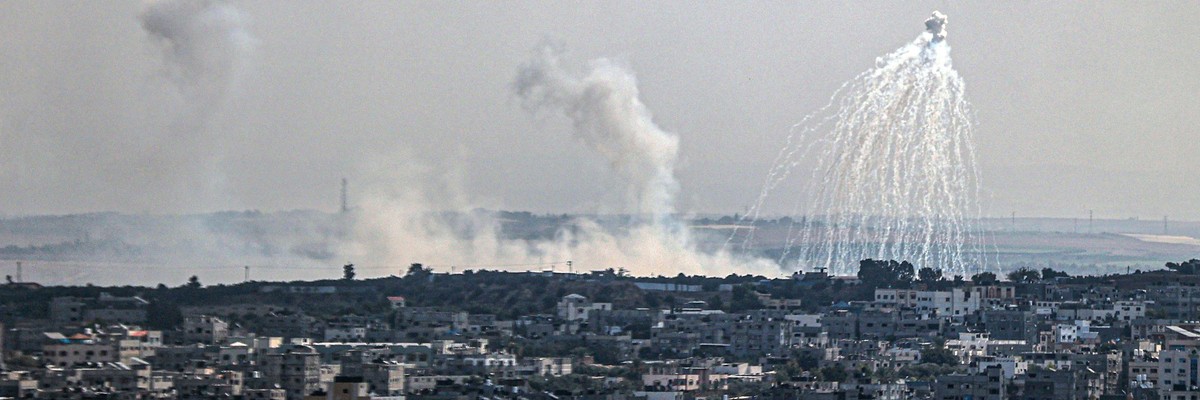
An Israeli white phosphorus round (right) airbursts over densely populated Gaza City, Palestine on October 11, 2023. 
(Photo: Ali Jadallah/Anadolu via Getty Images)

Original article by BRETT WILKINS republished from Common Dreams under Creative Commons (CC BY-NC-ND 3.0). 

“Any time that white phosphorus is used in crowded civilian areas, it poses a high risk of excruciating burns and lifelong suffering,” said one Human Rights Watch official.

Human Rights Watch on Thursday said it has confirmed reports that Israeli military forces unleashed white phosphorus munitions during artillery attacks on targets in Lebanon and Gaza this week, including over a heavily populated civilian area of the besieged Palestinian strip—an apparent war crime.

HRW said it has interviewed witnesses and verified video footage shot in Lebanon and Gaza on Tuesday and Wednesday “showing multiple airbursts of artillery-fired white phosphorus over the Gaza City port and two rural locations along the Israel-Lebanon border.”

The HRW announcement came as Israeli forces continue to bombard Gaza from air, land, and sea in an assault that has killed more than 1,500 Palestinians, including at least 500 children, in retaliation for Hamas’ surprise infiltration of Israel and killing of over 1,300 Israeli soldiers and civilians.

As HRW explained Thursday:

Upon contact, white phosphorus can burn people, thermally and chemically, down to the bone as it is highly soluble in fat and therefore in human flesh. White phosphorus fragments can exacerbate wounds even after treatment and can enter the bloodstream and cause multiple organ failure. Already dressed wounds can reignite when dressings are removed and the wounds are reexposed to oxygen. Even relatively minor burns are often fatal. For survivors, extensive scarring tightens muscle tissue and creates physical disabilities.

WP burns as hot as 1,500°F. Water does not extinguish it.

“Any time that white phosphorus is used in crowded civilian areas, it poses a high risk of excruciating burns and lifelong suffering,” HRW Middle East and North Africa director Lama Fakih said in a statement. “White phosphorous is unlawfully indiscriminate when airburst in populated urban areas, where it can burn down houses and cause egregious harm to civilians.”

“To avoid civilian harm, Israel should stop using white phosphorus in populated areas,” Fakih added. “Parties to the conflict should be doing everything they can to spare civilians from further suffering.”

HRW previously accused Israel of war crimes for using WP munitions in densely populated areas—including over a United Nations school—during the 2008-09 Operation Cast Lead invasion of Gaza. In response to a 2013 petition to Israel’s High Court of Justice filed by human rights groups including HRW, the Israel Defense Forces said it would no longer use WP in populated areas, with “very narrow exceptions” that it would not disclose.

Other countries’ militaries also use WP, most notably the United States, which fired the incendiary rounds during the 2004 battle for Fallujah and elsewhere in the so-called War on Terror.

In 2016, Saudi Arabia was condemned for allegedly firing U.S.-supplied WP munitions against Houthi rebels in Yemen. WP and other incendiary weapons have also been used by Syrian government and Russian forces fighting Islamic State and other militants during the Syrian civil war. Turkey has also been accused of firing WP rounds at Kurdish civilians in Syria.

Original article by BRETT WILKINS republished from Common Dreams under Creative Commons (CC BY-NC-ND 3.0). 

Continue ReadingIsrael Accused of ‘Blatant War Crime’ as HRW Confirms White Phosphorus Used in Gaza

Human Rights Watch reports new evidence of Ukrainian use of anti-personnel landmines

Spread the love

https://www.eureporter.co/world/human-rights-category/2023/07/03/human-rights-watch-reports-new-evidence-of-ukrainian-use-of-anti-personnel-landmines/

Human Rights Watch (HRW) said on Friday (30 June) that it uncovered new evidence of the indiscriminate use by Ukrainian forces of banned anti-personnel landmines against Russian troops who invaded Ukraine in 2022.

The group called on Ukraine’s government to follow through with a commitment made earlier this month not to employ such weapons, investigate their suspected use and hold accountable those responsible.

“The Ukrainian government’s pledge to investigate its military’s apparent use of banned anti-personnel mines is an important recognition of its duty to protect civilians,” Steve Goose, Human Rights Watch’s arms director, said in a statement.

HRW said it shared its findings with the Ukrainian government in a May letter to which it received no response.

https://www.eureporter.co/world/human-rights-category/2023/07/03/human-rights-watch-reports-new-evidence-of-ukrainian-use-of-anti-personnel-landmines/

Continue ReadingHuman Rights Watch reports new evidence of Ukrainian use of anti-personnel landmines