Why the US and Israel’s alliance endures – even when it strains

Spread the love

Bamo Nouri, City St George’s, University of London and Inderjeet Parmar, City St George’s, University of London

Israeli and US flags hang at Ben Gurion Airport ahead of the arrival of the US president, Donald Trump, to Israel in October 2025. Abir Sultan / EPA

Israel and the US have maintained a close alliance for decades. Their recent joint air campaign in Iran has once again underscored the depth of this partnership. Yet while the strength of their relationship is widely acknowledged, the reasons behind it remain contested.

At the centre of this debate lies the question of whether US support for Israel is driven primarily by domestic political forces, particularly lobbying organisations such as the American Israel Public Affairs Committee (Aipac), or whether it reflects broader strategic imperatives within US foreign policy.

Aipac’s historical influence is well documented. It emerged in the 1950s from the American Zionist Committee for Public Affairs and developed into a powerful lobbying organisation. By the 1970s it had become instrumental in securing substantial US military and economic aid, as well as favourable legislative outcomes, for Israel.

US aid to Israel now includes approximately US$3.3 billion (£2.4 billion) annually in military financing and an additional US$500 million for missile defence. Aipac, which has embedded itself across Democratic and Republican political networks, has played a central role in maintaining this flow of support.

But the claim that Aipac drives US policy, which former US counterterrorism official Joe Kent suggested in March when resigning from the Trump administration in opposition to the Iran war, misreads how power operates in Washington.

As scholars of American power, we argue that the US-Israeli alliance has been driven primarily by Israel’s demonstrated value as a strategic asset for the US, rather than solely by the influence of lobbying. Aipac has become effective because it aligns with this existing strategic consensus, not because it created it.

The former US national security advisor and secretary of state, Henry Kissinger, meets with Benjamin Netanyahu in Jerusalem in 2008. Anna Kaplan / EPA

Strategic US asset

This strategic consensus can be traced to the cold war. Israel’s decisive victory in the 1967 six-day war over a coalition of Arab states supported by and aligned with the Soviet Union revealed its utility as a regional proxy capable of advancing US interests in the Middle East.

From that point onward, US policymakers framed Israel as a pillar of their Middle East strategy – part of a broader effort to contain the influence of rival powers, project US power overseas and stabilise a region that is central to global energy supplies.

This framing became institutionalised in US policy in the late 1960s. Washington sharply increased arms transfers, supplying Israel with advanced aircraft such as F-4 Phantoms under President Lyndon B. Johnson. Intelligence-sharing arrangements were also expanded between the two countries.

The US perception of Israel as a strategic regional asset grew further in 1970. That year, the US requested that Israel prepare to intervene in Jordan on behalf of the government in its conflict with the Palestine Liberation Organization. Israel responded by moving troops to the border, with the presence of Israeli planes overhead often credited as having deterred invasion by Syrian forces.

Then, during the 1973 Yom Kippur war (again fought between Israel and Soviet-aligned Arab states), the US launched a large-scale airlift of military supplies into Israel. The operation signalled that Israel’s security was now directly tied to American strategy.

From the late 1970s, Israel was incorporated into a wider US-led regional security architecture alongside countries such as Egypt and Jordan. This followed the 1978 Camp David accords and 1979 Egypt-Israel peace treaty, which brought Egypt into a US-backed regional order. The US subsequently expanded joint military exercises, positioned military equipment in Israel and deepened defence coordination across these states.

Further evidence underscores the primacy of strategy in the US-Israeli relationship. President Ronald Reagan’s 1981 decision to sell surveillance aircraft to Saudi Arabia, for example, proceeded despite intense opposition from pro-Israel lobby groups. When core US strategic interests have been at stake, US policy has overridden lobbying pressure.

Formal agreements have reinforced the depth of the US-Israeli alliance. A 2016 memorandum of understanding committed US$38 billion in military aid over a decade. The US is also Israel’s largest trading partner, with bilateral trade approaching US$50 billion annually.

Cooperation extends across scientific, technological and industrial sectors, while both states are deeply integrated within international organisations. This dense web of ties cannot be reduced to lobbying influence alone.

People walk past damaged buildings in Corniche el-Mazraa, one of the areas of Beirut that were hit during a wave of Israeli airstrikes on April 8. Wael Hamzeh / EPA

Israel has played a significant role in destabilising the Middle East in recent years through its actions in Gaza, Lebanon and Iran. It has also effectively undermined the current ceasefire between the US and Iran by continuing to bomb Hezbollah targets in Lebanon.

In light of these developments, does the core premise of the US-Israeli alliance – that Israel helps underpin regional stability in line with US interests – still hold? Or are the foundations of US support for Israel beginning to strain under the pressures of a more volatile Middle East?

We argue that, instead of undermining the alliance, Israel’s continued attacks on Lebanon expose the underlying structure of the US-Israeli relationship. Israel said Lebanon was not included in the ceasefire, a stance that was reinforced by US officials including President Donald Trump and Vice-President J.D. Vance.

They backed Israel’s right to act against Hezbollah, with Trump calling the conflict in Lebanon a “separate skirmish”. This alignment suggests not divergence, but coordination within an asymmetric relationship in which the US provides the overarching strategic framework and Israel executes within it.

Rather than adding strain to the alliance, these developments illustrate its durability. Even where Israeli actions risk escalation or complicate diplomacy, US support remains intact – rooted in a broader convergence of interests centred on maintaining regional dominance.

Bamo Nouri, Honorary Research Fellow, Department of International Politics, City St George’s, University of London and Inderjeet Parmar, Professor in International Politics, City St George’s, University of London

This article is republished from The Conversation under a Creative Commons license. Read the original article.

Keir Starmer explains that UK is actively supporting Israel's genocidal expansion and repeats his previous quotation that he supports Zionism "without qualification". Keir Starmer said “I said it loud and clear – and meant it – that I support Zionism without qualification.” here: https://www.jewishnews.co.uk/keir-starmer-interview-i-will-work-to-eradicate-antisemitism-from-day-one/
Keir Starmer explains that UK is actively supporting Israel’s genocidal expansion and repeats his previous quotation that he supports Zionism “without qualification”. Keir Starmer said “I said it loud and clear – and meant it – that I support Zionism without qualification.” here: https://www.jewishnews.co.uk/keir-starmer-interview-i-will-work-to-eradicate-antisemitism-from-day-one/
Climate science denier Donald Trump confirms that he knows nothing about democracy and that more liquid gold is being secured according to his policy of global privateering.
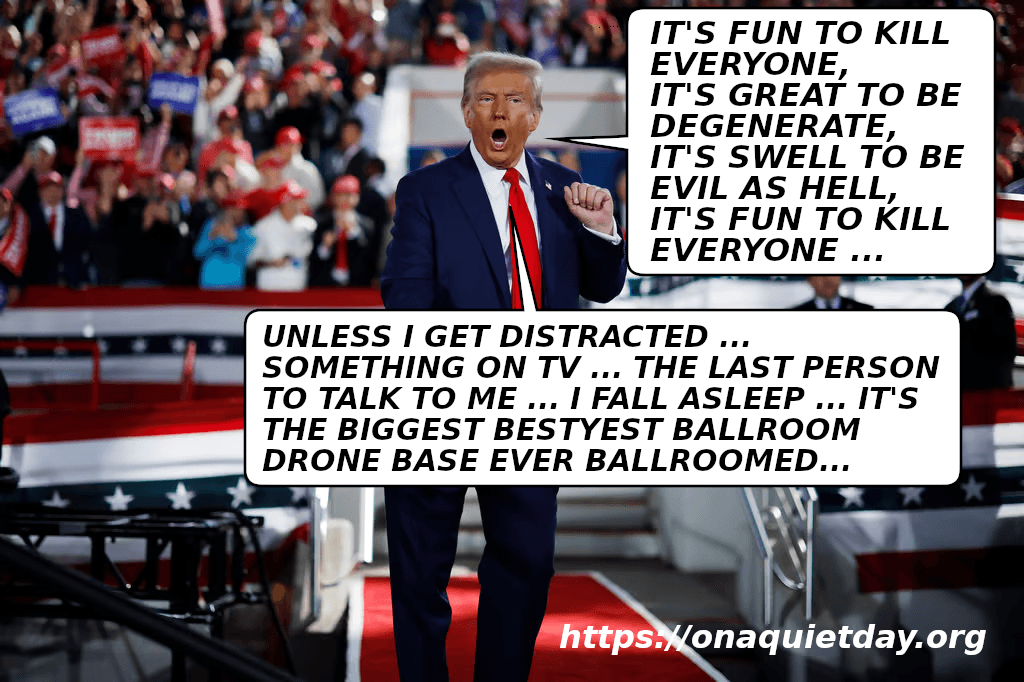
Donald Trump sings and dances, says that it's fun to kill everyone ...
Donald Trump sings and dances, says that it’s fun to kill everyone …
Continue ReadingWhy the US and Israel’s alliance endures – even when it strains

Iran has ‘high’ incentive to maintain ceasefire, US forces remain ‘postured’: US defense chief

Spread the love

This work by Middle East Monitor is licensed under a Creative Commons Attribution-NonCommercial-ShareAlike 4.0 International License.

United States Secretary of War Pete Hegseth speaks during the press conference held by The United States President Donald Trump in the James S. Brady Press Briefing Room at the White House on April 6, 2026, in Washington DC, United States. [Celal Güneş – Anadolu Agency ]

US Defense Secretary Pete Hegseth said Thursday that Iran’s “motivation” to maintain the ceasefire is “very high,” while warning that US forces remain “maximally postured” to resume war if Tehran rejects a deal, Anadolu reports.

“Our forces are maximally postured to restart combat operations, should this new Iranian regime choose poorly and not agree to a deal,” Hegseth said during a Pentagon briefing.

He urged Iran to “choose wisely,” warning its military leadership that Washington is closely “watching” their actions.

Hegseth said Iran’s command and control capabilities are “highly degraded,” limiting its ability to coordinate operations, but noted that its “motivation to want to stay in the ceasefire is very high.”

“They understand that a violation of that ceasefire means a commencement,” he continued.

“We are reloading with more power than ever before, and better intelligence, even more importantly, better intelligence than ever before,” said Hegseth. “As you expose yourself with your movement to our watchful eye, we are locked and loaded on your critical dual-use infrastructure, on your remaining power generation and on your energy industry.”

“We’d rather not have to do it, but we’re ready to go at the command of our president and at the push of a button,” he added.

READ: Iran and US deny reports of preliminary ceasefire extension agreement

Strait of Hormuz

Hegseth also said the US Navy controls traffic in and out of the Strait of Hormuz, enforcing a blockade with “less than 10%” of America’s naval power.

Separately, Joint Chiefs Chair Dan Caine said the blockade applies to all vessels heading to or from Iranian ports, regardless of nationality, but stressed it does not constitute a blockade of the Strait of Hormuz itself.

The remarks came as the US and Iran have been holding negotiations to extend a two-week ceasefire announced last week, which is set to expire on April 22.

Shipping through the Strait of Hormuz has been severely disrupted since the US-Israeli war against Iran began Feb. 28, and a US naval blockade announced Monday, after Washington said talks last weekend failed to yield a deal.

About 20% of global oil supply passes through the strait daily, and heightened insecurity has driven up oil prices as well as shipping and insurance costs.

READ: Iran supreme leader’s adviser threatens to sink US ships in Strait of Hormuz

This work by Middle East Monitor is licensed under a Creative Commons Attribution-NonCommercial-ShareAlike 4.0 International License.

Keir Starmer explains that UK is actively supporting Israel's genocidal expansion and repeats his previous quotation that he supports Zionism "without qualification". Keir Starmer said “I said it loud and clear – and meant it – that I support Zionism without qualification.” here: https://www.jewishnews.co.uk/keir-starmer-interview-i-will-work-to-eradicate-antisemitism-from-day-one/
Keir Starmer explains that UK is actively supporting Israel’s genocidal expansion and repeats his previous quotation that he supports Zionism “without qualification”. Keir Starmer said “I said it loud and clear – and meant it – that I support Zionism without qualification.” here: https://www.jewishnews.co.uk/keir-starmer-interview-i-will-work-to-eradicate-antisemitism-from-day-one/
Donald Trump calls for help from NATO allies in securing the Straight of Hormuz despite saying on 7 March 2026 that they don't need people to join wars after they've already won. He's challenged with the claim that he lies as much as the IDF.
Donald Trump calls for help from NATO allies in securing the Straight of Hormuz despite saying on 7 March 2026 that they don’t need people to join wars after they’ve already won. He’s challenged with the claim that he lies as much as the IDF.
Orcas discuss how Trump was re-elected and him being an obviously insane, xenophobic Fascist.

Continue ReadingIran has ‘high’ incentive to maintain ceasefire, US forces remain ‘postured’: US defense chief

Iran supreme leader’s adviser threatens to sink US ships in Strait of Hormuz

Spread the love

This work by Middle East Monitor is licensed under a Creative Commons Attribution-NonCommercial-ShareAlike 4.0 International License.

Iranian military personnel take part in an exercise titled “Smart Control of the Strait of Hormuz”, launched by the Naval Forces of the Islamic Revolutionary Guard Corps, is being carried out in the Persian Gulf and the Strait of Hormuz on February 16, 2026. [Islamic Revolutionary Guard Corps – Anadolu Agency]

A military adviser to Iran’s Supreme Leader has warned that Iranian forces would sink US ships in the Strait of Hormuz if Washington acts as a “policeman” in the strategic waterway.

The warning was made on Wednesday amid ongoing tensions in the region, where the United States has imposed a military blockade on Iranian ports after Iran disrupted maritime navigation in the strait during more than six weeks of fighting, now paused under a fragile two-week ceasefire.

Mohsen Rezaei, a former commander-in-chief of Iran’s Revolutionary Guards who was appointed as a military adviser by Khamenei last month, criticised the US President in remarks broadcast on state television, according to AFP, saying: “Mr Trump wants to become the police of the Strait of Hormuz. Is this really your job? Is this the job of a powerful army like the US?” 

READ: 26 million Iranians volunteer to defend country, including public figures

Speaking in military uniform, he added: “These ships of yours will be sunk by our first missiles and have created a great danger for the US military. They can definitely be exposed to our missiles and we can destroy them.”     

Rezaei, long considered a hardliner even within the Revolutionary Guard, also said that it would be “great” if the US launched a ground invasion of Iran, as “we would take thousands of hostages and then for each hostage we would get a billion dollars,” according to AFP.

He added: “I am not in favour of extending the ceasefire at all, and this is a personal view,” without giving further details.

Rezaei is a veteran figure in Iran’s political and military establishment and led the Revolutionary Guard between 1981 and 1997.

OPINION: The naval blockade of Iran and the closure of the Strait of Hormuz: Long-term implications for global energy security

This work by Middle East Monitor is licensed under a Creative Commons Attribution-NonCommercial-ShareAlike 4.0 International License.

Keir Starmer explains that UK is actively supporting Israel's genocidal expansion and repeats his previous quotation that he supports Zionism "without qualification". Keir Starmer said “I said it loud and clear – and meant it – that I support Zionism without qualification.” here: https://www.jewishnews.co.uk/keir-starmer-interview-i-will-work-to-eradicate-antisemitism-from-day-one/
Keir Starmer explains that UK is actively supporting Israel’s genocidal expansion and repeats his previous quotation that he supports Zionism “without qualification”. Keir Starmer said “I said it loud and clear – and meant it – that I support Zionism without qualification.” here: https://www.jewishnews.co.uk/keir-starmer-interview-i-will-work-to-eradicate-antisemitism-from-day-one/
Donald Trump calls for help from NATO allies in securing the Straight of Hormuz despite saying on 7 March 2026 that they don't need people to join wars after they've already won. He's challenged with the claim that he lies as much as the IDF.
Donald Trump calls for help from NATO allies in securing the Straight of Hormuz despite saying on 7 March 2026 that they don’t need people to join wars after they’ve already won. He’s challenged with the claim that he lies as much as the IDF.
Orcas discuss how Trump was re-elected and him being an obviously insane, xenophobic Fascist.
Continue ReadingIran supreme leader’s adviser threatens to sink US ships in Strait of Hormuz

Iran threatens to block exports, imports in Gulf if US blockade continues

Spread the love

This work by Middle East Monitor is licensed under a Creative Commons Attribution-NonCommercial-ShareAlike 4.0 International License

A view shows a large billboard displayed at Vanak Square in Tehran, Iran, on April 12, 2026.[Fatemeh Bahrami – Anadolu Agency]

Iran’s Khatam al-Anbiya Central Headquarters threatened Wednesday to block exports and imports through the Gulf, the Sea of Oman and the Red Sea in response to the US naval blockade on Iranian ports.

If the “aggressive and terrorist US” continues “illegal maritime blockade actions and creates insecurity for Iranian commercial vessels and oil tankers,” such moves would be seen as “a prelude to violating the ceasefire,” Major General Ali Abdollahi, the commander of the Central Headquarters, said in a statement carried by Fars News Agency.

He warned that if the blockade persists, Iran’s armed forces “will not allow any exports or imports to continue” in strategic waterways, including the Gulf, Sea of Oman, and the Red Sea.

The US has imposed a naval blockade around Iranian ports following their rare direct talks in Pakistan, which ended without an agreement this weekend.

More than 3,300 people have been killed in US-Israeli airstrikes in Iran since Feb. 28, according to Iranian authorities.

Tehran retaliated with missile and drone strikes targeting Israel, Iraq, Jordan, and Gulf countries hosting US military assets before a two-week ceasefire was announced last week.

READ: Iran interior minister dismisses impact of blockade threats

This work by Middle East Monitor is licensed under a Creative Commons Attribution-NonCommercial-ShareAlike 4.0 International License

Keir Starmer explains that UK is actively supporting Israel's genocidal expansion and repeats his previous quotation that he supports Zionism "without qualification". Keir Starmer said “I said it loud and clear – and meant it – that I support Zionism without qualification.” here: https://www.jewishnews.co.uk/keir-starmer-interview-i-will-work-to-eradicate-antisemitism-from-day-one/
Keir Starmer explains that UK is actively supporting Israel’s genocidal expansion and repeats his previous quotation that he supports Zionism “without qualification”. Keir Starmer said “I said it loud and clear – and meant it – that I support Zionism without qualification.” here: https://www.jewishnews.co.uk/keir-starmer-interview-i-will-work-to-eradicate-antisemitism-from-day-one/
Donald Trump calls for help from NATO allies in securing the Straight of Hormuz despite saying on 7 March 2026 that they don't need people to join wars after they've already won. He's challenged with the claim that he lies as much as the IDF.
Donald Trump calls for help from NATO allies in securing the Straight of Hormuz despite saying on 7 March 2026 that they don’t need people to join wars after they’ve already won. He’s challenged with the claim that he lies as much as the IDF.
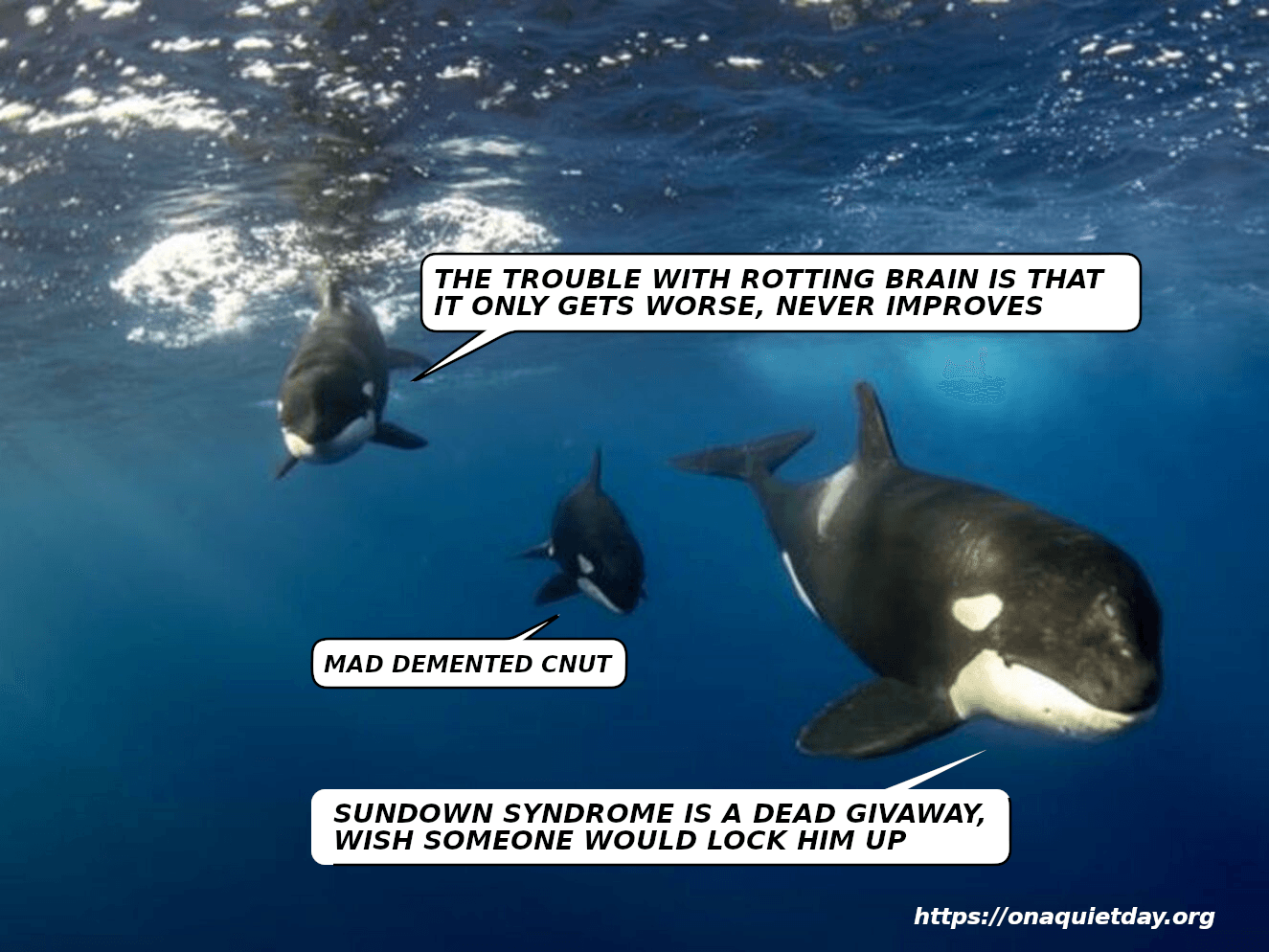
Orcas discuss rotting brain. Front Orca says "Wish someone would lock him up".
Orcas discuss rotting brain. Front Orca says “Wish someone would lock him up”.
Continue ReadingIran threatens to block exports, imports in Gulf if US blockade continues

Morning Star Editorial: Suppressing protest won’t save the government or Labour Party

Spread the love

https://morningstaronline.co.uk/article/suppressing-protest-wont-save-government-or-labour-party

 People take part in a march organised by the Palestine Solidarity Campaign, from Russell Square to Whitehall in central London, June 21, 2025

We live in a country now where the police round up hundreds at peaceful sit-ins for the slogans on their placards, where they inspect the books and flyers on political stalls, where peace movement leaders get convicted of public order offences for leading a march to lay flowers on the road in memory of dead children.

Suppressing these movements does nothing to address their grievances and Labour’s support is in freefall. Arrests such as those at Lakenheath air base, protesting at the US using British territory as a launchpad to bomb Iran, are not even made to shield our government but a Donald Trump regime that humiliates and undermines it at every turn, while dragging our country into illegal wars.

Wales First Minister Eluned Morgan, demanding an end to military co-operation with the United States on a military radar project in Pembrokeshire, sees how toxic and dangerous the US alliance has become.

There is little Labour can do to turn things around by May: doing so at all will require a complete overhaul of government policy, and the ejection of Starmer himself.

But Morgan’s intervention does point to an immediate step needed to show Labour intends to change: dump Trump, and Netanyahu. Stop arresting people to shield them.

Stop the slide into repression and war.

See the original article at https://morningstaronline.co.uk/article/suppressing-protest-wont-save-government-or-labour-party

Palestine Action joke that appeared in the UK satirical magazine 'Private Eye'.
Palestine Action joke that appeared in the UK satirical magazine ‘Private Eye’.
Keir Starmer objects to criticism of the IDF. He asks how could anyone object to them starving people to death, forced marches like the Nazis did, bombing Gaza's hospitals and universities, mass-murdering journalists, healthworkers and starving people queuing for food, killing and raping prisoners and murdering children. He calls for people to stop obstructing his genocide for Israel.
Keir Starmer objects to criticism of the IDF. He asks how could anyone object to them starving people to death, forced marches like the Nazis did, bombing Gaza’s hospitals and universities, mass-murdering journalists, healthworkers and starving people queuing for food, killing and raping prisoners and murdering children. He calls for people to stop obstructing his genocide for Israel.
Keir Starmer explains that UK is actively supporting Israel's genocidal expansion and repeats his previous quotation that he supports Zionism "without qualification". Keir Starmer said “I said it loud and clear – and meant it – that I support Zionism without qualification.” here: https://www.jewishnews.co.uk/keir-starmer-interview-i-will-work-to-eradicate-antisemitism-from-day-one/
Keir Starmer explains that UK is actively supporting Israel’s genocidal expansion and repeats his previous quotation that he supports Zionism “without qualification”. Keir Starmer said “I said it loud and clear – and meant it – that I support Zionism without qualification.” here: https://www.jewishnews.co.uk/keir-starmer-interview-i-will-work-to-eradicate-antisemitism-from-day-one/

Continue ReadingMorning Star Editorial: Suppressing protest won’t save the government or Labour Party