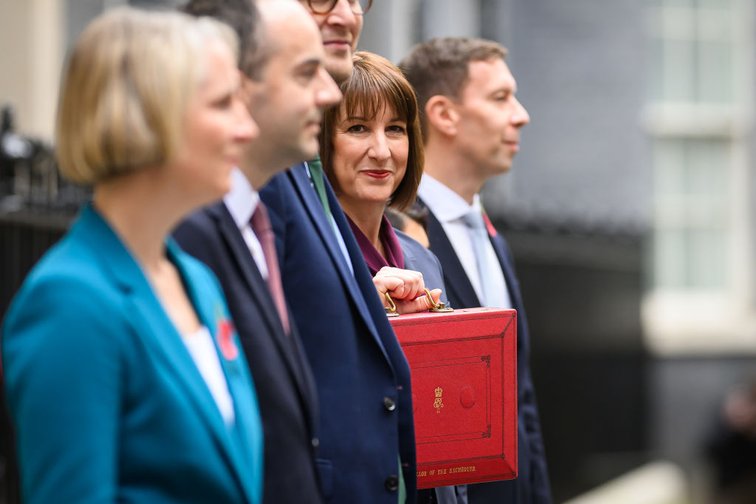
The Treasury is at the centre of a move to refocus the government’s agenda on ‘growth at all costs’ | Leon Neal/Getty Images
Exclusive: Government is inviting lobbyists and their clients to play a major role in the deregulatory agenda
“Growth comes from business, not the government.”
That was the message a government minister delivered to hundreds of corporate lobbyists, including those representing banks, arms companies and pharmaceuticals, during a webinar this morning.
Lord Livermore, the financial secretary to the Treasury, made the comments at the online event, which was the first in a series aimed at encouraging lobbyists to play a major role in the government’s ‘growth at all costs’ agenda.
In the call, which openDemocracy attended, Livermore made clear that Number 10 sees this agenda as being driven by corporations, while the government is a secondary actor that “work[s] in partnership with business”.
Also present among the 700 attendees were lobbyists representing tech firms, energy giants and consultancies, and those working for agencies including Hanbury, Headland, Lexington, Brunswick, Cavendish and Grayling.
These people and their clients are a “huge and important part” of the government’s plans, Livermore said, stressing that ministers are “really keen to draw on… the expertise that exists within your organisations and your clients”.
He added that the government’s focus is on getting rid of “stifling regulation that has for too long held business back” and “removing barriers to growth that we, in partnership with business, identify”.
The treasury minister also discussed Great British Energy’s role in “derisking investment” and providing capital for public-private partnerships, to make renewable infrastructure investment more attractive to the market.
While the government has been unapologetic about its outreach to business as a means to drive growth, Labour’s critics say an ever-closer relationship with lobbyists only heightens the impression of a government that does not have an agenda of its own.
Speaking to openDemocracy after the call, Green Party deputy leader Zack Polanski said: “With inequality rife, the government should be listening to the people who keep our country running and those suffering, not hosting desperate mass Zoom calls with arms dealers and oil giants.”
Cutting red tape
Setting out the government’s priorities, Livermore put a particular focus on achieving major reform to the planning system to encourage more commercial and infrastructure projects, and getting rid of regulations that “stand in the way of businesses investing”.
Livermore talked up the recent ousting of the head of the competitions regulator and his replacement with a former Amazon executive as evidence that the government is taking seriously its deregulatory agenda.
He also mentioned the recent push for regulators to submit proposals for growth and said Labour’s National Wealth Fund will “help catalyse private investment into sectors where at the moment, perhaps there’s a too high degree of risk”.
“We can use the National Wealth Fund to help derisk some of those investments,” said the minister. Economists describe this process as the state stepping in to improve the private returns on infrastructure assets.
Livermore continued that the fund could be used to “guide investments, particularly into the kind of clean energy investments of the future that we want to see”.
The government-lobbyist calls are being led by a new partnerships team in No 10 fronted by James Carroll, who has previously worked for the party on external relations and business engagement.
Also on the call was a senior executive at Anacta UK, described by The Times as the “first Starmerite lobbying firm”, and a banking lobbyist who is also involved in the running of Labour in the City, a group which convenes Labour supporters who work in financial services.
Lobbyists were able to submit questions during the call. One criticised “some parts of the business community” which have been “vocally critical about the government’s handling of the economy so far,” describing it as “unhelpful”.
They then asked: “How can firms who don’t want to talk down the UK but would rather promote a more positive narrative about the many opportunities open to British businesses best work with the government to do so?”
This prompted Carroll to quip: “I promise I haven’t planted that question.”
Carroll then rounded out the call by reiterating the importance the government places on developing this relationship with lobbyists.
“Just to emphasise,” he said, “your clients [and] your expertise is critical to delivering these ambitious national missions the prime minister has set out and the chancellor reiterated this week.”
Polanski, the Green’s deputy leader, said the plans to derisk investment “amounts to privatising the rewards and socialising the risks”.
He added: “Regulation exists for a reason, Grenfell stands as a towering reminder of lives lost and the total failure of standards.
“This isn’t growth for the many, just more wealth for the super-rich while the rest of us are told to look up at their private jets and wait for the trickle down.”
Keir Starmer and Rachel Reeves hosting an investment roundtable discussion with BlackRock CEO Larry Fink and members of the BlackRock executive board at 10 Downing Street | Frank Augstein – WPA Pool/Getty Images
Jonathan Reynolds told the investment bank that he looked forward to working together to “change the face of our UK”
Senior executives from BlackRock, one of the world’s most controversial companies, last week sat down opposite Keir Starmer and chancellor Rachel Reeves in Downing Street.
The government’s laser-focus on private investment as the key means of driving economic growth has inevitably led to a reliance on the world’s big money machines, such as BlackRock. But this is a relationship that Labour initially developed in opposition – and which has only become cosier since the party entered government.
The meeting on Thursday between Starmer, Reeves, investment minister Poppy Gustafsson and several members of BlackRock’s board was not the first time that senior figures from the world’s largest asset manager have met with ministers in recent months.
BlackRock CEO Larry Fink also made a star turn at Labour’s investment summit in October and posed for pictures with the prime minister when he visited New York in September. Senior BlackRock figures also attended a summer reception for business leaders at No 10, as openDemocracy revealed previously.
‘On a personal note’
As Starmer’s cabinet ministers were appointed in July, hundreds of companies contacted them to offer their congratulations, pitch their value to the government, and request meetings. Inevitably, some had more success than others in obtaining access to their targets. BlackRock was one of them.
With around $10tn (yes, trillion) under its management, BlackRock is among the most powerful financial institutions on the planet. To many, it is also among the most “evil”, because it continues to pump billions into fossil fuels and arms companies, and its reach extends into almost every aspect of the economy and society.
At 5pm on Monday 8 July, a managing director at the investment giant emailed Jonathan Reynolds, who’d been appointed the UK’s new secretary of state for business and trade just a few days earlier.
“Dear Secretary of State,” the executive wrote, “on behalf of all of us here at BlackRock, please find attached a formal letter of congratulations from myself and our UK Chair, Sandra Boss.
“And may I add, on a personal note, it is a pleasure after all these years to address you as such!”
The BlackRock executive was Anthony Manchester, a former senior civil servant who held roles across various government departments between 2001 and 2015, including the Treasury and Cabinet Office.
The attached letter began with the same pleasantries and congratulations expressed by Manchester, before highlighting BlackRock’s broad range of clientele and the scale of their footprint across the breadth of the UK economy, name-dropping British Airways, Rolls Royce and AstraZeneca as investments.
Next came the key point:
“As you know, we also share the government’s view that infrastructure investment can play a critical role in improving economic growth and productivity. We believe infrastructure is poised to become one of the fastest-growing segments in private markets globally.
“As our Chairman and CEO Larry Fink has recently written, private capital market financing, combined with policy pragmatism, are necessary to meet countries’ infrastructure needs and thereby enhance economic growth and productivity.
“We would welcome the opportunity to meet with you to discuss our work on funding the projects and enterprises that drive the economy and building the UK’s case as an investment destination. We will work with your team to get this meeting in the diary.
“Until then, congratulations once again on your appointment.”
Cutting through the corporate glaze, we can roughly understand the point being made here. In effect, BlackRock is highlighting that Labour’s entire political project rests on the willingness of companies like BlackRock to plough private capital into the foundational components of our society (and extracting massive profits in the process).
Reynolds’ reply to BlackRock, when it eventually came in August, gushed with praise for the firm and the wider financial services sector.
“Partnership with the Financial Services sector will be critical to developing and delivering on our industrial strategy and supporting small businesses. The sector underpins UK investment and trade, and its continued success is critical to lay the strong foundations for economic growth that this country needs.”
Reynolds added: “I would like to thank you for your long-standing investment in the UK, and partnership in driving growth, jobs and innovation. Blackrock has an impressive reach driving investment into the UK across sectors of our economy and your work is vital to economic growth. Funding our priority projects and investment in infrastructure is an important part of this…”
“We do not underestimate the importance of the UK’s Financial Services sector to the wider economy, or its potential to help deliver social value and the clean energy transition. To succeed we need everyone to play their part. I am looking forward to working with you in this common endeavour of national renewal.
“Together, we will change the face of our United Kingdom for the better.
“Thank you for your kind offer to meet. I would be delighted to accept this invitation. My Private Office will be in touch with you to arrange a suitable time. Thank you once again for writing and I look forward to working with you.”
‘Getting BlackRock to rebuild Britain’
In the asset management space, BlackRock has historically been a fairly hands-off investor, the bulk of its holdings being significant but typically not controlling shares in many of the world’s biggest companies – generally between 5-10% – according to Brett Christopher’s survey of the industry, Our Lives in Their Portfolios: Why Asset Managers Rule the World.
Think of an industry, then think of the top companies within it, and there’s a fairly good chance that BlackRock has shares in it. Christophers notes that, as a proportion of its overall holdings, investments placed in infrastructure – things like the electricity grid, water systems, and toll roads – were relatively small.
But in January this year, the firm announced it would purchase Global Infrastructure Partners, which controls around $170bn worth of assets worldwide, including Gatwick Airport and Hornsea 1, a project to build the world’s largest offshore windfarm in the North Sea. This purchase, which was completed last month, reportedly makes BlackRock the second largest asset manager in the infrastructure space, after ‘the vampire kangaroo’, Macquarie.
Critics will argue that when asset managers own significant chunks of infrastructure, their priority is their investors (including sovereign wealth funds and pension funds), rather than society, or even the planet. The primary purpose of infrastructure, the argument goes, becomes the generation of profit, rather than providing a working, reliable service. In practice, this might mean cutting investment while raising prices.
BlackRock and its ilk buying up the UK’s infrastructure would be controversial enough, but the way in which Labour is seeking to encourage this process is even worse. Writing in The Guardian ahead of the general election, economist Daniela Gabor said Labour’s plan for getting back into government amounted to: “get BlackRock to rebuild Britain”.
She wrote: “Labour’s strategy raises a bigger set of questions about the type of state we want. Starmer’s vision for government-by-BlackRock reduces the question of state capacity to ‘how do I get BlackRock to invest in infrastructure assets?’ This model involves the state in effect subsidising the privatisation of everyday life.”
In simple terms, the government’s plans to use public funds to ‘derisk’ private investment means that the taxpayer takes on much of the risk involved, while the private sector stands to reap most of the benefits. This is particularly true of essential infrastructure, which the government cannot let fail and so must step in to cover losses in the event that something goes wrong.
Gabor continues: “This doesn’t only make it harder to bring public goods back into public ownership; it also allows big finance to tighten the grip on the social contract with citizens, and to become the ultimate arbiter of climate, energy and welfare politics, which will have profound distributional, structural and political consequences.”
Immediately after the Downing Street meeting yesterday, Starmer took to social media to trumpet his sitdown with BlackRock. His message echoes the tone and substance of BlackRock’s letter to Reynolds months prior.
He wrote that the government’s mission, to “deliver growth, create wealth and put more money in people’s pockets” can “only be achieved by working in close partnership with businesses and investors”.
The prime minister continued: “BlackRock has a big footprint in the UK, and supports thousands of jobs across the country. Their insight on how we can put the UK on the world’s stage as a top investment destination and turbocharge growth is invaluable. Delighted to welcome them to Downing Street today to continue my government’s partnership with leading businesses.”
Exactly which people’s pockets are about to be filled with more money remains unclear.
Keir Starmer, Angela Rayner and Rachel Reeves wear the uniform of the rich and powerful. They have all had clothes bought for them by multi-millionaire Labour donor Lord Alli. CORRECTION: It appears that Rachel Reeves clothing was provided by Juliet Rosenfeld.
Activists protesting against fossil fuel lobbyists in attendance at COP29 hold a demonstration on November 15, 2024 in Baku, Azerbaijan. (Photo: Sean Gallup/Getty Images)
“It is now clear that the COP is no longer fit for purpose,” a coalition of scientists and advocates wrote as more than 1,700 fossil fuel lobbyists swarmed COP29 in Azerbaijan.
The crushing influence of petrostates and fossil fuel industry lobbyists has rendered the annual United Nations climate conference unfit to deliver the kinds of sweeping changes needed to avert catastrophic warming, a coalition of leading scientists, advocates, and policy experts warned in an open letter released Friday as the first week of the COP29 summit in Baku, Azerbaijan came to a close.
Acknowledging that the COP process has achieved “important diplomatic milestones” and “a remarkable consensus” on climate targets over nearly three decades of international negotiations, the coalition wrote that the policy framework produced by dozens of U.N. summits is not sufficient to solve the pressing crises facing humanity in an age of runaway warming and large-scale climate devastation.
“Science tells us that global greenhouse gas emissions must be reduced by 7.5% annually to have any chance of staying within the 1.5°C threshold, a prerequisite for the stability of our planet and a livable future for much of humanity. In 2024, the task is unequivocal: Global greenhouse gas emissions must be reduced by 4 billion tonnes,” reads the letter, whose signatories include former U.N. Secretary-General Ban Ki-moon, former U.N. Framework Convention on Climate Change executive secretary Christiana Figueres, Club of Rome global ambassador Sandrine Dixson-Declève, and Potsdam Institute for Climate Action Research director Johan Rockström.
“Twenty-eight COPs have delivered us with the policy framework to achieve this, but it is now clear that the COP is no longer fit for purpose,” the letter continues. “Its current structure simply cannot deliver the change at exponential speed and scale, which is essential to ensure a safe climate landing for humanity.”
The letter calls not for a complete abandonment of COP but rather “a fundamental overhaul” that would enable the U.N.-led summit “to deliver on agreed commitments and ensure the urgent energy transition and phase-out of fossil energy.”
The coalition of experts and advocates recommended a number of reforms for future COP summits, including “strict eligibility criteria to exclude countries who do not support the phase-out/transition away from fossil energy,” new “mechanisms to hold countries accountable for their climate targets and commitments,” and changes to limit the influence of fossil fuel lobbyists and ensure equitable representation.
“At the last COP, fossil fuel lobbyists outnumbered representatives of scientific institutions, Indigenous communities, and vulnerable nations,” Figueres said in a statement Friday. “We cannot hope to achieve a just transition without significant reforms to the COP process that ensure fair representation of those most affected.”
Rockström added that “there is still a window of opportunity for a safe landing for humanity, but this requires a global climate policy process that can deliver change at exponential speed and scale.”
“Planet Earth is in critical condition,” he said. “We have already crossed six planetary boundaries.”
“2024 marks yet another year at COP where we see those fighting the climate crisis outnumbered by those that have contributed to it the most—the fossil fuel industry.”
The open letter was released in the wake of a new analysis from the Kick Big Polluters Out coalition showing that at least 1,773 fossil fuel lobbyists have been granted access to the COP29 summit—giving the industry primarily responsible for the global climate emergency more representation than nearly every country present at the talks in Baku.
According to the Kick Big Polluters Out coalition, the fossil fuel industry has more representation at COP29 than the 10 most climate-vulnerable nations combined.
Additionally, The Guardian reported Friday that “at least 132 oil and gas company bosses and staff were invited” to COP29 as “guests” by Azerbaijan’s government and “given host country badges.”
“2024 marks yet another year at COP where we see those fighting the climate crisis outnumbered by those that have contributed to it the most—the fossil fuel industry,” said Joseph Sikulu of 350.org. “How can we achieve the ambition that is needed to save our homes when these negotiations are continually flooded with fossil fuel lobbyists? There is a ban on tobacco lobbyists from attending the World Health Organization’s summit, why is that not the case for the fossil fuel industry at COP?”
“We demand that the upcoming COP presidencies set clear rules against the presence of fossil fuel interests at the negotiating table,” Sikulu added. “Our lives depend on it.”
Al Gore, the former U.S. vice president, joined climate advocates on Friday in decrying Big Oil’s capture of the U.N. climate summit.
“It’s unfortunate that the fossil fuel industry and the petrostates have seized control of the COP process to an unhealthy degree,” said Gore.
Lamenting that the follow-through on COP28 commitments to transition away from fossil fuels has been “very weak,” Gore said he believes “one of the reasons for that is that the petrostates have too much control over the process.”
Experienced climbers scale a rock face near the historic Dumbarton castle in Glasgow, releasing a banner that reads “Climate on a Cliff Edge.” One activist, dressed as a globe, symbolically looms near the edge, while another plays the bagpipes on the shores below. | Photo courtesy of Extinction Rebellion and Mark Richards
View of Teesside, site of the planned £1.5 billion Net Zero Teesside Power gas-fired power plant with carbon capture. Credit: Bill Allsopp / Alamy Stock Photo.
The new Labour government is pledging billions to support projects based on climate-heating natural gas.
This story is the sixth part of a DeSmog series on carbon capture and was developed with the support of Journalismfund Europe.
Norwegian state-owned oil and gas company Equinor, the North Sea’s largest fossil fuel producer, is positioning itself to play a key role in plans to turn Britain into a world leader in capturing carbon.
Earlier this month, the new Labour government pledged £21.7 billion over 25 years to finance carbon capture and storage (CCS) projects shortlisted by the previous Conservative administration. Equinor was among several companies awarded a total of £3.9 billion in subsidies from 2025 to 2026 under the scheme when Chancellor of the Exchequer Rachel Reeves delivered the Autumn Budget on Wednesday.
But a DeSmog analysis of the company’s plans points to a series of technical, environmental and economic risks that raise questions over whether the projects will succeed in reducing emissions — or make them worse.
The uncertainties centre on Equinor’s backing for new “net zero” gas-fired power plants fitted with technology to capture carbon dioxide (CO2) billowing from their smokestacks, and bury the gas in disused oil and gas fields under the North Sea.
Carbon capture has never been deployed on gas-fired power stations at such a scale before — and a senior Equinor executive has made frank admissions around the technical challenges such projects face. Even if they perform as hoped, the power plants would likely burn imported liquified natural gas (LNG) from the United States, Qatar, and other suppliers — a fuel source that emits high levels of climate-heating methane when it’s being extracted, transported and stored.
Climate advocates are also concerned about Equinor’s plans to develop a UK market for “blue hydrogen”. This clean-burning fuel is made from natural gas, with carbon capture technology used to trap emissions released during the process. Even if the majority of these emissions are stored, however, the problem of methane leaking from the natural gas supply chain remains.
“This is not a decarbonisation project, it’s a ‘recarbonisation project’,” said environmental consultant Andrew Boswell, who launched a legal challenge to one of the new gas-power projects backed by Equinor and British oil giant BP in July.
Credit: Sabrina Bedford.
Lobbying Push
With oil and gas companies intensifying their lobbying of government ministers over carbon capture in recent years, Equinor, which supplies about 27 percent of the UK’s natural gas, has secured a prime seat at the table. Equinor executives attended 16 meetings with UK ministers from 2020 to 2023 to discuss CCS — more than any other company, and second only to the Carbon Capture and Storage Association lobby group, which held 20 meetings, according to transparency records [See related story].
Concerned about the fossil fuel industry’s role in shaping the UK’s carbon capture strategy, a group of scientists and campaigners wrote to Ed Miliband, Secretary of State for Energy and Net Zero, in September to urge him to reconsider the UK government’s support for the proposed gas-fired power and blue hydrogen projects.
“Putting the UK on the wrong pathway could be catastrophic,” wrote the authors, who included professors from 10 universities, including the University of Cambridge and the Massachusetts Institute of Technology. “Currently, this policy would lock the UK into using fossil fuel-based energy generation to well past 2050.”
Responding to the criticisms, Stuart Haszeldine, a geology professor at the University of Edinburgh and several other UK-based university professors, wrote their own letter to Miliband this month in support of CCS, and urged the government to disburse promised funding to avoid further delays.
“The fact remains that to achieve Net Zero in the UK by 2050 we need to deploy CCS at scale, and we need to deploy it well,” the authors wrote. “Not doing so could lead the UK to lose its status as a world leader in the space of tackling climate change, climate technology innovation, and a hub for investment for the energy transition.”
Technical Challenges
Equinor’s flagship carbon capture project in Britain is the estimated £1.5 billion Net Zero Teesside Power gas-fired power plant in the northeast of England, to be built in partnership with BP on the site of the demolished Teesside Steelworks.
Equinor and BP describe Net Zero Teesside Power as a “world-first gas-fired power station with carbon capture” and estimate that it will capture up to two million tonnes of CO2 per year by 2027, about 0.5 percent of the UK’s current yearly emissions.
Worldwide, attempts to make fossil fuel power plants cleaner through CCS have proved costly and challenging, however. So far, the approach has mostly only been used at power stations which burn coal — and even then the climate impact has been miniscule.
Only about 1.5 million tonnes of the world’s 37 billion tonnes of energy sector emissions each year, or 0.004 percent, were captured from power stations fitted with CCS in 2023, according to a DeSmog analysis of data from the Global CCS Institute, an industry group, and reporting from the SaskPower company in Canada.
And past attempts to build large gas-fired power stations with carbon capture in the UK, Norway, and Canada never made it past the planning stage.
That’s for both economic and technical reasons: It’s much harder and more expensive to capture the diffuse CO2 molecules emitted by burning natural gas than it is to mop up the denser CO2 concentrations spewed by natural gas processing facilities, the most common source of captured carbon worldwide.
‘Needle in a Haystack‘
Equinor encountered these challenges first-hand in 2006, when the company (then known as Statoil) began an estimated £650 million project to capture CO2 from its Mongstad gas-fired power station.
Then-prime minister of Norway Jens Stoltenberg called the project a “moon landing” for the climate, but project costs soon ballooned beyond earlier estimates, and the plan was abandoned in 2013. More recently, doubts about Equinor’s ability to capture CO2 from gas-fired power plants surfaced from within the company’s senior management.
Henrik Solgaard Andersen, then Equinor’s vice-president for low carbon technology, told Recharge Newsin 2021 that CCS at gas-fired power stations was “very difficult” and like “finding a needle in a haystack”.
Nevertheless, Equinor and BP told the UK government in their 2021 application for Net Zero Teesside Power that the companies could capture up to 95 percent of CO2 emissions at the gas-fired power plant. And the project’s website says the plant will capture “over 95% of emissions”.
That appeared to contradict Andersen’s 2021 comments to Recharge News, where he said a large gas-fired power station “will not be able to capture that amount of CO2” (90-plus percent).
“Nobody has run a dispatchable power plant with CCS before. Nobody knows really what the energy efficiency will be and the capture rate,” Andersen was quoted as saying.
When asked by DeSmog to clarify the apparent disparity between Andersen’s prior statements and company estimates for Net Zero Teesside Power, an Equinor spokesperson suggested referring all technical questions to BP, which will run operations at the power station.
“We believe that CCS could play a vital role in the UK’s transition to net zero by enabling industrial carbon capture, low-carbon hydrogen production, and power with carbon capture,” said the Equinor spokesperson.
BP did not respond to multiple requests for further information regarding CO2 capture estimates for Net Zero Teesside Power.
Equinor says its major investments in offshore wind and CCS will put the company on track to reach “net zero” carbon emissions by 2050 — and says it plans to store 30 to 50 million tonnes of CO2 a year by 2035 at various sites in Norway, the UK, Denmark and the United States, an over thirtyfold increase from the 0.8 million tonnes of CO2 it stored last year.
The company opened its new Northern Lights carbon transport and storage facility in Norway last month, a joint venture with Shell and TotalEnergies, but has yet to store large quantities of CO2 at the site.
‘Flawed’ Estimates
Even if Equinor and BP can achieve capture rates of 95 percent in Teesside, some researchers say that the project and others like it could still undermine Britain’s climate ambitions.
Lorenzo Sani, a power analyst from the London-based financial think tank Carbon Tracker, concluded in a June report that “flawed assumptions” and “underestimates” marred the government’s analysis of the Net Zero Teesside Power project’s potential emissions — which could make its climate impact up to four times higher than stated by BP and Equinor.
Sani argues that BP and Equinor have not taken adequate account of “upstream emissions” — methane and CO2 released during the production and transport of the natural gas burned in the power station.
As North Sea oil and gas production declines, the UK is increasingly importing gas in the form of liquefied natural gas (LNG), with the majority from the United States. This gas generally has a higher emissions footprint than UK or Norwegian gas due to the elevated amounts of methane and CO2 released during extraction, and the process of turning the gas into a liquid, and shipping it.
In Teesside, U.S.-based company WaveCrest Energy plans to build a new liquified natural gas import terminal to satisfy future gas demand in the region, which it advertises as “sustainable” and “low carbon” — despite its significant carbon footprint.
“Liquefied natural gas comes with a much heavier carbon intensity when combustion emissions are removed, because in the whole supply chain, there are higher energy losses and leaks,” Sani said. “So the carbon intensity of the gas that is delivered is at five or more times higher than natural gas from the North Sea.”
That critique was the basis of the case brought by Boswell, the environmental consultant, who argued that planning permission for Equinor and BP’s Net Zero Teesside Power plant failed to consider the full climate impact of the project.
In her July ruling in favour of the government, High Court Justice Nathalie Lieven, however, found that “no logical flaw” was made by ministers in granting planning permission for the project. Boswell has appealed the ruling, with a hearing due in March.
In response to detailed questions about the government’s CCS strategy submitted by DeSmog, a spokesman for the Department for Energy Security and Net Zero said that the Climate Change Committee, an independent government advisory body, had described carbon capture as “a necessity not an option for reaching our climate goals.”
“Carbon capture, usage and storage will play a vital role in a decarbonised power system,” the spokesperson said.
WaveCrest Energy did not respond to a request for comment.
‘Business as Usual’
Beyond concerns over the emissions footprint of the planned projects, it is also unclear how Equinor and other oil companies venturing into the UK’s nascent carbon capture market can expect to make such projects pay.
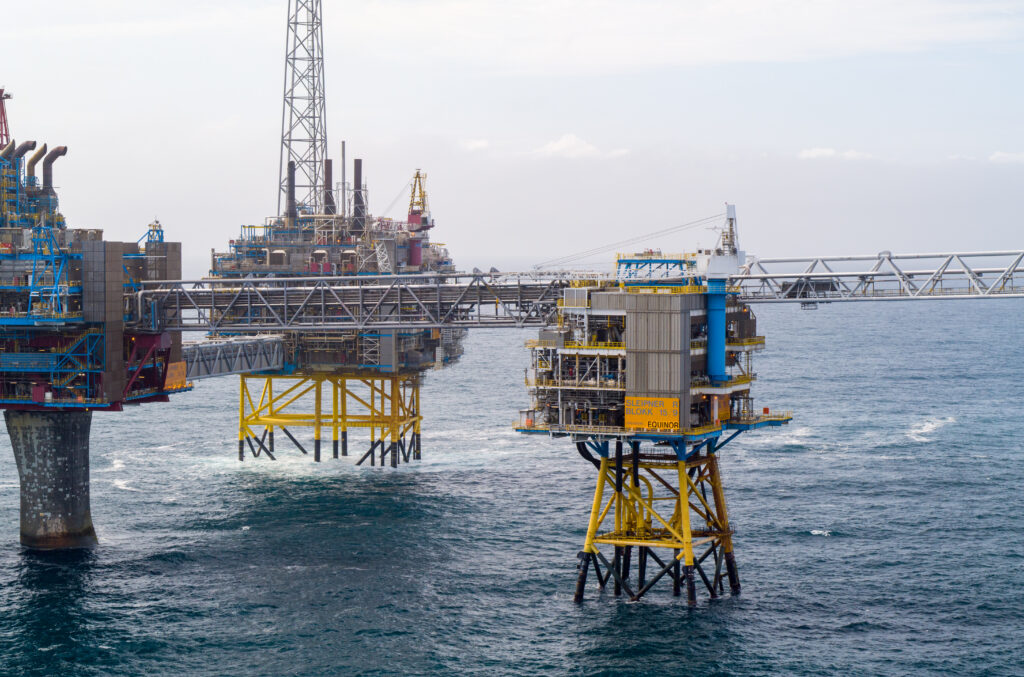
Carbon capture advocates often cite Equinor’s success at capturing CO2 from its Sleipner offshore gas field in the North Sea since 1996 as proof the technology can work.
But critics point out that the project did nothing to reduce consumption of fossil fuels.
Ada Nissen, a University of Oslo historian, argues that the Sleipner project allowed Equinor to continue “business as usual” — earning the company a rebate on a new Norwegian carbon tax, but doing nothing to curb further natural gas extraction or consumption.
What’s more, company figures for the amount of CO2 stored at Sleipner have not always proved reliable.
Equinor has admitted over-reporting the amount of CO2 captured at Sleipner during the period 2017-2021 due to an equipment malfunction, DeSmog reported this week, expanding on findings by Norwegian public broadcaster NRK Rogaland in 2022.
Elsewhere, in the 52 years since carbon capture was first deployed in a Texas oilfield, the fossil fuel industry has mostly used the technique to revive depleting oilfields by pumping CO2 back underground to force hard-to-reach oil to the surface. Selling that oil helped make the expensive business of capturing carbon economically viable — and generated more emissions when the oil was burned.
DeSmog revealed in March that the North Sea oil industry has long studied the possibility of using the technique — known as enhanced oil recovery — to reanimate declining offshore fields. Nevertheless, oil companies such as Shell and Equinor say they have no plans to do so.
That raises the question of how industry will finance the UK’s carbon capture plans.
The previous Conservative government set a target to capture 20 to 30 million tonnes of CO2 by 2030 — from none today. Such a build-out would mean constructing the equivalent of roughly half of the world’s total CCS capacity of about 50 million tonnes, which took half a century to develop, over the next five years. The new Labour government has not explicitly endorsed that target, though its carbon capture strategy is broadly in line with its predecessor’s.
In Britain, two decades of on-off attempts to introduce CCS have foundered due to the lack of a viable market to sell captured CO2, and wavering policy support.
“There’s been no monetary value placed on putting carbon back into the ground, and that’s why it doesn’t happen,” said Haszeldine, the geology professor at the University of Edinburgh.
Under the UK’s emissions trading scheme (ETS), companies must buy CO2 pollution allowances. In theory, rising prices for these permits could incentivise companies to capture carbon — instead of venting it into the atmosphere. Permits are trading at less than £40 per tonne, however, far below the estimated costs for capturing CO2 from a variety of sources. For example, the U.S.-based National Petroleum Council estimated in 2021 that it would cost an average of £90 per tonne to capture CO2 from a large gas-fired power plant.
In the absence of a reliable market signal, industry is clear that it will need significant subsidies.
Funding Concerns
The UK’s Carbon Capture Storage Association lobby group — which counts Equinor as a member — estimates that £2-3 billion in subsidies will be needed a year by 2028 to get a British CCS industry off the ground. That’s roughly in line with the government’s £3.9 billion in CCS subsidies for 2025-2026 announced on Wednesday, but higher than Labour’s pledge of £21.7 billion over 25 years — an average of less than £1 billion annually.
Despite past funding pledges, successive governments have come nowhere near to disbursing such funds. Since 2020, the government has granted £171 million for CCS and hydrogen projects as part of its 2021 UK Research and Innovation funding scheme. Equinor was the second largest recipient, with project grants amounting to more than £22 million, behind Italian oil company Eni with £30 million, according to a DeSmog review of the government’s subsidy database.
Companies are open about their worries over shortfalls.
In June last year, representatives of the Carbon Capture and Storage Association told Grant Shapps, then Secretary of State for Energy Security and Net Zero, that its members were concerned about delays and there was a “struggle to keep investors upbeat”, according to meeting notes obtained by DeSmog via a freedom of information request.
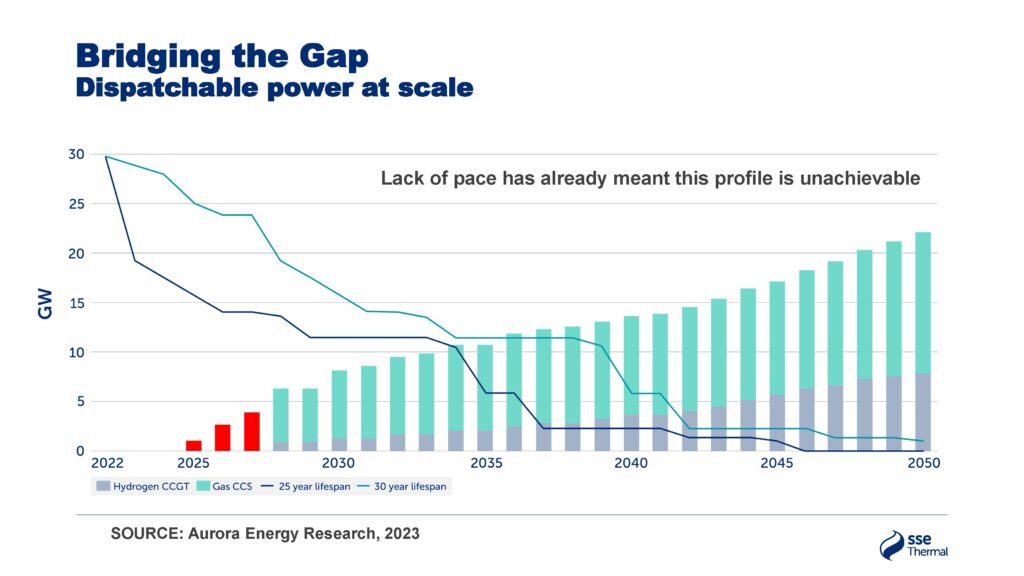
In a presentation given at a London CCS conference in October last year, Catherine Raw — then vice-president for Scottish utility SSE — stated that plans to scale up the UK’s gas-fired power CCS were beset by “lack of pace” which made them “unachievable.” If nothing happened soon, the then government’s plan to decarbonise electricity generation by 2035 — a target which Labour has since brought forward to 2030 — would force SSE to shut down much of its business. SSE did not respond to a request for comment.
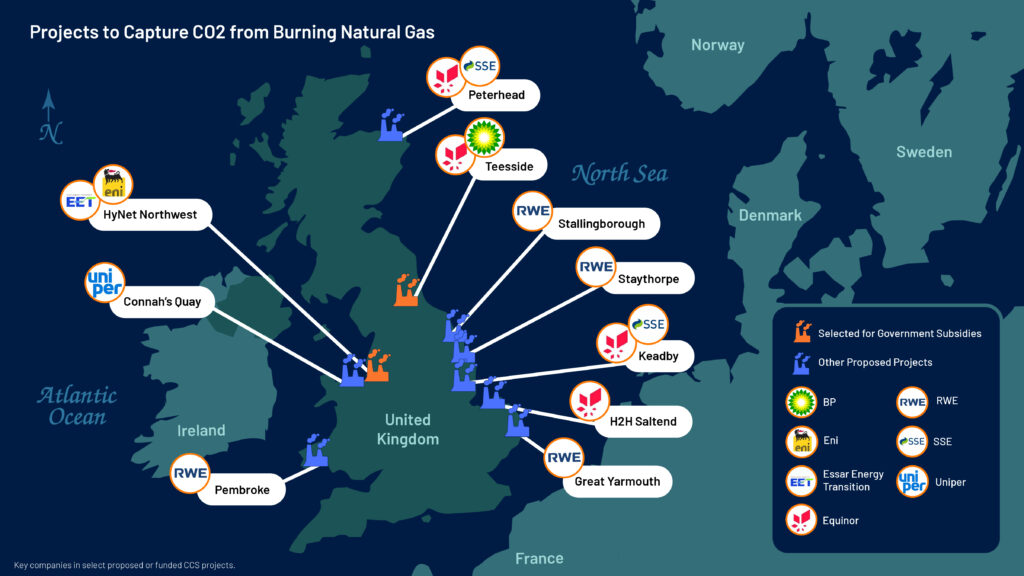
To meet the net zero challenge, SSE is partnering with Equinor to build two gas-fired power plants with CCS priced at £2.2 billion each, in Peterhead, Scotland and Keadby in the east of England. Neither project has yet been selected for government funding, with priority given to Net Zero Teesside Power.
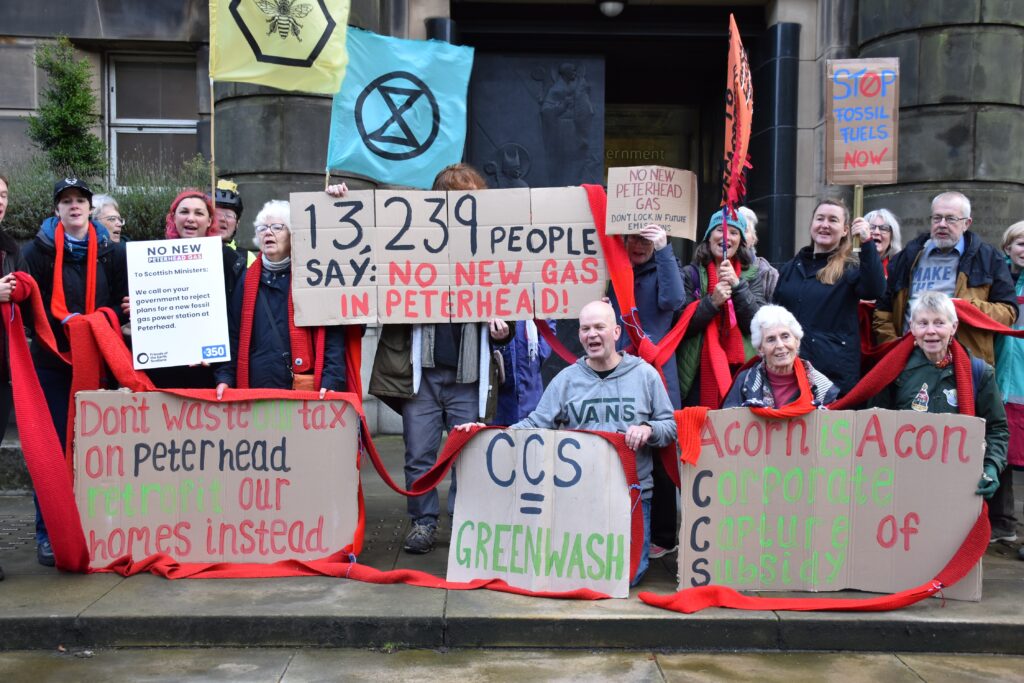
The Peterhead project has sparked opposition from climate groups including Friends of the Earth Scotland, which organised a protest in Edinburgh last month. “Projects like Peterhead carbon capture and Net Zero Teesside are wasting both time and money that should be spent on climate solutions that work from day one and will improve lives,” said Alex Lee, a campaigner for the group, responding to the CCS subsidy announcement in the Budget. “These greedy energy companies will do whatever it takes to keep the subsidies flowing, leaving the UK public to pick up the tab for its inevitable failure.”
In addition to Equinor and SSE, German energy company RWE plans to build CCS retrofits at three gas-fired power plants it operates in Pembroke, Wales, and Great Yarmouth and Staythorpe in eastern England, as well as a new-built gas power station with CCS at Stallingborough, also in eastern England. RWE estimates the projects could capture up to 11 million tonnes of CO2 emissions a year.
In February, Uniper — the German-state owned power utility and gas company — also announced plans to retrofit its Connah’s Quay gas-fired power station in Wales with CCS.
“Efficient gas-fired power stations fitted with carbon capture will support the transition to renewables by providing a firm and flexible power source, crucial for filling the gap when there is insufficient wind or solar energy to meet demand,” RWE said in a statement.
Uniper did not immediately respond to a request for comment.
Meanwhile, other carbon capture projects remain stalled. In June, Equinor delayed the potential start-date for a planned blue hydrogen plant near Hull on the east coast of England until 2027 at the earliest, citing funding concerns.
In September, Equinor cancelled plans to export blue hydrogen from Norway to Germany, citing lack of demand and economic challenges. And this month, ExxonMobil dropped plans to build a CO2 pipeline from its Fawley Refinery in southern England, linked to a proposed blue hydrogen plant at the site.
Budget Announcement
While the government’s carbon capture funding shortlist initially included eight projects, the Department for Energy Security and Net Zero said this month that the list would be cut to three.
The recipients are Net Zero Teesside Power; a blue hydrogen plant to be operated by EET Technologies — a subsidiary of Indian conglomerate and oil company Essar; and the Protos waste-to-energy power station with CCS, planned by waste and energy companies Biffa and Encyclis in Merseyside.
Left out of the funding round from the government’s initial shortlist were two blue hydrogen facilities planned in Teesside; a lime plant; a separate waste-to-power facility in Merseyside; and a project to capture CO2 at the Padeswood cement works in northern Wales.
In addition to the three selected carbon capture projects, the government plans to support Italian oil and gas company Eni’s CO2 transport and storage project in the Irish Sea as part of the HyNet Cluster in Merseyside, as well as the Northern Endurance Partnership CO2 transport and storage project in the North Sea, to be operated by Equinor, BP and TotalEnergies.
Eni says that its HyNet CO2 transport and storage network on land and in the Irish Sea could handle up to 4.5 million tonnes of CO2 per year, with plans to scale capacity to 10 million tonnes after 2030.
“The project will help preserve local jobs by supporting the decarbonisation of hard-to-abate industries, as well as attracting investment and creating new jobs,” said an Eni spokesperson.
David Parkin, chair of the HyNet Alliance, which includes Eni and EET Technologies, said that all blue hydrogen produced by EET Technologies will meet the UK’s “Low Carbon Hydrogen Standard” and estimates that more than 97 percent of CO2 will be captured from its blue hydrogen production plant.
“The low-carbon hydrogen can be stored in significant quantities to support the UK’s energy security and provide a reliable source of power for when the wind doesn’t blow and the sun doesn’t shine,” Parkin said.
The government’s decision to prioritise natural gas-based CCS projects such as new gas-fired power plants and blue hydrogen has alarmed some climate advocates, who recommend that the technology be used to clean up existing dirty industries, not build more fossil-based infrastructure.
Any investments in carbon capture “should be focusing on genuine ‘hard-to-abate’ applications like cement, fertiliser, and other chemicals processing/refining — not power generation and blue hydrogen,” said Arjun Flora, European director of the Institute for Energy Economics and Financial Analysis, a think tank, which analysed the UK’s carbon capture strategy last year.
“The most likely consequence is a waste of public money, at a time when budgets are constrained,” he added.
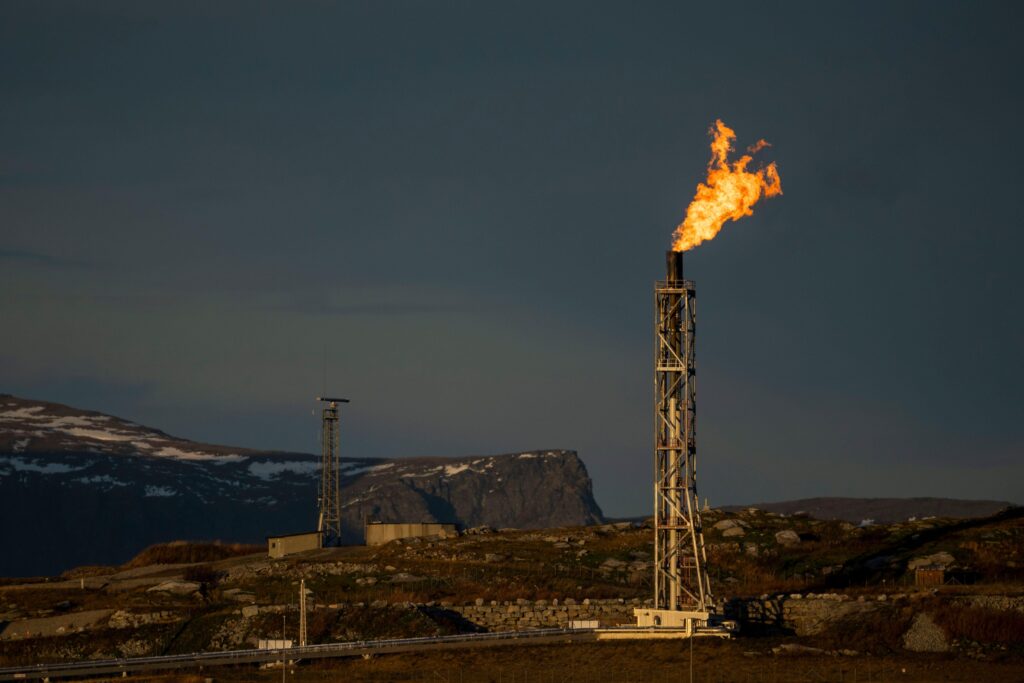
Equinor’s Hammerfest LNG export terminal on the Norwegian island of Melkøya. Credit: Fredrik Varfjell / NTB / Alamy.
Record Profits
While Equinor, BP and other companies waited for subsidies from the UK government to develop carbon capture in recent years, skyrocketing energy prices earned them record profits from oil and gas. In 2022, Equinor recorded adjusted earnings of £61 billion, more than double its previous annual record.
With demand for Norwegian oil and gas remaining strong, Equinor’s chief executive Anders Opedal announced plans in August to invest between £4.3 and £5 billion a year to maintain production levels in the Norwegian sector of the North Sea until 2035.
The company and partner Ithaca Energy also plan to invest an initial £3.1 billion to drill the Rosebank oil field west of the Shetland Islands, the UK’s largest fossil fuel project in a decade.
Last year, DeSmog revealed that former Chancellor of the Exchequer Jeremy Hunt had reassured Equinor’s Opedal of the government’s support for the Rosebank project during a meeting in January 2023, and had appeared to suggest that low carbon investments could improve the company’s image.
Even if Equinor succeeds in transforming the North Sea into a vast CO2 capture and storage site, however, the company’s target to store 30 to 50 million tonnes of CO2 a year by 2035 would nowhere near offset the 262 million tonnes of CO2 emitted from its operations and burning its oil and gas last year, according to company data reviewed by DeSmog.
That’s more than 300 times the combined total of 0.8 million tonnes of CO2 emissions it captured and stored in 2023 at its carbon capture project at the Sleipner gas field, and a similar facility in the Barents Sea.
Carbon capture expert Stuart Haszeldine said that fossil fuel companies should be bound by a “carbon takeback obligation” — a legal mechanism aimed at forcing them to store an equivalent amount of CO2 to the quantity produced by burning their products.
By subsidising carbon capture without constraining fresh drilling, governments are allowing fossil fuel companies to “have their cake and eat it too,” he said.
Additional reporting by TJ Jordan and Michael Buchsbaum
Drax power plant in Yorkshire. Credit: A.P.S. (UK) / Alamy Stock Photo
Scope of corporate influence underscores concerns the technology will be used to prolong demand for planet-heating natural gas.
This story is the third part of a DeSmog series on carbon capture and was developed with the support of Journalismfund Europeand published in partnership with the Guardian.
The UK government’s move to award £22 billion in subsidies to carbon capture projects followed a sharp increase in lobbying by the fossil fuel industry, DeSmog can reveal.
Oil and gas giants such as Equinor, BP, and ExxonMobil attended 24 out of 44 external ministerial meetings to discuss carbon capture and storage (CCS) in 2023, according to official transparency records.
That represented a surge in activity relative to 2020-2022, when ministers held about half as many meetings to discuss the technology, and oil and gas companies would attend seven to 10 of these discussions each year.
Meeting notes obtained via freedom of information requests showed how oil executives were involved in shaping policy, and used their access to underscore the need to continue developing oil and gas.
During a call in December with three Equinor executives, one of the company’s team told Jeremy Allen, then director of the Department for Energy Security and Net Zero, that Equinor “appreciate[s] the…collaborative approach to policy development.”
An executive from ExxonMobil’s Low Carbon Solutions division “spoke of the outstanding need for oil and gas, at the same time as needing to lower emissions” in a meeting with then energy minister Graham Stuart in March last year at the CERAWeek oil trade show in Houston.
The growing engagement by oil and gas companies has sharpened concerns among climate advocates that industry is skewing the UK’s carbon capture strategy to justify building new gas-fired power plants — prolonging demand for natural gas, a source of planet-heating carbon dioxide (CO2) and methane emissions.
“Fossil fuel companies often have the engineering know-how to build these projects, so the government naturally has to meet with them,” said Laurie Laybourn, environmental policy researcher and associate fellow at the Institute for Public Policy Research think tank. “But that might create a risk whereby these companies unduly influence policy and roll-out in a way that benefits them.”
Others engaging regularly with ministers on CCS policy include heavy manufacturing companies, CCS technology firms, lobby groups, and investment funds.
Researchers, climate groups, and local councils were less well represented, the transparency records showed. No individual organisation from these sectors has attended more than three meetings with ministers on carbon capture since the start of 2020.
Meanwhile, lobby group the Carbon Capture and Storage Association (CCSA) — which represents dozens of fossil fuel companies — attended 20 meetings, and Equinor 16. BP, ExxonMobil, Scottish power company SSE, and Drax, a biomass power plant and the UK’s biggest CO2 emitter, also attended nine meetings each during the same period.
‘Wrong Pathway’
The new Labour government announced plans last week to extend £22 billion in subsidies for carbon capture over 25 years, saying the strategy can help meet climate goals and support a broader revitalization of British industry.
The policy builds on the previous Conservative administration’s plans to establish four CCS “clusters,” where carbon capture would be used to trap some of the CO2 emitted by fossil-fuel burning factories and power plants. Pipelines would then carry the captured gas underground to be stored in depleted oil and gas reservoirs under the North and Irish Seas.
The government’s plans include backing proposals by Equinor and BP — two of the companies that have met most frequently with ministers since January 2020 — to build new “low-carbon” gas-fired power stations fitted with carbon capture units, which are slated to be among the first to receive state support.
A group of scientists and campaigners warned last month that such projects would allow the companies to continue extracting and burning natural gas based on the promises of unproven and expensive carbon capture technology — at the taxpayer’s expense.
“Putting the UK on the wrong pathway could be catastrophic,” said the letter, addressed to Secretary of State for Energy Security and Net Zero Ed Miliband.
Carbon Tracker, a financial think tank, warned in a March report that building new gas-fired power plants “could lock consumers into a high-cost and fossil-based future” and urged the UK to focus on deploying carbon capture in hard-to-decarbonise sectors such as cement.
“These ‘low-carbon’ gas projects are not really low carbon if you look at the whole supply chain,” said the report’s author Lorenzo Sani, referring to the large amount of natural gas, which is mostly comprised of the potent greenhouse gas methane, that leaks during the extraction and transport of the fuel.
“They also continue this paradigm that we have today of linking our economies with fossil fuels, whose markets are volatile and often controlled by external actors to the UK,” Sani added.
‘Struggle to Keep Investors Upbeat‘
The Intergovernmental Panel on Climate Change and International Energy Agency envisage significant deployments of carbon capture for reaching net zero emissions by mid-century.
However, many environmental groups are sceptical. Researchers point to the frequent failure of projects to meet carbon capture targets, cost-overruns, the need for multi-billion dollar subsidies, and the tendency of the oil and gas industry to use the technology to justify investments in new fossil fuel projects — rather than focus on cleaning up existing dirty industries.
The surge in lobbying by companies seeking public money coincided with the previous Conservative administration’s pledge of £20 billion in subsidies for carbon capture projects in March 2023.
Three months after that funding was announced, lobby group the CCSA told ministers its members were concerned about delays and there was a “struggle to keep investors upbeat”, according to meeting notes.
The CCSA has attended more government carbon capture meetings (20) than any other organisation since January 2020, including two meetings between January and March 2024, the latest period for which records are available.
The organisation had a presence at both this and last year’s Labour party conferences. The CCSA’s Head of Communications Joe Butler-Trewin has held various organising and research roles within the party, while CEO Ruth Herbert worked as a civil servant under Miliband, when he was Secretary of State for Energy and Climate Change from 2008 to 2010. Miliband was a guest speaker at the CCSA’s annual meeting last year.
Now Secretary of State for Energy Security and Net Zero, Miliband and the new Labour government announced plans last week to extend £22 billion in subsidies for carbon capture over 25 years, saying the strategy can help meet the country’s climate targets and support a broader revitalization of British industry.
When asked to comment on concerns that their CCS projects may “lock in” fossil fuel dependency, BP and Equinor gave almost identical statements, saying that CCS is essential for the UK’s transition to net zero and will create jobs.
The Department for Energy Security and Net Zero said CCS will play a “vital role” in its plans for a clean energy system by 2030. The department also pointed to independent government advisor the Climate Change Committee’s description of carbon capture as a “necessity, not an option”.
The CCSA did not respond to requests for comment.
‘Outstanding Need for Oil and Gas’
Two meetings with ExxonMobil designated for the discussion of “carbon solutions” were used by both the company and then senior Department for Energy Security and Net Zero minister Graham Stuart to reaffirm the need for continued oil and gas production in the UK, meeting notes show.
On March 8, 2023, Stuart met with at least one executive from ExxonMobil’s Low Carbon Solutions division at the CERAWeek oil trade show. Representatives from the North Sea Transition Authority regulator and the Department for Business and Trade were also present.
According to notes from the meeting, the ExxonMobil executive “spoke of the outstanding need for oil and gas, at the same time as needing to lower emissions.”
Just over three months later, on June 15, Stuart met with representatives from ExxonMobil again to “discuss carbon solutions”.
However, after discussing ExxonMobil’s CCS capabilities, Stuart then told attendees “that the UK government has championed the need for new oil and gas licenses.” An ExxonMobil executive replied that “this was important in attracting new investment.”
Later in the meeting, minutes show that Stuart “reiterated that the Government supports the continued development of oil and gas resources on the UKCS [UK Continental Shelf].”
Four months later, the then Conservative government announced it was granting hundreds of new oil and gas licences in the North Sea.
‘Easily Spun‘
In the March 2023 meeting, ExxonMobil touted the success of carbon capture projects in the United States that had been used to pump more oil using “enhanced oil recovery” — where CO2 is injected into the ground to extract hard-to-reach oil and gas.
Meeting notes show an ExxonMobil executive told Stuart that the company had “captured 40% of all the CO2 that has ever been captured”.
The ExxonMobil employee’s statement appeared to refer to the approximately 120 million tonnes of CO2 captured by its Shute Creek gas-processing plant in Wyoming, which opened in 1986 and often features in ExxonMobil’s promotional materials.
However, 47 percent of the CO2 captured over Shute Creek’s lifetime had been sold for enhanced oil recovery, according to a 2022 study by U.S.-based think tank the Institute for Energy Economics and Financial Analysis. Another 50 percent of the gas was vented back into the atmosphere when it couldn’t be sold. Just three percent was stored.
The meeting notes did not record any discussion of these caveats.
“CCS is technically complex and difficult for anyone but industry experts to fully understand,” said Lindsey Gulden, a former ExxonMobil climate and data scientist. “That means it can be easily spun to give cover to the oil industry as they attempt to navigate the growing public concern over climate change.”
ExxonMobil did not respond to a request for comment.
dizzy: A new government was elected 4 July 2024 while the lobbying will mostly have been with the previous Tory government. It follows that our current government has accepted and progressed with the previous government’s decisions. Is it fair to accuse them of simply rubber-stamping the previous government’s decisions?
Experienced climbers scale a rock face near the historic Dumbarton castle in Glasgow, releasing a banner that reads “Climate on a Cliff Edge.” One activist, dressed as a globe, symbolically looms near the edge, while another plays the bagpipes on the shores below. | Photo courtesy of Extinction Rebellion and Mark Richards