Opaquely funded right-wing think tanks have claimed responsibility for parts of today’s budget, celebrating its announcement as a victory for its lobbying.
Jeremy Hunt unveiled his autumn statement this afternoon, including policies such as a 2% cut to National Insurance, punitive enforcement action for those on disability benefits who do not find work in 18 months, and raising Local Housing Allowance before freezing it again in two years.
A key part of the chancellor’s budget, a policy called ‘full expensing’, means businesses can claim 100% of investment costs such as digital equipment against revenue in the same year, allowing businesses to pay less tax. It was first introduced in spring as a temporary measure but will now be made permanent.
“Amazing news that the full expensing has been made permanent,” the think tank wrote on its X (formerly Twitter) page. “Congratulations to everyone who worked so hard to make this a reality.”
It added: “We at the ASI have been campaigning for full expensing over many years.”
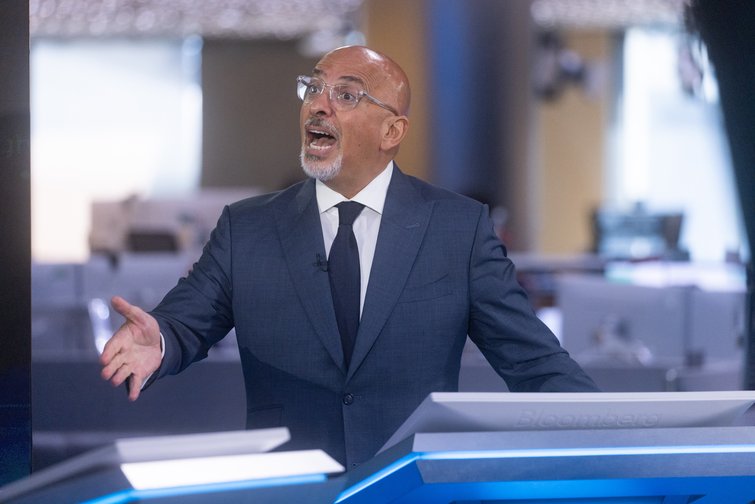
Former chancellor Nadhim Zahawi, a patron of the Adam Smith Institute, has lobbied for full expensing to Hunt in the House of Commons. Zahawi was fired from his role as chair of the Conservative Party and minister without portfolio after breaching the ministerial code by failing to declare he was being investigated by HMRC while chancellor under Boris Johnson.
In the past, companies like Amazon have taken advantage of expensing schemes – in particular, a ‘super-expensing’ short-term policy that allowed companies to write off 130% of investment in infrastructure. The company’s UK division paid no corporation tax for a second year in a row thanks to the scheme.
The Adam Smith Institute, named after the 18th-century Scottish thinker on capitalism, lobbies on issues such as deregulation and lower taxes. It was given the lowest possible transparency rating in openDemocracy’s ‘Who Funds You?’ project earlier this year, but is reported to be partly funded by the tobacco industry as well as American climate denial groups.
Other right-wing think tanks have also lauded the move. In a “wish list” written by free-market think tank the TaxPayers Alliance, it asked the chancellor to “Make full expensing for corporation tax permanent… to reduce the tax penalty on long-term investment.”
The TaxPayers Alliance does not publicise its funders, and was also given the lowest possible rating by Who Funds You?
Allowing businesses to invest more can be positive, so long as public spending isn’t cut in the process, Pranesh Narayanan, a research fellow at the Institute for Public Policy Research (IPPR) told openDemocracy.
“In this autumn statement, the Conservatives are able to ‘afford’ it because they’ve frozen public investment spending from 2025 onwards,” Narayanan said, referring to the billions of pounds of spending cuts forecast after the next general election. “You need both kinds of investment to have a proper economic recovery. You can’t do one at the expense of the other, especially when you have crumbling schools and crumbling hospitals.”
Narayanan added: “This policy is mainly for the benefit of big corporations. We believe we need more public investment.”
Economist Ann Pettifor argues in openDemocracy today that Hunt’s autumn statement “extinguished… any faint hope of the beginnings of an economic revival”.
The influential Conservative-linked Centre for Policy Studies (CPS) has been pushing for further North Sea oil and gas drilling while several of its board members hold financial interests in the industry, a DeSmog investigation has found.
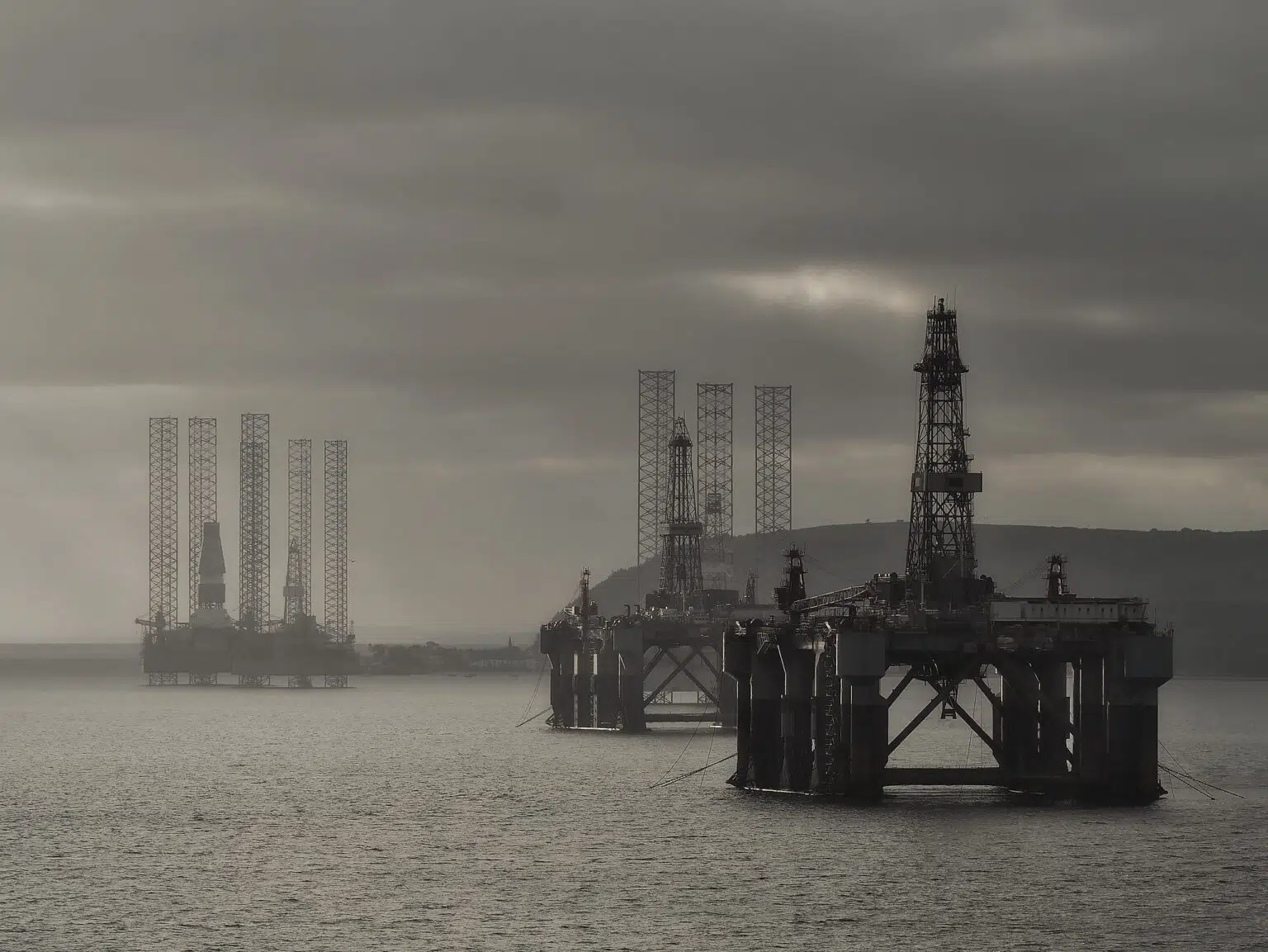
The news follows the government’s approval of the major Rosebank oilfield and the issuing of new North Sea licences, which the government intends to turn into a mandatory annual process, as announced in this week’s King’s Speech.
Five of the think tank’s board have financial interests in North Sea oil and gas, including its chair Lord Spencer, a major Conservative Party donor whose exploration company is bidding for licences in the current round.
The think tank, which is based at 57 Tufton Street in Westminster, meets regularly with ministers. It has called for new oil and gas projects to be accelerated, labelled the windfall tax on energy companies a “terrible idea”, and argued for a more generous fiscal environment for the UK’s fossil fuel producers.
Prime Minister Rishi Sunak is quoted on the organisation’s website as saying that “Lots of exciting ideas are being generated at the CPS… many of which are finding their way into government.”
Tessa Khan, executive director of climate group Uplift, said the findings were an example of how some think tanks have “long been little more than lobbying vehicles for private interests, including oil and gas”. The CPS denies that it is a lobbying group.
Khan added that organisations like the CPS “amplify the voices” of the oil and gas industry.
“This maybe goes some way to explaining why this government is set on subsidising new oil and gas fields when they represent such a bad deal for the public, in that they won’t lower bills, won’t increase energy security but will make the climate crisis worse,” she said.
Nature broadcaster Chris Packham, who is threatening to take the government to court over its recent watering down of climate measures, said: “Just weeks after we learn that not a single new offshore wind project will be going ahead this year due to the government’s intransigence – and as Rishi Sunak tears up vital climate policies – these findings are shocking.
“They provide further evidence that Number 10’s fossil fuel agenda is far from accidental. There are powerful vested interests at work and the Centre for Policy Studies seems to be at the heart of it. The government’s plan to hand out more than a hundred new North Sea drilling licences in the coming months is looking grubbier than ever.”
DeSmog previously revealed that the Conservative Party received £3.5 million from fossil fuel interests in 2022, including from the North Sea industry. This week, DeSmog also revealed that the government watered down its windfall tax on the excess profits of energy firms after a lobbying blitz by the oil and gas industry.
When asked about its board members’ business interests, a CPS spokesperson said that the think tank is “grateful for all our supporters, especially the support of our board members, but the investments of other boards on which they sit have no bearing on their relationship with the CPS”.
They claimed that DeSmog was “cherry-picking in order to manufacture an incorrect picture of the CPS’s position” and that it was “misleading and below journalistic standards.”
They added that “the Centre for Policy Studies has been one of the most prominent champions of free-market environmentalism, with a dedicated workstream on net zero” and that “Where our work is sponsored, this is made clear in the report acknowledgments, in press releases, and in event invitations.”
The North Sea Transition Authority (NSTA), the regulator in charge of issuing drilling licences, said that oil and gas were “forecast to play an important role in the energy mix for decades to come”. A spokesperson said the NSTA was “pleased” with the number of applications received in the current oil and gas licensing round and that the process of assessing them was “progressing well”.
The Department for Energy Security and Net Zero declined to add any further comment.
At the end of September, the International Energy Agency, of which the UK is a member, released a report reiterating the need for a phaseout of fossil fuels if climate goals are to be met.
Lord Deben, the recently retired chair of the UK’s Climate Change Committee, which advises the government, argued in August that the government should stop approving North Sea licences.
Deltic Energy
Lord Spencer, who has chaired the CPS since the start of 2020, is the largest shareholder of Deltic Energy, which holds stakes in 18 North Sea areas, known as blocks, according to NSTA data.
A former Conservative Party treasurer, Spencer was given a life peerage by Boris Johnson. Official data shows that he has donated more than £7.5 million to the Conservative Party, individual Tory politicians and officially affiliated groups since 2015. He also sits on the board of the party’s multi-million-pound endowment fund. DeSmog revealed earlier this year that many of its directors have significant fossil fuel interests.
Through his holding company, IPGL, Spencer owns a £17.5 million stake in Deltic, according to Refinitiv data – nearly a fifth of the firm. He has held a significant shareholding since at least 2018, and bought more shares in 2019 from its founder Algy Cluff, a pioneer of the original North Sea oil boom in the 1970s who himself later joined the CPS board.
Responding to an enquiry from DeSmog, Cluff said that although the value of the company “may have increased in the view of management”, the stock market is “unimpressed and very much aware of the risks associated with any oil investments nowadays”. He described the “small number” of options he holds in the company as “presently worthless”.
Cluff has nevertheless spoken of the North Sea’s “second coming”, claiming that there is “a lot more oil to be found” and a “huge amount of gas”.
Deltic has made significant discoveries in recent years, touting its “enviable reputation as proven hydrocarbon finders” on its website, and has seen its market value rise in tandem.
It won blocks in North Sea licensing rounds in both 2018 and 2020, with the former is said to represent an area the “size of Bedfordshire”.
In its latest annual report, for the 2022 calendar year, Deltic criticises the government’s windfall tax but praises its accompanying investment allowance, which provides North Sea companies with tax breaks to encourage investment.
A presentation it gave investors in March describes its strategy as “Identify. Explore. Monetise. Repeat.” It says the investment allowance “significantly enhances economics from investment in Deltic exploration”, touts controversial gas-derived “blue hydrogen” as environmentally friendly, and highlights “established export infrastructure” and “regular licensing rounds” as attractive features of the North Sea.
Deltic is chaired by Mark Lappin, a former technical director of fracking company Cuadrilla who has publicly called for more oil and gas production, criticising opposition to new drilling.
Lord Spencer’s Conservative donations, made either personally or through IPGL and ICAP, include £25,000 gifts to the 2022 leadership campaigns of Sunak, Liz Truss, and Penny Mordaunt.
Spencer made £20,000 donations to Johnson, Jeremy Hunt, Michael Gove and Sajid Javid in 2019, and has made smaller donations to numerous other leading figures within the party in recent years, including Kwasi Kwarteng, Dominic Raab, Theresa May, Brandon Lewis, and Andrew Griffith.
Spencer has also funded “Blue Collar Conservatism”, a large caucus of Conservative MPs working to “champion working people”, with donations totalling £25,000 in 2019 and 2020. The group has campaigned against fuel duty rises.
Spencer’s Other Fossil Fuel Interests
Lord Spencer has also publicly talked up the fossil fuel industry, telling LBC’s Nick Ferrari last September that the UK “sadly has opposed further investment in North Sea oil and gas”. During the interview, he praised then Prime Minister Liz Truss for speaking out against windfall taxes on the sector, calling them “not Tory policy” and “not pro-business”.
He also expressed support for fracking, praised Truss’s “strategy” and “ideology”, and called for investment in renewable energy, but omitted to mention his interests in oil and gas.
In addition to the North Sea, Spencer has various other fossil fuel interests. According to Refinitiv, he holds the second largest stake in Pantheon Resources, a UK company exploring for oil in Alaska that recently hailed a potentially enormous discovery.
His brokerage firm ICAP also includes an oil and gas trading arm. Until December last year, Spencer held shares in Petrofac, an oilfield services firm heavily involved in the North Sea, including the controversial Cambo project.
Spencer’s shareholdings are disclosed to the House of Lords – indicating either a stake worth more than £70,000 or significant control over the company. They include Cluff Energy Africa, described as an “early stage oil prospecting company, seeking licences in Africa (Angola and Sierra Leone)”.
Its founder, Algy Cluff, told DeSmog that they had “wound the company up” because they “found the premium being asked by governments for the right to explore not to be consonant with the rewards”.
Cluff was a director of the CPS between 1995 and 2006, coinciding with the executive directorship of the late Tessa Keswick. Cluff confirmed to DeSmog that Keswick helped him find investors for his North Sea consortium in the 1970s, as has been reported.
Tessa’s husband Henry Keswick, chairman emeritus of the conglomerate Jardine Matheson and a major Tory donor, used to own the influential conservative Spectator magazine and sold it to Cluff in the early 1980s. Cluff was its chairman until 2004, during which Charles Moore, Dominic Lawson, and Boris Johnson were editors.
The magazine was edited in the 1960s by the late Nigel Lawson, who would become Thatcher’s chancellor and in later life promote climate science denial through the Global Warming Policy Foundation, based at 55 Tufton Street.
Cluff’s remaining business interests include Cluff Mineral Resources, an Africa-focused gold and coal exploration company, which was temporarily based at 55 Tufton Street before moving next door to share an address with the CPS.
The Board
Another CPS board member, Lord Strathclyde, is a senior strategic adviser to Hibiscus Petroleum, a Malaysian oil and gas company that has amassed stakes in 11 North Sea blocks in recent years.
Ithaca, the firm behind the high-profile Rosebank and Cambo projects, is partnering with Hibiscus on one of the blocks.
Hibiscus is also one of the firms to have been awarded stakes in the latest round of oil and gas licences.
Strathclyde, who was leader of the House of Lords under David Cameron, is an adviser to oil trading giant Trafigura.
Sir Douglas Flint, chair of Abrdn – formerly, Standard Life Aberdeen – also sits on the CPS board. Abrdn has been targeted by protesters for its investments in oil and gas, which climate researchers Urgewald estimate at £2.9 billion. According to the latest figures, they include oil majors like BP, Shell and Exxon, as well as North Sea-focused firms Serica Energy, Harbour Energy, and EnQuest.
The major asset manager was reportedly one of a group of financial institutions recently summoned by the Treasury to increase investment in the North Sea.
Lord Spencer’s entry in the register of interests indicates he also holds a stake worth more than £70,000 in Abrdn.
Other CPS board members include Jon Moulton, chair of FinnCap, a financial advisory firm whose activities include raising finance for North Sea oil and gas companies, and Roger Orf, a partner at Apollo Global Management, a US private equity firm with £349 million of investments in BP and Shell, both major North Sea players.
Two further CPS board members have wider interests in oil and gas: Ian Molson, deputy chair of Central European Petroleum, which is exploring for oil in Germany and Poland; and major Tory donor Lord Bamford, chair of construction giant JCB, a sector still heavily reliant on fossil fuels.
In April 2023, DeSmog revealed that CPS board members had donated more than £600,000 to the Conservatives since Rishi Sunak became prime minister.
The CPS also leans on its board for funding. According to the group’s latest accounts – for the period up to September 2022 – its directors donated £1 million to the company during the year. Turnover was £650,000 during the year and ‘other operating income’ hit £1.5 million, meaning that the CPS board contributed nearly half (47%) of its income during the period.
North Sea Push
The Centre for Policy Studies has strongly supported new North Sea oil and gas drilling in recent years.
In a March 2022 economic bulletin, it recommended that the government “look at accelerating regulatory approval for upcoming oil and gas projects such as Rosebank [Phase 1], Clair South, Glengorm, Cambo and Bentley [Phase 2]”.
The bulletin added that introducing a windfall tax on profits would be a “terrible idea” and “completely self-defeating”. It welcomed “reports” suggesting the government was planning to launch another licensing round for fossil fuel projects.
A month later, the CPS welcomed the government’s “energy security strategy”, calling the return of annual North Sea licensing rounds “overdue”. A 33rd licensing round was launched in October.
In February this year, one of the CPS’s senior researchers criticised the “punishment beatings inflicted on the North Sea oil and gas industry from George Osborne onwards” – despite the sector having enjoyed one of the most generous tax regimes in the world until the recent windfall tax.
Other articles published on CapX, a commentary website run by the CPS, have labelled the Labour Party’s policy of no new North Sea licences “more than a little nuts” and the SNP’s similar position a “dangerous gambit”.
Andy Mayer, chief operations officer at the BP-funded Institute of Economic Affairs, writes regularly for CapX. He has used the platform to describe opposition to the Rosebank project as “shrill hysteria”, Shell’s bumper profits this year as “brilliant stuff”, and North Sea companies being fined for gas flaring as a “dotty investment message to send”. Following the announcement of the latest North Sea licences, Mayer wrote a story for CapX headlined “Hurrah for new North Sea oil licences!”
CPS Influence
The CPS has significant political access, having conducted private, one-to-one meetings with ministers on 27 occasions since 2014 and attended many other larger ministerial meetings, according to data compiled by Transparency International from government disclosures.
A number of the think tank’s former employees are now working as government advisers and its homepage carries supportive quotes from former prime ministers Liz Truss and Boris Johnson.
Rishi Sunak spoke at a CPS event at the Conservative Party conference in 2019 and wrote a report for the organisation in 2016 backing the roll-out of freeports, which have since been introduced.
The think tank, which was co-founded by Margaret Thatcher, hosted a “dedicated space” at this year’s party conference, with speakers including Jeremy Hunt, Michael Gove, and Grant Shapps.
The chair of Times Newspapers, which publishes The Times and Sunday Times, and the editor of The Spectator,both sit on the CPS board. All of the titles editorially support new North Sea oil and gas.
Richard Sharp, who was forced to resign as chairman of the BBC earlier this year over his connection to a secret £800,000 loan to Boris Johnson, sat on the CPS board for 19 years before joining the BBC in 2021.
The CPS, which does not disclose its funding, has offices on Tufton Street in Westminster, alongside several other “free market” pressure groups and think tanks, including the climate science denying Global Warming Policy Foundation.
Other board members include Rachel Wolf, a co-author alongside CPS Director Robert Colvile of the 2019 Conservative manifesto, which said the “North Sea oil and gas industry has a long future ahead” and supported a deal with the sector that allows for new drilling projects.
Industry figures held more than 200 meetings with key politicians in the year following Russia’s 2022 invasion of Ukraine, new research finds.
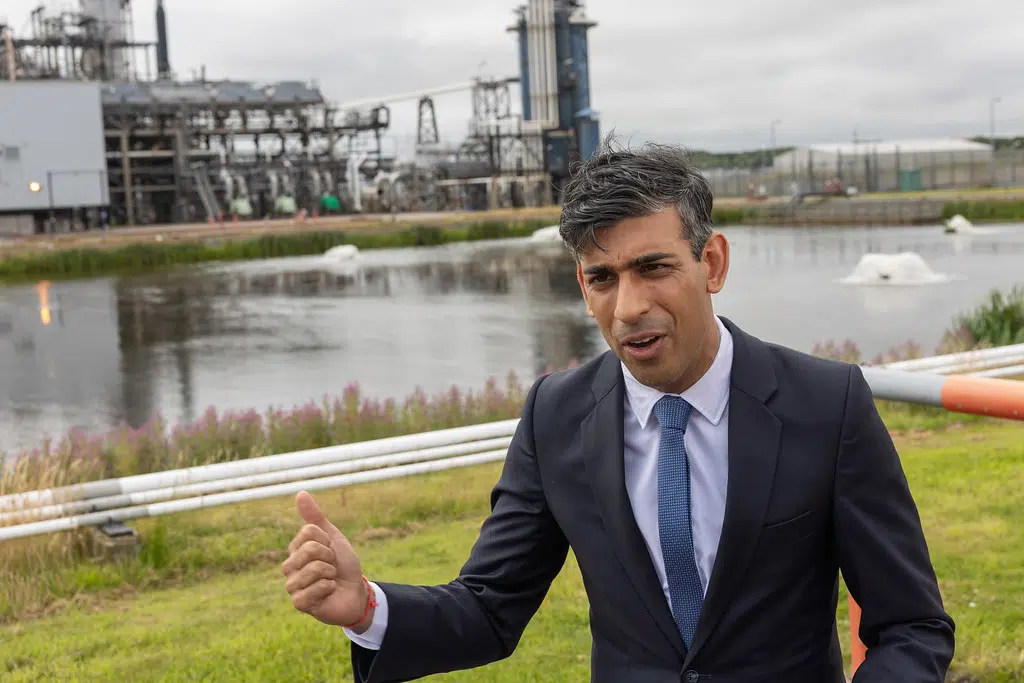
Prime Minister Rishi Sunak tours a Shell gas plant in Aberdeen in July 2023. Credit: Number 10 (CC BY-NC-ND 2.0)
The UK government’s weakening of its windfall tax on energy profits matched the demands of a high-level lobbying campaign by the oil and gas industry, new research reveals.
Trade body Offshore Energies UK (OEUK), formerly Oil and Gas UK, and its operator members including BP, Shell, ExxonMobil, TotalEnergies, and Equinor, met with ministers at least 210 times in the 12 months following Russia’s 2022 invasion of Ukraine.
The meetings – which include in-person talks with the then Business and Energy Secretary Kwasi Kwarteng and his minister Greg Hands (now the Conservative Party chairman) – are revealed in research by Fossil Free Parliament (FFP), a group campaigning against fossil fuel influence on UK politics.
They form part of a lobbying blitz by fossil fuel firms against the windfall tax, conducted through meetings, drinks receptions, letters, parliamentary groups, and a “fiscal forum” with the Treasury attended by the then chancellor (and now prime minister) Rishi Sunak.
The evidence, published in a briefing today (October 24) and shared exclusively with DeSmog, indicates that certain changes requested by the oil and gas industry were accommodated by the government when developing the scope of the levy.
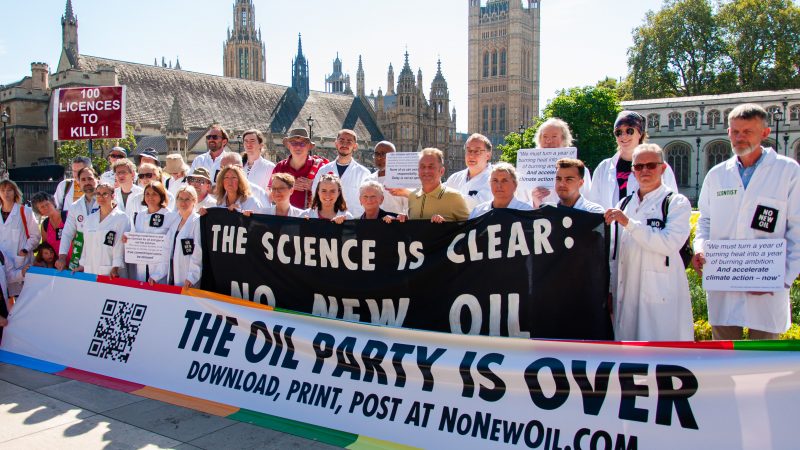
It comes as Sunak faces criticism for delaying some net zero targets and granting 100 new North Sea oil and gas licences, including Equinor’s Rosebank project. As DeSmog reported in March, the Conservative Party received £3.5 million from fossil fuel and polluting interests in 2022.
A spokesperson for OEUK defended its contact with the government: “We will always champion our industry to all parliamentarians on a cross-party basis and do so in an open and transparent manner.”
Caroline Lucas, Green Party MP for Brighton Pavilion, described the research as “shocking”.
“Fossil fuel giants have been committing countless climate crimes, polluting our planet and reaping obscene profits – while everyone else faces sky-high energy bills and a cost of living scandal,” she told DeSmog.
“This research reveals the extent to which the dirty fossil fuel lobby has been aided and abetted by this Tory government – taking their donations, offering privileged access, and handing over staggering tax breaks and subsidies to carry out yet more climate-wrecking damage.”
Windfall Tax ‘Loophole’
The Energy Profits Levy, known as the windfall tax, was announced by the government in May 2022 to tax energy companies’ billions in excess profits due to the global price spike fueled by Russia’s February 2022 invasion of Ukraine.
Then chancellor Sunak said the windfall tax would raise around £5 billion over the next year to help with cost of living. However, when the levy was passed in July 2022, it included a loophole where companies received 91p tax relief for every pound they invest in UK extraction, in what the independent Institute of Fiscal Studies called a “huge tax subsidy” for energy companies.
As of September 2023 the windfall tax had raised £2.6 billion, just over half of what was promised, and following a year of record profits by five oil majors. Between them, Chevron, ExxonMobil, Shell, BP and TotalEnergies made a total of £195 billion in profits last year.
The new research indicates this ‘loophole’ came about following a surge in meetings and lobbying between OEUK and its member companies with the government,
In June 2022, the month the windfall tax was being consulted on and drafted, meetings between the government and OEUK and its members nearly doubled from 15 to 29, according to the new research.
In the same month, OEUK also wrote letters to Sunak warning the proposed windfall tax would have a negative impact on oil and gas investments in the UK. The letters also called for an emergency summit, including a meeting of the “fiscal forum”, a talking shop between the industry and the Treasury. OEUK describes the fiscal forum as a tool for “facilitating coherent engagement with government authorities to drive the policy agenda”.
On 20 June, the day before the consultation’s launch, the British Offshore Oil and Gas Industry All-Party Parliamentary Group (APPG), which is co-run by OEUK, held a summer reception at the Houses of Parliament. The reception saw speeches from Conservative MP Peter Aldous, the APPG’s chair, and Greg Hands, then a minister in the Department for Business, Energy and Industrial Strategy.
At the reception, OEUK’s then chief executive Deirdre Michie gave a speech claiming the windfall tax could “undermine and disrupt” energy investment at a time when the UK needs to focus on “energy security and working for net zero”.
Three days later, Sunak, Hands and exchequer secretary Helen Whately attended an “Oil and Gas Roundtable”. The meeting, also known as a fiscal forum, was held in Aberdeen, Scotland, with OEUK and members including BP, Shell, Equinor, and TotalEnergies. According to a 28 June letter from Michie, the meeting discussed the “negative impact” of the windfall tax “on investor confidence”, while companies warned of its “damage to the UK’s competitiveness”.
Michie wrote: “While we remain disappointed at the decision to create the EPL [Energy Profits Levy], OEUK and our members want to work constructively with you to help rebuild investor confidence and ensure that the EPL is designed and implemented thoughtfully and is fit for purpose.”
OEUK’s concerns appear to have been taken into account by the government.
For example, in Michie’s 28 June letter she insisted that the windfall must tax end in 2025: “Industry needs certainty that the EPL will be terminated by the end of 2025 at the latest and we would hope that ministerial statements will continue to reinforce the timebound nature of the EPL.” A deadline of 31 December 2025 was later included in the EPL bill.
Michie’s letter also requested that the windfall tax should not apply to the Petroleum Revenue Tax (PRT), a tax break that oil and gas companies receive for decommissioning oil rigs, adding: “[we] have written to your officials with detailed proposals on the changes to the draft legislation and hope you will give this significant consideration”. The final windfall tax bill did not apply to PRT, as Michie had requested.
“This research makes it abundantly clear that our government has an open-door policy when it comes to the fossil fuel industry”, said Carys Boughton, a campaigner with Fossil Free Parliament.
“They ask for special treatment; they get special treatment, and the rest of us pay for it – with obscenely high energy bills, and a worsening climate crisis.”
She added: “Our political leaders should be channelling every effort into a just transition from fossil fuels, but this won’t happen until the industry with a vested interest in keeping us all hooked on oil, gas and coal is kicked out of our politics.”
Jeremy Hunt and the ‘Price Floor’
A tranche of additional documents, obtained by Fossil Free Politics and seen by DeSmog, shed further light on the extent of industry lobbying, which continued beyond the introduction of the windfall tax.
After Liz Truss’s disastrous September mini-budget, newly-installed chancellor Jeremy Hunt used his Autumn statement in November 2022 to extend the windfall tax to 2028 and increase it from 25 percent to 35 percent.
OEUK raised its opposition to these changes with Victoria Atkins MP, Financial Secretary to the Treasury, in a meeting on 17 November 2022.
Minutes of the meeting, obtained via a Freedom of Information request, show the body’s chief executive Deirdre Michie telling Atkins that the windfall tax extension “plays into investors being undermined”, and that the 10 percent increase “will impact companies borrowing and projects”.
Michie also complained of a “lack of engagement” with ministers, and brought up “the previous HMT [Treasury] fiscal forum”.
A few weeks later, on 9 December, Hunt hosted a fiscal forum in Edinburgh with OEUK and its members BP, Shell, Equinor, TotalEnergies and others. There he promised “more regular fiscal forum meetings in future”, according to a Treasury press release.
Ahead of the meeting, OEUK said it would urge the government to “scrap the windfall tax on homegrown energy when oil and gas prices fall back to normal levels”. This would mean that if prices drop below a certain point, the windfall tax could be removed before 2028.
Ahead of the Spring Budget in March 2023, OEUK repeated this demand, reportedly writing to Hunt to call for a “trigger price” which “switches off” the windfall tax.
Lobbying continued through the spring. In a meeting on 15 March with Treasury’s Exchequer Secretary James Cartlidge, OEUK’s new chief executive David Whitehouse told Cartlidge that the industry was “extremely disappointed that oil and gas did not get a mention in the budget” and called for more engagement and “a public signal” to “shore up confidence”.
On 9 June, OEUK got its wish. Hunt introduced a “price floor” to the windfall tax, which meant the tax would end before 2028 if wholesale energy prices fall back to normal levels – as OEUK and member companies had been requesting.
‘Cosy Relationship’
When contacted by DeSmog, OEUK did not address the evidence of lobbying specifically on the windfall tax. A spokesperson said the industry body was “proud” to provide a secretariat function to the all-party parliamentary group for offshore oil and gas.
“The offshore sector is a crucial part of the UK economy, supporting over 200,000 jobs in communities across the country and in nearly every parliamentary constituency,” they said.
“Our industry is playing a vital role in the UK’s low-carbon energy future and paid £11 billion in production taxes in 2022/23. It has paid a total of £400 billion in taxes over the lifetime of the basin.”
Shell referred DeSmog to OEUK for comment. All other companies named in this story were also approached but had not responded by publication.
The Conservative Party, Cabinet Office, and the Department for Energy Security and Net Zero were also contacted for comment.
Tessa Khan, executive director of Uplift, a North Sea campaign and research group, said the findings revealed the latest in the industry’s “long enjoyed unwarranted influence over our politics”.
“This is an industry that has made obscene amounts of money while millions of ordinary people – older and disabled people, families with young children – have struggled to heat their homes,” she said. “That they then lobbied in private against a windfall tax designed to claw back some of these profits, is disgusting if unsurprising.”
“The cosy relationship between government and profiteering oil and gas companies needs to end, not just for the sake of everyone facing unaffordable energy bills, but for a liveable climate too.”
Image of InBedWithBigOil by Not Here To Be Liked + Hex Prints from Just Stop Oil’s You May Find Yourself… art auction. Featuring Rishi Sunak, Fossil Fuels and Rupert Murdoch.
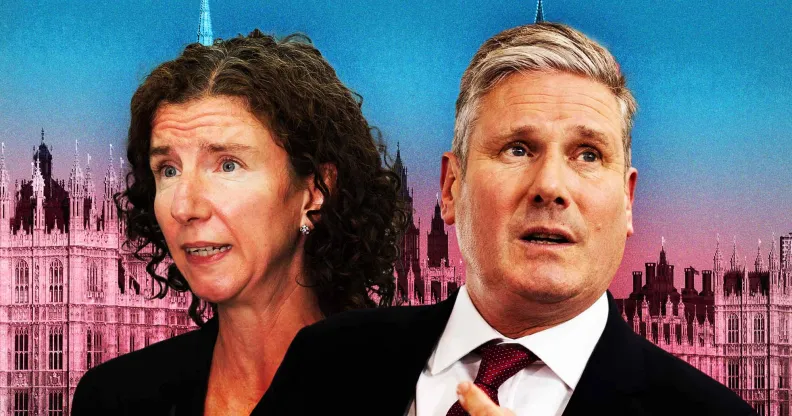
Image of Labour leader Keir Starmer and party chair Anneliese Dodds. A staffer in Starmer’s office works for consultancy firm Grant Thornton, while a Weber Shandwick lobbyist had a six-month stint in Dodds’ office
A staff member in Keir Starmer’s office is selling his knowledge of “politics, government and public policy issues” to corporate clients through a major consultancy firm, openDemocracy can reveal.
The staffer, who joined Starmer’s team in the summer, is listed as an associate director of Grant Thornton. The arrangement does not breach any regulations because Labour is not in power, though equivalent roles advising government ministers come with an obligation that holders must not “misuse your official position, for example by using information acquired in the course of your official duties to further your private interests or those of others”.
Corporate lobbying firms have started expanding their offerings to clients who are looking to influence a likely Labour government next year. In November, it was reported that two major lobbying outfits had set up ‘Labour Units’ to help clients influence the party.
Over the past year, three other corporate lobbyists have had roles advising the shadow cabinet while still employed by their corporate bosses, and another ten former corporate lobbyists are now working in the offices of members of the shadow cabinet, analysis by this website has found.
Nick Dearden, director of the campaign group Global Justice Now, called it “yet more evidence that there’s a revolving door between big business and the top layers of the Labour Party”.
While Starmer’s staffer appears to work for Grant Thornton and Labour simultaneously, the other three had jobs in the offices of shadow cabinet members that were directly funded by lobbying firms in the form of secondments. One of these was placed in the office of Labour’s chair and equalities chief Anneliese Dodds for six months, while two more have been placed with shadow business secretary Jonathan Reynolds. Throughout their time in Parliament, their salaries were paid by the lobbying firms, none of which would disclose to openDemocracy whether any of their clients had funded the work.
Starmer’s staffer was formerly head of Grant Thornton’s Brexit advisory team. A page on the firm’s website advertises his knowledge of “politics, government and public policy issues” to corporate clients. He says he can “help our clients make sense of the current macroeconomic and political environment, providing insight and practical advice on what it means for them and their business”.
With a revenue of more than $7bn last year, Grant Thornton is one of the world’s largest professional services networks, offering clients a range of consultancy services. Its clients and partners in recent years have included the arms company BAE Systems, coal miners Adani and a range of oil and gas firms. In 2021, the firm was fined £2.3m for its involvement in the collapse of the bakery chain Patisserie Valerie. And last year, the company was found guilty of bribing officials in Western Australia.
The staff member appears to work part time on Keir Starmer’s team, and part time selling his political insights through Grant Thornton. Last year, before he took the role, he wrote a blog on Grant Thornton’s website discussing the likely priorities of a future Labour government.
A spokesperson for Grant Thornton would not disclose which clients their associate director had been advising since he started working for Starmer, or how he managed any conflict of interest.
They said: “As a leading provider of professional services in the UK, Grant Thornton has deep expertise in the public sector and has worked with a variety of government bodies and institutions over the years where our nonpartisan input has been of value. Whilst any such engagements will be a matter of public record, it would be inappropriate for us to comment on any specifics.”
In recent years, Grant Thornton has benefited from more than 300 public sector contracts in the UK. It also supports hundreds of major corporations on a range of projects, from the private healthcare sector to the oil and gas industry.
Two other staff members in Starmer’s office are former lobbyists who worked at the firm InHouse Communications, whose clients have included Google, e-cigarette company Juul, and a number of major alcohol brands. Starmer’s press officer worked for the firm until August last year, while one of Labour’s communications chiefs was previously a director at the firm.
Dodds, the Labour Party chair and equalities spokesperson, had a senior Weber Shandwick London staffer seconded to work in her office from September 2022 to March 2023. The staffer’s roles at the firm’s London office have included senior vice president and team director for corporate enterprise. Since her secondment ended, she has been heading up another team at Weber Shandwick. The company would not say whether she now has any involvement in lobbying Labour.
Weber Shandwick is perhaps most controversial for its historic role lobbying on behalf of the tobacco industry, and was recently linked to at least eight oil and gas companies, some of which have been accused of opposing or seeking to delay net zero policies. The firm also lobbies on behalf of the UK’s offshore oil and gas industry as a whole.
Former clients of Dodds’ staffer before her secondment to Labour include the snacks giant Mondelez, which owns brands including Cadbury’s chocolate. In recent years, Mondelez has been involved in opposing health measures like a sugar tax, faced legal action over alleged child slavery, and been accused of involvement in illegal rainforest deforestation. Mondelez has said it has “been working relentlessly to take a stand against” child labour, which it claims to prohibit, and says it has taken steps to ensure its chocolate doesn’t come from illegally deforested national parks.
The staffer’s other previous clients have included the estate and letting agency Knight Frank, the French spirits giant Pernod Ricard, which has been battling India’s alcohol tax over the last year and is a sponsor of the Labour Party conference, and the takeaway Just Eat, which has also given free events tickets to a number of Labour figures over the last year.
openDemocracy asked Dodds’s office what it thought Weber Shandwick had to gain by funding a staff member for six months and was told: “You’d have to ask Weber Shandwick.” Weber Shandwick did not respond to our request for comment.
From September to October 2022, a staffer was seconded from the PR and lobbying firm the Lowick Group to work in the office of shadow business secretary Jonathan Reynolds. Immediately before the secondment, he had worked as a lobbyist for another firm, Westminster Digital, best known for running Boris Johnson’s online campaign during the 2019 election, though he did not work there at the time.
Another one of Reynolds’ seconded staffers is a senior policy manager at HSBC, which was forced by US regulators in 2013 to pay then-record fines of more than a billion dollars after being found to be the “preferred financial institution” of Mexican and Colombian drug cartels.
Before working for HSBC, she was registered as a lobbyist for Portland Communications, a major lobbying agency.
As well as shadow cabinet staffers currently working as corporate lobbyists or political advisers, openDemocracy has found ten staffers for shadow cabinet members who previously worked as corporate lobbyists.
‘Worrying’
Responding to the revelations, the Green MP Caroline Lucas said: “Under this Conservative government we’ve seen the endless revolving door between MPs, Ministers and big business reach new heights. It’s deeply worrying that Labour already look set to follow in their footsteps.
“If they form the next government, they mustn’t be in the back pocket of any industry – we urgently need policies and legislation that consistently prioritise the greater public good over letting big corporations trouser ever bigger profits.”
Tommy Sheppard, MP for Edinburgh East and SNP constitutional affairs spokesperson said: “This is shocking and quite extraordinary news. I’ve not been aware of this before – I’ve known special advisers who went to work for Weber Shandwick, but I’ve never known people ride both horses at once.
“Labour ought to be aware that these companies are not doing this on behalf of the Labour Party – they are doing it because they want to influence [a potential future] government on behalf of corporate clients.”
He added: “Labour need to be more careful about where they take their staffers from.”
Dearden told openDemocracy: “Many parts of society with an alternative vision of the future are finding it really hard to even get a single meeting with shadow ministers.
“A Labour government in hock to corporate interests will be a very short-lived Labour government. The world has changed. Across the US, Europe and the emerging economies, the economic myths of the last 40 years are being punctured. Big business lobbyists do not have the answer to the problems we face. If Labour wants to govern successfully, they need to start listening to a much wider pool of people.”
A Labour spokesperson said: “Employment and secondment arrangements have been transparently declared in line with legal requirements and parliamentary rules.”
The UK Labour Party has hired a former Israeli spy to help manage its social media, The Electronic Intifada can reveal.
Assaf Kaplan will work in the office of Labour leader Keir Starmer, a source with knowledge of the hire said.
Kaplan was in Israeli military intelligence for nearly five years, an officer in Unit 8200, its cyberwarfare branch.
Unit 8200 specializes in spying, hacking and encryption. It carries out blackmail, mass surveillance and systematic discrimination against Palestinians.
Campaigners say the lobbying tactics used to argue against tougher measures on emissions echo those of the 20th century tobacco industry
Airlines have been accused of using a “typical climate denialist” strategy after downplaying decades of scientific research on aviation emissions to block tougher regulations.
Campaigners said the lobbying tactics echoed those of the 20th century tobacco industry, which fought stricter measures by magnifying minor doubts on the health risks of smoking.
Documents obtained by openDemocracy show airlines and airports privately told the government there was too much uncertainty about the additional warming effects of flights to justify introducing new policies to tackle them.
But senior climate scientists contradicted the industry’s claims, saying the science is well established on what are known as aviation’s “non-CO2 effects”.
These are caused by emissions at high altitude of water, nitrous oxides, sulphur dioxide and particulate matter, with aircraft vapour trails, also known as contrails, a particular problem because they form clouds at high altitude that trap heat radiated from the Earth.
The Intergovernmental Panel on Climate Change estimated in a special report in 1999 that the total historic impact of aviation on the climate was two to four times greater than from its CO2 emissions alone.
Research in 2021 largely confirmed those findings and concluded aviation emissions were warming the climate at “approximately three times the rate of that associated with aviation CO2 emissions alone”. An EU study from 2020 also found non-CO2 emissions warm the planet about twice as much as CO2 emissions, but acknowledged there were “significant uncertainties”.
The Department for Transport considered regulating these non-CO2 impacts and asked for views on the issue in a consultation in 2021 on its proposed “Jet Zero strategy”.
Responses from airlines and airports, obtained under FOI by openDemocracy, reveal several used the same tactic of arguing the science was too uncertain to justify policies to address non-CO2 effects. Several recommended instead that the government should limit its action on the issue to funding further research into it.
‘A bit of a joke’
Airlines UK, a trade body that lobbies for airlines including British Airways (BA), easyJet and Virgin Atlantic, told the DfT that “the science around these [non-CO2 impacts] is not yet robust enough to form reduction targets”.
When asked during the Jet Zero consultation what could be done to tackle non-CO2 impacts, Ryanair said it was “too early to say until impact is better understood”.
Low-cost airline Wizz Air told the DfT: “There is too high a level of uncertainty of non-CO2 emission contribution to climate change for a policy to be formed.”
Airlines UK, Ryanair and Wizz – alongside others across the industry – called on the DfT to instead fund further research into the science of non-CO2 impacts.
The tactic appears to have worked, with the DfT announcing in the Jet Zero strategy last year that more work would be done with scientists and the industry to understand the issue.
The DfT did, however, say the government was “exploring whether and how non-CO2 impacts could be included in the scope of the UK ETS (emissions trading scheme)”.
Professor Piers Forster, an atmospheric physicist and member of the independent Climate Change Committee, told openDemocracy it was “completely wrong” for the aviation industry to claim the science on aviation’s non-CO2 effects was too uncertain to address them.
He said: “It’s a bit of a joke to say the effects are too uncertain to do anything about. We see their contrails and we’ve known for over 20 years that they are warming the planet. The industry should not hide behind uncertainty.”
He added that “the non-CO2 effects absolutely have to be accounted for in some way and action should be taken to reduce them”.
Milan Klöwer, a climate physicist at Massachusetts Institute of Technology, said airlines were adopting a “typical climate denialist strategy” by overstating the level of uncertainty about non-CO2 effects.
“Even in the best case they roughly double the effect of CO2 emissions on the climate,” he said.
He called on airlines to start accounting for their non CO2 effects and invest more in solutions, such as alternative fuels, which reduced those effects.
Rob Bryher, aviation campaigner at climate charity Possible, said: “These documents show that airlines cannot be trusted to decarbonise on their own. Demand management solutions like a frequent flyer levy, introducing fuel duty, carbon pricing, or management of airport capacity are going to be crucial.”
Matt Finch, UK policy manager of campaign group Transport & Environment, said: “Aviation’s non-CO2 impacts are somewhere between huge and absolutely massive. But the industry doesn’t want you to know that. Instead of confronting its environmental problems head-on, the industry copies the tobacco industry of the ’50s and the oil industry of the ’70s in casting doubt and disbelief around the science.”
BA said it was working with academics and experts on non-CO2 impacts of flying while Sustainable Aviation, an industry group that includes airlines, said it was committing to addressing them but reiterated more research was needed. Wizz Air said it was already addressing the impacts through a range of measures.
Some airlines ignore non-CO2 effects in schemes they support to help passengers calculate and offset the emissions of their flights.
BA’s emissions calculator states a one way flight from London Heathrow to New York emits 348kg CO2E (carbon dioxide equivalent) and charges £3.97 for offsetting.
Atmosfair, a German non-profit organisation which supports the decarbonisation of flying, calculates the same journey on a Boeing 777-200 – an aircraft type used by BA – emits 896kg and charges 21 euros (£18.37) for offsetting. Atmosfair’s emissions total comprises 308kg of CO2 emissions and 587 kg equivalent for “climate impact of contrails, ozone formation etc”.
While the DfT has so far failed to act on non-CO2 effects, they are mentioned in official advice to companies from the Department for Business Energy and Industrial Strategy on how to report their emissions.
It says: “Organisations should include the indirect effects of non-CO2 emissions when reporting air travel emissions to capture the full climate impact of their travel.”
A DfT spokesperson said: “Our Jet Zero Strategy confirmed our aim of addressing the non-CO2 impacts of aviation, by developing our understanding of their impact and possible solutions, and the UK is one of the leading countries working to address this issue.”
Sustainable Aviation Fuel
International Airlines Group (IAG), which owns BA, Vueling and Aer Lingus, told DfT’s Jet Zero consultation it could address non-CO2 emissions by supporting “sustainable aviation fuel” (SAF).
SAF is a jet fuel made from sources which the industry claims are sustainable, including cooking oil and animal fat. It performs in a similar way to kerosene but can produce up to 80% less CO2 depending on how it is made. It potentially also reduces contrails.
IAG told the Jet Zero consultation SAF was “the only viable solution for decarbonising medium and long haul flights”, which account for about 70% of global aviation emissions.
But further documents obtained by openDemocracy reveal IAG then lobbied the DfT to water down its SAF mandate.
In response to a separate consultation, IAG argued the SAF mandate should only cover flights within the UK or to the EU, and not the long haul flights on which British Airways makes most of its profits.
IAG also lobbied against a proposal to ban airlines from dodging the mandate by filling their tanks with cheap kerosene at overseas airports – a practice known as “tankering”.
A BBC Panorama investigation in 2019 revealed tankering by BA and other airlines was creating small financial savings but unnecessary carbon emissions.
IAG also argued against a proposal aimed at building demand for “power-to-liquid” jet fuel, which is produced by combining hydrogen made by renewable energy with carbon captured from the atmosphere.
Unlike other so-called sustainable jet fuels, power-to-liquid fuel does not involve a feedstock needed by other industries to decarbonise, such as used cooking oil or animal fat.
IAG called it “a very expensive pathway to directly decarbonise aviation”.
Sustainable Aviation, an industry group that includes airlines, said: “We are committed to addressing [non-CO2] impacts based on the scientific evidence, but further research is key to developing effective mitigation solutions, for example the use of sustainable aviation fuels (which contain lower contrail forming particulates), alongside steps such as optimising flight routes to avoid contrail formation.”
BA, IAG’s principal airline, said: “We are actively engaging with academics, experts within the industry and the government’s Jet Zero Council to take proactive steps to look into non-CO2 impact.”
Wizz Air said it was mitigating non-CO2 effects “through route optimisation and jet fuel improvements” and by using Airbus A321neo aircraft which reduced NOx emissions by 50%.