After Venezuela Assault, Trump and Rubio Warn Cuba, Mexico, and Colombia Could Be Next

Spread the love

Original article by Jake Johnson republished from Common Dreams under Creative Commons (CC BY-NC-ND 3.0). 
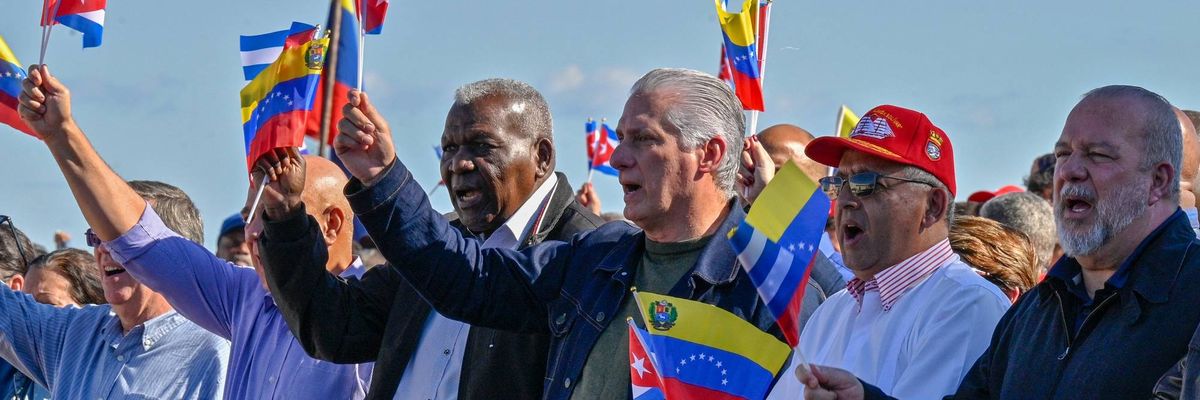
Cuban President Miguel Diaz-Canel waves a Venezuelan national flag in Havana on January 3, 2026.  (Photo by Adalberto Roque/AFP via Getty Images)

“The ‘Trump corollary’ to the Monroe Doctrine—applied in recent hours with violent force over the skies of Caracas—is the single greatest threat to peace and prosperity that the Americas confront today,” said Progressive International.

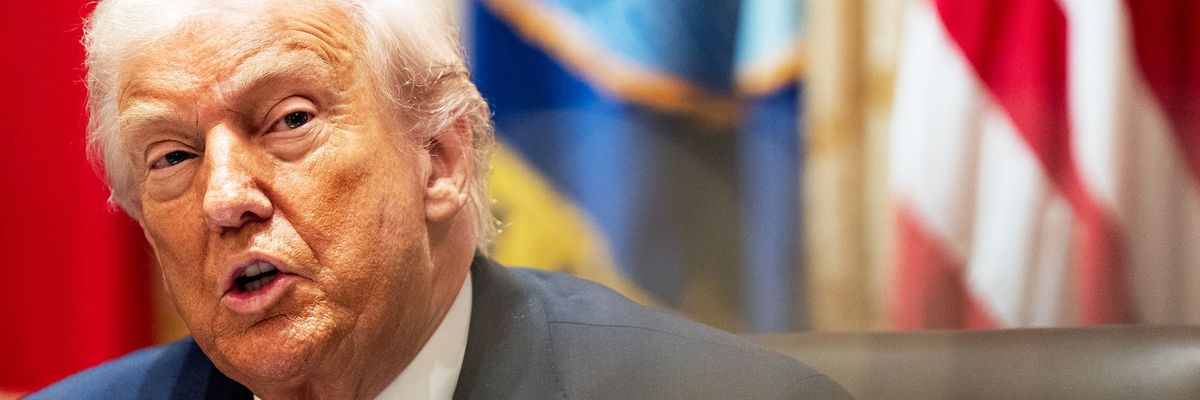
US President Donald Trump and top administration officials, including Secretary of State Marco Rubio, characterized Saturday’s assault on Venezuela and abduction of the country’s president as a warning shot in the direction of Cuba, Mexico, Colombia, and other Latin American nations.

During a Saturday press conference, Trump openly invoked the Monroe Doctrine—an assertion of US dominance of the Western Hemisphere—and said his campaign of aggression against Venezuela represented the “Donroe Doctrine” in action.

RECOMMENDED…
Donald Trump

Trump Says Ground Attack on Venezuela Imminent—Plus Colombia, Mexico Also in US Crosshairs
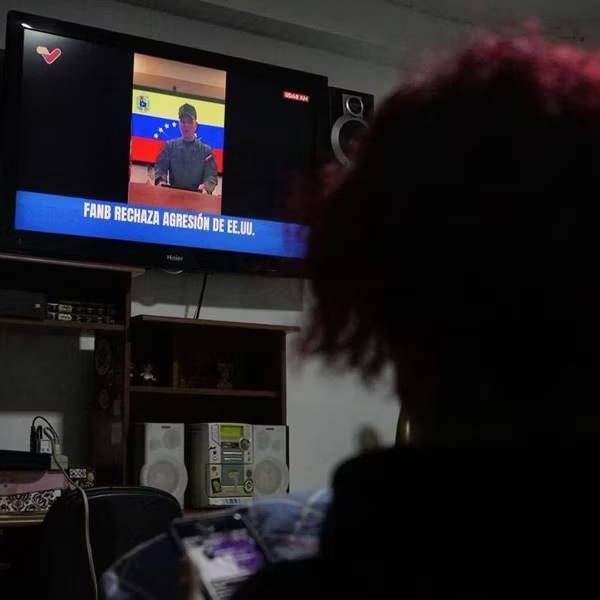
A woman watches a public television broadcast by Venezuelan Defense Minister Vladimir Padrino

‘This Is State Terrorism’: Global Outrage as Trump Launches Illegal Assault on Venezuela

In his unwieldy remarks, Trump called out Colombian President Gustavo Petro by name, accusing him without evidence of “making cocaine and sending it to the United States.”

“So he does have to watch his ass,” the US president said of Petro, who condemned the Trump administration’s Saturday attack on Venezuela as “aggression against the sovereignty of Venezuela and Latin America.”

Petro responded defiantly to the possibility of the US targeting him, writing on social media that he is “not worried at all.”

In a Fox News appearance earlier Saturday, Trump also took aim at the United States’ southern neighbor, declaring ominously that “something’s going to have to be done with Mexico,” which also denounced the attack on Venezuela and abduction of President Nicolás Maduro.

“She is very frightened of the cartels,” Trump said of Mexican President Claudia Sheinbaum. “So we have to do something.”

“This armed attack on Venezuela is not an isolated event. It is the next step in the United States’ campaign of regime change that stretches from Caracas to Havana.”

Rubio, for his part, focused on Cuba—a country whose government he has long sought to topple.

“If I lived in Havana and I was in the government, I’d be concerned, at least a little bit,” Rubio, who was born in Miami to Cuban immigrant parents, said during Saturday’s press conference.

That the Trump administration wasted no time threatening other nations as it pledged to control Venezuela indefinitely sparked grave warnings, with the leadership of Progressive International cautioning that “this armed attack on Venezuela is not an isolated event.”

“It is the next step in the United States’ campaign of regime change that stretches from Caracas to Havana—and an attack on the very principle of sovereign equality and the prospects for the Zone of Peace once established by the Community of Latin American and Caribbean States,” the coalition said in a statement. “This renewed declaration of impunity from Washington is a threat to all nations around the world.”

“Trump has clearly articulated the imperial logic of this intervention—to seize control over Venezuela’s natural resources and reassert US domination over the hemisphere,” said Progressive International. “The ‘Trump corollary’ to the Monroe Doctrine—applied in recent hours with violent force over the skies of Caracas—is the single greatest threat to peace and prosperity that the Americas confront today.”

Original article by Jake Johnson republished from Common Dreams under Creative Commons (CC BY-NC-ND 3.0). 

Orcas discuss how Trump was re-elected and him being an obviously insane, xenophobic Fascist.
Donald Fuhrump says that Amerikkka doesn't bother with crimes or charges anymore, not being 100% Amerikkkan and opposing his real estate intentions is enough.
Donald Fuhrump says that Amerikkka doesn’t bother with crimes or charges anymore, not being 100% Amerikkkan and opposing his real estate intentions is enough.

Continue ReadingAfter Venezuela Assault, Trump and Rubio Warn Cuba, Mexico, and Colombia Could Be Next

Belgium joins South Africa’s genocide case against Israel at ICJ

Spread the love

This work by Middle East Monitor is licensed under a Creative Commons Attribution-NonCommercial-ShareAlike 4.0 International License

Overview of the courtroom at the International Court of Justice (ICJ) in The Hague, Netherlands on 22 April, 2024 [Selman Aksünger/Anadolu Agency]

The international court of justice (ICJ) announced on Tuesday that Belgium has joined the legal case brought by South Africa against Israel, accusing it of committing genocide in the Gaza Strip. 

Several countries had already joined the case before Belgium, including Brazil, Ireland, Bolivia, Colombia, Libya, Spain and Mexico, at the United Nations’ highest court.

In a ruling issued in January 2024, around four months after the start of Israel’s military campaign in Gaza, the court called on Israel to refrain from any acts that could fall under genocide. The court warned of a “real and imminent risk” of “irreparable harm” to Palestinians.

The ICJ also issued provisional measures ordering Israel to allow humanitarian aid into Gaza, prevent incitement to genocide and punish those responsible. Israel has so far failed to comply with these orders.

READ: Comoros to join South Africa’s genocide case at ICJ against Israel

Meanwhile, Palestinian resistance factions in Gaza say they are continuing efforts to complete the first phase of the ceasefire agreement, which began on 10 October this year, by searching for the body of the last Israeli soldier in their possession. At the same time, Israel is accused of continuing to violate the agreement and failing to implement its terms, especially those related to the first phase.

Since the ceasefire took effect on 10 October, Israel has killed at least 406 Palestinians and injured 1,118 others in Gaza, according to the Palestinian Ministry of Health in the territory.

The ministry added that, since the outbreak of the war on 7 October 2023, the death toll has reached at least 70,942 Palestinians, with 171,195 others wounded.

READ: ICC rejects Israel’s appeal as arrest warrants for Netanyahu, Gallant remain in force

This work by Middle East Monitor is licensed under a Creative Commons Attribution-NonCommercial-ShareAlike 4.0 International License

Experiencing issues with this image not appearing. I suspect because it's so critical of Zionist Keir Starmer's support of and complicity in Israel's genocides.
Genocide denier and Current UK Prime Minister Keir Starmer is quoted that he supports Zionism without qualification. He also confirms that UK air force support has been essential in Israel’s mass-murdering genocide. Includes URLs https://www.declassifieduk.org/keir-starmers-100-spy-flights-over-gaza-in-support-of-israel/ and https://youtu.be/O74hZCKKdpA
Keir Starmer objects to criticism of the IDF. He asks how could anyone object to them starving people to death, forced marches like the Nazis did, bombing Gaza's hospitals and universities, mass-murdering journalists, healthworkers and starving people queuing for food, killing and raping prisoners and murdering children. He calls for people to stop obstructing his genocide for Israel.
Keir Starmer objects to criticism of the IDF. He asks how could anyone object to them starving people to death, forced marches like the Nazis did, bombing Gaza’s hospitals and universities, mass-murdering journalists, healthworkers and starving people queuing for food, killing and raping prisoners and murdering children. He calls for people to stop obstructing his genocide for Israel.
Orcas discuss Genocide-supporting and complicit Zionists. Donald Trump, Keith Starmer, David Lammy, Rachel Reeves, Angela Rayner and Wes Streeting are acknowledged as evil genocide-complicit and supporting cnuts.

Continue ReadingBelgium joins South Africa’s genocide case against Israel at ICJ

Trump Says Ground Attack on Venezuela Imminent—Plus Colombia, Mexico Also in US Crosshairs

Spread the love

Original article by Brett Wilkins republished from Common Dreams under Creative Commons (CC BY-NC-ND 3.0).

US President Donald Trump speaks to reporters in the White House in Washington, DC on December 8, 2025. (Photo by Demetrius Freeman/The Washington Post via Getty Images)

“It’s now taken as a given… that Trump is mulling a ground invasion of Venezuela and a dramatic expansion in his bombing campaign with no congressional authorization,” said one critic.

President Donald Trump said in an interview published Tuesday that a US land attack on Venezuela is coming and signaled that he is open to launching similar military action against Colombia and Mexico.

“We’re gonna hit ‘em on land very soon, too,” Trump told Politico‘s Dasha Burns, citing the pretext of stopping fentanyl from entering the United States.

RECOMMENDED…

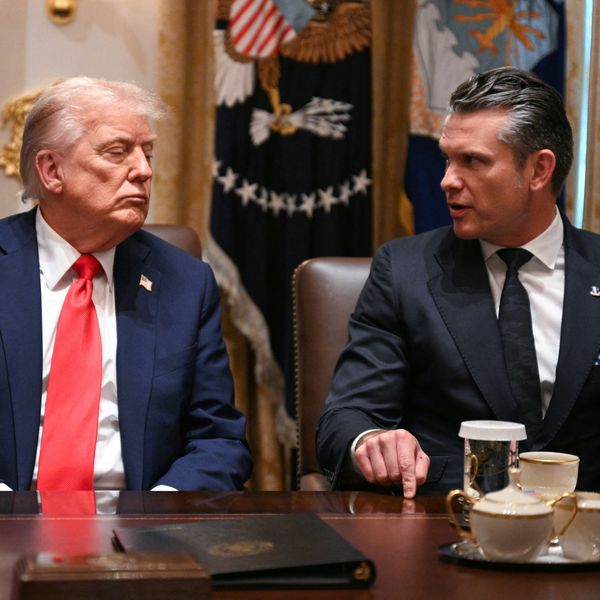
Donald Trump and Pete Hegseth

Trump Briefed On Venezuela Military Strike Options That Could Occur in ‘Coming Days’: Report

COLOMBIA-POLICE-ANNIVERSARY-PROMOTION

As Trump Issues New Threats to Mexico and Colombia, Democrats Push to End Unauthorized Aggression

Trump repeated his baseless claim that during the administration of his predecessor, the “very stupid” former President Joe Biden, Venezuelan President Nicolás Maduro “sent us millions of people, many from prisons, many drug dealers, drug lords,” and “people in mental institutions.”

Burns then noted that most of the illicit fentanyl sold in the United States “is actually produced in Mexico,” which along with Colombia is “even more responsible” for trafficking the potent synthetic opioid into the US. She asked Trump if he would “consider doing something similar” to those countries.

“I would,” Trump replied. “Sure, I would.”

Pressed on his contradictory pardon of convicted narco-trafficking former Honduran President Juan Orlando Hernández while threatening war against Venezuela, Trump feigned ignorance, claiming that “I don’t know him” and asserting that “he was set up.”

Trump’s latest threat against Venezuela comes amid his deployment of warships and thousands of troops off the coast of the oil-rich South American nation, his approval of covert CIA action against Maduro’s government, and more than 20 airstrikes on boats his administration claims without evidence were smuggling drugs in the southern Caribbean Sea and eastern Pacific Ocean.

The Trump administration’s targeting of Venezuela evokes the long history of US “gunboat diplomacy” in Latin America and continues more than a century of Washington’s meddling in Venezuelan affairs. It also marks a historic escalation of aggression, as the US has never attacked Venezuelan territory.

Officials in Venezuela and Colombia, as well as relatives of men killed in the boat bombings, contend that at least some of the victims were fishermen who were not involved in drug trafficking.

The strikes have killed at least 87 people since early September, according to administration figures—including shipwrecked survivors slain in a so-called double-tap bombing. Legal experts and some former US military officials contend that the strikes are a violation of international law, murders, war crimes, or all of these.

Critics also assert that the boat strikes violate the War Powers Act, which requires the president to report any military action to Congress within 48 hours and mandates that lawmakers must approve troop deployments after 60 days. The Trump administration argues that it is not bound by the War Powers Resolution, citing as precedent the Obama administration’s highly questionable claim of immunity from the law when the US attacked Libya in 2011.

A bipartisan bid to block the boat bombings on the grounds that they run afoul of the War Powers Act failed to muster enough votes in the Senate in October.

“Note that it’s now taken as a given—as an unremarkable and baked-in fact about our politics—that Trump is mulling a ground invasion of Venezuela and a dramatic expansion in his bombing campaign with no congressional authorization,” New Republic staff writer Greg Sargent observed Tuesday in response to the president’s remarks to Politico.

“What emerges from this interview,” he added, “is that Trump is pulling all of this—the substantive case for these bombings, the legal justification for them, the rationale for mulling a massive military escalation in the Western Hemisphere—out of his rear end.”

Original article by Brett Wilkins republished from Common Dreams under Creative Commons (CC BY-NC-ND 3.0).

Donald Fuhrump says that Amerikkka doesn't bother with crimes or charges anymore, not being 100% Amerikkkan and opposing his real estate intentions is enough.
Donald Fuhrump says that Amerikkka doesn’t bother with crimes or charges anymore, not being 100% Amerikkkan and opposing his real estate intentions is enough.
Continue ReadingTrump Says Ground Attack on Venezuela Imminent—Plus Colombia, Mexico Also in US Crosshairs

As Trump Issues New Threats to Mexico and Colombia, Democrats Push to End Unauthorized Aggression

Spread the love

Original article by Stephen Prager republished from Common Dreams under Creative Commons (CC BY-NC-ND 3.0). 

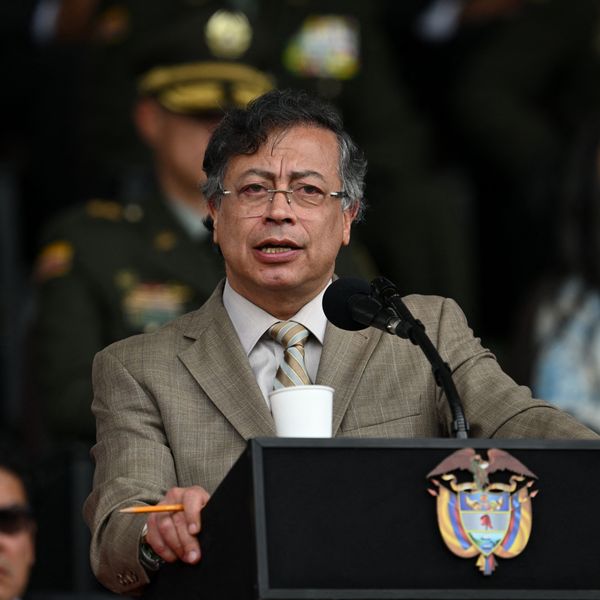
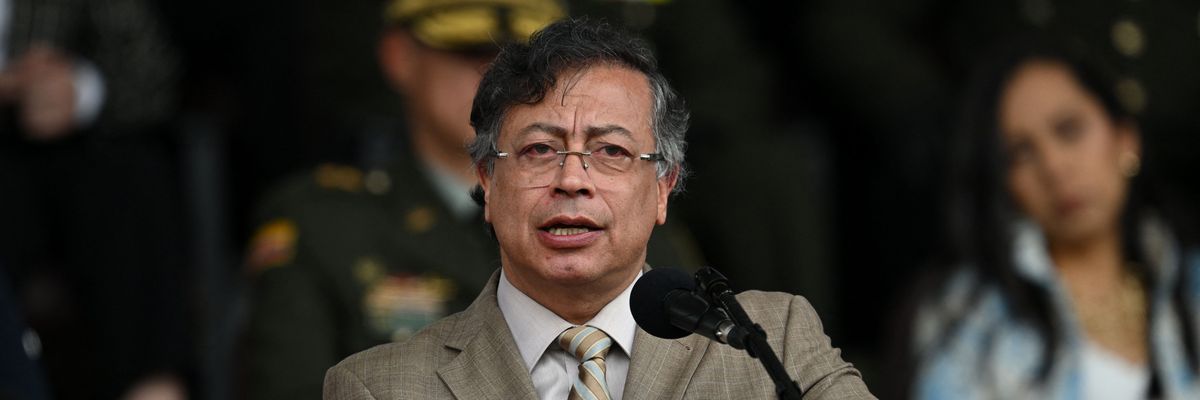
Colombia’s President Gustavo Petro delivers a speech during the commemoration of the 134th anniversary of the National Police and the promotion of officers at the General Santander Police Academy in Bogotá on November 13, 2025. (Photo by Raul Arboleda/AFP via Getty Images)

Rep. Gregory Meeks, who introduced a war powers resolution, said Trump’s actions combine the “worst excesses of the war on drugs and the war on terror.”

As Democrats in the US House of Representatives introduced their latest measure to stop President Donald Trump from continuing his attacks against alleged drug cartels without approval from Congress, the president said he wouldn’t “rule out” deploying US ground troops in Venezuela—and warned he could escalate attacks across Latin America, with possible strikes in Mexico and Colombia as well.

Shortly after the Department of Defense, called the Department of War by the Trump administration, announced its 21st illegal airstrike on what they’ve claimed, without evidence, to be “narco-terrorist” vessels mostly in the Caribbean—attacks that have killed at least 83 people—Trump told reporters in the Oval Office on Monday that he may soon begin similar operations against drug cartels in mainland Mexico.

“Would I launch strikes in Mexico to stop drugs? It’s OK with me. I’ve been speaking to Mexico. They know how I stand,” he said. “We’re losing hundreds of thousands of people to drugs. So now we’ve stopped the waterways, but we know every route.”

Earlier this month, following reports from US officials that the Trump administration had started “detailed planning” to send US troops to Mexico, the nation’s president, Claudia Sheinbaum, retorted that “it’s not going to happen.”

In his comments Monday, Trump threatened to carry out strikes in Colombia as well, saying: “Colombia has cocaine factories where they make cocaine. Would I knock out those factories? I would be proud to do it personally.”

Colombian President Gustavo Petro has been one of Latin America’s fiercest critics of Trump’s extrajudicial boat bombings, last week referring to the US president as a “barbarian.” Trump, meanwhile, has baselessly accused Petro of being “an illegal drug leader,” slapping him and his family with sanctions and cutting off aid to the country.

In response to Trump’s threats on Monday, Petro touted the number of cocaine factories that have been “destroyed” under his tenure. According to figures from the Colombian Ministry of Defense, around 18,000 of them have been taken out of commission since Petro took office in 2022, a 21% increase from Colombia’s previous president.

Immediately after Trump issued his threat against Colombia, he backpedaled, saying: “I didn’t say I’m doing it, I would be proud to do it.”

However, reporting from Drop Site News earlier this month has suggested that Sen. Lindsey Graham (R-SC) “was briefed by Secretary of War Pete Hegseth on the new list of hard targets inside Venezuela, Colombia, and Mexico in early October, and lobbied fellow senators on expanding the war to include drug-related sites in Colombia.”

The senator had alluded to the plans on CBS News’ “Face the Nation,” saying: “We’re not gonna sit on the sidelines and watch boats full of drugs come into our country. We’re gonna blow them up and kill the people who want to poison America. And we’re now gonna expand our operations, I think, to the land. So please be clear about what I’m saying today. President Donald Trump sees Venezuela and Colombia as direct threats to our country, because they house narco-terrorist organizations.”

On Tuesday, a group of Democrats in the US House of Representatives introduced another measure that would stop Trump from continuing his attacks against alleged drug cartel members without approval from Congress.

The measure would require the removal of “United States Armed Forces from hostilities with any presidentially designated terrorist organization in the Western Hemisphere,” unless Congress authorizes the use of military force or issues a declaration of war. Previous measures to stall Trump’s extrajudicial attacks have been narrowly stymied, despite receiving some support from the Republican majority.

“There is no evidence that the people being killed are an imminent threat to the United States of America,” said Rep. Gregory Meeks (NY), the top Democrat on the House Foreign Affairs Committee, who introduced the resolution.

Meeks added that Trump’s campaign of assassinations in Latin America combines “the worst excesses of the war on drugs and the war on terror.”

Trump’s threats of military action come after Hegseth announced what he called “Operation Southern Spear” last week, which he said would be aimed at “remov[ing] narco-terrorists from our hemisphere.” In a description that evoked the 19th-century Monroe Doctrine, Hegseth wrote on social media that “the Western Hemisphere is America’s neighborhood—and we will protect it.”

In the Oval Office, Trump declared, without evidence, that with each strike his administration carries out against Venezuelan boats, “we save 25,000 American lives,” which experts say is obviously false since Venezuela plays a very minor role in global drug trafficking.

Several international legal experts have said Trump’s strikes constitute a war crime. Earlier this month, Oona A. Hathaway, a professor of international law at Yale Law School, said that members of the Trump administration “know what they are doing is wrong.”

“If they do it, they are violating international law and domestic law,” Hathaway said. “Dropping bombs on people when you do not know who they are is a breach of law.”

The Trump administration has argued that its actions are consistent with Article 51 of the UN’s founding charter, which requires the UN Security Council to be informed immediately of actions taken in self-defense against an armed attack.

The administration has not provided evidence that its attacks constitute a necessary form of self-defense. But last month, a panel of independent UN experts said that “even if such allegations were substantiated, the use of lethal force in international waters without proper legal basis violates the international law of the sea and amounts to extrajudicial executions.”

Original article by Stephen Prager republished from Common Dreams under Creative Commons (CC BY-NC-ND 3.0). 

Donald Fuhrump says that Amerikkka doesn't bother with crimes or charges anymore, not being 100% Amerikkkan and opposing his real estate intentions is enough.
Donald Fuhrump says that Amerikkka doesn’t bother with crimes or charges anymore, not being 100% Amerikkkan and opposing his real estate intentions is enough.

Continue ReadingAs Trump Issues New Threats to Mexico and Colombia, Democrats Push to End Unauthorized Aggression

Twenty years after “No to the FTAA”, Latin American movements reaffirm their anti-imperialist commitment

Spread the love

Original article by Pablo Meriguet republished from peoples dispatch under a Creative Commons Attribution-ShareAlike 4.0 (CC BY-SA) license.

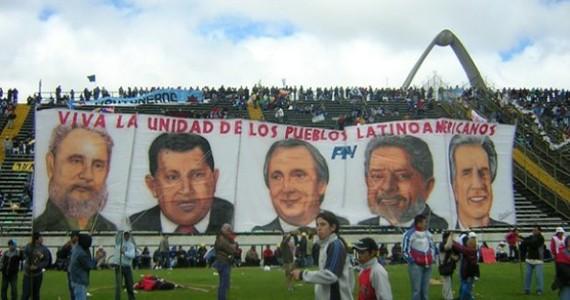
In 2005, in the city of Mar del Plata, the presidents of the brother countries of the Americas, Lula da Silva, Hugo Chávez, Evo Morales, and Néstor Kirchner stood firm against the United States. Photo: X

The meeting in Mar del Plata paid tribute to the moment when several Latin American presidents defeated the US attempt to establish a regional free trade agreement.

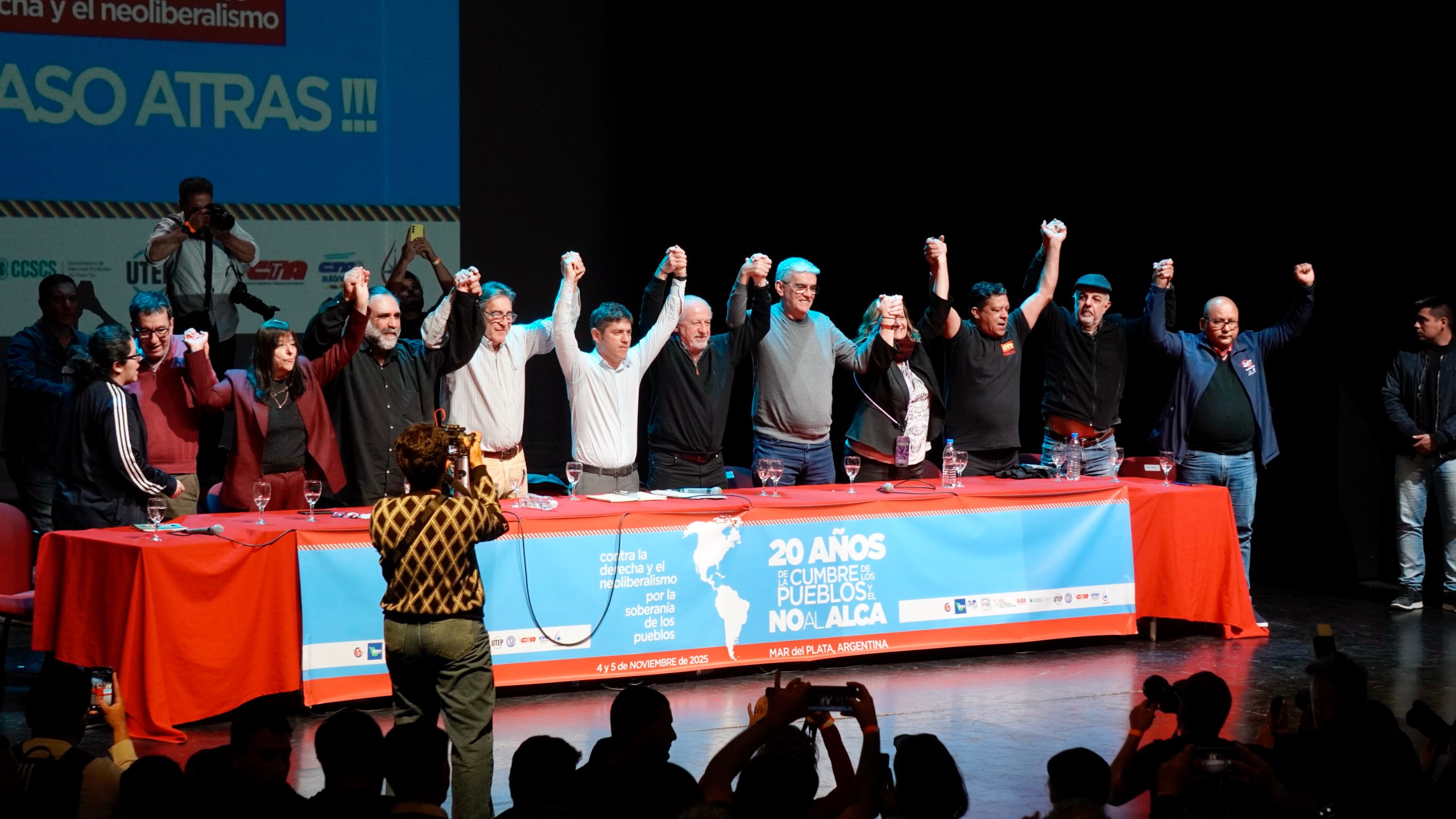
In the same place where the regional free trade project was “buried” two decades ago, 150 delegates from various social movements in Brazil, Uruguay, Bolivia, Cuba, Mexico, Portugal, Haiti, Palestine, Chile, Nicaragua, Peru, and Paraguay gathered to reaffirm the anti-imperialist spirit that led to the regional rejection of the FTAA project, they say.

“The world faces greater levels of inequality, injustice, and authoritarianism, with a growing concentration of financial and technological power that deepens poverty and limits the autonomy of countries in the Global South,” the delegates said in the event’s final declaration.

The meeting was also attended by the governor of Buenos Aires, Axel Kicillof, who stated that the rejection of the FTAA in 2005 was a “new declaration of independence” for Latin American countries. “The rejection of the FTAA was a victory for Latin American sovereignty, voiced by a group of presidents with enormous courage, represented in our country by Néstor Kirchner. Twenty years after that historic milestone, we have a responsibility to continue building unity, because there is no possibility of development for our countries outside the framework of regional integration. We cannot afford not to have a project on behalf of our people, because Argentina and the countries of Latin America are not anyone’s backyard,” Kicillof wrote in X.

Peoples Summit No al ALCA
Delegates from dozens of Latin American countries reaffirm the anti-imperialist spirit of the “No to the FTAA” summit in 2005.

For his part, the Secretary of Foreign Affairs of the Argentine Workers’ Central Union (CTA), Adolfo Aguirre, stated: “In this very place, in front of the President of the United States, George W. Bush, and before the eyes of the whole world, our peoples, workers, together with leaders such as Néstor Kirchner, Hugo Chávez, and Luiz Inácio Lula da Silva, marked a turning point. We said no to surrender, no to dependence, no to the model that wanted to turn our America into the backyard of economic power.”

Twenty years ago, the anti-imperialist slogan was born

Twenty years ago in Argentina, several political leaders from the Latin American left gathered at a People’s Summit, whose fundamental slogan was the rejection of the Free Trade Area of the Americas (FTAA), an initiative promoted, among others, by the George W. Bush administration. The FTAA sought to significantly reduce customs barriers between American countries.

According to popular and left-wing forces in Latin America and the Caribbean, the agreement would have promoted a regional market in which the United States would have had an enormous advantage over other countries and which, in the long run, would have led to the destruction of the still immature regional industry to benefit the interests of large US companies.

However, the economic and geopolitical project did not prosper due to fierce and coordinated opposition from several Latin American presidents, including Néstor Kirchner (Argentina), Hugo Chávez (Venezuela), and Luiz Inácio Lula da Silva (Brazil), among others. The political maneuver took place in Mar del Plata, during the Summit of the Americas, where Bush and his entourage suffered a severe setback. Thus, the proposal that had been in the works and planned since 1994 in Miami and was definitively defeated.

The Summit of the Americas is considered by several experts to be a turning point in the geopolitical relations of the American continent. New progressive and pro-sovereignty processes joined those of Argentina, Brazil, and Venezuela, giving rise to an attempt at regional integration that to this day is pushed by progressivism and boycotted by Washington’s neoliberal allies.

While the summit was taking place, thousands of people from left-wing and progressive movements and political parties gathered at a parallel conference with the slogan “No to the FTAA,” which was eventually attended by several political leaders. Among them, Hugo Chávez made a statement in his speech that would go down in history: “ALCA (FTAA in Spanish), al carajo! (FTAA, go to hell!)”.

A historic event

The region has undoubtedly changed its political composition. The seemingly unstoppable rise of progressive governments is now fragmented due to the emergence of new right-wing and neoliberal projects, such as those of Javier Milei in Argentina and Daniel Noboa in Ecuador, and the recent victory of the Bolivian right after more than 20 years of left-wing governments, among others.

However, in several countries, progressivism managed to regain government, as in the case of Lula da Silva himself, or managed to remain in power, as in the case of the United Socialist Party of Venezuela. Also, in other countries such as Colombia with Gustavo Petro and Mexico with Andrés Manuel López Obrador and Claudia Sheinbaum, progressive governments took office for the first time in their recent history.

In this sense, the dispute over governments in Latin America remains open, and much of the structure of that dispute can be found in what happened in Mar del Plata 20 years ago, where one regional project was buried and another was established, for almost a decade, as the model for regional integration around a position that, although it had its clear limits, always declared itself sovereign and independent.

Original article by Pablo Meriguet republished from peoples dispatch under a Creative Commons Attribution-ShareAlike 4.0 (CC BY-SA) license.

Continue ReadingTwenty years after “No to the FTAA”, Latin American movements reaffirm their anti-imperialist commitment