‘Insane’: Trump Threatens 8 Allies With New Tariffs for Opposing Greenland Takeover

Spread the love

Original article by Olivia Rosane republished from Common Dreams under Creative Commons (CC BY-NC-ND 3.0). 
Protesters on City Square gather during a protest in support of Greenland on January 17, 2026 in Copenhagen, Denmark. (Photo by Martin Sylvest Andersen/Getty Images)

“Trump has no legal authority to tariff American allies to bully them into backing his brainless attempt to seize Greenland,” one US lawmaker said.

President Donald Trump on Saturday announced new tariffs on eight European countries that oppose his plan to annex Greenland hours after thousands of people gathered in Denmark and Greenland to declare, “Greenland is not for sale.”

In a post on Truth Social, Trump announced that imports from Denmark, Norway, SwedenFrance, Germany, the United Kingdom, the Netherlands, and Finland would face a 10% tariff beginning February 1, which would jump to a 25% tariff on June 1.

RECOMMENDED…
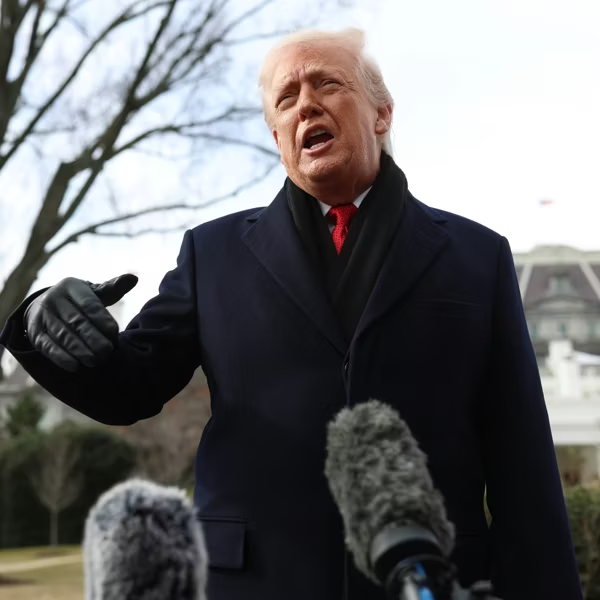
President Trump Departs White House En Route To Florida For The Weekend

Trump Threatens Tariffs on Any Nation That Opposes US Efforts to Conquer Greenland
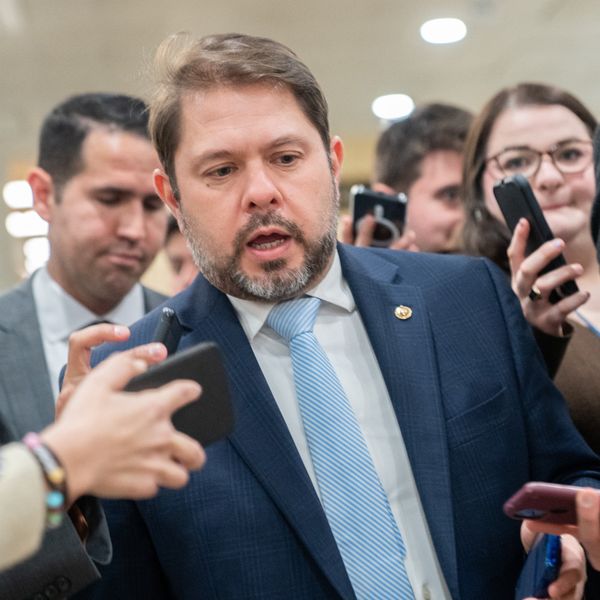
Ruben Gallego.

‘We Must Stop Him’: Gallego Bill Would Ban Funding for Trump Greenland Invasion

“This Tariff will be due and payable until such a time as a Deal is reached for the Complete and Total purchase of Greenland,” Trump wrote from his West Palm Beach, Florida gulf course.

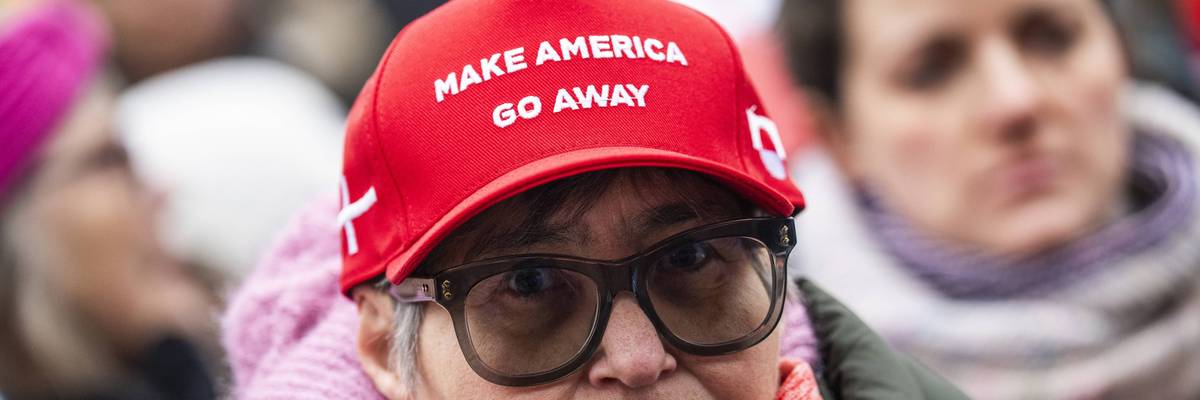
The announcement seemed to deliver on a threat the president made Friday to impose tariffs on countries “if they don’t go along with” his designs on Greenland. It also ignored the sentiment of the thousands of people who marched in Denmark and Greenland’s capitals wearing red hats with the slogan, “Make America Go Away.”

“You cannot buy Greenland, you cannot buy a people. It is so wrong, disrespectful to think that you can purchase a country and a people.”

“We are demonstrating against American statements and ambitions to annex Greenland,” Camilla Siezing, chairwoman of the Inuit Association, said in a statement. “We demand respect for the Danish Realm and for Greenland’s right to self-determination.”

Julie Rademacher, chair of Uagut—an association of Greenlanders who live in Denmark that helped organize the demonstrations—said at the Copenhagen protest, as Deutsche Welle reported: “We are also sending a message to the world that you all must wake up… Greenland and the Greenlanders have involuntarily become the front in the fight for democracy and human rights.”

One Greenlander who attended the Copenhagen protest was Naja Mathilde Rosing.

“America has a sense of feeling they can steal land from the Native Americans, steal land from the Indigenous Hawaiian people, steal land from the Indigenous Inuit from Alaska,” she told NPR. “You cannot buy Greenland, you cannot buy a people. It is so wrong, disrespectful to think that you can purchase a country and a people.”

Protests were also held in the Danish cities of Aarhus, Aalborg and Odense.

Greenland is a semiautonomous territory of Denmark with a population of nearly 57,000, 85% of whom do not want to join the United States.

Greenland’s Prime Minister prime minister Jens-Frederik Nielsen joined a crowd of 5,000 in the island’s capital city of Nuuk, where people carried signs reading, “Greenland is already great,” and “Yankee, go home,” according to CNN.

“We have seen what (Trump) does in Venezuela and Iran,” one protester, named Patricia, told CNN. “He doesn’t respect anything. He just takes what he thinks is his… He misuses his power.”

Yet Trump did not acknowledge the feelings of Greenlanders in his post on Saturday. Instead, he was focused on the actions of eight European countries that have sent small numbers of troops to the island, accusing them of “playing this very dangerous game.”

The leaders of the eight countries and the European Union pushed back against Trump’s threats.

French President Emmanuel Macron likened Trump’s designs on Greenland to Russian President Vladimir Putin’s invasion of Ukraine.

“No intimidation or threat will influence us—neither in Ukraine, nor in Greenland, nor anywhere else in the world when we are confronted with such situations,” he wrote on social media. “Tariff threats are unacceptable and have no place in this context. Europeans will respond in a united and coordinated manner should they be confirmed. We will ensure that European sovereignty is upheld. It is in this spirit that I will engage with our European partners.”

Swedish Prime Minister Ulf Kristersson posted: “We will not let ourselves be blackmailed. Only Denmark and Greenland decide on issues concerning Denmark and Greenland.”

European Commission President Ursula von der Leyen wrote: “Tariffs would undermine transatlantic relations and risk a dangerous downward spiral. Europe will remain united, coordinated, and committed to upholding its sovereignty.”

Denmark’s Foreign Minister Lars Løkke Rasmussen, meanwhile, said Trump’s tariff announcement came “as a surprise,” noting that it followed a meeting with Vice President JD Vance and Secretary of State Marco Rubio earlier in the week, which he described as “constructive.”

Trump’s latest tariff threat also drew criticism from US lawmakers.

“To threaten Denmark—and now six other NATO allies—in a crusade to take Greenland threatens to blow up the NATO alliance that has kept Americans safe and destroy our standing in the world as a trustworthy ally,” wrote Sen. Chris Coons (D-Del.), who led a bipartisan congressional delegation to Denmark that coincided with Saturday’s protests.

Rep. Don Beyer (D-Va.) said: “Trump has no legal authority to tariff American allies to bully them into backing his brainless attempt to seize Greenland. This is against the law, it’s a total disaster for America, and Republicans in Congress and the Supreme Court need to find their spines and stop it.”

“ Donald Trump wants to be Tariff King, but he’s nothing more than a tax troll with no legal authority to levy these tariffs, no support from the American people, and no support from his allies.”

Sens. Bernie Sanders (I-Vt.) and Patty Murray (D-Wash.) also called on Congress to act.

“Trump is raising tariffs on eight NATO allies because they rightly support Denmark’s sovereignty in Greenland. Destroying our closest alliances to take Greenland—which Denmark lets us use freely already—is insane. Congress must say NO,” Sanders wrote on social media.

Murray posted: “To my Republican colleagues: ENOUGH. It’s time for the Senate to vote to block these tariffs and to block the use of military force against Greenland. Trump is tearing apart our alliances in real time and the economic and diplomatic consequences will be catastrophic.”

Sen. Mark Kelly (D-Ariz.) also appealed to Republican colleagues, and pointed out that it would ultimately be Americans who would pay higher prices as a result of the tariffs.

“Troops from European countries are arriving in Greenland to defend the territory from us,” he wrote on social media. “Let that sink in. And now Trump is setting tariffs on our allies, making you pay more to try to get territory we don’t need. The damage this President is doing to our reputation and our relationships is growing, making us less safe. If something doesn’t change we will be on our own with adversaries and enemies in every direction. Republicans in Congress need to stand up to Trump.”

Sen. Ed Markey (D-Mass.) posted a video from the streets of Boston, evoking the spirit of the American Revolution.

“Donald Trump wants to be Tariff King, but he’s nothing more than a tax troll with no legal authority to levy these tariffs, no support from the American people, and no support from his allies. Enough is enough,” he said.

Ultimately, Trump’s ability to play “tariff king” will be determined by the Supreme Court, which could rule as soon as next week on the legality of many of his tariffs.

Original article by Olivia Rosane republished from Common Dreams under Creative Commons (CC BY-NC-ND 3.0). 

Elon Musk urges you to be a Fascist like him, says that you can ignore facts and reality then.
Donald Fuhrump says that Amerikkka doesn't bother with crimes or charges anymore, not being 100% Amerikkkan and opposing his real estate intentions is enough.
Donald Fuhrump says that Amerikkka doesn’t bother with crimes or charges anymore, not being 100% Amerikkkan and opposing his real estate intentions is enough.
Orcas discuss how Trump was re-elected and him being an obviously insane, xenophobic Fascist.

Continue Reading‘Insane’: Trump Threatens 8 Allies With New Tariffs for Opposing Greenland Takeover

European nations, Canada, Japan voice ‘serious concerns’ about ongoing Gaza crisis

Spread the love

This work by Middle East Monitor is licensed under a Creative Commons Attribution-NonCommercial-ShareAlike 4.0 International License

Displaced Palestinians living in makeshift tents are trying to carry on their daily lives under harsh conditions in Deir al Balah, Gaza on December 29, 2025. [Mohammed Nassar – Anadolu Agency]

Eight European nations, Japan, and Canada on Tuesday expressed “serious concerns” about the renewed deterioration of the humanitarian situation in the Gaza Strip, Anadolu reports.

In a joint statement, foreign ministers of Canada, Denmark, Finland, France, Iceland, Japan, Norway, Sweden, Switzerland, and the UK recalled the “catastrophic” humanitarian situation in the besieged enclave.

The statement mentioned the appalling conditions that are exacerbated by winter, noting that 1.3 million Gazans still require urgent shelter assistance.

The foreign ministers cited the latest Integrated Food Security Phase Classification (IPC) report, which was published earlier in December, as evidence that the situation remains desperate.

The statement expressed their appreciation for the ceasefire in Gaza but stated that they will not lose sight of the plight of Gaza’s civilian population.

It called on Israel to ensure that the UN, its partners, and NGOs can continue their vital work and lift unreasonable restrictions on imports considered to have a dual use.

Saying that many established international NGO partners are at risk of being deregistered because of Israel’s restrictive new requirements, it warned that deregistration could result in the forced closure of humanitarian operations within 60 days in Gaza and the West Bank.

“This would have a severe impact on access to essential services including healthcare,” said the statement.

READ: Israeli Knesset passes bill halting electricity, water supply to UNRWA facilities

Ensuring UN, its partners can continue their vital work is ‘essential’

It also underlined that ensuring the UN and its partners can continue their vital work is “essential” to the impartial, neutral, and independent delivery of aid throughout Gaza.

“This includes UNRWA, which provides essential services, such as healthcare and education, to millions of Palestinian refugees,” said the foreign ministers.

The statement also called on Tel Aviv to open crossings and increase the flow of humanitarian aid into Gaza.

“The target of 4,200 trucks per week, including an allocation of 250 UN trucks per day, should be a floor not a ceiling,” it said, adding that these targets should be lifted so they can be sure the vital supplies are getting in at the vast scale needed.

The nations also underlined that ongoing restrictions limit the capacity for aid to be delivered at the scale needed, in accordance with international humanitarian law, or for repairs to be made to support recovery and reconstruction efforts.

“We now urge the Government of Israel to remove these humanitarian access constraints, and to deliver and honour the Comprehensive Plan to End the Gaza Conflict,” it added.

Despite the ceasefire, Israel continues to keep Gaza’s crossings largely closed, preventing the entry of mobile homes and reconstruction materials and worsening the humanitarian crisis affecting over 2 million people.

Palestinian officials say that at least 414 people in Gaza have been killed since the ceasefire deal between Israel and Hamas took place on Oct. 10.

Since October 2023, Israeli attacks have killed over 71,000 Palestinians in the enclave, most of them women and children, and rendered it largely uninhabitable.

READ: 25 Palestinians die in Gaza amid severe weather since start of December

This work by Middle East Monitor is licensed under a Creative Commons Attribution-NonCommercial-ShareAlike 4.0 International License

Keir Starmer objects to criticism of the IDF. He asks how could anyone object to them starving people to death, forced marches like the Nazis did, bombing Gaza's hospitals and universities, mass-murdering journalists, healthworkers and starving people queuing for food, killing and raping prisoners and murdering children. He calls for people to stop obstructing his genocide for Israel.
Keir Starmer objects to criticism of the IDF. He asks how could anyone object to them starving people to death, forced marches like the Nazis did, bombing Gaza’s hospitals and universities, mass-murdering journalists, healthworkers and starving people queuing for food, killing and raping prisoners and murdering children. He calls for people to stop obstructing his genocide for Israel.
Orcas discuss Genocide-supporting and complicit Zionists. Donald Trump, Keith Starmer, David Lammy, Rachel Reeves, Angela Rayner and Wes Streeting are acknowledged as evil genocide-complicit and supporting cnuts.
Vote Labour for Genocide.

Continue ReadingEuropean nations, Canada, Japan voice ‘serious concerns’ about ongoing Gaza crisis

Witch memorials are quietly spreading across Europe

Spread the love
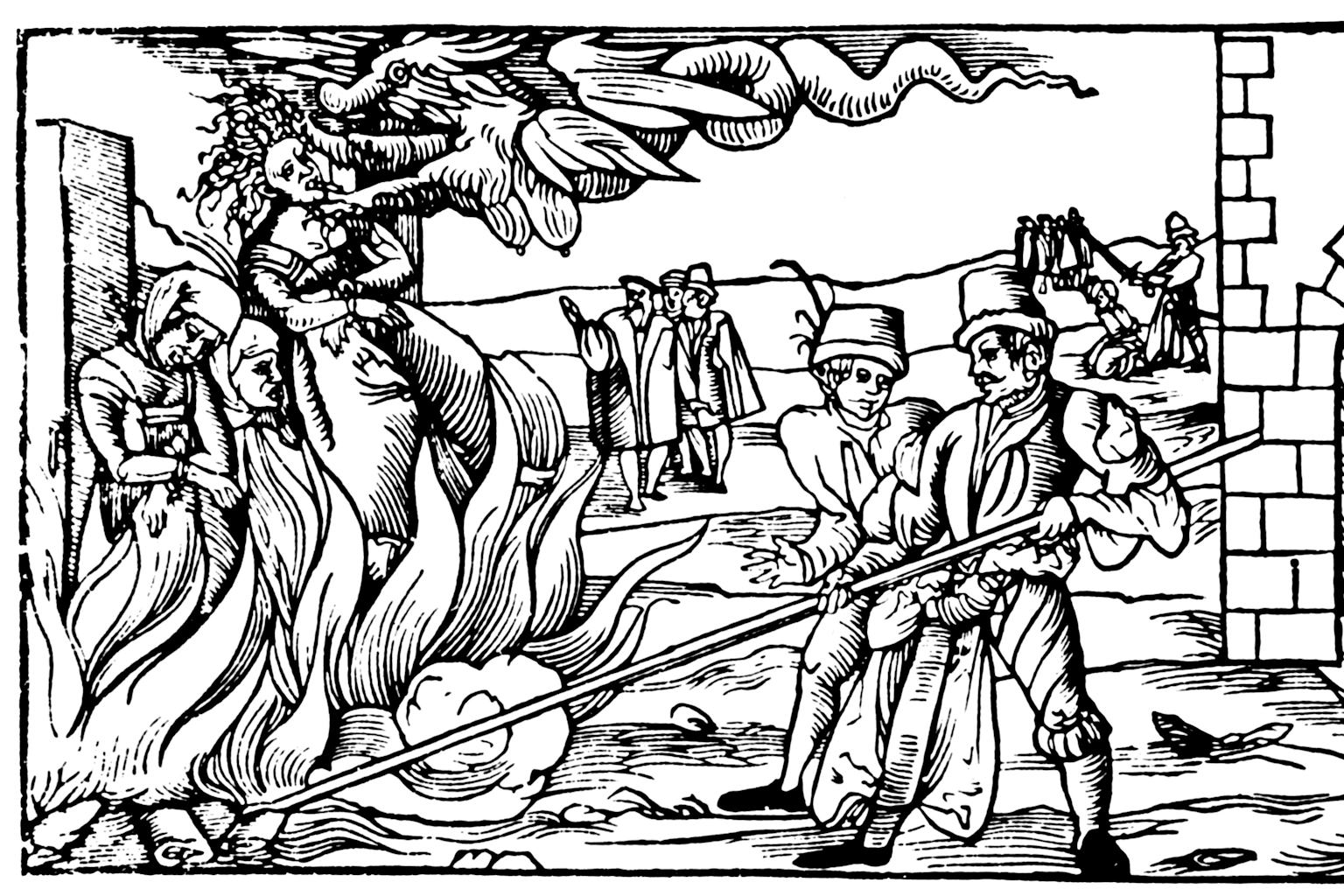
A 1555 depiction of women deemed to be witches being burned at the stake. Science History Images / Alamy

Jan Machielsen, Cardiff University and Paul Webster, Cardiff University

Across Europe, campaigns for national witch memorials are gathering pace. In the Netherlands, a charity recently announced it had selected the design for a monument in Roermond, the site of the country’s worst witch-hunt.

In Scotland, campaigners Claire Mitchell and Zoe Venditozzi published a manifesto, How To Kill A Witch, to continue pressure on the Scottish government for a state-funded monument. Their Witches of Scotland campaign had won an early victory in 2022 when first minister Nicola Sturgeon issued an official apology.

Across early modern Europe (1450-1750), between 40,000 and 50,000 people were executed as witches. Though the age and gender of the accused varied from place to place, roughly 75% to 80% of all victims were women.

Within Britain and Ireland, Scotland saw some of the fiercest witch-hunting. Historians have identified more than 3,800 accusations (84% women), leading to perhaps as many as 2,500 executions.

Despite these stark figures, there are still no official national witch memorials anywhere in Europe, although the Steilneset memorial in northern Norway, created in 2011, comes close.

The Damned, The Possessed and the Beloved, Louise Bourgeois’ memorial to the women burned for being witches, at Steilneset, near Vardo in Norway. Wolfmann / Wikipedia

The lack of such national memorials does not mean the witch hunt has been forgotten. Its memory has long offered moral lessons for the present.

On the other side of the Atlantic, descendants of those caught up in the infamous 1692 Salem witch trials were among the earliest to commemorate the victims. A cenotaph erected in 1885 by descendants of Rebecca Nurse, one of the Salem accused, may well have been the first.

In Europe, there are similar local memorials. A witches’ well installed outside Edinburgh Castle in 1894 was probably the earliest such memorial in Europe, but most local attempts at memorialisation have been much more recent.

Our project – supported by Cardiff University’s On Campus student internship scheme – mapped memorials around the world and created an inventory of 134 plaques, memorials, sites and museums, which skews heavily towards the 21st century. Of the sites that can be securely dated, nearly half were unveiled during the past decade.

#MeToo, politics and wartime bears

This growth in grassroots interest has several origins. It partly stems from renewed concern at present-day violence, both against women in general but also against suspected witches in the global south. Our research threw up one memorial in the Indian state of Odisha to deter modern vigilantism.

It also coincides with the popularisation of witch-hunting as a political metaphor and the #MeToo movement. The latter not only encouraged women to call out misogyny, in the process it also highlighted how few statues of non-royal women exist.

It was the sight of a statue of Wojtek, a Polish bear and second world war mascot in Edinburgh’s Princes Street Gardens, that inspired one of the Witches of Scotland campaigners. If a bear could be commemorated, why not any of the thousands of women executed as witches?

Overlaying witch memorials with the geography of the early modern witch-hunt reveals further striking patterns. With 29 local memorials, Scotland accounts for the largest share, followed by Germany with 24 – both epicentres of the early modern witch-hunt.

By contrast, France is virtually absent from our data. There is no memorial in the former Duchy of Lorraine, another notable witch-hunting hotspot, nor any marker in Paris of the sensational and infamous “affair of the poisons” that shook Louis XIV’s court.

Whether to remember is also a political choice. Memorials in the Basque country present witch-hunting as foreign (French and Spanish) impositions, while glossing over the role played by local officials and folkloric beliefs.

Catalonia saw relatively few trials but its nationalist politicians have spearheaded motions labelling the witch-hunt “institutionalised femicide”. In this way, calls for a memorial have become something of a vehicle for progressive nationalism.

How to remember can be fraught. Accusations of kitsch, commercialism and profit haunt museums in particular. Salem’s Witch Museum was once named the world’s second biggest tourist trap.

Perhaps for this reason, many communities have settled for straightforward plaques listing those executed for alleged witchcraft. In a similar spirit, streets in Catalonia and Scotland have been renamed in their memory as well.

Going further raises thorny questions of artistic licence and historical representation. Visual depictions risk perpetuating stereotypes about warts, noses and pointy hats.

On the other hand, portraying witches as alluring ignores a substantial body of research linking witchcraft fears to young mothers’ anxieties about the postmenopausal body. For those reasons, a monument on a Belgian roundabout of a naked witch “flying to freedom” on her broomstick surrounded by traffic sparked much debate among our project team.

Acts of remembering inevitably entail acts of forgetting, and there are pitfalls here to be avoided. Stronger, more centralised states saw less witch-hunting, not more. State and church-issued pardons and apologies may thus downplay the role that communities played in witch persecutions, including other women.

Remembering is never simple. Yet, as one of history’s most infamous forms of demonisation, the early modern witch-hunt will always teach us how easy it is to blame, and how difficult it is to understand.


Looking for something good? Cut through the noise with a carefully curated selection of the latest releases, live events and exhibitions, straight to your inbox every fortnight, on Fridays. Sign up here.


Jan Machielsen, Senior Lecturer in Early Modern History, History, Archaeology and Religion, Cardiff University and Paul Webster, Lecturer in Medieval History and Co-Ordinator, Exploring the Past Pathway, Cardiff University

This article is republished from The Conversation under a Creative Commons license. Read the original article.

Continue ReadingWitch memorials are quietly spreading across Europe

European Court of Human Rights Delivers ‘Quantum Leap for Climate Accountability’

Spread the love

Original article by Jessica Corbett republished from Common Dreams under Creative Commons (CC BY-NC-ND 3.0).

An activist from the environmental movement Extinction Rebellion holds up a sign reading “Oil Kills” as police officers remove him from the premises of DNB Bank during a protest in Oslo, Norway on August 21, 2025. (Photo by Javad Parsa/NTB/AFP via Getty Images)

“Requiring governments to assess the global climate consequences of oil and gas combustion before approving new fossil projects is common sense, and long overdue,” said one campaigner.

Although the European Court of Human Rights on Tuesday sided with the Norwegian government over six young adults and a pair of climate groups, the plaintiffs still welcomed the tribunal’s ruling as “a major step forward,” in the words of Frode Pleym, head of Greenpeace Norway.

The case stems from the Norwegian Ministry of Petroleum and Energy granting 10 exploration licenses to 13 companies for fossil fuel production in the Arctic Barents Sea in 2016. The plaintiffs argued that doing so violated Article 8 of the European Convention on Human Rights, or the right to respect for private and family life.

The court unanimously held that “there had been no violation” of Article 8, but it also affirmed that the government must conduct a full environmental impact assessment, including greenhouse gas emissions from combustion, for any new petroleum production.

“It’s a relief to see the court recognize what science has told us for years—that new oil and gas fields threaten our most basic human rights,” Pleym said in a statement. “Requiring governments to assess the global climate consequences of oil and gas combustion before approving new fossil projects is common sense, and long overdue.”

Young Friends of the Earth Norway, which sued alongside Greenpeace and the six individuals, also praised the ruling as progress.

“This decision is a quantum leap for climate accountability,” said the group’s leader, Sigrid Hoddevik Losnegård. “The government can no longer continue its oil and gas policy as if climate change doesn’t exist. This judgment will have ripple effects far beyond Norway.”

I can think of at least seven ways fossil fuel producers could wiggle out of this, but still: holy shit this is huge.

Dr. Genevieve Guenther (she/they) (@doctorvive.bsky.social) 2025-10-28T11:17:12.237Z

The plaintiffs noted in a joint statement that the ruling “builds on” recent decisions from the International Court of Justice and the UK Supreme Court. The ICJ said in a landmark advisory opinion in July that countries have a legal obligation to take cooperative action to address the fossil fuel-driven climate emergency. At the time, Danilo Garrido, legal counsel at Greenpeace International, hailed the development as “the start of a new era of climate accountability at a global level.”

That decision came roughly a year after the UK’s top court ruled that Surrey authorities’ approval of the Horse Hill drilling project “was unlawful” because they didn’t consider “emissions that will occur when the oil produced is burnt as fuel,” as required by law. Friends of the Earth UK called the ruling “a heavy blow for the fossil fuel industry” that could impact other projects.

The European court’s Tuesday decision came less than two weeks away from the start of the 30th United Nations Climate Change Conference in Belém, Brazil. In preparation for COP30, the UN on Tuesday released a report warning that governments’ climate plans would reduce fossil fuel emissions by just 10% by 2035 compared to 2019 levels, far short of what is needed to meet the Paris Agreement goal of limiting temperature rise this century to 1.5°C above preindustrial levels.

As Oil Change International pointed out in a June report, Norway and three other wealthy nations—Australia, Canada, and the United States—account for the majority of planned oil and gas expansion over the next decade. This month, the group commissioned a poll that found a majority of Norwegians believe their country should either stop exploring for new oil and gas or slow down the pace.

“The data show that Norwegians increasingly want political leadership that aligns the country’s oil policy with its climate goals,” Oil Change’s North Sea campaign manager, Silje Lundberg, said Monday. “People are calling time on endless oil expansion—it’s the government that’s stuck in the past. The public clearly wants a plan to phase down oil and gas and deliver real climate leadership, not more empty talk from ministers protecting the industry.”

Original article by Jessica Corbett republished from Common Dreams under Creative Commons (CC BY-NC-ND 3.0).

Orcas comment on killer apes destroying the planet by continuing to burn fossil fuels.
Donald Trump urges you to be a Climate Science denier like him. He says that he makes millions and millions for destroying the planet, Burn, Baby, Burn and Flood, Baby, Flood.
Nigel Farage urges you to ignore facts and reality and be a climate science denier like him and his Deputy Richard Tice. He says that Reform UK has received £Millions and £Millions from the fossil fuel industry to promote climate denial and destroy the planet.

Continue ReadingEuropean Court of Human Rights Delivers ‘Quantum Leap for Climate Accountability’

12 countries commit to arms embargo on Israel to stop its attacks on Gaza

Spread the love

Original article by Pablo Meriguet republished from peoples dispatch under a Creative Commons Attribution-ShareAlike 4.0 (CC BY-SA) license.

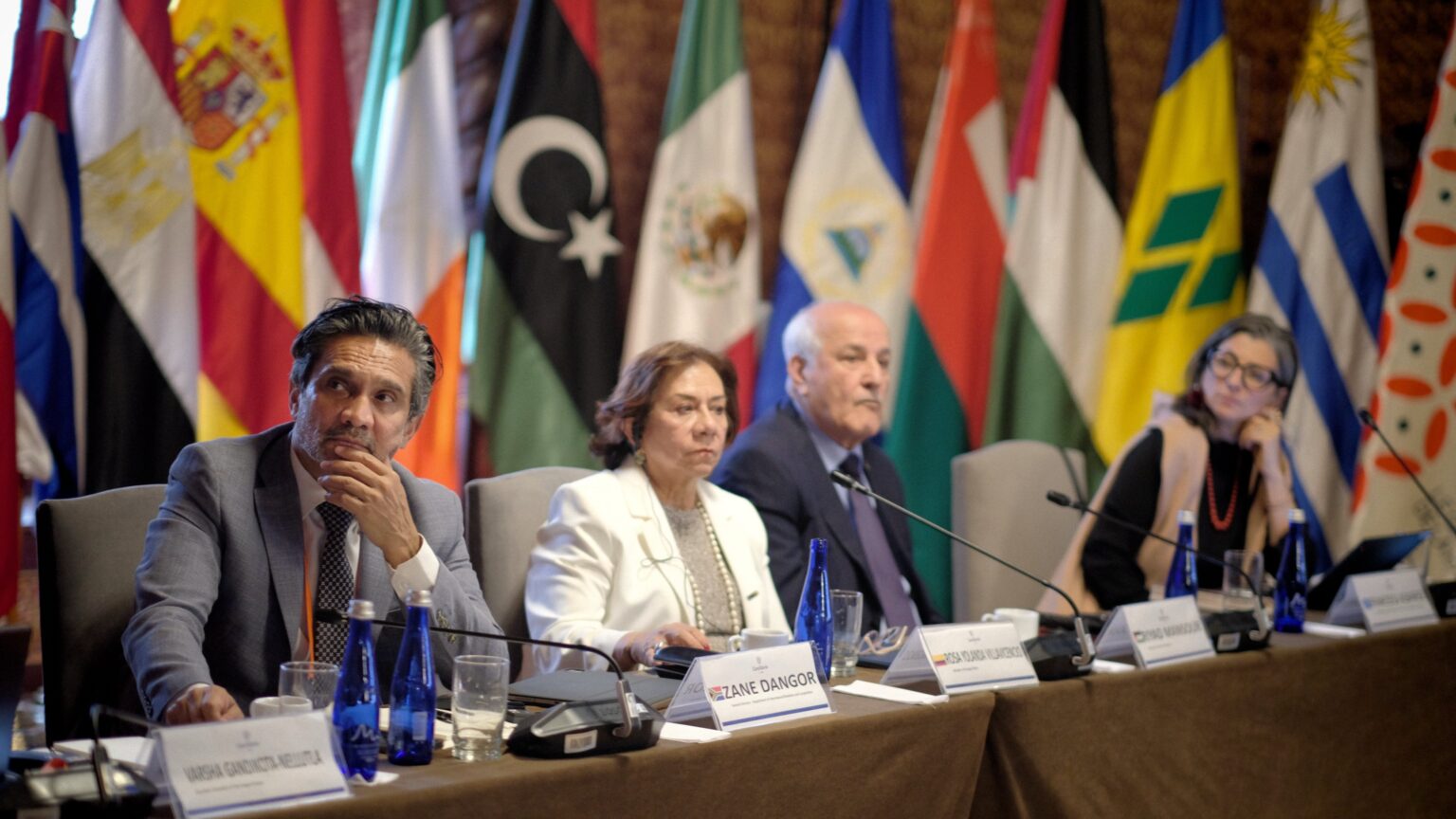
Hague Group Summit in Bogotá, Colombia. Photo: Abby Martin

In the final document, the signatory countries commit, among other things, to cease arms trade with Israel, review public contracts with that country, and seek accountability for war crimes.

Countries of the Global South have expressed their solidarity with the Palestinian people at the Emergency Ministerial Conference on Palestine organized by The Hague Group, which took place on July 15 and 16 in Bogotá, Colombia. The multilateral meeting was attended by representatives from Algeria, Bangladesh, Botswana, Brazil, Chile, China, Djibouti, Egypt, Slovenia, Spain, Honduras, Indonesia, Iraq, Ireland, Lebanon, Libya, Malaysia, Mexico, Namibia, Nicaragua, Norway, Oman, Pakistan, Palestine, Qatar, Saint Vincent and the Grenadines, South Africa, Turkey, Uruguay, and Venezuela.

Regarding the meeting, Colombia’s deputy secretary of state, Mauricio Jaramillo, said: “This conference is being convened by the Hague Group, but it is not an exclusive meeting of this group. Given the urgency of what is happening in the occupied territories, especially in Gaza, where today, for example, we have passed the threshold of 58,000 fatalities, we must commit ourselves to action.”

The conference, which was organized by the governments of Colombia and South Africa and attended by 30 countries, agreed that: “The era of impunity must end – and that international law must be enforced without fear or favor through immediate domestic policies and legislation – along with a unified call for an immediate ceasefire.”

The agreements

According to an official press release, the meeting laid out several measures to stop the genocide in Gaza:

  1. Prevent the provision or transfer of arms, munitions, military fuel, related military equipment, and dual-use items to Israel.
  2. Prevent the transit, docking, and servicing of vessels at any port … in all cases where there is a clear risk of the vessel being used to carry arms, munitions, military fuel, related military equipment, and dual-use items to Israel.
  3. Prevent the carriage of arms, munitions, military fuel, related military equipment, and dual-use items to Israel on vessels bearing our flag … and ensure full accountability, including de-flagging, for non-compliance with this prohibition.
  4. Commence an urgent review of all public contracts to prevent public institutions and funds from supporting Israel’s illegal occupation of the Palestinian Territory and entrenching its unlawful presence.
  5. Comply with obligations to ensure accountability for the most serious crimes under international law, through robust, impartial, and independent investigations and prosecutions at national or international levels, to ensure justice for all victims and the prevention of future crimes.
  6. Support universal jurisdiction mandates, as and where applicable in national legal frameworks and judiciaries, to ensure justice for victims of international crimes committed in the Occupied Palestinian Territory.

Although 30 countries attended the meeting, only 12 countries committed to immediately complying with the agreements outlined in the final declaration: Bolivia, Cuba, Colombia, Indonesia, Iraq, Libya, Malaysia, Namibia, Nicaragua, Oman, Saint Vincent and the Grenadines, and South Africa. The others expected to join them by September 20, 2025 – the date of the 80th UN General Assembly. The group will also be consulting various other states on an ongoing basis for participation in the measures against Israel.

Colombia’s President Gustavo Petro stated: “We came to Bogotá to make history — and we did … Together, we have begun the work of ending the era of impunity. These measures show that we will no longer allow international law to be treated as optional, or Palestinian life as disposable.”

“What we have achieved here is a collective affirmation that no state is above the law … The Hague Group was born to advance international law in an era of impunity. The measures adopted in Bogotá show that we are serious — and that coordinated state action is possible,” said South African Secretary of State Ronald Lamola.

The final agreement is historic as it is the first multilateral agreement that seeks to influence the Israeli government’s actions in its offensive against Gaza. In this sense, it is the first time that several countries have challenged the apparent immunity of the Israeli state in its actions in Gaza, which could have unpredictable diplomatic repercussions. It could also become the starting point for other countries to demand an end to the violence in Palestine jointly.

Original article by Pablo Meriguet republished from peoples dispatch under a Creative Commons Attribution-ShareAlike 4.0 (CC BY-SA) license.

Continue Reading12 countries commit to arms embargo on Israel to stop its attacks on Gaza