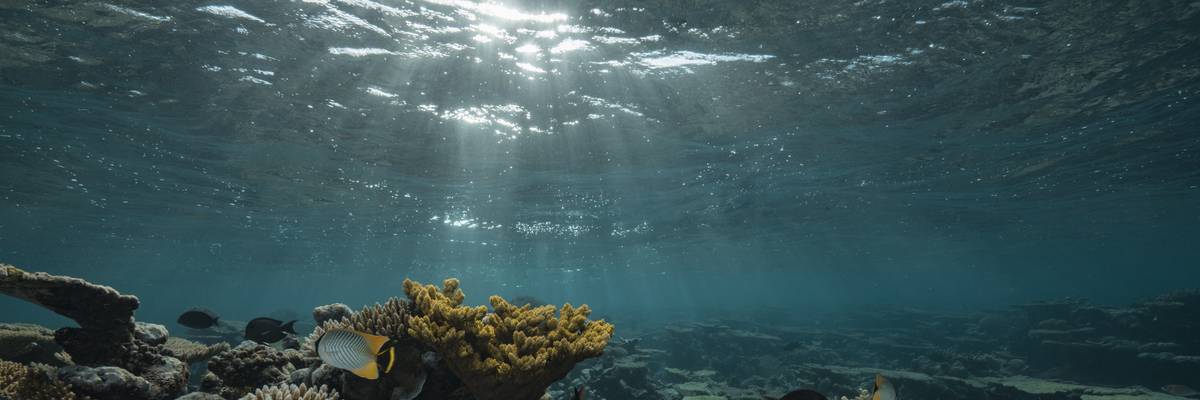
THE world’s nations will gather in France next month to tackle what the United Nations says is a global emergency facing global oceans.
Conference secretary-general Li Junhua told reporters on Tuesday that he hopes the third UN Ocean Conference would not be another routine meeting but “the pivotal opportunity” to accelerate action and mobilise people in all sectors and across the world.
The conference aims to unite governments, scientists, businesses and civil society to take action and raise money to address these and other crises facing the oceans and the people who rely on them for their survival.
…
French UN ambassador Jerome Bonnafont said his country’s priorities for the conference included obtaining 60 ratifications of the treaty to protect biodiversity in the high seas, which was adopted in March 2023, so that it comes into force.
The treaty’s mission is to ensure sustainable fishing, mobilise support to protect and conserve at least 30 per cent of the oceans’ waters, fight plastic pollution, “accelerate decarbonisation” of maritime transport and mobilise financing.
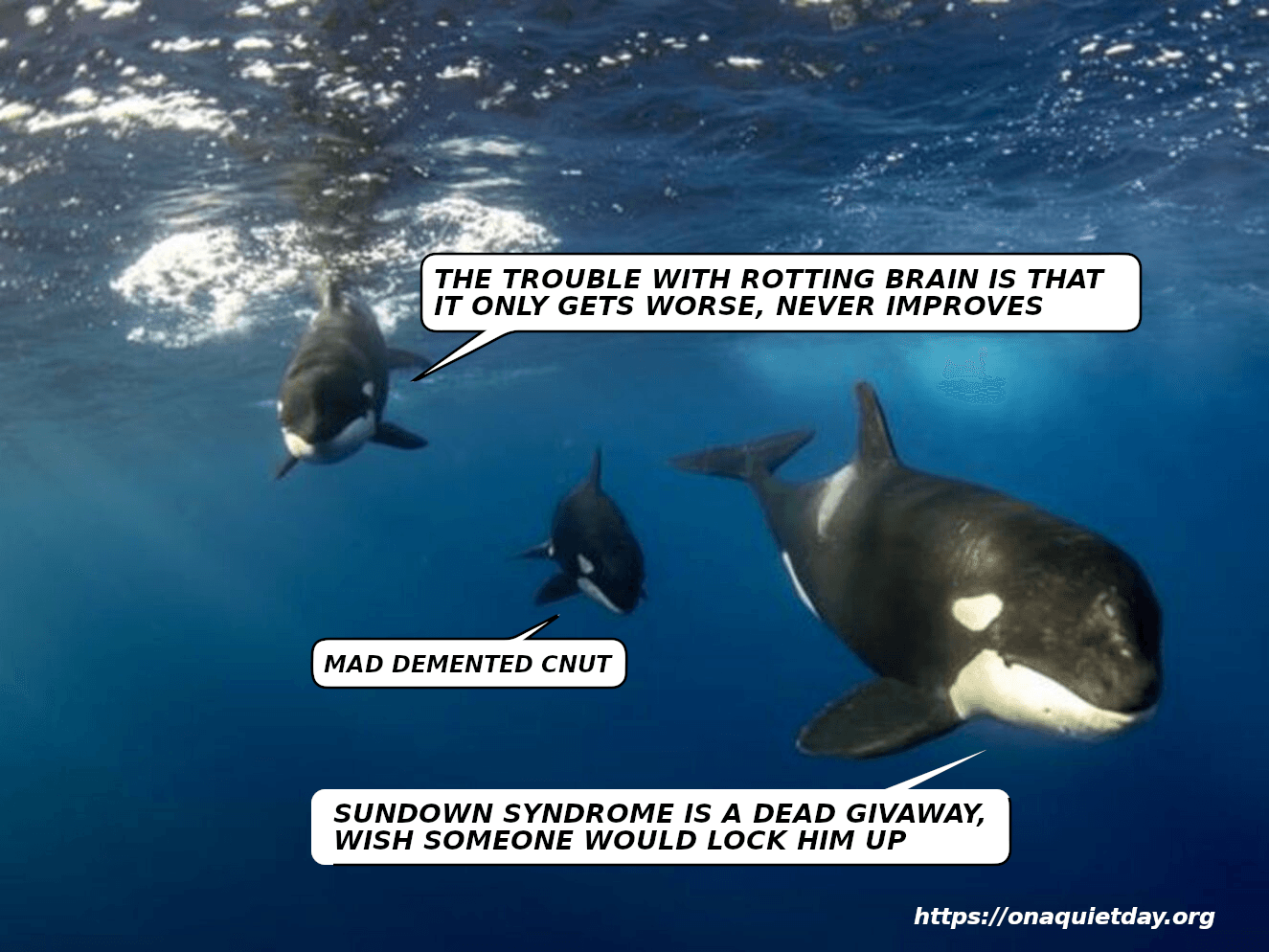
Orcas discuss Donald Trump and the killer apes’ concept of democracy. Front Orca warns that Trump is crashing his country’s economy and that everything he does he does for the fantastically wealthy.Neo-Fascist Climate Science Denier Donald Trump says Burn, Baby, Burn.Elon Musk urges you to be a Fascist like him, says that you can ignore facts and reality then.
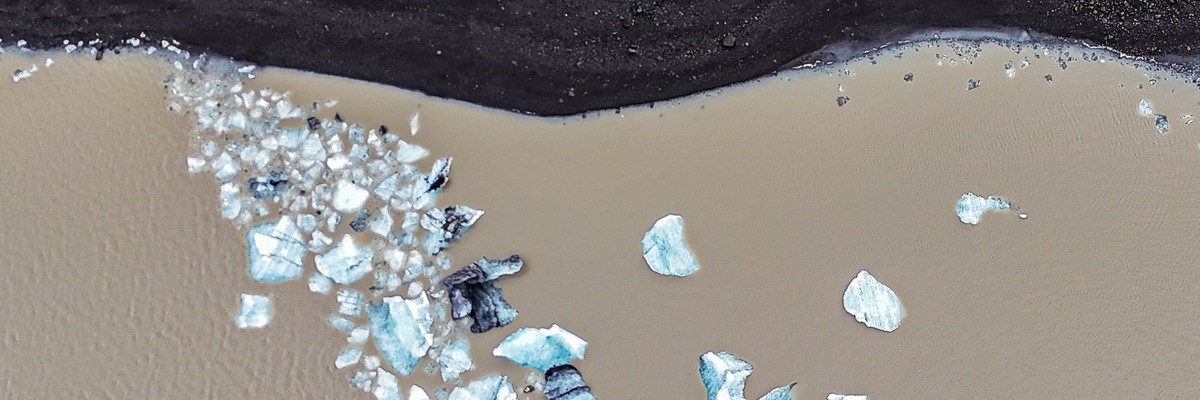
An aerial view shows the Vatnajokull glaciers in Iceland are melting into the ocean or forming lagoons due to global warming and climate change on February 23, 2025. (Photo: Evrim Aydin/Anadolu via Getty Images)
“The environment does not care about politics. Keep spewing greenhouse gases and face the consequences.”
European Union officials said the Copernicus Climate Change Service had issued its latest “stark reminder of why climate action is urgent” when the bloc’s program announced that it observed less sea ice covering the Earth’s oceans last month than at any other point in recorded history.
In the Arctic, sea ice reached its lowest monthly extent on record, at 8% below average, in early February, and it remained below the previous record for the rest of the month.
The oceans were missing an area of ice roughly the size of the United Kingdom last month, according to Copernicus (C3S), and the finding was not an anomaly in recent sea ice observations.
February marked the third consecutive month in which record low sea ice levels for the corresponding month were observed in the Arctic.
C3S reported that in the Antarctic, sea ice levels have rapidly declined in 2025 after appearing to recover to near-record levels in December 2024.
Last month, sea ice near the South Pole reached its fourth-lowest monthly extent, at 26% below average.
C3S said the daily sea ice extent in the Antarctic may have also reached its annual minimum toward the end of the month, which will be confirmed later in March; if confirmed, it would be the second-lowest annual minimum in the satellite record.
“February 2025 continues the streak of record or near-record temperatures observed throughout the last two years,” said Samanatha Burgess, strategic lead for climate at the European Center for Medium-Range Weather Forecasts. “One of the consequences of a warmer world is melting sea ice, and the record or near-record low sea ice cover at both poles has pushed global sea ice cover to an all-time minimum.”
The melting sea ice was recorded as global average temperatures rose 1.59°C (2.8°F) above the pre-industrial average last month, making it the third-warmest February on record.
In Europe, the temperatures that most exceeded averages were recorded last month in parts of Scandinavia, Iceland, and the Alps. Outside of Europe, “temperatures were most above average over large parts of the Arctic.”
The low extent of sea ice will lead to “more solar heat absorbed by the darker oceans,” and “faster warming,” said Simon Oldridge, a climate campaigner.
Grim news for the climate. Less reflective ice means more solar heat absorbed by the darker oceans—faster warming.
It’s time for politicians to take their heads out the sand and brief the public on the seriousness of this crisis. https://t.co/fvkoudUKb1
— Simon Oldridge #CANBill (@SiOldridge) March 6, 2025
The loss of sea ice can also lead to the collapse of ocean currents that are crucial for marine life to thrive.
C3S reported on the record-low sea ice levels as campaigners in the U.S. and around the world condemned recent anti-climate actions taken by U.S. President Donald Trump and the Republican Party, including the country’s exit from the Paris climate agreement, the GOP’s passing of a bill to end a federal program aimed at reducing planet-heating methane emissions, and Trump’s push to fast-track fossil fuel projects—as scientists warn that new extractive projects have no place on a pathway to limiting planetary heating and avoiding its worst impacts.
“The environment does not care about politics,” said public health expert Ali Khan. “Keep spewing greenhouse gases and face the consequences.”
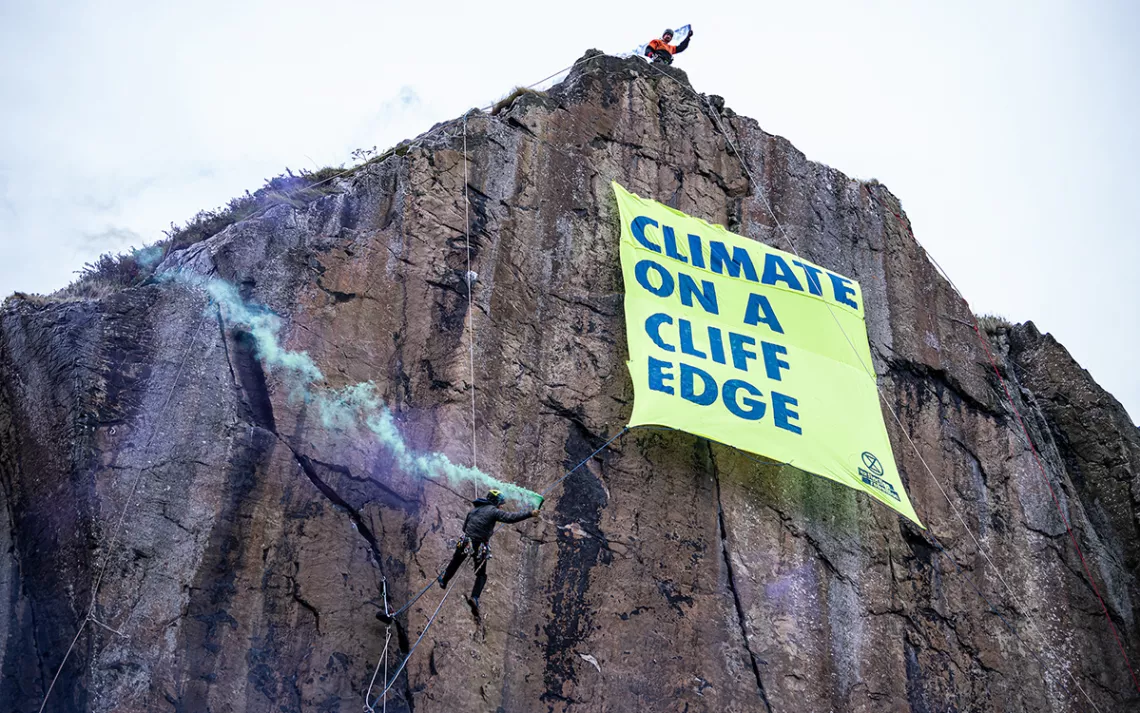
Experienced climbers scale a rock face near the historic Dumbarton castle in Glasgow, releasing a banner that reads “Climate on a Cliff Edge.” One activist, dressed as a globe, symbolically looms near the edge, while another plays the bagpipes on the shores below. | Photo courtesy of Extinction Rebellion and Mark RichardsNeo-Fascist Climate Science Denier Donald Trump says Burn, Baby, Burn.
As talks resume, supporters of a moratorium are also calling for the ouster of the International Seabed Authority’s leader, who faces an election on July 29.
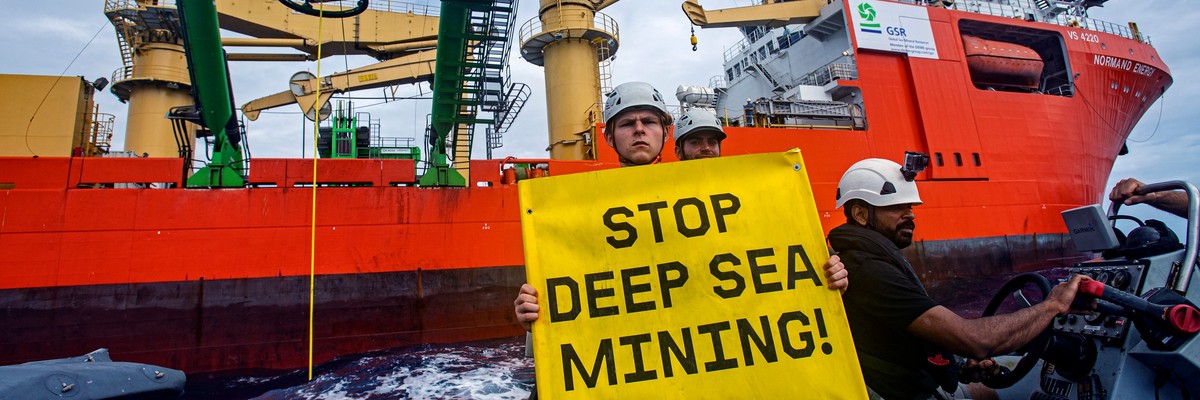
As talks to establish global policies on deep-sea mining resumed in Jamaica on Monday, Greenpeace International renewed its demand for a moratorium on the practice, the path also backed other civil society and Indigenous groups, at least hundreds of science and policy experts, and 27 countries.
“The science is clear—there can’t be deep-sea mining without environmental cost and the only solution is a moratorium. The more we know about deep-sea mining, the harder it is to justify it,” said Greenpeace campaigner Louisa Casson, who is attending the United Nations-affiliated International Seabed Authority’s (ISA) 29th session in Kingston.
“Governments at the ISA must not dance to the tune of the industry and approve rushed regulations for the benefit of a few over the interests of Pacific communities and the opinion of scientists,” Casson argued, as companies and countries see chances to cash in on the clean energy transition by extracting metals including cobalt, copper, and nickel.
“The deep ocean sustains crucial processes that make the entire planet habitable, from driving ocean currents that regulate our weather to storing carbon and buffering our planet against the impacts of climate change.”
The Associated Press reported Monday that although the ISA has not allowed any extraction during debates, it “has granted 31 mining exploration contracts,” and “much of the ongoing exploration is centered in the Clarion-Clipperton Fracture Zone, which covers 1.7 million square miles (4.5 million square kilometers) between Hawaii and Mexico.”
The Mexican government last year endorsed a moratorium and Democratic Hawaii Gov. Josh Green last week signed a bill banning seabed mining in state waters, citing “environmental risks and constitutional rights to have a clean and healthy environment.”
Ahead of the meeting in Jamaica, Deep Sea Conservation Coalition campaign lead Sofia Tsenikli highlighted that “gouging minerals from the seafloor poses an existential threat that goes far beyond the immediate destruction of deep-sea wildlife and habitats.”
“The deep ocean sustains crucial processes that make the entire planet habitable, from driving ocean currents that regulate our weather to storing carbon and buffering our planet against the impacts of climate change,” Tsenikli said. “States must now protect the ocean and not allow any more damage.”
The ISA was established under the 1982 U.N. Convention on the Law of the Sea and a related 1994 agreement, and is responsible for waters not under the control of specific nations. As Common Dreams reported earlier this month, some diplomats have accused British lawyer Michael Lodge, its current secretary-general, of trying to speed up the start of mining.
“The rush to complete the mining code was triggered by the Pacific island state of Nauru, which is expected to submit a mining license application on behalf of Canada’s the Metals Company (TMC) later this year, regardless of whether or not regulations are complete,” Reuters noted Monday.
After ISA’s 36-member Council negotiates the “Mining Code” over the next two weeks, its full Assembly is scheduled to meet on July 29 to vote on the next secretary-general, with Lodge facing a challenge from Brazil’s Leticia Carvalho for the top post.
“It is time for change at the ISA,” Casson of Greenpeace declared Monday. “A third term for Michael Lodge would not only put the oceans under threat but also risk further damaging public trust in the regulator. Mining companies are impatient to get started and mounting evidence indicates that Lodge is overstepping his supposedly-neutral role to align with commercial interests.”
“The ISA must listen to millions of people and the growing number of governments calling for a halt to deep-sea mining,” she added. “It is time to put conservation at the heart of the ISA’s work.”
In preparation for the talks in Kingston, Environment Oregon Research & Policy Center, U.S. Public Interest Research Group (PIRG) Education Fund, and Frontier Group last month released a report showing that not only would deep-sea mining destroy “a vibrant, biodiverse place, teeming with complex ecosystems and thousands, possibly millions of species,” but also it isn’t necessary.
“Disposable electronic devices are creating a toxic e-waste mess. Now, some mining companies are trying to convince policymakers that we need to wreak havoc on the ocean to source the materials to make more,” said Charlie Fisher of the Oregon State PIRG Foundation. “This report shows that we don’t need to ruin the deep sea to make the products we need. There is a more sustainable path: Make long-lasting, fixable electronics and recycle them when they no longer work.”