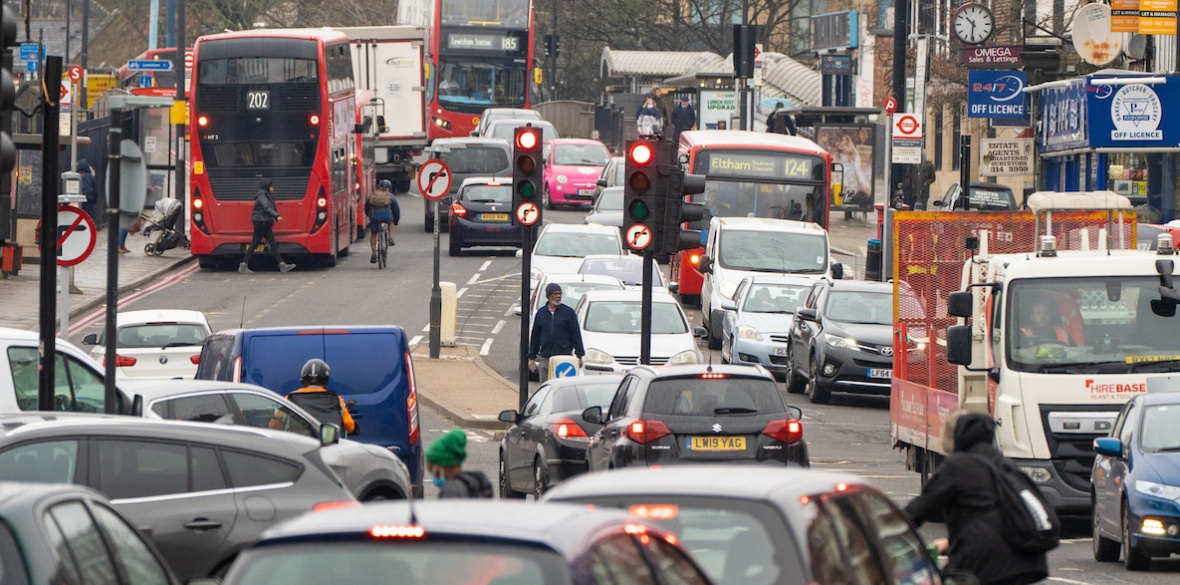
ENVIRONMENT campaigners have told Prime Minister Rishi Sunak to “stop playing politics” over London’s anti-pollution Ulez regulations.
Instead he should work with the capital’s Mayor Sadiq Khan and provide government funding for working people to replace polluting vehicles, Greenpeace said.
…
Greenpeace UK clean air campaigner Paul Morozzo said: “Rishi Sunak has a legal obligation to cut harmful pollution levels across the UK.
“So instead of playing politics with such a vital issue, he should work with the London mayor to provide proper financial support for working people wanting to get rid of older, more polluting vehicles.”
Green groups enraged by ministers’ plans to ditch nutrient neutrality requirements for housebuilders have warned that it could lead some rivers to ‘total ecological collapse’
Feargal Sharkey, the pop star turned river campaigner, and Craig Bennett, head of the Wildlife Trusts, are among those who have blasted the Government over its plans.
Mr Bennett said: “They lied – this is a disgraceful move which undermines public trust in this Government.”
Meanwhile, the RSPB warned that removing the rules could lead to “total ecological collapse” for some rivers.
Ministers spent much of this year promising not to weaken environmental regulations in its efforts to scrap European regulations. Yet on Tuesday morning, it announced that nutrient neutrality laws would be ditched to unblock housing developments.
After decades immersed in Antarctic science, I’ve learned that physical and biological changes rarely occur smoothly. More often than not, they unfold in sharp steps. Right now, Antarctica’s climate and ecosystems are experiencing disturbing changes.
On land, fragile moss ecosystems are collapsing. Majestic emperor penguins may be headed for extinction. And pollution from human activity in Antarctica has left a toxic legacy.
It’s almost certain things will get worse. On Friday, hundreds of international scientists called for an urgent expansion – not contraction – of Southern Ocean science in response to the emerging climate crisis. This adds to the scientific chorus claiming we have only a narrow window to save the planet.
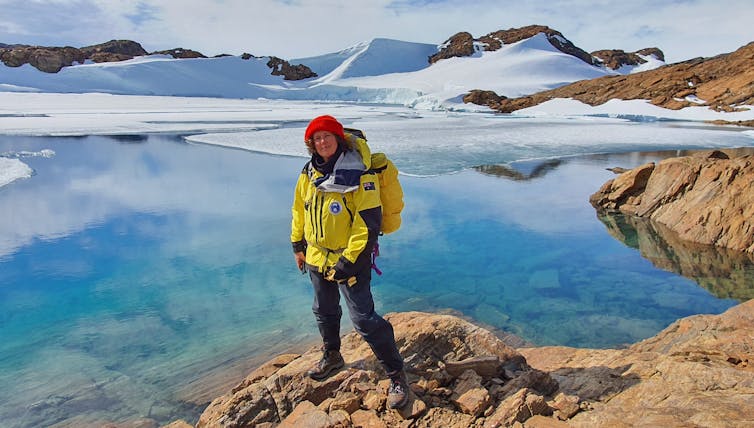
I’ve spent 40 years in Antarctic and subantarctic research. Some 22 of those were spent at the federal government’s Australian Antarctic Division; my final day there was last Thursday. No longer a public servant, I feel compelled, as a private citizen now, to publicly stand up for the icy continent and the benefit of Antarctic science to society.
Crucial to life as we know it
Antarctica matters. What happens there affects global weather patterns and sea levels.
But Antarctica’s climate is changing. Record-breaking stored heat is melting ice shelves from underneath, setting off a chain reaction. Without the buttressing of the ice shelves, glaciers flow faster to the sea. In West Antarctica, the Thwaites “doomsday glacier” is melting faster than predicted. In East Antarctica, lesser-known ice shelves have collapsed and glaciers are shrinking, adding to sea-level rise.
Antarctica is governed by the Antarctic Treaty, negotiated by 12 countries, including Australia, during the Cold War in 1959. Australia’s territory in Antarctica comprises 42% of the continent.
In my view, the treaty is magnificent. It represents a grand vision: a continent set aside for conservation, peace and science.
But Antarctica remains under threat. And the biggest threat of all is climate change.
In June this year, all treaty nations, including Australia, collectively stated:
changes in Antarctic and Southern Ocean environments are linked to, and influence, climate impact drivers globally.
They added “further irreversible change is likely” without “accelerated efforts” to reduce greenhouse gas emissions.
Scientific research is crucial in the face of these threats, to help better understand these changes now and over the longer term, and to feed into policy interventions.
In July, the ABC reported the Antarctic Division told staff A$25 million in budget savings was needed this financial year. This led to a review of plans for field research this summer. Reportedly, two out of three permanent research stations (Mawson and Davis) will not be filled with the normal number of scientists this season. That means some planned and approved projects will not be going ahead this year, including surveys on sea-ice thickness and landfast sea ice.
The Greens claim the $25 million hit to the Antarctic Division represents a 16% cut to its operating budget for the current financial year.
Generally speaking, Antarctic activities receive overwhelmingly bipartisan support. For many decades Australia’s record in Antarctic protection has been impressive. For example, Environment Minister Tanya Plibersek recently tripled the size of the marine protected area around Macquarie Island.
Former Labor environment minister Peter Garrett advanced whale conservation. He was instrumental in the campaign against so-called “scientific whaling” in the Antarctic, backed by government scientists, which culminated in Australia’s successful challenge to Japanese whaling in the International Court of Justice in 2014.
Support for Antarctic Division activities contributed to curtailing the illegal toothfish fishing in Antarctic waters. A regulated, sustainable industry is now in place. Krill fisheries operate according to science-based decisions. Efforts to reduce albatross bycatch in longline fishing were also led by Antarctic Division scientists.
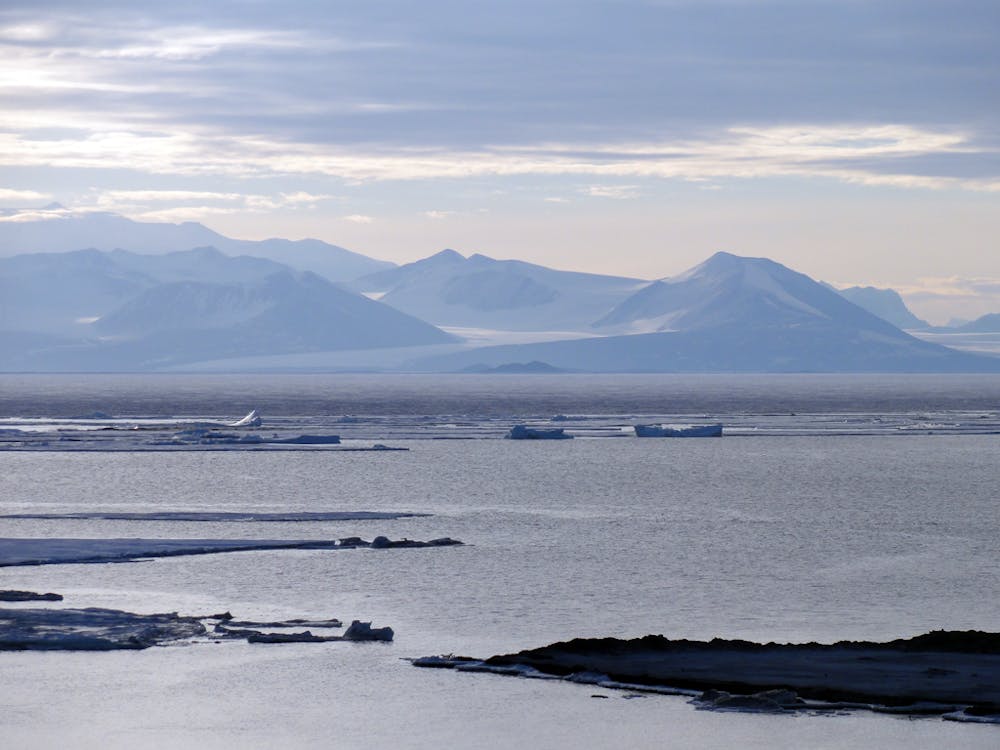
Mount Martin looms over the Ross Sea in east Antarctica. Dana M Bergstrom
Cleaning up the mess in Antarctica
The story of Antarctica serves as a compelling reminder humanity must end our reliance on fossil fuels. We must also do a far better job of environmental stewardship – including paying for the scientific research so urgently needed.
Failing to fully support vital Antarctic science in a rapidly unfolding climate emergency, in my view, is unwise.
Exclusive: Assessment that used to happen annually will now take six years despite rising concerns
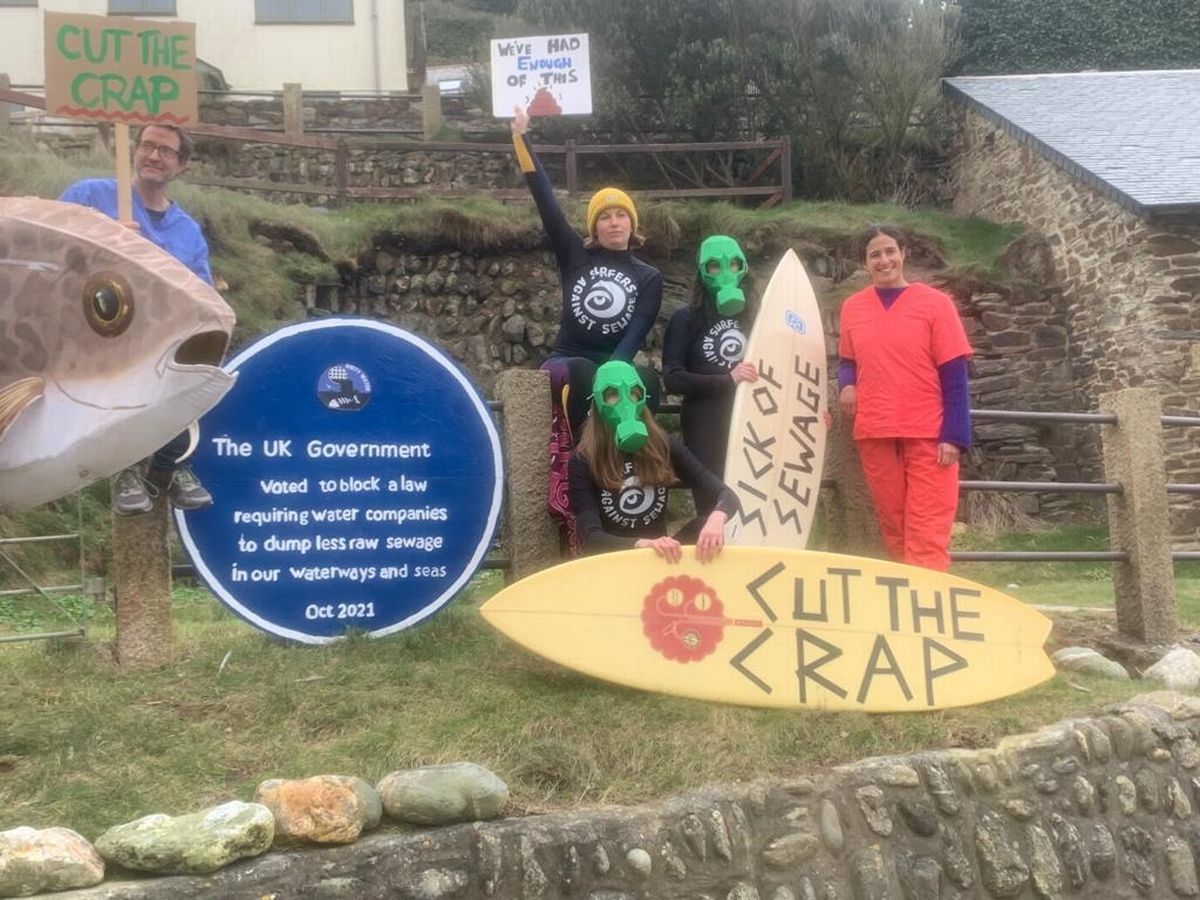
April 2023 Surfers Against Sewage and Extinction Rebellion protests in St Agnes, Perranporth, Truro and Charlestown which unveiled spoof Blue Plaques to the MPs and Conservative Government who allowed raw sewage to be dumped in the sea (Image: Surfers Against Sewage)
A nationwide annual health check of England’s water bodies which used to take place annually, will now take six years to complete, prompting anger from campaigners and politicians, as public alarm grows over the state of the nation’s rivers and coasts.
The assessments, undertaken by the Environment Agency, look at the ecological and chemical condition of rivers, lakes, groundwater, and transitional and coastal waters, and are required under the Water Framework Directive (WFD).
In 2019, the last time the full assessments took place, just 14% of rivers were in good ecological health and none met standards for good chemical health. Before 2016 the tests were done annually, but the government has now opted not to deliver a complete update until 2025, the latest permissible under the WFD.
Clean water advocates accused the government of trying to hide the data.
Rivers activist Feargal Sharkey said: “The future of England’s rivers has been sacrificed in a cynical act of self preservation by the very same failed government agency set up to protect them.”
The Green party peer Natalie Bennett said the government “clearly recognised the huge public anger about the parlous state of our waterways, but instead of taking action to clean them up, it is instead trying to hide the data”.
She added that the “stench of pollution, the choking of our waters with sewage, plastics and farm runoff is evident to all”, and that the Green party wanted to see a return to more frequent publication of the river health statistics. “Democracy demands transparency, and that’s one more thing this government is not delivering.”
April 2023 Surfers Against Sewage and Extinction Rebellion protests in St Agnes, Perranporth, Truro and Charlestown which unveiled spoof Blue Plaques to the MPs and Conservative Government who allowed raw sewage to be dumped in the sea (Image: Surfers Against Sewage)
The Mayor of London, Sadiq Khan, has been urged to clamp down on sewage dumping in London’s rivers, as the capital’s water companies have only been prosecuted twice in four years. This comes after data has revealed that 31 of the city’s waterways saw 1,809 combined overflow discharges, resulting in raw sewage being pumped into London’s rivers and streams for over 7,000 hours in 2022.
A freedom of information request sent by the Liberal Democrats to the Environment Agency last year revealed that the organisation took action over pollution in London rivers on only eight occasions between 2017 and 2021, and just two incidents resulted in prosecutions.
Mr Khan pledged in July 2020 to reduce water pollution incidents by 30 per cent by 2025. Hina Bokhari AM, the Liberal Dems’ London Assembly environment spokesperson, said: “It is clear from the sheer scale of raw sewage entering London’s waters that the UK Conservative Government has utterly failed to get to grips with this problem. Sewage dumping is endangering human health, our wildlife and our tourism industry across London and the whole country.