“They are dividing a society. They are making us feel like refugees are the scum”
The government’s attempts to get the controversial Rwanda scheme off the ground have been dominating the news cycle this week. As such, it was a major topic of debate on this week’s edition of the BBC‘s flagship political debate show Question Time.
Hashi Mohamed – a barrister and author – appeared on the show, which was broadcast from Peterborough. During the show, he condemned the government’s Rwanda scheme in response to a question from the audience which asked: ‘Is the Rwanda plan worth all the money, time and resignations?’
Mohamed began his response by saying: “First things first, it’s important to acknowledge that people are really concerned about the boat crossings and so many people are dying and something has to be done. I think any rational person agrees on that level.”
He then went on to point out that a similar scheme to that proposed by the Tories has been in place between the Israeli and Rwandan governments, something absent from much of the conversation about the proposed plan.
Mohamed said: “Two years ago, I travelled to Dresden, the German town, and I met an Eritrean man who had been deported from Israel to Rwanda. He’d been paid to go to Rwanda. Rwanda had a reciprocal arrangement with Israel to take refugees.
“When he got there, the Rwandans said: ‘You don’t need to stay. There’s the door.’ And he used the money that he was given to make his way back – that treacherous journey – and he made his way to Dresden where he sought asylum again.
Government criticised for spending £400m on Rwanda scheme while more than 1.2m wait for social housing
A housing charity accused the government of “pandering to dog-whistle politics” with the deal. Getty Images
The government could have increased the number of social homes built across England last year by more than a fifth using the money it has committed to its Rwanda asylum scheme.
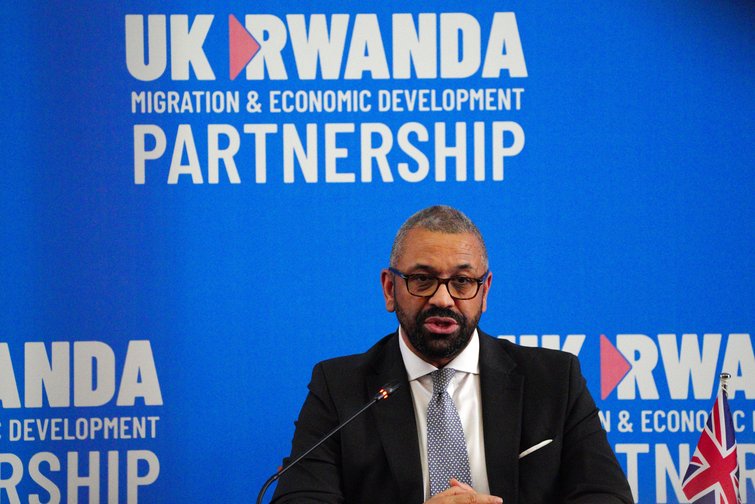
Home secretary James Cleverly confirmed on Wednesday that the government’s agreement to deport asylum seekers who enter the UK irregularly to the African country will have cost almost £400m by 2027.
The total sum would be enough to completely fund an estimated 2,131 new social homes, which is more than 22% of the 9,561 completed in England in the year to April 2023. The average government grant required to build a new home for social rent in England is £183,000, according to estimates by the National Housing Federation.
More than 1.2 million households were waiting for social housing in England as of March 2023, statistics published by the Department for Levelling Up, Housing and Communities (DLUHC) show.
The figures also show 7,620 social homes were completed in the year to April 2022, but a much higher number, 27,849, either sold or demolished – a net loss of more than 20,000. No figures have yet been published for social homes lost in the most recent year.
The government gave £140m to Rwanda in 2022 as part of its deal with the county and last week the Home Office’s most senior civil servant confirmed that a further £100m was given to the country in 2023. They added that a further payment of £50m is “anticipated” in 2024.
Cleverly, this week, told Parliament that the UK plans to give a further £50m to Rwanda annually in 2026 and 2027.
The overall costs of the Rwanda scheme could reach far higher that the £390m already committed by the government. An earlier economic impact assessment of the Illegal Migration Bill said that it would cost £63,000 more to remove a person to a third country, such as Rwanda, than having their asylum claim processed in the UK.
Rishi Sunak claimed in November that the policy “will literally save us billions in the long run”, but has not provided any figures to back this up.
On Tuesday, the National Audit Office confirmed that it would publish a report assessing the costs of the Rwanda scheme in 2024.
The inquiry was prompted by criticism from Labour MPs Meg Hillier and Diana Johnson, the chairs of the Public Accounts Committee and the Home Office Select Committee respectively, who said that there has been a “lack of clarity around value for money”.
Robina Qureshi, the CEO of Positive Action in Housing, said openDemocracy’s findings show that the government has put “pandering to dog-whistle politics” and “giving asylum contractors huge profits” over people’s futures.
“They haven’t been providing for society,” she said. “Instead they are sitting on their social media accounts trying to promote their own careers, and giving multi-million-pound contracts to asylum contractors. But nothing’s been done to help anyone that really needs it.
“When you build social homes, it increases the pool of houses that are available for anyone who’s in need.”
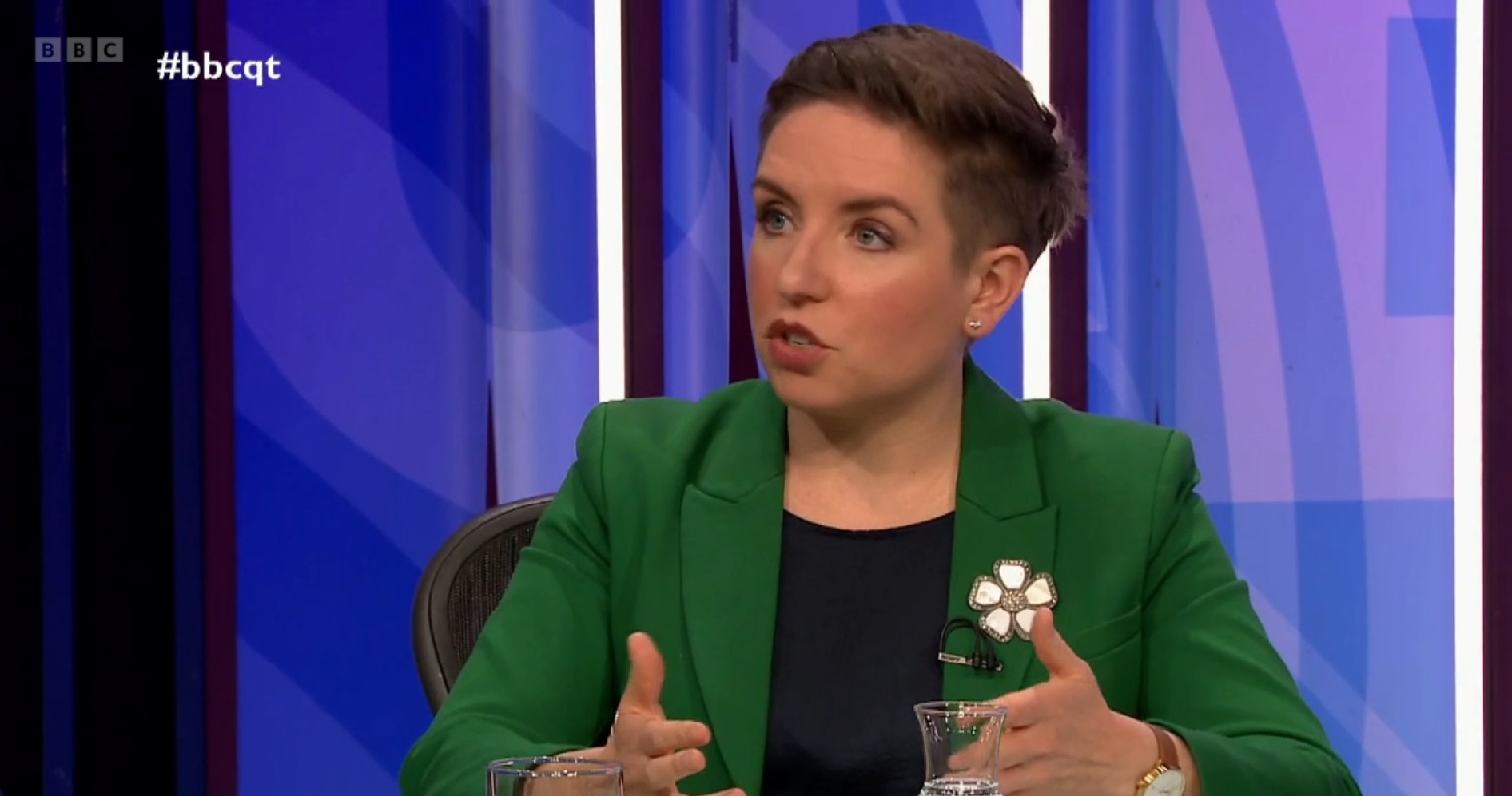
Image of the Green Party’s Carla Denyer on BBC Question Time.
Responding to the government publishing plans to disapply sections of the Human Rights Act to get around a Supreme Court ruling banning the deportation of people seeking asylum to Rwanda for processing, Green Party co-leader Carla Denyer said:
“The fact that the government is going to try to use its parliamentary majority to over-ride established human rights protections is an affront to democracy.
“We need a system that welcomes refugees through clear, open, safe and legal routes, that offers quick and efficient determinations and support for resettlement into local communities with properly funded local services.”
“Instead of creating an asylum system that works, the government is deliberately making it chaotic and inaccessible to put people off using their right to seek asylum.
“It is the use of cruelty and inhumanity as a tool of public policy and cannot be allowed to go unchallenged.
“Everyone deserves to be treated in a way that is fair and humane. This new legislation will remove fundamental legal protections designed to protect us all from the arbitrary power of the state.”
One of the many occasions climate change denier and UK Prime Minister Rishi Sunak uses a private jet.
The shocking waste of money all occurred when Rishi Sunak was either Prime Minister or Chancellor and includes the £140 million on the failed Rwanda scheme and £2.3bn on the scrapped parts of HS2.
Ever keen to portray themselves as the party of sound finances, the Tories have squandered £100 billion of taxpayers’ cash in four years on ‘crony contracts’ and ‘duff deals’, a new report has found.
The shocking waste of money all occurred when Rishi Sunak was either Prime Minister or Chancellor and includes the £140 million on the failed Rwanda scheme and £2.3bn on the scrapped parts of HS2.
The report was compiled by campaign group such as Best for Britain, looking at figures since 2019, which found that just under £15 billion vanished on unused or unusable PPE, storing it and ending contracts – and up to £10,000 of furlough cash went to Koru Kids, a childcare firm in which the PM’s wife, Akshata Murty, has shares.
Naomi Smith, CEO of Best for Britain, said: “The notion that the Tories are safe with money has been blown out of the water.
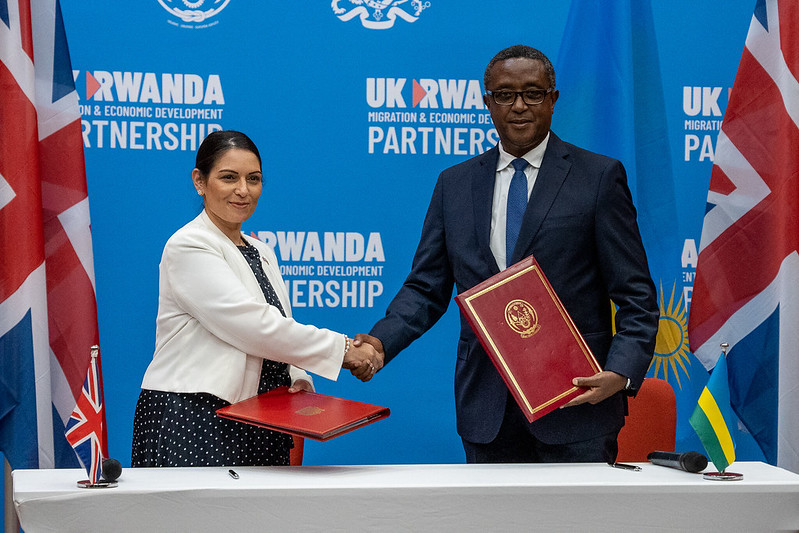
The Rwanda deal was signed when Priti Patel was home secretary. Rwanda visit April 14, 2022. Image: UK Home Office.
Before publishing this article unaltered, I draw your attention to these excerpts:
…
It is important to note that the supreme court’s decision is not a comment on the political viability of the Rwanda plan, or on the concept of offshoring asylum processes generally. The ruling focused only on the legal principle of non-refoulement, and determined that in this respect, Rwanda is not a “safe third country” to send asylum seekers.
…
This ruling is likely to revive discussion about the UK leaving the European convention on human rights (ECHR), which holds the UK to the non-refoulement obligation. Some Conservatives, including the former home secretary Suella Braverman, have argued that leaving the convention would make it easier to pass stronger immigration laws.
But while handing down the supreme court judgment, Lord Reed emphasised that there are obligations towards asylum seekers that go beyond the ECHR. The duty of non-refoulement is part of many other international conventions, and domestic law as well. In other words, exiting the ECHR would not automatically make the Rwanda plan lawful or easier to implement.
…
So it would appear that UK is not going to be sending refugees to Rwanda despite Rishi Sunak and Conservative claims that it will.
Supreme court rules Rwanda plan unlawful: a legal expert explains the judgment, and what happens next
The UK supreme court has unanimously ruled that the government’s plan to send asylum seekers to Rwanda is unlawful.
Upholding an earlier decision by the court of appeal, the supreme court found that asylum seekers sent to Rwanda may be at risk of refoulement – being sent back to a country where they may be persecuted, tortured or killed.
The courts cited extensive evidence from the UN refugee agency (UNHCR) that Rwanda does not respect the principle of non-refoulement – a legal obligation. The UNHCR’s evidence questioned the ability of Rwandan authorities to fairly assess asylum claims. It also raised concerns about human rights violations by Rwandan authorities, including not respecting non-refoulement with other asylum seekers.
It is important to note that the supreme court’s decision is not a comment on the political viability of the Rwanda plan, or on the concept of offshoring asylum processes generally. The ruling focused only on the legal principle of non-refoulement, and determined that in this respect, Rwanda is not a “safe third country” to send asylum seekers.
The ruling is another blow to the government’s promise to “stop the boats”. And since the Rwanda plan is at the heart of its new Illegal Migration Act, the government will need to reconsider its asylum policies. This is further complicated by Conservative party infighting and the firing of home secretary Suella Braverman, just two days before the ruling.
How did we get here?
For years, the UK government has been seeking to reduce small boat arrivals to the UK. In April 2022, the UK and Rwanda signed an agreement making it possible for the UK to deport some people seeking asylum in Britain to Rwanda, without their cases being heard in the UK. Instead, they would have their cases decided by Rwandan authorities, to be granted (or rejected) asylum in Rwanda.
While the Rwanda plan specifically was found to be unlawful, the government could, in theory, replicate this in other countries so long as they are considered “safe” for asylum seekers.
The government has not yet sent anyone to Rwanda. The first flight was prevented from taking off by the European court of human rights in June 2022, which said that British courts needed to consider all human rights issues before starting deportations.
A UK high court then decided in December 2022 that the Rwanda plan was lawful.
Catch up on our other coverage of the Rwanda plan:
Ten asylum seekers from Syria, Iraq, Iran, Vietnam, Sudan and Albania challenged the high court ruling, with the support of the charity Asylum Aid. Their claim was about whether Rwanda meets the legal threshold for being a safe country for asylum seekers.
The court of appeal said it was not and that asylum seekers risked being sent back to their home countries (where they could face persecution), when in fact they may have a good claim for asylum.
The government has since passed the Illegal Migration Act. The law now states that all asylum seekers arriving irregularly (for example, in small boats) must be removed to a safe third country. But now that the Rwanda deal has been ruled unlawful, there are no other countries that have said they would take asylum seekers from the UK.
What happens next?
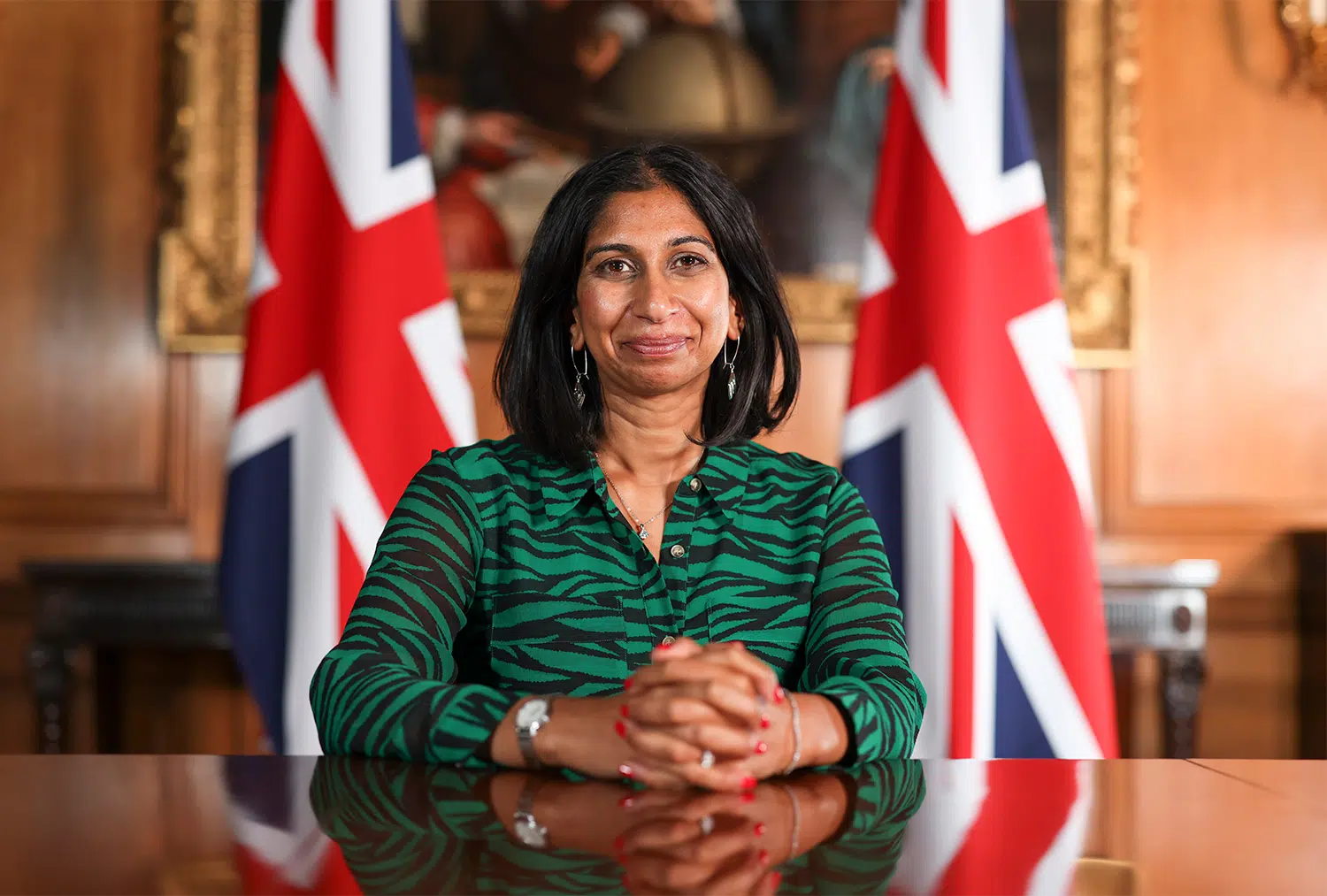
Former Home Secretary Suella ‘Sue-Ellen’ Braverman continued with the Rwanda policy.
It is clear that the government’s asylum policies will need rethinking. Should another country now be designated as a safe country and different arrangements put in place, these will probably be subject to further legal challenges, including in the European court of human rights and in British courts.
This ruling is likely to revive discussion about the UK leaving the European convention on human rights (ECHR), which holds the UK to the non-refoulement obligation. Some Conservatives, including the former home secretary Suella Braverman, have argued that leaving the convention would make it easier to pass stronger immigration laws.
But while handing down the supreme court judgment, Lord Reed emphasised that there are obligations towards asylum seekers that go beyond the ECHR. The duty of non-refoulement is part of many other international conventions, and domestic law as well. In other words, exiting the ECHR would not automatically make the Rwanda plan lawful or easier to implement.
The prime minister, Rishi Sunak, has said that he is working on a new treaty with Rwanda and is prepared to change domestic laws to “do whatever it takes to stop the boats”.
The UK is not the only country to attempt to off-shore asylum processing. Germany and Italy have recently been considering finding new safe third countries to accept asylum seekers as well.
But ensuring these measures comply with human rights obligations is complicated. International law requires states to provide sanctuary to those fleeing persecution or risk to their lives. As this ruling shows, the UK is not going to find an easy way out of these obligations.