Morning Star Editorial: The West won’t rein in Israel, because its savagery is ours

Spread the love

Original article republished from https://morningstaronline.co.uk/article/west-wont-rein-israel-because-its-savagery-ours

Relatives and friends mourn over the bodies of five Palestinian journalists who were killed by an Israeli airstrike in Gaza City at the Al-Aqsa Hospital in Deir al-Balah, December 26, 2024

ISRAEL bombing the airport in Yemen’s capital Sana’a when World Health Organisation chief Tedros Adhanom Ghebreyesus was actually at it shows a brazen contempt for the United Nations.

It is not new. Israel has expressed this contempt repeatedly. Most dramatically when its ambassador to the UN Gilad Erdan used a miniature shredder to shred the UN Charter after the general assembly voted in favour of giving Palestine full membership in May.

But it is seen too in the bombardment of UN peacekeepers in Lebanon. In the evidence-free assertion that the UN agency for Palestinian refugees UNRWA harbours Hamas fighters and subsequent decree banning the agency from operating in Israel-controlled territory — meaning the whole of Palestine.

Benjamin Netanyahu accuses the United Nations of intrinsic hostility to Israel, calling it an “anti-Israel flat Earth society” which has “an automatic majority willing to demonise the Jewish state.”

The siege mentality is deliberate: only by presenting this fortress state, so extravagantly armed by its Washington sponsors that it can extend its bombing campaigns across Lebanon, Syria and Yemen after over a year of carpet-bombing Gaza, as under constant existential menace can he justify its frenetic aggression.

Enforcing this narrative is why Israel has become more authoritarian in step with its increasing belligerence, codifying institutional racism through measures like the Nation-State Law and pending legislation that could bar parties representing Palestinian citizens of Israel (and the Communist Party of Israel to boot) from standing in elections.

As its suspended communist MP Ofer Cassif warns, there is no positive outcome possible from this vicious cycle: an unendable, unwinnable war against the world will bring Israelis neither security nor peace.

Israel is a rogue state, a danger to itself and others, but it will not be stopped by other rogue states. Just as the agony of the Palestinians continues due to the US policy of unlimited support for Israel, we cannot expect the so-called “free world” to step in on Yemen’s behalf.

Least of all Britain. When evidence of Saudi Arabia deliberately bombing Yemeni schools and hospitals became undeniable, even the United States paused arms sales — but Britain did not.

Expecting our government to be persuaded or even shamed into upholding international law is a fool’s errand.

There is much to criticise in the United Nations: its undemocratic structure, the way the veto power can be wielded to shield perpetrators of war crimes.

Even so, since the beginning of the 21st century a clear division has emerged between the US-led West, awarding itself the right to violate international law by invading, bombing and assassinating whoever it likes, and emerging powers which support the United Nations — a creation of the Allied victory over fascism, intended to prevent the lawless aggression that characterised Nazi Germany and its allies.

China brokered peace in Yemen through a rapprochement between Saudi Arabia and Iran. China continually makes the case too for UN recognition of a Palestinian state, and hosted talks between 14 Palestinian factions last year in an attempt to forge a united Palestinian leadership capable of taking that project forward.

China, like most of the global South, is not happy with an international system designed in Western capitals 80 years ago, and calls for a more equitable international order. Yet China, unlike the Western founders of that system, is acting to uphold its principles and prevent the world descending into the kind of “might is right” violence the UN was supposed to stop.

We need to recognise how the world looks from outside the West. The “rules-based international order” is not threatened by emerging powers, but by the US-led imperialist camp. We don’t rein in Israel, because its violence is ours.

This is why solidarity with Palestine means fighting for peace and disarmament in Britain, and resisting the constant militarist propaganda pretending our country is under threat.

Original article republished from https://morningstaronline.co.uk/article/west-wont-rein-israel-because-its-savagery-ours
Continue ReadingMorning Star Editorial: The West won’t rein in Israel, because its savagery is ours

For decades, governments have subsidised fossil fuels. But why?

Spread the love
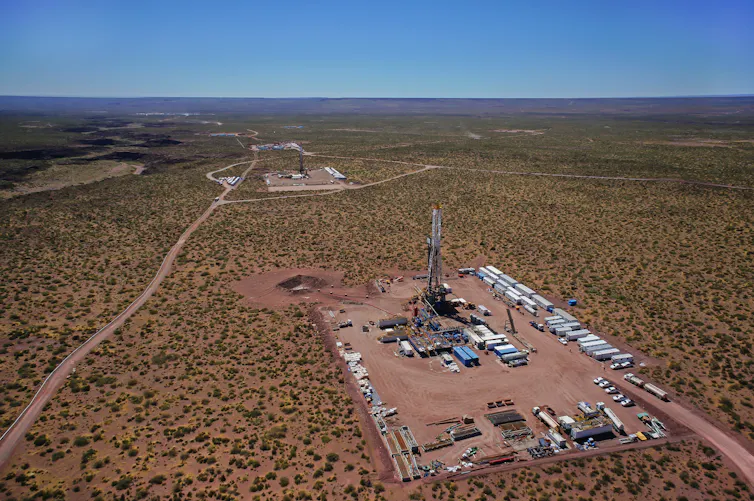
Sobrevolando Patagonia/Shutterstock

Bernard Njindan Iyke, La Trobe University

Even now, decades after we first began trying to avert the worst of global warming, more than 80% of the world’s total energy comes from fossil fuels.

You might think this would make fossil fuel production extremely profitable. But it’s not always the case. Much of the most accessible oil has already been extracted and burned. Many countries want to shore up domestic sources of fossil fuels to boost energy security. Energy price fluctuations and competition from new energy sources such as solar, wind and fossil gas have made it harder for some fossil fuel companies to make money, especially in coal.

This is where fossil fuel subsidies come in. Australia gave A$14.5 billion in subsidies to major fossil fuel producers and consumers in 2023–24 alone.

You might have wondered – why would some of the largest companies on Earth need subsidies? Here’s why.

LNG tanker
Australia’s surging liquefied natural gas industry has been boosted by government funding. KDS Photographics/Shutterstock

Private companies, public money

Globally, private companies dominate fossil fuel production, though fossil fuel-rich nations often have state-owned companies, such as Saudi Arabia’s Aramco and Russia’s Rosneft.

Why would governments give fossil fuel companies money? Many reasons. But the most important is that wealthy countries have historically needed huge volumes of fossil fuels for manufacturing, transport and power. Many countries have some sources of fossil fuels inside their borders, but only a few are self-sufficient. This has enabled fossil fuel giants such as Saudi Arabia to become wealthy beyond belief.

Many governments have used subsidies to boost their energy security and encourage local producers to seek out new sources of coal, gas and oil. These subsidies can make all the difference in making fossil fuel companies competitive internationally. For instance, Canada spent billions on subsidies to boost its oil sands and fracking projects.

Subsidies were essential in the United States’ fracking revolution. Novel approaches to extracting fossil gas and oil – boosted by major tax incentives – turned the US from a major importer of oil and gas into a net exporter by 2019.

You can see why the US did this. At a stroke, it went from being dependent on energy provided by foreign nations to being independent.

Once subsidies are in place, they become very hard to remove. Indonesia’s lavish fuel subsidies now account for 2% of the nation’s GDP. When the national government tried to walk these back, there were riots.

And there’s another reason, too. Fossil fuels are still playing an important role in boosting the economy in most nations. Subsidising them has long been seen as a way to maintain economic growth and stability.

Globally, these subsidies are estimated at a staggering $10.5 trillion each year.

This figure has grown sharply in recent years, after Russia’s invasion of Ukraine. As European nations tried to wean themselves off Russia’s gas, energy prices surged worldwide. In response, some countries introduced new subsidies to support businesses and consumers.

The top-line figure of $10.5 trillion includes two types of subsidy – explicit (meaning real dollars change hands) and implicit (for example, governments building roads and railways to encourage crude oil transport).

Explicit subsidies

Explicit fossil fuel subsidies are direct financial incentives from governments to fossil fuel producers and consumers. These incentives come in different forms, such as tax breaks, direct payments, grants and price controls. All of them aim to reduce the financial burden associated with fossil fuel production and use.

In Australia, explicit subsidies include fuel tax credits and exploration tax reductions. Fossil fuel companies can get subsidies to offset the losses they make during the years it takes to find and begin extracting new fossil fuels.

In the US, oil and gas companies benefit from the oil depletion allowance, which permits them to deduct a percentage of their gross income from oil and gas sales as an expense. They can also claim tax deductions for intangible drilling costs, such as the wages of workers and material needed to find new sources of oil and gas.

China, too, uses direct subsidies, discounted land-use fees, and preferential loans as explicit subsidies to boost coal production and consumption. The national government also supports fossil fuel consumption through direct payments to consumers.

coal miners China
China has used subsidies to encourage exploitation of its large coal resources. zhaoliang70/Shutterstock

Implicit subsidies

Implicit subsidies are often described as “imaginary”. That doesn’t mean they don’t exist, just that they’re not a direct transfer to directly paid to fossil fuel producers.

For instance, the cost of burning fossil fuels is borne by the global community and the natural world, in the form of climate change, damage to human health and other harms. Most fossil fuel companies don’t have to pay a cent for the pollution their products cause – so in effect, they are being granted an indirect subsidy.

Implicit incentives also include government investment in facilities such as transport networks, pipelines, oil refineries and port infrastructure, which will accelerate fossil fuel production and delivery. Think of the Middle Arm development in Darwin, funded by both the federal and territory government.

Why are these subsidies still being paid?

As the world grapples with a worsening climate crisis, fossil fuel subsidies are under great scrutiny.

It’s politically difficult to withdraw subsidies once given. This is why governments around the world have instead begun to give subsidies and tax incentives to green energy developers, including the enormous $500 billion Inflation Reduction Act in the US, the European Union’s Green Deal, and China’s massive subsidies of green technologies such as electric vehicles and solar panels.

The goal here is to make renewable energy and electrified transport steadily more affordable and competitive – just as fossil fuel subsidies did for oil, gas and coal.

Bernard Njindan Iyke, Lecturer in Finance, La Trobe University

This article is republished from The Conversation under a Creative Commons license. Read the original article.

Continue ReadingFor decades, governments have subsidised fossil fuels. But why?

More than 1,000 hajj pilgrims die amid temperatures approaching 52C in Mecca

Spread the love

https://www.theguardian.com/world/article/2024/jun/20/more-than-1000-hajj-pilgrims-die-in-mecca-as-temperatures-hit-high-of-51c

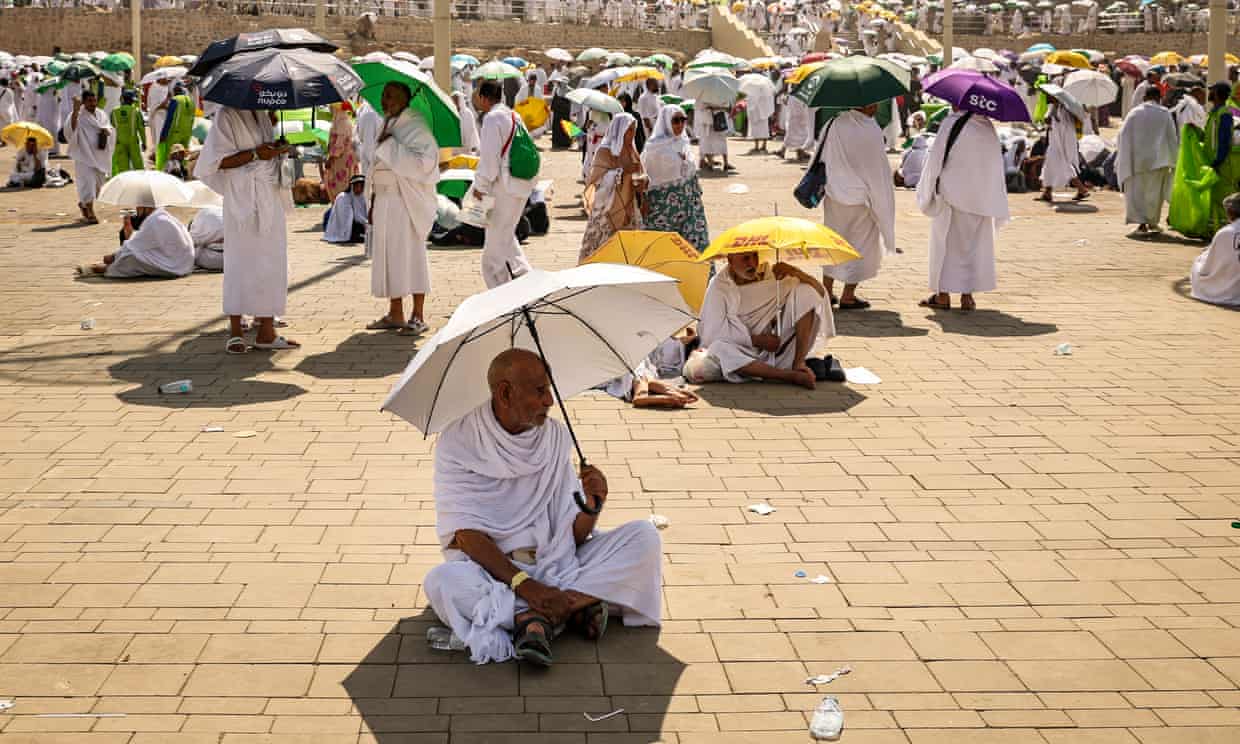
Pilgrims using umbrellas for shade as they arrived at the base of Mount Arafat, also known as Jabal al-Rahma or Mount of Mercy, during the hajj. Photograph: Fadel Senna/AFP/Getty Images

Saudi authorities said they sent away unregistered pilgrims but many appear to have taken part without access to cooler spaces

The death toll from this year’s hajj has exceeded 1,000, with more than half of the victims unregistered worshippers who performed the pilgrimage in extreme heat in Saudi Arabia.

The new deaths reported on Thursday included 58 from Egypt, according to an Arab diplomat who provided a breakdown showing that of 658 Egyptians who died, 630 were unregistered pilgrims.

About 10 countries have reported 1,081 deaths during the pilgrimage, one of the five pillars of Islam which all Muslims with the means must complete at least once.

The hajj, whose timing is determined by the lunar Islamic calendar, fell again this year during the oven-like Saudi summer.

The national meteorological centre reported a high of 51.8C (125F) this week at the Grand Mosque in Mecca.

A Saudi study published last month said temperatures in the area were rising by 0.4C each decade.

Each year tens of thousands of pilgrims try to join the hajj through irregular channels as they cannot afford the often costly official permits.

https://www.theguardian.com/world/article/2024/jun/20/more-than-1000-hajj-pilgrims-die-in-mecca-as-temperatures-hit-high-of-51c

Continue ReadingMore than 1,000 hajj pilgrims die amid temperatures approaching 52C in Mecca

Deadly heat waves in Mecca and Greece underscore climate crisis

Spread the love

https://www.axios.com/2024/06/17/heat-waves-greece-mecca-saudi-arabia-climate-crisis

As the U.S. faces another potentially record heat wave this week, the Middle East and Europe’s Mediterranean have endured extreme temperatures that have proven deadly.

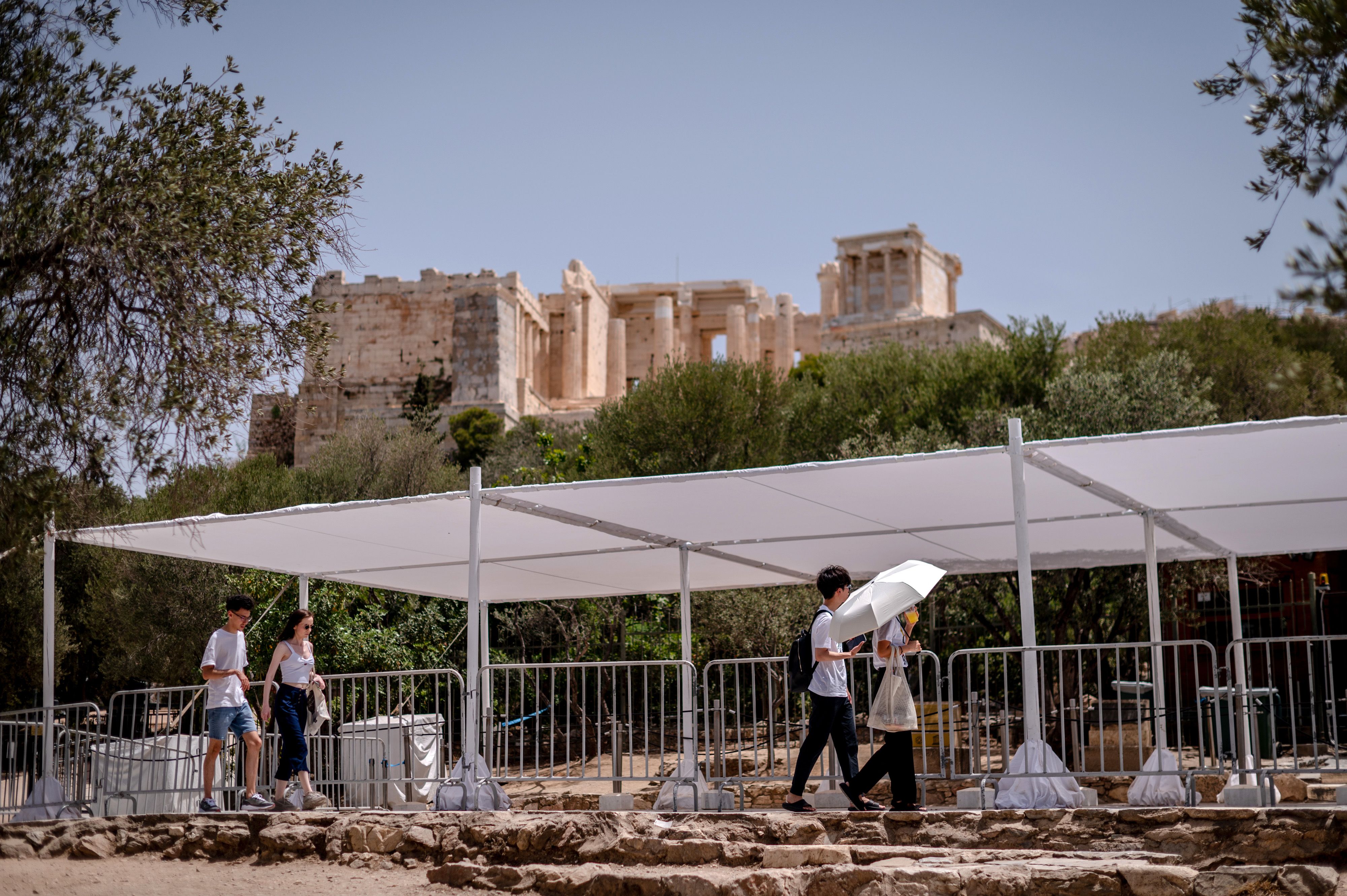
The big picture: Multiple heat-related deaths have been reported in Greece during the country’s earliest heat wave on record and Jordan’s official news agency said Sunday “14 Jordanian pilgrims died and 17 others were missing” in the searing heat while on the Islamic Hajj pilgrimage to Mecca in Saudi Arabia.

Tourists outside the Acropolis during high temperatures in Athens, Greece, on June 12, when authorities announced the closure of the ancient site for five hours due to soaring temperatures that also shut schools. Photo: Hilary Swift/Bloomberg via Getty Images
  • The heat waves sweeping these regions this month have been made “at least five times more likely” because of human-caused climate change, per new Climate Central analysis.

Context: Climate Central’s analysis is based on the group’s Climate Shift Index (CSI), which compares observed or forecast temperatures with simulations of the same weather conditions minus excess atmospheric greenhouse gases, per Alex Fitzpatrick.

  • The idea is to compare real-world conditions with what might have been the case had human-caused climate change been absent.
  • Saudi Arabia had a CSI of 5, meaning that human-caused climate change made a given daily average temperature five times more likely as of Monday morning. Greece, which has endured two weeks of extreme heat, had a CSI of 5 last week and 2 on Monday. Parts of Turkey had a CSI of 5.

Between the lines: Greece has been among the worst-affected European countries for extreme weather caused by the climate crisis in recent months, enduring an intense heat wave, severe wildfires and heavy rains flooding the country’s streets last year.

  • A joint report by UN and European Union agencies found in April that Europe’s temperatures are rising about twice as fast the global average due to human-caused climate change — making it the fastest-warming continent on Earth.

Continues at https://www.axios.com/2024/06/17/heat-waves-greece-mecca-saudi-arabia-climate-crisis

Continue ReadingDeadly heat waves in Mecca and Greece underscore climate crisis

Led by US, Global Military Spending Surged to Record $2.4 Trillion Last Year

Spread the love

Original article by JAKE JOHNSON republished from Common Dreams under Creative Commons (CC BY-NC-ND 3.0). 

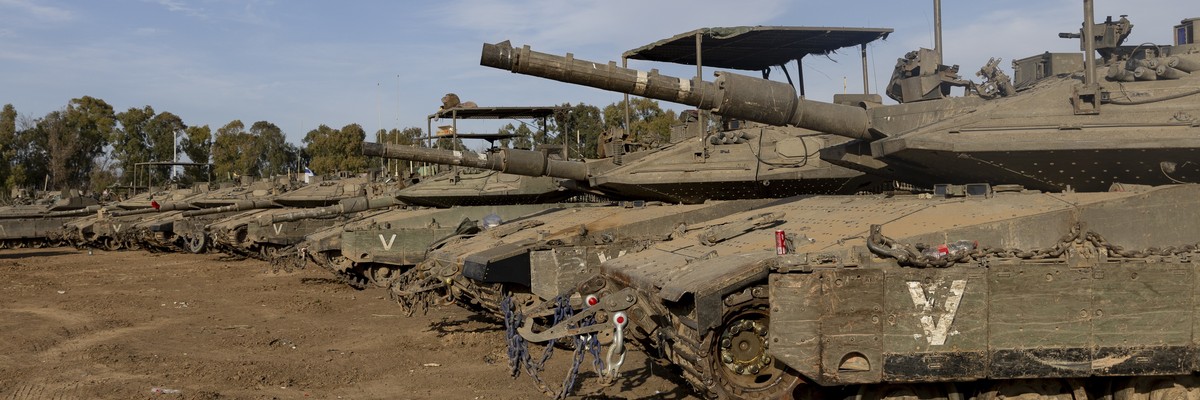
A row of tanks is pictured in southern Israel on March 14, 2024.  (Photo: Amir Levy/Getty Images

“Can we get some healthcare please, or maybe feed some of the 40 million+ Americans who can’t get enough food?” asked the watchdog group Public Citizen.

New research published Monday shows that global military spending increased in 2023 for the ninth consecutive year, surging to $2.4 trillion as Russia’s assault on Ukraine and Israel’s war on the Gaza Strip helped push war-related outlays to an all-time high.

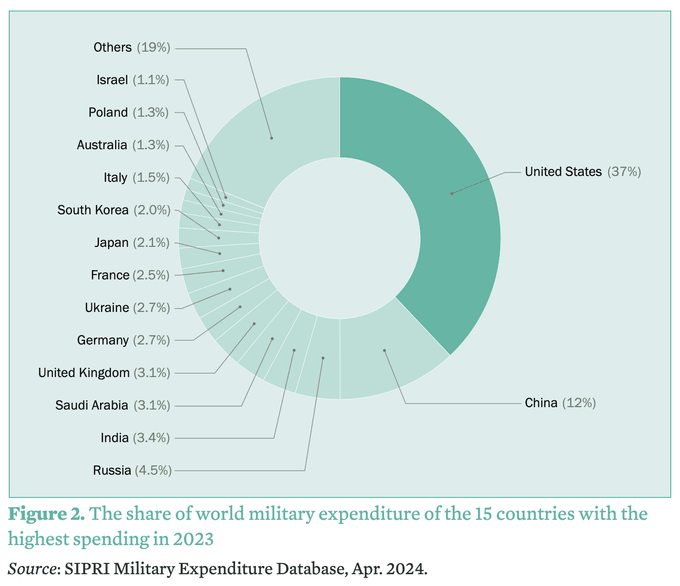
The Stockholm International Peace Research Institute (SIPRI) recorded military spending increases in every geographical region it examined last year, from Europe to Oceania to the Middle East. Last year’s global increase of 6.8% was the largest since 2009, SIPRI said.

The United States was by far the largest military spender at $916 billion in 2023, up 2.3% compared to the previous year. The next biggest spender was China, which poured an estimated $296 billion into its military last year—three times less than the U.S.

“Can we get some healthcare please, or maybe feed some of the 40 million+ Americans who can’t get enough food?” asked the watchdog group Public Citizen in response to SIPRI’s report, which found that the U.S. accounted for 37% of the world’s total military spending last year.

separate analysis of U.S. military spending in 2023 found that 62% of the country’s federal discretionary budget went to militarized programs, leaving less than half of the budget for healthcare, housing, nutrition assistance, education, and other domestic priorities.

Together, SIPRI found, the top five biggest military spenders last year—the U.S., China, Russia, India, and Saudi Arabia—accounted for 61% of global military outlays.

“The unprecedented rise in military spending is a direct response to the global deterioration in peace and security,” Nan Tian, senior researcher with SIPRI’s Military Expenditure and Arms Production Program, said in a statement. “States are prioritizing military strength but they risk an action-reaction spiral in the increasingly volatile geopolitical and security landscape.”

In the Middle East, military spending jumped by 9% last year—the highest annual growth rate in the past decade. Israel, which relies heavily on weapons imports from the U.S., spent 24% more on its military last year than in 2022, according to SIPRI, an increase fueled by the country’s devastating assault on Gaza.

SIPRI found that NATO’s 31 member countries dumped a combined $1.3 trillion into military expenditures in 2023, accounting for 55% of the global total.

U.S. military spending, which is poised to continue surging in the coming years, made up 68% of NATO’s 2023 total.

Original article by JAKE JOHNSON republished from Common Dreams under Creative Commons (CC BY-NC-ND 3.0). 

‘Blood on Their Hands’: 79 US Senators Approve Billions More in Military Aid for Israel

US Dodges Growing Calls for Probe of Mass Graves at Gaza Hospitals

Israel’s War on Gaza Has Helped Fuel ‘Near Breakdown of International Law’: Amnesty

Continue ReadingLed by US, Global Military Spending Surged to Record $2.4 Trillion Last Year