This work by Middle East Monitor is licensed under a Creative Commons Attribution-NonCommercial-ShareAlike 4.0 International License.
Security forces stand guard as Houthis gather at Sabeen Square to hold a demonstration in support of Houthi leader in Yemen Abdul Malik al-Houthi’s statements in Sanaa, Yemen on July 17, 2026. [Mohammed Hamoud – Anadolu Agency]
Yemen’s Houthi group claimed Tuesday that it carried out a drone strike on a “sensitive target” at Najran Airport in southern Saudi Arabia, Anadolu reports.
Military spokesman Yahya Saree alleged on the US social media company X that the attack accurately hit its intended target.
He said the operation was launched in response to what he described as Saudi drone violations of Yemeni airspace over the provinces of Saada and Hajjah.
Saree warned that any future violation of Yemen’s airspace “will not pass without response and punishment.”
There was no immediate comment from Saudi authorities on the claim.
This work by Middle East Monitor is licensed under a Creative Commons Attribution-NonCommercial-ShareAlike 4.0 International License.
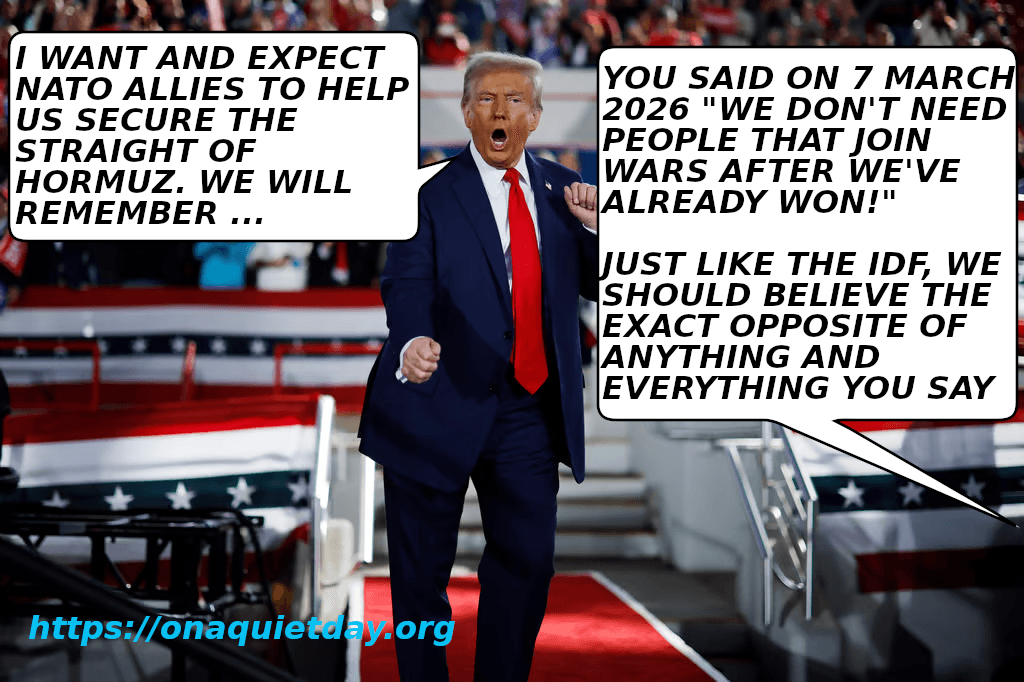
Donald Trump calls for help from NATO allies in securing the Strait of Hormuz despite saying on 7 March 2026 that they don’t need people to join wars after they’ve already won. He’s challenged with the claim that he lies as much as the IDF.
This work by Middle East Monitor is licensed under a Creative Commons Attribution-NonCommercial-ShareAlike 4.0 International License.
Yemen’s Houthi group on Monday declared “a maritime blockade” on Saudi Arabia effective immediately, Anadolu reports.
Military spokesman Yahya Saree said in a televised statement on the group’s Al-Masirah television that a ban on Saudi-linked maritime navigation “has entered into force from the moment of issuing this statement.”
Saree warned that any Saudi escalation would be met with what he called a “comprehensive and severe escalation.”
There was no immediate Saudi comment on the Houthi announcement.
Last week, the Houthi group accused Saudi Arabia of carrying out an airstrike on the Sanaa airport and launched missiles toward Saudi territory, breaking years of calm. While Riyadh did not comment on the Houthi accusation, Yemen’s internationally recognized government claimed responsibility for the strike, saying it targeted the airport to prevent an Iranian aircraft from landing.
Donald Trump calls for help from NATO allies in securing the Strait of Hormuz despite saying on 7 March 2026 that they don’t need people to join wars after they’ve already won. He’s challenged with the claim that he lies as much as the IDF.Orcas discuss rotting brain, front Orca says Sundown Syndrome is a dead givaway and he wishes someone would Lock Him Up
This work by Middle East Monitor is licensed under a Creative Commons Attribution-NonCommercial-ShareAlike 4.0 International License.
Officials conduct search and rescue operation following Israeli attacks on a farm in the village of al-Jemaliyya, near the city of Baalbek, Lebanon on June 19, 2026. [Suleiman Amhaz – Anadolu Agency]
Arab nations are increasingly viewing Saudi Arabia as their primary diplomatic channel to moderate Donald Trump’s Middle East policies, particularly regarding the Palestinian cause, which has resurged as the region’s paramount concern amidst Israel’s genocide in Gaza.
According to diplomats quoted in the Financial Times, Saudi Arabia’s Crown Prince Mohammed bin Salman is positioned as the “key player” in influencing Trump’s approach to the Palestinian issue, once the former president returns to office. “The key player in the region is Saudi Arabia because of their known relations with him, so it will be the linchpin of any regional actions the US might decide to do,” one Arab diplomat told the FT.
The political landscape has shifted dramatically since Trump’s first term. Saudi Arabia has restored diplomatic relations with Iran, and the kingdom, along with other Arab and Muslim nations, have been forced to reconsider their relations with a country committing genocide. This realignment was in view at the recent Arab and Islamic summit in Riyadh, where the Crown Prince accused Israel of committing “genocide” in Gaza, marking a significant hardening of Saudi Arabia’s position.
The summit, which brought together more than 50 Arab and Muslim nations, sent a clear message to Trump about the region’s unified stance on Palestinian rights. “Trump is somebody who likes to be handed ready-deals he can take credit for,” a senior diplomat reported to the FT, adding that while MBS might present Trump with potential agreements, these would necessarily need to address Palestinian aspirations.
The Palestinian cause has become impossible to sideline, with Arab leaders particularly worried about radicalisation among their youth. As one Arab diplomat explained: “Trump will need to end the war in Gaza, and to do that you need to address the day after. He will need some focus on the Palestinian track or the regional element won’t work. Saudi Arabia has said bluntly that unless there’s a Palestinian state, normalisation is not an option.”
While Trump and bin Salman maintained warm relations during the former’s presidency, marked by significant financial deals and political support, the Crown Prince has recently positioned Saudi Arabia as the architect of a broader Arab and Muslim consensus on Palestine. “Saudi Arabia could heavily influence how Trump deals with Gaza and Palestine,” another official told the FT. “A lot of the countries in the region are concerned about what comes next.”
The strategic positioning by bin Salman is seen as having provided him with an opportunity to project himself as a regional leader. A second Arab diplomat said that the Crown Prince had found the “password” to the Middle East’s leadership role. “The only issue that unites the Arab world is the Palestinian issue,” the diplomat said, while cautioning about the challenges ahead: “The question is how much Saudi Arabia can invest in this . . . and how much Netanyahu will have the ability to torpedo it.”
Arab officials believe Trump’s success in any regional agreements will depend on his ability to pressure Israeli Prime Minister Benjamin Netanyahu to make concessions regarding Palestinian statehood – something Netanyahu currently “vociferously rejects.”
The devastating toll of Israel’s military campaign in Gaza has forced Arab states to reconsider their relationships with Israel, with normalisation efforts now firmly tied to progress on Palestinian statehood. The unified stance of Arab and Muslim states suggests that despite Trump’s personal rapport with bin Salman, any future dealings would need to accommodate the broader Arab and Muslim consensus on Palestinian rights, marking a significant shift from his first term in office.
This work by Middle East Monitor is licensed under a Creative Commons Attribution-NonCommercial-ShareAlike 4.0 International License.
Keir “I support Zionism without Qualification” Starmer supporting genocide. He berates Palestine Action for upholding international law and prevent his – Labour and Israel’s – Gaza genocide. Starmer says that that they’ve got a genocide to achieve, forced marches like the Nazis did, hospitals to bomb into obliteration, journalists, healthcare workers and starving people queuing for food to mass-murder and that they have to murder all Gazans for Zionism.Orcas discuss rotting brain, front Orca says Sundown Syndrome is a dead givaway and he wishes someone would Lock Him Up
This work by Middle East Monitor is licensed under a Creative Commons Attribution-NonCommercial-ShareAlike 4.0 International License.
US President Donald Trump addresses a meeting with Gulf leaders of the six-nation Gulf Cooperation Council (GCC) in Riyadh on May 14, 2025. [Photo by BRENDAN SMIALOWSKI/AFP via Getty Images]
The suspension and redesign of Trump’s plan to reopen Hormuz showed that the Arab states of the Persian Gulf still need the United States, but they are no longer willing to pay, unconditionally, the price of a war they did not start.
When Donald Trump spoke of “Project Freedom” to reopen the Strait of Hormuz, the plan was supposed to be a display of restored American deterrence: an operation meant to prove that Washington could still open the world’s energy artery with its military fleet and its network of regional bases. Yet the rapid suspension of the project, after Saudi Arabia’s initial opposition to the use of its bases and airspace, carried a deeper meaning. This was not merely an operational disagreement.
“Project Freedom” showed that the Persian Gulf security order has entered a new phase: Arab states have not turned their backs on America, but they are no longer willing, without calculation, to serve as the launchpad for Washington’s war with Iran.
The significance of this shift became even clearer with the interim agreement between the United States and Iran. The framework, which is reportedly expected to lead to the reopening of Hormuz, ease pressure on the energy market, and begin a sixty-day period for nuclear negotiations, was not simply the product of military pressure. It was also the result of the constraints America faced on the regional battlefield. Washington could send more warships, but it could not be certain that all of its Arab partners would stand with it in every escalation scenario.
For decades, the relationship between Washington and the Arab governments of the Persian Gulf rested on a simple formula: oil, bases, and political alignment in exchange for security. Arab states provided access and alignment; in return, they expected protection. But the 2019 attacks on Aramco created the first serious crack in that mindset. Riyadh expected a decisive response, yet America’s reaction remained limited. From that moment, a hard question began to take shape: in a moment of danger, would America really enter a costly war to defend its allies?
The Hormuz crisis revived that question, but this time with greater urgency. The Arab states of the Persian Gulf know that any overt participation in an American military operation against Iran could turn them into direct targets of missile, drone, or maritime attacks. Their refineries, ports, and coastal cities are vulnerable, while the decision for war is made in Washington. From the perspective of Riyadh and Kuwait, the danger is not only Iran; the danger is being trapped in a war designed by others, while its geographic and economic costs fall on the Persian Gulf.
For this reason, the initial opposition to “Project Freedom” should not be read as a Saudi or Kuwaiti break with America. It was not an ideological “no”; it was a conditional and calculating “no.” Riyadh and Kuwait did not say they would no longer cooperate with the United States. They said they were not prepared to turn their territory into part of the theater of operations without clear guarantees about the consequences of war. Even later reports that Saudi Arabia and Kuwait had eased restrictions on U.S. military access did not erase the core issue. The significance of the episode was not that the restrictions were permanent; it was that such restrictions were imposed at all.
Some argue that because the restrictions were later reduced, no structural change has occurred. This argument sees part of the reality, but it misses the political meaning of hesitation. In regional politics, the pause itself matters.
If a plan that was supposed to display American authority became, from the very beginning, dependent on the consent of Riyadh and Kuwait, it means that American military power alone is no longer enough to produce political obedience. This is precisely the point at which strategic dependence remains, but automatic compliance begins to erode.
This shift cannot be separated from Saudi Arabia’s internal transformations either. Saudi Arabia today is not the Saudi Arabia of the early years of the Yemen war. Mohammed bin Salman needs stability in order to attract investment, expand tourism, and reduce dependence on oil. “Vision 2030” makes sense with the image of a safe country, not with the spectacle of a battlefield exchanging missiles and drones. Recent analyses of the consequences of a Hormuz war have also shown that the crisis made Saudi Arabia’s strategic vulnerability—and its need for safer energy routes—even more visible.
From this perspective, de-escalation with Iran is not a sign of weakness; it is part of a new rationality of survival. The Tehran-Riyadh agreement mediated by China, and the effort to preserve channels of communication with Tehran, can be understood within this same framework.
Arab countries know that Iran is not a neighbor that can be erased. They can compete with Tehran, but they cannot change geography. America can change its priorities; the Persian Gulf, however, must live with the consequences of every war in that same region.
Trump’s policy made this reality even more visible. On the one hand, he spoke in the language of threats, sanctions, and displays of power; on the other, he tried to avoid an all-out war, one that could endanger the energy market, the elections, and America’s focus on China. The result of this contradiction was the transfer of risk to allies. Arab states felt that Washington wanted to use their territory to pressure Iran, without offering a clear guarantee that it would bear the heavy costs of defending them. This is where security trust begins to erode from within.
Nor has the interim agreement between the United States and Iran ended this problem; rather, it has revealed it in a different form. If this agreement keeps Hormuz open on a durable basis, Arab governments will breathe a sigh of relief. Reports of oil tankers carrying Iranian crude once again passing through the route of America’s naval blockade are a sign of reduced tensions. But if the negotiations fail and Trump returns to the military option, the same question will return: should the Persian Gulf be the main arena for Iran’s retaliation?
“Project Freedom,” then, was not merely a plan to escort ships through Hormuz. It was a test of the Persian Gulf security order. And that test showed that America remains the region’s superior military power, but it can no longer count on the unconditional cooperation of its Arab partners. Arab allies still need Washington’s security umbrella, but they want distance between their own security and America’s costly adventures.
The Middle East today is not witnessing America’s complete withdrawal. It is witnessing the end of a political habit. The old habit was that whenever Washington decided to escalate pressure against Iran, the Arab states of the Persian Gulf would line up behind it without hesitation. Now they have become too cautious, and too vulnerable, to take such a decision lightly.
This is the main message of “Project Freedom”: America’s Arab allies still say “yes” to Washington, but that “yes” is no longer automatic, cheap, or unconditional.
Keir Starmer objects to criticism of the IDF. He asks how could anyone object to them starving people to death, forced marches like the Nazis did, bombing Gaza’s hospitals and universities, mass-murdering journalists, healthworkers and starving people queuing for food, killing and raping prisoners and murdering children. He calls for people to stop obstructing his genocide for Israel.Orcas discuss rotting brain, front Orca says Sundown Syndrome is a dead givaway and he wishes someone would Lock Him Up
This work by Middle East Monitor is licensed under a Creative Commons Attribution-NonCommercial-ShareAlike 4.0 International License.
Flags of Israel and Saudi Arabia
CNN reported, citing a Saudi source, that Saudi Arabia will not normalize relations with Israel unless there is what the source described as a “clear and irreversible path” toward establishing a Palestinian state.
The reported Saudi position came after US President Donald Trump stated that countries in the Middle East would be expected to recognize Israel once a broader agreement with Iran is reached.
According to the source cited by CNN, Saudi Arabia continues to maintain its longstanding position that normalization must be linked to credible progress toward Palestinian statehood.
Trump had earlier written on social media that he expected Middle Eastern countries and others to join the Abraham Accords after a deal ending the conflict with Iran is finalized.
He also warned that if negotiations fail, military action could follow on a scale “bigger and more powerful than ever before.”
The report noted that Trump had previously asked Saudi Crown Prince Mohammed bin Salman during a meeting last November to join the Abraham Accords.
According to the account cited by CNN, Mohammed bin Salman responded that Saudi Arabia wants to be part of the accords but insists on a clearly defined path toward a two-state solution.
The crown prince reportedly described his discussions with Trump on the issue as “constructive” and said Riyadh would work toward creating the conditions necessary to achieve that objective.
Climate science denier Donald Trump confirms that he knows nothing about democracy and that more liquid gold is being secured according to his policy of global privateering.Orcas discuss Donald Trump and the killer apes’ concept of democracy. Front Orca warns that Trump is crashing his country’s economy and that everything he does he does for the fantastically wealthy.