Prime Minister Sir Keir Starmer talks to soldiers during a visit to the Netherlands marines training base, June 24, 2025
Labour’s cynical recruitment drive normalises militarism, diverts attention from youth unemployment and public service cuts, and seeks to build consent for an increasingly aggressive defence agenda, argues GEORGINA ANDREWS
THE Labour government has announced that it will launch an armed forces “gap year” for under-25s. It will initially be open to 150 recruits, expanding to 1,000 in the future, with a starting salary of around £26,000.
It will include training in the Royal Navy, British Army and Royal Air Force for those looking for a career in the military.
Presented as an opportunity to young people, this scheme in reality is to manufacture consent for warfare and militarism among youth as more personnel leave the military rather than join it these days.
…
This military gap year scheme is cited as tackling youth unemployment which has reached a staggering 15.3 per cent, meaning 702,000 young people are not in education, employment or training, up 60,000 from last year.
Youth unemployment is intrinsically linked to cuts to public services, which are in crisis. Genuine job opportunities for youth are lacking, which might make this scheme tempting for some young people, and highlights the lack of genuine investment in youth and public services from successive governments. Young people demand jobs not bombs.
Young communists oppose this gap-year scheme, which promotes careers in the military to young people instead of genuinely investing in youth and public services to tackle unemployment. Young people should be part of building strong and organised labour, peace and progressive movements to demand peace, fully funded public services, and the implementation of the ADR in their workplaces, campuses and communities.
Vast military expenditure increases must end in favour of the demilitarised strategy on conflict, which promotes human security, co-operation and diplomacy, outlined by the ADR. Public services should be fully and adequately funded by an end to militarism and drive to war alongside other measures.
The Communist Party and its youth wing the Young Communist League offer youth an alternative to militarism and drive to war, through Britain’s Road to Socialism. Let us build the united front against war and austerity for peace, jobs and socialism in our lifetime.
Georgina Andrews is general secretary of the Young Communist League.
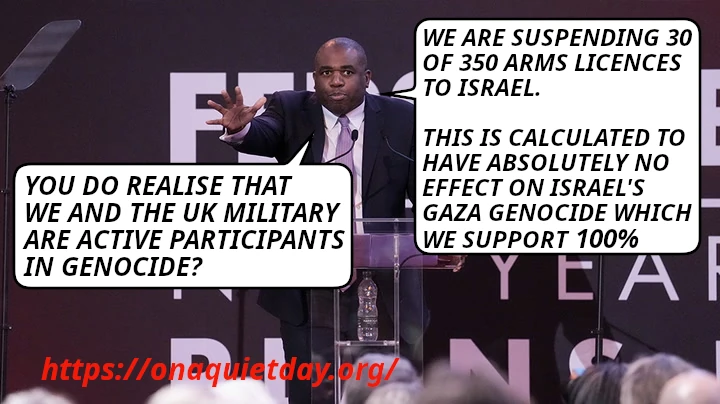
Genocide denier and Current UK Prime Minister Keir Starmer is quoted that he supports Zionism without qualification. He also confirms that UK air force support has been essential in Israel’s mass-murdering genocide. Includes URLs https://www.declassifieduk.org/keir-starmers-100-spy-flights-over-gaza-in-support-of-israel/ and https://youtu.be/O74hZCKKdpAGenocide denying UK Foreign Secretary David Lammy says that UK is suspending 30 of 350 arms licences to Israel. He also confirms the UK government’s support for Israel’s Gaza genocide and the UK government and military’s active participation in genocide.
This article by republished from peoples dispatch under a Creative Commons Attribution-ShareAlike 4.0 (CC BY-SA) license.
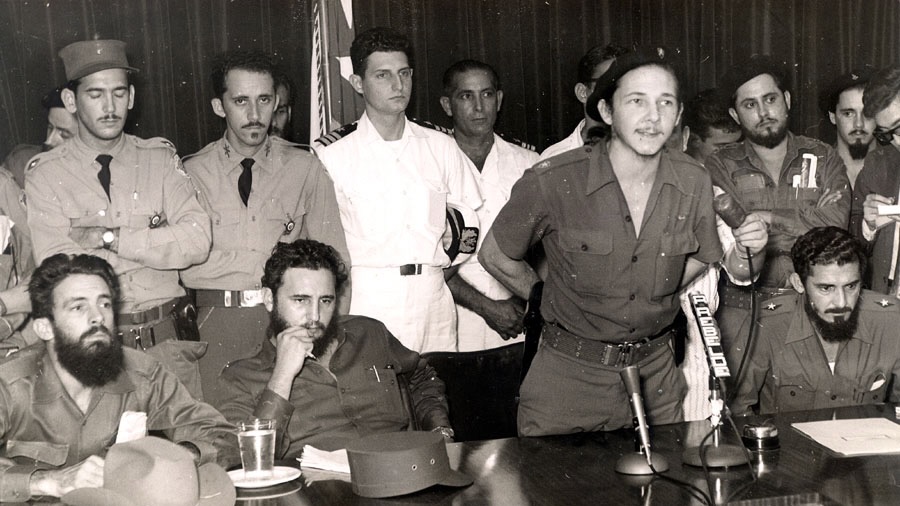
On February 16, 1959, Cuba established the Ministry of the Revolutionary Armed Forces, the executive body of their defense force, and its first Army General, Raúl Castro Ruz. Photo: Miguel Díaz-Canel/X
A recent webinar by Pan Africanism Today and the International Peoples’ Assembly looked at global struggles, from Africa to Latin America, showing how Cuba’s enduring resistance offers vital lessons in organization, unity, and internationalism for today’s movements fighting oppression and war.
The world is in an era marked by relentless wars and overlapping crises, from the devastating civil war in Sudan and violence in the Democratic Republic of Congo to the unfolding genocide in Palestine. The demand to end all wars has never carried greater urgency. And in the midst of all these visible battlegrounds persists a more enduring and insidious conflict; the hybrid war and economic blockade waged against the Cuban people and their revolution.
This was the central focus of a recent global webinar convened under the banner of Pan-African and internationalist solidarity, bringing together progressive voices to draw lessons from Cuba’s anti-imperialist struggle. The session, held on October 15, was facilitated by Mbali Gwenda from Pan Africanism Today, who situated the discussion within a broader historical and moral framework, invoking the revolutionary spirits of Thomas Sankara, martyred on the same date in 1987, and Assata Shakur who recently passed, and whose life consistently symbolized uncompromising resistance to oppression.
“We are dealing with the question of the hybrid war and blockade against the Cuban Revolution and her people,” Gwenda said. “A revolution that has been a source of inspiration for all oppressed peoples throughout the world till this day.”
The keynote address was delivered by Manolo De Los Santos, executive director of The People’s Forum and a researcher at the Tricontinental: Institute for Social Research, who framed Cuba’s defiance not as a miracle, but as the outcome of a centuries-long process of people’s struggle, organization, and consciousness.
The long arc of revolution
De Los Santos began by looking at Cuba’s revolution more than an event confined to the years 1953–1959, when Fidel Castro, Che Guevara, and others led the guerrilla war against the Batista dictatorship. Revolutions, he reminded the audience, are not events but processes, collective journeys of resistance that unfold across generations.
Cuba’s revolution, he argued, has roots reaching back to centuries of anti-colonial and anti-slavery resistance, when the island was still a colony of the Spanish Empire. Unlike many independence movements in Latin America, Cuban revolutionaries understood that genuine freedom required addressing three interlinked questions:
Could Cuba truly be independent if it remained a slaveholding society?
Could it be free if it continued under the exploitative system of capitalism?
Could it claim sovereignty while dominated by imperial powers, first Spain and later the United States?
These questions shaped the consciousness of generations of Cuban patriots, culminating in the 1959 triumph of the socialist revolution. But as he explained, the revolution’s endurance has rested on three essential pillars: organization, unity, and internationalism.
Organization: the bedrock of resistance
Organization, De Los Santos emphasized, has been the Cuban people’s greatest weapon against imperial aggression. From the early independence wars to the 26th of July Movement led by Fidel Castro, Cubans have understood that only a disciplined, organized people can confront an empire with infinite resources.
This organizational spirit persisted after 1959, with the creation of mass democratic structures that unite workers, women, peasants, students, and youth. The Federation of Cuban Women, for example, mobilizes millions in defense of gender equality and revolutionary ideals, while student and peasant organizations remain vital spaces for political education and collective problem-solving.
Even under today’s extreme shortages such as the lack of fuel to power garbage collection, Cuban communities respond not with despair but with collective initiative, a reflection of their revolutionary organization and social consciousness.
Unity, he continued, has been the second indispensable lesson from Cuba. Every time the people were divided, the empire gained the upper hand; every time they stood together, they won. This unity has transcended class, race, and regional divisions, dismantling the legacies of slavery and racism that imperialism imposed.
The Cuban Revolution’s unity was forged not just through ideology but through practice, through collective participation in building a new society. It remains, as Manolo put it, “the most important defense the Cuban people have.”
Internationalism is the soul of the revolution
If organization is the body and unity the shield, then internationalism is the soul of the Cuban Revolution.
Quoting Fidel Castro, the New York-based researcher reminded participants that “a people who are not willing to fight for the freedom of others will never be able to fully fight for their own freedom.”
This principle drove Cuba to send tens of thousands of its sons and daughters to fight alongside liberation movements in Angola, Namibia, and South Africa, contributing directly to the defeat of apartheid. As he noted, “Cuba doesn’t need gold or minerals from Africa, it knows that its freedom is tied to the freedom of the peoples of the African continent.”
Even today, with over 24,000 Cuban doctors working abroad, many across Africa, Cuba continues this legacy of solidarity. The US, in its campaign of distortion, now accuses Cuba of “human trafficking” for this very act of humanitarianism.
The United States’ war against Cuba has been fought through unconventional means. It is a hybrid war, a combination of economic blockade, financial strangulation, media disinformation, and covert sabotage.
For more than 65 years, the blockade has inflicted immense human and economic damage. In 2024 alone, it cost Cuba USD 7.5 billion, money that could have been used to buy food, medicine, or oil for its 11 million citizens.
The war is also fought in the terrain of ideas. US-funded media campaigns spread false narratives about repression and poverty in Cuba while erasing the country’s achievements in health, education, and solidarity.
Socialism and survival
When asked on how Cuba has managed to survive more than six decades of blockade, Manolo’s answer was clear: because Cuba made a socialist revolution.
Socialism, he said, allowed Cuba to create a system where the needs of the people come before profit. In capitalist societies, when crises hit, the rich survive and the poor starve. In Cuba, food, healthcare, and education are distributed equitably, even in times of scarcity. This social organization transforms a siege economy into a community of resilience.
This difference, he explained, is what makes Cuba unique among nations facing US aggression. It’s also what inspires global movements seeking alternatives to neoliberalism and imperial domination.
Cuba, Sankara, and the spirit of resistance
The session also honored Thomas Sankara linking a symbolic bridge between the African and Latin American revolutionary traditions. Both embodied a commitment to self-reliance, dignity, and international solidarity.
Sankara’s vision of a self-determined Africa resonated deeply with the Cuban experience. His assassination on October 15, 1987 marked a turning point in African politics, yet his ideas continue to inspire movements across the continent, just as Cuba continues to stand as living proof that another world is possible.
In closing, Manolo issued a clear call; the Cuban people will overcome the blockade, but they cannot and should not do it alone. Their survival depends on the solidarity of all who believe in justice, sovereignty, and equality.
Cuba’s endurance is not simply a Cuban story; it is a lesson for all peoples resisting imperial domination. As the world faces renewed militarization and economic warfare, the spirit of organization, unity, and internationalism must also be crucial as ever.
“When they stand with the Palestinians, when they stand with the Congolese, when they stand with the peoples of the African continent,” Manolo concluded, “they are breaking the blockade too.”
This article by republished from peoples dispatch under a Creative Commons Attribution-ShareAlike 4.0 (CC BY-SA) license.
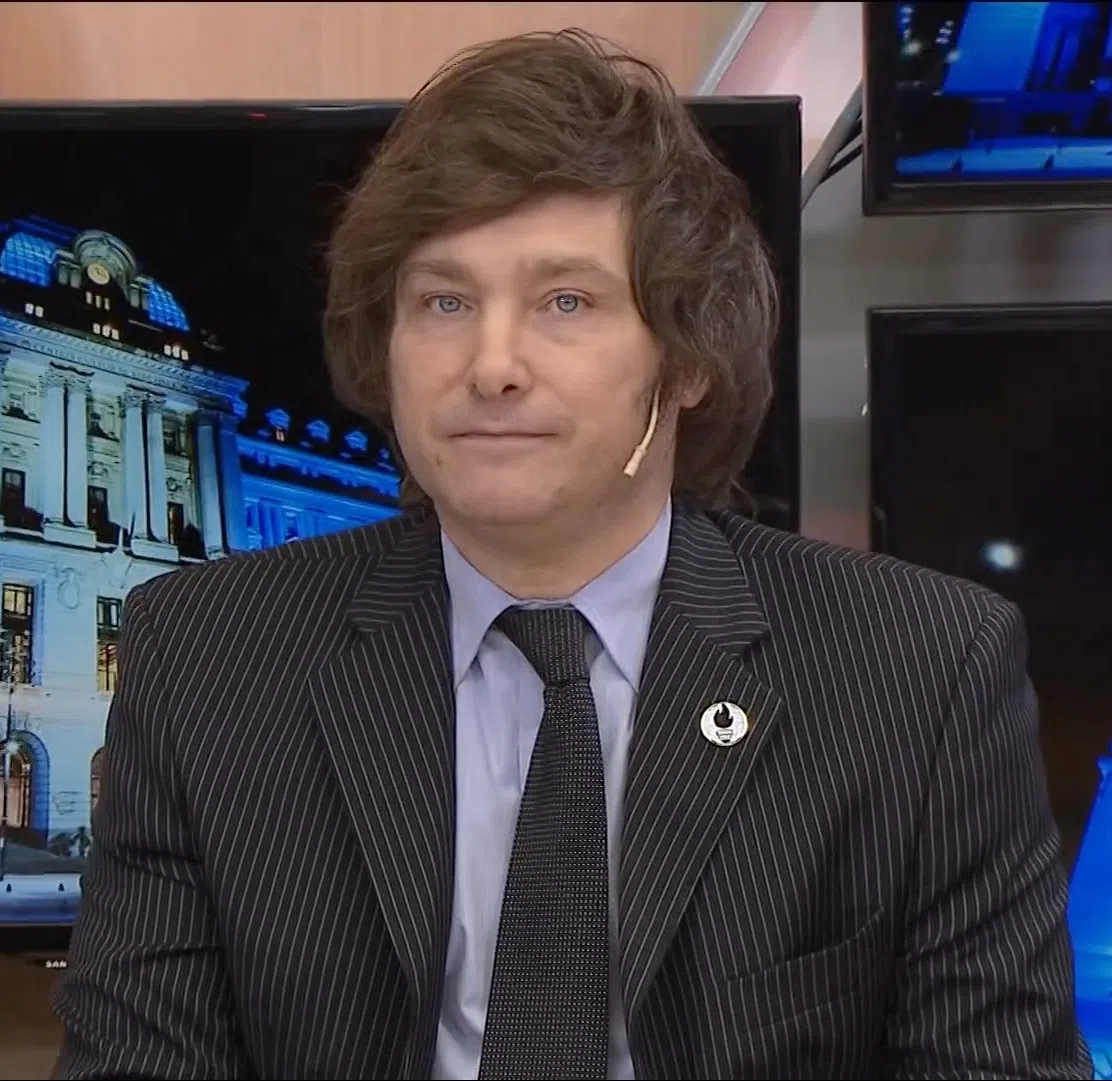
Javier Milei, a climate change denier widely supported by Atlas Network, a web of free market think tanks, won the necessary votes to run in Argentina’s presidential election in October.
ANALYSIS By Lucas Araldi on Aug 22, 2023 @ 15:15 PDT
Argentine presidential candidate Javier Milei haș been influenced, and boosted, by the Atlas Network. Credit: Todo Noticias(CC BY 3.0)
Ask Argentine politician, economist, and presidential candidate Javier Milei what he thinks of climate change, and he might tell you that it’s “another lie of socialism” and “part of the agenda of Cultural Marxism.”
The right-wing politician is part of coalitionLibertad Avanza and this August won the most votes in Argentina’s primary election, enabling him to run for president on October 23.
He gained prominence through his talk show appearances, making his debut on the political talk show Animales Sueltos (Stray Animals) in 2016. In addition, he hosted his own radio program called Demoliendo Mitos (Debunking Myths).
In 2021, Milei was elected as a national deputy for Buenos Aires. Prior to this, he had built an extensive career in both the public and private sectors as an economist, even holding the position of Chief Economist at HSBC.
Milei has been compared to right-wing populist leaders Donald Trump and Jair Bolsonaro due to his direct and aggressive way of speaking and his radical proposals. Milei would likely be flattered by the comparison — he is a huge fan of these right-wing populists that have emerged in recent years.
Milei won 30 percent of the vote in the August primary — nearly 10 percent more than the next-most-popular candidate — with a political platform that combines radical neoliberal policy proposals with a conservative populist moral agenda. His economic proposals include reducing the number of government ministries, cutting public spending, dollarizing the economy, and “exploding” the Central Bank, in Milei’s own words.
Milei didn’t arrive at these proposals on his own; his views, particularly in regards to the economy, have been shaped by the Atlas Network, a U.S. nonprofit that works to spread free-market think tanks all over the world.
Based in Washington, D.C., the Atlas Network supports more than 500 free-market organizations. Some of these groups, such as the Heartland Institute, are also involved in climate science denial and in campaigns against legislation to limit greenhouse gas emissions.
Around 100 think tanks in Latin America — 10 of which are in Argentina — are part of Atlas’s web. Between 2010 and 2021, Atlas gave approximately $12 million USD to think tanks in the region, mostly for “economic education,” according to U.S. tax filings analyzed by DeSmog. Across the world, including in Latin America, Atlas think tanks collaborate beyond national borders, sharing strategies and ideology. It is common, for example, for Atlas think tanks to share board members or even create their own networks, such as Red Liberal de America Latina (RELIAL).
Alberto Benegas Lynch, who serves as an adviser for Milei and also is a director at Mont Pelerin Society, is an example of transnational ties within the network. He is part of several Atlas Network groups in Latin America, such as Fundación Federalismo y Libertad and Instituto Libertad y Progreso, both in Argentina, Universidad Francisco Marroquín in Guatemala, and Centro de Estudios para el Desarrollo in Uruguay.
Lynch is also known for making denialist statements about climate change. In an opinion article published in 2018 in the Argentinian online newspaper Infobae, for example, he argued that climate change is a fraud based on distortion of statistics. He built his argument from alleged studies of John Coleman, Ivar Giaever, and Patrick Moore.
The Argentine newspaper La Nación describes the relationship between Milei and Lynch as one of admiration, as Milei frequently cites Lynch. Beyond that, Lynch wrote several times on the Instituto Libertad y Progreso’s website about his relationship with Milei, as well as his proposals, and how Milei means a miracle for Argentine politics.
Milei benefits from the whole infrastructure of ideas boosted by the Atlas Network to project himself as presidential. While the other traditional candidates do not have a platform of think tanks that can help them, Milei manages to move between these institutes and use them as hubs for disseminating his ideas and as a safe arena for advancing the debate on his agenda.
For instance, Milei has connections to other Latin American think tanks in the Atlas Network. He has attended conferences and participated in events promoted by the Fundación Libertad y Progreso, Federalismo y Libertad, and Fundación Atlas, all based in Argentina. He also participated in Instituto de Estudos Empresariais’s Liberty Forum 2022 in Porto Alegre, Brazil. Articles in Fundación Atlas’s blog praise him, with Axel Kaiser, executive director at Fundación para El Progreso in Chile, writing that Milei is helping restore Argentina’s Libertarian legacy by setting up a “cultural and political movement which became the third way.” In 2018, Fundación Atlas awarded Milei the Liberty Prize.
Milei sat on the advisory board of Fundación Libre (FL), an Argentine far-right think tank that was part of Atlas. FL promoted “individual freedom and republicanism” in the face of “hegemonic progressive ideology and the empire of politically correctness.” Although FL did not focus primarily on denying climate change, it did feature climate-related content, like a YouTube video criticizing Greta Thunberg, that has since been removed.
Milei, however, is known for denying climate change, claiming that the planet’s temperature is currently at its lowest level in the past 15,000 years. His source for this belief is a graph from a 2008 study by the geologist Don J. Easterbrook — who is known for erroneously predicting “global cooling.” However, this graph is based on data only from Greenland and is not a reliable indicator of climate change, according to fact-checking groups in Argentina.
Although Milei uses climate denialism to ignite his followers, climate change was barely discussed in the Argentine primaries, even though the occurrence of extreme weather events has increased twofold since 1980 and could become even worse in the coming decades. Instead, candidates focused on the country’s current food crisis: Argentina faces one of the biggest food inflations in the world and more than 4 million people in the country are food insecure. This scenario also could become worse due to climate change’s impacts on Argentine agriculture.
Milei’s significant result at the polls shows that the free-market, neoliberal ideals the Atlas Network is promoting have a huge organizational strength in Argentina that can be converted into votes. Even if Milei doesn’t win the October presidential election, his rise to this level of politics means a victory for the Atlas Network.
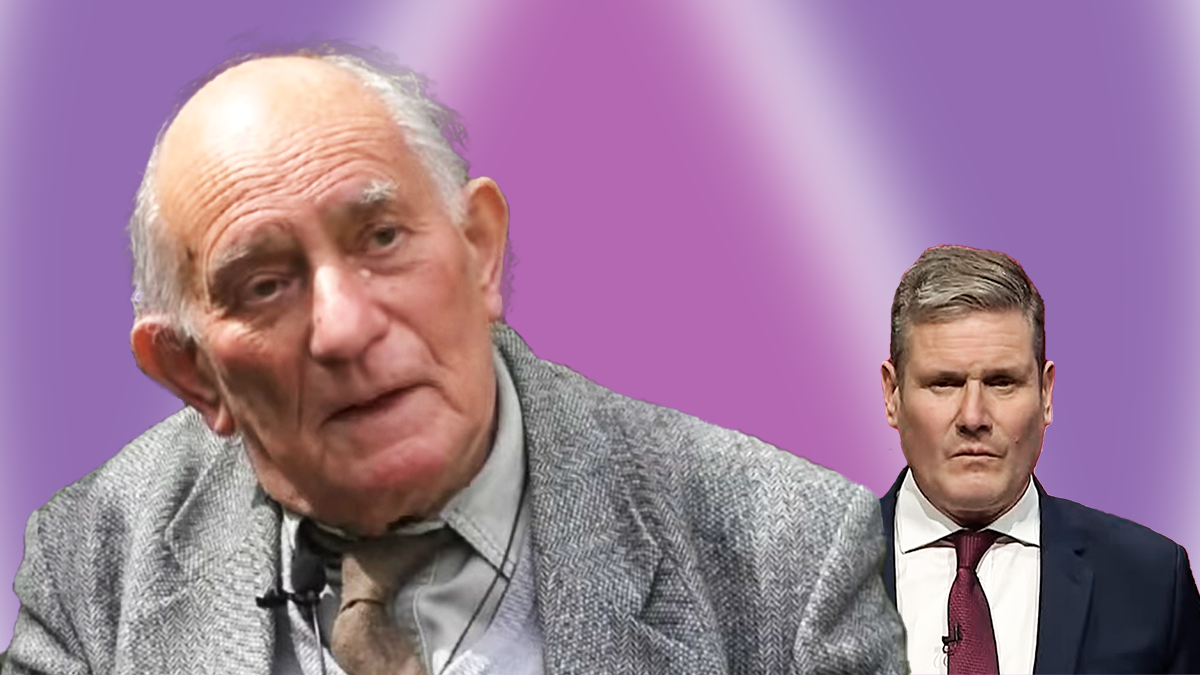
Stephen Kapos says he has a duty to teach others about his experience whether Starmer and co like it or not
As Skwawkbox predicted last week, Holocaust survivor Stephen Kapos has been driven out of the Labour party in yet another demonstration of the antisemitism and arrogance of the Labour right.
It has been brought to the attention of the Labour Party that you have been advertised as a speaker for an event entitled ‘Zionism During the Holocaust – Reclaiming the Memory of All Those Who Died’, hosted by Socialist Labour Network on Friday 27th January 2023.
In line with Labour Party rules, Socialist Labour Network is a group which the NEC of the party has determined is incompatible with Labour Party values. Any support for the organisation would likely be deemed in breach of Party rules and may lead to expulsion.
Yours sincerely,
London Labour
But rather than back down to the cowardly threat, to which the party drone who sent it didn’t even dare put his or her name, Kapos – a constituent of party leader Keir Starmer – resigned his membership, saying that his duty to teach people about the terrible slaughter at every opportunity – and to stand up against Israeli apartheid against Palestinians – was too important to bow to petty tyrants and their so-called ‘Labour values’:
Dear London General,
Thank you for your emailed letter of the 24th of January giving me advance warning that I am likely to be expelled from the Party if I were to speak from the panel as a Holocaust survivor at the SLN (Socialist Labour Network) Webinar on the 27th January — on Holocaust Memorial Day.
The Holocaust is the most important single example of genocide, which at its worst descended into an industrial process of mass murder of millions.
As a child survivor and one of the fewer and fewer still living direct witnesses to the Holocaust I feel a compelling duty to bear witness and speak out about it at any platform that would invite me and to any audience ready to listen.
I am an activist for Palestinian human rights and an active member of the Palestine Solidarity Campaign in its Camden Branch. The defence of Palestinians living under a brutal occupation is very important to me, particularly as a Holocaust survivor. Palestinians live under a system of apartheid as recognised by Amnesty International and other major human-rights organisations. Those are my political beliefs which I claim are protected characteristics under the Equalities Act 2010.
I am not a member of SLN nor have I been following its activities, but via the book to be discussed on the 27th I have a general understanding of SLN’s views on present-day Zionism (as a political movement ) and on some of the actions of the Zionist movement during the Holocaust and WWII. I am in sympathy with some of those views on the grounds of my political beliefs mentioned above. I have personal experience of the Kastner project in Hungary which was driven by Zionist ideology.
Email and letter details courtesy of Tony Greenstein
Left-wing Jewish activist Tony Greenstein, one of the first to be expelled during Labour’s mass purge of Jews who stand up for Palestinian human rights, published the video of Kapos speaking at the event about what he saw and suffered:
Solidarity with Stephen Kapos and all those targeted by the Labour right’s regime.
SKWAWKBOX needs your help. The site is provided free of charge but depends on the support of its readers to be viable. If you’d like to help it keep revealing the news as it is and not what the Establishment wants you to hear – and can afford to without hardship – please click here to arrange a one-off or modest monthly donation via PayPal orhere to set up a monthly donation via GoCardless (SKWAWKBOX will contact you to confirm the GoCardless amount). Thanks for your solidarity so SKWAWKBOX can keep doing its job.
ed: I’ve amended this post. The title originally had ‘ That’s what Socialism is ‘ at the end. I’m not sure that it is appropriate. While I accept that Socialists certainly do care about people, I don’t consider that it is correct to associate the NHS so clearly (tightly) with Socialism. Although – of course – that is exactly the reality.
later ed: It’s yours and mine?
The NHS is so important. It is ours and it’s important. It cares for people when they’re sick and vulnerable.
Do you ever get that feeling that as your write it’s not so much that you’re writing on a tractor as your flicking a doganoo!

 Prime Minister Sir Keir Starmer talks to soldiers during a visit to the Netherlands marines training base, June 24, 2025