“Worse to come” in Sudan as famine spreads and war continues

Spread the love

Original article by Pavan Kulkarni republished from peoples dispatch under a Creative Commons Attribution-ShareAlike 4.0 (CC BY-SA) license.

UN High Commissioner for Human Rights Volker Türk on Monday gave an update to the Human Rights Council on the situation in El Fasher, Sudan. Photo: screenshot

As the war grinds on well past 1,000 days, famine grips more and more areas in what is already the country with high levels of hunger

“We can only expect worse to come” in Sudan if the war is not stopped, UN High Commissioner for Human Rights Volker Türk warned the Human Rights Council on February 9, as famine conditions expand in the country facing the highest levels of hunger in the world.

Apart from Gaza, which has been suffering Israel’s genocidal war since October 2023, there are only two officially declared ongoing famines in the world – both in this North African country, in the throes of a civil war raging for nearly three years.

One of them is in South Kordofan State’s capital, Kadugli, gripped by famine since last September, following a prolonged siege by the Rapid Support Forces (RSF), fighting its former ally, the Sudanese Armed Forces (SAF), since April 2023.​

Also besieged further north was the state’s second largest city, Dilling, where hunger levels “are likely similar to Kadugli, but cannot be classified due to insufficient reliable data – a result of restricted humanitarian access and ongoing hostilities,” the UN had said.

Siege broken, but relief may be “temporary” 

Earlier, on February 3, the SAF announced it had broken the siege on Kadugli, days after making a similar advance, taking control of the supply routes to Dilling in late January, reconnecting the two cities to North Kordofan.​

With the markets re-supplied, prices of essential food items in Kadugli have dropped to a fraction of what they had surged to under siege, Sudan Tribune reported on February 8.​

However, the Famine Early Warning Systems Network (FEWS NET) had cautioned in its report on February 5 that the relief for its residents may only be “temporary”. It warned of the possibility “that Famine will persist through May in the absence of a ceasefire and sustained humanitarian access. It is expected that the towns will remain heavily contested, and the risk is high that renewed siege-like conditions will be re-established between February and May.”​

Drone attacks on food trucks amid famine

Türk also highlighted this volatility in his briefing to the Human Rights Council on February 9. Although the SAF and its allied armed groups have broken the siege on these cities, “drone strikes by both sides continue, resulting in dozens of civilian deaths and injuries,” he added.​

Two days before, on February 7, the RSF had killed at least 24 people (including eight children, among them infants) with a drone strike on a humanitarian convoy transporting residents fleeing the fighting in South Kordofan State’s Dubeiker area to North Kordofan in the city of Rahad.​

A day earlier, one was killed and many more wounded in the drone attack on a convoy of the World Food Program (WFP), en route to supplying aid to the displaced people sheltering in North Kordofan’s capital, El Obeid.​

Building earthen walls around El Obeid, the SAF is holding out against the RSF to defend this strategic city enroute to the national capital, Khartoum, from the Darfur region in western Sudan. The RSF has taken control over most of this region after overrunning North Darfur State’s capital, El Fasher, also in the throes of famine since last September.​

“Mass atrocities committed in Darfur may repeat Kordofan”: warns the UN

After laying a siege for over 500 days and starving the residents of this last major city in the five states of Darfur holding against the RSF, the paramilitary overran its defenses in late October. Barely two months later, satellite imagery analysis by the Yale Humanitarian Research Lab (HRL) had confirmed that the city had been depopulated by the RSF after likely killing tens of thousands of its residents.​

“My Office sounded the alarm about the risk of mass atrocities in the besieged city of El Fasher for more than a year,” Türk added in his briefing, regretting, “The threat was clear, but warnings were not heeded.” He went on to warn, “I am extremely concerned that these violations and abuses may be repeated in the Kordofan region,” which has become the center of fighting since the fall of El Fasher.​

Famine-conditions spread in Darfur

An estimated 127,000 people have managed to escape El Fasher and its surrounding areas, according to the International Organization for Migration (IOM). A large number of them fled toward the Chadian border, sheltering in northwestern reaches of Darfur in towns like Um Baru and Kernoi, and further west in the border town of El Tine, where militias allied with the SAF and local self-defense groups are still holding fort against the RSF.​

Read more: The war in Sudan is “between two wings of a comprador parasitic capitalist class”

With this influx increasing the strain on the limited resources of these remote towns, Integrated Food Security Phase Classification (IPC) data released on February 6 confirmed that hunger levels, already classified as “catastrophic”, have exceeded the “famine” threshold. Over half of all children in Um Baru, and 34% in Kernoi, are suffering acute malnutrition.  

​”Many other conflict-affected or inaccessible areas may also be facing similarly catastrophic conditions; however, the full extent remains unknown due to limited access and uncertainty over how rapidly conditions are deteriorating,” the IPC report added.

​With millions suffering malnutrition across Sudan, especially in Darfur and Kordofan regions, Action Against Hunger has warned that “more than 375,000 people are at real risk of starvation.”

Original article by Pavan Kulkarni republished from peoples dispatch under a Creative Commons Attribution-ShareAlike 4.0 (CC BY-SA) license.

Continue Reading“Worse to come” in Sudan as famine spreads and war continues

RSF has burnt and buried tens of thousands of corpses in El Fasher, says Yale report

Spread the love

Original article by Pavan Kulkarni republished from peoples dispatch under Creative Commons Attribution-ShareAlike 4.0 (CC BY-SA) license.

Analyzing satellite images showing “clusters of objects consistent with human remains”, “reddish discoloration consistent with blood”, charred earth and dug up ground consistent with the burning and burial of corpses, Yale HRL assesses that RSF has killed and disposed of people “likely in the tens of thousands”.

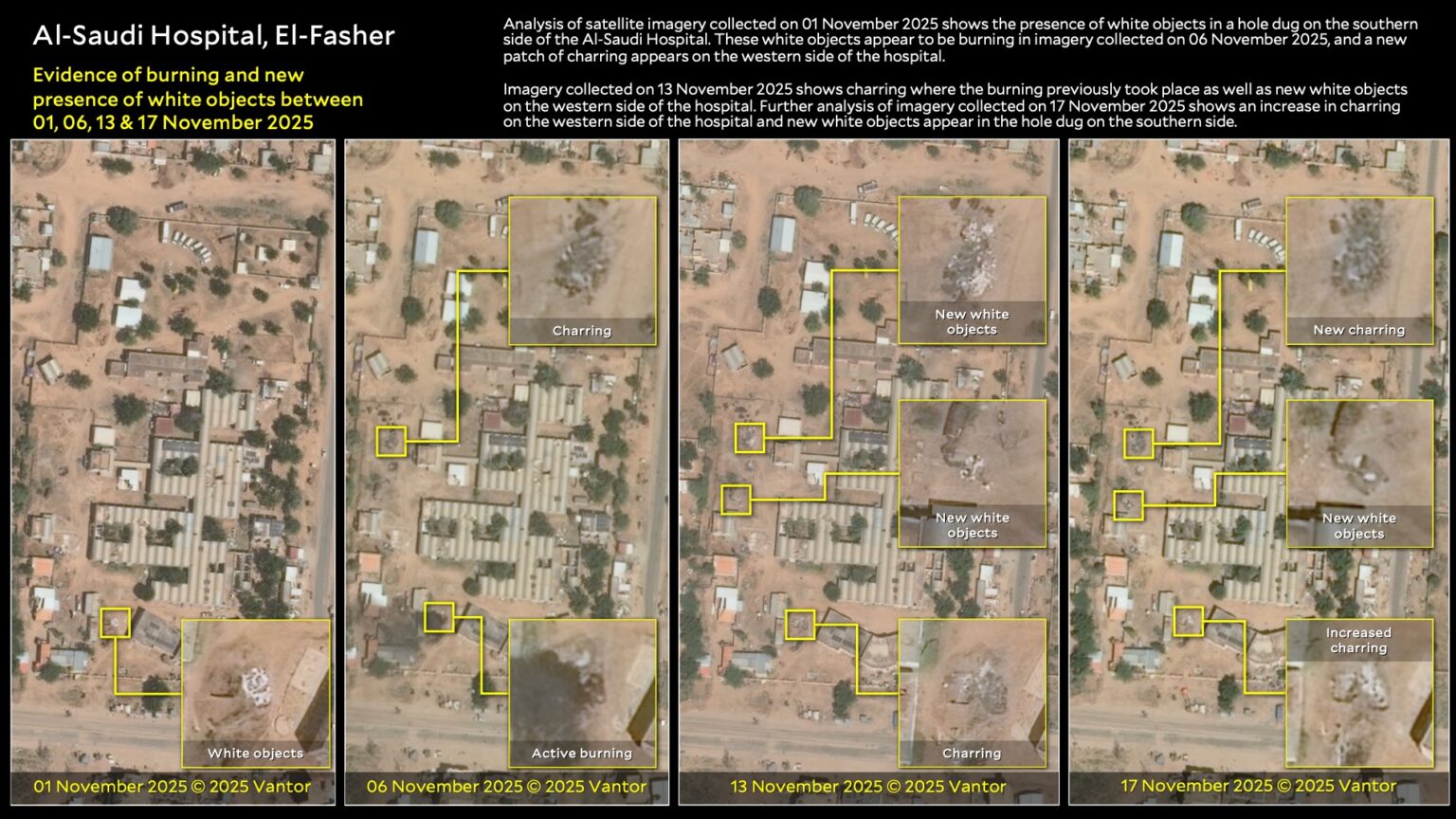
Evidence of burning and new presence of white objects collected by satellite imagery in early November. Photo: Yale Humanitarian Research Lab

Sudan’s Rapid Support Forces (RSF) have burnt and buried bodies, likely in the tens of thousands, after massacring civilians while overrunning El Fasher, the last city in Sudan’s western region of Darfur that held out against the paramilitary until late October.

The Yale School of Public Health’s Humanitarian Research Lab (HRL) said in a report published on December 16 that it “assesses to high confidence” that the RSF “engaged in widespread and systematic mass killing” after entering the besieged and starved city on October 26.

Read More: El Fasher’s last stand: “The city has fallen, but its dignity has not” 

Satellite images collected over the next few days, until November 1, showed at least 150 “clusters of objects consistent with human remains”. By November 28, 108 of these 150 clusters had changed in size, growing and shrinking over time, while 57 were no longer visible. 

“Disturbed earth”, meaning dug up ground, began to appear “at or in close proximity to locations where clusters” that shrunk or disappeared “were identified.” Several “clusters” were also burnt, visible as charred earth in later satellite images.  

The ground around 33 of the 108 clusters identified had a “reddish discoloration consistent with blood or other bodily fluids”, shed on a scale large enough to be visible from space.

Read More: A bloodbath visible from space: RSF’s massacres in Sudan’s El Fasher 

In the images, 52 body piles were observed in the neighborhood of Daraja Oula, where the remaining civilians in the city had sheltered before being executed by the RSF on a door-to-door killing spree. 

Another 83 clusters were seen outside El Fasher, consistent with footage shared on social media by the RSF troops, showing themselves chasing down the fleeing civilians, capturing and executing them. Indications consistent with “mass killings” were also observed at the sites used by the RSF for detention.  

The “RSF subsequently engaged in a systematic multi-week campaign to destroy evidence of its mass killings through burial, burning, and removal of human remains on a mass scale,” states the report, adding, “This pattern of body disposal and destruction is ongoing.” 

There are no reliable estimates of the death toll in the absence of access to the area. “Over 260,000 civilians, including 130,000 children, have been trapped” in El Fasher “under siege for more than 16 months, cut off from food, water, and healthcare,” UNICEF had reported on October 23, three days before the RSF entered the city after breaching its defenses. 

The International Organization for Migration (IOM) had recorded at least 106,387 people displaced by late-November. The remaining civilians, over 150,000 of them, are unaccounted. How many of them have survived is not known, but “HRL assesses that … RSF has systematically killed and disposed of a number of objects consistent with human remains, likely in the tens of thousands.”

In its aftermath, the city appears depopulated. The “pattern of civilian life in El-Fasher seems to have all but ended following RSF’s total control of El-Fasher,” the report added. “The end of civilian pattern of life is evidenced by abnormal vegetation growth in markets, no visible civilian activity at water points, absence of crowds of people in the street, and no evidence of civilian transport.”

Read More: Sudan’s RSF expands control eastward after taking over Darfur

Original article by Pavan Kulkarni republished from peoples dispatch under Creative Commons Attribution-ShareAlike 4.0 (CC BY-SA) license.

Continue ReadingRSF has burnt and buried tens of thousands of corpses in El Fasher, says Yale report

EU says Sudan has become ‘living nightmare,’ urges immediate ceasefire

Spread the love

This work by Middle East Monitor is licensed under a Creative Commons Attribution-NonCommercial-ShareAlike 4.0 International License.

People displaced from El Fasher and other conflict-affected areas are settled in the newly established El-Afadh camp in Al Dabbah, in Sudan’s Northern State, on November 09, 2025. [Stringer – Anadolu Agency]

The EU on Tuesday warned that Sudan is facing a “catastrophic” humanitarian crisis, urging all parties to grant unhindered humanitarian access and resume negotiations for an immediate ceasefire, Anadolu reports.

Addressing the European Parliament’s plenary session in Strasbourg, the EU commissioner for equality and acting commissioner for crisis management, Hadja Lahbib, said hunger, malnutrition, and disease are rapidly spreading across the country, while international humanitarian law is being violated.

Lahbib described the situation in Darfur and Kordofan as “particularly shocking,” recalling last month’s “horrific attacks” against civilians by the paramilitary Rapid Support Forces (RSF) during their capture of El-Fasher and Bara.

“Thousands of civilians in El-Fasher have been killed on ethnic grounds, in house-to-house raids, mass detentions. People (are) unable to leave the city,” she said.

The commissioner noted that the RSF continues to block humanitarian assistance, further shrinking the humanitarian space in Sudan.

READ: Sudanese Army repels new RSF attack on Babanusa

Since the conflict erupted in April 2023, more than 120 aid workers have been killed, making Sudan “one of the deadliest places in the world” for humanitarian staff.

Lahbib stressed that 21 million people face acute food insecurity, according to the latest assessment by the UN-backed Integrated Food Security Phase Classification, and warned that bureaucratic hurdles continue to obstruct aid operations.

She recalled that EU foreign ministers last week adopted sanctions against the RSF’s second-in-command, Abdelrahim Dagalo, for human rights violations and reiterated the bloc’s call for full accountability for atrocities committed in the country.

Lahbib also stressed the need for diplomatic engagement with regional actors to apply pressure on the warring sides.

“Considering the work of Kuwait, UAE, Egypt, Saudi Arabia, and the US, we have to take into account all interests and regional actors, including Türkiye,” she noted.

“Sudan has become a living nightmare for its people and a humanitarian catastrophe,” she said, adding that supporting humanitarian efforts in the country remains a priority for the European Commission.

Separately​​​​​​​, the EU and the African Union condemned the atrocities committed by the RSF following their capture of the city of El-Fasher, and urged an immediate end to the conflict in Sudan.

Since April 2023, the Sudanese army and the RSF have been locked in a war that regional and international mediations have failed to end. The conflict has killed thousands of people and displaced millions of others.

This work by Middle East Monitor is licensed under a Creative Commons Attribution-NonCommercial-ShareAlike 4.0 International License.

Continue ReadingEU says Sudan has become ‘living nightmare,’ urges immediate ceasefire

Progressive popular movements and organizations stand in solidarity with the people of Sudan

Spread the love

Original article by Nicholas Mwangi republished from peoples dispatch under a Creative Commons Attribution-ShareAlike 4.0 (CC BY-SA) license.
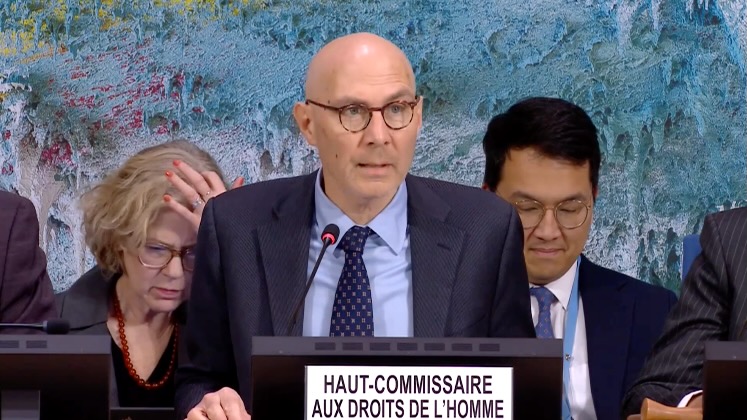
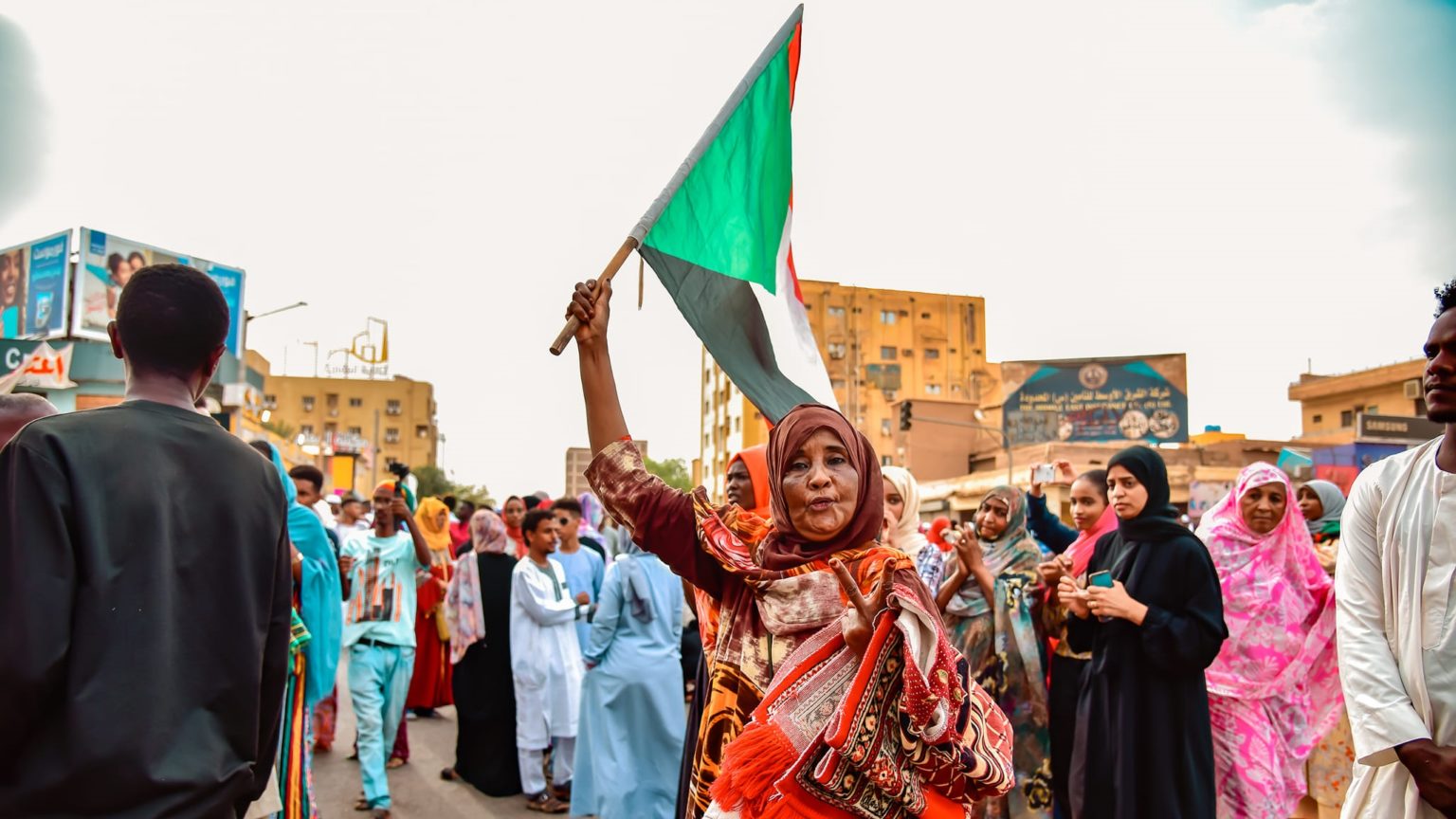
Photo: Ahmed Elfatih

Popular organizations and movements across Africa and beyond have condemned the ongoing massacre of the Sudanese people by the Rapid Support Forces (RSF), calling for an immediate end to the violence. Urging support for the Sudanese people’s struggle for peace, justice, and democratic self-determination.

Across Africa and the world, progressive and popular organizations are raising their voices in solidarity with the people of Sudan, as they face one of the most brutal and protracted conflicts in the world today. From Ghana to South Africa, from international networks to grassroots movements, the message is unified in a call to end the massacres, open humanitarian corridors, and uphold the Sudanese people’s struggle for justice, peace, and sovereignty.

Amid mounting international condemnation for its war crimes, especially over the last several weeks, the Rapid Support Forces (RSF) have reportedly agreed to a three-month pause in the fighting. However, analysts and activists argue that the “humanitarian ceasefire” is far from a solution to the two-and-a-half-year war.

The Socialist Movement of Ghana (SMG) condemned the “genocidal conflict between factions of the militarized elite” that has terrorized the people of Sudan since 2023. In their statement, the movement expressed solidarity with the Sudanese people and their popular organizations, including the Sudanese Communist Party (SCP), lauding their courage and political clarity in the face of devastation.

The SMG statement described the war between the Sudanese Armed Forces (SAF) and the RSF as a tragic consequence of elite rivalries and foreign interference. It denounced the “murky transnational corporate and resource-grabbing agenda of the United States, Western powers, and some Arab and East African countries” fueling the conflict.

“The people of Sudan clearly reject both warring factions and any national ‘solution’ based on military force or elite interests,” SMG declared, reaffirming that Sudan’s revolution, born out of the people’s 2018 uprising, continues to embody the demand for democracy, justice, and full sovereignty over national resources.

The International Peoples’ Assembly (IPA) and Pan Africanism Today (PAT) also issued a joint statement condemning the “brutal massacres currently unfolding in Sudan,” particularly in El-Fasher, Bara, Darfur, and Kordofan, describing the atrocities as genocide. They called for immediate international mobilization, demanding a ceasefire, protection of civilians, and independent investigations into war crimes.

“The Sudanese people face a destructive war machine, defending their dignity, communities, and right to live,” the statement read. It called upon trade unions, women’s movements, youth, and social movements worldwide to stand with Sudan through coordinated actions, educational events, and artistic expressions of solidarity.

Read More: A bloodbath visible from space: RSF’s massacres in Sudan’s El Fasher

Joining this call, South Africa’s Abahlali baseMjondolo Movement, representing shack dwellers and grassroots activists, issued a solidarity statement denouncing the ongoing massacres in El-Fasher and Darfur. The movement condemned the RSF’s atrocities; executions, mass killings, and the starvation of entire communities, financed by the United Arab Emirates and sustained by European complicity in migration control.

“The uprising that began in December 2018 was a democratic revolt of workers, women, students and the urban poor,” Abahlali’s statement reminded. “That uprising gave rise to new grass-roots forms of democracy through the resistance committees, which continue to provide food, medicine, and mutual aid amid war.”

Sudan’s struggle is our struggle. As the Socialist Movement of Ghana declared:

“Let us stand for unity, sovereignty, and development. Sudan’s struggle is Africa’s struggle.”

Original article by Nicholas Mwangi republished from peoples dispatch under a Creative Commons Attribution-ShareAlike 4.0 (CC BY-SA) license.
Continue ReadingProgressive popular movements and organizations stand in solidarity with the people of Sudan

Drawing lessons from the Cuban Revolution: organization, unity, and internationalism

Spread the love

This article by republished from peoples dispatch under a Creative Commons Attribution-ShareAlike 4.0 (CC BY-SA) license.
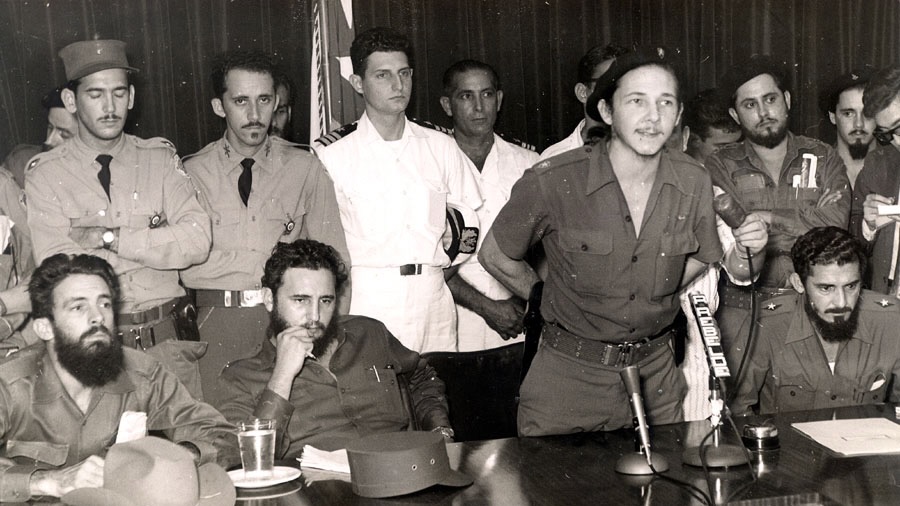
On February 16, 1959, Cuba established the Ministry of the Revolutionary Armed Forces, the executive body of their defense force, and its first Army General, Raúl Castro Ruz. Photo: Miguel Díaz-Canel/X

A recent webinar by Pan Africanism Today and the International Peoples’ Assembly looked at global struggles, from Africa to Latin America, showing how Cuba’s enduring resistance offers vital lessons in organization, unity, and internationalism for today’s movements fighting oppression and war.

The world is in an era marked by relentless wars and overlapping crises, from the devastating civil war in Sudan and violence in the Democratic Republic of Congo to the unfolding genocide in Palestine. The demand to end all wars has never carried greater urgency. And in the midst of all these visible battlegrounds persists a more enduring and insidious conflict; the hybrid war and economic blockade waged against the Cuban people and their revolution.

This was the central focus of a recent global webinar convened under the banner of Pan-African and internationalist solidarity, bringing together progressive voices to draw lessons from Cuba’s anti-imperialist struggle. The session, held on October 15, was facilitated by Mbali Gwenda from Pan Africanism Today, who situated the discussion within a broader historical and moral framework, invoking the revolutionary spirits of Thomas Sankara, martyred on the same date in 1987, and Assata Shakur who recently passed, and whose life consistently symbolized uncompromising resistance to oppression.

“We are dealing with the question of the hybrid war and blockade against the Cuban Revolution and her people,” Gwenda said. “A revolution that has been a source of inspiration for all oppressed peoples throughout the world till this day.”

The keynote address was delivered by Manolo De Los Santos, executive director of The People’s Forum and a researcher at the Tricontinental: Institute for Social Research, who framed Cuba’s defiance not as a miracle, but as the outcome of a centuries-long process of people’s struggle, organization, and consciousness.

The long arc of revolution

De Los Santos began by looking at Cuba’s revolution more than an event confined to the years 1953–1959, when Fidel Castro, Che Guevara, and others led the guerrilla war against the Batista dictatorship. Revolutions, he reminded the audience, are not events but processes, collective journeys of resistance that unfold across generations.

Cuba’s revolution, he argued, has roots reaching back to centuries of anti-colonial and anti-slavery resistance, when the island was still a colony of the Spanish Empire. Unlike many independence movements in Latin America, Cuban revolutionaries understood that genuine freedom required addressing three interlinked questions:

  1. Could Cuba truly be independent if it remained a slaveholding society?
  2. Could it be free if it continued under the exploitative system of capitalism?
  3. Could it claim sovereignty while dominated by imperial powers, first Spain and later the United States?

These questions shaped the consciousness of generations of Cuban patriots, culminating in the 1959 triumph of the socialist revolution. But as he explained, the revolution’s endurance has rested on three essential pillars: organization, unity, and internationalism.

Organization: the bedrock of resistance

Organization, De Los Santos emphasized, has been the Cuban people’s greatest weapon against imperial aggression. From the early independence wars to the 26th of July Movement led by Fidel Castro, Cubans have understood that only a disciplined, organized people can confront an empire with infinite resources.

This organizational spirit persisted after 1959, with the creation of mass democratic structures that unite workers, women, peasants, students, and youth. The Federation of Cuban Women, for example, mobilizes millions in defense of gender equality and revolutionary ideals, while student and peasant organizations remain vital spaces for political education and collective problem-solving.

Even under today’s extreme shortages such as the lack of fuel to power garbage collection, Cuban communities respond not with despair but with collective initiative, a reflection of their revolutionary organization and social consciousness.

Unity, he continued, has been the second indispensable lesson from Cuba. Every time the people were divided, the empire gained the upper hand; every time they stood together, they won. This unity has transcended class, race, and regional divisions, dismantling the legacies of slavery and racism that imperialism imposed.

The Cuban Revolution’s unity was forged not just through ideology but through practice, through collective participation in building a new society. It remains, as Manolo put it, “the most important defense the Cuban people have.”

Internationalism is the soul of the revolution

If organization is the body and unity the shield, then internationalism is the soul of the Cuban Revolution.

Quoting Fidel Castro, the New York-based researcher reminded participants that “a people who are not willing to fight for the freedom of others will never be able to fully fight for their own freedom.”

This principle drove Cuba to send tens of thousands of its sons and daughters to fight alongside liberation movements in Angola, Namibia, and South Africa, contributing directly to the defeat of apartheid. As he noted, “Cuba doesn’t need gold or minerals from Africa, it knows that its freedom is tied to the freedom of the peoples of the African continent.”

Even today, with over 24,000 Cuban doctors working abroad, many across Africa, Cuba continues this legacy of solidarity. The US, in its campaign of distortion, now accuses Cuba of “human trafficking” for this very act of humanitarianism.

Read more: Cuba’s medical brigades in Africa embody a long tradition of solidarity

The anatomy of a hybrid war

The United States’ war against Cuba has been fought through unconventional means. It is a hybrid war, a combination of economic blockade, financial strangulation, media disinformation, and covert sabotage.

For more than 65 years, the blockade has inflicted immense human and economic damage. In 2024 alone, it cost Cuba USD 7.5 billion, money that could have been used to buy food, medicine, or oil for its 11 million citizens.

The US uses its control of global financial systems to punish any country or institution that trades with Cuba. Banks in Africa or Latin America face sanctions simply for handling Cuban transactions. The blockade’s reach extends into every corner of global trade, designed to isolate Cuba and make daily life unbearable for its people.

Read More: Tens of thousands of Cubans march in support of Venezuela’s sovereignty amid US aggression

The war is also fought in the terrain of ideas. US-funded media campaigns spread false narratives about repression and poverty in Cuba while erasing the country’s achievements in health, education, and solidarity.

Socialism and survival

When asked on how Cuba has managed to survive more than six decades of blockade, Manolo’s answer was clear: because Cuba made a socialist revolution.

Socialism, he said, allowed Cuba to create a system where the needs of the people come before profit. In capitalist societies, when crises hit, the rich survive and the poor starve. In Cuba, food, healthcare, and education are distributed equitably, even in times of scarcity. This social organization transforms a siege economy into a community of resilience.

This difference, he explained, is what makes Cuba unique among nations facing US aggression. It’s also what inspires global movements seeking alternatives to neoliberalism and imperial domination.

Cuba, Sankara, and the spirit of resistance

The session also honored Thomas Sankara linking a symbolic bridge between the African and Latin American revolutionary traditions. Both embodied a commitment to self-reliance, dignity, and international solidarity.

Sankara’s vision of a self-determined Africa resonated deeply with the Cuban experience. His assassination on October 15, 1987 marked a turning point in African politics, yet his ideas continue to inspire movements across the continent, just as Cuba continues to stand as living proof that another world is possible.

Read More: Thomas Sankara’s legacy lives on in Burkina Faso 38 years after his death

A call for global solidarity

In closing, Manolo issued a clear call; the Cuban people will overcome the blockade, but they cannot and should not do it alone. Their survival depends on the solidarity of all who believe in justice, sovereignty, and equality.

Cuba’s endurance is not simply a Cuban story; it is a lesson for all peoples resisting imperial domination. As the world faces renewed militarization and economic warfare, the spirit of organization, unity, and internationalism must also be crucial as ever.

“When they stand with the Palestinians, when they stand with the Congolese, when they stand with the peoples of the African continent,” Manolo concluded, “they are breaking the blockade too.”

This article by republished from peoples dispatch under a Creative Commons Attribution-ShareAlike 4.0 (CC BY-SA) license.
Continue ReadingDrawing lessons from the Cuban Revolution: organization, unity, and internationalism