Civilians in El Fasher, Sudan face “slow, deliberate death under the RSF siege”

Spread the love

Original article by Pavan Kulkarni republished from peoples dispatch under Creative Commons Attribution-ShareAlike 4.0 (CC BY-SA) license.
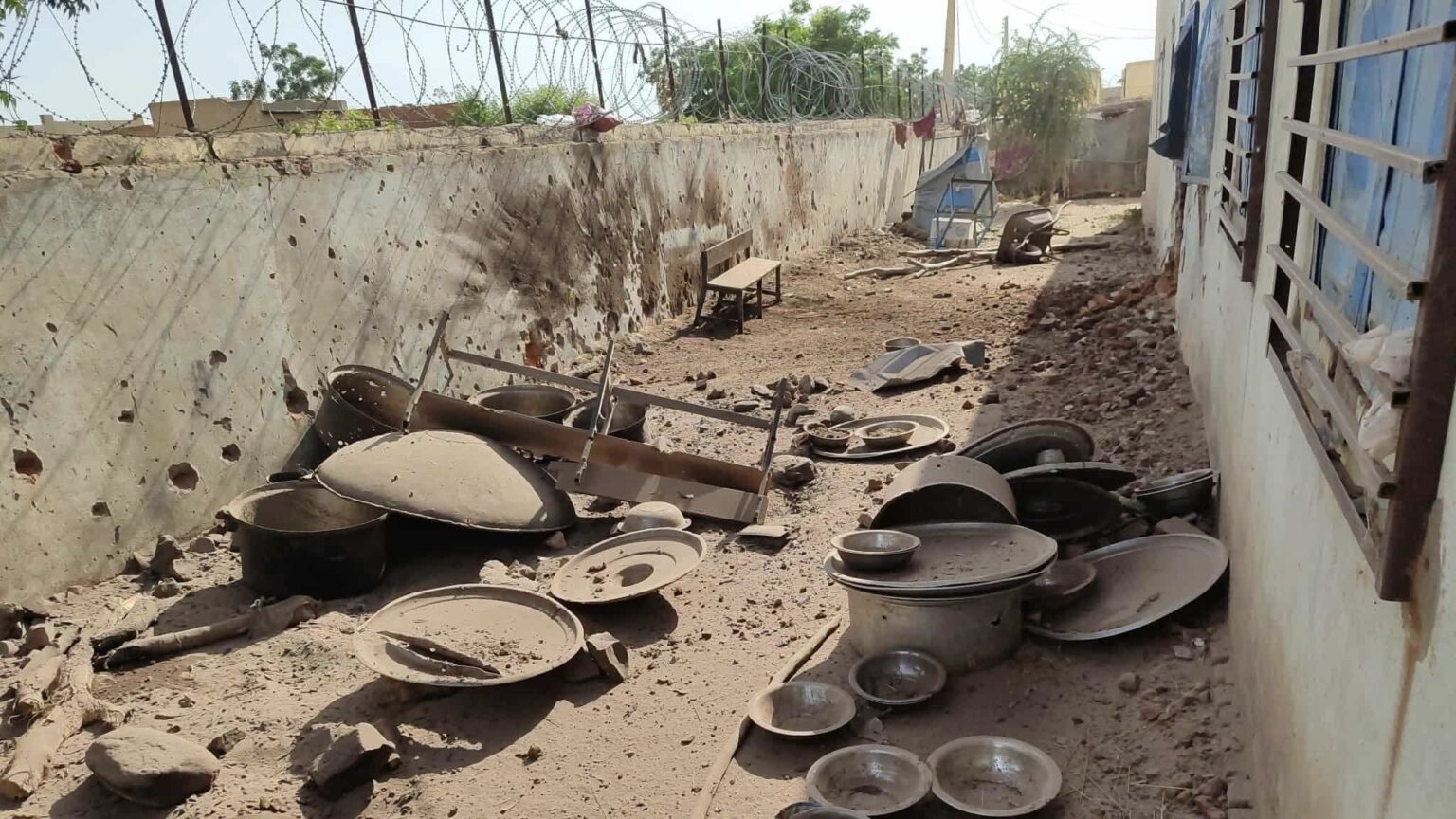
Destruction in El Fasher, Sudan. Photo: Resistance Committees

After running out of animal fodder, people are now consuming cow skin as a last resort against starvation in North Darfur state’s besieged capital, cut off from all food supply by a 57-km wall the paramilitary has built around the city.

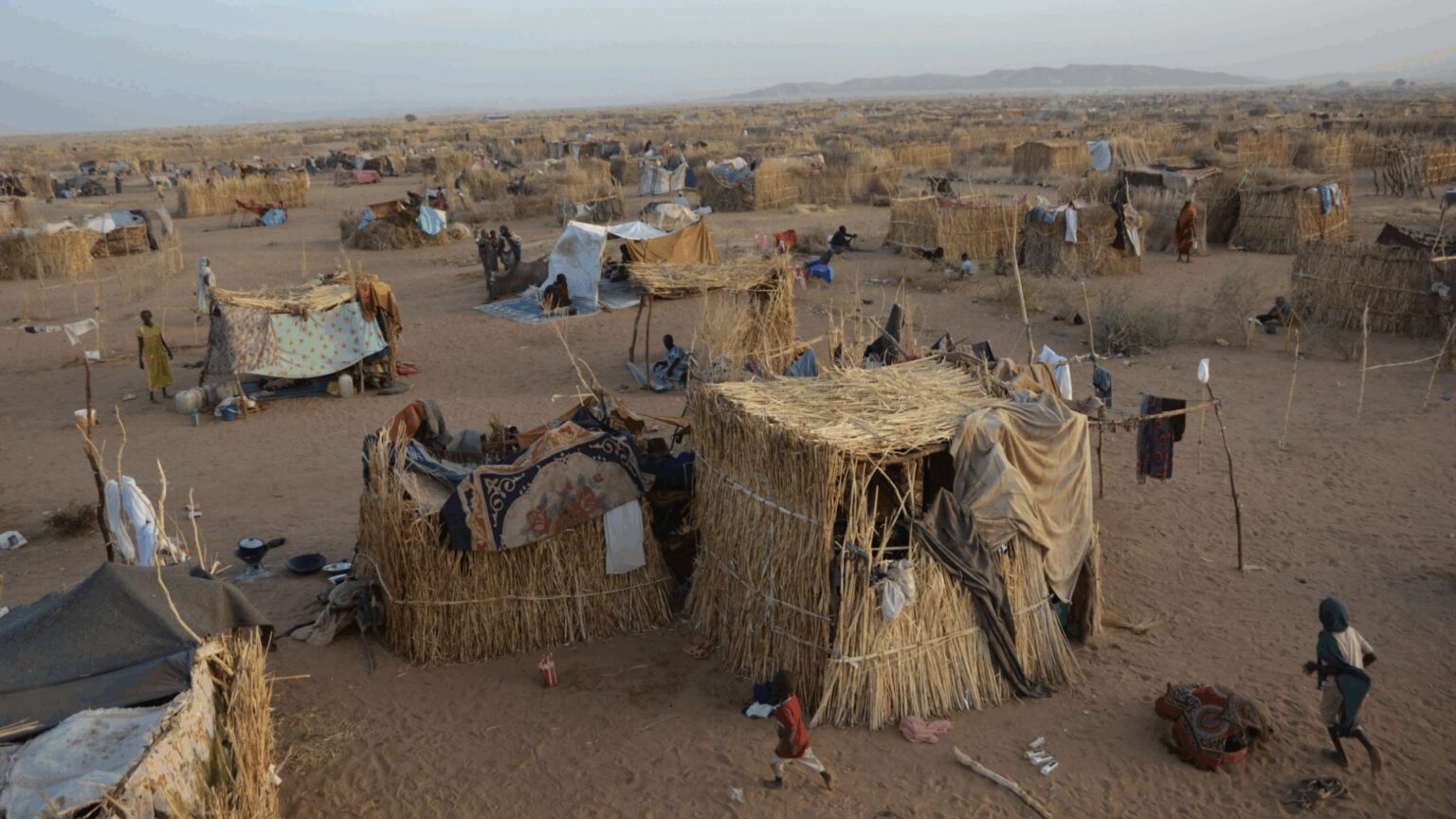
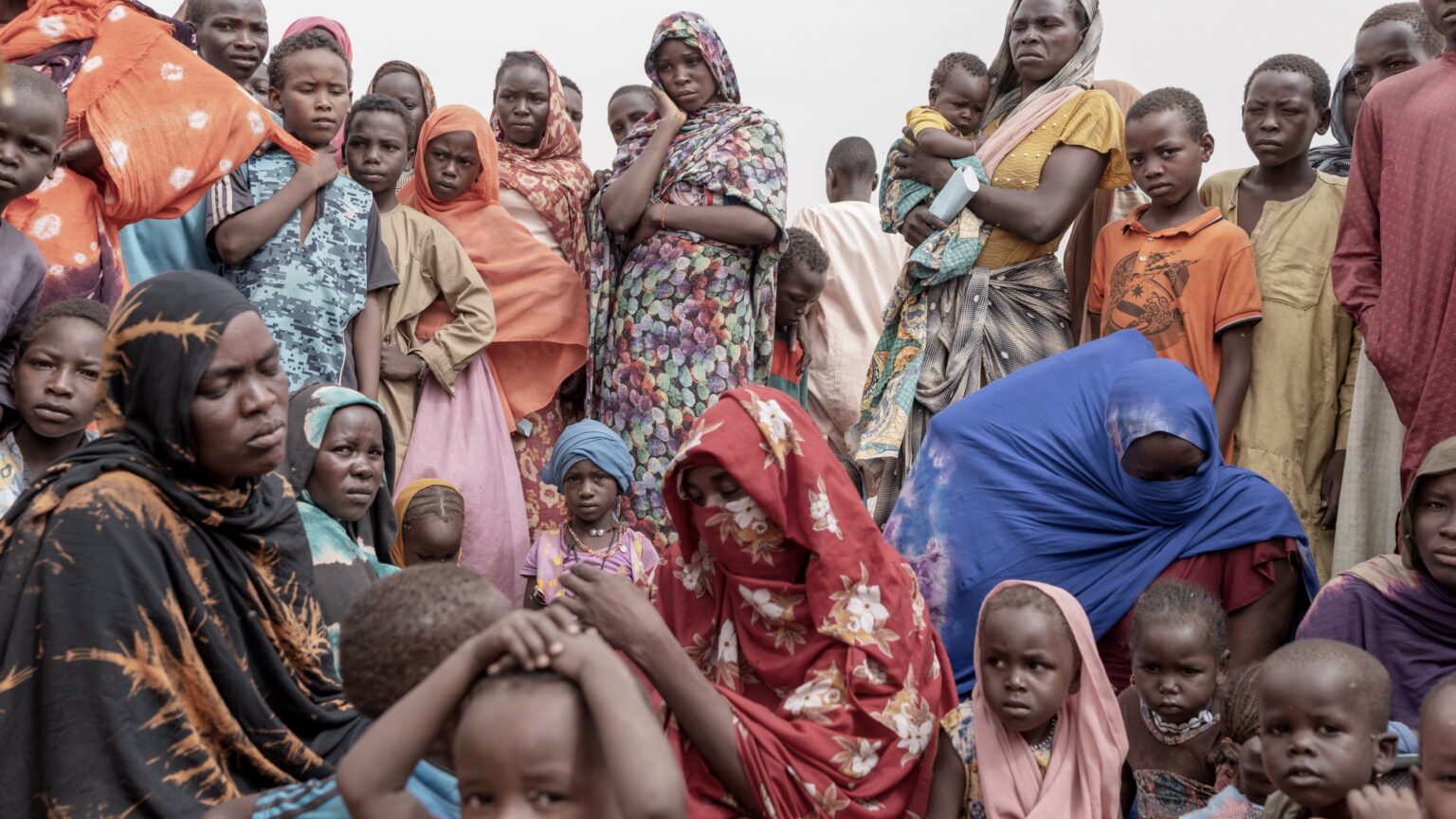
Walled in by war-torn Sudan’s paramilitary, the Rapid Support Forces (RSF), over two hundred thousand civilians in North Darfur state’s besieged capital El Fasher “have nothing left but resistance and a collective death,” warned the city’s Resistance Committees (RC)*.

Traders report having completely run out of food supplies as famine closes in on the malnourished population, cut off from food aid since the RSF laid siege on the city in April 2024 to oust the Sudanese Armed Forces (SAF) from its last foothold in the Darfur region.

There were “only some secret points to enter and exit the city”, through which small quantities of food supplies were being smuggled through the siege, reportedly with the collaboration of some RSF troops, said Saleh Osman, President of the Darfur Bar Association.

However, severe shortages and hoarding meant that grains were sold at prices multiple times higher than before the war started in April 2023. Unable to afford, most people were surviving on small portions of porridge made from kora ambaz – a type of animal fodder left behind after extracting oil from peanuts.

Unsafe for long-term human consumption, it had nevertheless become a staple of last resort for the survival of El Fasher’s residents. Now, however, the “ambaz is gone too”, the RC said in a statement on October 14.

Total siege

The earthen wall that the RSF started building around the city this May to totalize its siege is reportedly complete, 57 km long, leaving little or no opening for food or any other essentials to be smuggled in.

“El Fasher is now effectively under siege from all directions,” Stéphane Dujarric, Spokesperson for the UN Secretary-General, said in a briefing on Wednesday, October 15. With the “earthen barriers around the city… preventing movement of both people and supplies”, the city’s markets, which have been repeatedly bombed by the RSF, “are largely empty”.

The little amount of grain left in the city is priced beyond reach. “A kilo of rice costs 450,000 Sudanese pounds” – over USD 748 – said Adam Rojal, spokesperson of the General Coordination of Darfur Displaced People and Refugees. Early this month, even the cost of a 50-kilo sack of ambaz had reached 2 million Sudanese pounds, over USD 3,300.

The last of the community kitchens, which Dujarric described as the “last line of support”, closed down on October 11. “People are now eating cow skin to survive”, the RC said, posting a video of a resident roasting the animal hide over an open fire. “This is not just hunger. It’s a slow, deliberate death under the RSF siege.”

Famine – which first broke out in August 2024 in displaced people’s camps on the outskirts of El Fasher – is fast closing in on the city where about 260,000 residents, including 130,000 children, remain trapped, awaiting death by starvation, if they are not killed by the RSF first.

The smell of death now fills the streets

Composed of the Janjaweed militias organized by the SAF to commit mass atrocities during the civil war in Darfur in the 2000s, the RSF has ethnically cleansed several areas in the other four states of Darfur that it has taken over.

In over 250 attacks on El Fasher, the RSF has already killed hundreds in shelling. “The shells pour down like rain, not distinguishing between a sleeping child or a mother pleading to the heavens to protect her children,” the RC said after the intense bombardment of the city on October 3.

“The smell of death now fills the streets, blood washes over the pavements, homes are destroyed on top of their inhabitants, markets have been reduced to ashes, and bodies are being pulled from beneath the rubble – without names, without faces, only numbers in a long record of massacres.” Hundreds of bodies remain in the rubble of residential neighborhoods struck by drones.

Chemical weapons used?

The following day, on October 4, RSF drones dropped projectiles emitting a “strange and strong” smelling gas, after inhaling which several were rushed to hospitals, vomiting, convulsing, and hallucinating. “All signs point to the use of internationally banned gases or chemical agents,” the RC said.

Later on the night of October 7, RSF shelled the hospital multiple times, killing at least 13 and wounding sixteen others, including medics. The shelling destroyed several wards in one of the last remaining hospitals in El Fasher.

“No aid planes, no humanitarian bridge, no genuine international action”

“After over 500 days of unremitting siege by the RSF and incessant fighting, El Fasher is on the precipice of an even greater catastrophe if urgent measures are not taken to loosen the armed vice upon the city and to protect civilians,” UN High Commissioner for Human Rights Volker Türk warned earlier this month.

“The international community – led by the United Nations – continues to speak in the language of proposals without action. The UN proposal to deliver humanitarian aid by air to Al-Fasher has been awaited far too long, at a time when waiting is no longer an option – because people are dying of hunger now,” the RC complained.

“No aid planes, no humanitarian bridge, no genuine international action, no ground movement to lift the siege,” it lamented. “We cry for help and no one answers… We see our city being erased and we die resisting, because we have nothing left but resistance and a collective death in the silence of the world.”

*Organized in localities across Sudan’s cities, the Resistance Committees comprise a decentralized network of youth activists. It spearheaded the mass pro-democracy protests against the military junta before its components – the SAF and the RSF – turned on each other, hurling Sudan into a civil war in April 2023. Since the war, the Committees have been at the forefront of coordinating and organizing relief, rescue and defense of stranded civilians.

Original article by Pavan Kulkarni republished from peoples dispatch under Creative Commons Attribution-ShareAlike 4.0 (CC BY-SA) license.
Continue ReadingCivilians in El Fasher, Sudan face “slow, deliberate death under the RSF siege”

Ethnic cleansing awaits North Darfur’s besieged, starving population in war-torn Sudan

Spread the love

Original article by Pavan Kulkarni republished from peoples dispatch under a Creative Commons Attribution-ShareAlike 4.0 (CC BY-SA) license.
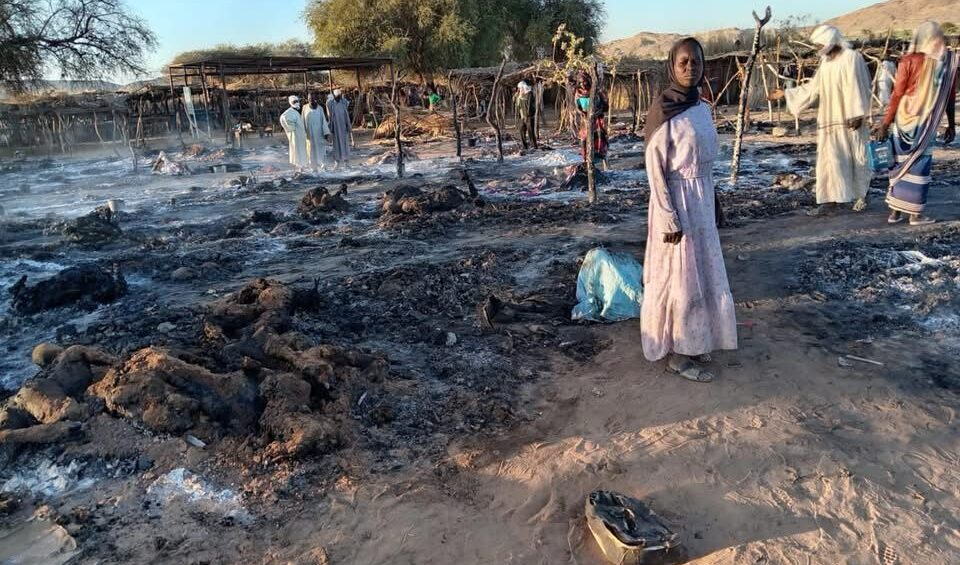
Over 400,000 people were forced to flee to El Fasher from the Zamzam refugee camp due to RSF ground operations. Photo: Doctors Without Borders

The specter of ethnic cleansing looms over hundreds of thousands trapped without food, water, or medicines in the North Darfur state’s besieged capital, El Fasher.

Nearly half a million people were forced to flee from North Darfur state’s capital, El Fasher, and the nearby Zamzam camp for displaced people in just the two months of April and May, the UN Secretary-General’s spokesperson, Stéphane Dujarric, said in a press briefing on Monday, July 7.

North Darfur is the only one of the five states where the Sudanese Armed Forces (SAF) have retained a foothold in the war-torn Sudan’s vast western region of Darfur, overrun by its rival, the paramilitary Rapid Support Force (RSF), within six months of the war’s start in April 2023. 

Moving against this last holdout, the RSF laid siege in May 2024 on El Fasher, where the SAF has a base, and the Zamzam camp on its outskirts, where some of the local self-defense units allied with the SAF are positioned.

Read more: Sudan’s paramilitary attacks largest IDP camps amid world’s biggest displacement crisis, killing over 100

“People are not only caught in indiscriminate heavy fighting between” the two warring forces, but are also being “actively targeted by the RSF and its allies, notably on the basis of their ethnicity,” Michel Olivier Lacharité, MSF head of emergencies, said on July 3. 

SAF created the RSF in Darfur

The RSF was coalesced in 2013 from the militias the SAF had spawned from Arabic-speaking nomadic communities to perpetrate mass atrocities on the regional-language-speaking groups of sedentary farmers that supported the rebel groups during the Darfur civil war in the 2000s.

The partnership between SAF and the RSF lasted a decade, during which they seized power together to form a military junta in 2019, when mass pro-democracy protests forced the ouster of Omar al-Bashir after a 30-year-long dictatorship.

The duo deployed its troops to jointly repress the militant protests that continued until April 15, 2023, when the intensifying power struggle within the junta between the two forces crossed the Rubicon, mobilizing their forces against each other and hurling the country into a civil war.

IDPs under attack

Now continuing into its third year, the civil war has claimed an estimated 150,000 lives and displaced nearly 13 million people, unleashing in this poor North African country the world’s worst displacement crisis.

Over three million of the displaced have fled to other countries as refugees. An estimated 8.6 million have remained as Internally Displaced People (IDPs). Darfur, which already had almost 3.1 million IDPs from the regional civil war in the 2000s, was among the worst-affected regions by this new war.

The RSF maneuvered quickly to take control over this region, starting with West Darfur, where it committed ethnically targeted massacres in June 2023 against the Masalit community, most of whom were displaced in the Darfur civil war. Ethnic cleansing of this community from West Darfur was nearly complete by November that year. 

Read more: Ethnic cleansing of West Darfur’s El Geneina culminates in largest massacre since onset of war in Sudan 

By then, the RSF had taken over most of the region, with North Darfur as the SAF’s only holdout. Members of the state’s Zaghawa community, which had until then remained neutral, volunteered in large numbers to form self-defense units that aligned themselves with the SAF.

“In light of the ethnically motivated mass atrocities committed on the Masalit in West Darfur… MSF fears such a scenario will be repeated in El Fasher – notably because witnesses report that RSF soldiers spoke of plans to ‘clean El Fasher’ of its non-Arab, and especially Zaghawa, community,” MSF said in a report released on July 3. 

Titled “Besieged, attacked, starved: Mass atrocities in El Fasher“, the report added: “Aside from the direct violence exerted on civilians, residents from El Fasher and surrounding areas [also] have been prevented from meeting their basic needs.”

Famine

The RSF’s siege since last May has cut off the city and its surrounding localities from supplies. Its markets have been repeatedly bombed by both sides. At the Zamzam camp located seventeen kilometers south of El Fasher, a famine was declared in August 2024. 

Among the largest IDP camps in the country, it was already sheltering about 350,000 displaced people from the Darfur civil war. With new displacements from this intra-junta civil war, IDPs nearly doubled in Zamzam. Its meagre resources in the form of aid were already stretched when its supply was cut off by the RSF’s siege in May 2024.

“When fighting erupted in Zamzam in December 2024 and then intensified at the end of January and in February 2025, the camp was hosting … up to 700,000,” MSF’s report added. 

Most of them had to flee again, for the second, even third time, after the RSF’s large-scale ground offensive this April, displacing over 400,000 in three weeks, according to the International Organization for Migration (IOM). 

“A large proportion of the population fled to El Fasher, where they remained trapped, out of reach of humanitarian aid and exposed to attacks and further mass violence,” the report warns.  

No escape for the Zaghawa community

Over 68,000 others have fled across the western border to Chad, according to the UN Refugee Agency (UNHCR). No one identified as Zaghawa was let through the RSF checkpoints, multiple survivors told the MSF. “They would only let mothers with small children under the age of five through,” said one of the refugees interviewed in Chad. 

“Other children and adult men didn’t go through. Males over fifteen can hardly cross the border [into Chad]. They take them, they push them aside, and then we only hear a noise, gunshots … Fifty families came along with me. Not even one boy of 15 years old or above.. [is] among us” in Chad. 

“The number of people killed and injured” in the RSF’s offensive on Zamzam is “unknown”, the report said, adding “with no functional hospital within the camp, most of the wounded had no access to life-saving medical assistance.” 

“Access to healthcare has been rendered near impossible, as most healthcare infrastructure has been partially or completely damaged.” MSF’s own medical facilities have been attacked over a dozen times since last May.

Original article by Pavan Kulkarni republished from peoples dispatch under a Creative Commons Attribution-ShareAlike 4.0 (CC BY-SA) license.

Continue ReadingEthnic cleansing awaits North Darfur’s besieged, starving population in war-torn Sudan

Now in its third year, war in Sudan is “is far from over”

Spread the love

Original article by Pavan Kulkarni republished from peoples dispatch under a Creative Commons Attribution-ShareAlike 4.0 (CC BY-SA) license.

The violence in Sudan has pushed North Darfur’s Zamzam camp, home to over 500,000 people, into famine. Photo: WHO

“The world has completely forgotten the crisis in Sudan” where “a slow death” has become the plight of millions, decried Adam Rojal, spokesperson of the General Coordination of Darfur Displaced People and Refugees.

As the fighting between the Sudanese Armed Forces (SAF) and the paramilitary Rapid Support Forces (RSF) intensifies in North Darfur state and the Kordofan region, UN Human Rights Chief Volker Türk warned on Friday, June 20 of a “further aggravation in an already brutal and deadly conflict.”

The war, which began in April 2023, has created the world’s worst humanitarian disaster, displacing nearly 13 million, leaving Sudan with the highest number of displaced people globally. 30 million, almost two-thirds of the population, need humanitarian aid, including food assistance.

The worst affected are children, amounting to half of the hungry and displaced population, the UN said last week, decrying a severe fund shortage, leaving it unable to assist over 80% of the children in need.

Children under the age of five are the largest group of victims of the measles outbreak, amounting to over 60% of the 2,200 suspected cases since the start of this year. Another 230 children have been killed and 7,300 suspected to have been infected by cholera, which broke out last July, killing over 2,000 and suspectedly infecting over 80,000 people.

The number of cholera cases sharply spiked earlier this year in Sudan’s capital region of Khartoum where over 34,000 displaced people returned mainly since March after the SAF retook control from the RSF.

Damaged in the fighting, most of the homes to which they returned lacked water or sanitation. In May, the RSF launched a series of drone strikes on water purification units and power plants, further curtailing water supply, and forcing residents to resort to unsafe sources, which caused over a nine-fold rise in cholera cases in the second half of that month.

Read more: Cholera ravages Sudan’s war-torn capital 

Last week, Doctors Without Borders (MSF) raised the alarm that the cholera wave had now reached the western semi-arid region of Darfur for the first time since the war began.

In a press statement on Sunday, June 22, the General Coordination of Darfur Displaced People and Refugees warned that diseases may spread rapidly as monsoon season has begun in Darfur, with rains lashing over the displaced sheltering only under plastic sheets with no sanitation facilities.

Particularly vulnerable to the deadly diseases are the children and the pregnant and breast-feeding women who are already suffering from malnutrition, its spokesperson Adam Rojal told Peoples Dispatch, “The world has completely forgotten the crisis in Sudan” where “a slow death” has become the plight of millions, he decried.

The Darfur region consists of five states, of which North Darfur remains the only state where the SAF has retained a foothold in its capital El Fasher. The RSF, which controls the rest of the region, has laid a siege on the city for over a year now, cutting off its supply of food and other essentials, and frequently bombarding the famine-stricken displaced peoples camp on its outskirts. Activists have warned that El Fasher itself is on the verge of famine.

Now in its third year, the war that has caused a humanitarian catastrophe on such a scale “is far from over”, a UN fact-finding mission warned last week.

After seizing the border triangle region between Sudan, Libya, and Egypt on June 14, the RSF also announced on June 16 that it captured the strategic oasis town of Karb al-Toum in the north-western desert region. This effectively severs the supply route to the SAF in North Darfur while paving the way for the RSF to advance in the Northern State.

The RSF – which the SAF claims to have killed 28,613 and wounded 43,575 since the start of the war – is also making advances in the Kordofan region in the center and southern region of Sudan. Civilians in South Kordofan’s city of El-Dibeibat – a crucial crossroad linking the state with North Kordofan and West Darfur – have been caught up in the crossfire for over two years.

Fleeing this city, thousands sought refuge in North Kordofan’s capital El-Obeid, under SAF’s control. However, the RSF has surrounded El-Obeid, “and may attack it in the coming days, as announced by the RSF commander,” the UN Human Rights Office of the High Commissioner said on June 20. 

Original article by Pavan Kulkarni republished from peoples dispatch under a Creative Commons Attribution-ShareAlike 4.0 (CC BY-SA) license.

Continue ReadingNow in its third year, war in Sudan is “is far from over”

Hundreds killed in the “deadliest single bombing” of the war in Sudan

Spread the love

Original article by Pavan Kulkarni republished from peoples dispatch under a Creative Commons Attribution-ShareAlike 4.0 (CC BY-SA) license.

The market is near the city of El-Fasher, which is controlled by the army. Photo: Darfur Network for Human Rights

The airstrike on one of the last major markets left with stocks in the North Darfur will likely accelerate the famine spreading in the state since last August.

An airstrike by the Sudanese Armed Forces (SAF) on a busy market in the North Darfur state killed hundreds on March 24, in what has been described as the “deadliest single bombing since the beginning of the war” in April 2023. 

Initial reports indicated about 60 deaths, but the death count has now “exceeded 350, with hundreds more injured and missing”, Adam Rojal, spokesperson of the General Coordination of Darfur Displaced People and Refugees told Peoples Dispatch. The SAF, he alleged, had deliberately chosen the weekly market day to inflict maximum damage.

“My Office has learned that 13 of those killed belonged to a single family, and that some of the injured are also reportedly dying as a result of the extremely limited access to healthcare,” the UN High Commissioner for Human Rights Volker Türk said in a statement on March 26.

“The market was bustling with life, mothers carrying their children, elderly men selling vegetables, and people going about their daily business. Then, without warning, we heard the deafening roar of a plane overhead. Within seconds, everything went dark. The air was thick with dust and the cries of the wounded. Bodies lay scattered across the ground,” 37-year-old Aisha, a survivor with injuries to an arm and leg, told the Darfur Network for Human Rights. “We are not fighters. We are just ordinary people struggling to live. Why are they bombing us?”

The market is located in the village of Tora, about 35 km north of the state capital El-Fasher, the last SAF foothold in the Darfur region. Its former ruling partner in the military junta turned enemy, the Rapid Support Forces (RSF) – which has taken over the other four states in the Darfur region – has besieged El-Fasher since mid-last year, cutting off the supply routes for food aid and causing a famine.

The famine is spreading to increasing regions of the state as both the warring parties, in an attempt to undermine the other’s position, have been indiscriminately bombing civilian spaces, including in markets – the SAF from the air and the RSF with artillery. Those markets spared of bombing, have largely run out of stock.

Tora had the only major market left with supplies for the people in and around El-Fasher to buy food and other essentials, Rojal said. On March 24, thousands had journeyed from different areas of the state to this weekly Monday market to stock up ahead of the ending of Ramadan, when an SAF warplane dropped a barrel bomb.

Pictures of the aftermath show charred bodies lying in the smoldering debris of the stalls in this market. 

Two million already suffering extreme food insecurity in the state 

The destruction of the last major market in the state is bound to worsen hunger and hasten the spread of famine in North Darfur, where two million people are already facing extreme food insecurity

The United Nations Children’s Fund (UNICEF) said on March 26 that over 457,000 children in the state are suffering acute malnourishment. Almost 146,000 of them are in the deadly stage of Severe Acute Malnutrition (SAM). 

IDP camps worst affected by famine

The worst affected are the camps for Internally Displaced People (IDP). Hundreds of thousands displaced during the Darfur Civil War in the 2000s when the SAF and the RSF’s precursor, the Janjaweed militias, committed mass atrocities together, were already living here in precarious conditions, dependent on food aid even before this war began in 2023. 

Displacing 12 million more, this war has caused the world’s worst displacement crisis. In North Darfur alone, almost 1.7 million people have been displaced, including 60,000 in the last six weeks. Increasing numbers of the newly displaced have sought shelter in Zamzam, one of Sudan’s largest and oldest IDP camps, located on the outskirts of El Fasher. 

Its population doubled from 350,000 before this war to up to 800,000, increasing pressure on the limited food availability. Cut-off from supply after the RSF’s siege of El-Fasher last year, a famine was declared here in August 2024.      

Read: Besieged and bombed amid famine, hundreds of thousands of IDPs struggle to survive in Darfur 

Since then, the UN’s World Food Program (WFP) has only been able to transport one convoy of aid to the camp amid the fighting. Late last month, the WFP complained that it was forced to halt “the distribution of life-saving food and nutrition assistance” because the “escalating violence left WFP’s partners with no choice but to evacuate staff for safety.

Over four weeks have passed since its Regional Director for Eastern Africa and acting Country Director for Sudan, Laurent Bukera, warned that “without immediate assistance, thousands of desperate families in Zamzam could starve in the coming weeks.” Nearly half a million more IDPs are also on the brink in the Abu Shouk camp, where famine was declared last December, along with El Salam camp in the state.

By May, the UN projects that five more areas in North Darfur, including the state capital El Fasher, may be in the throes of famine.  

Read: RSF shelling kills dozens in famine-stricken Abu Shouk Camp amid siege of North Darfur 

Water shortages worsen the plight of the starving

Water shortages have also become life-threatening, especially in Zamzam and Abu Shouk, added Rojal. “There are no means of transporting water from distant locations, nor are there spare parts and fuel to operate boilers” to purify the available water for drinking.  

“Women and children stand in line from 4 am to 3 pm waiting for their turn to collect whatever little water there is,” he added. Unable to bathe and wash their clothes and cooking pots, many are becoming increasingly vulnerable to diseases, which are life-threatening when victims are already suffering malnutrition. 

“We must resume the delivery of life-saving aid,” emphasized Bukera. “For that, the fighting must stop, and humanitarian organizations must be granted security guarantees.”

No end in sight after nearly two years of war

However, there are few signs of the guns stopping anytime soon. Earlier, following 48 hours of fighting on March 20 and 21, the RSF captured the town of Al-Malha, killing dozens of civilians and displacing another 15,000 households.

200 km to the northeast of El-Fasher, Al-Malha is the northernmost urban area before the desert stretching to Libya, from where Khalifa Haftar has been reportedly supplying the RSF with arms and fuel. The capture of this town therefore reinforces the RSF’s strategic advantage against the SAF in North Darfur.

The SAF, on the other hand, has also scored an important victory, retaking Sudan’s capital Khartoum on March 26, expelling the RSF after intense battles.

“Both sides are killing citizens because they were essentially one entity, killing citizens together. They are devoid of morality and humanity,” laments Rojal.

Original article by Pavan Kulkarni republished from peoples dispatch under a Creative Commons Attribution-ShareAlike 4.0 (CC BY-SA) license.

Continue ReadingHundreds killed in the “deadliest single bombing” of the war in Sudan

US, Israel discuss settling Gazans in 3 African states, AP reports

Spread the love

This work by Middle East Monitor is licensed under a Creative Commons Attribution-NonCommercial-ShareAlike 4.0 International License.

Pro-Palestinian protesters march from Whitehall to the US embassy in Nine Elms, on 15 February 2025, in London, England [Richard Baker/In Pictures via Getty Images]

The US and Israel have contacted officials of three East African countries to discuss using their territories to settle Palestinians who have been forcibly displaced from Gaza, the Associated Press reported today according to Reuters

US and Israeli sources cited by AP said officials from Sudan, Somalia and the breakaway region of Somaliland were contacted regarding the proposal.

However, Sudan officials said they rejected the proposal from the US and officials from Somalia and Somaliland said they were unaware of any contacts, reported AP.

The White House and the US State Department did not immediately respond to Reuters’ requests for comment. The information ministers for Somalia and its breakaway region of Somaliland did not pick up Reuters’ telephone calls for comment.

Earlier this month, Arab leaders adopted a $53 billion Egyptian reconstruction plan for Gaza that would avoid displacing Palestinians from the enclave, in contrast to US President Donald Trump’s vision of a “Middle East Riviera“.

Trump has proposed a US takeover of Gaza, where Israel’s military assault in the last 17 months has killed nearly 50,000 Palestinians, to reconstruct the destroyed enclave, after earlier suggesting that Palestinians should be permanently displaced.

Trump’s plan reinforced long-standing Palestinian fears of being permanently driven from their homes, and was met with widespread international rejection and warnings that it amounted to ethnic cleansing.

Israel continues to ban the entry of building materials and diggers into the besieged enclave, leaving the over 2.3 million Palestinians in the Strip to live among the ruins.

READ: Israel’s use of human shields in Gaza is part of its genocide against Palestinians

This work by Middle East Monitor is licensed under a Creative Commons Attribution-NonCommercial-ShareAlike 4.0 International License.

Neo-Fascist Climate Science Denier Donald Trump says Burn, Baby, Burn.
Elon Musk urges you to be a Fascist like him, says that you can ignore facts and reality then.
Continue ReadingUS, Israel discuss settling Gazans in 3 African states, AP reports