The climate is changing so fast that we haven’t seen how bad extreme weather could get

Spread the love
Andreas Thaller/Alamy Stock Photo

Simon H. Lee, University of St Andrews; Hayley J. Fowler, Newcastle University, and Paul Davies, Newcastle University

Extreme weather is by definition rare on our planet. Ferocious storms, searing heatwaves and biting cold snaps illustrate what the climate is capable of at its worst. However, since Earth’s climate is rapidly warming, predominantly due to fossil fuel burning, the range of possible weather conditions, including extremes, is changing.

Scientists define “climate” as the distribution of possible weather events observed over a length of time, such as the range of temperatures, rainfall totals or hours of sunshine. From this they construct statistical measures, such as the average (or normal) temperature. Weather varies on several timescales – from seconds to decades – so the longer the period over which the climate is analysed, the more accurately these analyses capture the infinite range of possible configurations of the atmosphere.

Typically, meteorologists and climate scientists use a 30-year period to represent the climate, which is updated every ten years. The most recent climate period is 1991-2020. The difference between each successive 30-year climate period serves as a very literal record of climate change.

This way of thinking about the climate falls short when the climate itself is rapidly changing. Global average temperatures have increased at around 0.2°C per decade over the past 30 years, meaning that the global climate of 1991 was around 0.6°C cooler than that in 2020 (when accounting for other year-to-year fluctuations), and even more so than the present day.

A moving target for climate modellers

If the climate is a range of possible weather events, then this rapid change has two implications. First, it means that part of the distribution of weather events comprising a 30-year climate period occurred in a very different background global climate: for example, northerly winds in the 1990s were much colder than those in the 2020s in north-west Europe, thanks to the Arctic warming nearly four times faster than the global average. Statistics from three decades ago no longer represent what is possible in the present day.

Second, the rapidly changing climate means we have not necessarily experienced the extremes that modern-day atmospheric and oceanic warmth can produce. In a stable climate, scientists would have multiple decades for the atmosphere to get into its various configurations and drive extreme events, such as heatwaves, floods or droughts. We could then use these observations to build up an understanding of what the climate is capable of. But in our rapidly changing climate, we effectively have only a few years – not enough to experience everything the climate has to offer.

Extreme weather, such as drought, is a particular problem for farmers. EPA-EFE/Guillaume Horcajuelo

Extreme weather events require what meteorologists might call a “perfect storm”. For example, extreme heat in the UK typically requires the northward movement of an air mass from Africa combined with clear skies, dry soils and a stable atmosphere to prevent thunderstorms forming which tend to dissipate heat.

Such “perfect” conditions are intrinsically unlikely, and many years can pass without them occurring – all while the climate continues to change in the background. Based on an understanding of observations alone, this can leave us woefully underprepared for what the climate can now do, should the right weather conditions all come together at once.

Startling recent examples include the extreme heatwave in the Pacific north-west of North America in 2021, in which temperatures exceeded the previous Canadian record maximum by 4.6°C. Another is the occurrence of 40°C in the UK in summer 2022, which exceeded the previous UK record maximum set only three years earlier by 1.6°C. This is part of the reason why the true impact of a fixed amount of global warming is only evident after several decades, but of course – since the climate is changing rapidly – we cannot use this method anymore.

Playing with fire

To better understand these extremes, scientists can use ensembles: many runs of the same weather or climate model that each slightly differ to show a range of plausible outcomes. Ensembles are routinely used in weather prediction, but can also be used to assess extreme events which could happen even if they do not actually happen at the time.

When 40°C first appeared in ensemble forecasts for the UK before the July 2022 heatwave, it revealed the kind of extreme weather that is possible in the current climate. Even if it had not come to fruition, its mere appearance in the models showed that the previously unthinkable was now possible. In the event, several naturally occurring atmospheric factors combined with background climate warming to generate the record-shattering heat on July 19 that year.

The highest observed temperature each year in the UK, from 1900 to 2023

A graph showing the highest observed temperature in the UK between 1900 and 2023.
The hottest days are getting hotter in the UK. Met Office/Kendon et al. 2024

Later in summer 2022, after the first occurrence of 40°C, some ensemble weather forecasts for the UK showed a situation in which 40°C could be reached on multiple consecutive days. This would have posed an unprecedented threat to public health and infrastructure in the UK. Unlike the previous month, this event did not come to pass, and was quickly forgotten – but it shouldn’t have been.

It is not certain whether these model simulations correctly represent the processes involved in producing extreme heat. Even so, we must heed the warning signs.

Despite a record-warm planet, summer 2024 in the UK has been relatively cool so far. The past two years have seen global temperatures far above anything previously observed, and so potential extremes have probably shifted even further from what we have so far experienced.

Just as was the case in August 2022, we’ve got away with it for now – but we might not be so lucky next time.


Imagine weekly climate newsletter

Don’t have time to read about climate change as much as you’d like?
Get our award-winning weekly roundup in your inbox instead. Every Wednesday, The Conversation’s environment editor writes Imagine, a short email that goes a little deeper into just one climate issue. Join the 35,000+ readers who’ve subscribed so far.


Simon H. Lee, Lecturer in Atmospheric Science, University of St Andrews; Hayley J. Fowler, Professor of Climate Change Impacts, Newcastle University, and Paul Davies, Chief Meteorologist, Met Office and Visiting Professor, Newcastle University

This article is republished from The Conversation under a Creative Commons license. Read the original article.
Continue ReadingThe climate is changing so fast that we haven’t seen how bad extreme weather could get

Why courts favour cars, not the climate

Spread the love
Morgan Trowland and Marcus Decker protest and close the M25 Dartford Bridge.
UN Special Rapporteur on Environmental Defenders under the Aarhus Convention Michel Forst attended the trial of five Just Stop Oil supporters at Southwark Crown Court. He attended as an observer because of his serious concerns.

Jack Marley, The Conversation

For planning to block a motorway encircling London, five Just Stop Oil activists were recently sentenced to a minimum of four years in prison.

Just Stop Oil wants to end the extraction and burning of coal, oil and gas in the UK by 2030. The group’s demands are consistent with what scientists have said is necessary to limit climate change. The same scientific advice underpins international agreements the UK has signed.

Just Stop Oil’s methods, which include stopping traffic by sitting on roads, are also peaceful. So why are its members facing a long stretch behind bars?


Imagine weekly climate newsletter

This roundup of The Conversation’s climate coverage comes from our award-winning weekly climate action newsletter. Every Wednesday, The Conversation’s environment editor writes Imagine, a short email that goes a little deeper into just one climate issue. Join the 35,000+ readers who’ve subscribed.


Such a severe sentence for non-violent protest has “no equivalent in modern times” according to Graeme Hayes and Steven Cammiss. Hayes is a reader in political sociology at Aston University while Cammiss teaches law at the University of Birmingham. Both have sat in on several high-profile climate protest cases.

“Nobody should be surprised,” they say. “These sentences are a logical outcome of Britain’s authoritarian turn against protest over the past five years”.

The state of UK protest law

Protesters facing prosecution in England and Wales were once partially protected by what’s known as Hoffman’s bargain. This maintained that the state would show restraint and offer lenient sentences to non-violent protesters deemed to be acting proportionately. Last week’s ruling seems to show that this meagre allowance is now dead.

Protest by Just Stop Oil
Just Stop Oil has vowed to continue its campaign of disruptive protest.

The Court of Appeal reaffirmed that Hoffman’s bargain should apply to such cases in 2021 with a ruling that exonerated the Stansted 15, protesters who obstructed a Home Office deportation flight in 2017. However, the court rejected the Stansted 15’s “necessity defence”, the argument that they were obliged to do what they did to avoid a greater harm. This precedent has been upheld in subsequent cases, including climate protest trials.

Conspiracy to cause public nuisance, which the Just Stop Oil five were found guilty of, is a relatively new offence (introduced in the Police, Crime, Sentencing and Courts Act 2022) that carries a maximum prison term of ten years. People who feel compelled to take part in disruptive protest due to the existential threat of climate change risk a decade in jail without being able to explain their actions to a jury.

“The legal philosopher Antony Duff suggests that criminal cases are a means of holding fellow citizens to account for their behaviour,” Hayes and Cammiss say.

“A trial fails in this regard if it doesn’t let defendants account for their behaviour in ways that are meaningful to them.”

UK anti-protest law is now so restrictive that even minor concessions seem like major victories. Retired social worker Trudi Warner was cleared of contempt of court in April for holding a placard outside London’s Old Bailey, affirming the right of juries to acquit based on their conscience. The result was lauded as a “huge win for democracy” by civil liberty campaigners.

The reality is far from comforting and should in fact trouble everyone, says Emily Barritt, a senior lecturer in environmental law at King’s College London:

“Punishing protesters won’t solve the problems that they are highlighting. Lethal air, filthy rivers, collapsing food chains, the climate crisis – these problems will all continue unabated, and soon become much more inconvenient than having to get off the bus to walk the last mile to work.”

Roads are sacred, the climate less so

Should the right of motorists to travel unimpeded take precedence over a collective demand for a liveable climate? Whatever most people think, the archetypal “angry motorist” is a constituency which Britain’s political elite appear eager to woo.

Labour proclaimed itself the only party “truly on the side of drivers” at the recent election, fending off an accusation from the Conservative party that Keir Starmer had “declared war on motorists across Britain”.

Matthew Paterson, a professor of international politics at the University of Manchester, sees this as a strategy of the political right to remain relevant as the climate crisis unfolds – a bet that the public will baulk at the necessary disruption of decarbonisation.

Yet channelling Britain’s road rage did not prevent an electoral wipeout for Rishi Sunak and the Conservatives. Rebecca Willis, a professor in energy and climate governance at Lancaster University, was unsurprised.

An onshore wind farm.
Action on climate change commands broad public support in the UK. Dave Head/Shutterstock

“The Conservatives’ private polling must have confirmed what public opinion research has consistently told us: there are vanishingly few votes to be won through an agenda of delaying action on climate change,” she says.

Hayes and Cammiss also note the result of a snap poll which showed 61% of respondents considered the record jail sentences for the five Just Stop Oil activists too harsh.

Public consent for the UK’s crackdown on peaceful protest cannot be taken for granted. Even so, Oscar Berglund, a researcher in political economy at the University of Bristol, expects more and longer prison sentences for protesters.

“These are political sentences and climate activists [have] become political prisoners,” he wrote via email.

“Removing the politics of climate change from the courtroom doesn’t change that.”

The Conversation would like to thank our readers and subscribers for their continued support after Imagine won best science newsletter of the year at the Publisher Newsletter Awards.

Jack Marley, Environment + Energy Editor, The Conversation

This article is republished from The Conversation under a Creative Commons license. Read the original article.
Experienced climbers scale a rock face near the historic Dumbarton castle in Glasgow, releasing a banner that reads “Climate on a Cliff Edge.” One activist, dressed as a globe, symbolically looms near the edge, while another plays the bagpipes on the shores below. | Photo courtesy of Extinction Rebellion and Mark Richards
Continue ReadingWhy courts favour cars, not the climate

‘Oil Kills’ protesters disrupt flights at airports across Europe in wave of action

Spread the love

https://www.theguardian.com/world/article/2024/jul/24/oil-kills-protesters-disrupt-flights-at-airports-across-europe-in-wave-of-action

Police and Heathrow airport security were on high alert after Just Stop Oil protesters were arrested at the airport’s perimeter fence. Photograph: Kristian Buus/In Pictures/Getty Images

Ten activists arrested at Heathrow, over 30 flights cancelled at Cologne-Bonn, and planes delayed or diverted

Climate activists acting under the banner “oil kills” have glued themselves to the tarmac and grounded flights across Europe as holidaymakers attempt to make summer getaways.

In a wave of protests at airports from Oslo to Barcelona, activists disrupted flights and demanded that rich and polluting countries phase out fossil fuels by 2030. The protests, which the activists said had led to several arrests, came a day after climate scientists logged the world’s hottest day on record.

An activist taking part in the protest at Cologne-Bonn airport holds her hand glued to the runway. Photograph: Letzte Generation Handout/EPA

“Ordinary people are taking matters into their own hands today to do what our criminal governments have failed to do,” the campaign said in a statement. “We are putting our bodies on the wheels of the machine of the global fossil economy and saying ‘oil kills’.”

In Germany, protesters from the climate group Letzte Generation (Last Generation) briefly stopped flights on Wednesday morning after they cut a chain-linked fence and glued themselves to the tarmac at Cologne-Bonn airport. The airport said that 31 flights had been cancelled and six diverted.

In Austria, activists delayed a flight by refusing to sit down before takeoff while others spilled orange paint in the terminal at Vienna airport. In Switzerland, they blocked roads leading to Zürich and Geneva airports.

https://www.theguardian.com/world/article/2024/jul/24/oil-kills-protesters-disrupt-flights-at-airports-across-europe-in-wave-of-action

Continue Reading‘Oil Kills’ protesters disrupt flights at airports across Europe in wave of action

UK Urged to Cut Off Arms Sales to Israel After Restoring UNRWA Funds

Spread the love

Original article by JULIA CONLEY republished from Common Dreams under Creative Commons (CC BY-NC-ND 3.0). 

British Foreign Secretary David Lammy speaks at the NATO Summit at the Walter E. Washington Convention Center in Washington, D.C. on July 10, 2024 (Photo: Drew Angerer/AFP via Getty Images)

“While the U.K. is giving aid with one hand, it continues to send weapons used in the ongoing killing of civilians with the other,” said one advocate.

Days after independent United Nations experts said the blocking of humanitarian aid to Gaza over the past nine months has led to famine throughout the enclave, rights groups on Friday applauded the British government’s announcement that it will restore funding to the U.N.’s relief agency in Palestine—but said the Labour Party will remain complicit in the suffering of Gazans as long as it continues arming Israel.

Tim Bierley, a campaigner at Global Justice Now, said the decision to restore U.K. funding to the U.N. Relief and Works Agency for Palestine Refugees in the Near East (UNRWA) six months after it was suspended was “welcome and long overdue,” following mounting reports of dozens of Palestinian children and adults dying of starvation in the intervening months.

The U.K. was one of several wealthy countries that suspended funding for UNRWA, which operates mainly on international donations, after Israel in January claimed without evidence that 12 out of 13,000 UNRWA staff members in Gaza had been involved in the Hamas-led attack on southern Israel on October 7, 2023.

The loss of hundreds of millions of dollars from the U.S., Germany, the U.K., and other countries severely reduced UNRWA’s ability to provide food aid, healthcare, sanitation services, and employment to Palestinians, nearly all of whom have been forcibly displaced by Israel’s bombardment.

Following sustained advocacy by rights groups and Labour Party lawmakers who support Palestinian rights, Foreign Secretary David Lammy on Friday announced that the new Labour government, which took control after this month’s elections, has committed to providing £21 million ($27 million) to UNRWA following former Conservative Prime Minister Rishi Sunak’s decision to suspend funding.

Lammy noted in his speech to Parliament that restoring UNRWA funding is “absolutely central” to ensuring humanitarian aid reaches Palestinians in Gaza.

“No other agency can deliver aid at the scale needed,” he said.

The government’s decision leaves the U.S.—UNRWA’s largest funder—as the only country that has not restored its financial support for the agency. In March, the U.S. passed a military spending package that prohibits UNRWA funding through at least March 2025.

Bierley was among those who noted that while the U.K. is committing to provide more humanitarian relief to Palestinians in Gaza, the Labour government is still providing Israel with military aid.

“While the U.K. is giving aid with one hand, it continues to send weapons used in the ongoing killing of civilians with the other. Labour has had more than enough time to review the evidence: The U.K. must ban all arms sales to Israel with immediate effect,” said Bierley.

Journalist Owen Jones added that considering all countries except the U.S. have already restored funding—with many citing the U.N.’s finding that Israel’s accusations were unsubstantiated—the Labour government’s decision is “the bare minimum.”

“Now end arms sales and stop trying to wreck the [International Criminal Court] arrest warrants,” said Jones, referring to the U.K.’s bid to intervene in the ICC’s case against Israeli Prime Minister Benjamin Netanyahu over alleged war crimes in Gaza.

Member of Parliament Andy McDonald of the Labour Party called on Prime Minister Keir Starmer’s government to “clarify that it supports the processes that will prosecute war crimes and that the U.K. accepts the ICC jurisdiction over Israel, and has no truck with the nonsense legal argument of Israel being exempt from international law.”

The humanitarian group Medical Aid for Palestinians said the Labour Party’s decision will restore “an irreplaceable lifeline” to a population of 2.3 million Gaza residents who “face an existential threat from Israel’s military bombardment and siege.”

“We hope that David Lammy and the U.K. government will now commit to increasing multi-year support to the agency,” said the group, “to bolster its vital humanitarian work across the region and ensure the inalienable rights of Palestinian refugees are upheld.”

Original article by JULIA CONLEY republished from Common Dreams under Creative Commons (CC BY-NC-ND 3.0). 

Continue ReadingUK Urged to Cut Off Arms Sales to Israel After Restoring UNRWA Funds

Pressure mounts on Labour to ban arms sales to Israel as new foreign secretary meets with ‘war criminals’

Spread the love

https://morningstaronline.co.uk/article/pressure-mounts-on-labour-to-ban-arms-sales-to-israel-as-new-foreign-secretary-meets-with-war-criminals

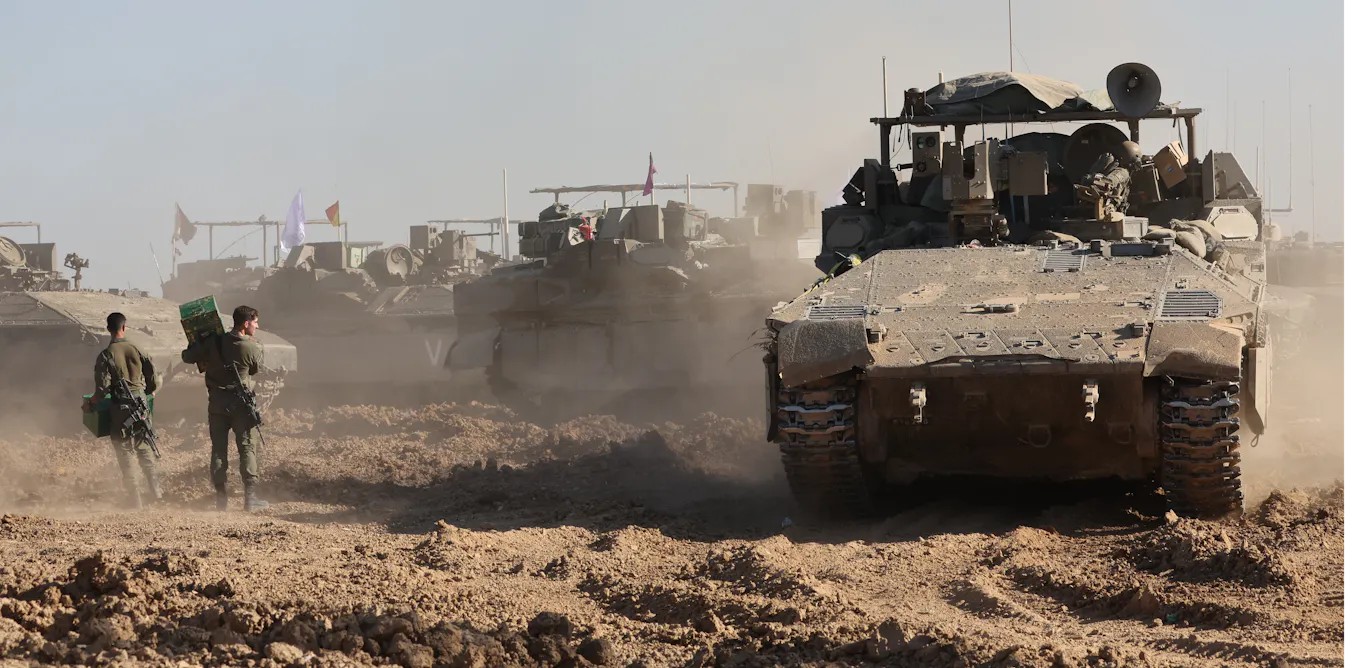
Israeli tanks stand near the Israel-Gaza border as seen from southern Israel, July 14, 2024

FOREIGN Secretary David Lammy should focus on halting arms exports to Israel instead of associating with war criminals, campaigners charged today.

The calls came as Mr Lammy visited Israel and the occupied Palestinian West Bank on his first trip to the Middle East in his new role.

Today, he shook hands with Israeli President Isaac Herzog, who last December was pictured proudly signing a shell headed for Gaza.

Mr Lammy said he hoped to see a hostage deal emerge “in the coming days” and a ceasefire to bring “alleviation to the suffering and the intolerable loss of life.”

Failing to lift the suspension of vital funding to the UN Relief & Works Agency, which the government gave £35 million last year, he announced that a slimmer sum of £5.5m would be given to medical aid charity UK-Med.

https://morningstaronline.co.uk/article/pressure-mounts-on-labour-to-ban-arms-sales-to-israel-as-new-foreign-secretary-meets-with-war-criminals

Vote For Genocide Vote Labour.
Zionist Keir Starmer is quoted "I support Zionism without qualification." He's asked whether that means that he supports Zionism under all circumstances, whatever Zionists do.
Zionist Keir Starmer is quoted “I support Zionism without qualification.” He’s asked whether that means that he supports Zionism under all circumstances, whatever Zionists do.
Continue ReadingPressure mounts on Labour to ban arms sales to Israel as new foreign secretary meets with ‘war criminals’