Greens call for scaling up actions against Israel, accusing UK government of complicity in killing 

Spread the love
Image of the Green Party's Carla Denyer on BBC Question Time.
Image of the Green Party’s Carla Denyer on BBC Question Time.

As Israel appears to be on the brink of an all out assault on Rafah, despite warnings against such action by the UN, Red Crescent and others, Green Party co-leader Carla Denyer is demanding the UK scale up actions against the Israeli government until the killing stops. Greens are calling for an end to all arms sales to Israel, prosecutions of war criminals and targeted sanctions on Israel’s leaders. 

Green Party co-leader Carla Denyer said: 

“It is clear that the Israeli government is refusing to heed warnings about the catastrophic implications of an all-out attack on Rafah. The UK government must now demand that Israel stop the killing, calling for an immediate ceasefire. Hamas must also agree to this ceasefire of course, and release all hostages.  

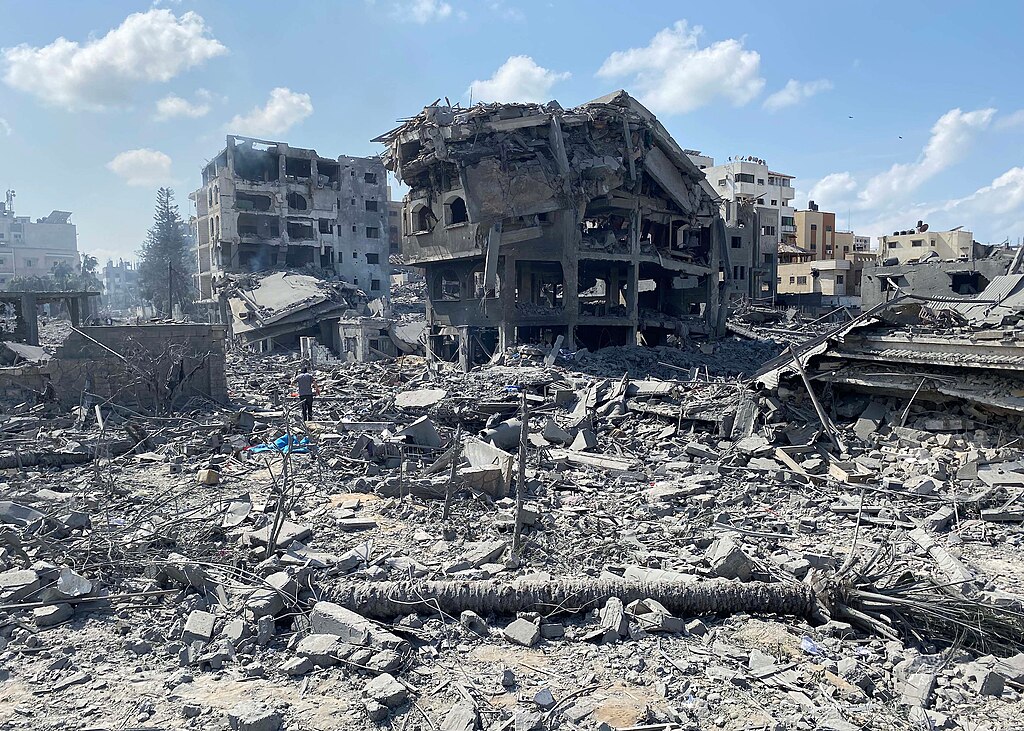
“Decisions made by the UK government – above all its failure, month after month, to call for an immediate ceasefire – have made them complicit in the killing of almost 28,000 people to date, 12,000 of whom are children.

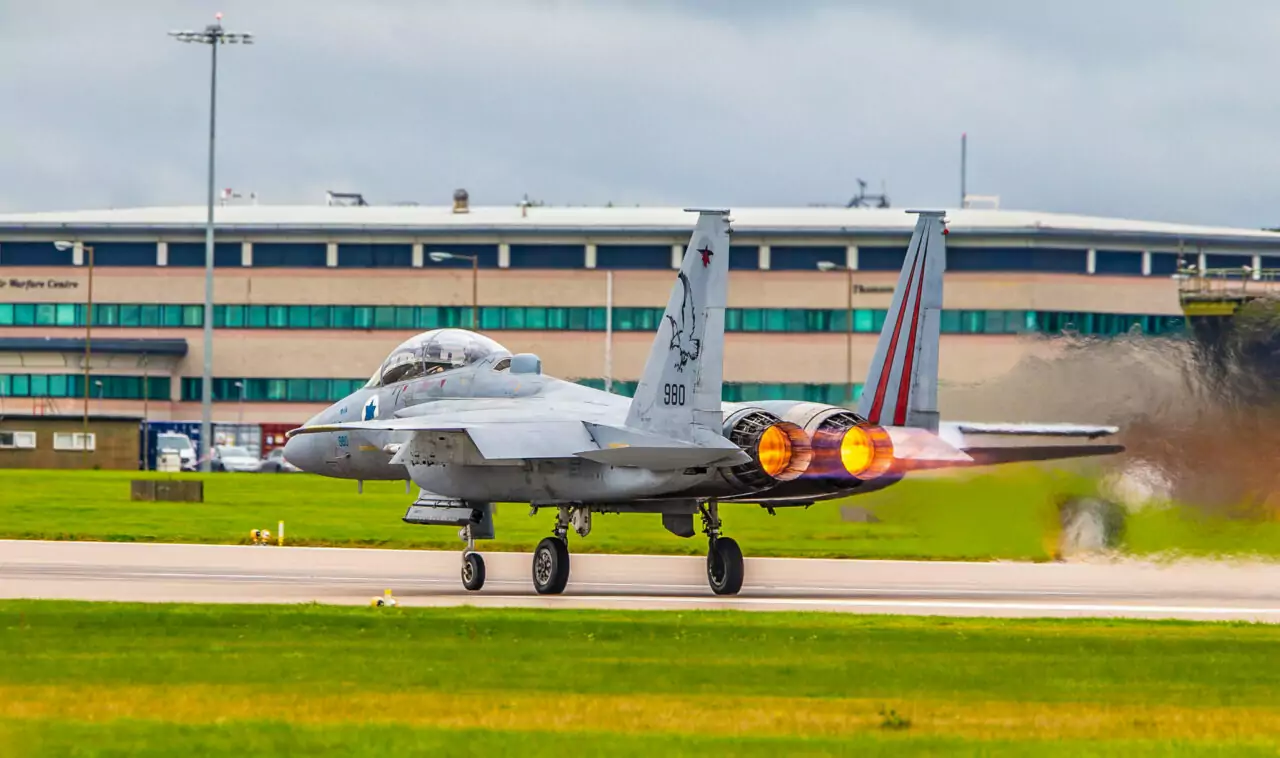
“Israel relies on certain weapon parts manufactured in the UK, including the F-35 Joint Strike Fighter whose essential components are made here.

A Dutch court has today ordered the state to cease the export of F-35 spare parts to Israel. We call on the UK government to follow suit, and suspend all arms export licences to Israel until the killing stops. The UK must also cease all military collaboration with Israel, including allowing Israeli use of British bases and RAF intelligence flights over Gaza.

“Greens would also implement the requirements of the Boycott, Divestment and Sanctions campaign across the UK economy. This would include excluding Israel from international sporting and music events; withdrawing all public money from funds with investments in Israel; and ending beneficial trade arrangements with Israel.

“It is clear that only outside pressure will make Israel stop its mass killing. We can increase the pressure on Israeli leaders by introducing targeted sanctions against key individuals. This would include travel bans and asset freezes on Israel’s leadership and cabinet members, in particular those calling for new settlements in Gaza and the annexation of the West Bank. 

“Finally, we would encourage UK authorities including the Metropolitan Police and Director of Public Prosecutions to pursue perpetrators of war crimes committed where UK citizens are the victims or where UK citizens are potential perpetrators. 

“There are many steps the UK government could take to pressure Israel to stop the killing. Its refusal to do so means that they are implicitly condoning the appalling carnage in Gaza.” 

Continue ReadingGreens call for scaling up actions against Israel, accusing UK government of complicity in killing 

South Africa to file legal action with ICJ against UK, US, for war crime complicity

Spread the love

Article republished from the Skwawkbox

South Africa’s legal team at the ICJ last month

Nation whose case put Israel formally on trial for genocide joins Nicaragua in turning its sights on accomplices in genocide

A team of almost fifty South African lawyers is preparing a legal case to bring to the International Court of Justice (ICJ), the United Nations’ top court, against the US and UK, for their complicity in Israel’s array of war crimes in Gaza and the occupied West Bank.

South Africa’s successful ICJ case against Israel last month led to Israel being put formally on trial for genocide and resulted in a string of binding orders on Israel to stop its slaughter of Gazans and even to protect Palestinians from harm, as well as to ensure adequate aid reaches the strip’s 2.5 million people, many of whom are now starving and homeless.

Israel has flouted the rulings, continuing and even intensifying the mass murder and blockade, and is being supported in its flagrant disregard for international law by the UK and US, who are providing both material and financial aid, and giving political cover by refusing to condemn Israel’s actions or to call its crimes what they are, instead casting doubt on the mass deaths and brutality and denigrating the Court’s ruling.

South Africa joins Nicaragua in taking action against the UK and US. The Central American nation has also filed a case against Germany, Canada and the Netherlands.

The team of lawyers, which already numbers around fifty, is likely to grow further as more lawyers are set to join from other nations. Wikus van Rensburg, who is leading the action, said that it was time for the US and other complicit nations to “be held responsible for [their] crimes”.

Article republished from the Skwawkbox

Continue ReadingSouth Africa to file legal action with ICJ against UK, US, for war crime complicity

North Sea oil and gas assets a risky bet for private equity, think tank warns 

Spread the love
North Sea oil rigs in Cromarty Firth, Scotland. Credit: joiseyshowaa (CC BY-SA 2.0)

https://www.energymonitor.ai/finance/corporate-strategy/north-sea-oil-and-gas-assets-a-risky-bet-for-private-equity-think-tank-warns/?cf-view&cf-closed

North Sea oil and gas production is expected to plummet in the coming years, as renewables become increasingly competitive. Now, a new report by the think tank Carbon Tracker argues that private equity companies invested in North Sea (UK and Norway) oil and gas assets are particularly vulnerable to losses as demand falls. Private equity’s presence in the North Sea has grown steadily since the 2014 oil price crash. 

In 2010, just 8% of North Sea assets were held by private companies, with the remainder owned by publicly listed oil majors and state-owned utilities. Currently, 29.7% of North Sea equity licences are held by current or former private equity-backed ventures, according to recent analysis from the Common Wealth think tank. 

Carbon Tracker argues that while all upstream investors risk being saddled with stranded assets as demand for hydrocarbons falls, private equity companies are particularly vulnerable. For starters, the private equity industry is already facing “serious headwinds” as the low interest rate environment that “buoyed private markets” for the last decade “has, at least temporarily, come to an end”. 

https://www.energymonitor.ai/finance/corporate-strategy/north-sea-oil-and-gas-assets-a-risky-bet-for-private-equity-think-tank-warns/?cf-view&cf-closed

Continue ReadingNorth Sea oil and gas assets a risky bet for private equity, think tank warns 

Extreme UK flood levels are happening much more often than they used to, analysis shows

Spread the love

Original article by Louise Slater and Jamie Hannaford republished from the Conversation under Creative Commons Attribution-No Derivatives licence.

Flooding on the River Ouse, near York. January 4 2024. EPA-EFE/Adam Vaughan

Heavy rain across southern Britain meant that most rivers in England swelled at the beginning of 2024, prompting widespread flooding.

The River Trent was among the most severely affected. Water levels at the Drakelow gauging station in the west Midlands reached 3.88 metres on January 4 – well above the previous record set less than four years earlier in February 2020.

Are floods growing larger and happening more often in the UK? There are two ways to answer this question. One is to consult computer models which project Earth’s climate in the future, and the other is to search the historical record.

Climate projections are important but highly uncertain as they indicate a wide range of potential futures for any given river. Projections also only tell part of the story as they do not reflect the patterns of water use, changes to groundwater levels or to the urban environment that can decide flooding on a particular river.

That’s why we give equal importance to historical data, although we cannot project past changes directly into the future. Historical archives of river monitoring data can help us understand how the largest floods are changing on the River Trent.

For instance, how is the 50-year water level (the highest point a river would be expected to reach in 50 years on average) changing? On the River Trent at Drakelow, the 50-year water level has risen from about 3.46 metres in 1959 to 3.83 metres in 2024. This means the largest floods are indeed getting bigger.

How the January 2024 floods compare

The flood water level on the Trent at the start of January 2024 was actually higher than what scientists would consider a once-in-50-year event in today’s warmer climate.

The 50-year water level on the River Trent has risen in 65 years. Grey circles indicate the highest water level in each year. L. Slater

Another way to understand how much floods have changed is to consider how often they happen today compared with the past. If we look at the 50-year level from 1959 (about 3.46 metres), how often would such a flood occur in today’s climate?

On the Trent, a 3.46-metre flood level would now be expected to occur every 9.38 years, on average, in 2024. This makes sense, considering there have already been six events in which the river level exceeded 3.5 metres since the 1980s. The historical data shows that extreme water levels are being reached more frequently on the Trent.

The 50-year flood level from 1959 (3.5 metres) now recurs every nine years in 2024. L. Slater

Our analysis of the Trent aligns with results from a previous study which looked at rivers across the rest of the UK. In many places, 50-year floods are now happening less than every ten years, on average.

This is partly due to climate change and also partly due to natural variations in the climate which see rivers cycle through spells of more and less flooding. The UK went through a “flood-poor” period in the 1960s, 70s and 80s, and has been going through a “flood-rich” period since then.

Prepare for worse

It is worth noting that there are caveats to this type of analysis which tries to assess how extreme events are changing over time. Caution must be exercised when looking at long records of river levels given changes in river management practices and measurement techniques over time.

It should also be noted that these results use a different methodology to the industry standard for flood estimation.

But what matters is not the precise changes in the frequency of major floods (from 50 years down to nine or even two-and-a-half years, according to some statistical methods). It is understanding that the frequency of large floods is changing fast.

For many UK rivers with more extensive historical archives of river level measurements, floods appear to be occurring far more frequently than before. In a smaller number of places, they are occurring less frequently.

We need to better understand how flood risk will evolve in response to further human-induced warming. The UK’s efforts to predict and prepare for future floods are supported by the Environment Agency’s flood hydrology roadmap, which is mobilising a wide community of researchers and practitioners.

Overall, the UK must prepare to live with bigger floods and be able to predict flood-rich periods several years ahead. This starts with an understanding of how the severity and frequency of such events is changing.

To support this effort, we are preparing a range of tools to guide flood planners, including an interactive map allowing users to explore how flood return periods are changing across the UK. Being better prepared for extreme events in a warming climate starts with understanding what it will mean for your local area.

Original article by Louise Slater and Jamie Hannaford republished from the Conversation under Creative Commons Attribution-No Derivatives licence.

Continue ReadingExtreme UK flood levels are happening much more often than they used to, analysis shows