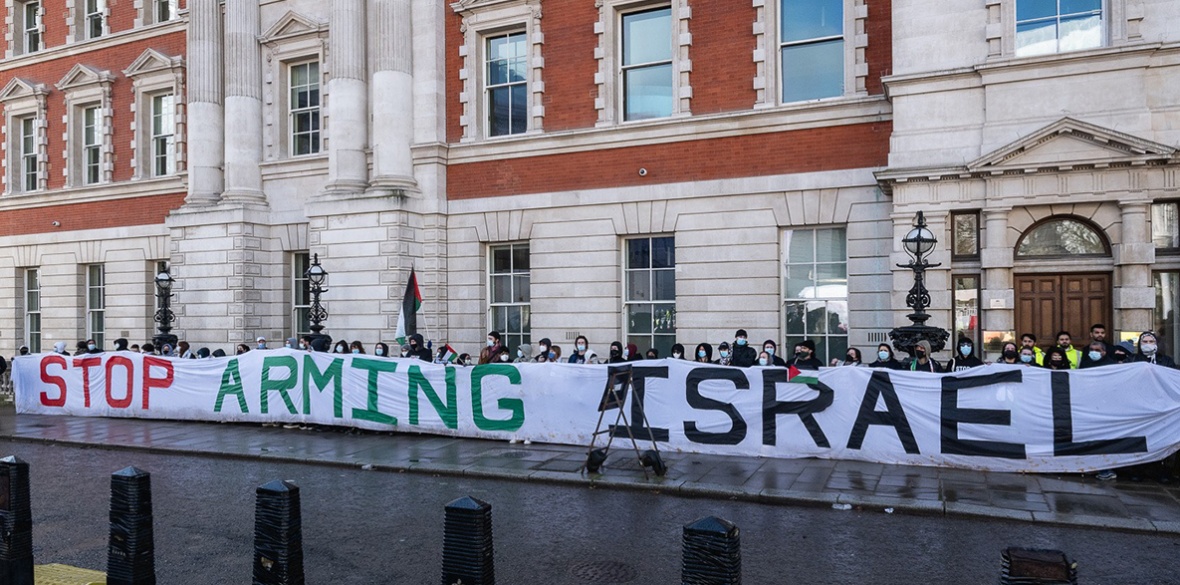
London for a Free Palestine activists outside the Department of Business and TradePhoto: Guy Smallman
ACTIVISTS from London for a Free Palestine occupied the Department of Business and Trade today, [yesterday] demanding that the British government stop arming Israel.
The campaigners took over the lobby in the Old Admiralty Building, chanting: “British government you can’t hide, we charge you with genocide.”
One protester, Maria, said: “We are going here today because the Department for Business and Trade is where the licences for British arms exports to Israel are signed and approved.
“The UK has been giving Israel diplomatic, military and economic support, which has enabled it to carry out and continue its genocide and long-term colonisation of Palestine.”
Another participant, Cynthia Allett, said: “This department arms genocide.
“As Israel prepares a ground invasion in Rafah, we won’t allow the weapons used to slaughter more Palestinian people to be supplied in our names and funded by our taxes.”
UK could be sued over decision to stop funding a key UN agency delivering aid to Gaza
A legal challenge is to be launched against the Foreign Office over its decision to pause funding for the UN’s Palestinian refugee agency.
On behalf of a British-Palestinian man with family in Gaza, Bindmans LLP has issued a pre-action letter to the government department warning, if funding is not reinstated by Tuesday 2, April, the client will issue judicial review proceedings in the High Court.
The legal challenge claims that the government’s decision to withdraw funds from the United Nations Relief and Works Agency for Palestine Refugees in the Near East (UNRWA) on 27, January was decided, “illogically and without due consideration of evidence, of international obligations, or of FCDO decision-making frameworks”.
Funding was paused by 10 governments including Australia, the United States and Canada following allegations by the Israeli authorities that several UNRWA staff were involved in the October 7 Hamas attacks.
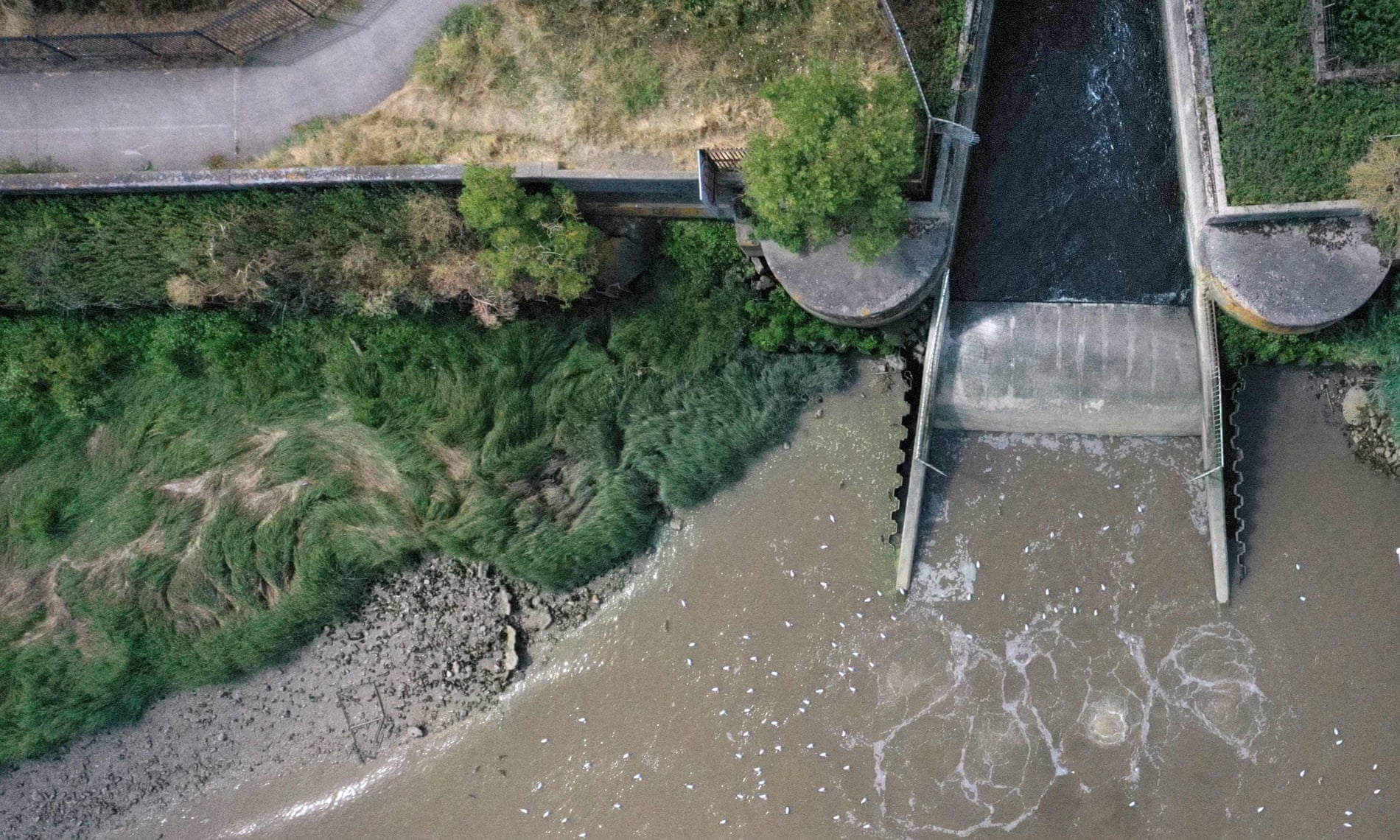
Raw sewage discharges are allowed to be released from storm overflows on the network only in exceptional circumstances, such as very heavy rain. Photograph: Ben Stansall/AFP/Getty Images
Exclusive: Environment Agency figures due out on Wednesday to reveal 129% increase in total discharges on previous 12 months
More than 4m hours of raw sewage discharges poured into rivers and seas last year, a 129% increase on the previous 12 months, new figures are expected to reveal on Wednesday.
Total discharges from the 14,000 storm overflows owned by English water companies that release untreated sewage into rivers and coastal waters increased by 59% to 477,972, making 2023 the worst year for sewage spills, according to an early estimate of the Environment Agency figures seen by the Guardian.
Senior industry sources were preparing for the government to turn its guns on water companies after the record year of discharges. The Environment Agency said it was setting up a whistleblowing hotline for people who work in the industry to report any activity that concerns them.
The heavy rainfall over the autumn and winter is likely to be blamed by the industry for the huge rise. Storm overflows are supposed to be used only in extreme weather but for many years they have been used routinely, discharging raw sewage even on dry days in some cases. The academic Peter Hammond has shown how water companies are routinely using storm overflow discharges in their water management.
Heavy industry and dense urban populations both contribute to high levels of effluent containing toxic forever chemicals that don’t biodegrade. Shaun Jeffers/Shutterstock
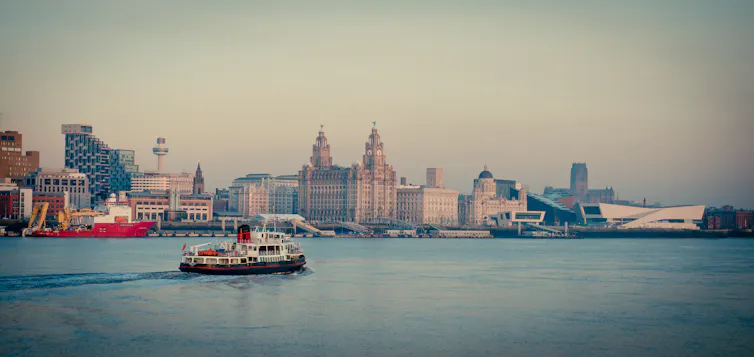
Huge volumes of toxic and cancer-causing forever chemicals are flowing into the River Mersey in north-west England. With a busy, industrialised skyline and both Manchester and Liverpool nearby, it’s the second-most populated river catchment in the UK after the Thames.
None of England’s rivers are in good chemical health. The recent State of Our Rivers 2024 report from The Rivers Trust found that one of the most concerning groups of synthetic chemicals, per- and polyfluorinated substances (PFAS), contaminates almost every river in England.
My team of hydrologists and I found that levels of two cancer-causing PFAS washing off the land and into the Mersey – perfluorooctane sulfonate (PFOS) and perfluorooctanoic acid (PFOA)– are among the highest in the world. Both PFOS and PFOA, now banned in most countries, were used to make many consumer and industrial products including furniture, cookware and fire-fighting foams.
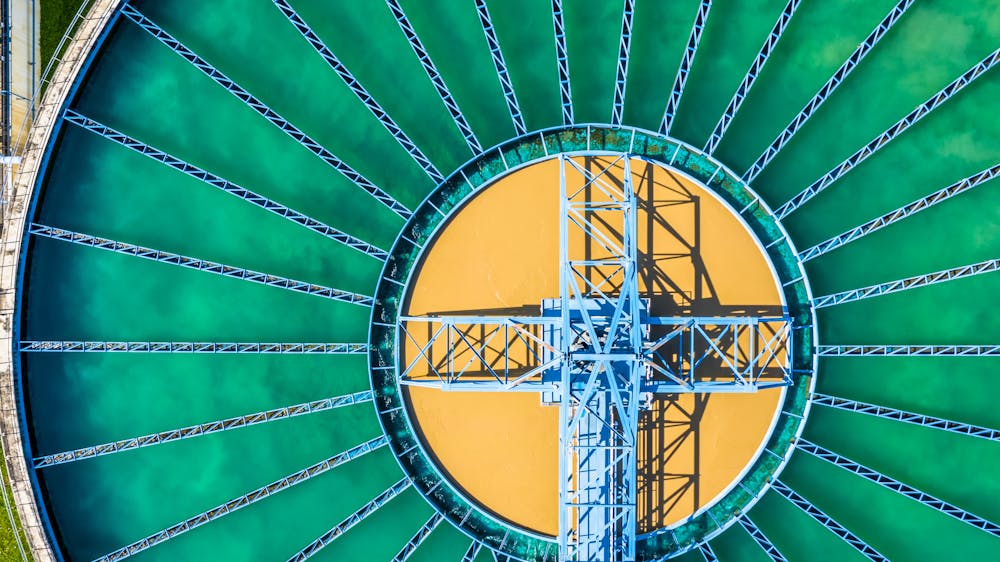
Our study established that around 50% of PFOS, a type of PFAS that’s classed as probably carcinogenic, in the River Mersey was coming from supposedly clean water discharges from 44 different wastewater treatment works. PFAS are found in treated water because they are very difficult to remove using current water treatment technologies. Almost all wastewater treatment work effluents in the UK contain PFAS.
Our research highlights that we don’t really know where the remaining 50% of that PFOS is coming from. Other potential sources include runoff from airports where big amounts of fire-fighting foams are used, agricultural land and landfills. Some PFAS could contaminate groundwater or surface waters used as drinking water.
PFAS chemicals are all around us and impossible to avoid. Found in everything from food packaging to cosmetic products, they are also used to manufacture green energy technologies like electric cars and wind turbines.
Whenever PFAS are used to make these products they end up draining into rivers, so wildlife and humans living in the river basin are exposed to them. We don’t really know the long-term implications of the current exposure levels. But these chemicals will persist. If we keep discharging them into the environment, PFAS exposure levels – and potential risk to humans – can increase through drinking water contamination and accumulation in the food chain.
Pinpointing exactly where, how and when these chemicals enter rivers is not straightforward so scientists and governments don’t really have the regulatory measures and tools to hold polluters to account.
Significant PFAS levels were found in effluent from 44 wastewater treatment plants flowing into the River Mersey. Avigator Fortuner/Shutterstock
Dilute, disperse and detect
Since the 1850s, the Mersey has been a hub of industry, particularly for cotton manufacturing and chemical production. Most cities, including Liverpool and Manchester, have been built close to rivers and seas, partly to dilute pollution and transport it away. Out of sight, out of mind.
Today, enormous volumes of toxic waste are discharged into rivers and seas because dilution reduces chemical concentrations to extremely low or undetectable levels. But undetectable does not mean toxic chemicals are not present.
PFAS are ubiquitous. These forever chemicals have been detected almost everywhere we look, including in Antarctica, in whales and polar bears and in rainwater. Most people on Earth probably have detectable concentrations of PFAS in their blood. An estimated [97% of the US population] have PFAS in their blood, according to one study of 1,682 people.
A state of flux
Governments need to phase out PFAS from society to reduce human exposure and halt their accumulation in the environment and wildlife. The development of safer, healthier, greener alternatives is essential.
Even if the tap gets turned off immediately, the PFAS already in the environment, and in the River Mersey, will persist for thousands of years. To prevent further PFAS entering our rivers, more needs to be known about how they move into and through river systems. As part of our study, we measured this flux.
Instead of measuring a chemical’s concentration, flux is a measure of how much PFAS, for example in kilograms per year, flows off the land and out to sea. By measuring PFAS flux at multiple locations across a river basin like the Mersey, we can distinguish different sources of PFAS to the river, such as runoff from landfills, and establish how much comes from that source.
Governments and environmental regulators need more data like this to develop strategies that will prevent PFAS entering rivers. Our study not only confirmed wastewater treatment works effluents as a source of PFAS to the Mersey, we established exactly how much is coming from that source. This direct accountability is required to effectively target regulations and apply measures that make a difference.
Greater understanding of the flux and movement of PFAS in rivers and seas will help ensure better monitoring and regulation of these toxic forever chemicals – especially in hotspots like the Mersey that should be a top priority for enforcement.
Don’t have time to read about climate change as much as you’d like?
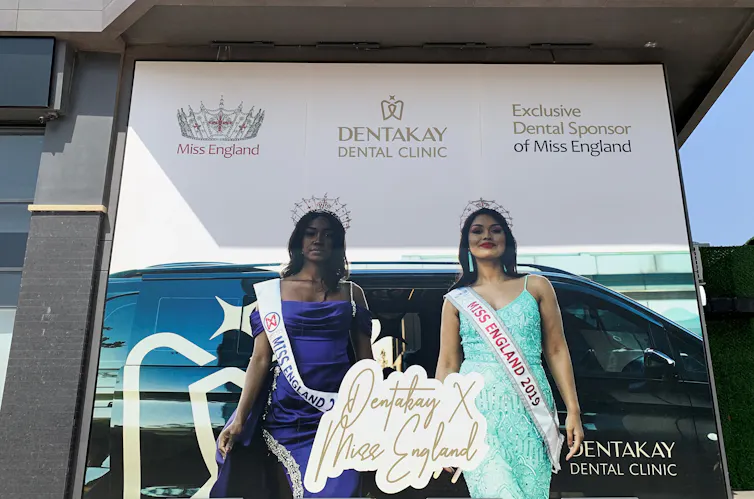
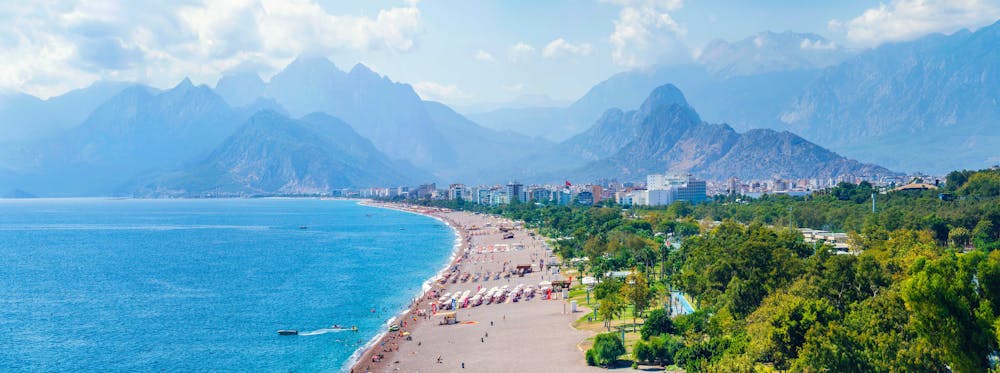
It’s a hot summer day in the Turkish city of Antalya, a Mediterranean resort with golden beaches, deep blue sea and vibrant nightlife. The pool area of the all-inclusive resort is crammed with British people on sun loungers – but they aren’t here for a holiday. This hotel is linked to a dental clinic that organises treatment packages, and most of these guests are here to see a dentist.
From Norwich, two women talk about gums and injections. A man from Wales holds a tissue close to his mouth and spits blood – he has just had two molars extracted.
The dental clinic organises everything for these dental “tourists” throughout their treatment, which typically lasts from three to 15 days. The stories I hear of what has caused them to travel to Turkey are strikingly similar: all have struggled to secure dental treatment at home on the NHS.
“The hotel is nice and some days I go to the beach,” says Susan*, a hairdresser in her mid-30s from Norwich. “But really, we aren’t tourists like in a proper holiday. We come here because we have no choice. I couldn’t stand the pain.”
This is Susan’s second visit to Antalya. She explains that her ordeal started two years earlier:
I went to an NHS dentist who told me I had gum disease … She did some cleaning to my teeth and gums but it got worse. When I ate, my teeth were moving … the gums were bleeding and it was very painful. I called to say I was in pain but the clinic was not accepting NHS patients any more.
The only option the dentist offered Susan was to register as a private patient:
I asked how much. They said £50 for x-rays and then if the gum disease got worse, £300 or so for extraction. Four of them were moving – imagine: £1,200 for losing your teeth! Without teeth I’d lose my clients, but I didn’t have the money. I’m a single mum. I called my mum and cried.
Susan’s mother told her about a friend of hers who had been to Turkey for treatment, then together they found a suitable clinic:
The prices are so much cheaper! Tooth extraction, x-rays, consultations – it all comes included. The flight and hotel for seven days cost the same as losing four teeth in Norwich … I had my lower teeth removed here six months ago, now I’ve got implants … £2,800 for everything – hotel, transfer, treatments. I only paid the flights separately.
In the UK, roughly half the adult population suffers from periodontitis – inflammation of the gums caused by plaque bacteria that can lead to irreversible loss of gums, teeth, and bone. Regular reviews by a dentist or hygienist are required to manage this condition. But nine out of ten dental practices cannot offer NHS appointments to new adult patients, while eight in ten are not accepting new child patients.
Dentists in England say: ‘If you go to Turkey, we won’t touch you [afterwards].’ But I don’t worry because there are no appointments at home anyway. They couldn’t help in the first place, and this is why we are in Turkey.
‘How can we pay all this money?’
As a social anthropologist, I travelled to Turkey a number of times in 2023 to investigate the crisis of NHS dentistry, and the journeys abroad that UK patients are increasingly making as a result. I have relatives in Istanbul and have been researching migration and trading patterns in Turkey’s largest city since 2016.
In August 2023, I visited the resort in Antalya, nearly 400 miles south of Istanbul. As well as Susan, I met a group from a village in Wales who said there was no provision of NHS dentistry back home. They had organised a two-week trip to Turkey: the 12-strong group included a middle-aged couple with two sons in their early 20s, and two couples who were pensioners. By going together, Anya tells me, they could support each other through their different treatments:
I’ve had many cavities since I was little … Before, you could see a dentist regularly – you didn’t even think about it. If you had pain or wanted a regular visit, you phoned and you went … That was in the 1990s, when I went to the dentist maybe every year.
Anya says that once she had children, her family and work commitments meant she had no time to go to the dentist. Then, years later, she started having serious toothache:
Every time I chewed something, it hurt. I ate soups and soft food, and I also lost weight … Even drinking was painful – tea: pain, cold water: pain. I was taking paracetamol all the time! I went to the dentist to fix all this, but there were no appointments.
Anya was told she would have to wait months, or find a dentist elsewhere:
A private clinic gave me a list of things I needed done. Oh my God, almost £6,000. My husband went too – same story. How can we pay all this money? So we decided to come to Turkey. Some people we know had been here, and others in the village wanted to come too. We’ve brought our sons too – they also need to be checked and fixed. Our whole family could be fixed for less than £6,000.
By the time they travelled, Anya’s dental problems had turned into a dental emergency. She says she could not live with the pain anymore, and was relying on paracetamol.
In 2023, about 6 million adults in the UK experienced protracted pain (lasting more than two weeks) caused by toothache. Unintentional paracetamol overdose due to dental pain is a significant cause of admissions to acute medical units. If left untreated, tooth infections can spread to other parts of the body and cause life-threatening complications – and on rare occasions, death.
In February 2024, police were called to manage hundreds of people queuing outside a newly opened dental clinic in Bristol, all hoping to be registered or seen by an NHS dentist. One in ten Britons have admitted to performing “DIY dentistry”, of which 20% did so because they could not find a timely appointment. This includes people pulling out their teeth with pliers and using superglue to repair their teeth.
In the 1990s, dentistry was almost entirely provided through NHS services, with only around 500 solely private dentists registered. Today, NHS dentist numbers in England are at their lowest level in a decade, with 23,577 dentists registered to perform NHS work in 2022-23, down 695 on the previous year. Furthermore, the precise division of NHS and private work that each dentist provides is not measured.
The COVID pandemic created longer waiting lists for NHS treatment in an already stretched public service. In Bridlington, Yorkshire, people are now reportedly having to wait eight-to-nine years to get an NHS dental appointment with the only remaining NHS dentist in the town.
In his book Patients of the State (2012), Argentine sociologist Javier Auyero describes the “indignities of waiting”. It is the poor who are mostly forced to wait, he writes. Queues for state benefits and public services constitute a tangible form of power over the marginalised. There is an ethnic dimension to this story, too. Data suggests that in the UK, patients less likely to be effective in booking an NHS dental appointment are non-white ethnic groups and Gypsy or Irish travellers, and that it is particularly challenging for refugees and asylum-seekers to access dental care.
This article is part of Conversation Insights
The Insights team generates long-form journalism derived from interdisciplinary research. The team is working with academics from different backgrounds who have been engaged in projects aimed at tackling societal and scientific challenges.
In 2022, I experienced my own dental emergency. An infected tooth was causing me debilitating pain, and needed root canal treatment. I was advised this would cost £71 on the NHS, plus £307 for a follow-up crown – but that I would have to wait months for an appointment. The pain became excruciating – I could not sleep, let alone wait for months. In the same clinic, privately, I was quoted £1,300 for the treatment (more than half my monthly income at the time), or £295 for a tooth extraction.
I did not want to lose my tooth because of lack of money. So I bought a flight to Istanbul immediately for the price of the extraction in the UK, and my tooth was treated with root canal therapy by a private dentist there for £80. Including the costs of travelling, the total was a third of what I was quoted to be treated privately in the UK. Two years on, my treated tooth hasn’t given me any more problems.
A better quality of life
Not everyone is in Antalya for emergency procedures. The pensioners from Wales had contacted numerous clinics they found on the internet, comparing prices, treatments and hotel packages at least a year in advance, in a carefully planned trip to get dental implants – artificial replacements for tooth roots that help support dentures, crowns and bridges.
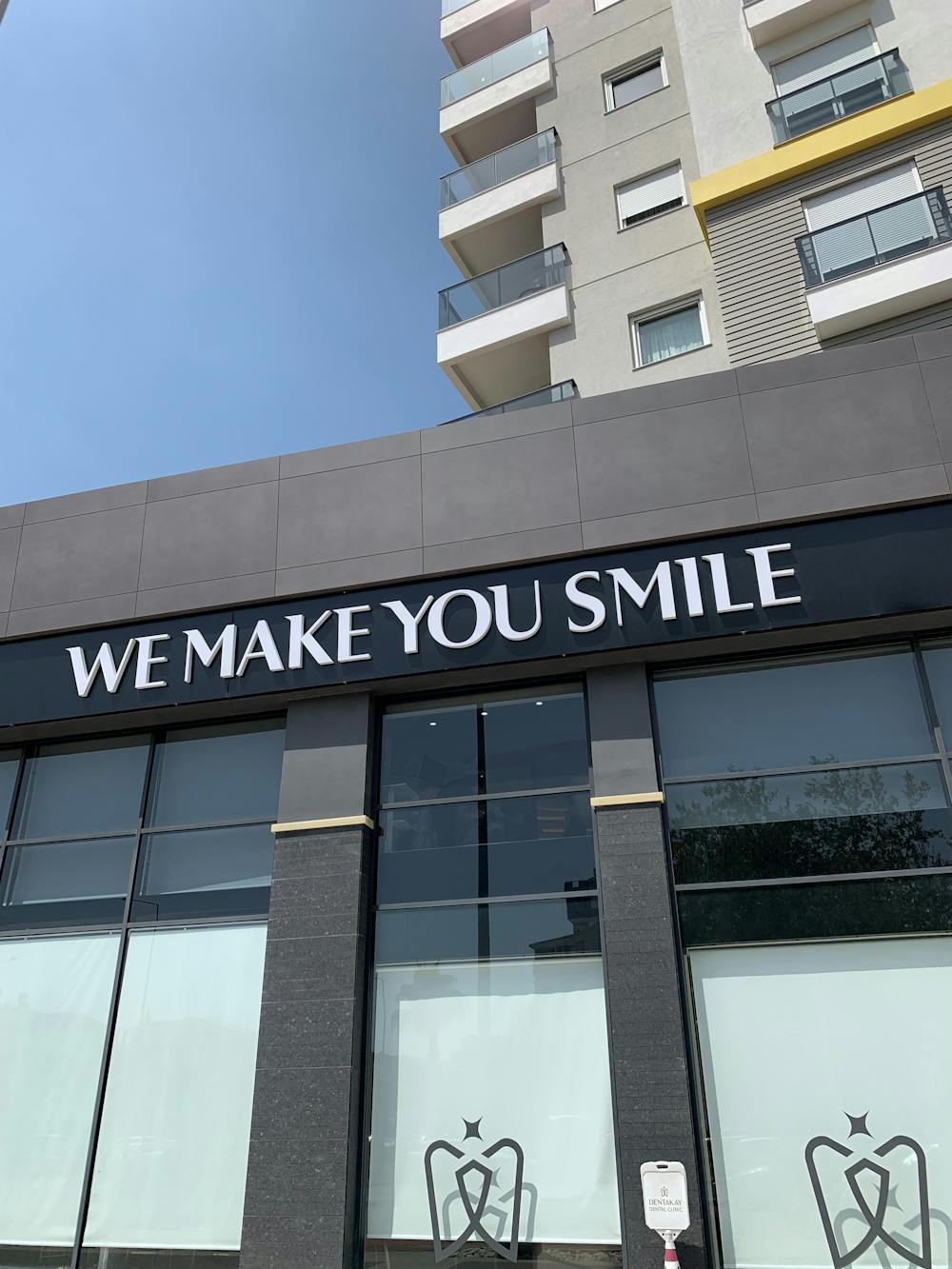
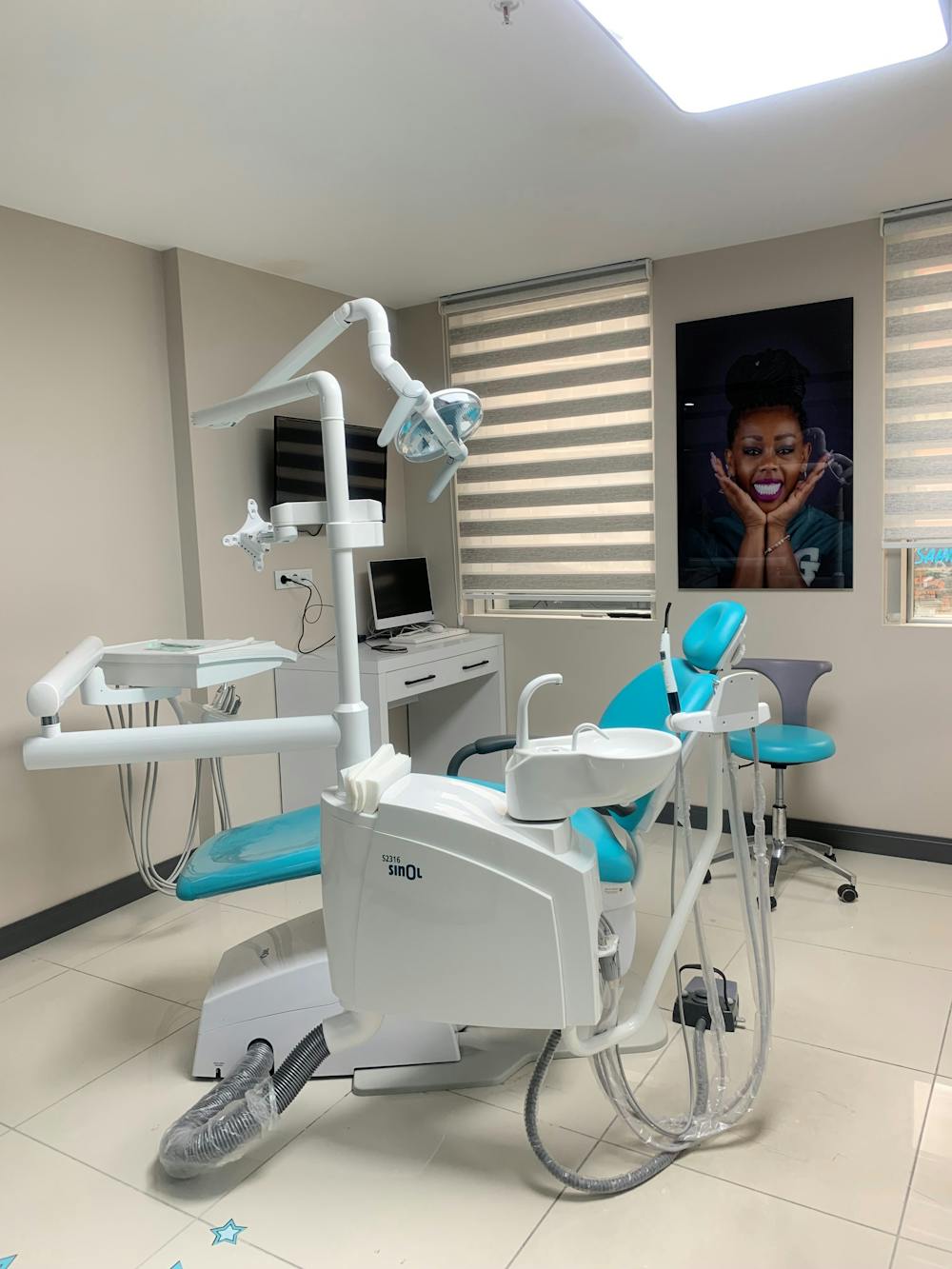
Dental clinic in Antalya, Turkey. Diana Ibanez-Tirado, CC BY-NC-ND
In Turkey, all the dentists I speak to (most of whom cater mainly for foreigners, including UK nationals) consider implants not a cosmetic or luxurious treatment, but a development in dentistry that gives patients who are able to have the procedure a much better quality of life. This procedure is not available on the NHS for most of the UK population, and the patients I meet in Turkey could not afford implants in private clinics back home.
Paul is in Antalya to replace his dentures, which have become uncomfortable and irritating to his gums, with implants. He says he couldn’t find an appointment to see an NHS dentist. His wife Sonia went through a similar procedure the year before and is very satisfied with the results, telling me: “Why have dentures that you need to put in a glass overnight, in the old style? If you can have implants, I say, you’re better off having them.”
Most of the dental tourists I meet in Antalya are white British: this city, known as the Turkish Riviera, has developed an entire economy catering to English-speaking tourists. In 2023, more than 1.3 million people visited the city from the UK, up almost 15% on the previous year.
In contrast, the Britons I meet in Istanbul are predominantly from a non-white ethnic background. Omar, a pensioner of Pakistani origin in his early 70s, has come here after waiting “half a year” for an NHS appointment to fix the dental bridge that is causing him pain. Omar’s son had been previously for a hair transplant, and was offered a free dental checkup by the same clinic, so he suggested it to his father. Having worked as a driver for a manufacturing company for two decades in Birmingham, Omar says he feels disappointed to have contributed to the British economy for so long, only to be “let down” by the NHS:
At home, I must wait and wait and wait to get a bridge – and then I had many problems with it. I couldn’t eat because the bridge was uncomfortable and I was in pain, but there were no appointments on the NHS. I asked a private dentist and they recommended implants, but they are far too expensive [in the UK]. I started losing weight, which is not a bad thing at the beginning, but then I was worrying because I couldn’t chew and eat well and was losing more weight … Here in Istanbul, I got dental implants – US$500 each, problem solved! In England, each implant is maybe £2,000 or £3,000.
In the waiting area of another clinic in Istanbul, I meet Mariam, a British woman of Iraqi background in her late 40s, who is making her second visit to the dentist here. Initially, she needed root canal therapy after experiencing severe pain for weeks. Having been quoted £1,200 in a private clinic in outer London, Mariam decided to fly to Istanbul instead, where she was quoted £150 by a dentist she knew through her large family. Even considering the cost of the flight, Mariam says the decision was obvious:
Dentists in England are so expensive and NHS appointments so difficult to find. It’s awful there, isn’t it? Dentists there blamed me for my rotten teeth. They say it’s my fault: I don’t clean or I ate sugar, or this or that. I grew up in a village in Iraq and didn’t go to the dentist – we were very poor. Then we left because of war, so we didn’t go to a dentist … When I arrived in London more than 20 years ago, I didn’t speak English, so I still didn’t go to the dentist … I think when you move from one place to another, you don’t go to the dentist unless you are in real, real pain.
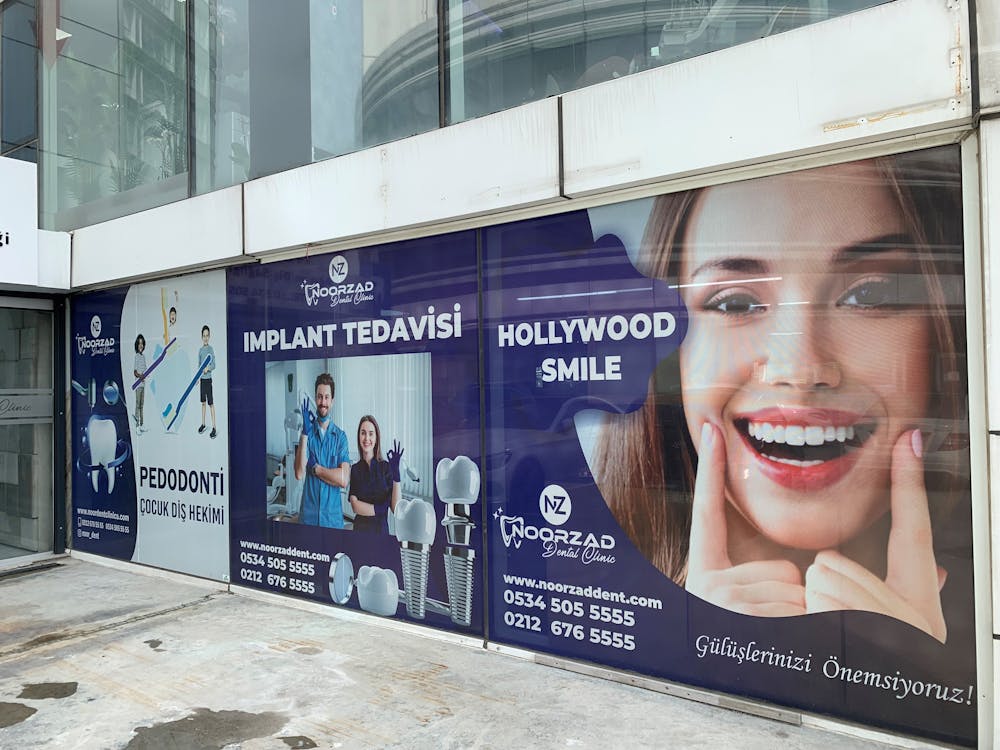
In Istanbul, Mariam has opted not only for the urgent root canal treatment but also a longer and more complex treatment suggested by her consultant, who she says is a renowned doctor from Syria. This will include several extractions and implants of back and front teeth, and when I ask what she thinks of achieving a “Hollywood smile”, Mariam says:
Who doesn’t want a nice smile? I didn’t come here to be a model. I came because I was in pain, but I know this doctor is the best for implants, and my front teeth were rotten anyway.
Dentists in the UK warn about the risks of “overtreatment” abroad, but Mariam appears confident that this is her opportunity to solve all her oral health problems. Two of her sisters have already been through a similar treatment, so they all trust this doctor.
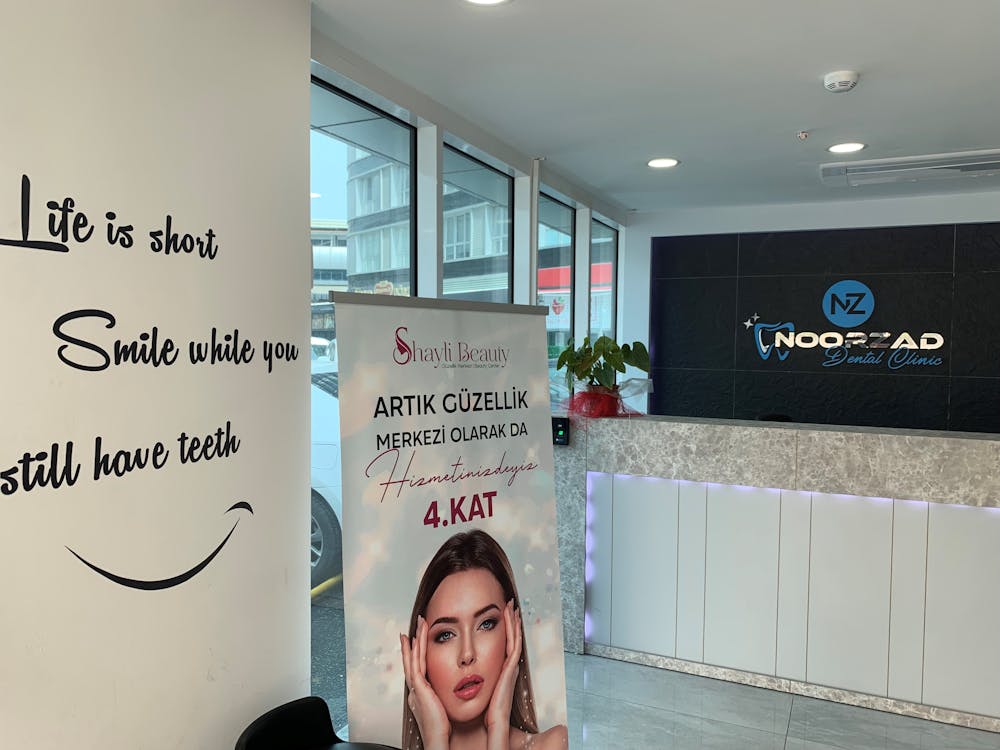
An Istanbul clinic founded by Afghan dentists has a message for its UK customers. Diana Ibanez-Tirado, CC BY-NC-ND
The UK’s ‘dental deserts’
To get a fuller understanding of the NHS dental crisis, I’ve also conducted 20 interviews in the UK with people who have travelled or were considering travelling abroad for dental treatment.
Joan, a 50-year-old woman from Exeter, tells me she considered going to Turkey and could have afforded it, but that her back and knee problems meant she could not brave the trip. She has lost all her lower front teeth due to gum disease and, when I meet her, has been waiting 13 months for an NHS dental appointment. Joan tells me she is living in “shame”, unable to smile.
In the UK, areas with extremely limited provision of NHS dental services – known as as “dental deserts” – include densely populated urban areas such as Portsmouth and Greater Manchester, as well as many rural and coastal areas.
Data shows that 2 million adults must travel at least 40 miles within the UK to access dental care. Branding travel for dental care as “tourism” carries the risk of disguising the elements of duress under which patients move to restore their oral health – nationally and internationally. It also hides the immobility of those who cannot undertake such journeys.
The 90-year-old woman in Dumfries & Galloway who now faces travelling for hours by bus to see an NHS dentist can hardly be considered “tourism” – nor the Ukrainian war refugees who travelled back from West Sussex and Norwich to Ukraine, rather than face the long wait to see an NHS dentist.
Many people I have spoken to cannot afford the cost of transport to attend dental appointments two hours away – or they have care responsibilities that make it impossible. Instead, they are forced to wait in pain, in the hope of one day securing an appointment closer to home.
Dental clinics have mushroomed in recent years in Turkey, thanks to the influx of foreign patients seeking a wide range of treatments. Diana Ibanez-Tirado, CC BY-NC-ND
‘Your crisis is our business’
The indignities of waiting in the UK are having a big impact on the lives of some local and foreign dentists in Turkey. Some neighbourhoods are rapidly changing as dental and other health clinics, usually in luxurious multi-storey glass buildings, mushroom. In the office of one large Istanbul medical complex with sections for hair transplants and dentistry (plus one linked to a hospital for more extensive cosmetic surgery), its Turkish owner and main investor tells me:
Your crisis is our business, but this is a bazaar. There are good clinics and bad clinics, and unfortunately sometimes foreign patients do not know which one to choose. But for us, the business is very good.
This clinic only caters to foreign patients. The owner, an architect by profession who also developed medical clinics in Brazil, describes how COVID had a major impact on his business:
When in Europe you had COVID lockdowns, Turkey allowed foreigners to come. Many people came for ‘medical tourism’ – we had many patients for cosmetic surgery and hair transplants. And that was when the dental business started, because our patients couldn’t see a dentist in Germany or England. Then more and more patients started to come for dental treatments, especially from the UK and Ireland. For them, it’s very, very cheap here.
The reasons include the value of the Turkish lira relative to the British pound, the low cost of labour, the increasing competition among Turkish clinics, and the sheer motivation of dentists here. While most dentists catering to foreign patients are from Turkey, others have arrived seeking refuge from war and violence in Syria, Iraq, Afghanistan, Iran and beyond. They work diligently to rebuild their lives, careers and lost wealth.
Regardless of their origin, all dentists in Turkey must be registered and certified. Hamed, a Syrian dentist and co-owner of a new clinic in Istanbul catering to European and North American patients, tells me:
I know that you say ‘Syrian’ and people think ‘migrant’, ‘refugee’, and maybe think ‘how can this dentist be good?’ – but Syria, before the war, had very good doctors and dentists. Many of us came to Turkey and now I have a Turkish passport. I had to pass the exams to practise dentistry here – I study hard. The exams are in Turkish and they are difficult, so you cannot say that Syrian doctors are stupid.
Hamed talks excitedly about the latest technology that is coming to his profession: “There are always new materials and techniques, and we cannot stop learning.” He is about to travel to Paris to an international conference:
I can say my techniques are very advanced … I bet I put more implants and do more bone grafting and surgeries every week than any dentist you know in England. A good dentist is about practice and hand skills and experience. I work hard, very hard, because more and more patients are arriving to my clinic, because in England they don’t find dentists.
Dentists in Turkey boast of using the latest technology. Diana Ibanez-Tirado, CC BY-NC-ND
While there is no official data about the number of people travelling from the UK to Turkey for dental treatment, investors and dentists I speak to consider that numbers are rocketing. From all over the world, Turkey received 1.2 million visitors for “medical tourism” in 2022, an increase of 308% on the previous year. Of these, about 250,000 patients went for dentistry. One of the most renowned dental clinics in Istanbul had only 15 British patients in 2019, but that number increased to 2,200 in 2023 and is expected to reach 5,500 in 2024.
Like all forms of medical care, dental treatments carry risks. Most clinics in Turkey offer a ten-year guarantee for treatments and a printed clinical history of procedures carried out, so patients can show this to their local dentists and continue their regular annual care in the UK. Dental treatments, checkups and maintaining a good oral health is a life-time process, not a one-off event.
Many UK patients, however, are caught between a rock and a hard place – criticised for going abroad, yet unable to get affordable dental care in the UK before and after their return. The British Dental Association has called for more action to inform these patients about the risks of getting treated overseas – and has warned UK dentists about the legal implications of treating these patients on their return. But this does not address the difficulties faced by British patients who are being forced to go abroad in search of affordable, often urgent dental care.
A global emergency
The World Health Organization states that the explosion of oral disease around the world is a result of the “negligent attitude” that governments, policymakers and insurance companies have towards including oral healthcare under the umbrella of universal healthcare. It as if the health of our teeth and mouth is optional; somehow less important than treatment to the rest of our body. Yet complications from untreated tooth decay can lead to hospitalisation.
The main causes of oral health diseases are untreated tooth decay, severe gum disease, toothlessness, and cancers of the lip and oral cavity. Cases grew during the pandemic, when little or no attention was paid to oral health. Meanwhile, the global cosmetic dentistry market is predicted to continue growing at an annual rate of 13% for the rest of this decade, confirming the strong relationship between socioeconomic status and access to oral healthcare.
In the UK since 2018, there have been more than 218,000 admissions to hospital for rotting teeth, of which more than 100,000 were children. Some 40% of children in the UK have not seen a dentist in the past 12 months. The role of dentists in prevention of tooth decay and its complications, and in the early detection of mouth cancer, is vital. While there is a 90% survival rate for mouth cancer if spotted early, the lack of access to dental appointments is causing cases to go undetected.
The reasons for the crisis in NHS dentistry are complex, but include: the real-term cuts in funding to NHS dentistry; the challenges of recruitment and retention of dentists in rural and coastal areas; pay inequalities facing dental nurses, most of them women, who are being badly hit by the cost of living crisis; and, in England, the 2006 Dental Contract that does not remunerate dentists in a way that encourages them to continue seeing NHS patients.
Reversing the UK’s dental crisis requires more commitment to substantial reform and funding than the “recovery plan” announced by Victoria Atkins, the secretary of state for health and social care, on February 7.
The stories I have gathered show that people travelling abroad for dental treatment don’t see themselves as “tourists” or vanity-driven consumers of the “Hollywood smile”. Rather, they have been forced by the crisis in NHS dentistry to seek out a service 1,500 miles away in Turkey that should be a basic, affordable right for all, on their own doorstep.
*Names in this article have been changed to protect the anonymity of the interviewees.
To hear about new Insights articles, join the hundreds of thousands of people who value The Conversation’s evidence-based news. Subscribe to our newsletter.