Trump Says US Fighting Iran War ‘To Help Israel… Saudi Arabia… Qatar… UAE… Kuwait’—China Too

Spread the love

Article by Stephen Prager republished form Common Dreams under Creative Commons (CC BY-NC-ND 3.0). 

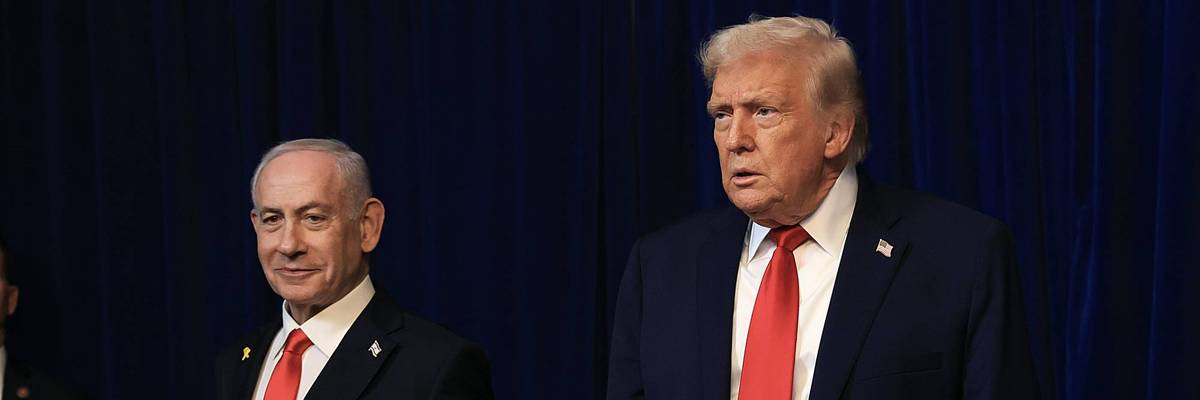
US President Donald Trump holds a press conference with Israeli Prime Minister Benjamin Netanyahu at his Mar-a-Lago club on December 29, 2025, in Palm Beach, Florida. (Photo by Joe Raedle/Getty Images)

“Trump again says the quiet part out loud—America entered the Iran war to support a genocidal ethno-state and brutal absolute autocracies, all of whom are his political and commercial financiers.”

During his campaign for reelection, one of President Donald Trump’s central pitches was that the US needed to stay out of foreign wars in order to prioritize “America first.”

But his decision to join Israel and launch a massive war with Iran, which has caused turmoil across the American economy, has left many voters rather skeptical of these motivations, believing the war benefits other nations—particularly Israel—more than the US.

RECOMMENDED…

'We Can Tell': Trump Confesses He Doesn't 'Think About Americans' Financial Situation' When It Comes to Iran War

‘We Can Tell’: Trump Confesses He Doesn’t ‘Think About Americans’ Financial Situation’ When It Comes to Iran War

Pete Hegseth

Trump Cries ‘Virtual Treason’ as US News Outlets Detail Iran War Intel Assessments

That perception has not been assuaged by statements from officials like Secretary of State Marco Rubio, who acknowledged in the early days of the war that a so-called “imminent threat” to the US only existed because Israel had planned to attack, or by the president’s recent comment that he doesn’t “think about Americans’ financial situation” regarding the war.

In an interview with Sean Hannity on Fox News on Thursday, Trump appeared to further affirm that the Iran invasion’s impact on his own country is far from top-of-mind.

Trump was asked by Hannity about his weekslong effort to reopen the Strait of Hormuz, which Iran closed in response to the war’s launch, causing a spike in global oil prices that has hit the US. Reopening the strait has become one of Trump’s main demands as he pushes for a deal with Iran, even though it was open before the war began.

But Trump said on Thursday that other countries “need the strait more than we need it open.” He cited his administration’s aggressive expansion of oil drilling, which he has claimed would make the US more resilient to the oil shock, although it hasn’t been enough to stop gas prices from soaring above $4.50/gallon on average.

“We don’t need it at all,” Trump said, to which Hannity responded incredulously, “We don’t need it at all?”

“We don’t need it at all,” Trump reiterated. “I mean, you could make the case, you know, like why are we even, we’re doing it to help Israel, and to help Saudi Arabia, and to help Qatar and [the United Arab Emirates] and, you know, Kuwait and other countries, Bahrain—”

Hannity interjected: “It also helps China.”

Speaking of his summit this week with Chinese leaders, including President Xi Jinping, Trump said: “Actually, I told him today, I said, ‘You know, we’re helping you, and we’re helping you in another way,’ because I don’t think they want, I don’t think China wants Iran to have a nuclear weapon either.’”

Trump’s director of national intelligence, Tulsi Gabbardtestified in a written statement to Congress in March that Iran had not tried to rebuild its nuclear enrichment capability after earlier US and Israeli attacks last June, which undercut one of the administration’s primary rationales for war.

Trump’s former National Counterterrorism Center director, Joe Kent, said last week that the US intelligence community agreed in the days leading up to the war that “Iran wasn’t developing a nuclear weapon,” but said that these assessments were undermined by persuasion from “a foreign government—Israel,” which “won the argument and forced us into this war.”

Many of the US’s Persian Gulf allies have publicly tried to distance themselves from the war, especially in the face of retaliation from Iran. But The Associated Press has reported that countries like the UAE, Saudi Arabia, Kuwait, and Bahrain have pushed Trump behind the scenes to continue escalating the war in an effort to weaken Iran militarily and force more permanent changes to the regime.

Some have noted the Trump family’s close personal ties to the Gulf regimes—from his family’s cryptocurrency venture which is buoyed by a $500 million investment from a powerful member of Abu Dhabi’s ruling family; to his son in law Jared Kushner’s private equity firm, which has received $2 billion from Saudi Arabia’s public investment fund; to his real estate empire which has lucrative Trump-branded properties popping up across the region.

Independent journalist Borzou Daragahi said that with his latest comments, “Trump again says the quiet part out loud—America entered the Iran war to support a genocidal ethno-state and brutal absolute autocracies, all of whom are his political and commercial financiers.”

Article by Stephen Prager republished form Common Dreams under Creative Commons (CC BY-NC-ND 3.0). 

Continue ReadingTrump Says US Fighting Iran War ‘To Help Israel… Saudi Arabia… Qatar… UAE… Kuwait’—China Too

Gulf countries, Jordan condemn Iranian attacks, affirm right to self-defense

Spread the love

This work by Middle East Monitor is licensed under a Creative Commons Attribution-NonCommercial-ShareAlike 4.0 International License.

Smoke rises after Iranian-sourced unmanned aerial vehicle (UAV) carried out an attack on a fuel depot at Kuwait International Airport in Kuwait City, Kuwait on March 25, 2026. [Stringer – Anadolu Agency]

The Gulf countries and Jordan on Wednesday strongly denounced Iranian attacks as a “flagrant violation” of their sovereignty and territorial integrity, affirming their full right to self-defense, Anadolu reports.

In a joint statement, Kuwait, the United Arab Emirates, Bahrain, Saudi Arabia, Qatar and Jordan said attacks carried out by Iran or its proxies constitute “a violation of international law, international humanitarian law, and the United Nations Charter.”

They particularly cited attacks launched by Iran-backed armed groups in Iraq as “a breach of international laws and conventions,” and “a blatant violation” of UN Security Council 2817, which demands Iran cease all assaults and threats against neighboring countries.

The statement called on the Iraqi government to take “the necessary measures” to halt attacks by armed groups against neighbors “in order to preserve fraternal relations and prevent further escalation.”

READ: Iran calls for regional “security union” independent of United States, Israel

Signatories reaffirmed their full right to self-defense “against these criminal attacks,” and to take all necessary measures “to preserve their sovereignty, security, and stability.”

They also condemned acts and activities “that undermine the security and stability of the region’s countries, planned by sleeper cells loyal to Iran and terrorist organizations linked to Hezbollah.”

Regional escalation has continued to flare since the US and Israel launched a joint offensive on Iran on Feb. 28, killing so far over 1,340 people, including then-Supreme Leader Ali Khamenei.

Tehran has retaliated with drone and missile strikes targeting Israel, along with Jordan, Iraq, and Gulf countries hosting US military assets, causing casualties and damage to infrastructure while disrupting global markets and aviation.

READ: Trump prefers peace but ready to ‘unleash hell’ in Iran: White House

This work by Middle East Monitor is licensed under a Creative Commons Attribution-NonCommercial-ShareAlike 4.0 International License.
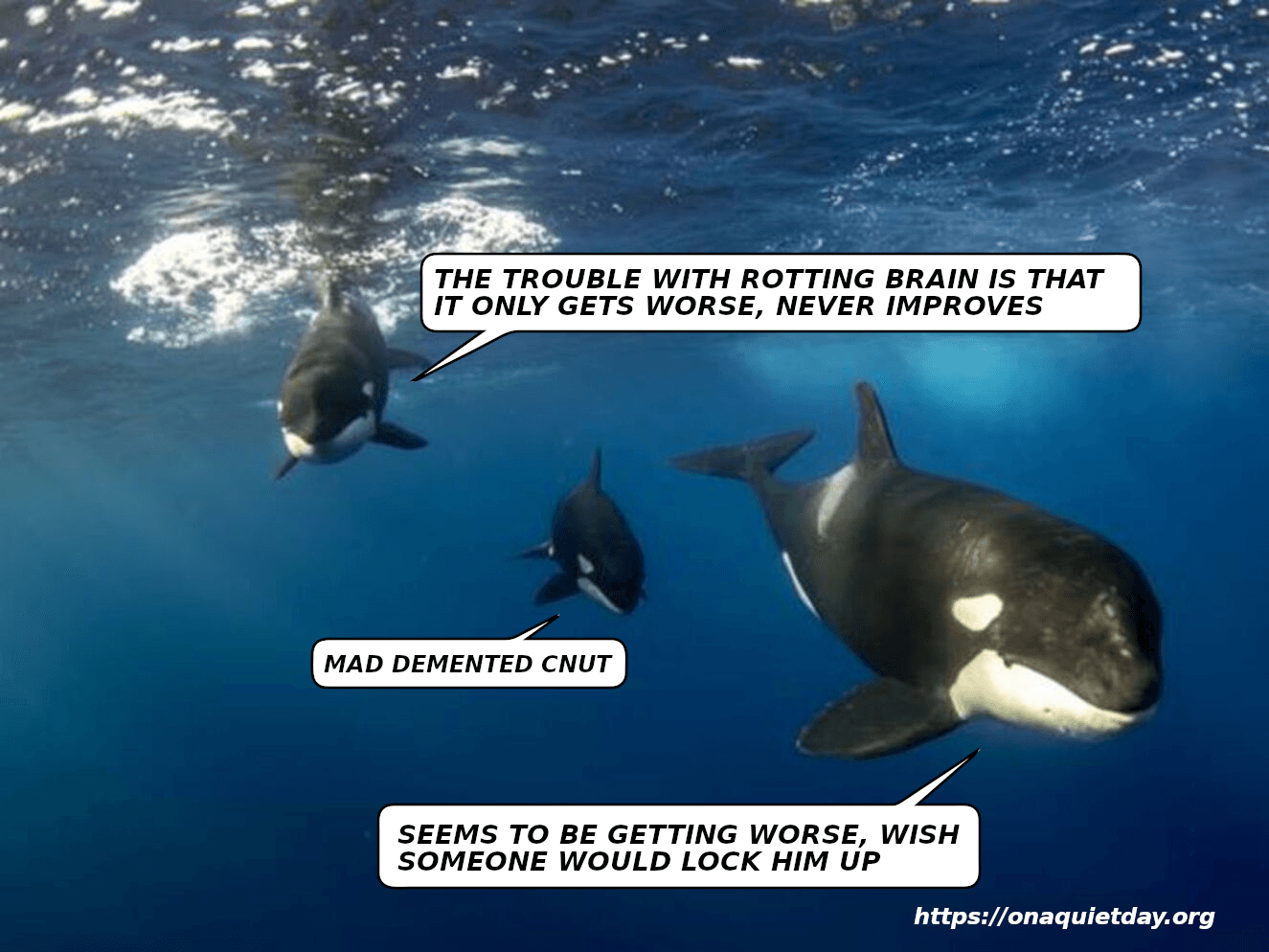
Orcas discuss rotting brain. Front Orca says "Wish someone would lock him up".
Orcas discuss rotting brain. Front Orca says “Wish someone would lock him up”.
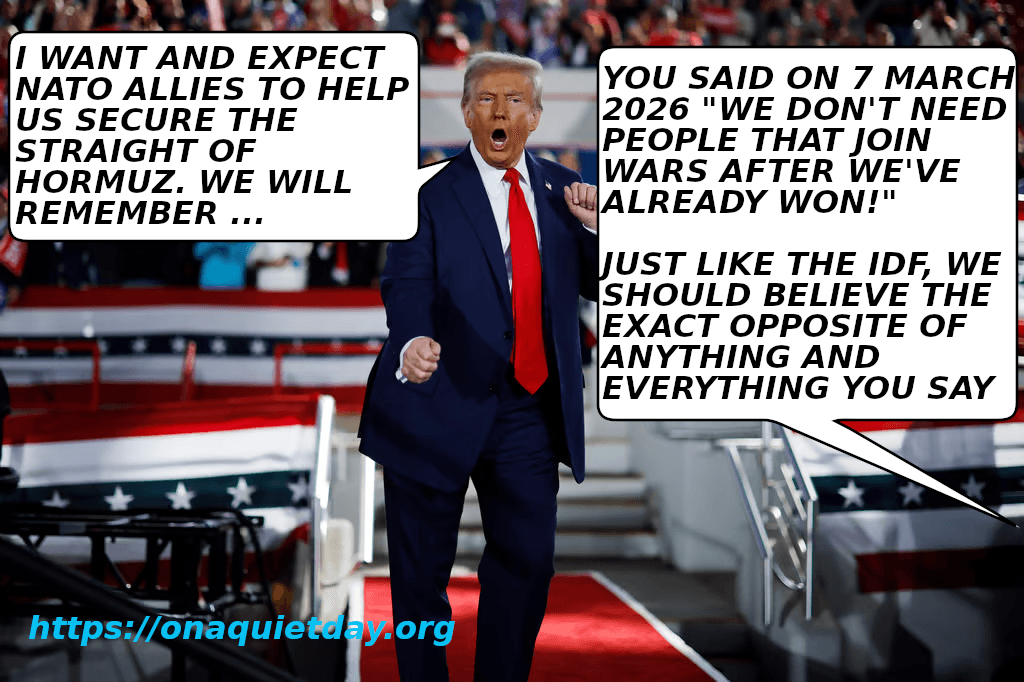
Donald Trump warns against following the https://onaquietday.org blog, says that it's easy atm, she only needs to report war crimes supporting Israel's genocidal expansion.
Donald Trump warns against following the https://onaquietday.org blog, says that it’s easy atm, she only needs to report war crimes supporting Israel’s genocidal expansion.
Keir Starmer explains that UK is participating defensively in Trump and Israel's criminal war for Israel's genocidal expansion in Iran and states that he supports Zionism "without qualification". Keir Starmer said "I said it loud and clear – and meant it – that I support Zionism without qualification.” here: https://www.jewishnews.co.uk/keir-starmer-interview-i-will-work-to-eradicate-antisemitism-from-day-one/
Keir Starmer explains that UK is participating defensively in Trump and Israel’s criminal war for Israel’s genocidal expansion in Iran and states that he supports Zionism “without qualification”. Keir Starmer said “I said it loud and clear – and meant it – that I support Zionism without qualification.” here: https://www.jewishnews.co.uk/keir-starmer-interview-i-will-work-to-eradicate-antisemitism-from-day-one/

Continue ReadingGulf countries, Jordan condemn Iranian attacks, affirm right to self-defense

Iran’s targeting of airport, ports and hotels in reaction to US strikes has forced Gulf nations onto front lines of a war they want no part in

Spread the love
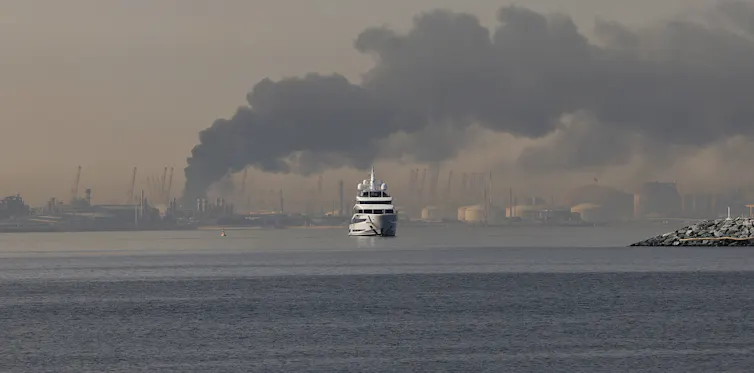
A yacht sails past a plume of smoke rising from the port of Jebel Ali following a reported Iranian strike in Dubai on March 1, 2026. Fadel Senna/AFP via Getty Images

Kristian Coates Ulrichsen, Rice University

Washington’s allies in the Persian Gulf have found themselves in a position they have long sought to avoid: on the front line and bearing the brunt of a widening Middle East conflict.

Having been dragged into a war of choice by the U.S. – one which many around the world are calling a war of aggression – all six Gulf Cooperation Council nations have been struck by Iranian retaliatory attacks in response.

Military facilities in Bahrain, Kuwait, Oman, Qatar, Saudi Arabia and the United Arab Emirates have all been hit. But the missiles and drones from Iran have been aimed at civilian infrastructure, too, including airport, ports and hotels in the opening days of U.S. and Israeli operations against Iran.

In scale and scope, the barrage marks a major departure from Iran’s previous response to being attacked by U.S. and Israeli airstrikes. In contrast, during a 12-day war in June 2025, Tehran only attacked one base in Qatar, and even then forewarned authorities in Doha.

Instead, what is occurring in the region is a scenario that planners in Persian Gulf capitals have long warned about: a deliberate attempt by Tehran to widen conflict and hit nations it sees as allied to the West.

As an expert on Gulf dynamics, I see the unfurling events as undoing years of work to de-risk the region and placing in jeopardy the unique selling point and business models that have underpinned the Gulf states’ global rise.

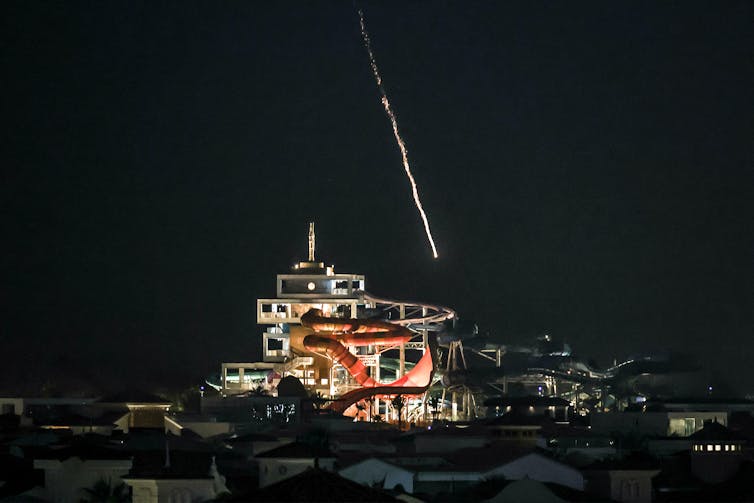
an entertainment building can be seen as a missile falls from the night sky, leaving a trail
An intercepted projectile falls into the sea near Dubai’s Palm Jumeirah archipelago on March 1, 2026. Fadel Senna/AFP via Getty Images

A cornered regime fighting for survival

Ever since the Oct. 7, 2023, attacks by Hamas and other Palestinian militants on Israel, policymakers in the Gulf nations have sought to avoid the regionalization of conflict.

Qatar led the way in mediating between Israel and Hamas, while Oman has done the same with the U.S. and Iran. Meanwhile, Saudi Arabia has maintained regular dialogue with Iran to de-escalate regional tensions.

Each of the successive escalations between Israel and Iran – in April and October 2024 and then in June 2025, with the joint U.S.-Israeli strikes – brought the region closer to, without tipping over into, all-out war.

But Iran’s actions in the opening days following what Washington has named “Operation Epic Fury” have signaled that the comparative restraint it showed during the 12-day war is firmly off the table.

The Islamic Republic is now a cornered regime fighting for its survival. As such, it is lashing out and seeking to spread the pain to regional neighbors. The logic in this approach is that Gulf nations could put pressure on the U.S., which may fear the cascading costs of a prolonged regional conflict.

Gulf nations are also obvious targets for Iran. With Iran lacking the capability to hit the U.S. mainland through conventional weapons, the American military bases that dot the Gulf region are within the reach of Tehran’s ballistic arsenal.

Psychological impact on Gulf nations

The scale of the Iranian attacks on targets in the Gulf nations in the opening two days of the current conflict underscores the extent to which Iran’s response now differs from that of June 2025: In the first two days of the conflict, Iran had fired at least 390 ballistic missiles and 830 drones at the Gulf states. By comparison, the Iranian strike on the Al-Udeid air base in Qatar last year involved 14 ballistic missiles and was a one-off attack on a single target.

https://datawrapper.dwcdn.net/6XJVf

Air defense systems in Gulf nations have neutralized most of the incoming Iranian missiles, to date, and actual damage and casualties have been limited to a handful of deaths and injuries in the dozens.

But it is the intangible and psychological impact on Gulf cities under attack that threatens to inflict profound damage on the reputation and image of cities such as Dubai, Abu Dhabi and Doha. In recent years, Gulf Cooperation Council nations have presented the Gulf as an oasis of stability and havens to live and work.

This is especially the case for Dubai, which has marketed itself strongly as a hub for business and tourism. But it is also applicable to other Gulf nations as well, such as Qatar, which relies heavily on a steady stream of large-scale meetings and events.

Iran’s attacks on civilian infrastructure and soft targets – airports in Bahrain, Dubai, Abu Dhabi and Kuwait, and hotels in Bahrain and Dubai – serve to puncture this image of safe and secure Gulf capitals.

This choice of targets by Iran likely reflects a calculation that leaders in the Gulf countries would immediately feel the full impact of the war and push Washington hard to find a resolution and quick.

The subsequent targeting by Tehran on oil and gas facilities, including Ras Laffan in Qatar and Ras Tanura in Saudi Arabia, serves as a further and highly consequential step. It has already triggered a forceful response from Qatar, which shot down two Iranian jets on March 2.

There is concern among Gulf nations that the next step in the ladder of escalation could involve targeting the desalination plants that are so vital to overcoming water scarcity in the region.

https://datawrapper.dwcdn.net/0fO03

Vulnerable to escalation

As critical hubs in the global economy by virtue of their reserves of oil and gas and centrality to international shipping and aviation, the Gulf nations are uniquely vulnerable to further escalation by Iran.

Dubai, Abu Dhabi and Doha have invested heavily in creating airlines that function as “super-connectors” capable of linking any two destinations worldwide with a stop in the Gulf. A Feb. 28 drone strike on Dubai International Airport, the world’s busiest for international travel, illustrated the impact that Iran’s asymmetric responses could have on the global hub model that has come to dominate world air travel.

Already, closure of airspaces over Qatar and the UAE, as well as in Bahrain and Kuwait, has stranded tens of thousands of passengers and created the biggest disruption to global travel since the COVID-19 pandemic.

In addition, cargo operations essential to local supply chains have been heavily impacted, at the same time that seaborne trade through the Strait of Hormuz has been similarly interrupted.

Whereas initial spikes in oil prices and insurance premiums at the start of the 12-day war last year fell away as it became clear that energy infrastructure was not significantly targeted, the opposite has happened this time.

Peril and uncertainty

But the short-term shock to the global economy is not what will be of primary concern to the Gulf Cooperation Council members. Not since the Gulf crisis of 1990-91, with the Iraqi invasion of Kuwait and subsequent Gulf War, has the region faced so much peril and uncertainty.

And that is what Iran’s leaders are banking on. The attacks across the Gulf by Tehran are not, after all, without strategy. The intent is to expand the conflict, thereby significantly raising costs to the U.S. and its partners in the Gulf.

Tehran’s hope is that the economic impact will encourage Gulf leaders to press Trump for an endgame. But in attacking capitals across the region, Iran risks perhaps doing the opposite: rupturing any chance of bettering ties with rivals in the region and instead pushing them further back into Washington’s orbit after a period of drift.

Kristian Coates Ulrichsen, Fellow for the Middle East at the Baker Institute, Rice University

This article is republished from The Conversation under a Creative Commons license. Read the original article.

Orcas discuss rotting brain. Front Orca says "Wish someone would lock him up".
Orcas discuss rotting brain. Front Orca says “Wish someone would lock him up”.
Donald Fuhrump says that Amerikkka doesn't bother with crimes or charges anymore, not being 100% Amerikkkan and opposing his real estate intentions is enough.
Donald Fuhrump says that Amerikkka doesn’t bother with crimes or charges anymore, not being 100% Amerikkkan and opposing his real estate intentions is enough.
Elon Musk urges you to be a Fascist like him, says that you can ignore facts and reality then.

Continue ReadingIran’s targeting of airport, ports and hotels in reaction to US strikes has forced Gulf nations onto front lines of a war they want no part in

Iran launches retaliatory strikes across Middle East, dozens dead

Spread the love

This work by Middle East Monitor is licensed under a Creative Commons Attribution-NonCommercial-ShareAlike 4.0 International License.

Smoke rises after Iran carried out a missile strike on the main headquarters of the U.S. Navy’s 5th Fleet in Manama in retaliation against US-Israeli attacks, in Bahrain February 28, 2026. [Stringer – Anadolu Agency]

Iran launched retaliatory missile and drone strikes over the weekend against eight countries across the Middle East, killing dozens and wounding hundreds, as a second day of explosions shook the region following joint US-Israeli military operations against Tehran, Anadolu reports.

So far, Iranian strikes have hit Bahrain, Iraq, Jordan, Kuwait, Oman, Qatar, Saudi Arabia, and the United Arab Emirates. Inside Iran, the Iranian Red Crescent reported at least 201 people killed and 747 injured from US-Israeli attacks that began Saturday.

In Israel, nine Israelis were killed in an Iranian missile strike that directly hit a building in Beit Shemesh in west Jerusalem on Sunday.

The US also reported casualties, with US Central Command confirming three service members killed and five “seriously wounded” since the start of attacks against Iran.

The strikes took a toll across the Gulf. The United Arab Emirates reported that three people from Pakistan, Nepal and Bangladesh were killed, while 58 people of different nationalities were injured in Iranian missile and drone strikes following a US-Israeli attack on Iran.

Kuwait’s Health Ministry also said that one person was killed and 32 others were injured amid the current regional escalation.

READ: Gulf bloc set to hold emergency meeting on Sunday amid US-Iran conflict

In Qatar, the number of injuries rose to 16 following retaliatory strikes by Iran, officials announced.

Iraq reported two dead and three wounded in a strike on the Jurf al-Nasr area of Babil province.

In Bahrain, an Iranian drone struck Bahrain International Airport, causing material damage but no casualties, the Bahraini Ministry of Interior reported.

In the capital, Manama, a separate kamikaze drone hit a building on Al-Ma’arid Street. Images circulating on social media showed smoke rising from the site, though authorities have not yet released information on potential injuries or fatalities.

In Oman, five people were injured in two separate incidents — four aboard a Palau-flagged oil tanker struck north of Khasab Port, and one foreign worker hurt in a drone attack on Duqm Port.

No casualties were reported in Jordan or Saudi Arabia.

The US and Israel launched an attack on Iran on Saturday, killing several top Iranian leaders, including Supreme Leader Ayatollah Ali Khamenei. Tehran retaliated with a series of drone and missile attacks that targeted Israel, US assets and several Gulf countries.

This came after an earlier wave of attacks by Tel Aviv and Washington in June last year, triggering a 12-day war before a ceasefire was announced.

READ: Qatar, Saudi Arabia condemn Iranian attacks on Oman as ‘unacceptable escalation’

Orcas discuss Donald Trump and the killer apes' concept of democracy. Front Orca warns that Trump is crashing his country's economy and that everything he does he does for the fantastically wealthy.
Orcas discuss Donald Trump and the killer apes’ concept of democracy. Front Orca warns that Trump is crashing his country’s economy and that everything he does he does for the fantastically wealthy.
Donald Fuhrump says that Amerikkka doesn't bother with crimes or charges anymore, not being 100% Amerikkkan and opposing his real estate intentions is enough.
Donald Fuhrump says that Amerikkka doesn’t bother with crimes or charges anymore, not being 100% Amerikkkan and opposing his real estate intentions is enough.
Orcas discuss rotting brain. Front Orca says "Wish someone would lock him up".
Orcas discuss rotting brain. Front Orca says “Wish someone would lock him up”.

Continue ReadingIran launches retaliatory strikes across Middle East, dozens dead

‘Corruption on a Breathtaking Level’: Report Details Massive Foreign Investment in Trump Crypto Firm

Spread the love

Original article by Brad Reed republished from Common Dreams under Creative Commons (CC BY-NC-ND 3.0).

President Donald Trump and Sheikh Mansour bin Zayed Al Nahyan, UAE Vice President and Deputy Prime Minister, shake hands on October 13, 2025 in Sharm El-Sheikh, Egypt. (Photo by Suzanne Plunkett, Pool / Getty Images)

“This was a bribe,” said one critic.

A bombshell Saturday report from the Wall Street Journal revealed that a member of the Abu Dhabi royal family secretly backed a massive $500 million investment into the Trump family’s cryptocurrency venture months before the Trump administration gave the United Arab Emirates access to highly sensitive artificial intelligence chip technology.

According to the Journal’s sources, lieutenants of Abu Dhabi royal Sheikh Tahnoon bin Zayed Al Nahyan signed a deal in early 2025 to buy a 49% stake in World Liberty Financial, the startup founded by members of the Trump family and the family of Trump Middle East envoy Steve Witkoff.

RECOMMENDED…

Capitalizing on Trump Corruption, Scammers Trick Davos Elites With Phony Pay-for-Access Scheme

Capitalizing on Trump Corruption, Scammers Trick Davos Elites With Phony Pay-for-Access Scheme

US-POLITICS-TRUMP

Trump Pocketed At Least $1.4 Billion in First Year Back in Office in Unprecedented ‘Exploitation of the Presidency’

Documents reviewed by the Journal showed that the buyers in the deal agreed to “pay half up front, steering $187 million to Trump family entities,” while “at least $31 million was also slated to flow to entities affiliated with” the Witkoff family.

Weeks after green lighting the investment into the Trump crypto venture, Tahnoon met directly with President Donald Trump and Witkoff in the White House, where he reportedly expressed interest in working with the US on AI-related technology.

Two months after this, the Journal noted, “the administration committed to give the tiny Gulf monarchy access to around 500,000 of the most advanced AI chips a year—enough to build one of the world’s biggest AI data center clusters.”

Tahnoon in the past had tried to get US officials to give the UAE access to the chips, but was rebuffed on concerns that the cutting-edge technology could be passed along to top US geopolitical rival China, wrote the Journal.

Many observers expressed shock at the Journal’s report, with some critics saying that it showed Trump and his associates were engaging in a criminal bribery scheme.

“This was a bribe,” wrote Melanie D’Arrigo, executive director of the Campaign for New York Health, in a social media post. “UAE royals gave the Trump family $500 million, and Trump, in his presidential capacity, gave them access to tightly guarded American AI chips. The most powerful person on the planet, also happens to be the most shamelessly corrupt.”

Jesse Eisinger, reporter and editor at ProPublicaargued that the Abu Dhabi investment into the Trump cypto firm “should rank among the greatest US scandals ever.”

Democratic strategist David Axelrod also said that the scope of the Trump crypto investment scandal was historic in nature.

“In any other time or presidency, this story… would be an earthquake of a scandal,” he wrote. “The size, scope and implications of it are unprecedented and mind-boggling.”

Tommy Vietor, co-host of “Pod Save America,” struggled to wrap his head around the scale of corruption on display.

“How do you add up the cost of corruption this massive?” he wondered. “It’s not just that Trump is selling advanced AI tech to the highest bidder, national security be damned. Its that he’s tapped that doofus Steve Witkoff as an international emissary so his son Zach Witkoff can mop up bribes.”

Former Rep. Tom Malinkowski (D-NJ) warned the Trump and his associates that they could wind up paying a severe price for their deal with the UAE.

“If a future administration finds that such payments to the Trump family were acts of corruption,” he wrote, “these people could be sanctioned under the Global Magnitsky Act, and the assets in the US could potentially be frozen.”

Original article by Brad Reed republished from Common Dreams under Creative Commons (CC BY-NC-ND 3.0).

Elon Musk urges you to be a Fascist like him, says that you can ignore facts and reality then.
Donald Fuhrump says that Amerikkka doesn't bother with crimes or charges anymore, not being 100% Amerikkkan and opposing his real estate intentions is enough.
Donald Fuhrump says that Amerikkka doesn’t bother with crimes or charges anymore, not being 100% Amerikkkan and opposing his real estate intentions is enough.
Orcas discuss how Trump was re-elected and him being an obviously insane, xenophobic Fascist.

Continue Reading‘Corruption on a Breathtaking Level’: Report Details Massive Foreign Investment in Trump Crypto Firm