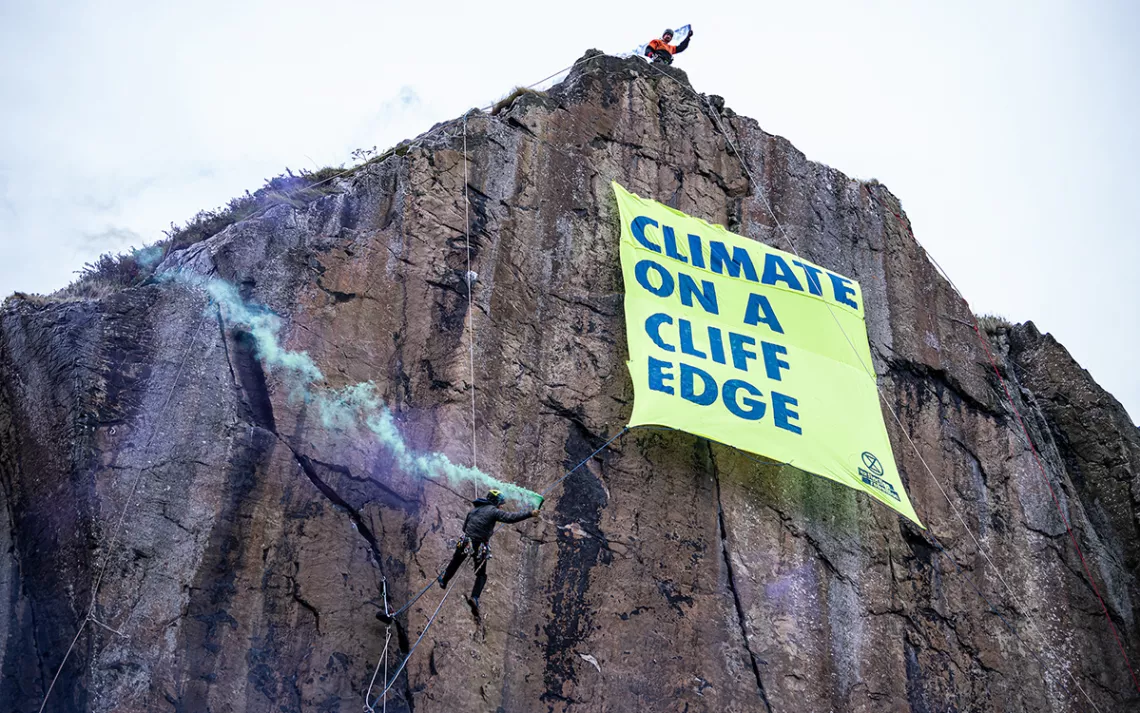
Christian rockers Europe ‘The Final Countdown’Experienced climbers scale a rock face near the historic Dumbarton castle in Glasgow, releasing a banner that reads “Climate on a Cliff Edge.” One activist, dressed as a globe, symbolically looms near the edge, while another plays the bagpipes on the shores below. | Photo courtesy of Extinction Rebellion and Mark Richards
Five years ago, XR was told that our warnings about the escalation of the climate and ecological emergency were hysterical, exaggerated and scientifically unfounded. It’s now clear that we were right to sound the alarm. There will be groups from all sides telling us that we cannot talk about 2°C yet, that there’s no scientific evidence and that we haven’t seen the global trends — but we must continue to do so. Under the precautionary principle, which makes us put our seatbelts on in case of an accident, it’s vital we up the pressure because the truth is, that even if it was only for one day, even if temperatures will dip again, 2 °C has been breached and the trend is relentlessly upwards.
In this context — in a world that is as bad, if not worse than we predicted five years ago — we are once again seeing world leaders fly, on their private jets [3], to the next Conference of the Parties (COP) on Climate, COP 28. The conference will take place in Dubai in the United Arab Emirates [4], a nation built almost entirely on fossil fuel wealth. COP28 is led by Dr. Sultan Ahmed Al Jaber [5], founder and Chair of Abu Dhabi National Oil Company (ADNOC) [6]. which has the largest net-zero busting plans in the world [7].
At the same time, indigenous people who work tirelessly to defend their lands — which contain 80% of the world’s remaining biodiversity — and whose traditional knowledge is key to designing a sustainable future, are excluded from the negotiations [8].
Before it has even begun, it is clear the COP process has been captured by the fossil fuel economy. We are unlikely to see the rapid, just and equitable phaseout of all fossil fuels coming out of this process.
…
[3] Flight Operations to COP28 Dubai – COP28 UAE will take place at Dubai’s Expo City from November 30 – December 12, 2023, with government leaders and dignitaries from all over the globe descending on Dubai for the historic event. Operations to COP 28 in Dubai Jetluxe – Your gateway to COP 28
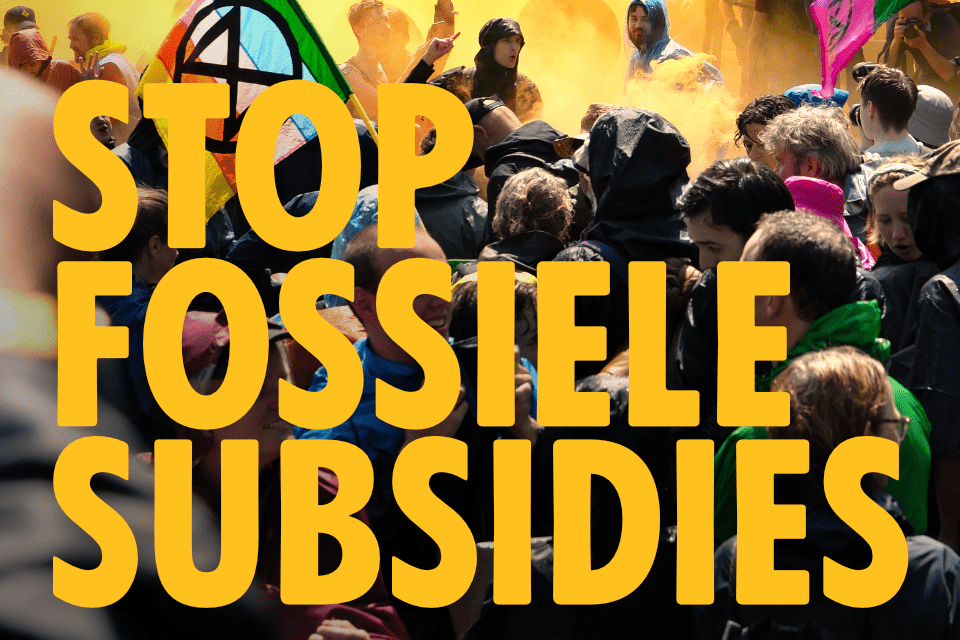
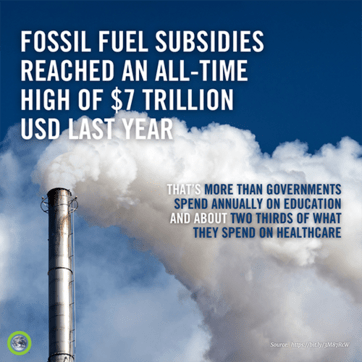
Like it or not, we’re all paying the fossil fuel industry to destroy the planet every time we do our taxes.
That’s right. Each of us is chipping in our hard-earned dollars [, Euros or Pounds], all to an industry earning billions in profits every year. One whose product is heating up our planet and sowing more and more climatic chaos the higher the thermometer rises.
We’re doing it through fossil fuel subsidies. And the time to end them is now.
Oil and gas companies, and some governments, are more interested in looking like they are acting on climate change than actually acting on climate change. They spend billions on smoke and mirrors, such as:
to make us believe that they are coming up with solutions for a livable planet when, in reality, they are trying to build escape hatches to suck every last ounce of profit out of their dirty fossil fuel business. These companies and their lobbyists are counting on adding loopholes in the final UN Climate Change Conference commitments to keep business as usual.
We cannot let them.
The end of the fossil fuel era is unstoppable but we cannot allow polluters to delay us. We must hold governments to moving forward the solutions we need. We need a full, fast, fair, and funded fossil fuel phase out, and a just transition that triples renewable energy and doubles energy efficiency. Any dangerous distractions that allow companies to keep extracting oil and gas, instead of phasing out these dirty energies, are traps.
“Abated Fossil Fuels” and COP
At The UN Climate Change Conference (COP28), fossil fuel companies and their government enablers will push the fantasy of “abated fossil fuels”. They will try to convince the global community that when fossil fuels are produced or used along with certain technologies, they don’t pollute, cause climate chaos, or harm communities.
The term fossil fuel “abatement” has no official definition but is generally understood to mean “with carbon capture and storage”. The fossil fuel industry is pursuing a wide range of technologies it frames as “abatement”, despite these technologies failing to deliver emissions reductions and prolonging the era of fossil fuels.
The idea of “abated fossil fuels” is a delay tactic. “Abatement” is a qualifier that allows oil and gas companies to keep pumping out and profiting off dirty energy, instead of phasing out. What we need is a full, fast, fair and funded phaseout.
As the global stocktake has found, policies on cutting emissions remain a long way off what is needed to hold temperatures to well below 2°C – let alone 1.5°C. The recently published 2023 UN emissions gap report, which tracks our progress in limiting global warming, echoes the same concern. The report revealed that the world is on track for 2.9°C of global warming, and maybe considerably more, before the end of this century.
As the latest UN climate change summit (COP28) gets underway in Dubai, conversations around limiting global warming to 1.5°C will confront a harsh reality. Global temperatures have surged over the past year, with the monthly global average surpassing 1.5°C above pre-industrial levels during the summer. Some days in November have even breached 2°C of warming for the first time.
Since the Glasgow Climate Summit in 2021, the UN has been conducting a review of our progress towards limiting temperature rise in line with the Paris Agreement. This review, which is set to conclude in Dubai, aims to make countries ratchet up their emission reduction commitments.
The evidence from this two-year “stocktake” is now available, and it shows just how far off track we are. To restrict global warming to 1.5°C, countries must reduce greenhouse gas emissions by more than 40% by 2030, yet emissions are currently on the rise.
Countries around the world have borne the human and economic toll. The United Arab Emirates itself is one of the latest countries to be hit by severe flooding, with parts of Dubai under water for the first time. This has led some, including the legendary climate scientist James Hansen, to speculate that climate scientists have underestimated the pace of change.
The evidence itself presents a more balanced view. Climate change has indeed accelerated, but this uptick in pace was entirely predicted by climate models and is expected due to greenhouse emissions being at an all-time high.
The potential for confusion as we approach 1.5°C of global warming makes it all the more crucial to track rising temperatures and climate change as they develop between the comprehensive Intergovernmental Panel on Climate Change assessments. The next assessment isn’t expected until around 2030.
A broken record
As the global stocktake has found, policies on cutting emissions remain a long way off what is needed to hold temperatures to well below 2°C – let alone 1.5°C. The recently published 2023 UN emissions gap report, which tracks our progress in limiting global warming, echoes the same concern. The report revealed that the world is on track for 2.9°C of global warming, and maybe considerably more, before the end of this century.
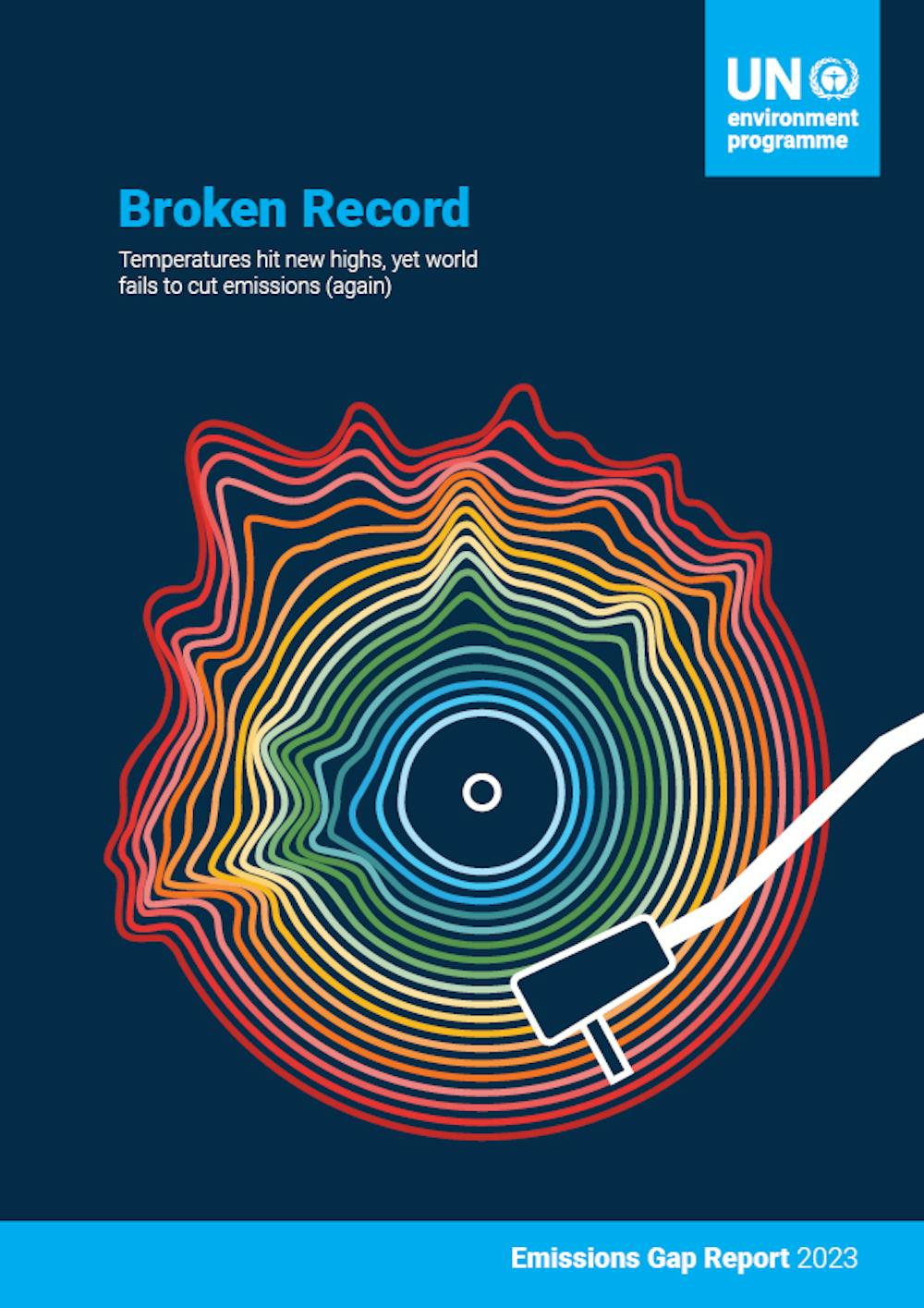
If this sounds like a broken record – as emphasised by the report’s cover art – it is. The message that we need urgent action and stronger emissions cuts to avoid the worst climate impacts is far from new, but still somehow needs to hit home.
The UN emissions gap report finds that 80% of climate change can be attributed to G20 countries, a group consisting of the world’s major economies. Within the bloc, western countries generally have ambitious emissions reduction targets, but are failing to deliver on them. By contrast, countries including China, India, Mexico and Indonesia are largely overachieving much weaker targets, but are failing on ambition.
This divide is evident in national submissions to the global stocktake process. Western countries are urging the rest of the world to increase ambition, while other nations are urging western governments to deliver on their finance and other commitments, especially in providing sufficient funding to help developing countries adapt to the harmful effects of climate change.
Inequalities in how emissions vary across a country’s population were highlighted in the UN Emissions Gap report and also in a dedicated report by Oxfam. The report revealed that the world’s wealthiest 1% account for 16% of global emissions. These wealthy people each emit more than 100 tonnes of CO₂ every year, 15 times the global average.
Inequality drives vulnerability. The same report showed that floods kill seven times as many people in countries with higher levels of inequality than they do in more equal ones.
A crucial period
The gloomy picture places a clear focus on the need for transformative progress at COP28 and beyond. In a report that was released ahead of COP, the International Energy Agency places the challenge firmly at the door of the oil and gas sector.
This report found that only 1% of clean energy investment comes from the industry, and that oil and gas use needs to decline by 75% or more to be compatible with net zero targets. The industry needs to undergo radical change.
If oil and gas firms urgently remove emissions from their operations, especially around methane leaks, and invest in trebling global renewable energy capacity by 2030 instead of extraction, they can be a force for change.
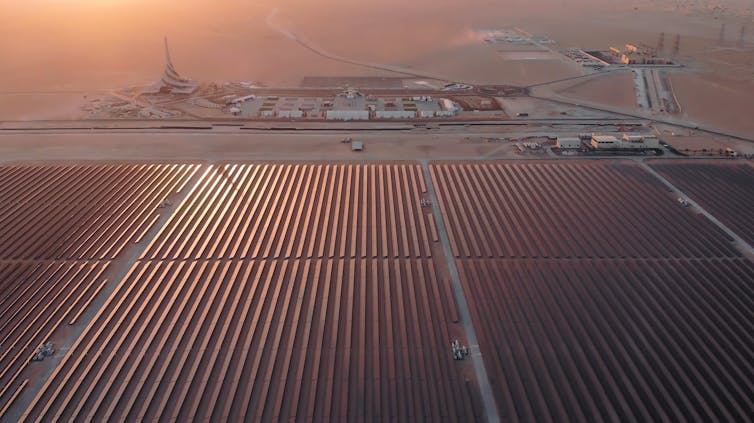
Discussions around the role of oil and gas will be a recurring theme both at COP28 and at future climate change summits. But concerted efforts to reduce methane emissions, build renewable energy infrastructure, roll out electric vehicles and halt deforestation globally could also see emissions fall significantly by 2030, consequently slowing down the rate of warming.
Investment in global renewable energy capacity needs to be trebled by 2030. SkyMediaPro/Shutterstock
Whether the discussions in Dubai lead to the transformative change we need remains to be seen. However, it is essential to continue offering independent, expert and respected advice to governments through organisations like the UK Climate Change Committee, which I currently chair, and the International Climate Councils Network. This effort is crucial in advocating for transformative change across all sectors and in providing consistent and ambitious national emission reduction policies that are based on evidence.
As we approach 1.5°C of global warming, we need to work even harder. To quote from a recent article in US magazine Scientific American: “Declarations that 1.5°C is dead make no sense. Global temperature limits don’t die if we surpass them. People do.”
Don’t have time to read about climate change as much as you’d like?
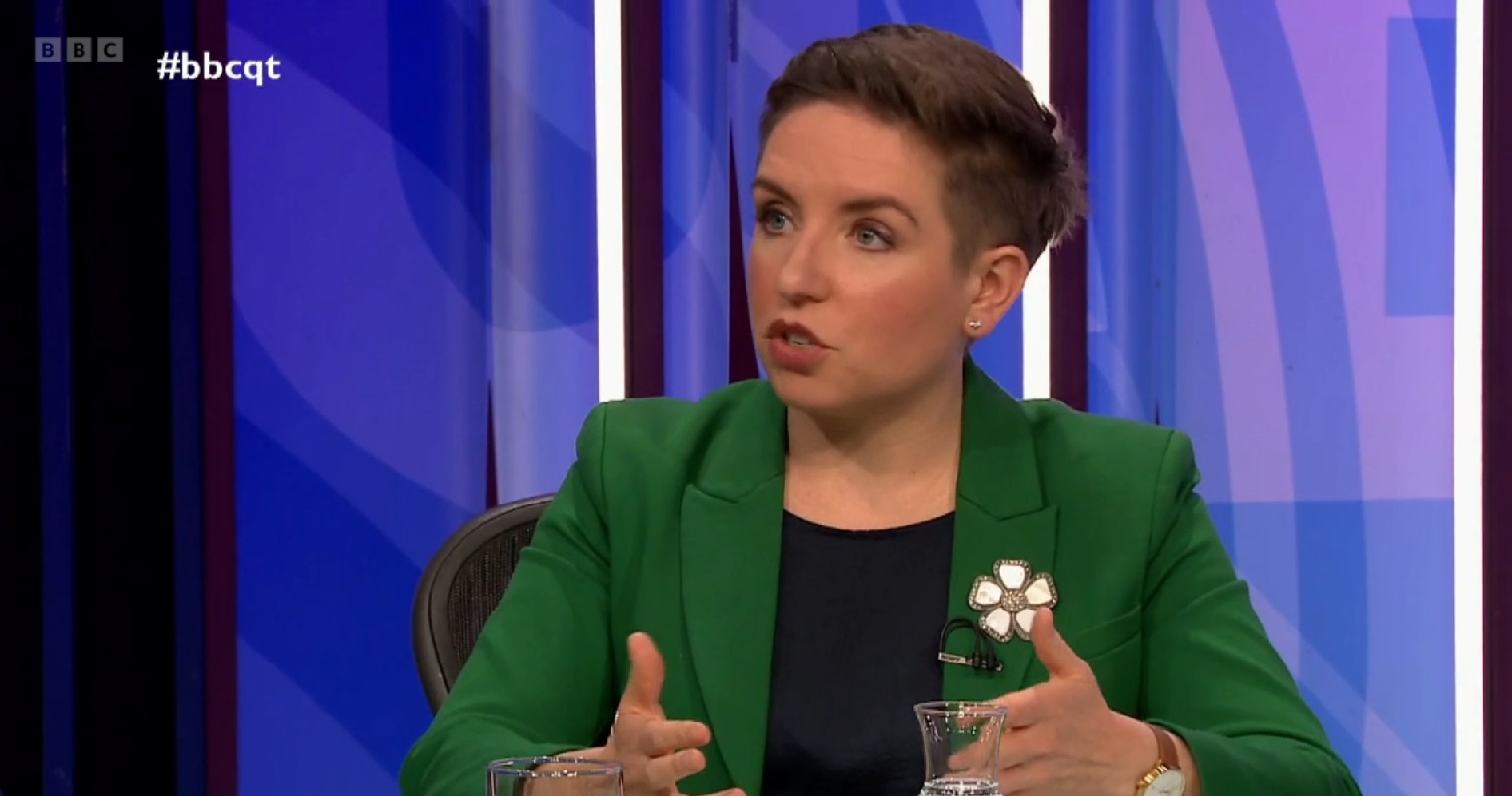
Image of the Green Party’s Carla Denyer on BBC Question Time.
Co-leader of the Green Party, Carla Denyer, said:
“As the COP28 climate conference gets under way this week, governments can no longer ignore the very large elephant in the room – that it is a super-rich elite who are super-heating the planet.
“Private jets are the favoured form of transport by this super-rich elite and are the ultimate symbol of the ‘climate inequality’ that is not only leading to the breakdown of our climate but is also deeply unfair. A short trip on a private jet will produce more carbon than the average person emits all year.
“The Green Party wants the UK government to challenge the grotesque inequality driving climate breakdown. By pledging to impose a ban on all private jets taking off or landing at UK airports, the government would send a clear message to global leaders at COP28 that the super-rich cannot be allowed to continue with their lavish and destructive lifestyles at the expense of the rest of the global population.
“While the richest can use their vast wealth to cocoon themselves, the poorest have nowhere to hide from the impacts of climate chaos. COP28 needs to ensure those with the greatest responsibility for the climate crisis end their destructive ways. And we must redistribute the price paid by the heaviest polluters towards helping those on the front line of climate breakdown and to hasten the transition to a fairer, greener world.”