Canceled Canadian CCS Project Deemed ‘Not Economically Feasible’

Spread the love

Original article by Taylor Noakes republished from DeSmog.
https://www.desmog.com/2024/05/06/capital-power-generation-genesee-power-plant-canceled-canadian-ccs-project-not-economically-feasible/

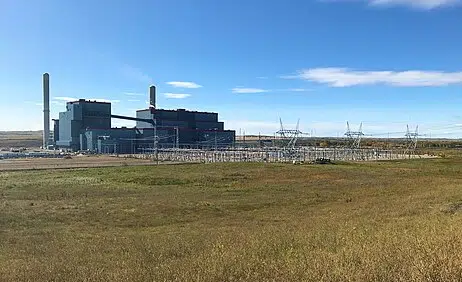
Capital Power Generation pulled the plug on a $2.4 billion carbon capture and storage project at the Genesee Generating Station. Credit: Wikimedia Commons (CC BY-NC-ND 2.0)

Repeal accompanies a new report that confirms existing carbon capture projects continue to underperform.

Capital Power Generation has canceled a $2.4 billion carbon capture and storage (CCS) project at their Genesee Generating Station, claiming it is “technically viable but not economically feasible.”

The project aimed to capture and sequester up to 3 million tons of carbon dioxide emissions from the Genesee Power Plant, located southwest of Edmonton, Alberta, a plant that’s in the process of being converted from coal to natural gas.

Julia Levin, associate director of National Climate with Environmental Defence, characterized the cancellation as yet another failure for carbon capture.

“This decision is just the latest failure in carbon capture’s terrible track record,” Levin said in a statement. “It should serve as a lesson for governments on how reckless it is to be using taxpayer dollars to subsidize these projects.”

She indicated that the project had already received $5 million from the Government of Alberta, and was further eligible for additional tax breaks from both the federal and provincial governments.

“Carbon capture has not been successfully used in the power sector,” said Levin. 

“Most projects never make it off the ground,” she added. “The few that do, like the Boundary Dam coal plant, capture a fraction of the promised rate.” Levin also noted that equipping power plants with carbon capture makes fossil fuel-generated power even more expensive, while the cost of renewable energy has plummeted.
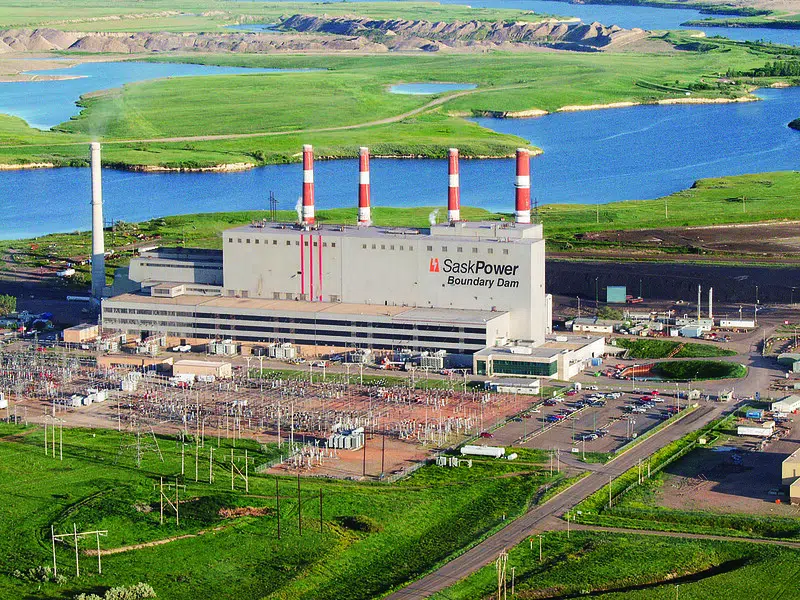
The Boundary Dam carbon capture and storage facility in Saskatchewan never met the 90 percent capture rate originally promised. Credit: SaskPower/Flickr

The Institute for Energy Economics and Financial Analysis (IEEFA) recently released new research that shows the failures of carbon capture in the Boundary Dam coal facility. After nine years and $1 billion spent retrofitting the plant with CCS equipment, the facility never met the 90 percent capture rate owner-operator SaskPower originally promised. 

Moreover, all the carbon that Boundary Dam captured was used for enhanced oil recovery (EOR), a process where carbon dioxide is pumped into old wells to extract otherwise unobtainable oil. The IEEFA study further reveals that the Boundary Dam facility’s carbon capture rate is below 60 percent in total over nine years of operation.

“Canadians should not be proud of the money and resources wasted on carbon capture, and they should be especially concerned about the billions of dollars now earmarked for additional carbon capture investments,” said the IEEFA report’s authors, David Schlissel, director of resource planning analysis at the organization, and Mark Kalegha, an IEEFA energy finance analyst, in a statement. 

“Carbon capture is not a solution to the world’s climate crisis, especially when coupled with enhanced oil recovery,” they said. 

Part of a Decarbonization Plan

Capital Power Generation is an independent power company based in Edmonton, Alberta’s capital city. The company has described the Genesee plant’s conversion from coal to natural gas as part of its decarbonization effort. The company set a goal to decarbonize by 2045. The conversion is also in line with the coal phase-out goals of the Canadian government.

Despite claims by politicians and industry that natural gas is a bridge fuel, or that it is cleaner than coal, the reality is that natural gas is not a carbon-neutral energy source, nor a viable method of decarbonizing the energy grid. Rather, natural gas is a destructive fossil fuel. Research from Robert W. Howarth, a professor of ecology and environmental biology at Cornell University, shows that methane emissions from natural gas is on par with coal’s.  
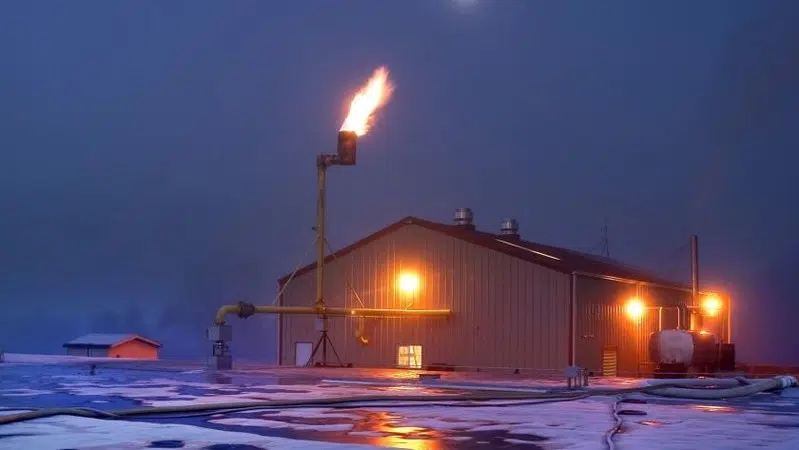
Natural gas is not considered a viable method of decarbonizing the energy grid. Credit: Felton Davis/Flickr

Emissions Reduction Alberta, a government funded group, previously claimed that the Genesee repowering and carbon capture projects could potentially remove about 6.4 million tons of carbon dioxide per year, with CCS projects handling about half that amount.

Though Capital Power Generation justified its decision to cancel the project by stating it wasn’t financially feasible, news reports show the company was holding out for additional financial support from various levels of government. As Global News reported, Altius Royalty Corp., owner of the coal mine that feeds the Genesee plant, had demanded $190 million in compensation from the federal and provincial governments to phase out coal. It argued that government efforts to terminate coal production for health and environmental reasons was equivalent to expropriation.

Altius filed the claim in 2018, and it was rejected by the Court of Appeal of Alberta in April.

In March, the Globe and Mail reported that Capital Power was considering shelving the Genesee CCS project because it couldn’t come to an agreement with the government to provide revenue certainty. The Canada Growth Fund (CGF), a $15 billion federal financing agency, is tasked with guaranteeing a minimum value for emissions-reduction credits earned under Canada’s industrial carbon-pricing system. The March news report claims that representatives from Capital Power argued that negotiations with the CGF had not produced a structure or price that would allow them to proceed with the project. A CGF representative countered that such frameworks and prices had already been negotiated with other companies.

Regardless of what specifics led Capital Power to cancel the Genesee CCS project, the fact remains that CCS is expensive, is often used for EOR, and has a long, well-documented history of under-delivering on the crucial issue of capturing carbon dioxide. Critics say the considerable amount of financial resources already dedicated to CCS have effectively been wasted, particularly when the means to cheaply decarbonize the grid – such as solar panels or wind turbines – are already available.

“The most effective way to deal with carbon dioxide emissions is to prevent them from ever being created,” said Levin with Environmental Defence, “rather than trying to pluck them from the air or smokestacks and inject them underground.”

Original article by Taylor Noakes republished from DeSmog.

Continue ReadingCanceled Canadian CCS Project Deemed ‘Not Economically Feasible’

DeSmog Launches Investigation Into Food and Farming Misinformation Ahead of EU Elections

Spread the love

Original article by Clare Carlile republished from DeSmog.

Credit: Alberto Perinot/X

The far right is set to piggyback on agricultural discontent to capture votes in June.

A large blue billboard stands outside a park in the town of Conegliano in northern Italy. On the left, a man pops a vast cricket into his mouth. On the right, are the words, “Let’s Change Europe before it changes us” – and the dates of the upcoming elections.  

The poster – an advert for the country’s radical right party Lega per Salvini Premier – refers to a conspiracy theory that has swept across Italy in the last 18 months. Elites in Brussels are planning to replace meat with bugs and are using environmental regulations to do so, or so the theory goes.

As millions of voters across the EU prepare to head to the polls from 6-9 June, conspiracy theories and misinformation on food and farming could pull voters towards the far right and parties opposing climate-friendly laws.

In the face of this onslaught of misinformation, DeSmog is launching a new series that investigates misleading claims and their impact on climate policy in the farming sector. 

Over the next two months DeSmog will monitor the spread of misinformation across the continent, working in seven different languages. We will look to identify false claims and uncover who is spreading these narratives online.

Agriculture accounts for 11 percent of carbon emissions in the EU, and has contributed to plummeting bird and bee numbers. But tackling the sector’s harms has become one of the most divisive issues on the continent, with tractors blocking highways across Europe during demonstrations this year. 

The protests – attended by thousands of farmers in several countries – reflected a wide range of concerns, from unfair food prices to calls for protection from increasingly extreme weather. Yet this complexity was barely represented in the media where demonstrations were cast as opposition to environmental measures. 

Far-right groups also weaponised the protests. In January, Jordan Bardella, lead EU candidate for France’s National Rally (formerly National Front), accused the country’s President Emmanuel Macron of pursuing “the death of agriculture” while Santiago Abascal, leader of Spain’s far-right party Vox, wrote to Macron demanding an end to “aggressions” against Spanish producers, who he described as “victims” of EU policy.

In the eyes of its critics, green reforms agreed in the last EU term would destroy farming. Plans to cut chemical use and make farmers protect natural habitats would lead to monumental job losses, they claim. The same arguments are used by agricultural corporations that stand to lose out if green reforms are enacted.

The most extreme opponents, including radical right think tanks and hardline farming groups, see green reforms as part of a plan by Brussels bureaucrats to control the industry and “grab land”. 

These claims, however, contradict the facts: last year, more than 6,000 scientists said that such nature-friendly measures were “the cornerstone of food security and human health”. 

The policies that are currently being attacked aim to tackle climate breakdown – the biggest threat to producers across the EU, who are already feeling the effects of global heating. A “staggering portion” of the continent has been exposed to high drought risk in recent years, according to the European Drought Observatory, leading to widespread crop losses.

Right-wing and far-right groups stand to make massive gains from stoking these tensions. A recent study by the EU’s Committee of the Regions showed that discontented rural areas could be a major source of votes.  

This series will shine a light on those candidates that are weaponising false claims for electoral gain.

Original article by Clare Carlile republished from DeSmog.

Continue ReadingDeSmog Launches Investigation Into Food and Farming Misinformation Ahead of EU Elections

South Asia sizzles: Record heatwave and extreme weather blamed on climate crisis

Spread the love

https://globalvoices.org/2024/05/06/south-asia-sizzles-record-heatwave-and-extreme-weather-blamed-on-climate-crisis/#

Screenshot from YouTube video by Abhi and Niyu via Zoom.Earth. April 7, 2024. Fair use.

A scorching heatwave is ravaging South and Southeast Asia, impacting hundreds of millions with its intense heat. With April temperatures shattering previous records, the region is witnessing extreme weather patterns, wildfires, and tragic heat-related deaths. Schools have been forced to close, agricultural production and storage of perishable foods have been disrupted, and the risk of heatstroke and other health problems has risen significantly.

Climate scientist Roxy Koll tweeted:

The scientists attribute the heatwave to the diminishing influence of the 2023–2024 El Niño event, which started in July 2023.

Forest fires and heatstroke deaths in Bangladesh

Bangladesh has experienced increasingly extreme weather conditions in recent years, and April 2024 stands out as the hottest month since 1948, with average temperatures ranging from 40–42 degrees Celsius (104–107.6 degrees Fahrenheit) in over 80 percent of the country.

Climate journalist Rafiqul Montu posted on X (formerly Twitter):

Wildfires erupt amid extreme heat and dry conditions

Typically in April, Bangladesh receives 130.2 millimetres of rain, however, this year, there was almost none. The government announced the closure of government schools affecting 33 million students nationwide, while private schools with better facilities transitioned to online education. In just one week of April, over 10 deaths across the country were attributed to heatstroke.

However, the most notable impact was the wildfires in different parts of the Sundarbans Reserve Forest, the world’s largest mangrove forest. Sundarbans is a remote area, lacking adequate firefighting resources nearby. The Forest Department, along with fire service personnel, local villagers, and other volunteers, could only start firefighting efforts 17 hours after the first fire. As of the time of writing this report, a significant portion of the huge fire in the Amurbunia area of the Chandpai range is still burning, posing a threat to its rich biodiversity.

Article continues at https://globalvoices.org/2024/05/06/south-asia-sizzles-record-heatwave-and-extreme-weather-blamed-on-climate-crisis/#

Continue ReadingSouth Asia sizzles: Record heatwave and extreme weather blamed on climate crisis

Climate Justice Groups Confront Chevron on San Francisco Bay

Spread the love

https://insideclimatenews.org/news/06052024/san-francisco-bay-kayaktivists-confront-chevron/

Grassroots “kayaktivists,” the Rich City Rays, challenged tankers that import crude oil for Chevron and ship its refinery products around the world.

A generation of Richmond’s children, now grown, took to San Francisco Bay in nearly five dozen kayaks Sunday morning, in the shadow of Chevron’s massive refinery, headed for tankers controlled by the oil giant in an act of resistance, prayer and joy. 

After singing a ceremonial song led by a local Indigenous leader, activists launched their kayaks around 9:30 a.m. from the shores of Point Molate, 20 miles north of San Francisco, to protest the environmental and health harms caused by Chevron’s Richmond Oil Refinery. 

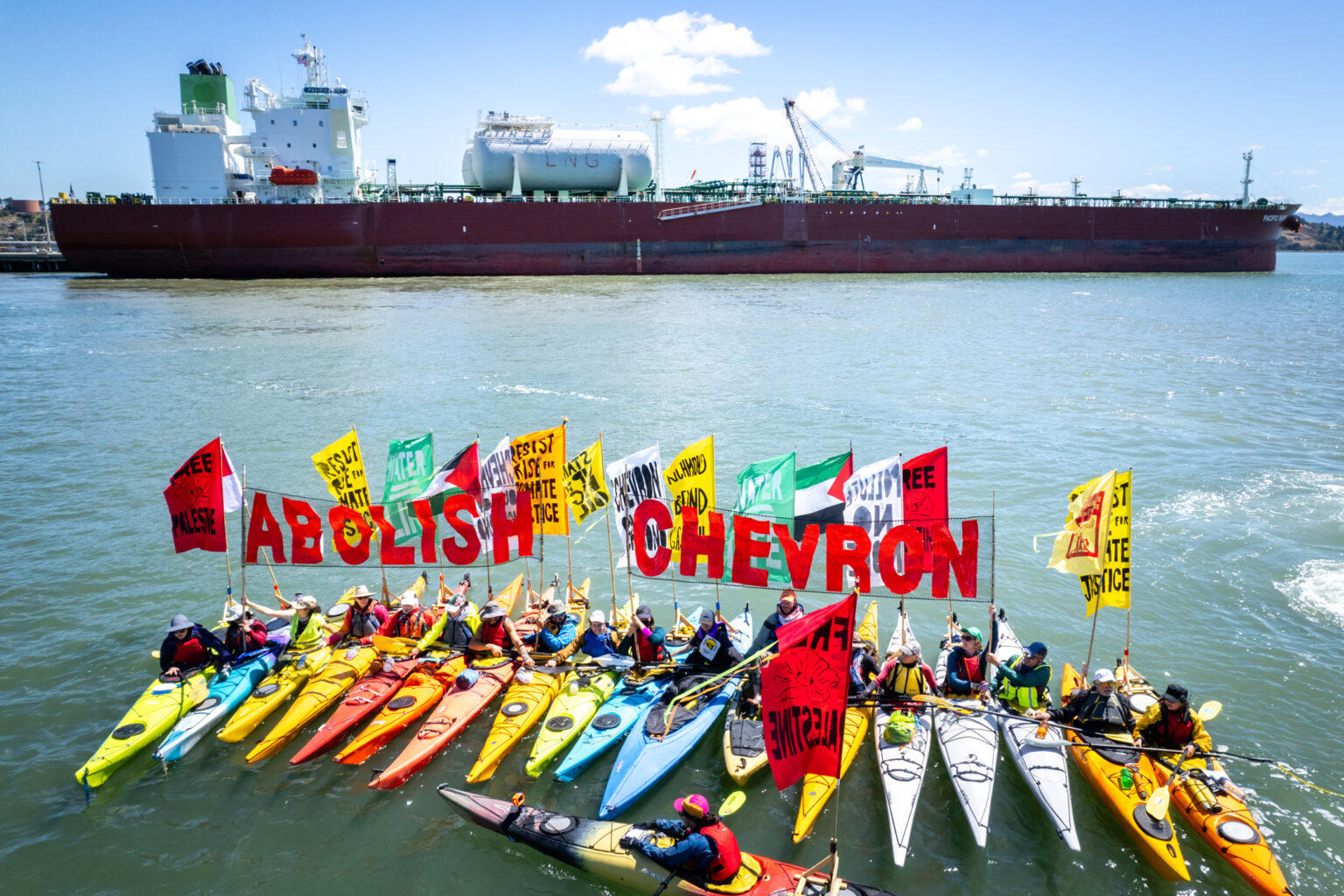
By noon, a core group of the Rich City Rays, a coalition of grassroots community groups based in Richmond, a San Francisco suburb where most residents are Asian, Black or Latino, had entered restricted waters alongside two giant tankers docked at the Chevron Long Wharf. Once activists in about 20 kayaks had jockeyed into position, side by side, they unfurled a banner with “Abolish Chevron” written in bright red letters, as the rest of the flotilla erupted in cheers.

Activists with Rich City Rays took to San Francisco Bay near Chevron’s Richmond Refinery to protest the oil giant’s impacts on communities of color around the world. Credit: Brooke Anderson

https://insideclimatenews.org/news/06052024/san-francisco-bay-kayaktivists-confront-chevron/

Continue ReadingClimate Justice Groups Confront Chevron on San Francisco Bay