Forget Wealth Tax. We Should Abolish Extreme Wealth Altogether

Spread the love

Original article by C.J. POLYCHRONIOU republished from Common Dreams under Creative Commons (CC BY-NC-ND 3.0). 

“The idea that rich and poor are equal before government in democratic societies is ludicrous,” writes Polychroniou. “As disparities in wealth and income grow, so do the disparities in political influence.” (Photo: flickr/Creative Commons)

Wealth taxation may sound like a good idea, but can it really address, let alone solve, the problem of inequality?

Economic inequality is the scourge of the 21st century. The rich are getting richer and faster than any other time since the onset of neoliberalism, which calls for “free-market” capitalism, regressive taxation, fiscal austerity and the rejection of the social state. They get richer not only when the economy is on an upswing but even amid crises. Billionaires more than doubled their net worth during the pandemic, according to Bloomberg Billionaires Index.

The latest analysis shows that the richest 1 percent gained $42 trillion in new wealth over the past decade, which amounts to “nearly 34 times more than the entire bottom 50 percent of the world’s population.” In the meantime, the very poor and low-income people across the globe, including the U.S., are actually getting poorer. So much for trickle-down economics which was popularized during the 1980s by the Reagan administration’s vast capital gains and income tax cuts and continues to persist to this day in spite of its major flaws. Cutting taxes on the rich not only increases economic inequality but has no effect on economic growth and unemployment.

There must be something very rotten with an economic system that allows individuals to generate obscene amounts of wealth to the point they can hijack the political system and undermine democracy.

However, inequality should not be examined purely from an economic perspective. Over the years, numerous studies have shown that economic inequality influences public attitudes toward democracy by generating political disillusion and low trust in government and other institutions, like Congress. Inequality also undermines social mobility, contributes to political polarization and fuels authoritarianism.

Finally, inequality contributes to climate change. The richest 1 percent is responsible for more carbon emissions than the poorest 66 percent, according to a 2023 report by Oxfam. Of course, while the world’s wealthiest people make a huge contribution to climate change, they are also able to insulate themselves from the worst impacts of global warming.

In sum, the super-rich can be blamed for many of the most serious ills confronting societies in the twentieth-first century. The only consequential question here is this: what can be done about it then?

One of the most frequent responses to the problem of rising inequality is a call for the implementation of a wealth tax. Wealth taxation may sound like a good idea, but can it really address, let alone solve, the problem of inequality? The answer is an unqualified “no.” At least for the world’s advanced economies. Indeed, even if it’s possible to discover all the wealth that the very rich people own (much of which is hidden in companies or put in trusts) and then proceed with an accurate asset valuation, this will have very little impact, if any, on the daily lives of people who try to survive on minimum wages. Wealth taxation alone will have no impact on workers without social protection and no bargaining power at companies. It won’t protect workers at the “gig economy” and part-time workers.

To effectively address economic inequality, we must identify the root cause of the problem, and one simple way to do this is by asking a rather simple question: How does one become superrich? Where does this immense wealth come from? Because as the renowned progressive economist James K. Boyce recently put it “nobody ‘earns’ a billion dollars.

There must be something very rotten with an economic system that allows individuals to generate obscene amounts of wealth to the point they can hijack the political system and undermine democracy. Democracy cannot exist when we have wealth concentrated in the hands of a few. The idea that rich and poor are equal before government in democratic societies is ludicrous. As disparities in wealth and income grow, so do the disparities in political influence.

Take corporations, for example, which exert enormous influence, thanks primarily to campaign donations and lobbying Their actions, which range from opposing labor laws and policies that benefit workers to restricting unionization, exacerbate inequalities at all levels of society and across the globe. Moreover, the surge in billionaire wealth and the surge in “corporate power and monopoly power” form a powerful connection. The very rich are not simply beneficiaries of the existing economic order. They are in control of the working arrangements of the global economic system. Yet despite the enormous power that corporations have on people’s lives and the communities in which they operate, there are very few policies and mechanisms at national or international level to curtail that power.

Of course, we know that billionaires and big corporations pay very little in taxes, but we need much more than wealth and corporate taxation. We need ways to curb the power of big corporations and their drive to maximize shareholder value at the expense of everything else. We should also set a cap on extreme wealth. There is no social value for having billionaires. We should abolish the superrich, perhaps an easier task, politically speaking, than finding ways to tax them. Democratic societies could hold a referendum on whether we should abolish extreme wealth.

In addition, we could create economic arrangements that provide a minimum income to ensure that everyone’s basic needs are met. This can be done either through universal basic income or guaranteed income programs.

Last, but not least, we can challenge the rule of capital by advancing democratic forms of economic governance and economic planning. Participatory economics is one such alternative that would change the economy as we know it since it entails social ownership of production and self-managed workplaces. Worker cooperatives are established is various parts of Europe, particularly in Italy and Spain. The Mondragon Corporation in the Basque region of Spain is owned by its workers and represents the biggest and most successful case of worker cooperatives. Of course, for economic transformation to occur, breaking down hierarchical structures and putting workers in charge of business activities is not enough. What needs to happen is that the values of worker cooperatives spread across the economy and that power is wrested away from the capitalist class.In today’s world, we can tackle economic inequality only by shifting the conversation to its root causes and then coming up with blends of policies that work together to put an end to the driving forces behind inequality. Spending all political capital on something like a wealth tax will only help to prolong the life of an immensely cruel and dangerous economic system. An easier and far more effective way to end plutocracy is through the power of democracy via a binding referendum that calls on citizens to decide whether or not we should abolish altogether extreme wealth.

Original article by C.J. POLYCHRONIOU republished from Common Dreams under Creative Commons (CC BY-NC-ND 3.0). 

Continue ReadingForget Wealth Tax. We Should Abolish Extreme Wealth Altogether

Lammy urged to condemn Israel for provoking wider war after killing of Hamas leader

Spread the love

https://morningstaronline.co.uk/article/lammy-urged-condemn-israel-provoking-wider-war-after-killing-hamas-leader

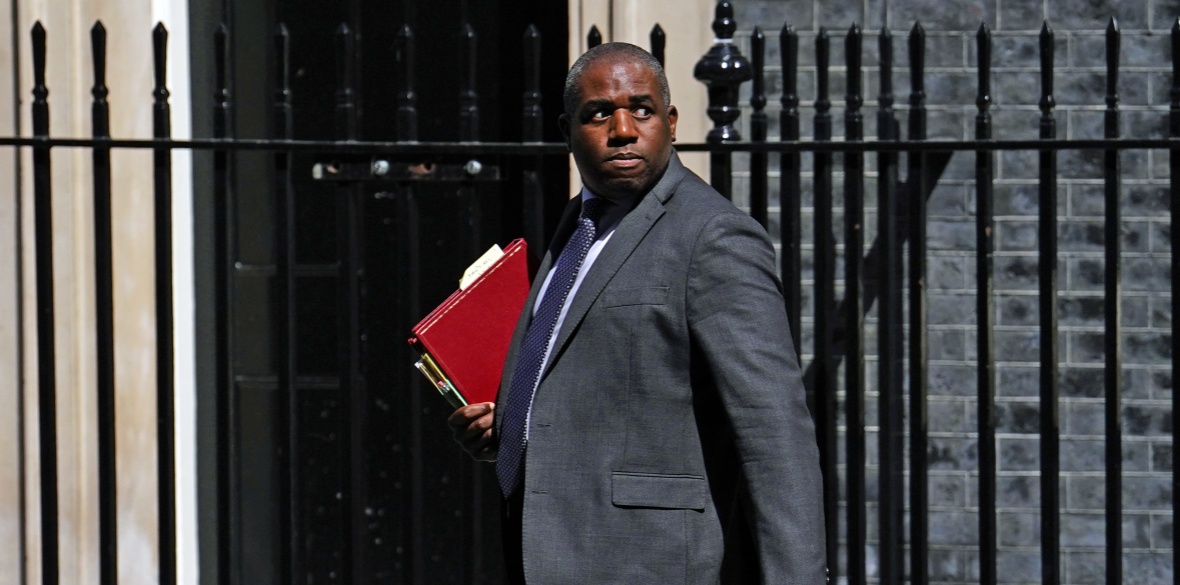
Foreign Secretary David Lammy leaving Downing Street, London, following a Cabinet meeting, July 30, 2024

FOREIGN SECRETARY David Lammy was urged to condemn Israel’s efforts to widen the war in the Middle East today following the killing of Hamas leader Ismail Haniyeh by an air strike in Iran.

Stop the War Coalition (StWC) said Haniyeh was the lead Hamas figure in the negotiations for a ceasefire in Gaza taking place in Qatar and Israel’s actions “could not have been more provocative.”

StWC vice-chairman Chris Nineham also criticised Labour for using the killing to delay its plans to cancel some arms sales to Israel.

He said: “Israel’s series of overnight attacks in Iran, Lebanon and Iraq were a dramatic and calculated attempt to spark a wider war in the Middle East.

“If you are serious about ceasefire negotiations you don’t assassinate the people you are negotiating with.

https://morningstaronline.co.uk/article/lammy-urged-condemn-israel-provoking-wider-war-after-killing-hamas-leader

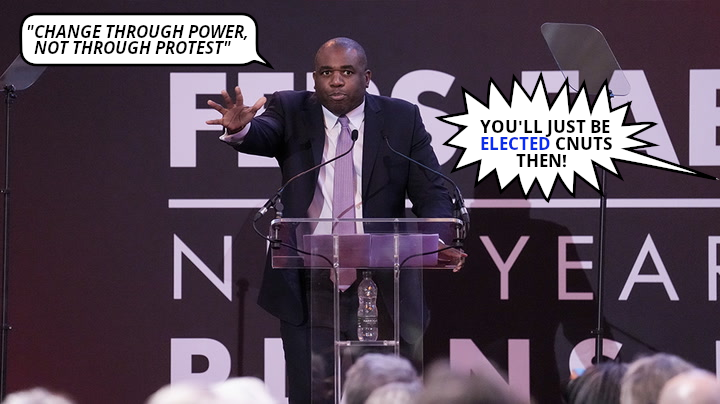
UK Labour Party shadow Foreign Secretary repeatedly heckled at a speech to the Fabian Society over his and the Labour Party's support for and complicity in Israel's genocide of Gaza.
UK Labour Party Shadow Foreign Secretary repeatedly heckled at a speech to the Fabian Society over his and the Labour Party’s support for and complicity in Israel’s genocide of Gaza.
Continue ReadingLammy urged to condemn Israel for provoking wider war after killing of Hamas leader

Dozens of New MPs Worked for Oil and Gas Lobbyists

Spread the love

Original article by Andrew Kersley republished from DeSmog.

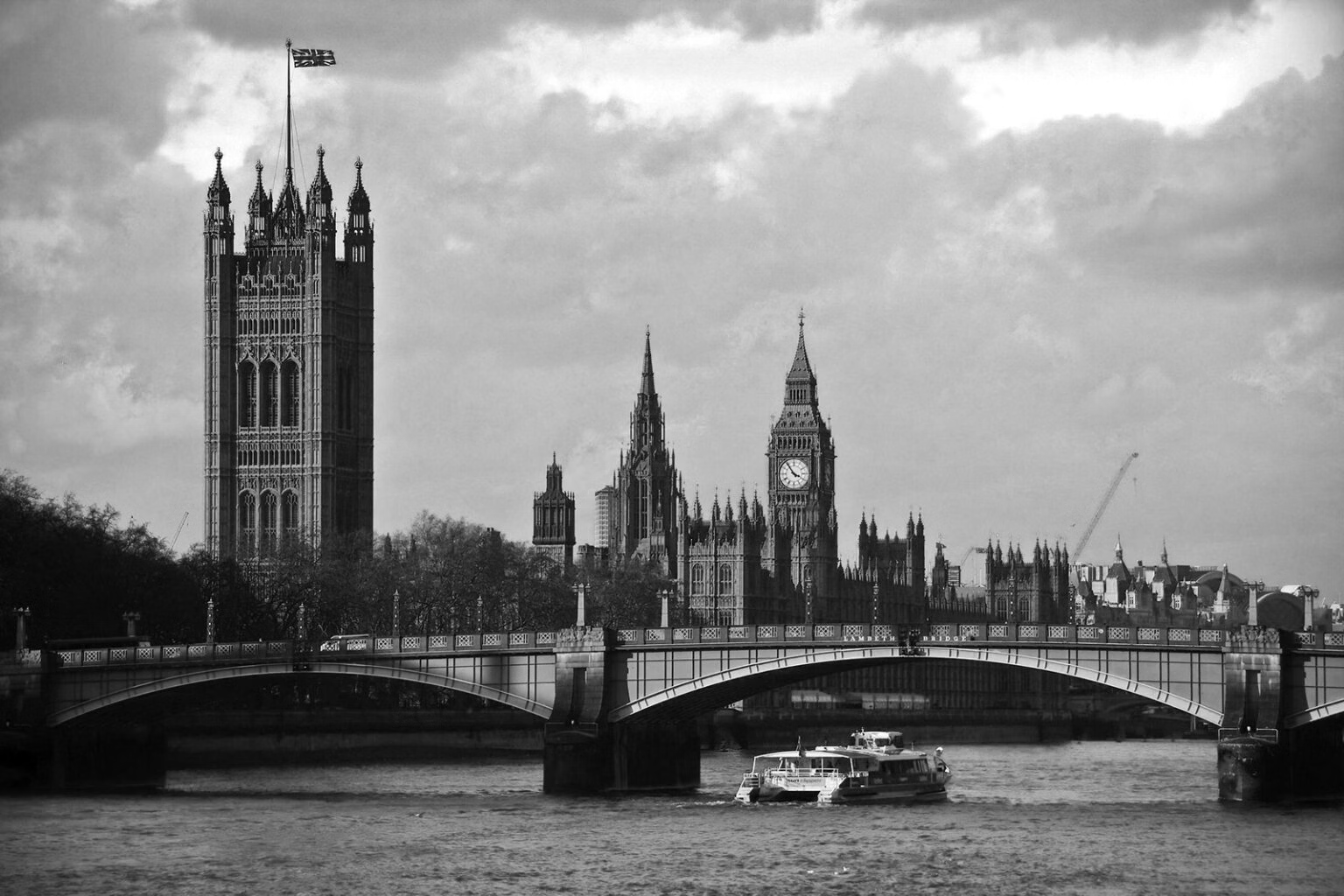
The Houses of Parliament in Westminster. Credit: Garry Knight / Flickr (CC BY 2.0)

A host of parliamentarians were previously employed by agencies with fossil fuel clients.

At least 24 newly elected MPs used to work for public relations, consultancy and lobbying firms that have a history of representing oil and gas companies, DeSmog can reveal.

A DeSmog analysis of the MPs entering Parliament after the 2024 general election found that two dozen had a background working for oil and gas giants, coal power station conglomerates, as well as other highly polluting clients.

The findings have sparked concerns that fossil fuel interests in Parliament may influence policy-making.

“I entered politics after working as an engineer in the renewables industry exactly because I could see we had the technology to make the transition to clean and green energy, but we were lacking the political will to make it happen,” said Green Party co-leader and Bristol Central MP Carla Denyer.

“Part of what stops this transition from occurring is the embedded influence of the fossil fuels industry in politics.”

Labour’s new Ossett and Denby Dale MP Jade Botterill started working at lobbying firm Portland after her parliamentary candidacy was announced in September 2023. Portland’s clients include oil major BP, French energy firm EDF, Heathrow Airport, and Chinese state-owned oil company CNOOC. Another Labour MP – Laura Kyrke-Smith – worked for Portland several years ago. She told DeSmog that she didn’t represent any oil firms while working for the company. 

Portland told DeSmog that they “do not comment on client relationships”.

At least three new Labour MPs – Oliver Ryan, Mary Creagh, and Steve Race – previously worked for Lexington Communications, a lobbying firm that works for oil giant Phillips 66, the International Airlines Group (IAG), and Eren Holding, a firm that runs coal-fired power stations in Turkey.

New Conservative MP for Bromsgrove Bradley Thomas spent at least five years working for Phillips 66, latterly as a strategy lead, before becoming an independent consultant to the sector.

Almost a third of Labour’s new MPs have a background working in communications and lobbying, according to the Sunday Times, a similar share to the Conservatives. Due to the UK’s limited transparency rules around lobbying, it’s often impossible to know whether these individuals worked on behalf of oil and gas clients.

However, we do know that several other major lobbying and consultancy firms with fossil fuel links – in addition to Lexington and Portland – used to employ a number of new MPs. These include:

  • Teneo (clients include BHP, Centrica, and EnQuest)
  • Arden Strategies (SGN, UK Power Networks)
  • Headland (London City Airport)
  • Weber Shandwick (ExxonMobil, Shell, Independent Fuel Suppliers Association, Cairn Oil and Gas)
  • Hanbury (Rockhopper Exploration, Spirit Energy)
  • Consulum (Saudi Arabia)
  • Hanover (Valero)
  • Camargue (Esso)
  • Four Communications (Oman Oil Company)

Four Communications emphasised that its work for the Oman Oil Company ended in 2019, though the firm also has offices in the petrostates United Arab Emirates, and Saudi Arabia.

In June 2024, United Nations Secretary-General António Guterres said that PR agencies had “aided and abetted” the fossil fuel industry, “acting as enablers to planetary destruction”. He called on these agencies to stop taking on new fossil fuel clients, and to set out plans to drop their existing ones.

“Fossil fuels are not only poisoning our planet – they’re toxic for your brand,” he said. 

All the MPs named in this article were approached for comment. 

Gas Lobbyists and Energy Consultants

Several new MPs have also worked for much smaller groups with links to the energy industry. This includes Labour’s new Cannock Chase MP Josh Newbury, who between 2019 and 2022 worked as senior parliamentary officer for the Energy and Utilities Alliance (EUA) – a trade group for the gas industry and fossil fuel boiler manufacturers.

DeSmog revealed in 2023 that the EUA, which is led by former Labour MP Mike Foster, was behind a barrage of negative press attacking heat pumps as a home heating source. Foster has repeatedly labelled pro-heat pump campaigners as a “green cult”.

New Liberal Democrat MP for St Neots and Mid Cambridgeshire Ian Sollom worked as the principal of StrategicFit, an energy sector strategic consultancy that has worked for the oil major ExxonMobil, and the Chinese state oil firm CNOOC.

Sollom told DeSmog that “as a scientist entering Parliament, I am committed to the phasing out of fossil fuels, and my previous career primarily focused on improving decision making and collaboration between energy companies, regulators and other stakeholders”.

Liberal Democrat MP for Cheltenham Max Wilkinson used to work for Camargue, which lobbied politicians in Westminster on behalf of the oil company Esso while he was employed by the firm. 

A spokesperson for the Liberal Democrats stressed that Wilkinson did not work for any oil and gas clients.

Fossil fuel companies have extensive existing ties to Westminster politics. DeSmog revealed that, from the 2019 general election to the start of the 2024 election campaign, the Conservative Party received £8.4 million from oil and gas interests, climate science deniers, and polluting industries.

Meanwhile, a number of leading right-wing think tanks have received direct funding from the fossil fuel industry. Onward, which hosted the most government meetings of any think tank in 2023, receives funding from Shell and BP.

All the agencies named in this article were approached for comment.

Original article by Andrew Kersley republished from DeSmog.

Continue ReadingDozens of New MPs Worked for Oil and Gas Lobbyists

Morning Star Editorial: Riots and racism in Southport – how fascism preys on tragedy

Spread the love

https://morningstaronline.co.uk/article/editorial-riots-and-racism-southport-how-fascism-preys-tragedy

Trouble flares during a protest in Southport, after three children died and eight were injured in a “ferocious” knife attack during a Taylor Swift event at a dance school on Monday, July 31, 2024

THE racist riot in Southport following the murderous knife attack on a children’s dance class speaks both to the unscrupulousness and mobilising reach of Britain’s fascist right.

Locals are still coming to terms with Monday’s horrific killings, which have so far claimed the lives of three little girls, with others still in critical condition. A suspect is in custody, an investigation is ongoing. Nobody interested in justice for the victims would be muddying the waters with false rumours. Police stress that unfounded speculation about the attacker is deeply unhelpful.

Fascists are not interested in justice. One of the few things we do know about the suspect is that he lived in the village of Banks in Lancashire, and that he was born in Cardiff.

Yet far-right rabble-rouser “Tommy Robinson,” again abroad having skipped bail, was promoting nonsense on the X social media site from the off about the attack being linked to immigration. Other lies were quickly spreading across social media: a fake name of the supposed perpetrator; the false claim that he was an asylum-seeker, arrived by boat.

Vulnerable people who have faced torture, abuse or trafficking for modern slavery, or been bereaved in wars often fuelled by our government, are now fair game to be blamed for unspeakable crimes committed by others.

Southport is a reminder that fascists don’t wait for elections. The mayhem and terror they spread is their true element.

https://morningstaronline.co.uk/article/editorial-riots-and-racism-southport-how-fascism-preys-tragedy

Continue ReadingMorning Star Editorial: Riots and racism in Southport – how fascism preys on tragedy