Britain’s relentless rain shows climate predictions playing out as expected
Jess Neumann, University of Reading and Hannah Cloke, University of Reading
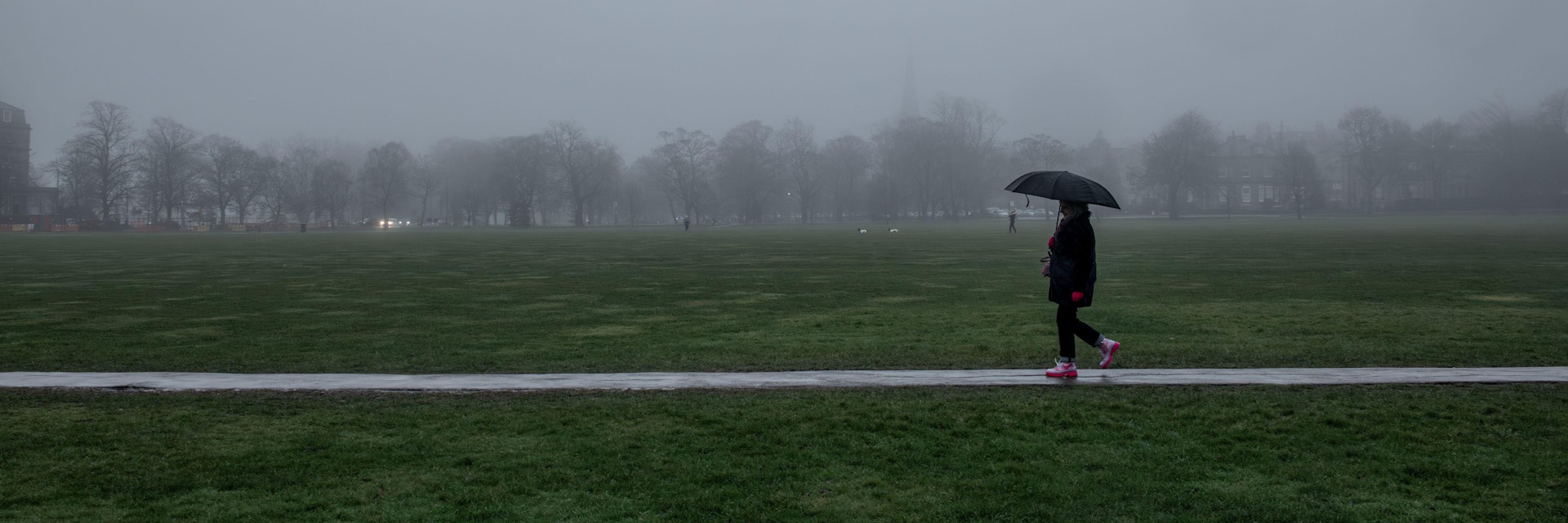
Large parts of the UK are experiencing relentless rainfall, with some places seeing rain for 41 consecutive days and counting. In Reading, in the south east of England, our university’s official rain gauge has recorded precipitation on 31 consecutive days – unprecedented in records stretching all the way back to 1908.
The pattern has not just made 2026 a bit dreary. It also reveals one way in which climate change is making the already naturally variable (some would say gloriously variable) British weather increasingly extreme.
In those 31 days, Reading has received 141mm of rain, compared to the 30-year average over that period of just 58mm – well over twice what we would expect at the time of year.
Higher than average rainfall totals are expected, well, half of the time. This is just how mean averages work. But it’s the nature of this current weather pattern that is so unusual, and is in keeping with the type of wetter winter situation for UK weather that climate scientists have been warning us to expect – even if we are still only just learning why exactly this is happening on a regional level.
Over the full breadth of a British year, the bigger picture is even more revealing. Last year, the UK was grappling with one of the hottest and driest summers on record. A succession of hot spells, combined with long periods that saw less than average rainfall, meant water supplies dwindled and widespread hosepipe bans were put in place.
As a whole, 2025 from spring onwards was exceptionally dry. Fast forward to the new year, and we’re facing the opposite – weeks of rainfall and flooding. These extremes are what we expect to see in this part of the world, as heat builds up in the global atmosphere and oceans. For British people, this is what climate change right now feels like.
More rain, more intense rain
What is causing this link between a warmer planet and wetter British winters? One fundamental link is in basic physics of the atmosphere as temperatures rise. Warmer air can hold more moisture – about 7% more for every one degree celsius of warming. This means that when it rains, on average it rains harder. Bigger, heavier downpours become more common.
Climate change is also disrupting the patterns of currents and cycles within the atmosphere and oceans that bring the UK much of its weather. As an island archipelago on the edge of three competing climate masses – the wet, mild Atlantic, the cold, dry Arctic, and the wildly variable temperatures of the Eurasian landmass – it is used to variability.
But one constant feature plays an oversized role in the type of weather we get: the jet stream – a ribbon of fast-flowing air high in the atmosphere. The position of the jet stream makes a big difference. Sometimes it flows to the north of Scotland, sometimes it is hundreds of miles further south towards Spain. This location matters, because the jet stream helps to blow whole weather systems – think of a big “bubble” of air carrying its own weather with it – from the Atlantic towards the UK.
Currently, the jet stream is positioned further south than typical for the time of year, steering consecutive wet and often windy weather systems directly towards the UK. At the same time, a high pressure system is sitting over parts of northern Europe, blocking the wet weather from moving further east.
The impact of climate change on the jet stream is complex, because this river of air circling the north pole from west to east is influenced by a lot of different factors. One thing we do know: the Arctic, at surface level, is warming faster than other parts of the planet. This means that the temperature difference between the poles and the equator, for air at lower levels at least, is not as big as it used to be. This may be influencing the jet stream to weaken and meander.
With less energy to push them along, these weather patterns can get stuck in one location, meaning that the systems of low air pressure associated with rainfall and storms can slow down or get stuck. When a system bringing rain parks itself over the UK for days on end, only to be followed by another system, and another, the result is relentless rainfall.
To complicate things further, high up in the atmosphere where the jet stream blows, climate change is actually making the temperature difference between equator and poles increase. This may be strengthening the speed and turbulence within the jet stream itself, and just adds to a complex picture of varying influence on UK rainfall.
The challenge of managing extremes
These rapid swings between drought and deluge pose serious practical challenges for everyone in the UK. Water companies must plan for both droughts and floods, even within the same year. Farmers face uncertain growing conditions, with crops rotting in the wet soil one month, and drying out in droughts a few months later. Infrastructure designed for the climate of the past may not cope with the extremes of the future.
Understanding these changes isn’t just an academic exercise. It’s essential for helping communities, businesses and governments prepare for what’s coming. As Britain experiences these climate extremes at first-hand, it is crucial to build resilience into plans for hotter and drier summers, and warmer wetter winters.
Jess Neumann, Associate Professor of Hydrology, University of Reading and Hannah Cloke, Professor of Hydrology, University of Reading
This article is republished from The Conversation under a Creative Commons license. Read the original article.


