‘Across much of the UK, combines have been rolling earlier than usual this year.’ Photograph: Gareth Fuller/PA
Farmers battle to salvage what they can of their crops as heatwave set to continue
Britain could face shortages of certain foods after punishing drought in parts of England, the National Farmers’ Union (NFU) has warned as a heatwave was forecast to continue into next week.
The UK’s Health Security Agency (UKHSA) has issued heat health alerts for eight regions of England, with temperatures set to rise above 30C in parts of the country. UKHSA said rising temperatures may increase health risks, particularly for vulnerable groups.
Farms across the country were affected by floods over the winter, making planting extremely difficult, and now in many areas they do not have access to water as irrigation is being restricted due to drought.
It is the third drought in five years and farming groups say this is the new normal for agriculture in Britain. Wheat farmers say their crop is half its normal height, and England is seeing its earliest ever harvest as farmers battle to salvage what they can of their produce.
In some areas it has not rained for over a month, while multiple record-breaking heatwaves have hit the country since early summer, drying out the soil.
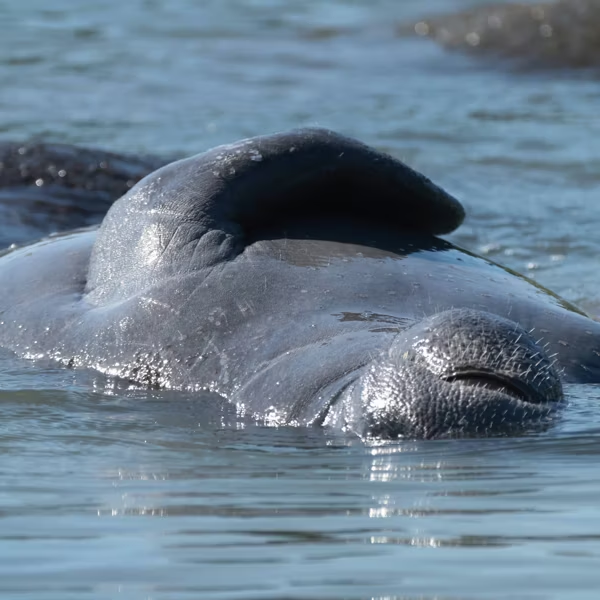
Nigel Farage urges you to ignore facts and reality and be a climate science denier like him and his Deputy Richard Tice. He says that Reform UK has received £Millions and £Millions from the fossil fuel industry to promote climate denial and destroy the planet.Donald Trump urges you to be a Climate Science denier like him. He says that he makes millions and millions for destroying the planet, Burn, Baby, Burn and Flood, Baby, Flood.Orcas comment on killer apes destroying the planet by continuing to burn fossil fuels.
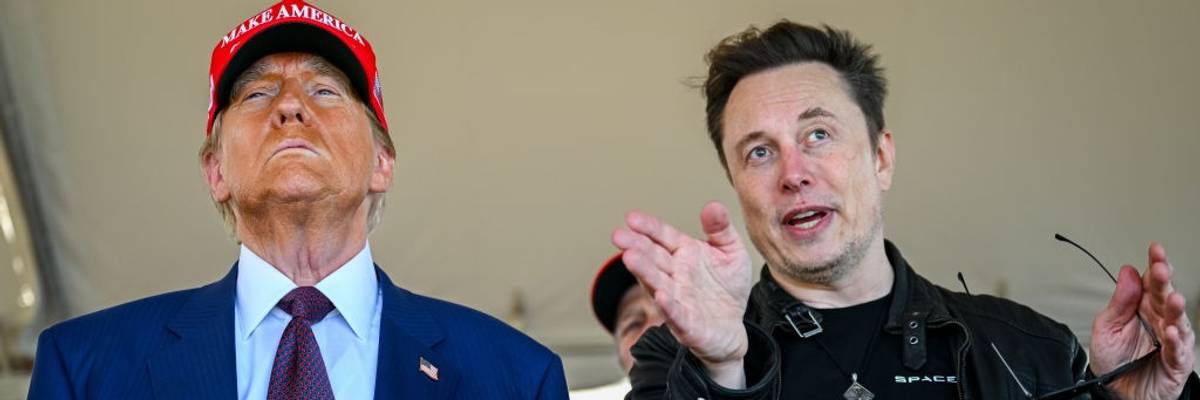
Then-US President-elect Donald Trump and SpaceX CEO Elon Musk watch the launch of the sixth test flight of the Starship rocket on November 19, 2024 in Brownsville, Texas. (Photo by Brandon Bell/Getty Images)
Under pressure from companies owned by billionaires like Elon Musk and Jeff Bezos, the Trump administration announced this week that it will waive what it called “unnecessary environmental laws and regulations” in order to expedite the approval of commercial rocket launches.
The US Department of Transportation’s (USDOT) Federal Aviation Administration (FAA) is proposing to waive numerous environmental review requirements and related federal laws that currently apply to commercial space launches, citing legal authority Congress granted to the secretary of transportation.
The proposed changes—on which the public has 30 days to comment—would make it much faster and easier for space profiteers to get permission to launch rockets or operate commercial spaceports in the United States by allowing the FAA to waive part or all of over a dozen laws and rules, including National Environmental Policy Act, the Endangered Species Act, the Clean Water and Clean Air acts, the National Historic Preservation Act, and the Marine Mammal Protection Act.
“America won the first space race, and we can do it again—but only if we get government red tape out of the way,” US Transportation Secretary Sean Duffy said on Tuesday. “That’s why President [Donald] Trump has charged USDOT with unlocking the final frontier and reestablishing the United States’ dominance in space.”
Trump’s FAA announced today that it intends to exempt #space launches and spacecraft reentries from complying with environmental laws like the #EndangeredSpeciesAct. This will put untold species directly in harm’s way.You can be sure we’ll fight this obscene giveaway to special interests 🚀🚀
The USDOT said that other federal agencies, such as the National Aeronautics and Space Administration (NASA) or the US military, may still be required to conduct environmental reviews under the law for launches on some federal property.
The proposal follows Trump’s August 2025 executive order, “Enabling Competition in the Commercial Space Industry,” which critics charge was issued to benefit Musk, the world’s richest person, and his company SpaceX, which is seeking to dramatically increase launches and landings and has suffered a series of rocket explosions. Trump has boosted other companies—including X and Tesla—led by Musk, who served for a period last year as de facto head of the president’s so-called Department of Government Efficiency, or DOGE.
Opponents warn that, if approved, the proposed changes mean that the FAA would generally no longer require environmental studies or consultations before issuing commercial space licenses.
“NASA has conducted space launches for decades in a responsible way, but now Trump wants to gut even the most basic environmental safeguards to enrich some of the world’s wealthiest people,” said Brett Hartl, government affairs director at the Center for Biological Diversity (CBD). “We’ve seen real environmental damage from the exploding rocket toys of the superrich. You can be damn sure we’ll fight this obscene giveaway to special interests.”
In 2024, SpaceX was punished with a paltry $150,000 in fines for violating the Clean Water Act after it discharged tens of thousands of gallons of industrial waste from a launch pad in Boca Chica, Texas.
CBD and other green and Indigenous groups last month sued the US Fish and Wildlife Service in a bid to stop the Trump administration from handing over 715 acres of the Lower Rio Grande Valley National Wildlife Refuge in South Texas to SpaceX in exchange for 683 acres elsewhere.
On Wednesday, CNBC revealed that six US lawmakers from both major parties—including five who sit on committees that regulate SpaceX—had or have family investments in the company, raising concerns over apparent conflicts of interest.
In addition to environmental concerns, Trump has also come under fire for militarizing space in contravention of the Outer Space Treaty—which the US has ratified—by launching the Space Force as an official service branch during his first term.
Donald Trump urges you to be a Climate Science denier like him. He says that he makes millions and millions for destroying the planet, Burn, Baby, Burn and Flood, Baby, Flood.Elon Musk urges you to be a Fascist like him, says that you can ignore facts and reality then.Orcas discuss Donald Trump and the killer apes’ concept of democracy. Front Orca warns that Trump is crashing his country’s economy and that everything he does he does for the fantastically wealthy.
No further action will be taken by police after Zack Polanski shared a photo of a man with a T-shirt showing a guillotine and the phrase “we’re only making plans for Nigel”.
The Metropolitan police’s decision comes after the Green party leader for England and Wales said he had made an “inadvertent mistake” and would not apologise to Nigel Farage.
…
A Met spokesperson said: “We absolutely understand the reaction to this image being shared online, particularly in the context of increasing threats toward politicians.
“While there will be people who will argue that those who shared the image in this Instagram post should be subject to criminal action, our review has concluded that on this occasion, the threshold is not met.”
Nigel Farage explains that he’s called another byelection in Clacton-on-Sea because he should be able to secretly enrich himself without scrutiny and accountabilty and that the rules shouldn’t apply to him.Nigel Farage admits to being a whore willing to do anything for someone with a big fat wallet and asks whether drinking pints and smoking fags is not enough for the stupid plebs.Nigel Farage blames the Muzzies.
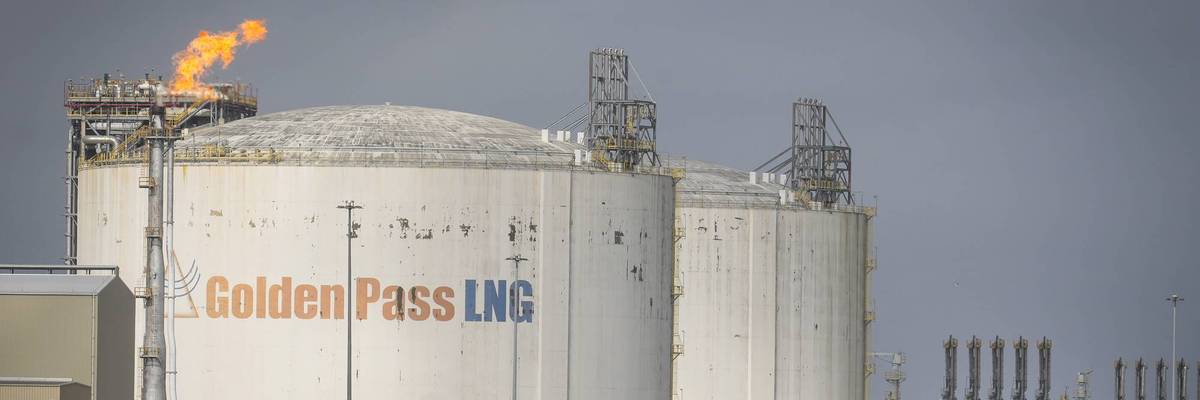
A barge moves along the water past ExxonMobil and QatarEnergy’s Golden Pass liquefied natural gas facility in Port Arthur on April 2, 2026. (Photo by Brett Coomer/Houston Chronicle via Getty Images)
Between 2026-40, the average wholesale price of liquefied natural gas could be 80% higher than during the past decade, thanks to Trump’s acceleration of exports and the construction of AI data centers.
As President Donald Trump’s push for artificial intelligence data centers sends demand for natural gas soaring, a report released Tuesday projects that wholesale prices will likely double by the late 2030s if his energy and AI policies continue, driving up household energy bills.
The report from the climate activist group Oil Change International, which argues for an end to reliance on fossil fuels, found that recent surges in wholesale natural gas prices are being driven by Trump’s so-called “energy dominance” agenda, which has cranked up natural gas exports.
In his second term, Trump has resumed and accelerated approvals for new natural gas export terminals following a pause on permits under the Biden administration.
Nearly 90 million metric tons of new annual liquefied natural gas (LNG) export capacity reached a final investment decision as of June, on top of 60 million that had already been under construction, the report found. Combined, the researchers predicted that these projects could double US LNG exports by the early 2030s.
While pursuing energy dominance, Trump is also pursuing “AI dominance,” which has included the breakneck development of data centers specifically built to run on fossil fuels, including natural gas.
His administration has fast-tracked federal permits for data center developers, loosened environmental review processes, and directed his agencies to provide incentives to finance the data center boom.
Gas is expected to power much of the near-term energy use from these data centers. The facilities, which operate 24/7, are being constructed faster than transmission lines can keep up, meaning that new gas plants are being proposed as an alternative.
The report finds that the demands of the AI data center boom could increase gas consumption by 17% by the early 2030s. With the cheapest gas being rapidly depleted, more demand will require producers to expand drilling in parts of the country where it’s significantly more expensive to operate, like the Haynesville shale region of Louisiana and East Texas.
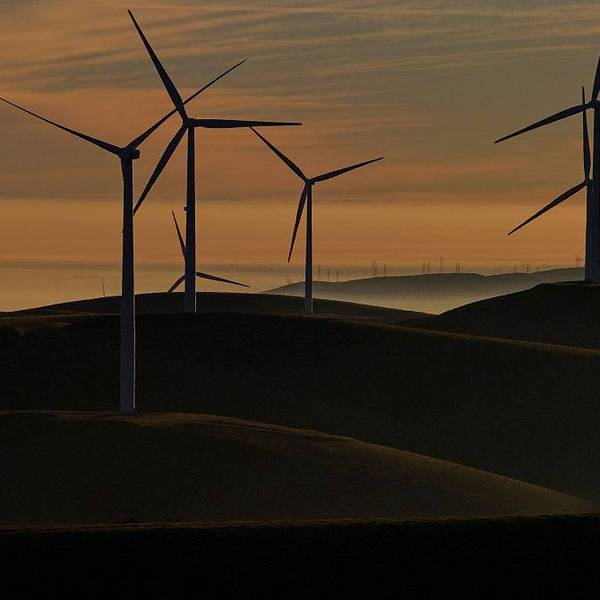
Meanwhile, the Trump administration and Republicans in Congress have gutted federal support for wind power construction and other renewable energy sources, which will further increase dependency on gas.
In addition to pumping more planet-heating greenhouse gases into the atmosphere, the report finds that this increased demand will likely cause prices to soar for consumers.
Thanks to Trump, the wholesale price of fossil gas could DOUBLE over the next decade, outpacing inflation every year. pic.twitter.com/8FCCmwysWd
— Oil Change International (@PriceofOil) July 28, 2026
Citing fluctuations in the Henry Hub gas price benchmark, the report projected that between 2026-40, the average wholesale price of gas could be 80% higher than during the past decade of US LNG exports, which it notes was “a decade when energy price volatility was already causing hardship in the US and LNG-importing countries.”
“Trump’s policies are making everyone’s lives more expensive while Big Tech and the fossil fuel industry cash in. Our research shows that the cost-of-living crisis will only escalate in the coming years if Congress and government agencies don’t intervene,” said Lorne Stockman, research director at Oil Change International.
“Our leaders must stand up to Trump, phase out LNG exports, stop the reckless data center build-out, and transition the US economy off of fossil fuels to make energy affordable again,” he added.
Bill McKibben, the co-founder of 350.org, argued in an op-ed for Common Dreams on Tuesday that Oil Change’s report, as well as another recent report demonstrating how the fossil fuel industry had hidden the climate damage caused by natural gas from the public for more than half a century, showed that it’s long past time to “make gas a dirty word” in a similar fashion to oil.
“Politicians locking us into natural gas are guaranteeing that our kids will spend much of their lives paying far more for energy than they should—and far more than people in the rest of the world will be spending,” he wrote.
McKibben noted recent reporting in The New York Times detailing how, in the wake of Trump’s war in Iran, which has caused LNG prices to soar across Europe and Asia, nations are beginning to “unshackle” themselves from it as an alternative fuel source. Not so in the US.
“The natural gas industry,” he wrote, “is destroying the climate, and destroying people’s lungs, and it’s trying to lock us into this expensive practice for decades to come.”
Donald Trump urges you to be a Climate Science denier like him. He says that he makes millions and millions for destroying the planet, Burn, Baby, Burn and Flood, Baby, Flood.Elon Musk urges you to be a Fascist like him, says that you can ignore facts and reality then.Power-mad orange gasbag Donald Trump says Burn, Baby, Burn.
A firefighter gestures next to burning trees as a wildfire rages near Marcheprime, outside, Bordeaux, France, July 26, 2026
FRANCE holds emergency meetings on the evacuation of Bordeaux, a city of a million, as wildfires sweep ever closer. In Spain families are fleeing the capital, Madrid.
The reality of the climate emergency has come to Europe. There were plenty of warning signs — more severe heatwaves by the year, droughts and floods devastating harvests — including in Britain, where three of the five worst harvests on record have been since 2020 — and worsening wildfires.
In Britain this summer fires have burnt swathes of the Cairngorms and Eryri (Snowdonia), as well as Arthur’s Seat in Edinburgh for the second year running. As summer heatwaves grow longer and drier, we should not imagine our towns and cities are safe. As Fire Brigades Union leader Steve Wright told the Morning Star in May, “In London a suburban street burnt to the ground last year” (in Rainham) “and we had wildfires in Dorset and Wiltshire.”
Computer scientist Tim Berners-Lee, inventor of the World Wide Web, argues that addressing the climate crisis requires “World War II-scale mobilisation.”
…
Addressing the climate crisis involves radical restructuring — one reason climate activists were, even before Palestine solidarity campaigners, the victims of repressive new anti-protest laws.
That, in turn, means getting real about the class power of the forces blocking change. Proposed mechanisms for delivering action like citizens’ assemblies are a response to the sluggishness of existing institutions, but do not address its cause — the power of the capitalist class.
Agreeing what we ought to do doesn’t guarantee that it will happen: the climate movement needs to be one with the labour and peace movements, and recognise that this is fundamentally a class struggle and a battle against capitalism itself.
That dividing line becomes ever clearer, domestically and internationally.
The far right are the climate deniers at home; globally the denier-in-chief is the main imperialist power, the United States, whose agenda is to stop the rise of China, the world leader in renewables and green tech. The only existential threat as grave as climate change is world war — and the push towards that is also the biggest obstacle to climate action.
The cry on climate demos — “system change, not climate change” — rings true. We need to follow through on the implications.
Donald Trump urges you to be a Climate Science denier like him. He says that he makes millions and millions for destroying the planet, Burn, Baby, Burn and Flood, Baby, Flood.Nigel Farage urges you to ignore facts and reality and be a climate science denier like him and his Deputy Richard Tice. He says that Reform UK has received £Millions and £Millions from the fossil fuel industry to promote climate denial and destroy the planet.Elon Musk urges you to be a Fascist like him, says that you can ignore facts and reality then.










 A firefighter gestures next to burning trees as a wildfire rages near Marcheprime, outside, Bordeaux, France, July 26, 2026