The situation remains unclear. Just Stop Oil have issued a press release saying that at least 15 people have been arrested at the organised soup event and at their homes. I noticed the number increase from 14 to 15 at about 10a.m. today and the press release url refers to 13.
28/6/24
While the situation still remains unclear, it appears that there was a huge police operation to arrest just Stop Oil supporters across England last night and the number arrested continues to increase.
The arrests took place in London, Gloucestershire, Oxfordshire, Devon, Essex, Manchester, Surrey, Sussex, Norfolk and West Yorkshire on suspicion of planning to disrupt airports this summer.
It comes after six members of the group, some described as being ‘key organisers’ were arrested in Hackney, in east London last night.
They were at an event at Haggerston Community Centre, promoted by Just Stop Oil as: ‘From Roads to Runways – A Just Stop Oil Talk’.
Officers had warned the eco-activists are planning to disrupt airports and holidaymakers over the summer, saying the arrests were made under a section of the Public Order Act which makes it illegal to conspire to disrupt national infrastructure.
One Just Stop Oil source said the arrests were “pathologically evil”.
The number, they said, is likely to be higher as there are other members that they “are struggling to reach”.
Home visits are understood to have been made in cities including London, Manchester, Birmingham, Norwich and Oxford.
Arrests were made under Section 7 of the Public Order Act, which was passed by parliament at the start of 2023, preventing the conspiracy, planning and preparation for certain disruptive activities.
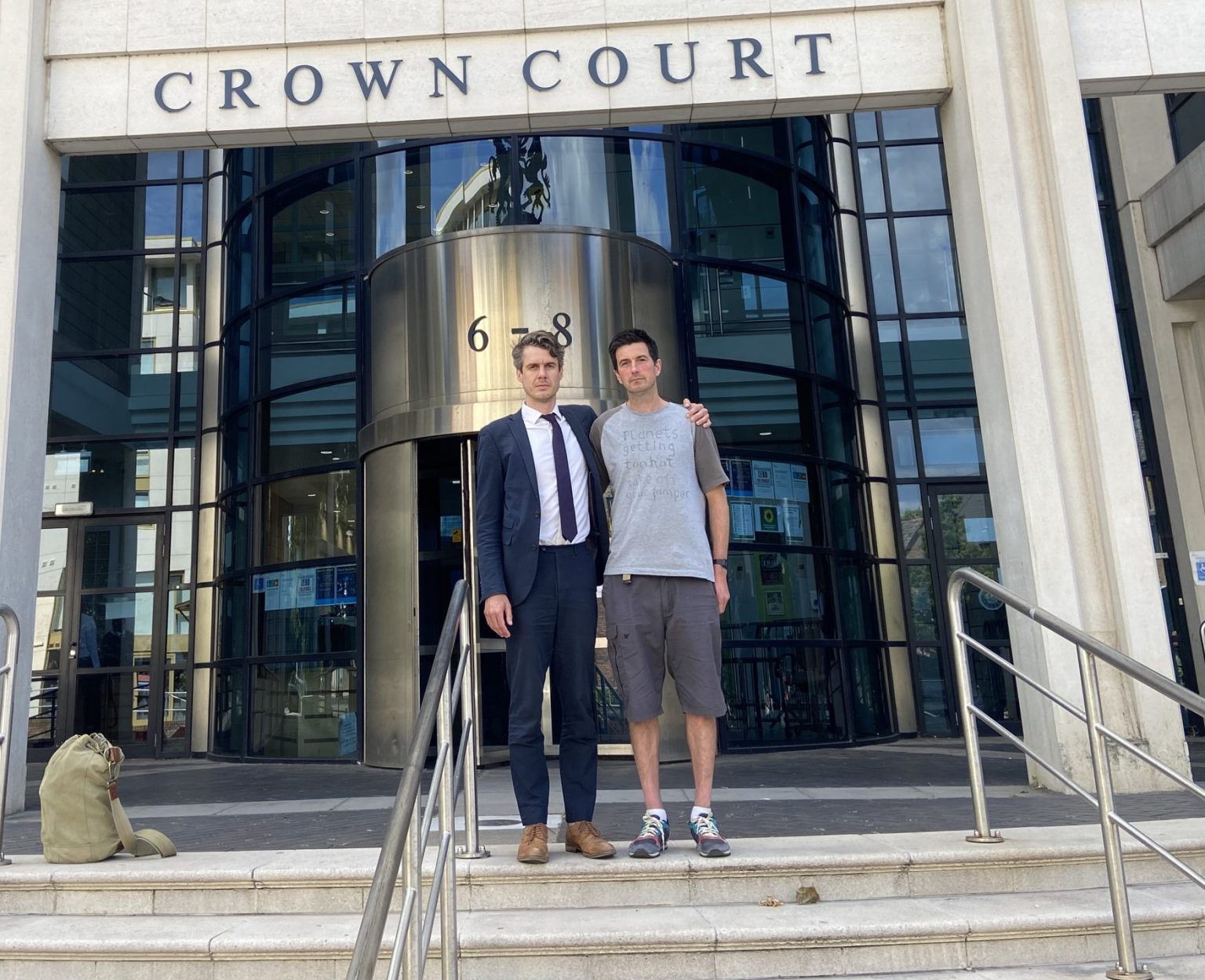
Two Just Stop Oil supporters who disrupted the Gallagher Premiership Rugby final in May 2023 were acquitted today at Kingston Crown Court. The unanimous 12-member jury found Samuel Johnson and Dr. Patrick Hart not guilty of the charge of criminal damage exceeding £5,000.
On 27th May 2023, the two supporters stormed the pitch in a cloud of cornstarch-based orange powder paint at Twickenham, where the Saracens were facing off against the Sale Sharks. They were demanding an immediate halt to any new licences for oil, gas, and coal projects in the UK.
Dr. Patrick Hart, a 38 year old GP from Bristol, said today:
“Normal people recognise that civil resistance is absolutely essential to break through the lies of the politicians, fossil fuel companies and banks who are destroying life on earth. I told the jury that I am taking the most effective action I can, on the best available evidence, to protect the health of my patients. To put it simply: I am doing my duty as a doctor.”
During the trial, the prosecution relied on the detailed, hours-long testimony of the groundskeeper. He explained that, unlike a similar action by Just Stop Oil supporters at the men’s Ashes Test at Lord’s, where the cornstarch was easily cleared with a leaf blower, the Twickenham pitch features a hybrid grass system that combines a natural grass sublayer with synthetic plastic grass. However, the testimony did not establish that ordinary people would have known the intricacies of Twickenham’s pitch maintenance, making it difficult for the prosecution to prove that the defendants had the criminal intent to cause the alleged damage.
One of those acquitted, Sam Johnson, a 41-year-old construction worker from Essex, commented on the outcome:
“A year ago, Patrick and I ran onto Twickenham during the Premiership final, throwing orange powder in the air. Today, we have been found not guilty of criminal damage. I took part in this action because our politicians continue to issue licences, knowing full well it will result in the deaths of millions of people. Thousands have died due to extreme heat brought on by climate change while we were on trial. This is happening now!”
Thousands of people marched through central London to urge political leaders to take more decisive action in tackling the UK’s wildlife crisis.
…
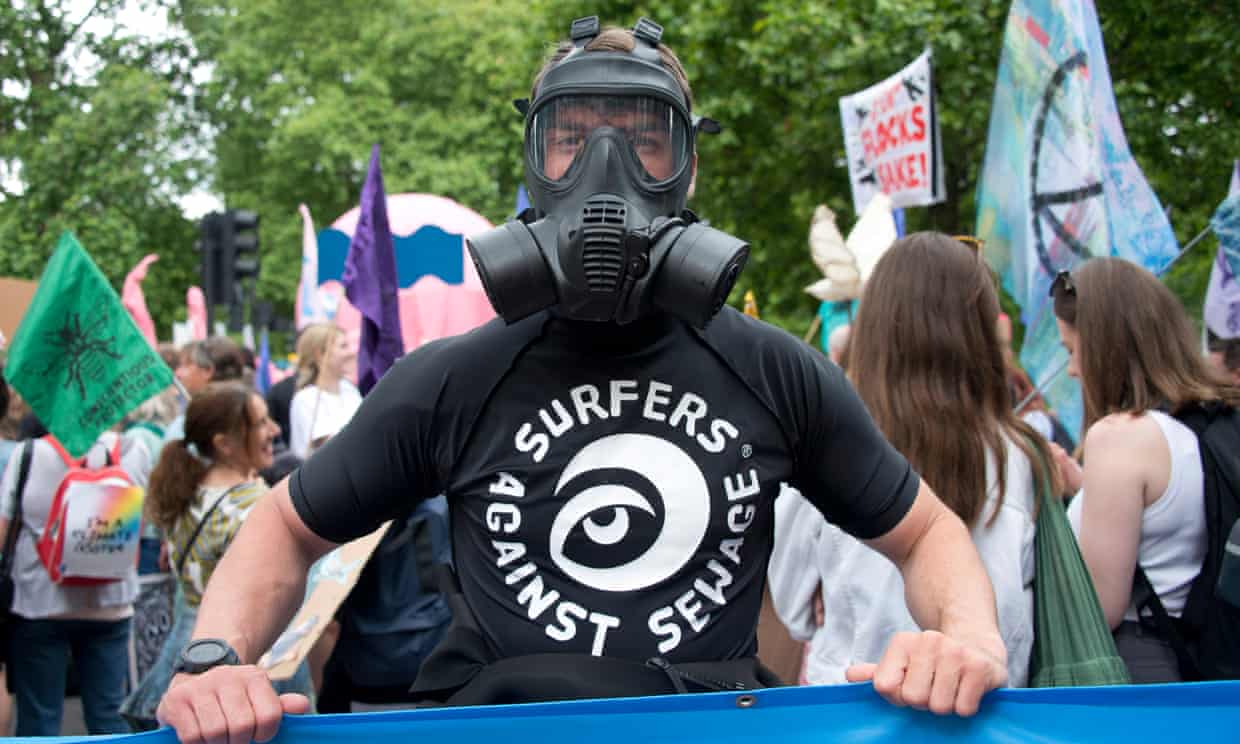
Demonstrators descended on the capital wearing glittery outfits, elaborate animal costumes and intricate face paint. Protesters were calm but the placards they held up revealed an undercurrent of frustration and anger. One read: “We have been swimming in shit.” There were also chants of “less faeces more species”.
A total of 350 environmental groups came together to pressure the government to act more robustly and decisively against the biodiversity crisis. Charities including the National Trust, the Wildlife Trusts, the RSPB and Friends of the Earth stood side by side with direct action groups such as Just Stop Oil, Extinction Rebellion and Animal Rising.
Henry Swithinbank from Surfers Against Sewage. Photograph: Sophia Evans/The Observer
Climate activists Just Stop Oil launched a protest at Stonehenge, the 5,000-year-old stone monument in southern England, a day before thousands of people planned to gather there to celebrate the summer solstice.
Two members of the group sprayed three of the standing stones with an orange powder made from cornflour to draw attention to their campaign and its demands: that the UK government commit to ending the extraction and burning of oil, gas and coal by 2030.
Much like other protests by Just Stop Oil, which have included throwing paint – and sometimes tomato soup – at protected paintings in galleries, the Stonehenge action has been lambasted for threatening that which people hold dear: cultural heritage and national identity.
Politicians, archaeologists and heritage enthusiasts have condemned Just Stop Oil for supposedly endangering the stones. Some have even called for prison sentences – which could happen, as the Unesco World Heritage Site is protected by the Ancient Monuments and Archaeological Areas Act (1979). Lichen species growing on the stones are also protected under the Sites of Special Scientific Interest (SSSI).
The backlash demonstrates how heritage sites such as Stonehenge hold a sacred place for many and generate an almost desperate desire for rigid preservation. But Stonehenge and its landscape are dynamic features that forever shift and change. They have been beset by wars, roadworks and countless solstice gatherings. The stones were touched by thousands of hands before a barrier was installed and still bear the footfall of millions of visitors. They have withstood several interventions by archaeologists, who have hoisted the stones upright and replaced the lintels. In fact, all of the stones painted by Just Stop Oil – 21, 22 and 23 – have been re-erected or consolidated during the 20th century.
This is also not the first time the stones have been vandalised. As well as graffiti carved into some of them, the stones have often been the stage for political protests. The slogan “ban the bomb”, referring to the call for nuclear disarmament, was sprayed across nine stones in 1961. The Stonehenge landscape will survive this protest by Just Stop Oil.
The real threat to Stonehenge
What Stonehenge may not withstand is climate change. The UK is set to experience warmer, wetter winters and hotter, drier summers, as well as an increase in the occurrence and severity of extreme weather which will include high winds and flooding. This will have an impact on the stones and their landscape, exacerbating erosion of the faces of the stones caused by freezing and thawing while much wetter or much drier soil undermines their stability.
There are 70 species of lichen growing on the stones, some of which are rare for the surrounding Salisbury plain. But drier summers brought about by climate change may deteriorate the environment required for these species to thrive.
While Just Stop Oil’s protest at Stonehenge has generated outrage, there is silence over the cumulative and ongoing effects of climate change upon this and other heritage sites. There is little to no public uproar about climate change posing one of the biggest challenges to cultural landscapes, buried archaeology and the built environment. Without immediate and drastic reductions in greenhouse gas emissions, we will witness the loss and change of beloved heritage sites which will in turn affect our economy, way of life and sense of place.
Heritage and climate change have a complex relationship. Climate change affects, and will continue to affect, heritage – but the reverse is also true. Heritage can encourage climate action. My research has demonstrated that greater awareness of heritage loss can raise consciousness of the climate crisis and prompt action.
This is in part due to the emotional attachment people have to local and national heritage sites, and even those in other countries. When climate change and heritage meet during these protests, it is incredibly emotive. The visceral response to the protest at Stonehenge reveals our fear of loss and change, but this can act as a catalyst for climate action too. Just Stop Oil’s protest appears to have highlighted a collective fear of losing revered heritage, yet the conversation about it has overlooked the main instigator.
The orange cornflour has been washed away by the charity English Heritage, which reports no visible damage. But climate change will continue to threaten Stonehenge, its wider landscape and the rare lichen living on the stones. We must channel our concern over potential damage to Stonehenge towards the real threats facing heritage sites.
However, in a ruling on Monday, Mr Justice Holgate largely dismissed their claim, finding most parts of their case were “unarguable”.
SSWHS previously said the approved scheme would “destroy” around seven hectares of the world heritage site, and mark “the first step” towards being de-listed by Unesco.
…
Then-transport secretary Grant Shapps first gave the green light to the project in November 2020, despite advice from Planning Inspectorate officials that it would cause “permanent, irreversible harm” to the area.