Twenty years after “No to the FTAA”, Latin American movements reaffirm their anti-imperialist commitment

Spread the love

Original article by Pablo Meriguet republished from peoples dispatch under a Creative Commons Attribution-ShareAlike 4.0 (CC BY-SA) license.
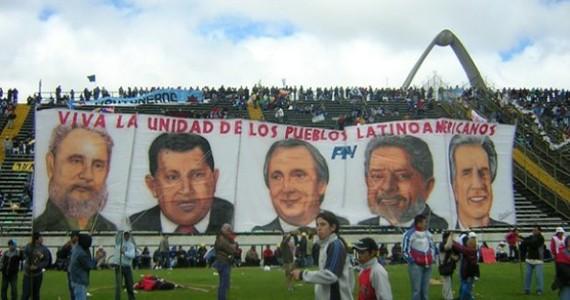
In 2005, in the city of Mar del Plata, the presidents of the brother countries of the Americas, Lula da Silva, Hugo Chávez, Evo Morales, and Néstor Kirchner stood firm against the United States. Photo: X

The meeting in Mar del Plata paid tribute to the moment when several Latin American presidents defeated the US attempt to establish a regional free trade agreement.

In the same place where the regional free trade project was “buried” two decades ago, 150 delegates from various social movements in Brazil, Uruguay, Bolivia, Cuba, Mexico, Portugal, Haiti, Palestine, Chile, Nicaragua, Peru, and Paraguay gathered to reaffirm the anti-imperialist spirit that led to the regional rejection of the FTAA project, they say.

“The world faces greater levels of inequality, injustice, and authoritarianism, with a growing concentration of financial and technological power that deepens poverty and limits the autonomy of countries in the Global South,” the delegates said in the event’s final declaration.

The meeting was also attended by the governor of Buenos Aires, Axel Kicillof, who stated that the rejection of the FTAA in 2005 was a “new declaration of independence” for Latin American countries. “The rejection of the FTAA was a victory for Latin American sovereignty, voiced by a group of presidents with enormous courage, represented in our country by Néstor Kirchner. Twenty years after that historic milestone, we have a responsibility to continue building unity, because there is no possibility of development for our countries outside the framework of regional integration. We cannot afford not to have a project on behalf of our people, because Argentina and the countries of Latin America are not anyone’s backyard,” Kicillof wrote in X.
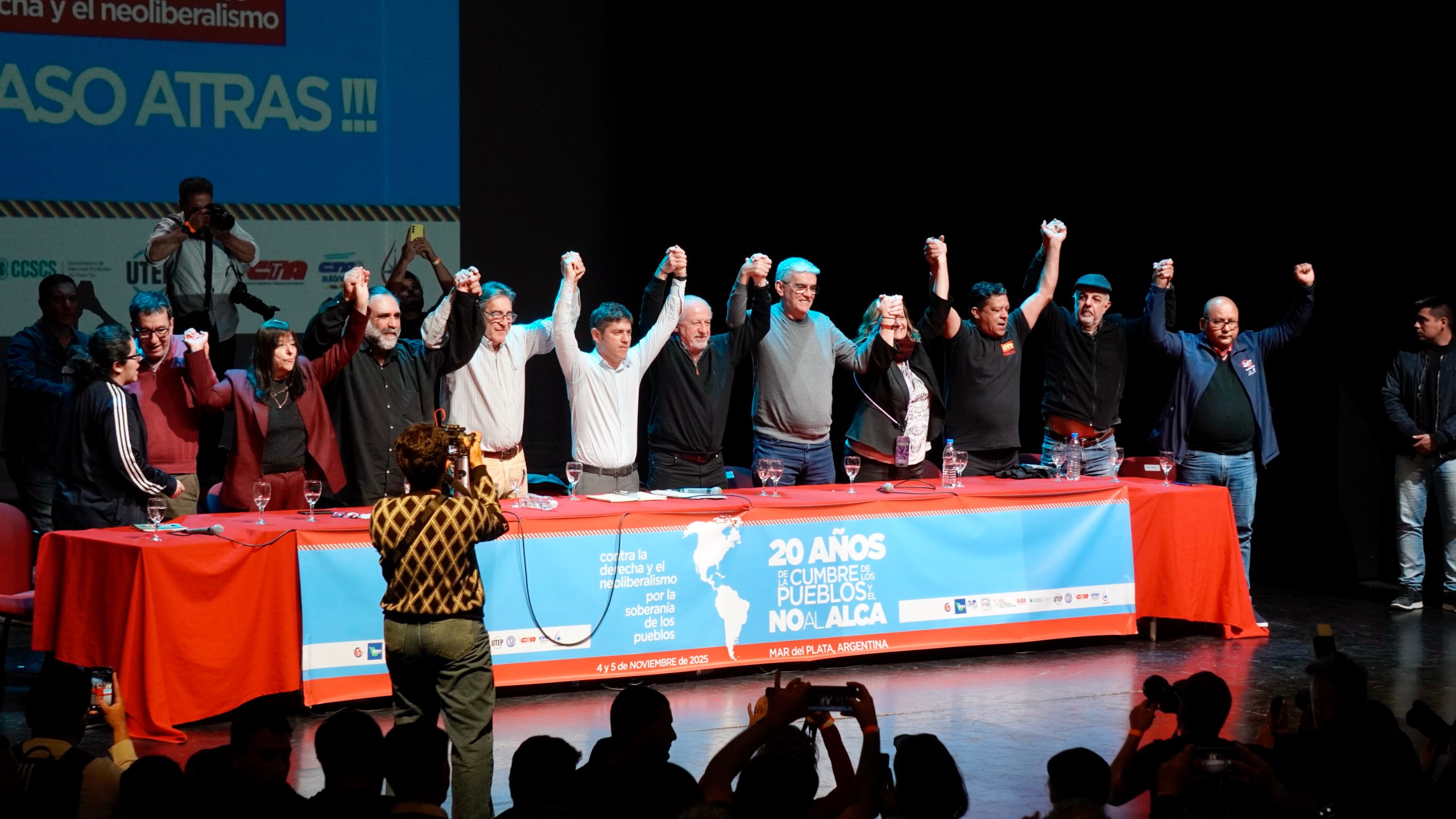
Peoples Summit No al ALCA
Delegates from dozens of Latin American countries reaffirm the anti-imperialist spirit of the “No to the FTAA” summit in 2005.

For his part, the Secretary of Foreign Affairs of the Argentine Workers’ Central Union (CTA), Adolfo Aguirre, stated: “In this very place, in front of the President of the United States, George W. Bush, and before the eyes of the whole world, our peoples, workers, together with leaders such as Néstor Kirchner, Hugo Chávez, and Luiz Inácio Lula da Silva, marked a turning point. We said no to surrender, no to dependence, no to the model that wanted to turn our America into the backyard of economic power.”

Twenty years ago, the anti-imperialist slogan was born

Twenty years ago in Argentina, several political leaders from the Latin American left gathered at a People’s Summit, whose fundamental slogan was the rejection of the Free Trade Area of the Americas (FTAA), an initiative promoted, among others, by the George W. Bush administration. The FTAA sought to significantly reduce customs barriers between American countries.

According to popular and left-wing forces in Latin America and the Caribbean, the agreement would have promoted a regional market in which the United States would have had an enormous advantage over other countries and which, in the long run, would have led to the destruction of the still immature regional industry to benefit the interests of large US companies.

However, the economic and geopolitical project did not prosper due to fierce and coordinated opposition from several Latin American presidents, including Néstor Kirchner (Argentina), Hugo Chávez (Venezuela), and Luiz Inácio Lula da Silva (Brazil), among others. The political maneuver took place in Mar del Plata, during the Summit of the Americas, where Bush and his entourage suffered a severe setback. Thus, the proposal that had been in the works and planned since 1994 in Miami and was definitively defeated.

The Summit of the Americas is considered by several experts to be a turning point in the geopolitical relations of the American continent. New progressive and pro-sovereignty processes joined those of Argentina, Brazil, and Venezuela, giving rise to an attempt at regional integration that to this day is pushed by progressivism and boycotted by Washington’s neoliberal allies.

While the summit was taking place, thousands of people from left-wing and progressive movements and political parties gathered at a parallel conference with the slogan “No to the FTAA,” which was eventually attended by several political leaders. Among them, Hugo Chávez made a statement in his speech that would go down in history: “ALCA (FTAA in Spanish), al carajo! (FTAA, go to hell!)”.

A historic event

The region has undoubtedly changed its political composition. The seemingly unstoppable rise of progressive governments is now fragmented due to the emergence of new right-wing and neoliberal projects, such as those of Javier Milei in Argentina and Daniel Noboa in Ecuador, and the recent victory of the Bolivian right after more than 20 years of left-wing governments, among others.

However, in several countries, progressivism managed to regain government, as in the case of Lula da Silva himself, or managed to remain in power, as in the case of the United Socialist Party of Venezuela. Also, in other countries such as Colombia with Gustavo Petro and Mexico with Andrés Manuel López Obrador and Claudia Sheinbaum, progressive governments took office for the first time in their recent history.

In this sense, the dispute over governments in Latin America remains open, and much of the structure of that dispute can be found in what happened in Mar del Plata 20 years ago, where one regional project was buried and another was established, for almost a decade, as the model for regional integration around a position that, although it had its clear limits, always declared itself sovereign and independent.

Original article by Pablo Meriguet republished from peoples dispatch under a Creative Commons Attribution-ShareAlike 4.0 (CC BY-SA) license.
Continue ReadingTwenty years after “No to the FTAA”, Latin American movements reaffirm their anti-imperialist commitment

Progressive popular movements and organizations stand in solidarity with the people of Sudan

Spread the love

Original article by Nicholas Mwangi republished from peoples dispatch under a Creative Commons Attribution-ShareAlike 4.0 (CC BY-SA) license.
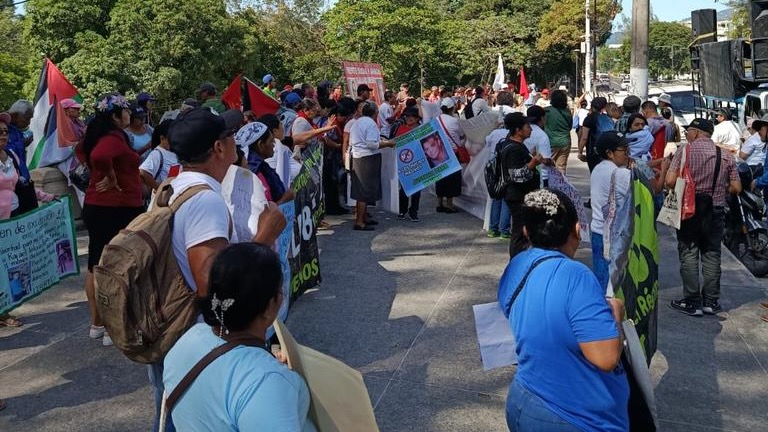
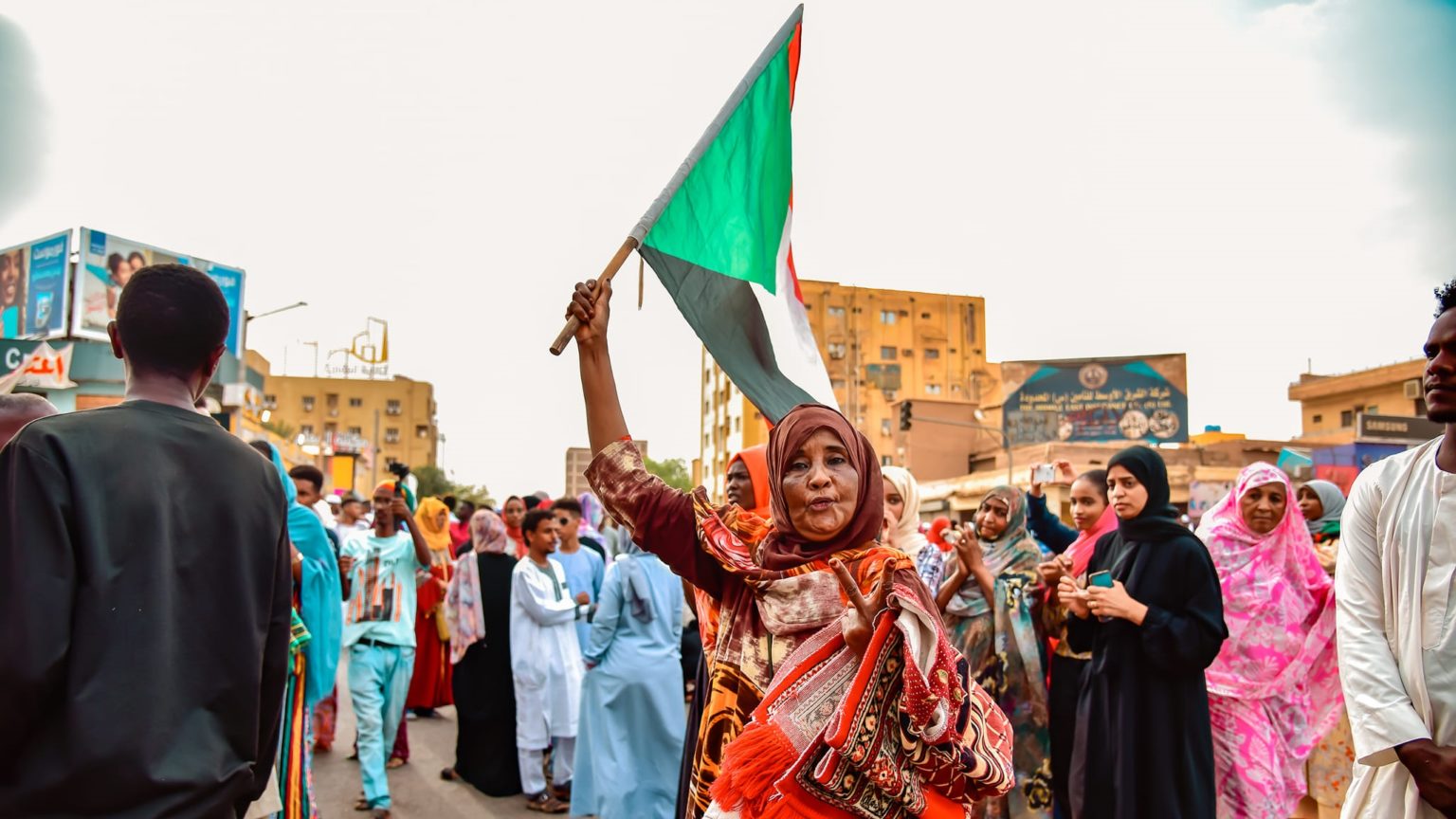
Photo: Ahmed Elfatih

Popular organizations and movements across Africa and beyond have condemned the ongoing massacre of the Sudanese people by the Rapid Support Forces (RSF), calling for an immediate end to the violence. Urging support for the Sudanese people’s struggle for peace, justice, and democratic self-determination.

Across Africa and the world, progressive and popular organizations are raising their voices in solidarity with the people of Sudan, as they face one of the most brutal and protracted conflicts in the world today. From Ghana to South Africa, from international networks to grassroots movements, the message is unified in a call to end the massacres, open humanitarian corridors, and uphold the Sudanese people’s struggle for justice, peace, and sovereignty.

Amid mounting international condemnation for its war crimes, especially over the last several weeks, the Rapid Support Forces (RSF) have reportedly agreed to a three-month pause in the fighting. However, analysts and activists argue that the “humanitarian ceasefire” is far from a solution to the two-and-a-half-year war.

The Socialist Movement of Ghana (SMG) condemned the “genocidal conflict between factions of the militarized elite” that has terrorized the people of Sudan since 2023. In their statement, the movement expressed solidarity with the Sudanese people and their popular organizations, including the Sudanese Communist Party (SCP), lauding their courage and political clarity in the face of devastation.

The SMG statement described the war between the Sudanese Armed Forces (SAF) and the RSF as a tragic consequence of elite rivalries and foreign interference. It denounced the “murky transnational corporate and resource-grabbing agenda of the United States, Western powers, and some Arab and East African countries” fueling the conflict.

“The people of Sudan clearly reject both warring factions and any national ‘solution’ based on military force or elite interests,” SMG declared, reaffirming that Sudan’s revolution, born out of the people’s 2018 uprising, continues to embody the demand for democracy, justice, and full sovereignty over national resources.

The International Peoples’ Assembly (IPA) and Pan Africanism Today (PAT) also issued a joint statement condemning the “brutal massacres currently unfolding in Sudan,” particularly in El-Fasher, Bara, Darfur, and Kordofan, describing the atrocities as genocide. They called for immediate international mobilization, demanding a ceasefire, protection of civilians, and independent investigations into war crimes.

“The Sudanese people face a destructive war machine, defending their dignity, communities, and right to live,” the statement read. It called upon trade unions, women’s movements, youth, and social movements worldwide to stand with Sudan through coordinated actions, educational events, and artistic expressions of solidarity.

Read More: A bloodbath visible from space: RSF’s massacres in Sudan’s El Fasher

Joining this call, South Africa’s Abahlali baseMjondolo Movement, representing shack dwellers and grassroots activists, issued a solidarity statement denouncing the ongoing massacres in El-Fasher and Darfur. The movement condemned the RSF’s atrocities; executions, mass killings, and the starvation of entire communities, financed by the United Arab Emirates and sustained by European complicity in migration control.

“The uprising that began in December 2018 was a democratic revolt of workers, women, students and the urban poor,” Abahlali’s statement reminded. “That uprising gave rise to new grass-roots forms of democracy through the resistance committees, which continue to provide food, medicine, and mutual aid amid war.”

Sudan’s struggle is our struggle. As the Socialist Movement of Ghana declared:

“Let us stand for unity, sovereignty, and development. Sudan’s struggle is Africa’s struggle.”

Original article by Nicholas Mwangi republished from peoples dispatch under a Creative Commons Attribution-ShareAlike 4.0 (CC BY-SA) license.

Continue ReadingProgressive popular movements and organizations stand in solidarity with the people of Sudan

Day of the Salvadoran Trade Unionist: how El Salvador’s labor martyrs shaped a revolutionary tradition

Spread the love

Original article by Devin B. Martinez republished from peoples dispatch under a Creative Commons Attribution-ShareAlike 4.0 (CC BY-SA) license.

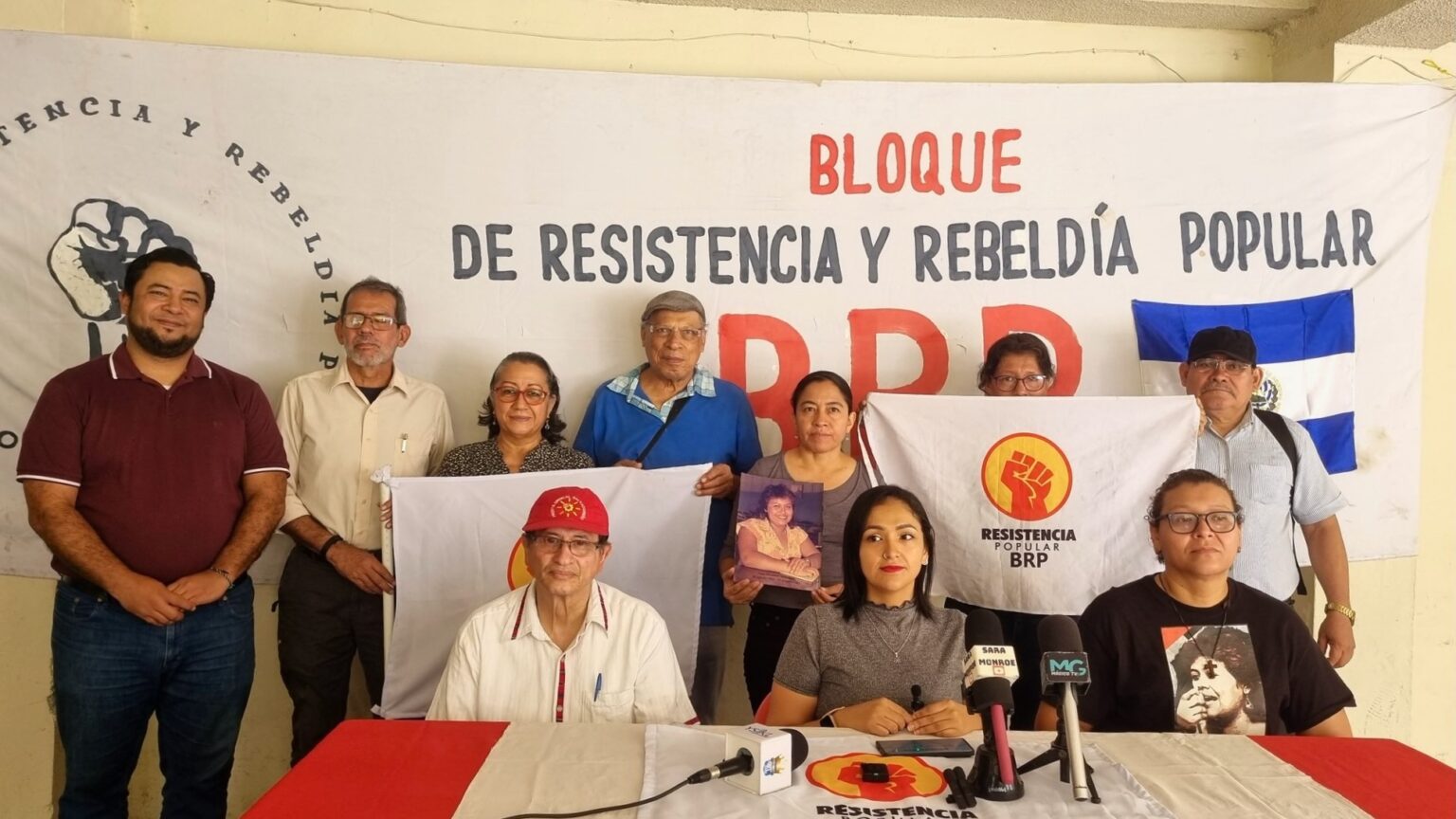
Organizers hold flags and a photo of labor martyr Febe Elizabeth Velasquéz during a press conference on the commemoration of the Day of the Salvadoran Trade Unionist. Photo: BRRP/X

The October 31 commemoration links past revolutionary struggles with today’s fight for labor rights and democracy

October 31 in El Salvador is recognized as the Day of the Salvadoran Trade Unionist. 

This year’s commemoration event brought together veteran organizers and a new generation of grassroots leaders, bridging past and present struggles for workers’ rights and social change.

“This date brings us back to the origin of labor organizing in our country,” asserted Marisela Ramírez, a leader of the Popular Resistance and Rebellion Bloc, at the rally at Cuscatlán Park in San Salvador, organized by the group.

“We remember with dignity, the history of struggle, resistance, and sacrifice, of the labor movement in El Salvador.” 

A few hundred people gathered with placards, flags, and banners representing various organizations, like the Salvadoran Social and Labor Front (FSS), the Permanent Roundtable for Labor Justice, the Movement of Victims of the Regime (MOVIR), and others.

Ramírez outlined the legacy that the day is tied to: the historic strikes of the 40s and 50s, the struggles for the 8-hour workday, for fair wages, and for the right to unionize. The event also paid tribute to “the thousands of women and men who, during the repression of the 70s and 80s, sacrificed their lives to defend justice and the dignity of the working class” against the US-backed Salvadoran government.

The Day of the Salvadoran Trade Unionist was established by Legislative Decree 589 (1990). It specifically honors the leaders of the National Union Federation of Salvadoran Workers (FENASTRAS) that were bombed by government forces on October 31, 1989. 

Friday’s commemoration paid homage to prominent labor figure Febe Elizabeth Velasquéz and the nine other leaders martyred in the attack on the country’s principal organized labor front at the time.

A legacy of revolutionary struggle

The country’s trade groups have a long history of tying labor organizing to social change. These connections can be traced back to the formation of the Communist Party in 1930. Similarly, many of the 1989 FENASTRAS martyrs were affiliated with the National Unity of Salvadoran Workers (UNTS), the main federation tied to the popular movement aligned with the left guerilla force, the Farabundo Martí National Liberation Front (FMLN).

Legislative Decree 589 (1990) came two years before the 1992 Peace Accords, which officially ended the 12-year war between the FMLN (Farabundo Martí National Liberation Front) and the US-backed Salvadoran state.

By 1990, faced with continued armed opposition and a popular movement (made up of unions, student groups, and peasant associations) that had endured heavy repression, the Salvadoran government was under tremendous pressure to negotiate and recognize the legitimacy of the country’s social movements. 

The deadly attack on FENASTRAS’ headquarters was a major factor in this outcome. Less than two weeks after the massacre, the FMLN would launch their historic final offensive, named in honor of the martyred union leader: “To the Limit, Period. Febe Elizabeth Lives”.

The military operation was the largest and most intense engagement of the entire war. About 3,000 FMLN fighters engaged in coordinated assaults on key military and government installations in San Salvador, proving, in a way not done before, their capacity to wage war in urban environments.

The Salvadoran military responded with intense fighting and indiscriminate aerial bombardment of residential neighborhoods, allegedly to dislodge the guerilla fighters. One US-trained Atlacatl Battalion unit stormed the Central American University (UCA) campus and murdered six Jesuit priests. The priests were known to advocate for a negotiated settlement to the conflict and spoke out against the military’s human rights abuses. The government and military claimed they were the “brain of the guerilla”.

International condemnation of the Salvadoran government grew louder than ever.

The FMLN was ultimately forced to retreat from the cities, but not before making it clear that a decisive military victory for the government was impossible. Negotiations became inevitable.

Decree 589 (1990) represented one of the first concessions by the state. It opened democratic space and acknowledged the sacrifices of trade unionists persecuted, imprisoned, or killed over the previous decade for their association with the revolutionary left. The FENASTRAS bombing and the martyrdom of Febe Elizabeth Velásquez was etched in history as the Day of the Salvadoran Trade Unionist.

Following these events, the power of the revolutionary movement and organized labor in El Salvador would completely restructure politics in the country through key democratic reforms signed into law in the 1992 Peace Accords.

Historical continuity and labor setbacks under Bukele

At the rally at Cuscatlán Park, the Bloc emphasized that this day is not only about remembrance, but also historical continuity: “the defense of labor rights today is part of the same battle for social justice that those martyrs defended with their lives,” Marisela Ramírez proclaimed.

The event’s organizers asserted that today, the Salvadoran trade unionist faces a new wave of “persecution and criminalization” by the “authoritarian regime of Nayib Bukele”.

Read More: One more year of Bukele: tough on crime, struggling with poverty

“This regime has imposed a neoliberal and anti-union model that intends to eliminate all forms of independent organizing that defends labor rights,” says the Bloc leader.

The group has consistently denounced a systematic weakening of union structures by the Bukele regime. They claim that recently, dozens of union members have suffered arbitrary arrests, threats, and terminations without justification. Over 200 unions have been denied credentials.

Despite the increasing attacks, Ramírez tells Peoples Dispatch that the historic spirit of resistance in the Salvadoran labor movement is still alive.

“Just as before, today we see unionism as a collective and solidarity-based struggle, not only for economic improvements, but also for social transformation and justice,” she says. 

Several Palestine flags were visible throughout the crowd, as well as placards that read “Respect our rights!” and “Freedom for political prisoners!” Some had photos of young men imprisoned or disappeared, asserting their innocence. Several placards displayed the image of Febe Elizabeth Velasquéz. Others, the image of Óscar Romero, the Archbishop of San Salvador, assassinated by government forces in 1980 after calling on the soldiers to disobey their orders amid escalating violence and massacres of civilians.

Commemoration of the Day of the Salvadoran Trade Unionist
Commemoration event for the Day of the Salvadoran Trade Unionist. Photo: BRRP

Eneida Abarca, mother of a disappeared young man named Carlos Abarca, spoke passionately about the historical continuity that the day represents.

“The impunity of yesterday is the impunity of today,” she declared.

“The only way to resist the impunity, the social injustice that we’re living under is through social struggle. We have to continue taking the streets and raising our voices.”

While the Bloc’s event was an act of protest against the current regime, the government-aligned Salvadoran Trade Union Unity (USS) held a separate commemoration event in San Salvador in collaboration with officials.

Rebuilding the labor movement in Bukele’s El Salvador

Ramírez says that what is lacking in the Salvadoran left is a political instrument that can “capture the discontent of the popular sectors and channel their demands towards a strategic commitment to social transformation.”

Amid Bukele’s “state of exception”, the challenge the new generation faces, she argues, is that of rebuilding and revitalizing Salvadoran trade unionism. Not just the infrastructure itself but the values and culture of historic movements. The new generation must promote “the active participation of women and young people in a process of organizational and ethical renewal that can re-articulate the labor struggles with broader social causes,” Ramírez says. 

The Popular Resistance and Rebellion Bloc recently held a mass march on September 15, El Salvador’s Independence Day. It mobilized its various affiliated organizations, trade unions, civil society groups, and the general public against the human rights violations of the Bukele government.

September 15 mass march in El Salvador. Photo: BRRP

A new generation may be doing just that: revitalizing the historic struggles of the Central American country.

As resistance grows once again, organizers across generations maintain that commemorations like the Day of the Salvadoran Trade Unionist are crucial in giving shape, identity, and historical memory to the social movements of today. 

The labor leaders targeted in the October 31, 1989 FRENASTRAS bombing are the following:

Febe Elizabeth Velásquez – General Secretary of FENASTRAS and member of the National Unity of Workers (UNTS); killed.

Ricardo Humberto Cestoni – Recording Secretary of the ANDA Workers’ Company Union (SETA); killed.

Rosa Hilda Saravia de Elías – Member of the Union of Workers of the Cotton, Synthetic, Textile Finishing and Related Industries (STITAS); killed.

Julia Tatiana Mendoza Aguirre – Member of the Gastronomic Union (STITGASC); killed.

Vicente Melgar – Secretary of Social Assistance of SETA; killed.

José Daniel López Meléndez – Member of SETA and Secretary of Conflicts of FENASTRAS; killed.

Luis Gerardo Vásquez – Member of the General Union of Bank Employees (SIGEBAN); killed.

María Magdalena Sánchez – FENASTRAS member; killed.

Carmen Hernández – FENASTRAS member; killed

Unidentified male worker – Died later from injuries sustained in the explosion

Original article by Devin B. Martinez republished from peoples dispatch under a Creative Commons Attribution-ShareAlike 4.0 (CC BY-SA) license.
Continue ReadingDay of the Salvadoran Trade Unionist: how El Salvador’s labor martyrs shaped a revolutionary tradition

Britain calls it safety. It is censorship

Spread the love

https://www.aljazeera.com/opinions/2025/11/6/britain-calls-it-safety-it-is-censorship

In this photo illustration, the age-restriction warning screen of the website PornHub is displayed on two digital screens, in London, England [Leon Neal/Getty Images]

The Online Safety Act, sold as child protection, now hides Gaza’s suffering, silences dissent and exports censorship to the world.

The United Kingdom’s Online Safety Act was meant to keep children safe. Instead, it is keeping the public uninformed. Within days of the law taking effect in late July 2025, X (formerly Twitter) started hiding videos of Israel’s atrocities in Gaza from UK timelines behind content warnings and age barriers. A law sold as safeguarding has become one of the most effective censorship tools Britain has ever built. What is unfolding is no accident. It is the result of legislation that weaponises child-protection rhetoric to normalise censorship, identity verification and online surveillance.

The roots of Britain’s online censorship crisis go back almost a decade, to MindGeek, now rebranded as Aylo, the scandal-ridden company behind Pornhub. This tax-dodging, exploitative porn empire worked closely with the UK government to develop an age-verification system called AgeID, a plan that would have effectively handed Aylo a monopoly over legal adult content by making smaller competitors pay or perish. Public backlash killed AgeID in 2019, but the idea survived. Once one democracy entertained the notion that access to online content should be gated by identity checks, the precedent was set. The Digital Economy Act 2017 laid the groundwork, and the Online Safety Act 2023 made it law. Today, several European Union states, including France and Germany, are exploring similar legislation, each cloaked in the same rhetoric of “protecting children”. This is not conspiracy; it is the natural convergence of corporate capture and state control, wrapped in the moral language of child safety.

The Online Safety Act empowers Ofcom to police almost every corner of the internet, from social media and search engines to adult content platforms, under threat of fines of up to 18 million pounds ($24m) or 10 percent of global revenue. Platforms can be designated as “Category 1” services, triggering the harshest rules, including mandatory age verification, identity checks for contributors and the removal of vaguely defined “harmful” material. Wikipedia now faces this exact threat. In August 2025, the High Court dismissed the Wikimedia Foundation’s challenge to the categorisation rules, clearing the way for Ofcom to treat it as a high-risk platform. The foundation has warned that compliance would force it to censor vital information and endanger volunteer editors by linking their real identities to their writing. If it refuses, the UK could, in theory, be legally empowered to block access altogether, a breathtaking example of how “child protection” becomes a tool for information control. Already, Ofcom has opened multiple investigations into major porn sites and social networks over alleged non-compliance. The law’s chilling effect is no longer hypothetical; it is operational.

Age-verification systems are fundamentally incompatible with privacy and security, in fact, any id-verification system should immediately raise suspicion. The July 25 breach of the Tea dating app, with thousands of photos and over 13,000 sensitive ID documents leaked and circulated on 4chan, or the even more recent Discord data breach exposing over 70 thousand government ID documents after a third-part service was hacked, proved the point.

Strip away the child-protection rhetoric, and the Online Safety Act’s true function becomes clear: it builds the infrastructure for mass content control and population surveillance. Once these systems exist, expanding them is easy. We have seen this logic before. Anti-terror laws morphed into instruments for policing dissent; now “child safety” provides cover for the same authoritarian creep. The EU is already entertaining proposals that would mandate chat-scanning and weaken encryption, promising such measures will be used only against abusers, until, inevitably, they are not. The immediate consequences in the UK – restricted Gaza footage, threatened access to Wikipedia, censored protest videos- are not glitches. They are previews of a digital order built on control. What is at stake is not just privacy but democracy itself, the right to speak, to know and to dissent without being verified first.

Original article at https://www.aljazeera.com/opinions/2025/11/6/britain-calls-it-safety-it-is-censorship

Continue ReadingBritain calls it safety. It is censorship

Trump threatens war on Africa’s most populous country to “save” “our CHERISHED Christians”

Spread the love

Original article by republished from peoples dispatch under a Creative Commons Attribution-ShareAlike 4.0 (CC BY-SA) license.

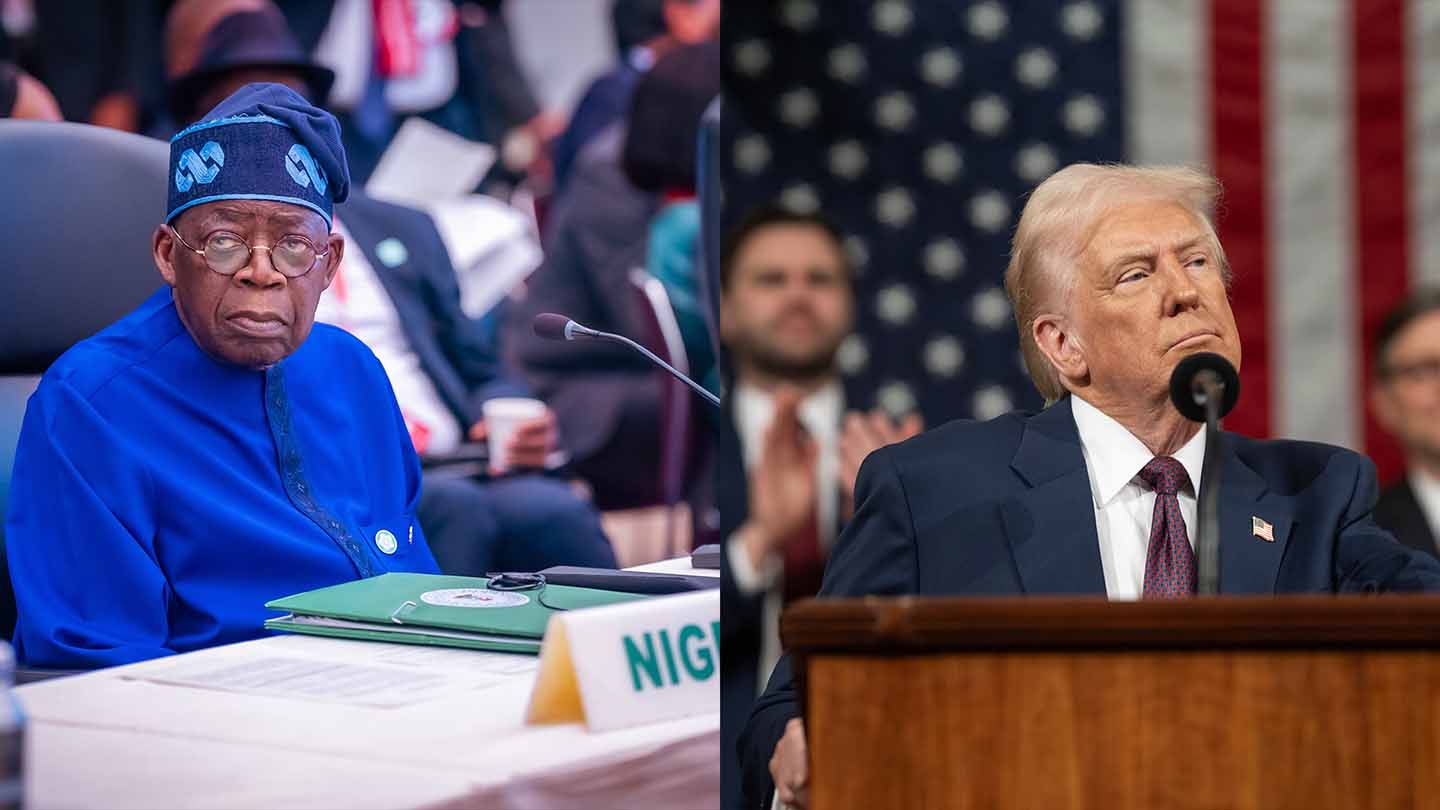
Nigerian President Bola Ahmed Tinubu and US President Donald Trump. Photos via X

“We know the heart and intent of Trump is to help us fight insecurity,” states the spokesperson of Nigeria’s President Bola Tinubu, who has time and again demonstrated his loyalty to the West.

US President Donald Trump has threatened to go “guns-a-blazing” into Africa’s most populous country, Nigeria, which he denigrated as a “disgraced country”. In a social media post on Saturday, November 1, he declared, “I am hereby instructing our Department of War to prepare for possible action. If we attack, it will be fast, vicious, and sweet.”

“Yes sir,” War Secretary Pete Hegseth replied to his post. “The Department of War is preparing for action.”

Why? Ostensibly to “wipe out the Islamic Terrorists who are committing these horrible atrocities” against “our CHERISHED Christians”. For over two months, the US right wing has been peddling a conspiracy about a “genocide” against Christians in Nigeria.

Championing this false claim, Senator Ted Cruz has proposed the so-called “Nigeria Religious Freedom Accountability Act” to use “powerful sanctions and other tools” against Nigerian officials he accuses of “ignoring and even facilitating the mass murder of Christians by Islamist jihadists.”

Myth of Christian genocide

Facts, however, contradict this accusation. The majority of people killed by the Boko Haram and Islamic State West Africa Province are Muslims, simply because they make up the majority in the northern region these Islamist insurgencies are ravaging. For the same demographic reasons, Muslims are also the majority victims of bandits who kill, loot, and kidnap in the northwest region, where the state is struggling to enforce the rule of law.

In the central region, Christian victims of violence are in the majority, not because of their religious identity but because of their occupation: farming. Amid intensifying competition over depleting land and water due to climate change, raids on farmlands by mobile herders, groups of whom are armed, are a serious problem in several African countries suffering desertification.

90% of these herders are Muslims, while in this region of Nigeria, farmers are predominantly Christian. But the violence is over resources, not faith. There is no evidence of a systematic and large-scale, religiously motivated targeting of Christians in Nigeria, where they are almost equal to Muslims in population.

“While Christians make up roughly 50% of the population, violence in which Christians have been specifically targeted in relation to their religious identity accounts for only 5% of reported civilian targeting events,” the Armed Conflict Location & Event Data Project reported in mid-2022.

Trump’s own envoy for Arab and African affairs, Massad Boulos, had pointed out at a summit last month in Italy to discuss counter-terrorism in West Africa that Boko Haram has killed more Muslims than Christians. Facts notwithstanding, “Christianity is facing an existential threat in Nigeria,” Trump insisted.

“Thousands of Christians are being killed. Radical Islamists are responsible for this mass slaughter,” he claimed, announcing on Friday, October 31, his decision to designate Nigeria a “country of particular concern” for systematic violation of religious freedoms.

“The characterization of Nigeria as religiously intolerant does not reflect our national reality, nor does it recognize government efforts to safeguard freedom of religion and belief,” replied Nigeria’s president, Bola Tinubu, a Muslim, married to a Christian Pastor.

A secular suffering

Under his secular regime, Christians, Muslims, and non-believers have all suffered alike, from hunger, unaffordability, unemployment, etc, as a consequence of his aggressive implementation of the IMF-World Bank prescribed reforms.

Read: World Bank acknowledges poverty increase in Nigeria, but doubles down on the reforms causing it

This crisis has enhanced the fertility of the ground for terror groups, bandits, and other criminal gangs to harvest more recruits, especially in the hinterlands and remote areas the state is struggling to police.

While struggling to restore security in these regions, Tinubu tried, albeit unsuccessfully, to lead the Nigerian military into a war with neighboring Niger at the behest of US ally France after its neocolonial puppet regime in Niger was ousted in mid-2023.

Read: Nigeria’s Senate refuses to support ECOWAS plan for West-backed military intervention

A year later, he unleashed his security forces on the domestic front to crush the “hunger protests” demanding a reversal of the IMF-World Bank prescribed liberalization, killing at least two dozen people. Another 1,200 protesters were arrested, many of whom were tortured in custody. Several, including minors, faced charges of treason.

Read: Nigerian president Bola Tinubu enforced violent crackdown on hunger protests to satisfy IMF demands

Later in November, allegations of treason were leveled against Tinubu himself when the CIA objected to the release of the unredacted files of the US Drug Enforcement Agency (DEA) investigation into Tinubu in the early 1990s. Accused of laundering money for a major heroin racket in Chicago at the time, Tinubu entered into a plea bargain to avoid a trial, forfeiting USD 460,000 to US authorities.

Tinubu’s loyalty to the West, unrewarded

In response to Freedom of Information Act (FOIA) requests for the release of unredacted files of the investigation, “We oppose the full… release of the DEA’s Bola Tinubu heroin trafficking investigation records,” the DEA insisted. “While Nigerians have a right to be informed about what their government is up to, they do not have a right to know what their president is up to.”

Reminding that its activities are “carried out through clandestine means, and therefore they must remain secret,” the CIA objected to full release as it could “cause damage to US national security by indicating whether or not the CIA maintained any human intelligence sources related to Tinubu.”

“The CIA effectively confirmed that Nigeria’s sitting president is an active CIA asset,” remarked David Hundeyin, author of the documentary “Bola Ahmed Tinubu: From Drug Lord to Presidential Candidate.”

From his alleged contribution to US intelligence, his readiness to hurl Nigeria into war with a neighbor for France, his obedient implementation of IMF-World Bank diktats, and ruthless crushing of protests against it – Tinubu has time and again demonstrated his loyalty to the West.

But Trump is not placated. Ordering the Department of War to prepare for a military action, Trump doubled down on Sunday, adding that both airstrikes and boots on the ground were open options.

Groveling again

“Nigeria is US’s partner in the global fight against terrorism,” said Tinubu’s spokesperson, Daniel Bwala. “We know the heart and intent of Trump is to help us fight insecurity,” he groveled. “We do not see (Trump’s threat) in the literal sense… We know that Donald Trump has his own style of communication.” It was, he suggested, Trump’s way to “force a sit-down between the two leaders so they can iron out a common front to fight their insecurity”.

But he is confident that when Tinubu and Trump meet, “there will be better outcomes.” Will these “outcomes” from the suggested meeting include Tinubu’s walking back on his refusal to accept foreign nationals deported by the US? Will he throw open Nigeria’s vast critical mineral deposits for US extraction, which the establishment think tank, Brookings Institution, deems “a win-win policy”?

Original article by republished from peoples dispatch under a Creative Commons Attribution-ShareAlike 4.0 (CC BY-SA) license.

Orcas discuss how Trump was re-elected and him being an obviously insane, xenophobic Fascist.

Continue ReadingTrump threatens war on Africa’s most populous country to “save” “our CHERISHED Christians”