Helen Lumuanganu the mother of Chris Kaba hugs friends alongside Prosper Kaba (second from right) the father of Chris Kaba outside the Old Bailey, central London, October 15, 2024
CAMPAIGNERS were left outraged today after the police marksman who shot and killed Chris Kaba was cleared of his murder.
Martyn Blake, 40, had been on trial at the Old Bailey in London since October 2 after shooting the 24-year-old black man through the front windscreen of his car in Streatham in 2022.
The jury deliberated for about three hours today to clear Mr Blake as the family of Mr Kaba listened to the verdict in silence.
…
Campaign group Save Our Citizenship called the verdict “another prime example of the extent of how deep-rooted racism manifests within the British injustice system.”
And the Women’s Equality Party said it is “both terrifying and outrageous to hear politicians say the police should be scrutinised less after they kill unarmed members of the public.”
Since 1990 there have been 1,904 deaths recorded by campaign group Inquest in or following police custody or contact.
In that time only one officer has been found guilty of manslaughter, in 2021, and none for murder.
In the 34 years, a total of 83 people were fatally shot by police in England and Wales.
Only three murder or manslaughter prosecutions were made, none with a guilty verdict.
Labour Deputy Leader Angela Rayner will be pleased that an innocent, unarmed man has been killed by police. That’s what she was calling for unless there’s a hidden meaning to her statements. [ed: That’s what she was calling for even if there is a hidden meaning to her statements.]
Deputy Labour Party Leader Angela Rayner calls for police to kill and harass innocent people.
It’s disappointing that mainline media is promoting the idea that the killed man was a dangerous gunman. He was unarmed and trying to escape before he was killed by armed police.
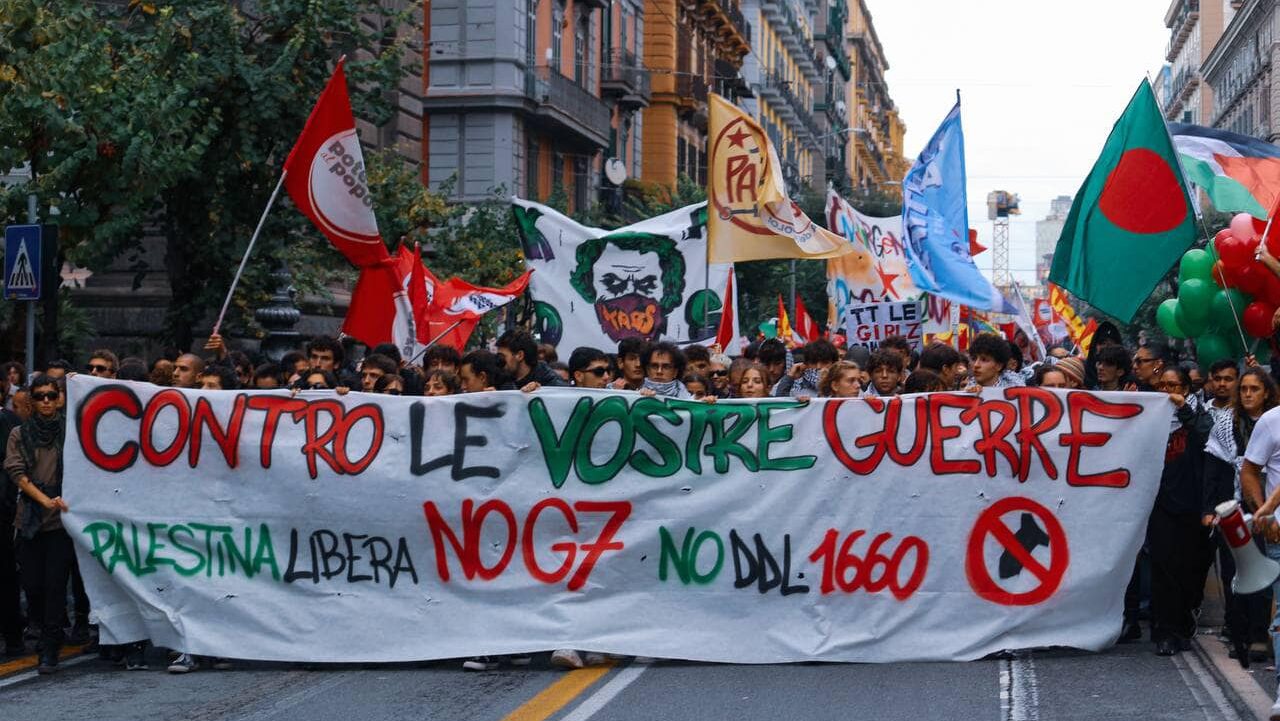
Over 2,000 people took to the streets of Naples against soaring military spending in Europe and increased repression of dissent as G7 defense ministers convened for high-level talks
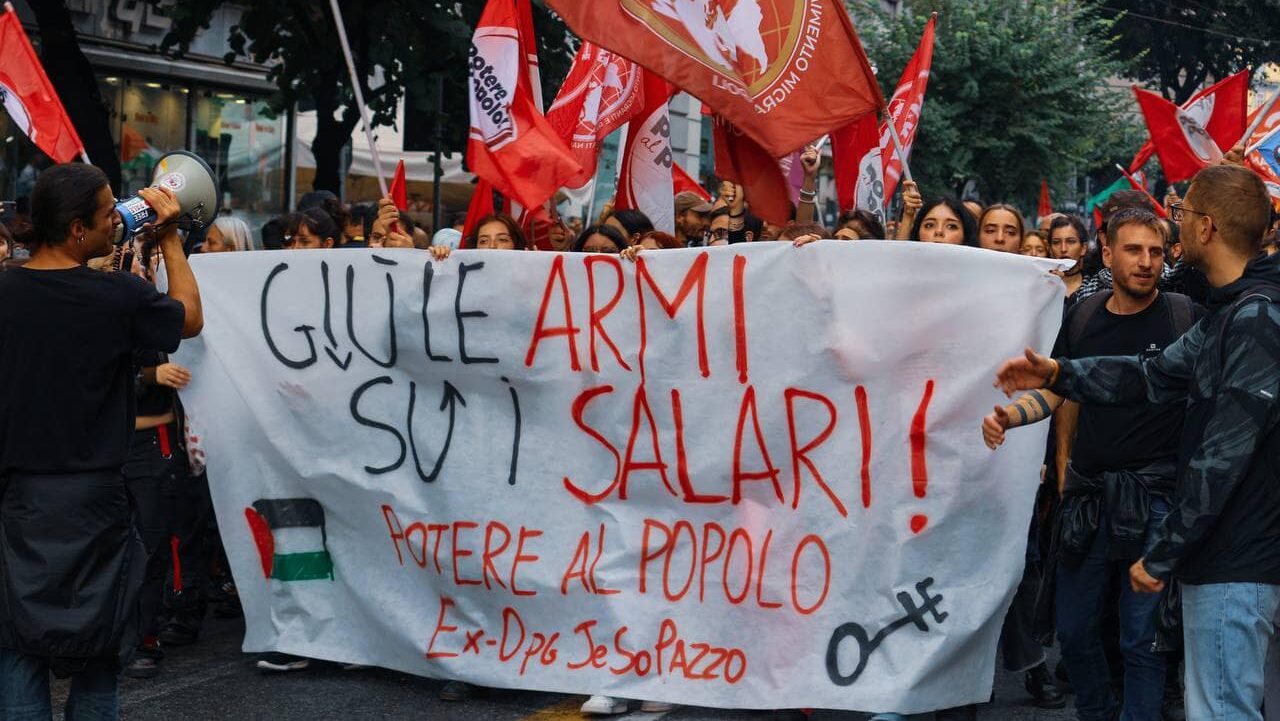
Thousands of people took to the streets of Naples on October 19, demonstrating against the G7 military agenda and Italy’s proposed reforms that would limit the freedom to dissent. Protesters, representing a host of organizations including student associations, trade unions, and community centers, rallied against Prime Minister Giorgia Meloni’s government’s policies, demanding a shift in priorities toward social needs instead of military spending. Side by side with the protest in Naples, demonstrations were held in dozens of cities across Italy, as reported by the left political party, Power to the People (Potere al Popolo).
Protesters carrying a banner reading “Cut the weapons, raise the wages!”. Source: Ex OPG occupato – Je so’ pazzo/Facebook
The protest was organized to counter a G7 defense ministers’ meeting that took place in Naples from October 18 to 20, with a focus on global military goals. The meeting was seen by protesters as yet another example of Western countries deepening their involvement in wars, including the ongoing genocide in Gaza and the war in Ukraine, instead of pursuing agendas of social justice and peace. In the lead-up to the meeting, local activists voiced their opposition, stating that “lords of war” were not welcome in their city.
“Never has so much been spent on war, and as a result, war is rampant everywhere,” the associations organizing the march asserted during the preparations. “We refuse to host a meeting in our city that supports the war economy our government has chosen to follow.”
Two central issues dominated the protest in Naples: the West’s support for Israel as it continues to exterminate the people of Gaza and the increasing repression of dissent at home, embodied in Meloni’s proposed security bill. Many protesters pointed out the link between military aggression abroad and domestic policies that seek to criminalize dissent. European countries continue to actively repress solidarity with Palestine and others, like Italy, are doing so while attempting to silence voices against their policies.
The new security bill seeks to impose severe restrictions on protests, including strikes and environmental activism. Progressive associations argue that this is a blatant attempt to stifle opposition and consolidate power, and some of them saw Saturday’s protest as a test run for the government’s strategy of suppressing future mobilizations. Days before the protest, authorities tried to restrict the march route, forcing organizers to end the demonstration a kilometer away from the G7 meeting site.
Despite these attempts, protesters refused to be stopped. They briefly broke through the set course of the rally, marching in areas originally declared off-limits by the authorities. In response, police deployed tear gas and used other forms of violence against them. Naples’ historic center has systematically been blocked off to popular protests, and things are set to get worse if the new bill is passed, protesters said. Because of that, community groups including Ex OPG – Je so’ pazzo called upon people to continue resisting.
“We believe this repressive project must be stopped, and more importantly, we see it as a reflection of the Meloni government’s fear of what might still be burning beneath the surface of the seeming calm in the country,” they said.
Saturday’s protest marked an important moment of resistance against the shrinking of democratic space in Italy, as well as to the strengthening of the armament agenda in Europe. Demonstrators announced they were ready to continue fighting against the security bill and expressed determination to challenge Meloni’s government over announced cuts to social support.
“Today, this square is sending a loud message: if the government thinks it can ignore social needs, public healthcare, workers’ rights, and housing in favor of pouring billions into military spending, it’s headed in the wrong direction,” said Chiara Capretti from Power to the People.
JAILED: Eco-protesters support Anna Holland and Phoebe Plummer as they are sentenced on September 27 2024 for throwing tinned soup over Vincent van Gogh’s Sunflowers in the National Gallery in 2022
Just Stop Oil has been criticised for targeting the work of Van Gogh, but it’s inaction on climate that’s putting great paintings at risk, argues LINDA PENTZ GUNTER
ON the occasions when activists from Just Stop Oil have targeted works of art or historical landmarks, there has been an outcry, both from horrified onlookers at the time and later in the press and the courtroom.
The British government is intent on cracking down on protest, even if it’s an action intent on trying to save us all from the ravages of runaway climate chaos.
Keir Starmer confirms that his government is cnutier than Suella Braverman on killing the right to protest. This image does not appear in the original article.
“They are pathetic, they are self-defeating, and they need to feel the full force of the law,” pronounced Keir Starmer of Just Stop Oil activists in June. “That is what will happen if we have an incoming Labour government.”
The fact that these “antics,” as Starmer referred to them, had continued was “a failure to grip criminal justice,” he said. Now Starmer and his version of the Labour Party are in power, and climate protesters are being duly gripped, tried and sentenced.
Because in today’s world, climate activists are criminals. As one of Just Stop Oil’s self-described foot soldiers put it, “Slow-walking across Waterloo Bridge becomes an offence that goes to crown court.”
Throwing soup at glass-enclosed paintings by Van Gogh is just the most high-profile of the various direct actions being carried out to demand immediate and effective measures to drastically reduce carbon emissions.
A sensible government should have arrived at such a realisation on its own, thus obviating the need for Just Stop Oil not only to toss soup but to exist at all.
Instead, the Starmer government’s latest move is to squander £22 billion on one of the most useless (along with nuclear power) of all the supposedly “green” climate solutions — carbon capture and storage (CCS).
Prime Minister Keir Starmer during his talks with Nato Secretary General Mark Rutte in Downing Street, in London, October 10, 2024
LABOUR and Prime Minister Sir Keir Starmer’s approval ratings are still nosediving as the government marks 100 days in office tomorrow.
New Ipsos polling reveals Sir Keir’s net popularity has fallen to a record low of minus 26 points — worse than Reform leader Nigel Farage.
Rachel Reeves was doing even worse at minus 30 points with four in nine saying she is doing a bad job as Chancellor.
Experts blamed No 10 “turf wars,” scandals over ministerial freebies and cutting pensioner benefits as the Labour Party’s net popularity also plummeted 13.5 points to minus 21 points since the general election.
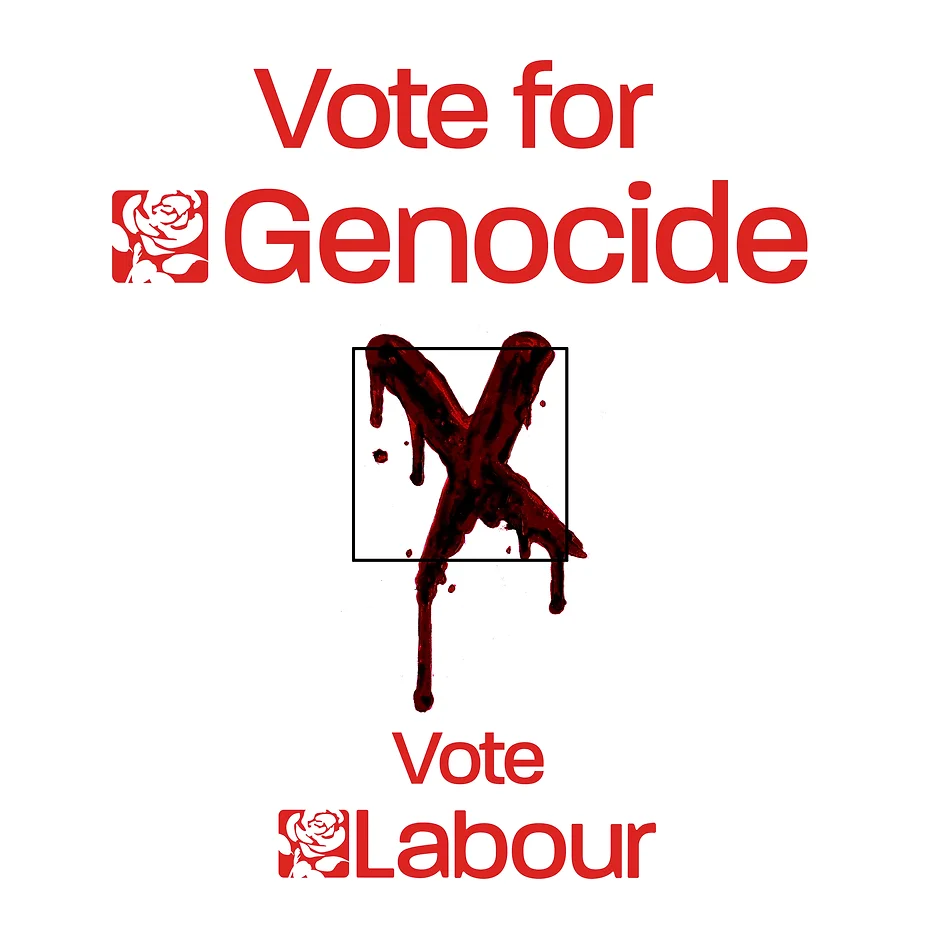
Keir Starmer explains that he feels no shame or guilt benefitting personally from gifts from the rich and powerful while insisting on policies of severe austerity causing suffering and death.Zionist Keir Starmer is quoted “I support Zionism without qualification.” He’s asked whether that means that he supports Zionism under all circumstances, whatever Zionists do.Vote For Genocide Vote Labour.
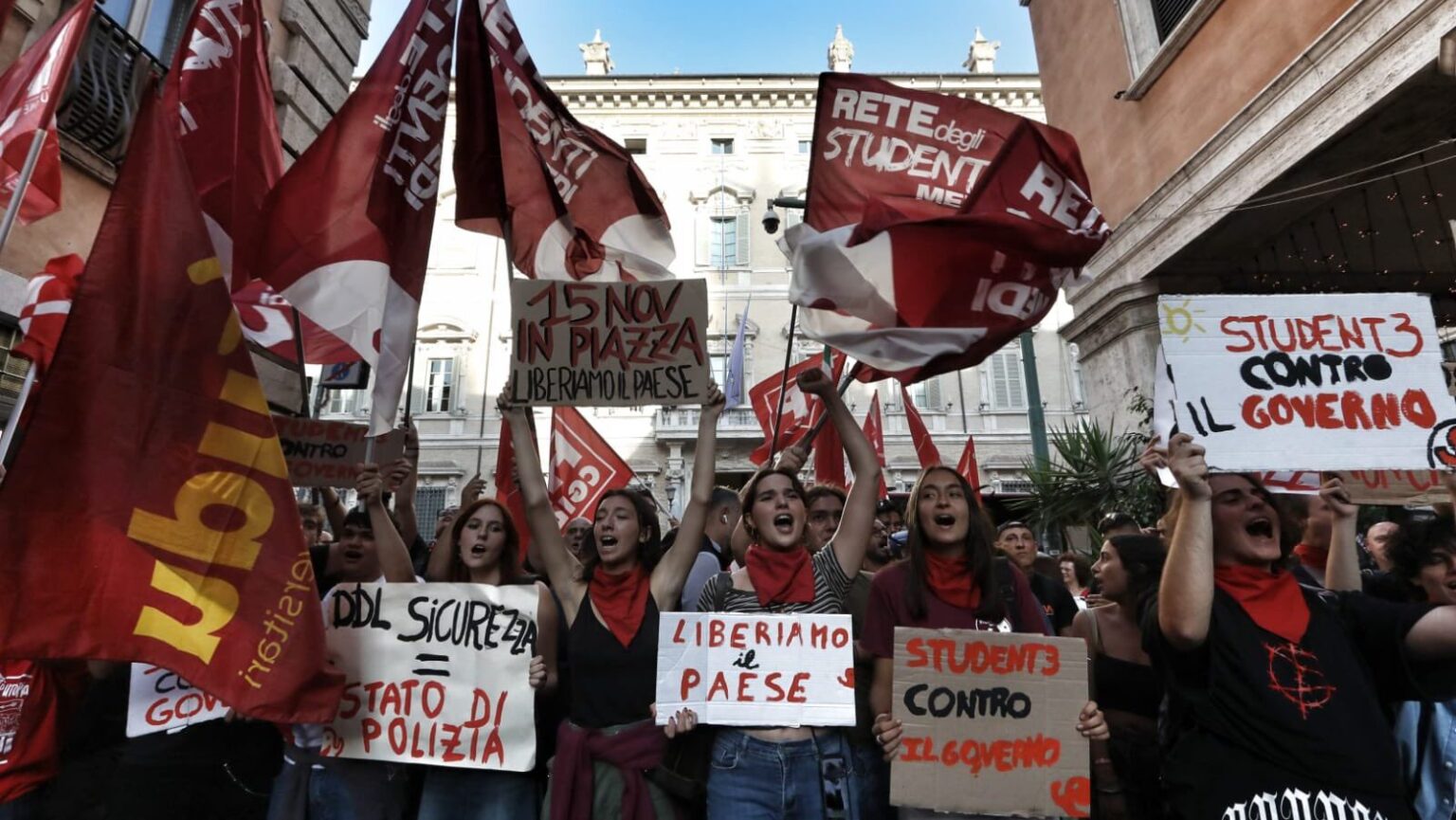
A proposed security bill in the Italian parliament aims to criminalize activism and penalize acts of solidarity
Giorgia Meloni’s government is on a rampage against popular dissent with a new bill under discussion in the Italian parliament. The proposed legislation seeks to penalize solidarity and criminalize activism, with the working class, migrants, and climate activists particularly at risk. In recent days, widespread protests have erupted, with trade unions, anti-fascist networks, and student groups all vowing to resist Meloni’s plans.
Giuliano Granato, a member of the left political party Power to the People (Potere al Popolo), criticized the bill’s framing as security legislation. He argued that it should instead be called the “Repression Bill” because “it responds to the country’s social needs only with more imprisonment and crime.”
“The government is saying that dissent and dispute are crimes in this country,” Granato added. “We believe they are the essence of democracy, and every achievement made over the decades is thanks to the struggles of the working classes.”
One of the bill’s most significant provisions is a crackdown on activists who block roads or railways during protests. Initially seen as targeting climate activists known for these tactics, the left has warned that it will also affect workers’ struggles. Granato pointed out that workers have also used such methods to protest, including during industrial action at Whirlpool factories over the last years.
Italy’s largest trade unions have echoed these concerns. The Italian General Confederation of Labor (CGIL) criticized the bill, arguing it represents an attack on trade union mobilizations aimed at protecting jobs and addressing company crises. In a joint statement with ANPI, the national anti-fascist network, the CGIL wrote: “The right wing continues to regard security only in terms of repression and punishment of social struggles.” Both organizations were at the forefront of protests held in several Italian cities on Wednesday, September 25.
The bill’s impact would extend beyond activists and workers, with prisoners facing harsh consequences. It proposes penalties for peaceful protests in prisons, such as sit-ins. Furthermore, limited protections currently granted to specific groups, like pregnant women or mothers of infants under one year of age, would be taken away. This would mean that babies would remain jailed with their mothers, despite only a handful of facilities being equipped to accommodate them. Legal and psychological experts have warned of the shocking impact this would have on children’s development even if capacities were expanded.
Migrants, the poor, and those showing solidarity with them are also at risk under the proposed law. Anti-eviction actions and those refusing to vacate spaces under threat of homelessness would be criminalized. Migrants without residence permits would be barred from legally obtaining SIM cards, their only connection to family and friends at home. Merchants who disobey this provision would face temporary closures.
While most describe the security bill as paving the way for a permanent police state, some groups might be looking forward to it. Approximately 300,000 police and security personnel would be granted the right to carry unofficial weapons in both private and public spaces – an idea that is likely to instill fear, rather than a sense of security, in the vast majority of the population.
Opposition to Meloni’s security bill is converging with ongoing resistance to her other policies, including the controversial differentiated autonomy reform. On Thursday, September 26, over 1 million signatures calling for a referendum against the reform were submitted by trade union and social movement leaders. These groups have vowed to remain in the streets, defending their right to protest and express dissent despite the government’s attempts to suppress them.