‘Climate free fall’: why the biggest risk to our economies is yet to be recognized

Spread the love

https://www.nature.com/articles/d41586-026-02154-8
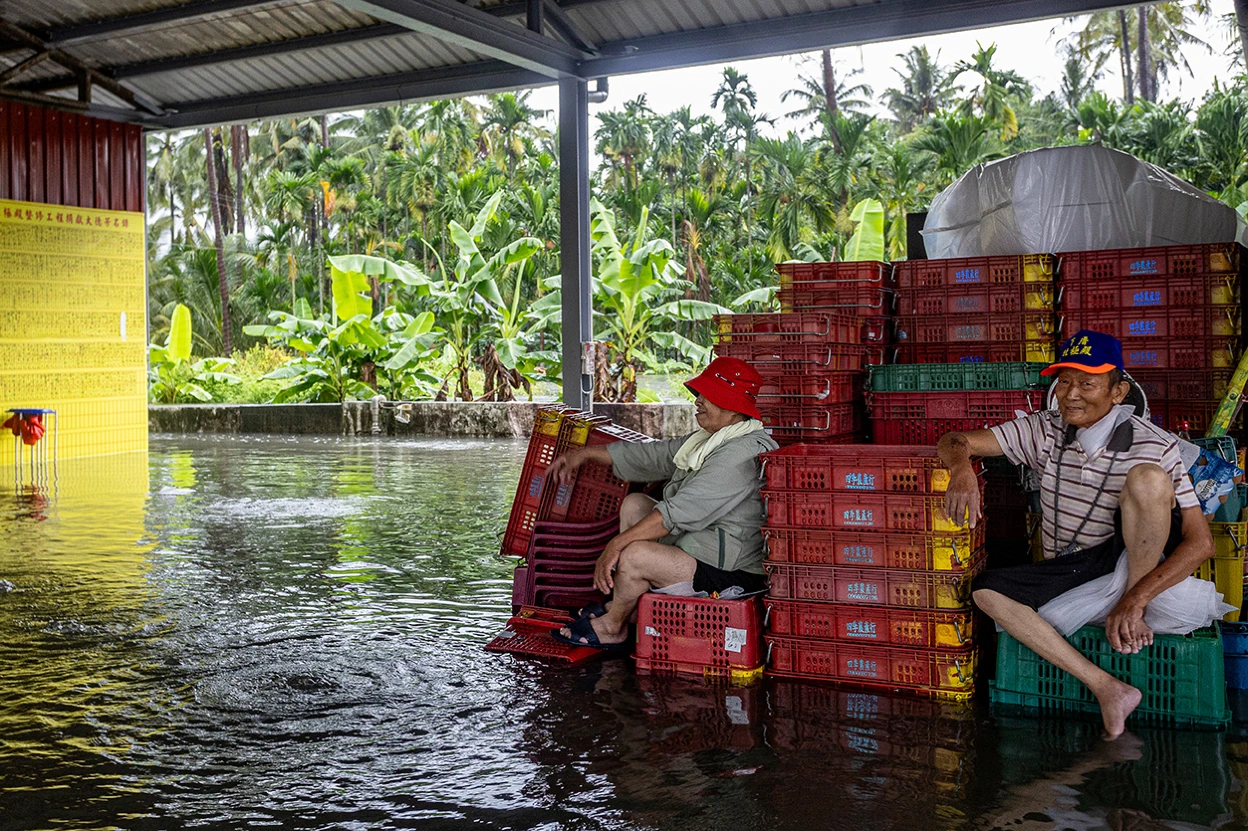
A farming storage area is flooded in Taiwan — events such as this will become more frequent in an increasingly erratic climate. Credit: Cheng Chia Huang/Getty

Increasing instability of the ocean, ice and atmosphere threatens farming, finance and society. We all need to wake up to that fact.

I have studied climate tipping points1 for more than 20 years, and I’m increasingly concerned that scientists have overlooked the most dangerous aspect of these for societies. The potential collapse of major parts of the Earth system — from ice sheets to ocean circulations — will profoundly alter the warming planet and tip it irreversibly into a different state2. But the greatest risks might not lie at that endpoint.Is a monster web of ocean currents headed for collapse? The race is on to find out

How we get there — how the tipping unfolds — is more important, and there is an urgent need to understand the process. This is missing from current analyses because the scales in time and space it occurs on fall between those of climate and weather. Tipping analyses focus on huge climate changes, often globally, over decades. Weather events are fast and local. But look at the interplay between the two and it’s clear that the transition between one climate state and another is not smooth but extremely volatile.

Climate tipping, therefore, will manifest as a period of increasingly dramatic weather volatility, rather than a sharp shift in average conditions. A fluctuating climate will bring swings and crashes in crop yields, flash flooding and erratic storms. It will stress economies by disrupting supply chains and amplifying insurance losses. Societies are unprepared, because weather volatility related to tipping points is absent from risk assessments.

This problem is urgent. Earth subsystems, including oceans, the cryosphere and biosphere, already seem to be destabilizing. The planet is heading for climate free fall.

Climate is destabilizing

By definition3, tipping points are reached when a series of interlinked changes amplify one another until the whole system becomes unstable and shifts uncontrollably into a different state. Loss of sea ice at the poles, for example, reduces the amount of sunlight reflected into space, further heating Earth’s surface, which then accelerates ice loss. These vicious cycles of change define a tipping point, at which the climate cannot return to its former patterns.Are we all doomed? How to cope with the daunting uncertainties of climate change

Before that point, the climate system becomes increasingly unstable. It fluctuates considerably — a rise in variability is a well-established property of such ‘non-linear dynamical systems’ approaching a critical threshold4,5. That society will face these fluctuations and that they will intensify through the tipping transition hasn’t been realized by scientists and policymakers, so far.

Earth will experience an increasingly erratic climate: more and stronger fluctuations in flows of melt water, ocean circulations and the extent of sea ice. These changes will lead to more frequent and intense extremes in temperature, precipitation and storms — leading not only to more heatwaves and droughts, but also to more cold spells and floods.

The scale of the consequences might not be obvious at first — ice sheets and ocean currents are so large that their responses to warming are relatively slow and delayed. Once a critical temperature threshold for instability is crossed, it takes time for such systems to collapse, but the collapse is inevitable (see ‘Tipping into trouble’).
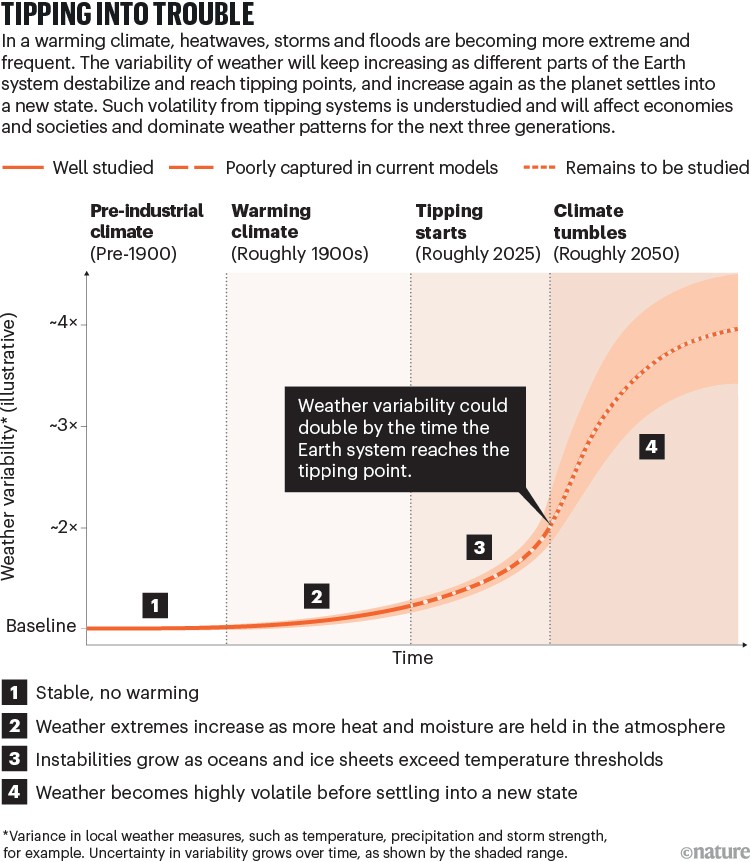
Conceptual line graph showing weather variability over time, from a stable pre-industrial climate to increasingly volatile future conditions as warming drives Earth-system tipping points. Solid, dashed and dotted sections indicate well-studied, poorly modelled and largely unstudied portions of the trajectory.
Source: A. Levermann

Ice sheets in West Antarctica6 and Greenland7 have already passed their tipping temperature. Arctic sea ice will do so in a few years. For the Atlantic Ocean, scientists simply don’t know8. The period between passing the tipping temperature and reaching the tipping point is when fluctuations increase dramatically.

Research into early warning of tipping points has identified increased climate variability as a signal of reduced stability and used it to estimate the time remaining before widespread tipping begins. But variability caused by instability as a mechanism of climate impact has been widely neglected.

Modern economies are adapted to relatively stable climatic baselines. Agricultural productivity, infrastructure design, insurance pricing and financial risk management all rely not only on expected mean conditions but also on the predictability of variability.

Article continues at https://www.nature.com/articles/d41586-026-02154-8 & further requirements to see the whole article …

Power-mad orange gasbag Donald Trump says Burn, Baby, Burn.
Nigel Farage urges you to ignore facts and reality and be a climate science denier like him and his Deputy Richard Tice. He says that Reform UK has received £Millions and £Millions from the fossil fuel industry to promote climate denial and destroy the planet.
Elon Musk urges you to be a Fascist like him, says that you can ignore facts and reality then.
Continue Reading‘Climate free fall’: why the biggest risk to our economies is yet to be recognized

Governments Knew the Risks of Global Warming as They Chose Fossil-Fueled Growth in the 1950s and ’60s

Spread the love

Article by Bob Berwyn republished from Inside Climate News under Creative Common License (CC BY-NC-ND 3.0)

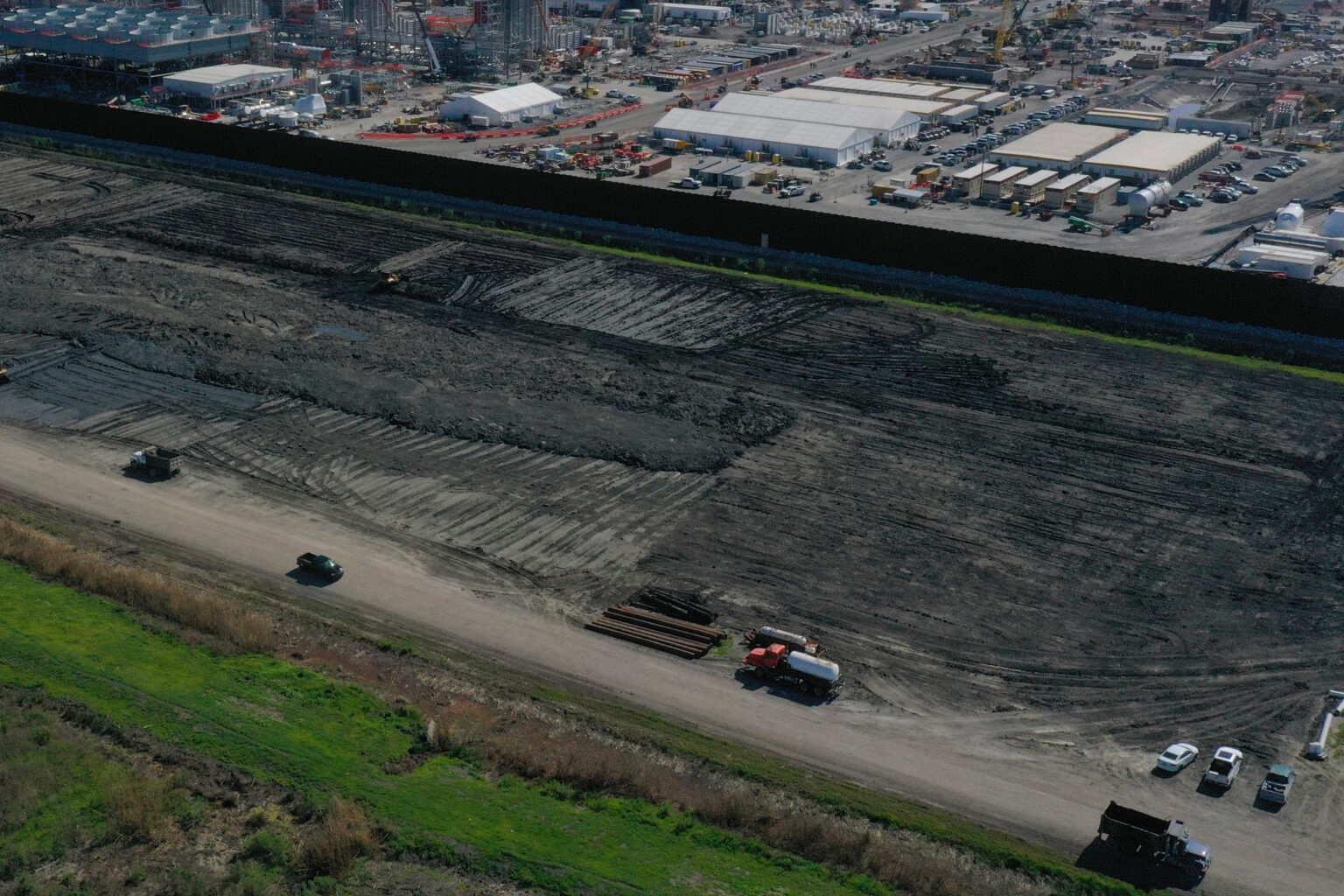
The construction at Venture Global’s LNG export facility in Port Sulphur, La., on Feb. 26, 2024. Credit: Ricky Carioti/The Washington Post via Getty Images

A new report suggests that some governments have ignored legal obligations to prevent climate harm for decades.

A new report strengthens the case that the United States and other major industrialized countries knew, long before they signed the 2015 Paris Agreement to limit global warming, that they could face legal obligations to reduce climate-damaging greenhouse gas emissions.

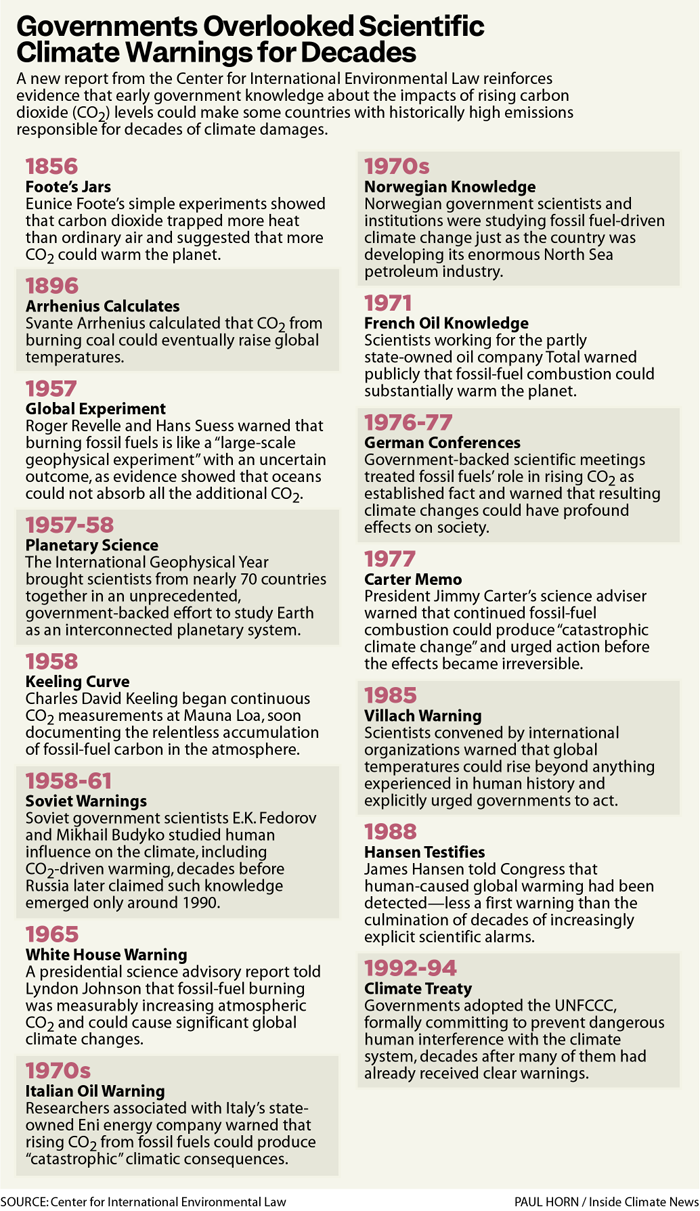
The “What Countries Knew” report, released Wednesday by the Center for International Environmental Law, traces when climate scientists first presented governments in the United States, Australia, Canada, Germany, Italy, Norway, the United Kingdom and the combined Soviet Union and Russia with research outlining the risks posed by the emissions from burning fossil fuels.

Those countries are responsible for about 40 percent of all emissions since the fossil fuel era began in the late 1800s. Summaries and transcripts from conferences cited in the report indicate that those governments and others were discussing the risks of rising global temperature, melting polar ice caps and sea-level rise as early as 1957, during the International Geophysical Year.

The warnings grew more urgent in the 1960s just as governments and economies of industrialized and industrializing countries placed nearly all their chips on fossil-fueled growth. In 1965, scientists warned U.S. President Lyndon Johnson that rising carbon dioxide could cause “marked changes” in climate. About the same time, researchers at Norway’s and Italy’s state-owned oil companies warned of potential climate impacts while governments encouraged them to expand. 

As the reports and warnings piled up, newsreel footage in Germany celebrated record coal hauls with images of miners grinning through sooty faces, and federally subsidized oil production in the U.S. meant prosperity and the freedom to “Put a Tiger in Your Tank” at an Esso gas station.

Lindsay Fenlock, a senior researcher with the Center for International Environmental Law and lead author of the report, said she was continually surprised by the breadth of international government awareness of climate impacts with a “threat of serious implications” as she combed through decades of materials archived from the pre-internet era. 

During the International Geophysical Year, about 70 countries collaborated to study Earth as an interconnected system and measure the growing effects of human activities on the planet, she said. The same year, a study by American scientists Roger Revelle and Hans Suess characterized the rising amount of CO2 in the air as an unprecedented and irreversible “large-scale geophysical experiment” unlike anything in human history.

Fenlock noted several other early international conferences that “had particularly striking conversations around what to do to combat climate change and move away from fossil fuel use.”  

A 1968 government-and-industry symposium in France included detailed discussions on alternatives to fossil fuels. In 1973, the International Institute for Applied Systems Analysis in Austria hosted talks about government responses to climate change. And when Fenlock retrieved old Canadian federal agency employee newsletters, she found that scientists had openly discussed climate change throughout the 1970s.

The report draws “important connections” between the history of government knowledge and the legal obligations outlined in the ICJ’s Advisory Opinion, said Michael Burger, executive director of the Sabin Center for Climate Change Law at Columbia University.

“It’s a warning shot, for those on the lookout for cases that may follow in the wake of the ICJ’s opinion,” he said.

Fenlock said the report wasn’t intended to be comprehensive, but it shows that governments often overlooked scientific evidence with life-and-death relevance.

“I think that just how much was known, and how soon, was pretty shocking,” she said. “But people don’t talk about it now.”

The report may reignite those conversations by framing the historical record in the context of international climate law, said Nikki Reisch, CIEL’s climate and energy program director. What governments knew, and how they responded or failed to respond, took on new legal significance after last year’s advisory opinion from the International Court of Justice, which found that states have longstanding legal obligations to prevent significant climate harm, and may be required to pay reparations when breaches of those obligations cause damage.

Reisch said tracing government knowledge could help determine whether a country’s greenhouse gas emissions violated international obligations to avoid environmental damage beyond its borders, and whether it could be held responsible for the resulting harm.

The report illustrates that the early scientific evidence “didn’t stay in a drawer or on a shelf,” she said. “It was being published, disseminated. Their information was communicated directly to government officials, sometimes at the highest levels and to the broader public. “All this information,” she said, “was in the hands of those who could have acted.”

Under a broad reading of international environmental legal principles, some countries could be held responsible for their share of climate damages caused by their emissions even before they understood the risks, she said. But pinpointing when governments became aware of those risks establishes a clearer threshold for legal liability. From that point onward, governments had the opportunity to change course, and those that instead continued or expanded fossil fuel use bear greater responsibility for resulting harms and for helping affected communities now, she added.

Reisch said governments should be judged by what was reasonable at the time, not by today’s standards. Once they had credible evidence that fossil fuels could cause serious harm, she said, they had a duty to stop expanding their use, develop alternatives and use the tools available to limit the damage.

Documenting widespread knowledge of the dangers undercuts attempts to dismiss governments’ historical responsibility, particularly because many continued to expand fossil fuel production and use and, in some cases, obstructed efforts to scale them back. The report alone does not establish liability, she said, but provides important evidence that could help hold governments accountable for resulting damages and require them to act with greater urgency.

The report’s legal significance can be seen in common-sense terms, added Michael Gerrard, the founder and faculty director of the Sabin Center.  

“If I know that the brakes on my car don’t work but I persist in driving, I have heightened culpability when I crash and injure someone,” he said.

Article by Bob Berwyn republished from Inside Climate News under Creative Common License (CC BY-NC-ND 3.0)

Inside Climate News has regular newsletters and invites donations.

Neo-Fascist Climate Science Denier Donald Trump says Burn, Baby, Burn.
Nigel Farage urges you to ignore facts and reality and be a climate science denier like him. He says that Reform UK has received millions and millions from the fossil fuel industry to promote climate denial and destroy the planet.
Elon Musk urges you to be a Fascist like him, says that you can ignore facts and reality then.
Continue ReadingGovernments Knew the Risks of Global Warming as They Chose Fossil-Fueled Growth in the 1950s and ’60s

Fee fantasies and false openings: Trump’s Hormuz delusions continue

Spread the love

This work by Middle East Monitor is licensed under a Creative Commons Attribution-NonCommercial-ShareAlike 4.0 International License.

A view shows a large billboard displayed at Vanak Square in Tehran, Iran, on April 12, 2026. [Fatemeh Bahrami – Anadolu Agency]


by Dr Binoy Kampmark

With the Iran-US ceasefire all but retired to the infirmary of international politics, Washington has conducted air strikes on Iran for a third straight night.  On early July 14, Iran’s state-run IRNA news agency reported explosions in the southern port city of Bandar Abbas and six explosions on Kish Island, with further blasts on Qeshm Island.

Prior to those strikes, President Donald Trump told reporters at the White House that, “We’re attacking them tonight, and we’re taking out all their capability for anything having to do with the Strait of Hormuz”.  That bit of wishful thinking was also accompanied by the hope that a diplomatic agreement with Tehran might still be reached, despite the latest mayhem.  US Central Command (CENTCOM) then posted a note confirming that a “third consecutive night of strikes against Iran” had been ordered at Trump’s direction.  “These strikes will continue to impose a heavy cost on Iranian forces and degrade their ability to attack innocent civilians and commercial shipping in the Strait of Hormuz.”

In a reversion to old positions, CENTCOM also announced that it would “resume blockading maritime traffic entering and exiting Iranian ports on 14th July at 4 p.m. ET.”  The US military would continue supporting “traffic flow through regional waters for all vessels not violating the blockade.”  The previous blockade by US naval forces, lasting from 13th April to 18th June, saw the redirection, if we are to rely on CENTCOM’s figures, of over 140 compliant vessels, the disabling of nine recalcitrant ships, and the permitted transit of “over 50 commercial vessels supporting humanitarian aid”.

Trump, ever burdened by an estranged idea of the factual record, also took to Truth Social (it tends to be neither), his preferred medium of miscommunication, blustering that, “The Hormuz Strait is OPEN, and will remain OPEN, with or without Iran.”  (This was at odds with the reporting of Iranian state media on 11th July, declaring that the Strait was closed “until further notice”.)  The president went on to announce a reinstituting of the blockade of Iran’s shipping and customers “from entering or leaving.  All other countries will have fair and open use of the Strait.”  Never one to be shy about the matter of might, the president also bellowed that the US would be “from this point forward, known as ‘THE GUARDIAN OF THE HORMUZ STRAIT,’ but as such, as a matter of FAIRNESS, will be reimbursed, at the rate of 20 percent on all cargo shipped, for any and all costs necessary to do the job providing safety and security to this very volatile section of the World.”

For students of maritime transit fees, Trump’s assertions remain pure babble.  A fee structure applicable for such transit ways as the Panama Canal or Suez Canal involve sophisticated structures of administration, billing and tariff schedules shaped by decades of practice. 

The Trump fee proposal is the stuff of ether, lacking any mechanism of collection, let alone enforcement.  His position also deliciously contradicts statements made by his own aides.  Consider these 23rd June remarks to the press by US Secretary of State Marco Rubio made in Abu Dhabi: “No country is allowed to charge tolls or fees on an international waterway.  That’s existing international law. That’s the way it is in international waterways all over the world, and that’s the way we expect it’ll be here.”

Correcting a mistake, not retreating: Why ending the war could restore Trump’s credibility

To Trump’s shouty remarks, Iran’s response was needling.  “POTUS is absolutely right,” chortled Iran’s foreign minister, Seyed Abbas Araghchi.  “Whoever provides secure and safe passage of commercial vessels through the Strait of Hormuz should be compensated for this service.”  Reiterating the critically affirmed importance of the waterway to Tehran, the foreign minister went on to declare that “Iran has always been the GUARDIAN of the Strait and will remain so FOREVER.”  There would be some budging on a 20 percent fee, as it was “too much.  We will be fair.”

Colonel Ebrahim Zolfaqari, that sternest of spokesmen for the Khatam al-Anbiya Central Headquarters, was more severe in reproaching “America’s repeated adventurism and malicious acts to interfere in the management of the Strait of Hormuz”.  These had “seriously endangered regional security, international trade, and the passage of oil tankers and commercial vessels.”  With notable menace, Zolfaqari also rebuked “the cooperation of some regional countries” as an incitement to a further widening of the war.  “Regional heads of state are warned that any cooperation with America and any logistical support for its aggressive army will be considered an act of war against Iran’s sovereignty and national security.”

The Iranians, true to form, have continued their barrages against various Gulf states and various vessels.  On 13th July, they were accused by the United Arab Emirates of a “brazen” attack on two tankers in the Strait, killing an Indian crew member and wounding eight, four seriously.  This was, according to the UAE Ministry of Defence, “a serious violation and a clear breach of international law, threatening the security and stability of the region.”

While such claims are hard to dispute, they should be placed in the context of an imbecilic, illegal war that began on 28th February, conducted by two hubristic monomaniacs in the form of Trump and Israel’s Benjamin Netanyahu against an Iranian regime that promises to be more durable and ruthless than ever.

All bets, be it in terms of security for the Gulf states or any equilibrium in energy markets, are off.

The views expressed in this article belong to the author and do not necessarily reflect the editorial policy of Middle East Monitor.

This work by Middle East Monitor is licensed under a Creative Commons Attribution-NonCommercial-ShareAlike 4.0 International License.

Keir Starmer explains that UK is actively supporting Israel's genocidal expansion and repeats his previous quotation that he supports Zionism "without qualification". Keir Starmer said “I said it loud and clear – and meant it – that I support Zionism without qualification.” here: https://www.jewishnews.co.uk/keir-starmer-interview-i-will-work-to-eradicate-antisemitism-from-day-one/
Keir Starmer explains that UK is actively supporting Israel’s genocidal expansion and repeats his previous quotation that he supports Zionism “without qualification”. Keir Starmer said “I said it loud and clear – and meant it – that I support Zionism without qualification.” here: https://www.jewishnews.co.uk/keir-starmer-interview-i-will-work-to-eradicate-antisemitism-from-day-one/

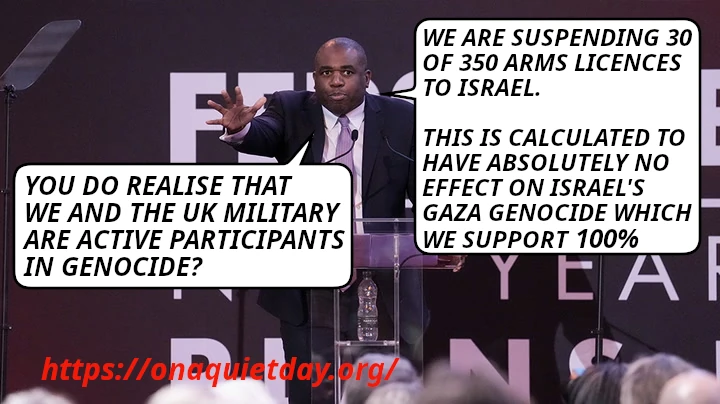
Genocide denying former UK Foreign Secretary David Lammy says that UK is suspending 30 of 350 arms licences to Israel. He also confirms the UK government's support for Israel's Gaza genocide and the UK government and military's active participation in genocide.
Genocide denying UK Foreign Secretary David Lammy says that UK is suspending 30 of 350 arms licences to Israel. He also confirms the UK government’s support for Israel’s Gaza genocide and the UK government and military’s active participation in genocide.
Orcas discuss rotting brain, front Orca says Sundown Syndrome is a dead givaway and he wishes someone would Lock Him Up

Continue ReadingFee fantasies and false openings: Trump’s Hormuz delusions continue

Trump Admin Finally Hands Over Evidence on Good and Pretti Killings to Minnesota Prosecutors After Withholding It For 6 Months

Spread the love

Article by Stephen Prager republished from Common Dreams under Creative Commons (CC BY-NC-ND 3.0). 

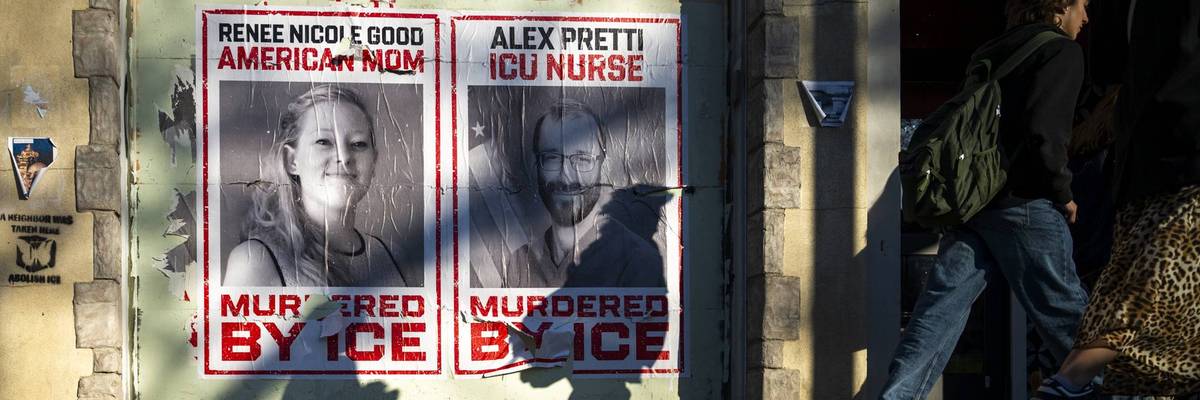
People walk by signs memorializing Renee Good and Alex Pretti on February 12, 2026 in Minneapolis, Minnesota. (Photo by Stephen Maturen/Getty Images)

Minnesota Attorney General Keith Ellison said it “should never have taken this long.”

After being shut out of the investigations by the Trump administration, Minnesota prosecutors announced on Monday that federal investigators finally turned over reams of unseen evidence related to shootings by immigration agents that killed Renee Good and Alex Pretti and injured Julio Sosa-Celis in January.

Hennepin County Attorney Mary Moriarty announced that after “six months of relentless collective effort,” state and local prosecutors had “obtained hard drives of previously withheld evidence” about the killings, which took place during the administration’s aggressive surge of immigration agents in and around Minneapolis and sparked a wave of protests.

RECOMMENDED…

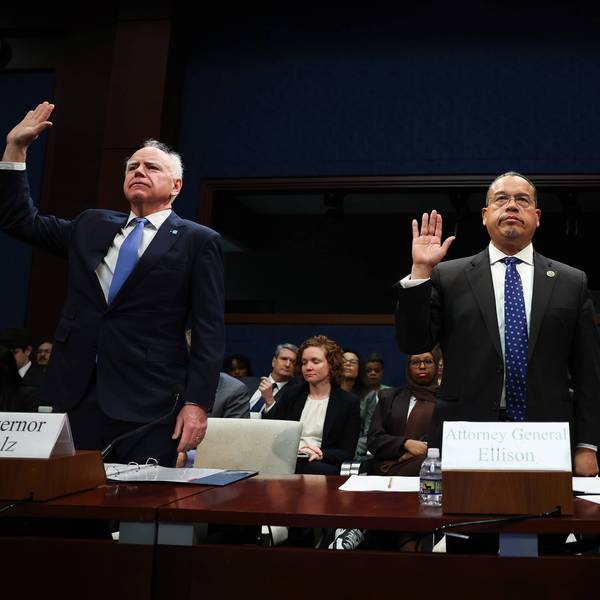
Minnesota Gov. Tim Walz and Minnesota Attorney General Keith Ellison are sworn in at House hearing

Judge Finds Trump DOJ Abused Subpoenas in Attempt to ‘Coerce’ Minnesota Leaders

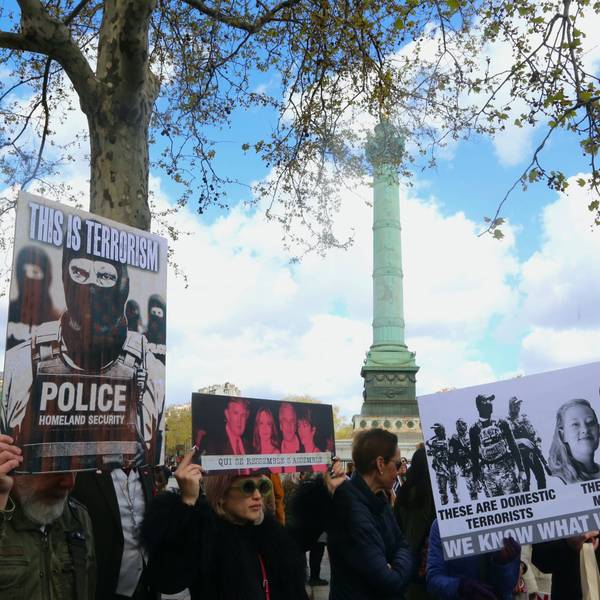
No KIng's Movement Protests In Paris

‘Major Escalation’: Trump Prosecutor Invokes NSPM-7 While Unveiling Charges Against 15 ICE Protesters

Moriarty added that prosecutors had also obtained some physical evidence that was “previously withheld” by federal investigators. This includes the SUV that Good, a 37-year-old US citizen and mother of three, had been driving when she was shot through her driver’s side window by US Immigration and Customs Enforcement (ICE) agent Jonathan Ross as she appeared to be leaving the scene of an enforcement operation.

Attorney Antonio Romanucci and the legal team representing the family of Good said in a statement that turning over the vehicle and other evidence was “an important and meaningful step towards justice and accountability,” and that they were “grateful for the resumption of regular investigatory protocols, which is not only important for the families impacted in these cases, but it is essential for the community and the country.”

Shortly after Good was shot, Department of Homeland Security (DHS) spokesperson Tricia McLaughlin portrayed her as a “violent rioter” who had attempted to run over Ross with her car, which then-Secretary Kristi Noem claimed was an “act of domestic terrorism.” But video evidence showed that her wheels were pointed away from the agent, indicating that she was attempting to leave.

Homeland Security adviser Stephen Miller similarly described Pretti, a 37-year-old intensive care nurse, another US citizen, as a “would-be assassin” while DHS said he showed up at a protest against ICE attempting to “massacre law enforcement” based on the fact that he was carrying a legal firearm when he was shot by two Customs and Border Protection (CBP) agents.

Videos showed that Pretti had intervened to stop agents from harming another protester and only held his phone during the confrontation, never reaching for his gun.

Sosa-Celis, a 24-year-old Venezuelan national, was called a “violent criminal alien” by DHS, which accused him and his two roommates of having attacked agent Christian Castro with snow shovels, leading Sosa-Celis to be shot in the leg through the door of the home.

Assault charges against him and his roommate were dropped by federal prosecutors after video and medical evidence showed that Castro had not been attacked. ICE Director Todd Lyons acknowledged that the agents had lied about the incident, and Castro has since been arrested after being charged by Moriarty’s office as part of an independent investigation.

Neither Ross nor the two CBP agents who shot Pretti—Jesus Ochoa and Raymundo Gutierrez—have been charged.

Federal authorities have repeatedly rejected demands from Minnesota officials to cooperate with investigations into the three shootings and grant access to evidence and the ability to interview witnesses.

In the case of Pretti, agents blocked investigators with the Minnesota Bureau of Criminal Apprehension from entering the shooting scene after the BCA had obtained a search warrant and removed physical evidence before Minnesota investigators could document it. This included Pretti’s gun, cellphone, and body camera footage, and other physical and digital evidence.

In March, Minnesota sued the Trump administration over its refusal to cooperate with the investigations, a lawsuit that was still ongoing as of Monday.

The federal government did not explain its sudden change of direction. The Associated Press described it as part of an agreement in which Minnesota agreed to share evidence it had collected in Castro’s case if the federal government shared evidence it was withholding about the shootings of Good and Pretti.

Moriarty thanked the federal officials for “their willingness to consider changing course to share evidence and promote public trust.”

But Minnesota Attorney General Keith Ellison emphasized that it “should never have taken this long.”

“I remain deeply troubled that the federal government spent more than half a year attempting to conceal this evidence from state investigators,” he said in a statement. “And I hope this is the beginning of a major course correction on the part of the federal government.”

US Sen. Tina Smith (D-Minn.) agreed that “this took way too long” and said, “It’s not enough.”

“Minnesotans’ trust has been fundamentally broken,” she said. “There’s a long way to go before we get true justice for ICE killing two of our neighbors.”

The federal government’s decision to turn over evidence to Minnesota officials came less than a week after an ICE agent shot and killed Lorenzo Salgado Araujo, a 52-year-old Mexican father in Houston, whom DHS claimed had attempted to attack officers with his car, only to once again be undermined by video and witness accounts.

DHS has acknowledged that it was not attempting to target Salgado for removal and had mistaken his van for someone else’s.

Harris County District Attorney Sean Teare has said that, just like in Minnesota, the federal government was refusing to share evidence with local officials.

“The federal government has not invited us in,” Teare said. “The federal government is not collaborating with us with this investigation.”

On Monday, ICE agents killed another man in Maine, 26-year-old Colombian father Joan Sebastian Guerrero, who was reportedly shot several times after stopping his vehicle, according to video footage.

DHS Secretary Markwayne Mullin has said Guerrero “weaponized” his vehicle and attempted to ram officers. One eyewitness told Reuters they saw a federal SUV ram Guerrero’s car.

According to Sen. Angus King (I-Maine), Mullin said that Guerrero, who was authorized to work in the US and had a Social Security number, was not the target of the warrant agents were executing.

Article by Stephen Prager republished from Common Dreams under Creative Commons (CC BY-NC-ND 3.0). 

Continue ReadingTrump Admin Finally Hands Over Evidence on Good and Pretti Killings to Minnesota Prosecutors After Withholding It For 6 Months

Another Fatal Shooting Involving ICE—This Time in Maine

Spread the love

Article by Julia Conley republished from Common Dreams under Creative Commons (CC BY-NC-ND 3.0). 

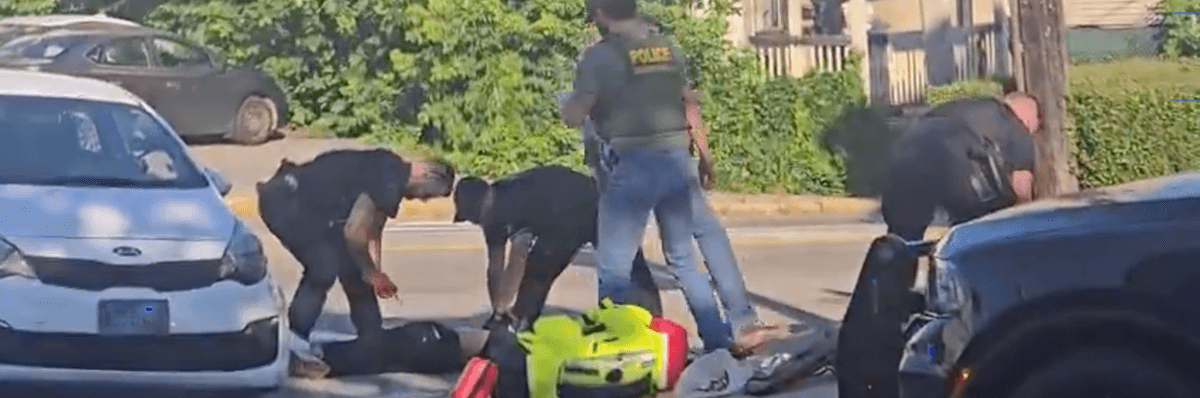
Police officers respond to a reportedly fatal shooting in Biddeford, Maine on July 13, 2026. (Image: screenshot/X)

The shooting in the coastal town of Biddeford comes less than a week after Lorenzo Salgado Araujo was killed by federal immigration agents in Houston, Texas.

This is a developing story. Please check back for possible updates.

The speaker of Maine’s state House of Representatives said the FBI was expected to investigate Monday morning after US Immigration and Customs Enforcement officers were reportedly “involved” in a fatal shooting in Biddeford—the second shooting involving ICE on the streets of an American city in less than a week.

RECOMMENDED…

US-POLITICS-IMMIGRATION

‘We Are Grieving, We Are Furious’: Mainers Protest Fatal ICE Shooting in Biddeford

'No Kings' Protest In Houston

Texas Rights Group, Officials Demand Independent Probe After ICE Fatally Shoots Immigrant

“This morning a shooting occurred in Biddeford,” said Speaker Ryan Doughty Fecteau, a Democrat. “A person was killed. ICE was involved. State Police and the Department of Public Safety are now on scene to gather details and would expect the FBI to investigate as well.”

Few details were known about the shooting initially. Some streets in the town, located about 18 miles south of Portland, were closed due to an “active crime scene,” according to News Center Maine.

Former state Senate President Troy Jackson, a progressive who is running to be the state’s Democratic candidate for US Senate, expressed solidarity with the town “and with all Mainers”—who include about 56,000 immigrants, many of whom have lived in fear of President Donald Trump’s mass deportation and detention operation in recent months.

A Biddeford resident named Daniel Boucher told The Portland Press Herald he had heard a loud sound outside “like fireworks going off” while he was getting ready for work, and rushed to the window where he saw “an SUV trying to ram a small white car in the intersection” near his house.

Agents in vests stopped the car and pulled a man out of the vehicle.

“He was bleeding profusely from the head,” Boucher told the Press Herald. “He was talking. He said, ‘I tried to stop.’”

Another resident identified as Em said she thought she had heard several gunshots around 7:15 am:

Em, who asked to be identified only by first name because of her fear of ICE, watched from her window as the small white car circle in the intersection as if the driver had no control.

“Two plain clothes ICE agents with vests on pressed up against the driver’s side door trying to guide it to not hit anything,” she said. “All of a sudden it seemed like six people with vests on were running down the street. I didn’t know where they were coming from.”

Em said agents appeared to crash a vehicle into the smaller car to get it to stop, then the driver was pulled out.

“No one went to him and no one did anything,” she said, her voice choking with tears.

The Press Herald posted a video showing a white car circling in an intersection before an officer appeared to try to stop it.

https://www.youtube.com/embed/iicxhLRsGmY?rel=0(Video: Portland Press Herald)

Another eyewitness, identified as 18-year-old Lucas Scott, described a car “trying to hit the ICE officer.” Aaron Reichlin-Melnick, a senior fellow at the American Immigration Council, said he had “some doubts as to intent” and noted that “trying to flee in panic is far more common than trying to hit anyone.”

Trump’s deployment of ICE in Maine briefly received national attention in January. Federal agents have continued to arrest members of immigrant communities in the state after Sen. Susan Collins (R-Maine) claimed she had received assurances from the Department of Homeland Security that the “surge” in ICE agents had ended.

Residents of Biddeford told the Press Herald they had noticed increased ICE activity in the historic working-class town in recent weeks.

Jordan Wood, an organizer who is also running for US Senate following former Democratic candidate Graham Platner’s withdrawal from the race to unseat Collins, said Monday that “ICE is dangerously out of control and an embarrassment to our country.”

“We are waiting for more details, and Mainers deserve the full truth,” said Wood, adding a call to abolish ICE “and replace it with an agency that answers to the people.”

The shooting came days after Lorenzo Salgado Araujo, a 52-year-old construction worker in Houston, Texas, was killed by an ICE agent.

Maine Secretary of State Shenna Bellows, another US Senate candidate, noted that at least 11 people have now been killed by ICE or Border Patrol agents this year.

The local group Biddeford Saco for Racial Justice said a protest would be held at nearby Mechanics Park at noon local time.

Jackson said he would be attending.

“We all need answers,” he said in a video he posted on social media, “and we deserve to know what happened here.”

Donald Trump sings and dances, says that it's fun to kill everyone ... unless he gets distracted or falls asleep.
Donald Trump sings and dances, says that it’s fun to kill everyone … unless he gets distracted or falls asleep.

Article by Julia Conley republished from Common Dreams under Creative Commons (CC BY-NC-ND 3.0). 

Continue ReadingAnother Fatal Shooting Involving ICE—This Time in Maine