No Kings protests in US
There are many “No Kings” protests and rallies throughout the United States. They are opposing Donald Trump and his administration’s policies and actions.
There are many “No Kings” protests and rallies throughout the United States. They are opposing Donald Trump and his administration’s policies and actions.
Original article by Brad Reed republished form Common Dreams under Creative Commons (CC BY-NC-ND 3.0).

Venezuelan United Nations Ambassador Samuel Moncada on Thursday delivered a scathing denunciation of US President Donald Trump’s drone attacks on purported drug boats off the coast of his country.
While holding up a copy of Thursday’s edition of the Trinidad and Tobago Guardian, which highlighted two Trinidadian citizens who were killed by a US drone strike while on a boat, Moncada lambasted the Trump administration and compared it to a serial killer.
“There is a killer roaming around the Caribbean!” he declared. “He’s bloodthirsty! He’s killing everyone who is on the sea working! And people from different countries—Colombia, Trinidad, etc.—are suffering the effects of these massacres!”
According to Reuters, Moncada this week also sent a letter to the United Nations Security Council asking it to rule on the legality of the US strikes, while also releasing a statement affirming Venezuela’s sovereignty.
The two Trinidadian citizens mentioned by Moncada were killed in a Tuesday drone strike that also reportedly took the lives of four other men.
In interviews with the Trinidad and Tobago Guardian, friends and relatives of 26-year-old Chad Joseph, one of the men killed in the strike, denied that he was involved with any drug trafficking.
“I find it wrong because it have—people will be innocent and they will still do and say otherwise,” Joseph’s mother, Lenore Burnley, told the Trinidad and Tobago Guardian. “The sea law is they supposed to stop the boat and intercept it, not blow it up like that.”
With the Tuesday strike, the total number of people killed by the Trump administration’s attacks on suspected drug boats totaled at least 27.
The administration carried out yet another boat strike on Thursday, and Reuters reported that at least two crew members had survived the attack, marking the first time that an attack on suspected drug vessels had left any survivors.
Reuters noted that “the development raises new questions, including whether the US military rendered aid to the survivors and whether they are now in US military custody, possibly as prisoners of war.”
The Trump administration so far has provided no legal justification for the strikes on boats, nor has it provided any evidence that any of the boats it has targeted were involved in the trafficking of illegal drugs.
Many legal experts believe that the strikes on the boats would be illegal even if they were found to have been carrying drugs, however, and some critics have accused the Trump administration of extrajudicial murder.
Moncada said Thursday that the Trump administration, which has also reportedly approved “lethal operations” by the CIA in Venezuela, is “looking for wars.”
“Everybody knows what’s going on here,” he said. “They are fabricating a war. The emperor is naked. Stop pretending this is complicated.”
Original article by Brad Reed republished form Common Dreams under Creative Commons (CC BY-NC-ND 3.0).


Original article by Brad Reed republished form Common Dreams under Creative Commons (CC BY-NC-ND 3.0).
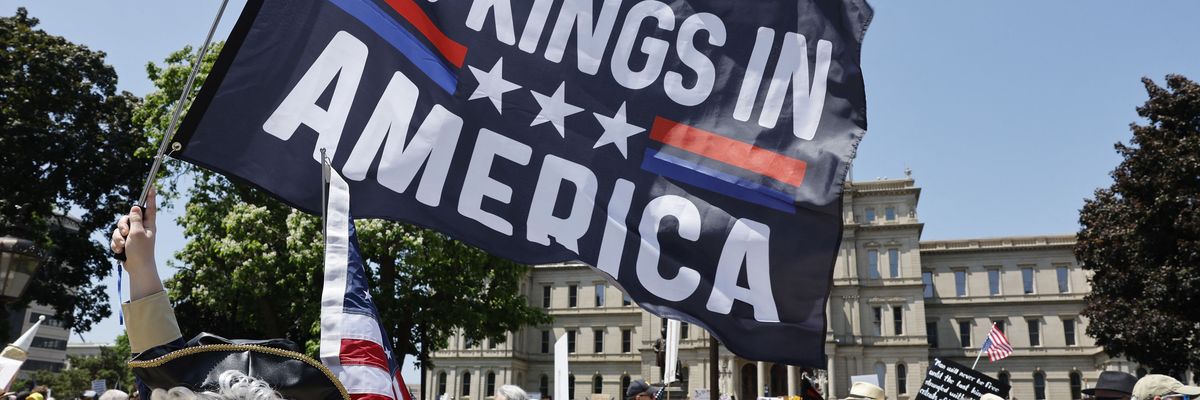
Organizers are expecting Saturday’s nationwide “No Kings” rallies to be among the largest single-day demonstrations in US history, and many activists and politicians on Friday sent messages of encouragement to demonstrators.
Leah Greenberg, the co-founder and co-president of Indivisible, which is one of the main organizers of the demonstrations, told Amy Goodman of Democracy Now! on Friday that she and her group are “engaging in the most American activity in the world, which is coming together in peaceful protest of our government.”
Greenberg then addressed attacks from President Donald Trump and other Republican lawmakers over the last week that the “No Kings” events were a “hate America” rally.
“This is a classic exercise of the authoritarian playbook, to try to create fear, to try to threaten, to try to make people back off preemptively,” she said. “We’re not going to do that… we won’t be cowed.”
Former US Labor Secretary Robert Reich also hit back at GOP claims that the “No Kings” rallies were anti-American, and he argued that the people attending them will be doing so out of a deep sense of patriotism.
“We’re rallying tomorrow because we LOVE America,” he wrote in a post on X. “It’s an opportunity for all of us who love this country to express our determination that our nation’s ideals not be crushed by the Trump regime.”
Progressive filmmaker Michael Moore encouraged his supporters to take part in Saturday’s demonstrations, and he wrote on his personal Substack it was of the utmost importance for Americans to make their voices heard in the face of authoritarian threats from the Trump administration.
“Don’t miss this chance to be part of the largest expression of free speech we’ve ever had,” he said. “Time has run out. One year from now, don’t find yourself wishing you had done something. Said something. This is our last chance, the final moment to stop the madness. I implore you to join us.”
Several Democratic politicians also expressed support for the demonstrations.
Rep. Pat Ryan (D-NY) blasted Trump and the GOP for attacking the patriotism of the “No Kings” protesters.
“I’ll be damned if I’m gonna let the Draftdodger-in-Chief tell me what a patriot is,” he wrote in a social media post. “We’re STANDING UP, SPEAKING OUT, and FIGHTING BACK. No Kings in America. See you Saturday.”
Rep. Jamie Raskin (D-Md.) sent out a video message expressing solidarity with Chicago and Portland, Oregon, two cities in which Trump has tried to deploy National Guard soldiers, and let them know that they fighting against authoritarianism by themselves.
“The people everywhere are standing up, in all 50 states and thousands of towns and cities across America,” he said. “We have no kings here, no crowns, no thrones.”
Sen. Chris Murphy (D-Conn.) accused Trump and Republicans of waging a campaign of intimidation aimed at frightening Americans out of exercising their rights to peacefully demonstrate.
“The Republicans’ attacks on the No Kings protests are sickening,” he wrote in a post on Bluesky. “To them, only pro-Trump speech is protected. If you oppose Trump, you ‘hate America’ or you’re a ’terrorist.‘ What they’re trying to do is simple: suppress turnout this weekend. Don’t let them win.”
Original article by Brad Reed republished form Common Dreams under Creative Commons (CC BY-NC-ND 3.0).

Original article by Pablo Meriguet republished from peoples dispatch under a Creative Commons Attribution-ShareAlike 4.0 (CC BY-SA) license.
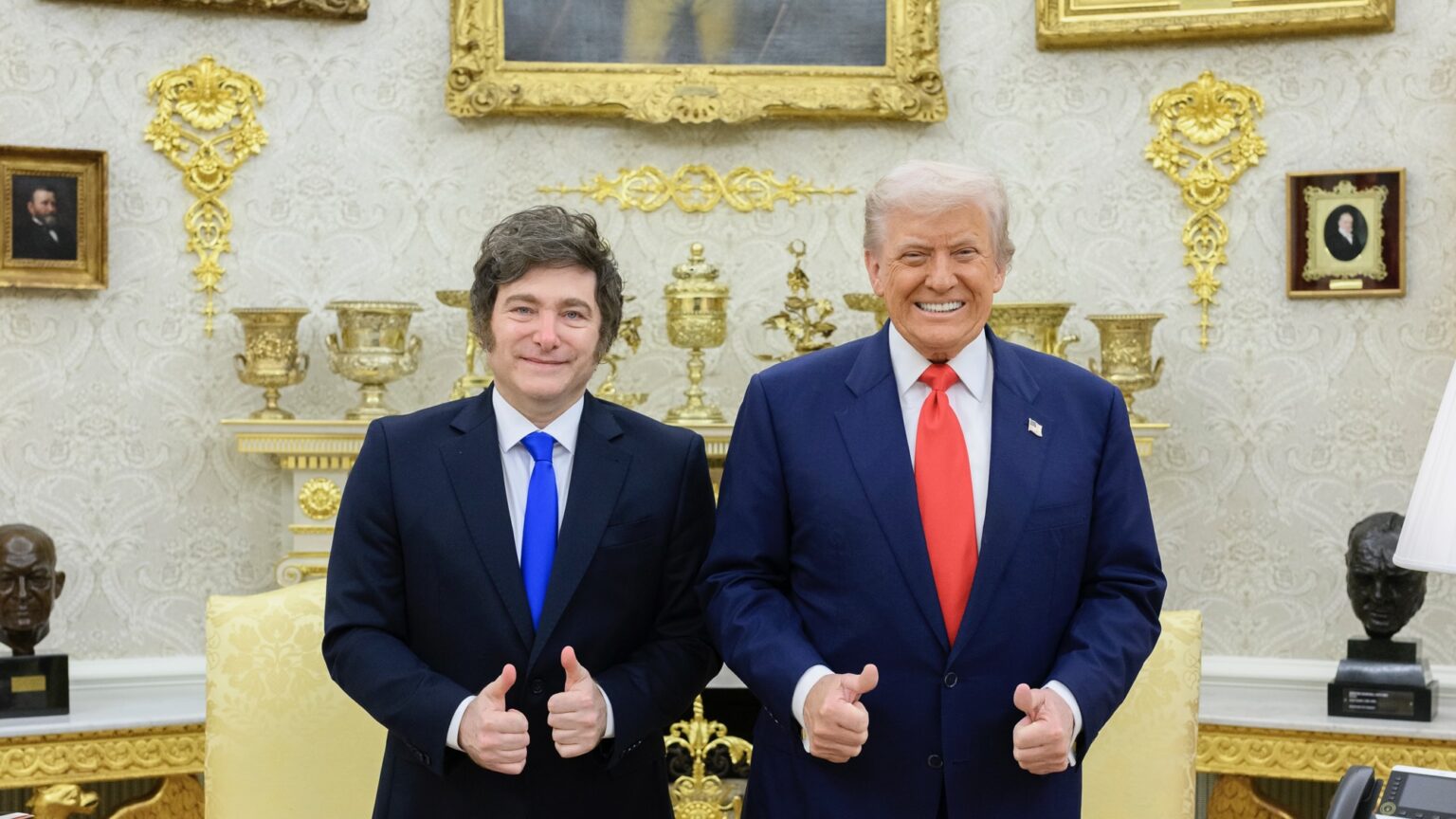
On October 14, Argentina’s right-wing president, Javier Milei, met with his US counterpart, Donald Trump in Washington. Milei, who arrived in the US capital in the early hours of the morning, hoped to secure a strategic financial bailout of almost USD 20 billion that Trump would sponsor to stabilize the economy, which has been struggling under Argentina’s libertarian government.
Traveling alongside Milei were Karina Milei, the president’s sister and secretary general of the presidency; Patricia Bullrich, minister of security; and Santiago Bausili, head of the Central Bank. Among the topics discussed were the trade relationship between the two countries and China’s influence in Argentina.
“Today we directly purchased Argentine pesos,” said US Treasury Secretary Scott Bessent in a post on X on October 9.
He described Argentina’s economic crisis as a “moment of acute illiquidity” in an otherwise “prudent financial strategy” that only the United States can and must save from collapse.
The South American nation has “strong economic fundamentals” and the structural reforms already underway will “generate significant dollar-denominated exports and foreign exchange reserves,” Bessent said.
The treasury secretary noted that the IMF also supports Milei’s economic policy.
Additionally, Bessent affirmed: “We have finalized a USD 20 billion currency swap framework with Argentina’s central bank. The US Treasury is prepared, immediately, to take whatever exceptional measures are warranted to provide stability to markets. I emphasized to Minister Caputo that President Donald Trump’s America First economic leadership is committed to strengthening our allies who welcome fair trade and American investment … The Trump administration is resolute in our support for allies of the United States, and to that end, we also discussed Argentina’s investment incentives and US tools to powerfully support investment in our strategic partners.”
Thus, the United States hopes to save the Argentine economy, which – despite the promises of Milei, an economist who for years has become an ideologue of the most radical neoliberalism – is faltering due to a lack of dollars. The orthodox program of reducing the size of the state, privatizing public companies, and cutting back on public policies has managed to improve certain economic indicators, such as the fiscal deficit, but for now it has run into a snag that, apparently, only the prodigious help of the United States can save.
Argentina has lost a large amount of money, causing several investors to begin selling their assets and, consequently, triggering a crisis of monetary illiquidity. With the agreement, Milei secures a historic injection of dollars that the IMF could not have offered him so quickly, considering that last April it already loaned Buenos Aires several billion.
This is of particular interest in view of the upcoming elections in Argentina on October 26; it should not be forgotten that Milei’s party already lost the last elections to Peronism (likely the most significant political force in Argentina over the last 70 years based on social justice, nationalism, and sovereignty) by a landslide. This was acknowledged by President Trump himself at a bilateral press conference, who made future economic aid conditional on Milei’s election victory: “The elections are coming very soon, and it is a very big election that will be watched by the world because [Milei] has done an incredible job, and with that comes some pain. I think the victory is very important … If a socialist, or in the case of New York City, a communist, wins, you feel a lot different about making an investment … If Milei doesn’t win … we will not be generous with Argentina if that happens.”
Trump has received heavy criticism for sponsoring Milei’s bailout, especially from some of his supporters who hoped that the slogan “America First” would materializein an opposite scenario. In addition, several US farmers have complained about Trump’s support, as Argentine soybeans compete with their production and, with this agreement, large landowners based in Argentina could benefit.
For his part, Milei, who has aligned his foreign policy almost mimically behind Washington’s, posted on X: “Thank you very much, President Trump, for receiving me at the White House. Since before becoming president, I have maintained that the Argentine Republic should be a strategic ally of the United States of America, and now that the Argentine people have entrusted me to guide the destiny of our country, fulfilling that promise is another step in the direction we set out on December 10, 2023: Make Argentina Great Again (MAGA). The support that you and your great country have given us is vitally important for the continuity of the long road of reforms we have embarked upon. Argentines know that the world’s leading power will continue to support us unless we return to populism. The situation is crystal clear: if the country strays from the path of freedom and returns to populism, the United States will cease to support our country. Otherwise, they will continue to stand by us.
Without a doubt, Milei’s hope is that long-awaited economic stability will translate into political stability that will allow him to get through the upcoming elections. However, this will be difficult for the government, given the latest polls showing growing discontent among the population over the rising cost of living, the latest corruption scandals (involving Milei’s own sister), and spending cuts that are already affecting millions of students, retirees, single mothers, etc.
Thus, Milei has bet big on Washington, just as Trump and his administration have bet big on the libertarian president. It will soon become clear whether this bet will allow Washington to maintain a totally loyal ally in South America or whether, on the contrary, Milei’s neoliberal project will be undermined by Argentina’s social and economic reality.
Original article by Pablo Meriguet republished from peoples dispatch under a Creative Commons Attribution-ShareAlike 4.0 (CC BY-SA) license.

Original article by Manolo De Los Santos republished from peoples dispatch under a Creative Commons Attribution-ShareAlike 4.0 (CC BY-SA) license.
Lee en español aquí
The mood in the Caribbean grows increasingly tense, as the United States intensifies its military threats. Beneath the deceptive shroud of the “war on drugs,” the United States is actively executing a blueprint for military intervention in Venezuela, employing lethal force and projecting power in a manner that legal institutions and regional leaders have condemned as a profound threat to international order. This aggression is not a law enforcement operation; it is the negation of law, a neocolonial revival of the Monroe Doctrine, designed to shatter the sovereignty of Venezuela, seize control of the world’s largest oil reserves, and install a compliant regime.
A chilling adoption of extrajudicial violence has marked the current escalation. The Trump administration has ordered unilateral military strikes against private vessels near the Venezuelan coast, allegedly to stop drug trafficking. To launch these alarming attacks, the US military has deployed a massive naval force of warships, drones, and special operations forces.
These strikes have resulted in the summary execution of at least 27 people as of recent reports. The most recent lethal strike in the Caribbean resulted in the “elimination” of 6 more people. This is not law enforcement; it is extrajudicial murder and a campaign that now stands as part of a war plan against Venezuela. The administration has characterized the victims, without credible proof, as drug traffickers and “terrorists,” a claim that, even if true, provides no legal authority for the US president to execute whomever it decides.
Legal and human rights organizations have been unequivocal in their condemnation of this profound and dangerous policy, which replaces established law enforcement procedures with premeditated lethal force. The New York City Bar Association (NYCBA), a key voice on international legal ethics, has strongly denounced these actions. The NYCBA stated explicitly that “Because the recent attacks on Venezuelan vessels and their crews were unauthorized by US law and in violation of binding international law, they were illegal summary executions – murders.” They further argued that these actions violate the fundamental international principle that “No one shall be arbitrarily deprived of his life” under the International Covenant on Civil and Political Rights.
The US government possesses ample legal authority for the Coast Guard to interdict and search vessels suspected of carrying narcotics, followed by prosecution in US courts according to due process requirements. However, in the case of the Venezuelan vessels, the Coast Guard’s Congressionally authorized police function was bypassed; instead, the crews were simply targeted and executed by overwhelming military force. Regional leaders, including Colombian President Gustavo Petro, have condemned the extrajudicial killings, highlighting the profound anxiety across Latin America over a return to unilateral US military action under the cover of anti-narcotics policy.
Beyond the lethal strikes, the US government has engaged in significant military posturing that amounts to a direct challenge to Venezuelan sovereignty. The sighting of US B-52 bombers in Venezuelan airspace, flying in close range, is a significant escalation. This warmongering has nothing to do with the “war on drugs” and everything to do with regime change to plunder Venezuela’s oil. This reckless push for war is a criminal act of international aggression.
The Trump Administration’s unilateral drone strikes in the Caribbean, combined with the White House’s termination of all negotiations with Venezuela, appear as a precursor for a full-scale regime change operation. This is a critical moment. We must sound the alarm: there is a risk of a new, catastrophic conflict in the region.
The US government’s own officials continue to escalate the crisis with bellicose rhetoric and actions. Secretary of State Marco Rubio, a key architect of the regime-change policy, has consistently refused to rule out a military option, asserting that the Maduro regime has become a “threat to the region and even to the United States.”
Venezuela’s response has been one of principled defense of its sovereignty. Ambassador to the UN, Samuel Moncada has repeatedly sounded the alarm on the global stage, arguing that the US military deployment in the Caribbean is a massive propaganda operation that seeks “excuses to fabricate a conflict” to seize the country’s oil wealth. Moncada affirmed that, “The United States believes that the Caribbean belongs to it because it has been using the expansionist Monroe Doctrine for over 100 years, which is nothing more than a remnant of colonialism.”
President Nicolás Maduro has called on Washington to resume dialogue, stating, “Our diplomacy isn’t the diplomacy of cannons, of threats, because the world cannot be the world of 100 years ago,” while simultaneously mobilizing national defense exercises to ensure the country is prepared for any direct assault. The NYCBA warned that attacks against Venezuelan vessels and reported threats against the Venezuelan government violate the nation’s obligations under the United Nations Charter, with the risk of escalating to open hostilities.
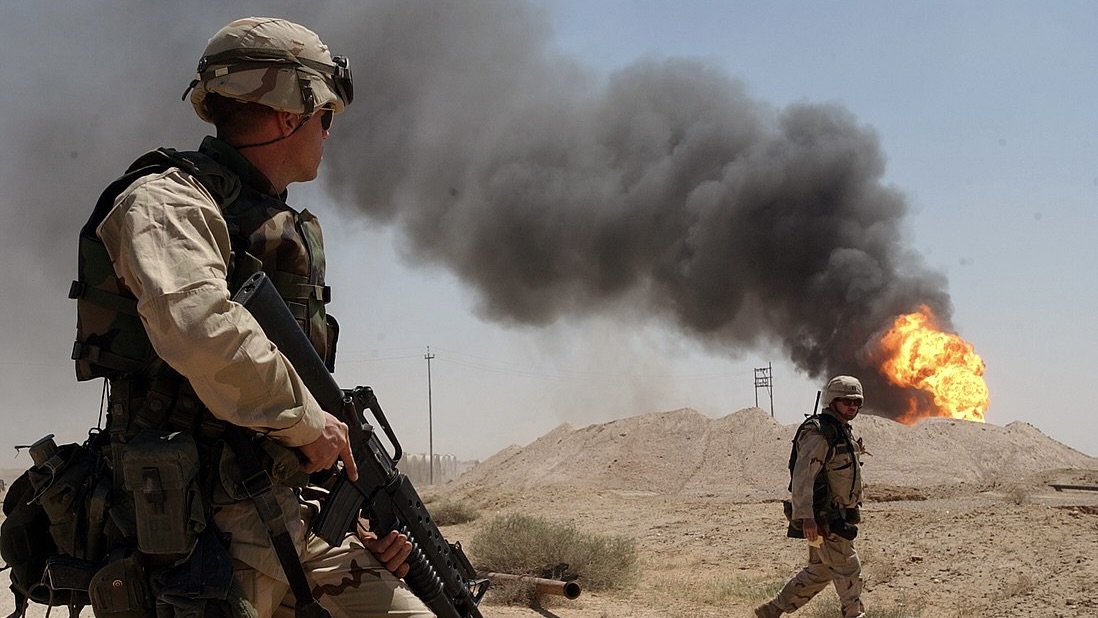
The current situation is chillingly reminiscent of the lead-up to the 2003 invasion of Iraq. In that case, the Bush administration justified unilateral action on the basis of “weapons of mass destruction,” but this was a pretext. The true objectives were not limited to oil, but also included achieving profound ideological and political goals – overthrowing a government to reshape Middle Eastern politics and assert dominance.
Washington must learn the lessons of this history. The Bush administration promised a quick victory in Iraq. Instead, the invasions and occupation claimed countless Iraqi lives, resulted in tens of thousands of American soldiers killed or wounded, and destabilized the region. The notion that the US can carry out military invasions into the heart of Latin America without a massive blowback is outlandish.
In the case of Venezuela, the “war on drugs” and the labeling of the government as a “threat” serve as the new rhetorical pretexts. The US interest is multifaceted: it involves securing the world’s largest proven oil reserves and achieving the ideological and political goal of overthrowing a socialist government to assert dominance and reshape Latin American politics. The US seeks to dismantle the Bolivarian Revolution and eliminate a major center of anti-imperialist politics in the hemisphere.
The current escalation is not about law enforcement or counter-narcotics; it is about regime change and plunder. While members of Congress from both Democratic and Republican parties, as well as key voices of public opinion, are increasingly speaking up about the illegality of these strikes and the absence of credible information from the administration, this situation requires much more urgency, once the escalation ladder is climbed, there may be no going back. The international community must recognize this aggressive campaign for what it is: a criminal act of international aggression. The world must stand against this threat of a new, catastrophic conflict.
Manolo De Los Santos is Executive Director of The People’s Forum and a researcher at Tricontinental: Institute for Social Research. His writing appears regularly in Monthly Review, Peoples Dispatch, CounterPunch, La Jornada, and other progressive media. He coedited, most recently, Viviremos: Venezuela vs. Hybrid War (LeftWord, 2020), Comrade of the Revolution: Selected Speeches of Fidel Castro (LeftWord, 2021), and Our Own Path to Socialism: Selected Speeches of Hugo Chávez (LeftWord, 2023).
Original article by Manolo De Los Santos republished from peoples dispatch under a Creative Commons Attribution-ShareAlike 4.0 (CC BY-SA) license.