A few recent news articles concerning the UK’s Conservative and Liberal-Democrat coalition government – the ConDem’s – brutal attack on the National Health Service.
Unite’s campaign to stop the privatisation of the NHS Blood Service has received huge public support which is still growing. In under a week, the union’s petition demanding that David Cameron stops the blood money was signed by 25,000 people
The petition was launched last Friday 3rd March and the Twitter campaign #bloodmoney began yesterday 9 March. In just one day almost 10,000 signed up.
On 16 February, the Health Service Journal learned that the Department of Health’s commercial directorate held talks with private providers about running parts of the NHS Blood and Transplant service. Capita and DHL are understood to be interested in taking over parts of the service.
The campaign has struck a chord with the general public who have been signing up at record speed for a Unite union petition. The public are right to be concerned, a study conducted in New Zealand found that there was opposition to profit being made from blood, with 52% of donors unlikely to continue donating if this occurred (see link in notes to editors).
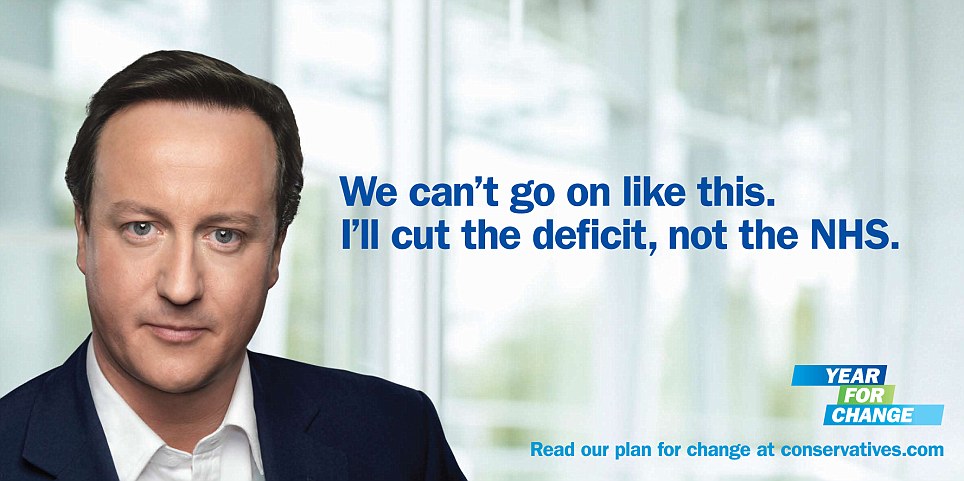
ONE of the most enduring image of last year’s General Election campaign was posters featuring David Cameron and his pledge to “cut the deficit, not the NHS”.
Many noted that his photograph had been airbrushed but it will not be so easy to paper over cracks in the Government’ health policies as this promise comes back to haunt the Prime Minister. Broken promises over the NHS are rarely forgiven by the electorate.
Despite escaping the worst of the cuts affecting the public sector, Mr Cameron was foolish – with hindsight – to guarantee real-term increases in NHS spending at a time of high inflation, as well as backing an unprecedented £20bn efficiency drive.
Now, and over coming months, this pa[i]nful reality will hit frontline services, with hospital bosses in Leeds preparing to announce details of a £55.5m programme of savings.
SOUTHPORT’S MP is at the forefront of a revolt against the Government’s wholesale reform of the NHS.
Lib Dem John Pugh has spoken out against divisive Coalition plans to impose free market-based competition in the health service
Health secretary Andrew Lansley’s Health and Social Care Bill will hand 80% of the NHS budget to consortia of GPs, who will buy services from providers in the public, private and charity sectors.
Senior Westcountry Liberal Democrats have hit out at plans to “privatise” the NHS, as health reform is poised to be a major fault-line for the coalition.
Writing in today’s Western Morning News, Adrian Sanders, Lib Dem MP for Torbay, urges the Government to “seriously reconsider” proposals.
Health Secretary Andrew Lansley wants to hand GPs £80 billion of the NHS budget, scrap existing local care trusts and increase the role of private companies in health provision. But Mr Sanders, who chairs the all-party parliamentary group for diabetes, argues that claims that “greater marketisation” will improve services is “unfounded”, and will lead to operations being cancelled.
As someone who knows firsthand how the profit motive can wreck a healthcare system – leaving millions of people without coverage and millions of others unable to pay for care even if they do have insurance – I was alarmed to learn about the reforms to the NHS that Prime Minister David Cameron is advocating.
As Channel 4’s recent investigation revealed, those reforms could very easily incentivize GPs to make decisions based on profits instead of clinical need.
To understand how devastating that could be to the people of England, all one has to do is look at the American healthcare system.
Until 2008, I was a top executive at one of America’s largest health insurance companies, CIGNA. The higher up the corporate ladder I climbed – to become head of public relations – the more I could see the often-devastating and even lethal consequences of insurers’ relentless quest for profits. I could not in good conscience continue promoting an industry whose routine practices – put in place to assure profitability – contribute to the unnecessary deaths of many of our citizens.
Addressing the NHS Innovation Expo in London, Earl Howe said that innovative ideas and services in the NHS worth £150bn should be sold abroad to drive growth in the UK economy.
Hospitals should treat more private and foreign patients, or open branches abroad to make money, he said.
Moorefields Eye Hospital already has a centre in Dubai that creates 2.4m for the NHS, he said.
The leader of Scotland’s GPs added his voice to the growing criticism of the health reforms that are being proposed in England. He raised concerns that the changes would commercialise the NHS and increase competition between GP providers.
Addressing the Annual Conference of Scottish Local Medical Committees (LMCs) in Clydebank, Dr Dean Marshall, Chairman of the BMA’s Scottish General Practitioners Committee, said:
“I want to send a message to our politicians in both England and Scotland. Our health service is not a factory, the health service cannot be treated like a commercial enterprise, our patients are not a commodity. We do not support the market based reforms being pushed through in England, where the consequences for patients could be severe indeed. Scotland’s GPs will support colleagues in England to preserve the founding principles of the NHS.”
The UK Conservative and Liberal-Democrat coalition government – the Con-Dems – intend to destroy the UK’s National Health Service. This is in direct contradiction to Prime Minister David Cameron’s election pledge “I’ll cut the defecit, not the NHS”.
Conservative election poster 2010
The Con-Dem spin machine are very fond of the phrase “doing nothing is not an option”. It’s absolute bullshit and doing nothing is not an option only to opponents of the NHS. The partially devolved governments of Scotland and Wales have decided to support and improve the NHS in its current form.
The Con-Dems also insulted opponents to NHS abolition by saying that they should “grow up”. In the same vein, the considered response is “Keep your fucking hands off our NHS you greedy, evil, lying bastards”.
The Con-Dems attack on the NHS is ideologically driven. Cameron’s thesis of the “Big Society” is nothing less than a return to the Victorian era whereby there is scant private and charitable provision combined with no public accountability. Please, sir, I want some more.
It is reckless and irresponsible to subject poor peoples’ health to the whims of market forces – the very market forces that brought about the current economic crisis.
Nick ‘Tory with a poor memory’ Clegg and the Liberal-Democrats are rightly held responsible for the demolition of the National Health Service – the population recognise that it could not be done without them. The Liberal-Democrats achieved sixth position after the BNP and an independent at the recent Barnsley Central by-election – their credibility has been decimated.
A few recent news articles concerning the UK’s Conservative and Liberal-Democrat coalition government – the ConDem’s – brutal attack on the National Health Service.
There is a noticably increase in news coverage. Let’s hope that the forthcoming party conferences pay attention.
Patients, health workers, and supporters of the NHS will march through London later today (Wednesday 9 March) to protest at job cuts and the reorganisation of medical services in England.
The protest – called ‘Day X for the NHS’ – starts at 5pm outside the Royal London Hospital, Whitechapel Road, London, E1 1BB.
Joining the march will be speech therapists from Southwark, south London, who won some concessions after striking over a threat to cut eleven jobs.
It comes two weeks after the trade union-funded False Economy website revealed 50,000 jobs are set to be axed in the NHS.
An outsourcing company that hopes to make millions of pounds from the most radical shake up of the NHS is secretly providing the government with apparently independent GPs to help ministers sell their controversial reform to patients and staff.
Internal emails obtained by SpinWatch show that the arrangement was agreed just before Andrew Lansley, the health secretary, launched his bill last month to scrap primary care trusts and hand £80bn of the NHS budget to GPs and private health companies.
Tribal, the outsourcing firm with £150m worth of government contracts, supplied a list of friendly GPs to Bill Morgan, Lansley’s special adviser. Morgan is a former lobbyist for private health companies and Tribal confirms that it was in discussions with some of the GPs on the list about future lucrative contracts.
Pro-reform GPs are a key front in the public relations offensive behind Lansley’s health and social care bill, which is currently going through parliament.
UNISON, the UK’s largest union, said today that management consultancy McKinsey’s involvement in one fifth of existing pathfinder consortia* was clear confirmation of Tory plans to drive NHS privatisation. Karen Jennings, UNISON Assistant General Secretary, said:
“UNISON has long been warning that the Tory’s titanic reorganisation would leave the door wide open for private companies to dominate our NHS – and here is the evidence.
“Just one private company – McKinsey – has already signed up one fifth of the pathfinder consortia, and we know other big companies are getting their teeth stuck into large chunks of the rest. They include management consultants and big accountancy firms like KPMG and Price Waterhouse Coopers.
“The health service is about what’s best for patients, not the bottom line. Less than two years ago McKinsey produced a much-derided report which called for more than one hundred thousand health workers to be sacked. Their vision for the NHS is clear, and was widely panned as being disastrous. This is the type of company the Tories are happy to welcome through the front door of our health service.”
Dave Prentis, general secretary of UNISON, the UK’s largest trade union, today pledged a massive fight-back against government plans to privatise parts of the NHS National Blood and Transfusion Service (NHSBT).
Speaking in London to an angry meeting of blood service workers from across the UK, Dave Prentis said:
“This is crunch time for the blood service. The government wants to open it up to private companies with DHL and Capita already in the frame. The prime motive of these companies is money and we will fight this all the way.
“The blood service is the Big Society writ large. Hundreds of thousands of donors regularly give up their blood to help save lives for free, untainted by the profit motive. If any part of the blood service was handed over to companies who are making a profit, then this turns the whole thing on its head.
The NHS is changing so fast that yesterday’s kite-flying proposal is already the new reality.
Just a week or so after Prime Minister David Cameron announced that whole tranches of existing public services would be sent out to tender, and here it is happening, at a primary care trust near you.
The pioneers of plans being piloted by NHS East of England insist providers of care pathways – likely to be GPs in partnership with private firms or possibly charities – will have to meet rigorous ‘quality’ targets. It’s hard to object to a bit of quality, and with a few outcome targets thrown in too, there’s a reassuring echo of the QOF. But this scheme, like another in Guildford also revealed over the past week, builds in another kind of contractual incentive that doesn’t seem quite so harmless. It hands providers the chance to boost profits by reducing referrals and driving down costs.
Schemes like these are supposedly about provision rather than commissioning, but either way the controversy they have generated goes right to the heart of one of the key arguments of principle on the NHS reforms – and one on which GPs are divided. Health secretary Andrew Lansley argues that GPs are the right people to hold budgets and commission services because it is they who take the clinical decisions that have the greatest impact on NHS costs. By ensuring the same people hold both the purse-strings and the stethoscopes, he believes the NHS can finally control its spiralling costs, by putting money at the core of every clinical decision.
The Liberal Democrat leadership has signalled a willingness to rethink its stance on some NHS changes – such as the extension of competition and the accountability of GP commissioning – if the party’s spring conference this weekend votes to rein in the shakeup.
Norman Lamb, parliamentary adviser to Nick Clegg, said: “We listen to the concerns and take them back to government. This is the chance for the party to have its say. We are determined they will have their say.”
Strong support has emerged for an amendment to a motion at this weekend’s conference, demanding that the NHS, rather than the private sector, should be the preferred provider in the health service. The amendment also calls for commissioning to remain a public function, “using the skills and expertise of existing NHS staff rather than subcontracting of commissioning to private companies”.
It says commissioning should be made democratically accountable, and not conducted in private by GP commissioners, as proposed in the health bill.
Opponents of government plans to introduce competition to the NHS have rallied to challenge the plans, which they say would privatise healthcare in the UK.
The well-respected British Medical Association (BMA) is lobbying hard to remove a section of the health and social care bill which would introduce new powers enforcing competition.
The bill would create a new economic regulator called Monitor, with similar powers to the Office of Fair Trading, according to the traditional model of privatising industries, such as gas, water or telecommunications.
But opponents are concerned that Monitor would have a statutory duty to promote competition, something many health experts warn could damage the NHS.
The NHS should not be run in the same way as privatised industries such as water, gas, and telecommunications, the BMA says today.
The warning comes as MPs prepare to debate the sections of the Health and Social Care Bill relating to new powers to enforce competition in the NHS in England.* Under the Bill, the new economic regulator Monitor would have the same powers the Office of Fair Trading has under the 1998 Competition Act, following the model that applies to a number of privatised industries, including gas, telecommunications, electricity and water. It would also have a statutory duty to promote competition in the NHS.
In a new briefing paper, the BMA requests amendments to the Bill removing this duty. It raises concerns that:
* Monitor will focus more on enforcing competition than on the provision of effective healthcare
* Fear of being open to legal challenge could divert healthcare providers and commissioners from their key task of ensuring high quality care
* Existing NHS services could be at risk of arbitrary closure, despite being popular with patients and delivering high quality services
HOSPITAL staff at the country’s biggest NHS trust are bracing themselves for major job cuts under plans to make savings worth more than £50m.
Hundreds of positions are likely to face the axe at Leeds Teaching Hospitals NHS Trust as health chiefs battle with a new era of austerity in the NHS.
Details of the plans will be made public later today. Talks with unions are arranged for next week but it is expected managers will agree a savings programme worth £55.5m.
The cuts come after the NHS was ordered to make unprecedented efficiencies of at least four per cent in the coming year.
The Queen Alexandra Hospital in Cosham, Hampshire, run by the Portsmouth Hospitals NHS Trust, has cut 700 jobs and ‘closed’ 100 beds. The hospital was rebuilt using private finance and opened in July 2009.
The 700 job cuts, mostly clerical and admin roles, are said to have been achieved by not replacing staff who left over the past 18 months.
The aim is to save £29m this year as the hospital strives to become a foundation trust but even with the cuts the hospital is likely to be £6m over budget.
AN AWARD-WINNING Birmingham A&E service praised for saving the health service £3 million is under threat because of NHS cutbacks.
Health workers have been told their jobs are at risk at the end of this month due to lack of cash for the RAID project at busy City Hospital, in Winson Green.
The 15 staff at RAID – Rapid Assessment Interface and Discharge service –assess patients for psychological problems in City A&E ensuring they get the correct help as mental illness, drug addiction and dementia often go undetected and untreated.
It comes months after it won the renowned Health Service Journal innovation in mental health award last year for saving City Hospital millions of pounds by avoiding unnecessary admissions to medical wards.
A study by healthcare charity the Patients Association has revealed that the number of elective procedures conducted by NHS trusts across England dropped drastically in 2010.
The study found that there were 10,757 fewer procedures carried out in 2010 than 2009, including 11% fewer tonsillectomies, 6% fewer knee replacements, 3% fewer hip replacements and 51% fewer bariatric procedures.
Patients also had to wait longer for surgical procedures; an average of eight days longer for hip and knee replacements, and six days longer for hysterectomies.
Patients Association chief executive, Katherine Murphy, said that patients were being denied access to surgical procedures in 2010 that they would have had if they had needed them in the previous year.
A UNION protest aimed at protecting the National Health Service was held in Torquay’s Union Square yesterday and gathered hundreds of signatures opposing any cuts.
Members of the health union Unison handed out leaflets and had a coffin representing the death of the NHS.
The union is concerned the speed of planned cuts may lead to them being pushed through unchallenged.
Unite’s campaign to stop the privatisation of the NHS Blood Service has received huge public support which is still growing. In under a week, the union’s petition demanding that David Cameron stops the blood money was signed by 25,000 people (see link in notes to editors).
The petition was launched last Friday (4 March) and the Twitter campaign #bloodmoney began yesterday 9 March. In just one day almost 10,000 signed up.
On 16 February the Health Service Journal learned that the Department of Health’s commercial directorate held talks with private providers about running parts of the NHS Blood and Transplant service. Capita and DHL are understood to be interested in taking over parts of the service (see link notes to editors).
The campaign has struck a chord with the general public who have been signing up at record speed for a Unite petition. The public is right to be concerned, a study conducted in New Zealand found that there was opposition to profit being made from blood, with 52 per cent of donors unlikely to continue donating if this occurred (see link in notes to editors).
All aspects of NHS care for entire diseases are to be put out to tender under radical plans to dramatically expand the role of private companies and charities in running the health service, Pulse can reveal.
A pilot set to launch across the east of England will put entire NHS care pathways out to tender, starting with musculoskeletal medicine, respiratory care and elderly care.
The plans will hand private firms, GPs or combinations of the two provider contracts for a fixed amount of money, creating an ‘incentive’ to increase profit margins by delivering cheaper care out of hospital.
The leader of the Scottish GPC has attacked NHS reforms in England as dangerous for patients, and set out an alternative strategy for Scotland’s health service.
Addressing the Scottish LMC Conference in Clydebank today, GPC chair Dr Dean Marshall said the consequences of reforms to increase competition in the NHS could be ‘severe’ for patients.
‘I want to send a message to our politicians in both England and Scotland. Our health service is not a factory, the health service cannot be treated like a commercial enterprise, our patients are not a commodity.
‘We do not support the market-based reforms being pushed through in England, where the consequences for patients could be severe indeed. Scotland’s GPs will support colleagues in England to preserve the founding principles of the NHS.’
Exceptional management will be required in the NHS over the coming years as radical reforms to the health service are implemented, a new report has claimed.
The drastic overhaul of the health service will see the commissioning responsibilities handed over to GP consortia from strategic health authorities and primary care trusts, which will be axed.
The Nuffield Trust said that the new organisations emerging from the restructure will need to focus solely on managing the transition period. It added that if they try to take on too much work in their early stages, they would most likely come up against some serious challenges.
One of the demanding targets that have been imposed on the NHS by the government is to cut back £15bn to £20bn a year in ‘efficiency savings’.
Private management consultants have been recruited by GPs seeking advice on the government’s controversial reforms set to transform the NHS.
The changes to the health service will see the responsibility of commissioning transferred to GP consortia from strategic health authorities and primary care trusts, which will then be axed. This means that GPs will be responsible for the handling of around £80bn of the NHS budget.
More than two dozen GP consortia have been working with consultancy firm McKinsey in an attempt to get a better idea of how the new arrangements will work out.
The government seems committed to charging forward with NHS reforms and not having constructive dialogue despite the warnings of the British Medical Association and other organisations, writes Dr Laurence Buckman, chairman of the BMA’s GPs committee, in the latest edition of Public Service Review: Health and Social Care
The government has recently responded to its consultation on the health white paper for England ‘Liberating the NHS’, which was published in July 2010. The British Medical Association (BMA) waited with interest to see if the government would take our concerns, and those of many other organisations, on board. Unfortunately, we saw little evidence in the government’s response that it is genuinely prepared to engage with constructive criticism of its plans for the NHS.
The BMA’s consultation response set out its belief that the white paper is good in parts, bad in parts, and lacking detail in others. We emphasised doctors’ concerns about the potential damage that could be done by the continuation of the internal market in the NHS and plans to accelerate competition. In particular, the BMA is concerned by the insistence on there being ‘any willing provider’, which will mean many different providers competing for services. While choice has been proven to drive up standards in other industries, the NHS does not operate like a normal market. Generating more work may increase income and profit in other sectors, but the more the NHS does, the more it costs the taxpayer. Having many different providers competing to run services is wasteful, bureaucratic and inefficient, and these plans are coming at a time when the NHS is expected to find billions of pounds in efficiency savings.
Doctors are also concerned about what this will mean for services. For example, could collaboration between GPs and a group of specialists at the local hospital be seen as anti-competitive and, therefore, be stopped by the new health regulator? Patients would find this hard to understand, but that is the possibility when competition is seen as more important than collaboration.
The number of NHS patients who wait months for cancer and heart disease tests has shot up in the last year, according to Department of Health (DH) figures.
The figures show that in January 2010 there were 7,080 patients waiting longer than six weeks for diagnostic tests but 12 months later there were 11,363. Also, the number of patients waiting for heart scans tripled over the year, and the numbers waiting six weeks for MRI scans went up by 175 per cent.
However, the DH said: “The NHS undertakes millions of diagnostic tests every month and patients continue to receive timely access to these tests. It is not unusual to see seasonal variations in waiting times. Given the pressure seasonal flu and other winter bugs played, it is not surprising that more people will have waited until January before their diagnostic tests.”
The shadow health secretary John Healey told the Daily Telegraph: “This is further evidence of frontline pressures emerging in the NHS, as the government forces through a wasteful reorganisation of the internal bureaucracy.”
A few recent news articles concerning the UK’s Conservative and Liberal-Democrat coalition government – the ConDem’s – brutal attack on the National Health Service.
A group campaigning against the proposed NHS reforms, and inspired by UK Uncut’s tactics, has staged its first protest.
NHS Direct Action targeted private health firm Care UK’s offices, close to Liverpool St station in London, on Monday. About 50 people took part – a mixture of student doctors, workers and former NHS staff.
Toby Simmons, a medical student at UCL, representing the campaigners, said: “Having been involved in the student movement over the last five or six months and as a medical student it seemed logical to funnel some of that energy toward challenging the health and social care bill. We’re taking UK Uncut’s idea of a simple message linked with a viable alternative.
John Healey called on the health secretary to provide reassurance to those patients who were being denied access to treatment.
During health questions in the Commons, he said Andrew Lansley was a “man in denial”, as patients failed to receive the operations they needed, with waiting times lengthened under the coalition.
He said: “You are a man in denial. What the government is doing to the NHS is making things worse not better for patients.
A huge increase in the amount of time people spend waiting for key NHS operations has left them “screaming in agony,” a charity said yesterday.
The Patients Association received 220 calls last year from people claiming that they were unable to undergo operations such as knee and hip replacements – up from 66 in 2009.
One patient claimed that putting weight on their knee had left them screaming in agony, but their GP said there was no more cash until April so the surgery couldn’t afford to perform the operation.
Thousands of Londoners face losing their GP because NHS managers are pioneering a cost-saving initiative to remove “ghost patients”.
And the measures could be forced on people across Britain.
Anyone who has not seen their doctor in the last six months and who does not respond to two letters asking them to confirm their details is being struck off automatically.
A survey of more than 60 hospital trusts has found that they carried out almost 11,000 fewer planned or ‘elective’ operations in 2010 than they did in 2009.
The trusts that replied carried out 1,227 fewer knee replacements, a drop of six per cent, and 531 fewer hip replacements.
And they carried out 2,041 fewer hernia operations, down 7.25 per cent, and 1,770 fewer tonsillectomies, a drop of 11 per cent.
Exclusive: GPs are to be pitched into competition with private firms for the right to provide entire NHS care pathways, under Government-backed plans to put huge tranches of the health service out to tender, Pulse can reveal.
A pilot set to launch across the east of England has already involved talks with a series of private companies about a dramatic expansion in their NHS role, and is seen by the Department of Health as a model for the whole country. It follows Prime Minister David Cameron’s pledge last month to end the state’s monopoly in provision of public services.
The plans will hand private firms, GPs, or combinations of the two provider contracts for a fixed amount of money, creating an ‘incentive’ to increase profit margins by delivering cheaper care out of hospital.
The NHS faces challenges in ensuring safe and stable healthcare while the Government’s reforms are implemented, according to a new report.
The “unprecedented” programme of change will require “exceptionally skilled and focused management” over the next few years, according to the Nuffield Trust.
It said new organisations emerging from the restructure, which will see primary care trusts and strategic health authorities abolished, will face challenges if they try to do more than keep things ticking over.
REBEL Liberal Democrat MP John Pugh is ready to lead a revolt against the Government’s sweeping NHS reforms – warning of “chaos and confusion” if they went ahead.
And the Southport MP predicted other Lib-Dems – and even Conservative – MPs would join the growing rebellion, adding: “MPs are waking up to the obvious problems.”
Asked if he would vote against the flagship Health and Social Care Bill – which will introduce a full-blown market into the NHS – Dr Pugh replied: “That is the likely outcome, if there are not significant amendments.”
Hundreds of staff are lobbying their MP to vote against controversial reforms they claim could lead to the break-up of the National Health Service.
Members of public service union UNISON have signed petitions warning the changes could lead to the private sector “cherry-picking” the most profitable hospital services.
They have signed petitions which will be presented to Liberal Democrat MPs David Laws and Jeremy Browne, whose Yeovil and Taunton constituencies each include a major district hospital.
Officials complained that a BBC London News report concerning NHS budgets used the word “savings” instead of “cuts”.
Labour claims the report, broadcast on BBC One after the News at Ten on Monday night, was biased in favour of the Coalition’s spending programme, an allegation strenuously denied by the corporation.
Officials are reportedly angry that cuts were described “savings” on at least half a dozen occasions during the bulletin, with an accompanying graphic also using the phrase.
A few recent news articles concerning the UK’s Conservative and Liberal-Democrat coalition government – the ConDem’s – brutal attack on the National Health Service.
The government’s deliberate dismantling of parts of the NHS risks returning healthcare provision back to the grim and unfair days of the 1930s and 40s, one of Britain’s leading doctors has warned.
The sweeping reforms are in danger of turning the service into “an increasingly tattered safety net” for those with complex illnesses such as diabetes and obesity because private healthcare firms will “cherry-pick” patients who are easy to treat, said Dr Mark Porter, the chairman of the British Medical Association’s hospital consultants committee.
Its ability to provide a comprehensive and universal service could be lost because of health secretary Andrew Lansley’s plan to force hospitals to compete with independent, profit-driven providers for patients, Porter told the Guardian.
Andrew Lansley’s NHS reforms are set to come under increased pressure as Liberal Democrat rebels begin to take a public stance against them.
Two Lib Dem rebels – who broke from their party and voted against the rise in tuition fees – have signed a Commons motion by Labour MP Tom Blenkinsop, demanding caution in the implementation of the reforms.
The motion said positive elements of the bill were “threatened” by increased competition and a lack of accountability.
A top British Medical Association (BMA) doctor’s analysis that the NHS ‘reforms’ risk returning health services to the 1930s is spot on, said Unite, the largest union in the country, yesterday.
Unite, which embraces the Medical Practitioners Union (MPU), welcomed the comments of Dr Mark Porter, the chairman of the BMA’s hospital consultants committee who said that the government wished to turn back the clock to the 1930s and 1940s, when there were private, charitable and co-operative providers.
The President of Unite/MPU, Dr Ron Singer said: ‘Dr Porter’s comments will give additional ammunition for those attending next Tuesday’s (15 March) special BMA conference to make their voices heard – that the privatisation agenda contained in the Health and Social Care Bill is pernicious, ill thought-out and unfair. His analysis is spot on.’
RCN members say there is growing evidence that pressure to save money in the NHS in England is affecting the quality and safety of care.
Speaking to the BBC Radio 4 Today programme, one health care assistant at an accident and emergency unit in north west England said staff were stressed and tired: “At the end of the day we try to do the best we can and they probably will pick up on the fact that we are short [staffed]. They are waiting longer for painkillers, waiting longer to be assessed.”
A diabetes ward nurse said shortages were putting safety at risk, because of mistakes in medication: “A lot of drugs have similar sounding names or look similar. So you have to be careful all the time. So whereas you used to take a bit of time, speak to the patient – and they usually know what they’re on anyway – but obviously because you’re rushing you haven’t got time to speak to the patient properly and find out.”
Two rebel Liberal Democrat MPs have thrown their weight behind calls to make major changes to the government’s proposed NHS reforms.
John Pugh and Andrew George have come out in support of Labour MP Tom Blenkinsop’s House of Commons motion, which claims that secretary Andrew Lansley’s plans will put the NHS at risk due to a lack of accountability and increased competition.
The coalition government will be nervously anticipating the Lib Dems spring conference this weekend where more widespread opposition to the changes from within the party could be made public after an amendment to oppose the reforms was tabled.
Campaigners have been rallying patients and politicians to lobby against the Government’s Health And Social Care Bill – which they claim will put unnecessary pressure on already overwhelmed doctors.
Under the proposals, GPs would be required to form consortiums in which they would have financial and administerial control over the services they offer – on top of their day-to-day duties.
Tottenham MP David Lammy is the latest political heavyweight to back the campaign.
Health secretary Andrew Lansley has defended his reorganisation of the NHS to doctors, saying it will cut unnecessary levels of management and cut costs in the long run.
Lansley said his programme of reforms will save the NHS around £5 billion by 2015, despite a high initial cost as the changes are put in place.
The health secretary was in a combative mood during a live webcast to British Medical Association members yesterday, and become notably irritated at several questions.
Hospital campaigners say they have discovered a “large fall” in the number of certain NHS operations performed in England last year.
The Patients Association expressed “great concern” that figures collected from a third of acute trusts showed a 5% drop in key surgical procedures and longer waiting times for some operations.
But the Department of Health said its own statistics suggested that more surgery was carried out in some areas highlighted in the survey as offering fewer operations.