A new injunction granted by the High Court and lasting almost a year could see Just Stop Oil activists face fresh penalties for demonstrating on the M25.
National Highways said it secured the civil order to “prevent unlawful protests” on the country’s busiest motorway after a series of stunts during which members of the environmental group scaled gantries and caused major traffic disruption.
The injunction, granted on Monday before Mr Justice Soole, will remain in place until just before midnight on November 15 2023 or until further order.
It means that anyone entering, remaining upon or affixing themselves to any object or to any structure on the M25 may have civil proceedings launched against them for contempt of court.
They could face imprisonment, an unlimited fine, the seizure of assets or a combination of these sanctions.
Just Stop Oil have restarted protesting in London today with protests at Shepherd’s Bush in West London and Aldwych / The Strand in central London this morning. Just Stop Oil: “Just Stop Oil is a coalition of groups working together to ensure that the government commits to ending all new licenses and consents for the exploration, development and production of fossil fuels in the UK.”
The first-ever national strikes of NHS nurses will take place on 15 and 20 December, the Royal College of Nursing (RCN) has announced.
The RCN, whose members made history by voting for direct action across England, Wales and Northern Ireland, has accused the government of “choosing strike action” by refusing to negotiate on pay.
Other health unions, meanwhile, continue to ballot their members across both England and Wales, while strike mandates have been achieved across Scotland and Northern Ireland.
Direct action will now take place in all corners of the NHS, including ambulance services. These ballot results are evidence that there has been a dramatic shift in mood among health workers over the last year.
We hear reports of the NHS in crisis, hospitals running at capacity and dangerously low staffing levels. But without working within these services, it’s impossible to truly understand what this looks like for staff, and the patients these staff are doing their best to care for.
What staff are witnessing first hand is a catastrophic breakdown of services that has left us with vacancies hitting 135,000 and patients in danger. We desperately need to focus on retention of staff: without addressing that, we have no chance of tackling the backlog of seven million patients. Sadly, neither the government or opposition ever bring retention into the conversation, because that would mean putting pay restoration on the agenda.
In a recent survey by the GMB union, one in three ambulance staff said they had been involved in a delay that had resulted in a person dying. This is a terrifying statistic, and just one of many that the government should be taking far more seriously.
Staff are not prepared to stand with their hands behind their backs while the NHS is ripped apart in front of our eyes
What we are now witnessing are increasingly extreme attacks from the right-wing press and commentators attempting to demonise us, and to guilt us into abandoning our fight for what we are owed.
However, as I commented to a colleague, nothing they can say about us will be as bad as what staff are witnessing day in, day out. Things cannot continue as they are, and staff are not prepared to stand with their hands behind their backs while the NHS is ripped apart in front of our eyes.
I have worked as an NHS nurse for 15 years. I love my job. But my pay, and that of my colleagues, has been deliberately eroded for over a decade, with some workers up to 29% worse off in real terms. What we are left with is a group of workers carrying the entire burden of keeping patients safe, while the government washes its hands of any responsibility or accountability for the state of the service within which they work.
These are the staff who find themselves skipping breaks, working overtime for free, selling back their annual leave to make ends meet, sleeping in their cars as they cannot afford fuel to and from work – and ultimately quitting, as the moral injury of delivering substandard care is not sustainable.
We should all be united in our outrage. While this is an industrial dispute about pay, the fight is about so much more. During the pandemic we witnessed the devastating impact of dramatically increased demand on an NHS that has been stripped to the bone. We cannot let this happen again.
This is why we are taking our fight to this government and standing up not only for ourselves, but for our families and communities, and for the future of the NHS. So when the time comes, and it will, please join NHS staff on the picket lines.
Without action now, there will be no NHS left to fight for.
The Paris Agreement 2015 is the latest international treaty on climate change.
Quoted from wikipedia
...
The Paris Agreement's long-term temperature goal is to keep the rise in mean global temperature to well below 2 °C (3.6 °F) above pre-industrial levels, and preferably limit the increase to 1.5 °C (2.7 °F), recognizing that this would substantially reduce the effects of climate change. Emissions should be reduced as soon as possible and reach net-zero by the middle of the 21st century.[3] To stay below 1.5 °C of global warming, emissions need to be cut by roughly 50% by 2030. This is an aggregate of each country's nationally determined contributions.
...
According to the 2020 United Nations Environment Programme (UNEP), with the current climate commitments of the Paris Agreement, global mean temperatures will likely rise by more than 3 °C by the end of the 21st century.
...
Countries determine themselves what contributions they should make to achieve the aims of the treaty. As such, these plans are called nationally determined contributions (NDCs).
...
In 2021, a study using a probabilistic model concluded that the rates of emissions reductions would have to increase by 80% beyond NDCs to likely meet the 2 °C upper target of the Paris Agreement, that the probabilities of major emitters meeting their NDCs without such an increase is very low. It estimated that with current trends the probability of staying below 2 °C of warming is 5% – and 26% if NDCs were met and continued post-2030 by all signatories.
...
The message from the above quotations is
1. The Paris Agreement is an attempt to limit climate change effects by keeping global mean (average) temperatures below 1.5C or 2C.
2. We are likely looking at global temperature rises between 2C and over 3C by the end of the century.
We are currently at 1.1 or 1.2C global mean temperature above pre-industrial levels. There are extreme climate events now never mind at 1.5, 2 or over 3C.
2022 saw record-breaking heat in UK while there were heatwaves and vast wildfires in North America, record-breaking temperatures and huge wildfires across France and Western Europe, huge drought followed by severe flooding in Pakistan, repeated flooding in Eastern Australia and currently East Africa is suffering the worst drought in decades.
We are in a climate crisis at 1.2C. The crisis is now.
The main cause of global warming is the use of fossil fuels. The best response to the climate crisis is to stop the use of fossil fuels as much as we possibly can and to transition to renewable sources of energy instead. This would also involve a programme of insulation to reduce the use of fossil fuels.
Politicians worldwide are neglecting to address the climate crisis in any meaningful way. The protest group Just Stop Oil is calling for no new development of fossil fuels. Grant Shapps, UK's Secretary of State for Business, Energy and Industrial Strategy is so totally out of touch that he's not even familiar with Just Stop Oil's objectives:“I’ve no issue with people arguing for lower levels of petrol, gas or whatever other thing they want to campaign for usage, that is fine, that is one thing. But don’t go disrupting other people’s lives - it’s unacceptable, it’s illegal!”, the Business Secretary said.
Young people particularly should get active opposing climate destruction because it's fekking their futures and otherwise they're just going to keep on getting totally disregarded, shat on. Extreme weather events at 1.2C are so serious, 3C may well lead to extinction and next to nothing is being done to prevent it.
Some links - try searching for your own e.g. extreme weather events 2022
https://en.wikipedia.org/wiki/Paris_Agreement
Met Office: Unprecedented extreme heatwave (UK), July 2022Analysis: Africa’s unreported extreme weather in 2022 and climate changeOver 20,000 died in western Europe’s summer heatwaves, figures show
16/12/22 Climate Reality Check 2021
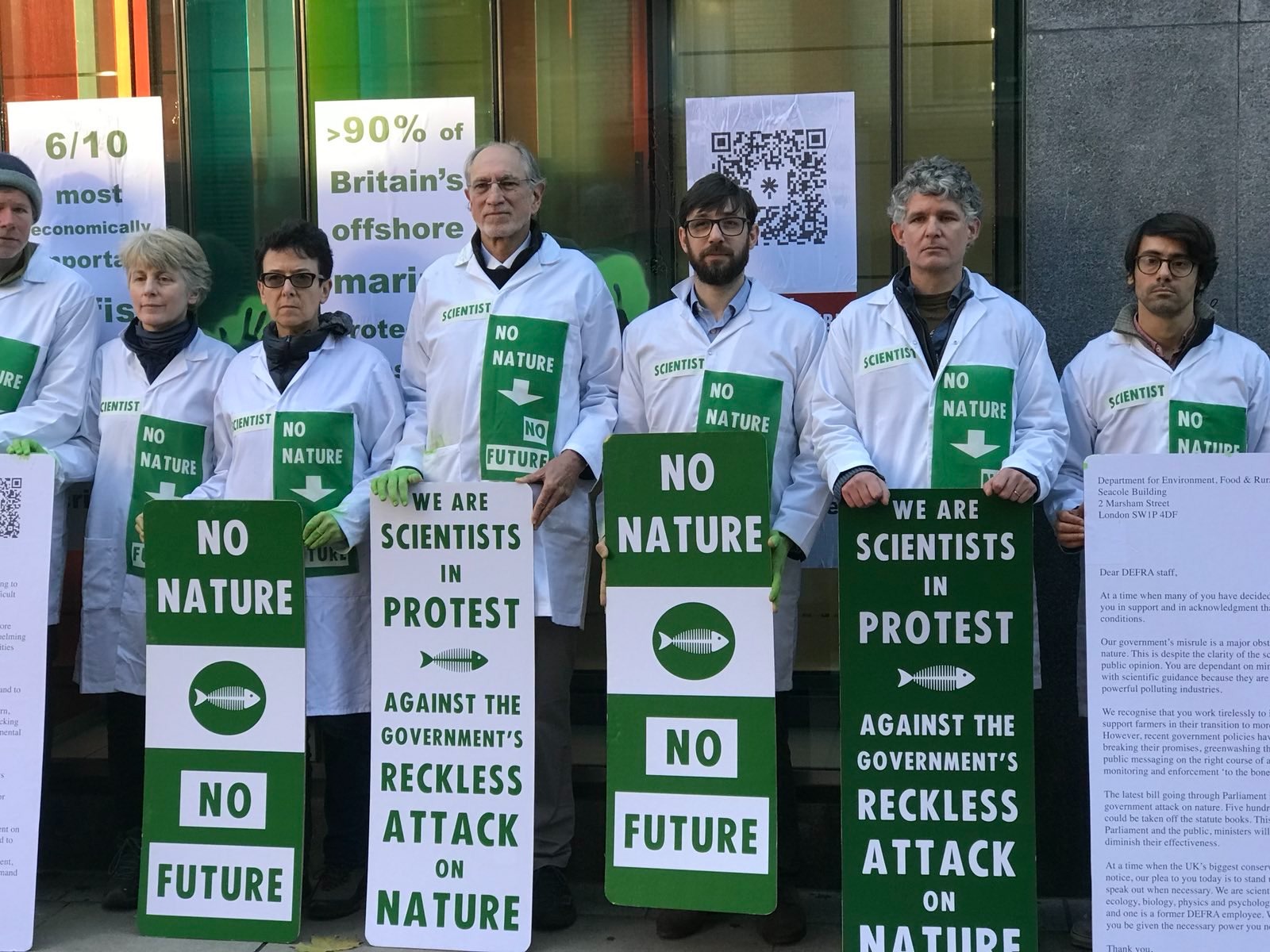
Scientists for Extinction Rebellion protest at the Department for Environment, Food & Rural Affairs (DEFRA) to highlight the state of nature in the UK and the failure of the government to protect it. The scientists who took part in the action and risked arrest included leading experts in ecology and conservation science who have previously worked for or advised Defra.
Scientists for Extinction Rebellion protest at DEFRA 25 November 2022. Image: Extinction Rebellion
The action comes just a few days before the start of a major UN biodiversity conference in Montreal, Canada where leaders will face the fact that the globe has failed to meet a single one of the Aichi goals for protecting nature agreed in 2010. This is at a time when scientists warn the world is facing unprecedented rates of biodiversity loss, with 1 million species now threatened with extinction worldwide.
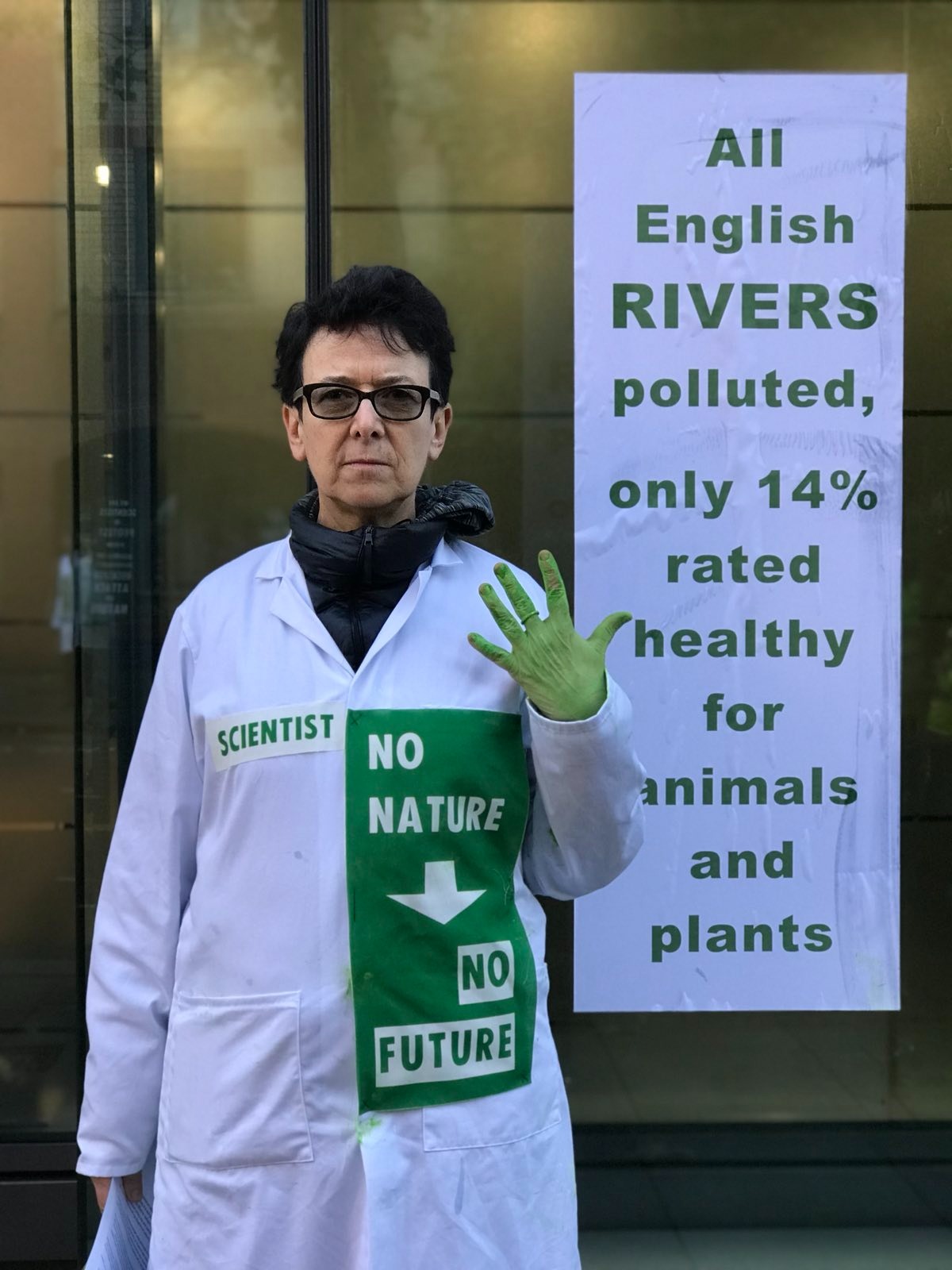
Posters highlighted scientific evidence showing the dramatic recent decline in species and precious natural habitats like peatlands, wetlands and ancient forests, failure of government to deliver on commitments and the threat posed by new government actions intended to scrap existing protection measures.
Scientists for Extinction Rebellion protest at DEFRA 25 November 2022. Image: Extinction Rebellion
Scientists for Extinction Rebellion made clear that the protest was not directed at DEFRA employees, acknowledging that they are doing a crucial job in difficult conditions. Public funding for nature protection has seen a one third cut in real terms in just the last 5 years. DEFRA employees and their scientific advisors are being prevented by government from doing their job.
Scientists for Extinction Rebellion protest at DEFRA 25 November 2022. NB: Marine-protected areas bottom-trawled. Image: Extinction Rebellion
Quotes from the scientists who took part in the action:
Professor Jeff Waage OBE, an ecologist and former member of Defra’s Science Advisory Committee, said: “Ours is one of the most nature-depleted countries in the world. The Government has made commitments to address this dire situation, based on excellent scientific advice, but it is failing profoundly to deliver on these.
“Further, it is misleading the public, claiming for instance that it is close to its target of protecting 30% of England for nature by 2030, when the true level is currently about 5%. Adding to this its recent failure to meet legal deadlines to set targets for clean water and nature recovery, it is clear to me that this Government is not taking its commitments seriously. Critical nature recovery in the UK is being actively delayed, avoided and undermined. Habitat- and species-loss looms large, and nature-loving citizens need to hear the truth. That is why I am here today.”
Dr Laura Thomas-Walters, a conservation social scientist, said: “I left my job as a senior analyst at Defra this year because I felt I had no opportunity to make real change. I worked with wonderful colleagues, smart scientists, but we were stymied by a lack of ministerial support. Civil servants are there to serve at the discretion of their ministers, and without buy-in from the Government we couldn’t work on vital issues.
“Biodiversity loss is just as big a threat as climate breakdown – we are racing at breakneck speed into an environmental catastrophe, and the ministers are the ones cutting the brakes. I left Government so I could speak up, to finally demand the change we need.“
Dr Ryan Walker, an ecologist and conservation biologist, said:“During my lifetime I have watched the decline of once numerous species such as lapwing, curlew and hedgehogs, descend to critically low numbers in this country. Tragically, our government’s response to this biodiversity crisis is a proposal that threatens 570 pieces of legislation specifically protecting nature and our natural environment. Our habitats and environmental legislation desperately needs strengthening, not disregarding as this Government is proposing. Healthy, and functioning ecosystems are essential to our food security and the clean water and air that we all depend upon.
“We are here as a coalition of scientists, to demand unequivocally that this Government takes its commitments to nature protection seriously, this is now a matter of survival, without nature there is no future”