Escape from the insufferable elections BS with a news item

Spread the love
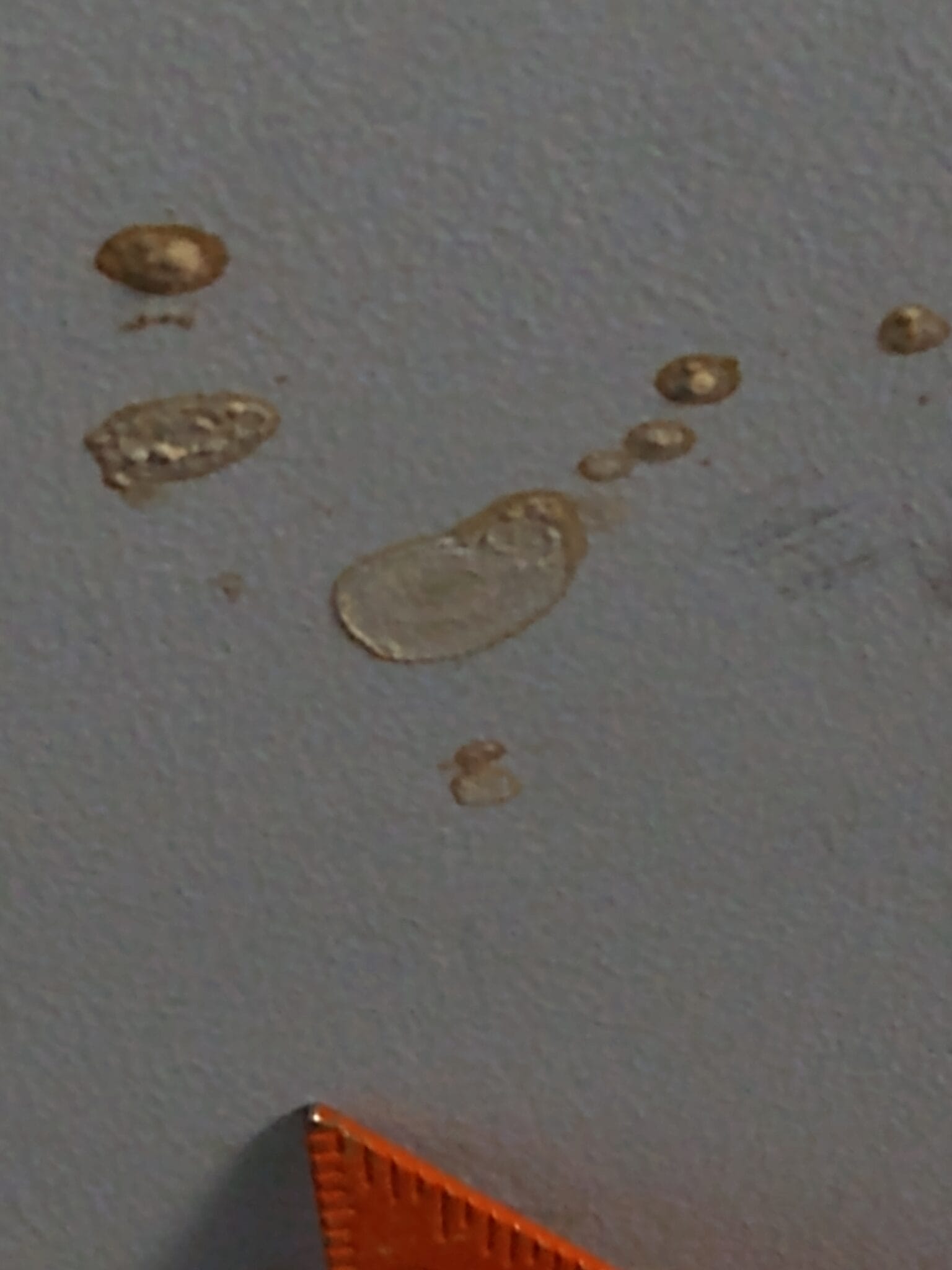
Asbestos stuck to wall

I don’t often write articles about myself and my own experiences … but FM this wall to wall election BS is insufferable. Days and days of election commentators talking BS, excluding everything else …

Asbestos was widely used as a building material in the 1970s. People recognise it as being fireproof but it was also used simply as a bulking filler. Boy-abusing paedo politician Cyril Smith had close ties with Turner and Newall Ltd, a major asbestos company and promoted it despite health dangers becoming apparent.

Since asbestos was widely used as a building material, many buildings built in the 60s and 70s era still have a lot of asbestos in them. It is not particularly dangerous unless it is disturbed – particularly using power tools like drills and sanders – and fibres are released into the air. It is accepted practice to isolate and encapsulate discovered asbestos to prevent it from being disturbed.

My social housing flat – let’s call my provider BCC – was built in the 70s when asbestos use was widespread. Many of the floors were originally tiled using tiles containing asbestos on bitumen oil-based adhesive containing asbestos. The tiles were removed previous to me moving in and the bitumen adhesive was notionally isolated and encapsulated in a self-levelling ‘latex’ flooring to make it safe. Except that it wasn’t.

My social-housing provider BCC signed my flat off as fit for habitation before I moved in and actually before any work was done to make if fit for habitation. There was bare bitumen exposed where the flooring hadn’t been done. After that was resolved I tried painting the floors using a roller and the floor was so thin that it came away attached to the roller.

My social-housing provider BCC agreed to redo the floor in my lounge after this nonsense. It was done by a company – let’s call them FF. FF redid the flooring in my lounge on a Thursday but the following day it was cracked throughout. The guy redid it on the Friday but it was poorly finished because he was doing 2 floors at different locations and rushing between them and needed to finish to get home and go to the pub.

So the ‘latex’ concrete flooring isolating the oil-based bitumen adhesive containing asbestos is a rushed job so that it is uneven with high and low points and the door doesn’t open or close properly. The floor is left as bare concrete because that’s what the regulations allow. Installing vinyl tile flooring would involve a big premium because the floor is so poorly finished i.e the floor would have to be repaired or replaced.

So somehow my floor – I have no idea how – got wet. So I’ve got a cat that could have vomited on it or I had a friend who would visit who suffered from ADHD. I suppose that he could have spilled a drink and neglected cleaning it up, it’s the sort of thing he could do. So just living in my flat really. I didn’t notice because there was a sofa close to the wall hiding it.

The water gets into the bitumen and reacts violently damaging the floor. I complain to my social-housing provider BCC that my floor is not sealed adequately, that they are not managing and maintaining asbestos properly. BCC deny everything, says they and everything they do is perfect and actually tell me that this asbestos is “deemed safe”. As part of the complaints process I tell them that it is not a council surveyor’s place to “deem” asbestos to be “safe”.

So this complaint is now with the Housing Ombudsman after a year’s wait … The Housing Ombudsman notionally decides on complaints while what they really do is excuse social housing providers’ neglect. The “safe asbestos” shit will be coming from them – they serve as a ‘regulator’ providing examples to crap social-housing providers about what is acceptable. If it is excused by the Housing Ombudsman councils know the shit they can get away with.

Asbestos stuck to wall

So I have brown bitumen splashes on my wall at a height of a foot and more which have now dried exposing globs of white, fibrous material stuck to my wall. The social-housing provider BCC claims to have done nothing wrong and that the floor is perfect. The Housing Ombudsman will now decide in BCC’s favour and tell me that I’m wrong. The problem is of course, if BCC has acted so perfectly how is there asbestos stuck to my wall?

Continue ReadingEscape from the insufferable elections BS with a news item

Doctor Who 60: show has always tapped into political issues – but never more so than in the 1970s

Spread the love

Jamie Medhurst, Aberystwyth University

Doctor Who hit television screens at a key period in British television history. It launched on Saturday November 23, 1963, at 5.15pm, being somewhat overshadowed by the assassination of US president John F. Kennedy the previous day.

Set firmly within the BBC’s public service broadcasting ethos of informing, educating and entertaining, Doctor Who quickly became a mainstay of Saturday-evening viewing. By 1965, it was drawing in around 10 million viewers.

Throughout its history, Doctor Who has tapped into political, social and moral issues of the day – sometimes explicitly, other times more subtly. During the 1970s, when the Doctor was played by Jon Pertwee and Tom Baker, there were a number of examples of this.

Doctor Who in the 1970s

The 1970s were a period of political and social divisions: relationships between the government the unions in the first part of the decade was strained, exemplified by the miners’ strikes of 1972 and 1974. The political consensus that had dominated since 1945 was under pressure with talk of a break-up of the UK in the form of Welsh and Scottish Assemblies.

In his cultural history of Doctor Who, Inside the Tardis, television historian James Chapman argued that the 1970s painted “an uncomfortably sinister projection of the sort of society that Britain might come”.

It was never clear if Doctor Who storylines during this time were set in the present or at some point in the future. The fact that one of the lead characters, Brigadier Lethbridge-Stewart of the United Nations Intelligence Task Force (UNIT), calls the prime minister “Madam” in a telephone conversation in one episode suggests the latter.

The opening credits for Doctor Who in the 1970s, with Jon Pertwee as Doctor.

As for some of the more politically engaged stories, The Green Death (1973), or “the one with the giant maggots” as it is known by fans, certainly pulled no punches. Described by Chapman as an “eco disaster narrative”, it pitted corporate greed and capitalism against environmental activists (portrayed here as Welsh hippies) and their concerns for the planet.

In the episode, Global Chemicals, run by a faceless machine, is tipping waste from its petrochemical plant into a disused mine in the south Wales valleys (cue awful Welsh stereotypes). The green sludge not only kills people, but creates mutant maggots which also attack. As fears grew and the green movement gained momentum in the early 1970s, this story would have resonated with large parts of the audience.

When the Doctor visits the planet Peladon in The Curse of Peladon (1972), the planet is attempting to join the Galactic Federation. There are those on the planet who argue for joining, while opponents are just as vociferous, arguing that joining the Federation would destroy the old ways of the planet.

Sound familiar? This is the time that Britain was negotiating to join the European Economic Community, as it did in 1973. Interestingly, the serial was broadcast during the time of the 1972 miners’ strike (leading to many viewers missing later episodes due to power cuts).

The follow-up story, The Monster of Peladon (1974), is set against a backdrop of industrial strife and conflict involving miners.

Tom Baker’s Doctor

In what many consider to be one of the best classic serials, Genesis of the Daleks (1975) Tom Baker’s doctor continued the tradition of raising complex political, social and moral issues.

Jon Pertwee’s Doctor regenerates to become Tom Baker’s.

Sent back in time by the Time Lords to change the course of history, the Doctor at one point has an opportunity to destroy the mutations which form the “body” of the Dalek (inside their metal casing) and destroy the Dalek race forever. Holding two wires close to each other, about to create an explosion in the incubation room, he asks himself and his companions: “Have I that right?”

Having the ability to see the future, he says that future planets will become allies in fighting the evil of the Daleks. Had he the right to change the course of history? Given the symbolism used in the story (salutes, black outfits, references to a “pure” race) this was a clear reference to the rise of the Nazis.

The political allegories didn’t end in the 1970s. One of the most blatant can be seen in the 1988 serial, The Happiness Patrol. The main antagonist, Helen A (played by Sheila Hancock), a ruthless and tyrannical leader is said to be modelled on Conservative prime minister, Margaret Thatcher. The fact that Hancock appears to be impersonating Thatcher lends a certain degree of credence to this belief.

Anybody who argues that the revival of Doctor Who in 2005 saw a more political edge to the storylines need only look back over 60 years. Now that we can do this thanks to the BBC uploading more than 800 episodes onto iPlayer, it will become clear to all.

Doctor Who – especially during its Golden Age in the 1970s – has always been political.


Looking for something good? Cut through the noise with a carefully curated selection of the latest releases, live events and exhibitions, straight to your inbox every fortnight, on Fridays. Sign up here.The Conversation


Jamie Medhurst, Professor of Film and Media, Aberystwyth University

This article is republished from The Conversation under a Creative Commons license. Read the original article.

Continue ReadingDoctor Who 60: show has always tapped into political issues – but never more so than in the 1970s