Pathways Carbon Capture Project Is Not Viable, Expert Warns

Spread the love

Original article by Taylor Noakes republished from De Smog.
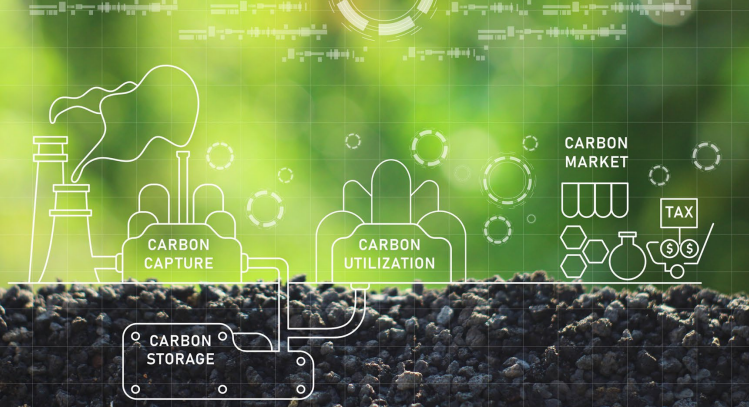
‘Public funding of CCS is a costly gamble,’ said IEEFA energy finance analyst Mark Kalegha. Credit: IEEFA

New report says CCS proposal is a subsidy-dependent ‘financial risk’ with ‘limited revenue potential.’

Pathways Alliance’s flagship carbon capture and storage project is not financially feasible without massive and consistent subsidies.

This is according to the most recent analysis of the venture, conducted by the Institute for Energy Economics and Financial Analysis (IEEFA), which identified multiple financial challenges.

The Pathways Alliance, a lobby group representing Canada’s six largest tar sands oil producers, proposed a massive carbon capture and storage (CCS) hub based near Cold Lake, Alberta, in 2022. The build-out includes a 400-kilometer pipeline network connecting the CCS hub with 13 tar sands facilities. The group’s members are responsible for approximately 95 percent of the tar sands’ annual output.

“The growing realization that carbon capture and storage projects are likely to require permanent government subsidies resets the discussion about the viability of CCS as a tool to effectively reduce carbon emissions,” Mark Kalegha, the IEEFA’s energy finance analyst for Canada and author of the report, said in a statement. 

“Public funding of CCS is a costly gamble that may not yield tangible returns on Canada’s journey towards achieving net-zero emissions,” Kalegha stated. 

“This is a financial risk the government should reconsider taking on.”

Among the study’s key findings, the IEEFA determined that the total costs — such as interest, insurance, depreciation, and taxes — for existing commercial-scale carbon capture plants in Alberta are approaching thresholds that threaten profitability. In addition, operating costs are increasing at roughly twice the rate of the amount of carbon dioxide that’s captured. 

Critics argue that Pathways will actually use the project for enhanced oil recovery (EOR), which is what carbon capture technology was initially developed to do in the 1970s. Companies have used other notable CCS projects explicitly in this way. In fact, Pathways Alliance has publicly stated on several occasions that it hopes its decarbonization efforts could result in increased oil production. Critics argue the oil industry proposes using carbon capture for EOR as a means to prolong fossil fuel production while appearing to work towards emissions reduction. Canadian federal and provincial governments have enthusiastically supported carbon capture initiatives by the oil and gas sector, despite the concerns and objections of environmentalists. 

But Kalegha is not convinced the Pathways project would be used for EOR. Instead, he believes the alliance’s business case is based on the use of Emission Performance Credit (EPCs) under Alberta’s TIER (Technology Innovation and Emissions Reduction) carbon pricing system. That said, the IEEFA isn’t certain the necessary operating revenue will manifest.

“An effective cap on emission performance credit (EPC) pricing of $170 (CAD) per tonne limits project revenue potential, while a looming oversupply of carbon EPCs is an example of risks to project cash flows,” the IEEFA report states. 

The report further notes that the option to combine Clean Fuel Regulation credits with EPCs is available to the ACTL (Alberta Carbon Trunk Line—one of the two operational carbon capture projects the IEEFA study investigated), but that this significant financial benefit is not currently available to the Pathways project.

The report warns that “without substantial efficiency improvements, the cost per tonne of CO2 captured is likely to exceed the revenue that the project can generate for each tonne captured.”

Kalegha noted that there is no guarantee carbon credits will trade for $170 and their value could face a limitless fall. “There is a severe oversupply risk, and over time, operating costs will likely increase while potential revenue will be stagnant,” he said.

The report indicates that an underperforming and unprofitable carbon capture project would invariably “struggle to bring lasting positive economic benefits to host communities and become dependent on external financial subsidies to maintain operations.”

Even under optimal conditions, “the Pathways project may struggle to break even,” the IEEFA noted. It further stated that real-world carbon capture operations are rarely optimal, echoing analysis by the International Institute for Sustainable Development (IISD), which also concluded carbon capture’s costs are persistently high in Canada, and unlikely to come down. 

Though details about Pathways’ project are scant — which the IEEFA noted in its report — the institute determined that Pathways could have an estimated annual carbon dioxide storage capacity of 10 to 12 million tonnes. If completed, it would be among the largest carbon capture facilities in the world.

Safety Risks

Whether storing such a large amount of CO2 is safe is a vitally important but unanswered question. The release of an estimated 100,000 to 300,000 tons of CO2 at Lake Nyos, Cameroon, in 1986 killed about 1,700 people and 3,500 livestock animals. The rupture of a CO2 pipeline near Satartia, Mississippi, in 2020, resulted in dozens of hospitalizations, the town’s evacuation, and a chaotic emergency response that underlined the public’s unfamiliarity with large-scale carbon dioxide poisoning.

A May 2024 article in The Narwhal revealed that Pathways Alliance made it clear to the federal government that it fully expects to depend on federal government subsidies in the tens of billions of dollars

In a letter to several federal ministers — including then-Finance Minister Chrystia Freeland and Environment Minister Steven Guilbeault — Pathways requested the government cover 50 percent of its estimated operating costs. The same letter also asked if the project would be eligible to generate Clean Fuel Regulation (CFR) for bitumen and crude oil exported using carbon capture technology. Pathways also demanded the federal government forgo an environmental impact assessment. At the provincial level, Pathways broke its project into 126 parts to avoid triggering an automatic environmental assessment.

Despite the growing body of evidence against the plan, it nonetheless maintains considerable political support in Canada. In October 2024, the Globe and Mail reported that the Canada Growth Fund (CGF) proposed funding support for the project. The CGF is a public fund of $15 billion (CAD) that supports implementing new technologies to reduce emissions, managed by the Public Sector Pension Investment Board.

“The Pathways Alliance has been in negotiations with the CGF for over a year, and wants the CGF to provide carbon contracts to mitigate financial risks and guarantee revenues,” Julia Levin, associate director of national climate with Environmental Defence, wrote in a statement to DeSmog. Levin noted that those negotiations ramped up last fall, and a decision is expected soon.

Despite Pathways’ request to abandon the environmental impact assessment, Levin also noted that the federal government is reviewing the project.

“In late November, following the Government of Alberta’s denial to conduct an impact assessment of the project, eight First Nations submitted a request that the federal government exercise its discretion to designate the Pathways Project for a federal impact assessment, given their concerns about the project impacts and the lack of a robust regulatory framework,” said Levin. “Minister Guilbeault has until the beginning of March to decide whether or not to designate the project.”

Little evidence exists showing carbon capture is effective at reducing emissions among Canada’s few extant commercial CCS projects and CCS projects worldwide.
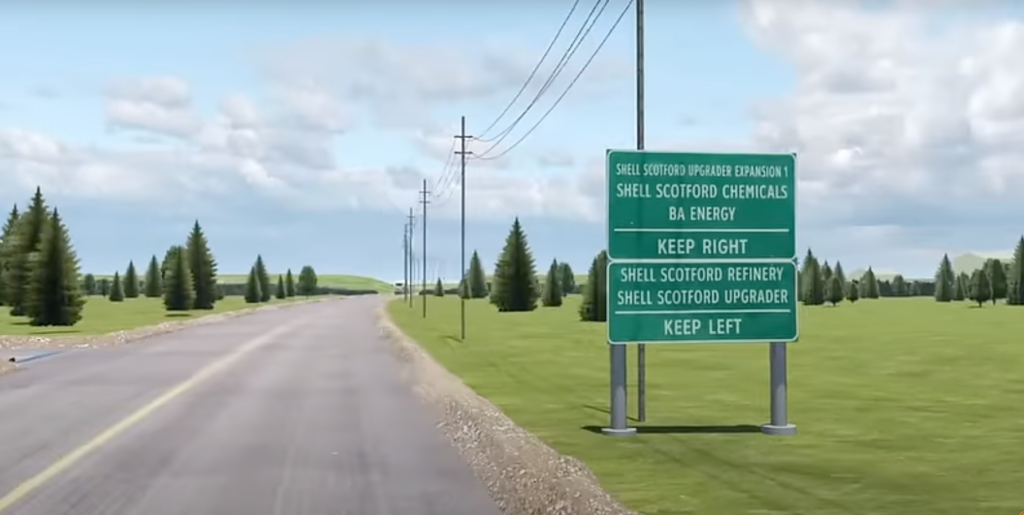
Video rendering of Shell’s Quest carbon capture project. Credit: Shell / YouTube

“Neither Quest nor the Alberta Carbon Trunk Line (ACTL) have managed to keep up with projected capture rates,” said Kalegha during a recent IEEFA webinar, referring to Shell’s massive Quest CCS facility in Alberta. “Boundary Dam is struggling as well,” he added, referring to the Saskatchewan coal plant that received a $1 billion retrofit to capture carbon. The IEEFA estimates that the Boundary Dam CCS effort has never exceeded a 60 percent capture rate, despite claims by CCS advocates that it captures carbon at a rate exceeding 90 percent.  

“There’s a global trend of underperformance when it comes to carbon capture,” he noted.  

Kalegha’s analysis also points to considerable risk factors. He said that operating costs at ACTL and Quest appear to have doubled, while capture rates at both facilities have remained relatively flat. In addition, Pathways Alliance’s project will have to grapple with the combined performance of 13 separate carbon capture facilities.

While the oil and gas industry claims carbon capture technology is improving, Kalegha doesn’t see any data to support this.

“Current CCS projects in Canada are heavily subsidized by the public, anywhere between 50 to 85 percent,” he said during an IEEA online seminar. “This is a very expensive, subsidy-dependent technology experiencing severe technological challenges. The question is who should bear this risk?” 

Julia Levin is doubtful the Pathways Alliance partners are sincerely interested in committing any of their own funds to the project. She noted in a statement to DeSmog that Canadian Natural Resources Limited (CNRL) only committed $90 million to carbon capture in its 2025 budget, compared with $45 million to move offices.

“CNRL’s 2025 budget reveals that the Pathways Alliance has no plans to invest their own funds into carbon capture and storage, instead insisting the public cover over $12 billion of their costs,”  Levin noted. 

“Ninety-million dollars is an insignificant amount of money, compared with the cost of carbon capture projects, as well as CNRL’s operating budget and yearly profits,” she added 

“If these companies seriously believed in carbon capture as a waste management solution for their operations and were intent on moving these projects forward, they would be willing to invest more of their own funds,” Levin pointed out. “Instead they’re using the promise of capturing emissions one day as a rationale to delay the energy transition and weaken climate policy.” 

Original article by Taylor Noakes republished from De Smog.

Continue ReadingPathways Carbon Capture Project Is Not Viable, Expert Warns

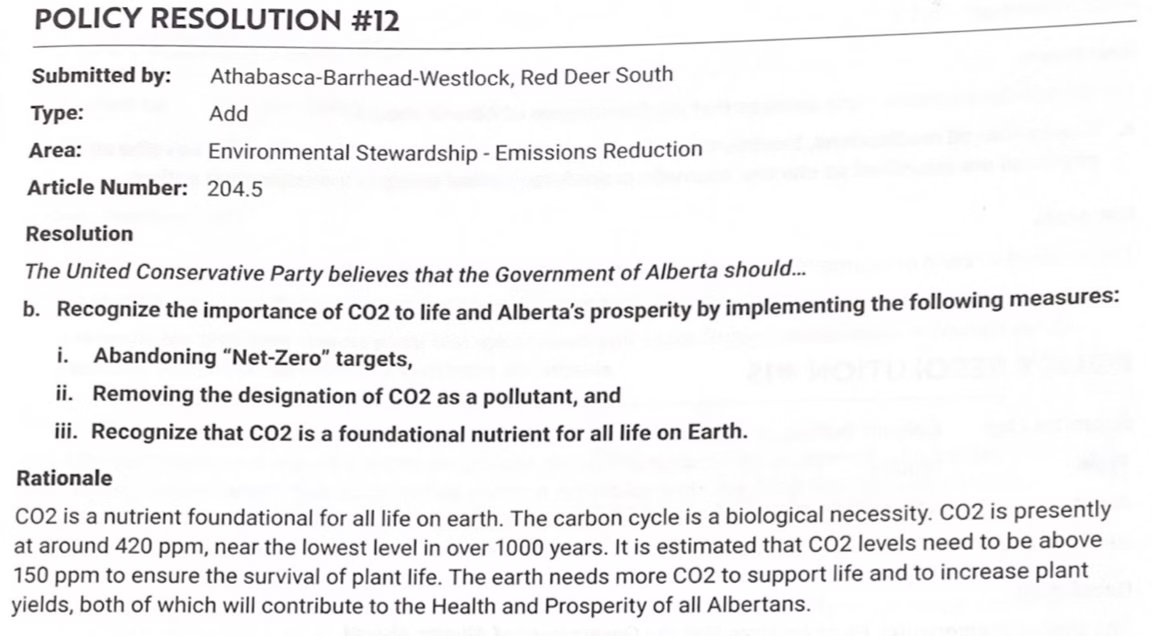
Alberta Conservatives Pass Climate Denial Resolution 12 to Celebrate CO2 Pollution

Spread the love

Original article by Danielle Paradis and Taylor Noakes republished from DeSmog

UCP members voted in favor of a resolution to “recognize the importance of CO2 to life and Alberta’s prosperity.” Credit: Danielle Paradis

Alberta’s United Conservative Party has passed a resolution to rebrand carbon dioxide — the chief gas whose overabundance in Earth’s atmosphere is causing the climate emergency — in a brazen display of climate science denial that harkens back to the 1990s fossil fuel industry playbook.

Resolution 12, which falls under the “environmental stewardship and emissions reduction” area of the policy discussion, will “recognize the importance of CO2 to life and Alberta’s prosperity.” 

In approving the resolution, the UCP resolved to abandon the province’s net zero targets, remove the designation of CO2 as a pollutant, and further “recognize that CO2 is a foundational nutrient for all life on Earth.”

“We must prioritize policies that protect our economy and our way of life. CO2 is an essential nutrient for mass, driving growth and boosting plant production. According to the CO2 Coalition, higher CO2 levels have led to healthier crops and improved food security worldwide,” said a UCP member speaking in favour of the policy who cited the notorious CO2 Coalition

The resolution passed by a wide majority. 

UCP members vote in favor of Resolution 12. Credit: Danielle Paradis

A member who spoke against the bill, saying that just like like someone can drink too much water and experience water poisoning, too much CO2 can be bad. He was booed by the crowd. 

The policy discussion took place in Red Deer, Alberta, where 6,085 UCP members and observers debated 33 policy resolutions at their annual general meeting. Earlier in the day, Alberta Premier Danielle Smith pledged to “triple down” on conservative priorities, including further expanding oil production and attacking Canadian climate policies.

As several outlets have reported previously, Resolution 12 flies in the face of the scientific consensus on climate change, and the party’s rationale for the resolution states a widely debunked claim that “the Earth needs more CO2 to support life and to increase plant yields.”

Carbon dioxide is the gas principally responsible for exacerbating the greenhouse effect, the consequence of which is global warming. Whereas carbon is a foundational building block of life on Earth, carbon dioxide is an asphyxiating gas whose atmospheric proportions are so high they’re disrupting the normal function of the carbon cycle. 

The resolution was submitted by the members of the legislative assembly (MLA) representing the provincial ridings of Athabasca-Barrhead-Westlock (Glenn van Dijken), and Red Deer-South (Jason Stephan). 

The argument that carbon dioxide is a “gas of life” has been a common yet easily refutable talking point popularized by climate change deniers and other right-wing extremists. One such group, the anti-wind energy group Wind Concerns, referred to carbon dioxide as a “gas of life” in an interview with DeSmog last year. Their leader, Mark Mallett, took credit for contributing to the anti-renewable energy moratorium instituted by Alberta UCP Premier Danielle Smith.

Climate scientists have long confirmed that increased CO2 in the atmosphere does not, as climate change deniers insist, create better growing conditions for plants.

The argument that carbon dioxide is beneficial for the environment appears to have first been made by the Greening Earth Society (GES) in the mid-late 1990s. GES was a creation of the Western Fuels Association, and it was later determined the two groups were one and the same. GES published the World Climate Report, a non-academic and non-peer-reviewed journal that served as a platform for climate change denial. They were transparent in acknowledging their funding from fossil fuel companies, and appear to have originated several talking points now common amongst climate change deniers, including those that advocate for increased atmospheric carbon dioxide, which would result in faster plant growth and greater agricultural yields.

In the “rationale” section of the resolution, the United Conservative Party document argues that “CO2 is a nutrient foundational to all life on Earth.”

While plants need both light and carbon dioxide to thrive, the over-supply of CO2 in recent decades is leading to plants being deprived of their nutrients. One biologist was quoted in a 2017 Politico article describing this as akin to “the greatest injection of carbohydrates into the biosphere in human history,” and that injection is diluting the nutrients in the food supply.

While the resolution notes that the “carbon cycle is a biological necessity,” it doesn’t appear the resolution’s sponsors are aware that increasing carbon dioxide in the atmosphere throws the carbon cycle off balance. This is precisely what’s causing the climate emergency: too much carbon dioxide in the atmosphere combined with the destruction of natural carbon storage is destroying the carbon cycle as we know it. The proposed resolution is as contradictory as it is scientifically illiterate.

The resolution also states that current CO2 levels are around 420 PPM, which is described as being “near the lowest level in over 1000 years.” Where this idea comes from is not clear, but it is not supported by verifiable scientific evidence. To the contrary, CO2 levels were 34 percent lower than today in the year 1024, at about 280 PPM. CO2 levels have climbed steadily since the beginning of the Industrial Revolution, though they have grown most aggressively since 1950. NASA estimates that, despite wide fluctuations over time, CO2 levels had not exceeded 300 PPM over the last 800,000 years, but have stayed above that level since 1950.

The argument that more CO2 will support life, increase yields, and “contribute to the health and prosperity of all Albertans” — as stated in the resolution — is not supported by scientific evidence. The opposite is a far likelier outcome. As the principal driver of the climate crisis and global warming, increasing CO2 levels will exacerbate droughtswildfires, and floods, among other disasters, in turn resulting in loss of life and major disruptions to global supply chains. The consequent economic disturbances and their aftereffects will worsen the affordability crisis and result in increasingly negative economic outcomes for all, not just Albertans. Rather than stimulate Alberta’s agricultural sector, climate change will destroy it, and the evidence this is already happening is quite clear.

Another policy resolution is focused on the provincial government’s “scrap the cap” program. The policy builds on a previous resolution to repeal the carbon tax and instead: “Prohibit any consumer carbon tax or carbon pricing scheme or carbon cap and trade system from being implemented in Alberta.” 

The resolution also proposes to support “any federal or interprovincial government’s efforts to “axe the tax” (the federal conservative campaign) by eliminating the federal carbon pricing backstop from being imposed on Albertans and Canadians.” 

Other resolutions over the weekend have focused on print-based identification, and a requirement for in-person voting “to deal with all the voter fraud.”

Original article by Danielle Paradis and Taylor Noakes republished from DeSmog

Continue ReadingAlberta Conservatives Pass Climate Denial Resolution 12 to Celebrate CO2 Pollution

Canada May Soon Give a $15.3B ‘Carbon Bomb’ Subsidy to Big Oil, Experts Say

Spread the love

Original article by Geoff Dembicki republished from DeSmog

Business leader says government tax credit for oil and gas ‘extends the life of Canada’s largest industrial sector.’

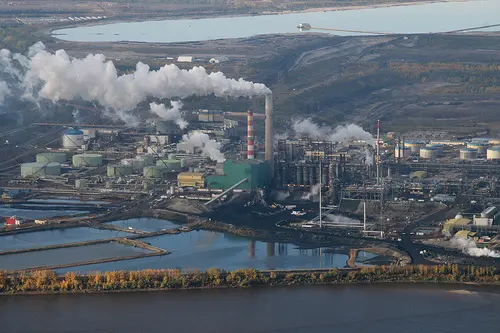
The government of Alberta, home to the tar sands pictured here, has announced taxpayer funding in the range of $3.5 billion to $5.3 billion for CCS projects. Credit: (CC BY-NC-ND 2.0)

As world leaders meet in Dubai for the COP28 climate negotiations, federal and provincial governments in Canada are preparing to give an estimated $15.3 billion in new subsidies to oil and gas companies, and other heavy emitters, for expanding the production of fossil fuels, according to climate experts. 

Those subsidies are taking the form of massive new tax credits for carbon capture and storage (CCS), which is a technology that companies use to grow their extraction of oil and gas while burying a fraction of their greenhouse gas emissions underground. 

“I completely agree that Canada’s tax credit for carbon capture and storage is a subsidy to the oil and gas industry,” Jason MacLean, an adjunct professor who studies climate policy at the University of Saskatchewan, told DeSmog in an email. 

The federal Canadian government is close to announcing details on a tax credit that will go to top oil and gas companies like Suncor, Cenovus, and Imperial Oil, along with other major industrial polluters. Policymakers previously estimated the value of these investment tax credits to be $10 billion. The government of Alberta, home to the tar sands, has meanwhile announced taxpayer funding in the range of $3.5 billion to $5.3 billion for CCS projects.

The Pathways Alliance, an industry lobbying and marketing group representing 95 percent of tar sands production, says these tax credits are essential for oil and gas producers to lower their emissions in line with achieving “net-zero emissions” by 2050. Reaching “net-zero” entails stabilizing global temperature rise at 1.5 degrees Celsius, a level beyond which scientists warn the impacts to humankind could be catastrophic. 

Yet, in submissions to the federal government, the Pathways Alliance explained that lowering a portion of oil sands emissions via carbon capture will create opportunities for the industry to expand globally — even as other countries move away from fossil fuels. “We believe Canada should seek to increase its market share for responsibly produced, lower emissions energy, even if global market demand, as a whole, begins to decline,” the group said in one submission. 

“We need to keep in mind that this is about reducing emissions and not reducing production,” the organization said last year in a separate submission, as revealed by DeSmog. 

Representatives of the Pathways Alliance are among the 35 people with ties to the fossil fuel sector who are part of Canada’s official delegation to COP28 this year. At the climate talks, they are pushing for policies supporting global deployment of carbon capture, which will allow companies to keep producing oil as countries get stricter about regulating emissions.   

“It is really important for the energy industry in Canada because it extends the life of Canada’s largest industrial sector and maintains our competitiveness over the long term,” Scott Crockatt of the Business Council of Alberta told the Calgary Herald last month.

However, tax credits supporting carbon capture risk accelerating already dangerous levels of global temperature rise, MacLean argues. Even if the technology can fully capture emissions from the production of oil and gas in Canada — which is an expensive and uncertain proposition — the vast majority of climate impacts occur when fossil fuels are burned in places like car and truck engines and house furnaces. 

“No possible innovation or improvement to [carbon capture technology] can change the fact that it applies only to the direct and upstream greenhouse gas emissions arising from the production of oil and gas, not the downstream emissions resulting from the combustion of oil and gas, which represent approximately 85 percent of the total emissions,” MacLean told DeSmog.  

Allowing oil and gas to expand while relying on carbon capture could result in the release of 86 billion additional tonnes of greenhouse gas emissions worldwide between 2020 and 2050, according to a new analysis from the organization Climate Analytics. This “86 billion tonne carbon bomb” could derail efforts to keep global warming from exceeding dangerous thresholds, the group argues. 

The Canadian government earlier this year unveiled detailed plans to remove “inefficient” oil and gas subsidies, with Environment and Climate Minister Steven Guilbeault saying at the time that “the simple reality is that it’s no longer free to pollute in Canada.” 

But climate campaigners say that promise risks being completely undermined by the new carbon capture tax credits. 

Original article by Geoff Dembicki republished from DeSmog

Continue ReadingCanada May Soon Give a $15.3B ‘Carbon Bomb’ Subsidy to Big Oil, Experts Say