Lula Blasts ‘Unjustifiable’ Israeli Detention of Gaza Flotilla Pair Amid More Reports of Torture

Spread the love

Article by Brett Wilkins republished from Common Dreams under Creative Commons (CC BY-NC-ND 3.0).
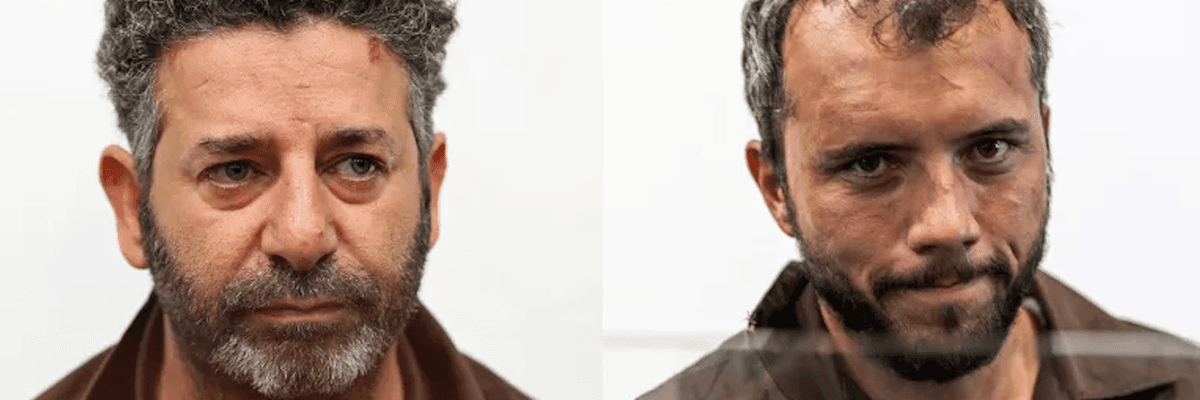
Global Sumud Flotilla members Saif Abu Keshek (left) and Thiago Ávila (right) are seen during a May 5, 2026 court appearance in Ashkelon, Israel.(Photo by Ilia Yefimovich/AFP via Getty Images)

Brazil’s president called Israel’s continued detention of Brazilian Thiago Ávila and Spanish-Swedish national Saif Abu Keshek “a serious affront to international law.”

Brazilian President Luiz Inácio Lula da Silva on Tuesday condemned Israel’s twice-extended detention of two Global Sumud Flotilla members abducted last week off the coast of Greece while attempting to break the decadeslong Israeli blockade of Gaza and deliver humanitarian aid to its people amid an ongoing genocide.

“Maintaining the imprisonment of Brazilian citizen Thiago Ávila, a member of the Global Sumud Flotilla, is an unjustifiable action by the Israeli government, causes great concern, and must be condemned by all,” Lula said on X.

RECOMMENDED…
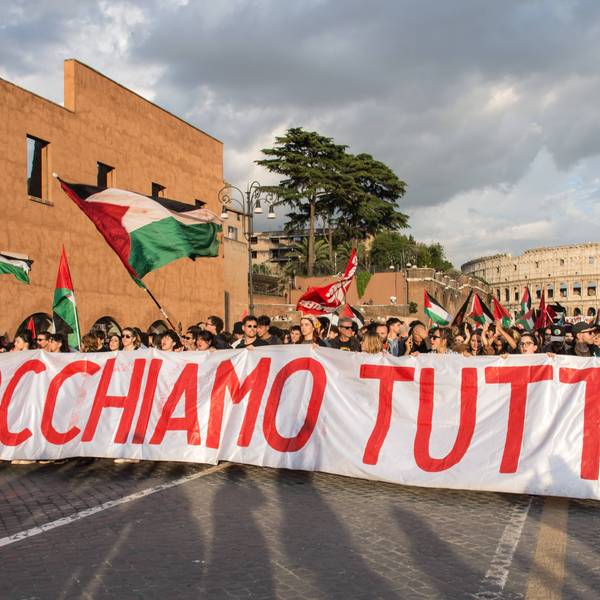
Protesters in Rome hold a banner reading "block everything" as they march near the Colisseum

Varoufakis Decries Western Complicity as Gaza Flotilla Leaders Abducted by Israel
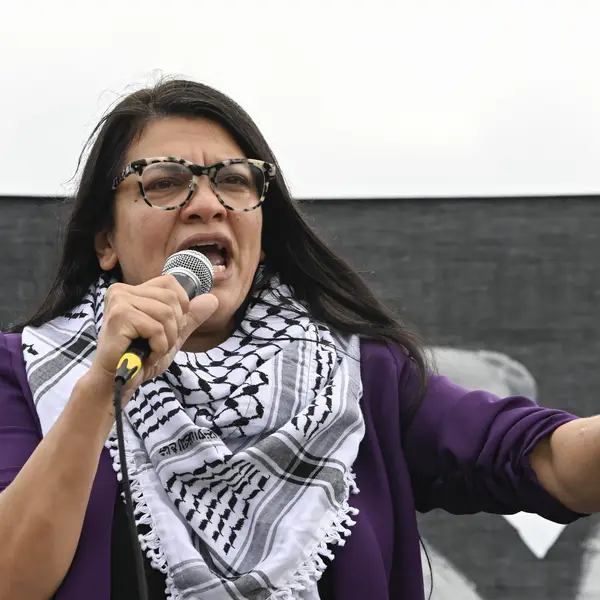
Rashida Tlaib speaks wearing a keffiyeh

Tlaib Leads Dems Decrying Trump Admin Failure to Protect US Citizens Abducted From Gaza Flotilla

“The detention of the flotilla activists in international waters had already represented a serious affront to international law,” he added. “For this reason, our government, together with that of Spain, which also had a citizen detained, demands that they receive full guarantees of safety and be immediately released.”

Spain’s government has also condemned Israel’s capture of Abu Keshek and demanded his immediate release, and like Lula, called the detention illegal because it occurred in international waters. Abu Keshek is also a citizen of Sweden, which has not condemned his detention—or even mentioned him by name—but has asked that “the rights of any Swedish citizens will be respected.”

Adalah Legal Center, the Palestinian group in Israel representing Ávila and Abu Keshek, said Tuesday that the Ashkelon Magistrates’ Court approved Israel’s request to extend the pair’s detention through May 10. This, after the court on Sunday prolonged their detention by two days.

“The court’s decision to extend the detention of humanitarian activists abducted in international waters amounts to judicial validation of the state’s lawlessness,” Adalah assertedad, vowing to appeal the decision, which the group said was based on “secret evidence.”

Adalah noted that “because the activists were abducted over 1,000 kilometers away from Gaza and are not Israeli citizens, Israeli domestic law does not apply to them.”

Israel contends that it is enforcing a lawful naval blockade of Gaza Strip, and that under the laws of naval warfare, that blockade can be enforced not only in its territorial waters, but also on the high seas.

Adalah said, “Crucially, the court granted the full six-day extension requested by the state without imposing any limitations or judicial constraints on the interrogation period,” adding that the stated purpose of their continued detention is further interrogation.

“Ávila reported being subjected to repeated interrogations lasting up to eight hours,” the group reported. “Interrogators have explicitly threatened him, stating he would either be ‘killed’ or ‘spend 100 years in jail.’”

“Both activists remain in total isolation, subjected to 24/7 high-intensity lighting in their cells, and kept blindfolded whenever they are moved, including during medical examinations,” Adalah said, accusing interrogators of “trying all the time to connect the humanitarian aid with Hamas to present it as a service to Hamas.”

Israel’s Ministry of Foreign Affairs claims that both men were affiliated with the Popular Conference for Palestinians Abroad, which the US government accuses of “clandestinely acting on behalf of” Hamas, the militant Palestinian resistance group that led the October 7, 2023 attack on Israel.

Still, no charges have been filed against the pair, who Adalah said have been on hunger strike since April 30 in protest of their detention.

Abu Keshek and Ávila were among the more than 170 Global Sumud Flotilla members intercepted and seized last week in international waters 45 nautical miles west of the Greek island Kythira and 600 nautical miles from Gaza in what many critics have called an act of piracy.

All of the other flotilla members have been released. Many said they brutally abused by their Israeli captors, who threatened to kill them. The Washington Post reported 34 people—including citizens of Australia, Colombia, Italy, Ukraine, and the United States—required medical attention for broken ribs, noses, and other injuries. Detained activists also said they were denied food and water, and were forced to sleep on deliberately flooded floors. Both Abu Keshek and Ávila had visible facial injuries during their first court appearances.

In a statement issued on Monday, Global Sumud Flotilla said Abu Keshek and Ávila “are being subjected to systemic psychological torture and explicit threats to the lives of their families.”

The statement also noted the growing calls for their release from advocacy organizations and governments.

“We urge the international community and their representatives to immediately take action for the safety and freedom of Saif and Thiago, the freedom of all Palestinian hostages, and the end of Israel’s illegal siege of Gaza and its genocide,” Global Sumud added.

American journalist Alex Colston, who was aboard the flotilla on assignment for Zeteo, said he was beaten by his captors, and corroborated accounts of broken bones, concussion symptoms, and other signs of abuse inflicted by Israeli forces on flotilla members, as well as death threats, property theft, and other mistreatment.

Hannah Smith, a representative of the flotilla’s public affairs team who was also aboard one of the vessels, told Democracy Now! on Monday that, after intercepting the boats, Israeli forces “pointed guns at us. They had lasers pointed at us. We had our hands in the air. They threatened lethal force.”

“Many people were subject to aggressive physical force,” she said. “We were denied access to adequate water. We were denied access to sanitary supplies.”

Smith continued:

The nights were extremely cold. People’s jackets were stolen. When I advocated for one of the participants, who’s a doctor, who was pacing for two hours trying to stay warm—she had a short-sleeve shirt in like 50-degree weather that was cold and damp. When I advocated for blankets, they flooded the sleeping area. And then we had a dozen people pacing, trying to stay warm, trying not to get hypothermia.

When we nonviolently resisted, many people were beat. Many people were dragged. I was held in a stress position for many hours… I heard people screaming. I heard people being dragged around. And it was absolutely horrifying.

The reports of torture and other abuse are consistent with Israeli forces’ brutal treatment of members of past Gaza flotillas, including Ávila, who has taken part in at least three such missions. Victims have included Swedish climate campaigner Greta Thunberg, who was allegedly dragged, beaten, and made to kiss an Israeli flag in which she was allegedly wrapped after Israeli forces intercepted last October’s Global Sumud mission.

It’s not just activists who reported Israeli brutality. Journalist Noa Avishag Schnal—who was covering last October’s flotilla—described rape threats and being “hung from the metal shackles on my wrists and ankles and beaten in the stomach, back, face, ear, and skull by a group of men and women guards, one of whom sat on my neck and face, blocking my airways.”

In 2010, Israeli forces raided one of the first Freedom Flotilla Coalition convoys carrying humanitarian aid intended for Gaza, which Israel blockaded three years earlier. The Israeli attackers killed nine volunteers aboard the MV Mavi Marmara, including Turkish-American teenager Furkan Doğan.

In a letter to his daughter dictated to his lawyer from prison, Ávila said, “I’m sorry for not being home with you right now.”

“Today over a million children are suffering a genocide, being starved to death, being amputated without anesthesia, and suffering from horrific, hateful ideas, despite not knowing what Zionism and Imperialism is,” he continued.

More than 250,000 Palestinians have been killed or wounded by Israeli forces in Gaza since October 2023. Around 2 million others have been forcibly displaced, starved, or sickened. Israeli Prime Minister Benjamin Netanyahu and former Defense Minister Yoav Gallant are wanted by the International Criminal Court for alleged crimes against humanity and war crimes in Gaza, and Israel is facing an International Court of Justice genocide case filed by South Africa and formally supported by numerous nations, including Brazil and Spain.

“Your world will be safer because many parents decided to give everything to build this better world for you,” Ávila added. “I hope someday you understand that because I love you so much there was nothing more dangerous for you and for other children than living in a world that accepts genocide.”

Article by Brett Wilkins republished from Common Dreams under Creative Commons (CC BY-NC-ND 3.0).

Keir Starmer explains that UK is actively supporting Israel's genocidal expansion and repeats his previous quotation that he supports Zionism "without qualification". Keir Starmer said “I said it loud and clear – and meant it – that I support Zionism without qualification.” here: https://www.jewishnews.co.uk/keir-starmer-interview-i-will-work-to-eradicate-antisemitism-from-day-one/
Keir Starmer explains that UK is actively supporting Israel’s genocidal expansion and repeats his previous quotation that he supports Zionism “without qualification”. Keir Starmer said “I said it loud and clear – and meant it – that I support Zionism without qualification.” here: https://www.jewishnews.co.uk/keir-starmer-interview-i-will-work-to-eradicate-antisemitism-from-day-one/

Continue ReadingLula Blasts ‘Unjustifiable’ Israeli Detention of Gaza Flotilla Pair Amid More Reports of Torture

Protests erupt in Tanzania amid disputed elections, internet shutdown, and curfew

Spread the love

Original article by Nicholas Mwangi republished from peoples dispatch under a Creative Commons Attribution-ShareAlike 4.0 (CC BY-SA) license.

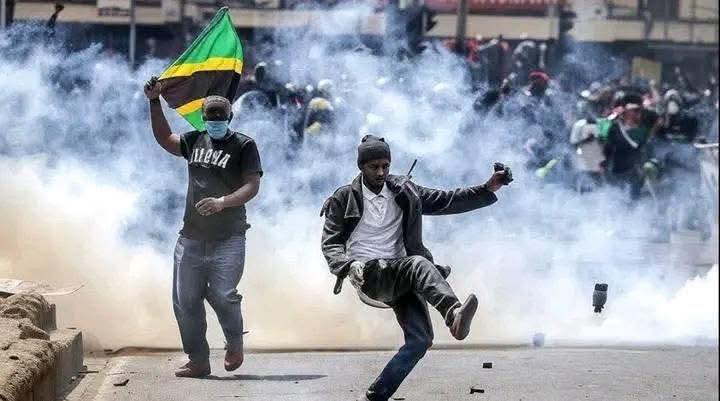
The Tanzanian Government has shut down internet services in the country and denied access to foreign reporters during elections The people are out in the streets protesting the “ceremonial” elections. Photo: X

Protests erupted as Tanzania went to the polls on October 29, 2025. With opposition leaders jailed, Internet access cut, the election has been criticized as ceremonial for President Samia Suluhu Hassan to get back to power.

Some of the regions in Tanzania descended into chaos following the country’s general elections on Wednesday, October 29, which many observers described as “ceremonial” rather than a contest. President Samia Suluhu Hassan, who became Tanzania’s first female head of state in 2021, was already the overwhelming favorite to win in an election devoid of meaningful opposition.

According to reports, the vote was marred by a nationwide internet shutdown, curfews, and unrest after protests broke out in parts of Dar es Salaam, reflecting widespread discontent over what citizens and regional observers have called a sham election.

Internet shutdown and curfew

Live network data from the internet observatory NetBlocks confirmed that Tanzania imposed nationwide internet restrictions early Wednesday morning, severely disrupting mobile data services and blocking access to social media platforms. The blackout coincided with the start of voting, signaling a deliberate move to suppress the flow of information.

By evening, the government imposed a nationwide curfew, urging students and civil servants to remain indoors for the following day. The restrictions came as images and reports of protests spread, despite the blackout, with demonstrators denouncing the exclusion of opposition parties and the continued detention of opposition leader Tundu Lissu, who is currently on trial for treason.

Opposition barred, democracy in decline

Both CHADEMA, the main opposition party, and ACT Wazalendo were barred from participating in the elections. Lissu, who had called for electoral reforms, was arrested earlier this year on what human rights groups have called trumped-up charges. His arrest, coupled with the systematic oppression and media censorship, has deepened fears of an authoritarian turn in Tanzania’s politics.

Reports from human rights organizations, including Amnesty International, describe the political climate as one of “repression, intimidation, and fear.” Amnesty’s recent publication titled “Wave of Terror Sweeps Across Tanzania” documents cases of enforced disappearances, torture, and unfair trials, primarily targeting critics of the regime. Opposition leaders and activists have also faced severe restrictions on their freedom of movement that have effectively prevented them from conducting normal political activities.

Targeting of religious leaders and civil society

The crackdown has extended to religious leaders who have spoken against government abuses. In June, the regime deregistered the Ufufuo na Uzima Church, led by Bishop Dr. Josephat Gwajima, citing alleged violations of the Societies Act. The move came just days after the bishop publicly condemned abductions and enforced disappearances.

Other clergy, including Bishop Benson Bagonza of the Evangelical Lutheran Church and Bishop Dickson Kabigumila, have reported threats or fled the country. Several religious figures, journalists, and political activists remain missing, with families demanding justice.

Regional reactions

The Kenya Human Rights Network issued a statement on Thursday, condemning the ongoing violations.

“We stand here as East African citizens, mandated by the fact that Jumuiya ni yetu (the community is ours). The tragic occurrences we are witnessing in Tanzania go against the very principles that underpin the East African Community,” the statement read.

“Borders will not limit our brotherhood and sisterhood. Injustice anywhere is a threat to justice everywhere.”

The group also noted that no credible international observation missions were allowed into Tanzania. Countries, including Belgium, Sweden, Germany, and Ireland withdrew their participation, while the United Nations Development Program (UNDP) is also not engaging in the electoral process. The African Union (AU) and East African Community (EAC) sent only symbolic delegations, drawing criticism for “legitimizing repression”.

Earlier this year, a delegation from Kenya that included Boniface Mwangi of Kenya and Agather Atuhaire of Uganda, were detained and later deported from Tanzania after attempting to go to Tundu Lissu’s trial. Mwangi and Atuhaire were later assaulted and subjected to torture during their detention.

A regional warning

There are concerns across East Africa that the Tanzanian crisis reflects a broader pattern of shrinking democratic space across the region.

The KHRC statement concluded – “Africans are rightfully outraged that the African Union, an institution meant to defend human rights, democracy, and the rule of law, has chosen silence over principle. It increasingly resembles a club of presidents shielding each other rather than protecting the people they claim to serve. The same betrayal is evident in SADC and the EAC. We are coming to the defense of Tanzanians and hereby give notice to Tanzania and all authoritarian regimes in the rest of East Africa and Africa. As despots regroup to oppress citizens, we, as the citizens, are similarly regrouping to reclaim our countries and our inherent freedoms.”

As of Thursday evening, Dar es Salaam remained tense under heavy police presence, with sporadic protests continuing despite the curfew. The official election results are expected to be announced in the coming days.

Original article by Nicholas Mwangi republished from peoples dispatch under a Creative Commons Attribution-ShareAlike 4.0 (CC BY-SA) license.

Continue ReadingProtests erupt in Tanzania amid disputed elections, internet shutdown, and curfew

Wife Says ‘Day X’ Hearing for Julian Assange ‘Will Determine if He Lives or Dies’

Spread the love

Original article by BRETT WILKINS reposted from Common Dreams under Creative Commons (CC BY-NC-ND 3.0). 

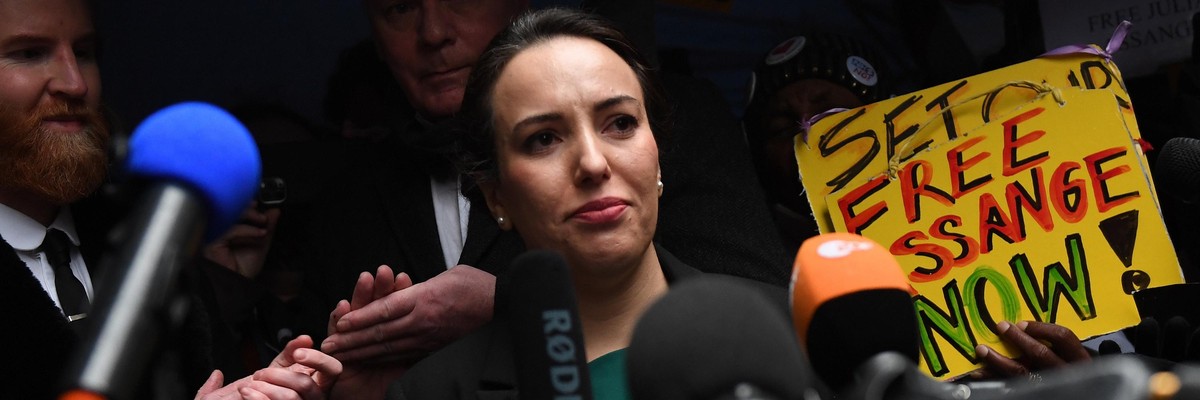
Stella Assange speaks to the media outside the Old Bailey on January 4, 2021 in London.  (Photo: Chris J Ratcliffe/Getty Images)

“This could very well be the final hearing for Julian,” said Stella Assange on the eve of the critical U.K. High Court session.

Stella Assange, the wife of Julian Assange, said Monday that the jailed WikiLeaks founder will likely die if he is extradited from Britain to the United States, where he could imprisoned for the rest of his life for publishing classified documents including numerous files exposing U.S. war crimes.

Assange’s final appeal is scheduled to be heard on Tuesday by the U.K. High Court. The Australian publisher’s supporters are calling it “Day X,” and his wife told the BBC that it “could very well be the final hearing for Julian.”

“There’s no possibility for further appeal in this jurisdiction,” she explained, adding that Assange could still seek an emergency injunction from the European Court of Human Rights.

Assange said her husband—who is 52 years old and suffers from physical and mental health problems including heart and respiratory issues—is very weak and “in a very difficult place.”

Imprisoned in London’s notorious Belmarsh Prison since April 2019, Assange could be sentenced to as many as 175 years behind bars if convicted of all the Espionage Act and Computer Fraud and Abuse Act charges against him.

WikiLeaks published a series of document dumps inculding “Collateral Murder” video—which shows a U.S. Army helicopter crew killing a group of Iraqi civilians—the Afghan War Diary, and the Iraq War Logs, which revealed American and allied war crimes.

In 2016, The United Nations Working Group on Arbitrary Detention found that Assange had been arbitrarily deprived of his freedom since his first arrest on December 7, 2010, including house arrest, imprisonment in London, and nearly seven years of political asylum in the Ecuadorian Embassy in the British capital.

Nils Melzer, the U.N.’s top torture official from 2016 to 2022, repeatedly said that Assange’s treatment amounted to torture.

Alice Jill Edwards, the current U.N. special rapporteur on torture, is imploring the U.K. government to decline Assange’s transfer to the U.S. because she says his health is likely to be “irreparably damaged” by extradition. Edwards cited conditions in U.S. prisons including the use of prolonged solitary confinement and excessive sentences as causes for concern.

Countless human rights defenders, press freedom advocates, and elected officials around the world have called on the U.S. to drop charges against Assange and for the U.K. to refuse his extradition.

“All eyes are on the U.K. High Court during this fateful hearing, but it remains to be seen whether the British judiciary can deliver some form of justice by preventing Assange’s extradition at this late stage,” Rebecca Vincent, campaigns director at Reporters Without Borders, said in a statement Monday.

“Regardless, none of this is inevitable—it remains within the U.S. government’s power to bring this judicial tragedy to an end by dropping its 13-year-old case against Assange and ceasing this endless persecution,” Vincent continued. “No one should face such treatment for publishing information in the public interest.”

“It’s time to protect journalism, press freedom, and all of our right to know,” she added. “It’s time to free Assange now.”

Original article by BRETT WILKINS reposted from Common Dreams under Creative Commons (CC BY-NC-ND 3.0). 

Continue ReadingWife Says ‘Day X’ Hearing for Julian Assange ‘Will Determine if He Lives or Dies’

Amnesty Condemns Israeli Military’s ‘Shocking’ Violence Against West Bank Civilians

Spread the love

Original article by JULIA CONLEY republished from Common Dreams under Creative Commons (CC BY-NC-ND 3.0).

“These unlawful killings are in blatant violation of international human rights law,” said the rights group.

While Israeli officials continue to claim, despite all evidence to the contrary, that the Israel Defense Forces are targeting Hamas in their bombardment of occupied Palestine, a new report from Amnesty International on Monday details the extent to which the military has frequently used lethal force against civilians across the West Bank in addition to the more than 27,000 people it has killed in Gaza.

Calling for an investigation into possible war crimes, the group said it had analyzed four cases in which the IDF has used “unlawful lethal force” against people in the occupied West Bank and blocked medical professionals from reaching injured residents, with Amnesty’s Crisis Evidence Lab verifying 19 videos and four photos of the incidents.

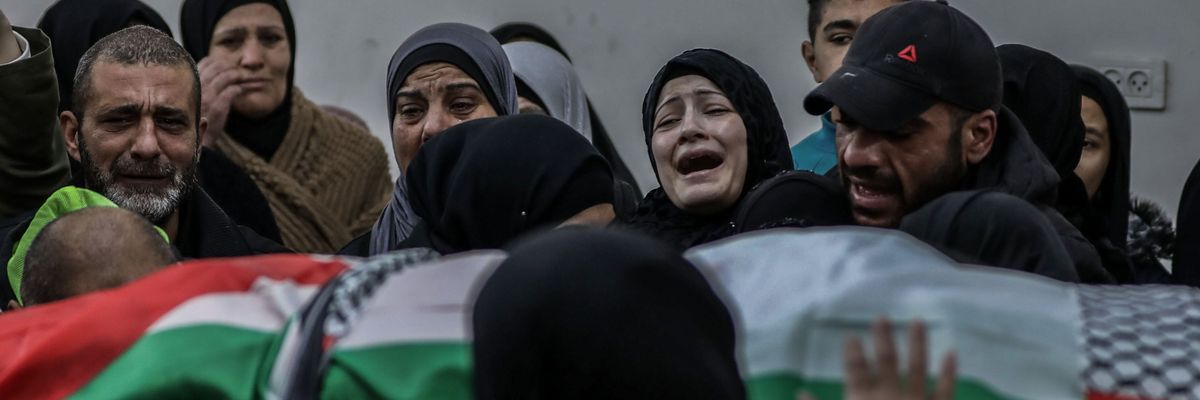
The events documented in the report account for the deaths of 20 Palestinians, including seven children. Since October 7, when the IDF began attacking the West Bank and Gaza in retaliation for a Hamas-led attack on southern Israel, at least 360 people have been killed by Israeli forces in the West Bank, including 94 children, according to the United Nations Office for the Coordination of Humanitarian Affairs (OCHA).

Erika Guevara-Rosas, Amnesty’s director of global research, advocacy, and policy, said the surge in unlawful deadly attacks in the West Bank have been perpetrated “under the cover of the relentless bombardment and atrocity crimes in Gaza.”

“These unlawful killings are in blatant violation of international human rights law and are committed with impunity in the context of maintaining Israel’s institutionalized regime of systematic oppression and domination over Palestinians,” said Guevara-Rosas. “These cases provide shocking evidence of the deadly consequences of Israel’s unlawful use of force against Palestinians in the West Bank. Israeli authorities, including the Israeli judicial system, have proven shamefully unwilling to ensure justice for Palestinian victims.”

The report was released days after a team of Israeli forces disguised themselves as medical staff and civilians and raided Ibn Sina Hospital in the West Bank city of Jenin, killing three Palestinians who they claimed—without evidence—were planning an attack on Israel.

OCHA has recorded a sharp increase in “search and arrest operations” by the IDF in the occupied West Bank since October 7, with 54% of the 4,382 Palestinians injured in Israel’s assault sustaining their injuries during raids.

In the early days of the Israeli onslaught, 13 people, including six children, were killed during a raid on Nour Shams refugee camp in Tulkarem that began on October 19 and went on for 30 hours. IDF soldiers “stormed more than 40 residential homes, destroying personal belongings and drilling holes in the walls for sniper outposts” during the operation, which Israel said was in response to an improvised explosive device that was thrown at border police by Palestinians.

Israeli authorities cut off water and electricity to the camp and used bulldozers to destroy infrastructure, while stopping at least two ambulances from reaching people who were injured.

One person killed in the raid was 15-year-old Taha Mahami, who was “unarmed and posed no threat to the soldiers at the time he was shot, based on witness testimony and videos reviewed by Amnesty International.”

“They did not give him a chance. In an instant, my brother was eliminated,” said Fatima Mahamid, the victim’s sister. “Three bullets were fired without any mercy. The first bullet hit him in the leg. The second—in his stomach. Third, in his eye. There were no confrontations… there was no conflict.”

When the children’s father, Ibrahim Mahamid, tried to carry his injured son out of the line of fire, he was shot in the back by the IDF, sustaining damage to his internal organs.

“Neither Taha nor Ibrahim Mahamid posed a threat to security forces or anyone else when they were shot,” said Amnesty. “This unnecessary use of lethal force should be investigated as possible war crimes of wilful killing and willfully causing great suffering or serious injury to body or health.”

In another “egregious” incident in October in Tulkarem, two eyewitnesses interviewed by Amnesty described Israeli forces opening fire from a watch tower on a crowd of at least 80 people who were holding a peaceful protest in solidarity with Gaza.

IDF soldiers opened fire on journalists wearing clearly visible “Press” markings as well as on a Palestinian man who was riding past the protest on a bike.

By carrying out such attacks, said Amnesty, Israel is violating international standards including the U.N. Basic Principles on the Use of Force and Firearms by Law Enforcement Officials.

“These standards prohibit the use of force by law enforcement officials unless strictly necessary and to the extent required for the performance of their duty and require that firearms may only be used as a last resort—when strictly necessary for military personnel or police to protect themselves or others against the imminent threat of death or serious injury,” said the group. “Willful killings of protected persons and willfully causing great suffering or serious injury to protected persons are grave breaches of the Fourth Geneva Convention and war crimes.”

Guevara-Rosas said the incidents documented in the report, and the Israeli onslaught in the West Bank and Gaza as a whole, “is a litmus test for the legitimacy and reputation” of the International Criminal Court, which prosecutes war crimes, and that “it cannot afford to fail it.”

“In this climate of near total impunity, an international justice system worth its salt must step in,” said Guevara-Rosas. “The prosecutor of the International Criminal Court must investigate these killings and injuries as possible war crimes of willful killing and willfully causing great suffering or serious injury.”

Original article by JULIA CONLEY republished from Common Dreams under Creative Commons (CC BY-NC-ND 3.0).

Continue ReadingAmnesty Condemns Israeli Military’s ‘Shocking’ Violence Against West Bank Civilians

Amnesty Details ‘Shocking’ Allegations of India Targeting Reporters With Pegasus Spyware

Spread the love

Original article by JULIA CONLEY republished from Common Dreams under Creative Commons (CC BY-NC-ND 3.0). 

A woman uses an iPhone in front of the building of the NSO Group, developer of the spyware Pegasus, on August 28, 2016, in Herzliya, Israel. (Photo: Jack Guez/AFP via Getty Images)

“Increasingly, journalists in India face the threat of unlawful surveillance simply for doing their jobs,” said one advocate.

Amnesty International on Thursday demanded transparency from the Indian government regarding its contracts with surveillance companies, including the Israeli firm NSO Group, after the rights organization joined The Washington Post in publishing what it called “shocking new details” about the use of spyware to target journalists in India.

Amnesty’s Security Lab revealed that a round of “state-sponsored attacker” notifications that were sent to Apple customers in October by the tech company went to more than 20 Indian journalists including Siddharth Varadarajan, founding editor of The Wire, and Anand Mangnale, South Asia editor at the Organized Crime and Corruption Report Project (OCCRP).

The Security Lab ran a forensic analysis of the two reporters’ devices and found evidence that the NSO Group’s highly invasive Pegasus spyware, which is capable of eavesdropping on phone calls and harvesting data, had been installed on phones owned by Varadarajan and Mangnale.

In Mangnale’s case, the journalist appeared to have received a “zero-click exploit” via iMessage on August 23, allowing the individual or group who sent it to covertly install Pegasus spyware on his phone without requiring Mangnale to take any action, such as clicking a link.

At the time of the attempted attack, said Amnesty, Mangnale was working on a story about alleged stock manipulation by a major Indian multinational firm with ties to Indian Prime Minister Narendra Modi. The journalist told Agence France Presse that his phone was targeted “within hours” of his sending interview questions to the company.

The timing of the attack—and the fact that NSO Group has said it only licenses Pegasus to governments and security agencies—was “a hell of a coincidence,” Mangnale said.

“Targeting journalists solely for doing their work amounts to an unlawful attack on their privacy and violates their right to freedom of expression,” said Donncha Ó Cearbhaill, head of Amnesty’s Security Lab. “All states, including India, have an obligation to protect human rights by protecting people from unlawful surveillance.”

The Indian government was previously accused of targeting journalists, opposition politicians, and activists with Pegasus in 2021, when leaked documents showed the spyware had attacked more than 1,000 phone numbers.

India has fallen 21 spots to 161 out of 180 countries in Reporters Without Borders’ World Press Freedom Index since Modi took office in 2014. In addition to the alleged use of spyware by the government, journalists have been arrested and detained while covering anti-government protests, and reporters have been targeted by coordinated social media campaigns inciting hatred and violence.

Varadarajan was the subject of an earlier report by Amnesty, which documented how he had previously been targeted by Pegasus spyware in 2018.

This past October the same email address used in the Pegasus attack on Mangnale was identified on Varadarajan’s phone, confirming he was targeted again.

Varadarajan toldThe Washington Post that at the time of the most recent covert spyware installation, he had been leading public opposition to the detention of a news publisher in New Delhi.

“Our latest findings show that increasingly, journalists in India face the threat of unlawful surveillance simply for doing their jobs, alongside other tools of repression including imprisonment under draconian laws, smear campaigns, harassment, and intimidation,” said Ó Cearbhaill.

The group called for the Indian Supreme Court to immediately release the findings of a technical committee report on Pegasus, which was completed in 2022 but has still not been made public.

“Despite repeated revelations,” said Ó Cearbhaill, “there has been a shameful lack of accountability about the use of Pegasus spyware in India which only intensifies the sense of impunity over these human rights violations.”

Original article by JULIA CONLEY republished from Common Dreams under Creative Commons (CC BY-NC-ND 3.0). 

Continue ReadingAmnesty Details ‘Shocking’ Allegations of India Targeting Reporters With Pegasus Spyware