NHS news review

Spread the love

The main NHS news is that the British Medical Association (BMA) is to “start a public campaign to call for the withdrawal of the health and social care bill”.

http://www.guardian.co.uk/society/2011/jul/20/doctors-campaign-against-nhs-reforms  NB article recommended.

The BMA, which represents 140,000 doctors, voted to “reject the idea that the government’s proposed changes to the bill will significantly reduce the risk of further marketisation and privatisation of the NHS” and “agreed that the government is misleading the public by repeatedly stating that there will be ‘no privatisation of the NHS'”.

Dr Hamish Meldrum, chairman of council at the BMA, said: “Whilst the BMA recognises there have been some changes following the listening pause, there is widespread feeling that the proposed legislation is hopelessly complex, and it really would be better if the bill were withdrawn.”

His colleague on the council Dr Peedell said that the health bill was “just a privatisation bill with a third of it devoted to [producing] an economic regulated market”.

In the same article, campaigning group 38degrees received huge support to their campaign to save the NHS.

To underline that the government’s attempts to dissipate professional and public anger – such as the legislative pause – have had little effect, internet campaigners at 38 Degrees, which has 850,000 members in the UK, claimed to have raised cash at the rate of £56 a minute via an email marketing campaign on Wednesday.

The money will be used to get lawyers to comb through the 180 amendments produced by the government when it re-submitted the bill for its second reading earlier this month.

“38 Degrees members want to cut through the tangled web of amendments which make up Andrew Lansley’s re-written NHS plans. So we’re chipping in to hire legal experts to go through them with a fine tooth comb,” said the organisation’s executive director, David Babbs. “We’re concerned that real threats to our NHS may still lurk behind Lansley and [David] Cameron’s warm words. Are we on a slippery slope to the NHS being broken up by EU competition laws? Why does Lansley seem to be watering down his legal duty to provide a national health service?”


Health treatment restrictions for smokers and fat people. It should be noted that this is rationing of care as a result of cuts.

Cuts hitting the NHS in Wales.

Many articles report on yesterday’s news of Lansley extending privatisation through Any Qualified (Willing) Provider.
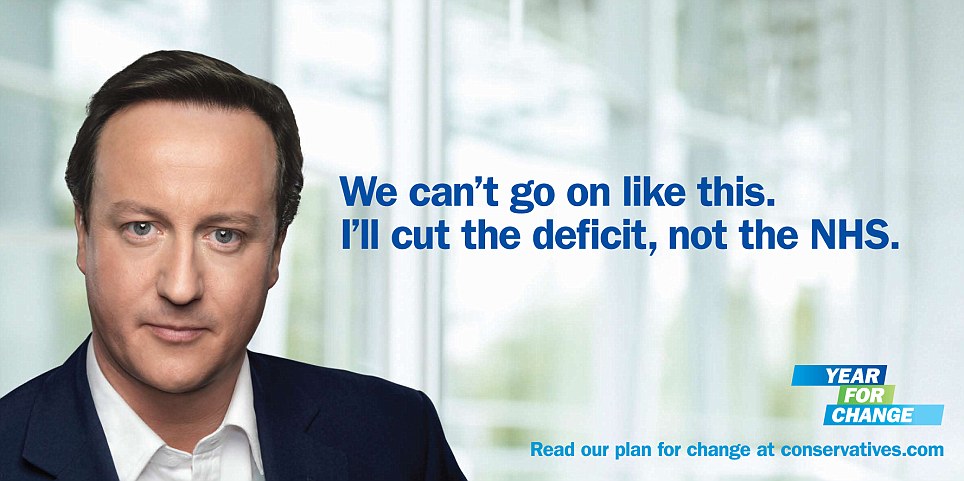
Conservative election poster 2010

A few recent news articles concerning the UK’s Conservative and Liberal-Democrat coalition government – the ConDem’s – brutal attack on the National Health Service.

Doctors to launch public campaign against proposed NHS reforms | Society | The Guardian

The government faces a summer of discontent over its NHS reforms after doctors voted to launch a public campaign against the health bill, and one of the UK’s internet campaign groups raised £10,000 in three hours after emailing members to pay for expert legal advice over the bill.

The British Medical Association’s council, the executive committee of the union, voted to pass a series of motions critical of the government’s bill – and crucially accepted that doctors “start a public campaign to call for the withdrawal of the health and social care bill”.

Put forward by NHS consultants Clive Peedell and Jacky Davis, the motion will ratchet up the pressure on ministers over the summer break who had hoped that the bill’s third reading in early September would be an easy ride.

The BMA, which represents 140,000 doctors, voted to “reject the idea that the government’s proposed changes to the bill will significantly reduce the risk of further marketisation and privatisation of the NHS” and “agreed that the government is misleading the public by repeatedly stating that there will be ‘no privatisation of the NHS'”.

Dr Hamish Meldrum, chairman of council at the BMA, said: “Whilst the BMA recognises there have been some changes following the listening pause, there is widespread feeling that the proposed legislation is hopelessly complex, and it really would be better if the bill were withdrawn.”

The Operating Theatre Journal : GPs agree ban on operations for smokers and obese patients

GPs have signed off a series of sweeping referral restrictions by NHS managers that will bar smokers and overweight patients from being referred for surgery, as PCTs across the country bring in new cost-saving restrictions.

Both LMCs and GP consortium leaders have backed moves by NHS Hertfordshire to block any patient with a BMI over 30 from being referred for routine joint replacement surgery without first being referred to a weight management scheme. GPs will also be prevented from referring smokers for any orthopaedic surgery until they have been referred for smoking cessation.

GPC leaders are seeking legal advice on the controversial plans and are warning that a number of trusts across England have suggested they may follow suit. Locally, the move has driven a wedge between GPs – with consortium leaders divided over the ethics of the restrictions and Hertfordshire LMC backing the plans by just one vote.

Meanwhile, a Pulse investigation covering 41 PCTs has found two-thirds have added new procedures to ‘low clinical priority’ lists since April, as trusts struggle to cut costs.

Procedures subject to new restrictions include the treatment of ganglions in Hampshire and DEXA scanning in primary prevention of osteoporotic fractures in men and women over 50 in Bristol. NHS Warrington has added 13 restrictions, including the treatment of obstructive sleep apnoea.

But it is the restrictions on treatment for smokers and obese patients that have prompted fiercest debate.

Fears for patient care as Welsh NHS battles to make £455m saving – Health News – News – WalesOnline

Patient services could be threatened as health boards battle to save almost half a billion pounds this year.

The scale of the financial challenge facing the NHS comes after “unprecedented” savings of £435m made last year and a further £1bn made over the course of recent years.

Experts believe patient services will not escape the spending cuts this year and the Western Mail has learned Wales’ seven health boards have not yet identified how they can find almost a third of the £455.7m total saving needed.

Hywel Dda and Cardiff and Vale University health boards have yet to find £39m and £31.5m of savings respectively.

Professor Marcus Longley, director of the Welsh Institute for Health and Social Care, at the University of Glamorgan, said: “Clearly this cannot be done with no impact on patient care because there isn’t half a billion pounds in the system that’s not needed.

More NHS care open to external providers – Public Service
NHS community and mental health services opened up to competition » Hospital Dr
Unions Criticize Government Plans for Patient Choice, Amid Fears of Privatization

Continue ReadingNHS news review

NHS news review

Spread the love

The Lib-Dems [edit: Con-Dems] are announcing an extension of “choice” in the NHS. What this means in actuality is an increase in privatised provision under the Any Qualified Provider scheme formally [edit: formerly] known as Any Willing Provider.

Dr Hamish Meldrum, Chairman of Council at the BMA comments

“We support greater choice for patients, although in an NHS with finite resources it will always be limited. What we would question is the assumption that increasing competition necessarily means improved choice. When competition results in market failure in the NHS, the ultimate consequence is the closure of services, and the restriction of choice for the patients who would have wished to use them.”

The concept of “Chice” as proposed by the Lib-Dems and by Blair previously is far from the simple concept of choice implied by freedom of choice. Do you still have choice in the case of one option or none?

Conservative election poster 2010

A few recent news articles concerning the UK’s Conservative and Liberal-Democrat coalition government – the ConDem’s – brutal attack on the National Health Service.

Patients to get choice of providers – Health News, Health & Families – The Independent

Patients will be given a choice of providers for mental health and community NHS services, the Government has announced.

The move, which opponents argue will lead to an increasingly privatised NHS, comes into force from next April and covers services worth millions of pounds.

Health Secretary Andrew Lansley said it was “a big day for patients”, who will be able to choose care from providers who meet NHS standards on quality, price and contracts.

Providers will compete to offer services and are likely to include private companies, charities and voluntary organisations, as well as the NHS.

Eight NHS areas – including musculoskeletal services for back pain, adult hearing services in the community, wheelchair services for children and talking therapies for adults – are being opened up for competition.

A minimum of three services must be offered in each area of England by September 2012.

The concept of “any qualified provider” has caused huge controversy, with opponents saying it represents privatisation of the health service.

Private sector firms invited to bid for £1bn slice of NHS – Health News, Health & Families – The Independent

NHS services costing about £1bn are to be opened up to competition, the Health Secretary said yesterday.

Patients will be offered a choice of provider, including private companies and charities, across eight services including those for back and neck pain, wheelchair services for children and talking therapies for patients with stress and depression, Andrew Lansley said.

Later, further specialities may be included under the “any qualified provider” provision in the Health and Social Care Bill, raising alarm about the privatisation of the health service.

BBC News – NHS competition extended to community care

Patients are getting greater choice over a host of community services as part of the government push to increase competition in the NHS in England.

Choice is already available over the full range of hospital operations.

But ministers now want that extended to treatments such as podiatry, hearing services and counselling from 2012.

It will lead to greater opportunities for charities, social enterprises and private firms to get NHS work – prompting accusations of privatisation.


27/11/13 Having received a takedown notice from the Independent newspaper for a different posting, I have reviewed this article which links to an article at the Independent’s website in order to attempt to ensure conformance with copyright laws.

I consider this posting to comply with copyright laws since
a. Only a small portion of the original article has been quoted satisfying the fair use criteria, and / or
b. This posting satisfies the requirements of a derivative work.

Please be assured that this blog is a non-commercial blog (weblog) which does not feature advertising and has not ever produced any income.

dizzy

Continue ReadingNHS news review

NHS news review

Spread the love

Waiting times rise.

Sir Richard Thompson, president of the Royal College of Physicians says that the National Health Service is “creaking at the seams. Our members are finding it difficult to cope.”

Blindness fears for diabetics as a drug is refused on the NHS.

Conservative election poster 2010

A few recent news articles concerning the UK’s Conservative and Liberal-Democrat coalition government – the ConDem’s – brutal attack on the National Health Service.

More patients waiting too long for NHS treatment | Society | guardian.co.uk

Number of cases missing waiting time target of 18 weeks since GP referral soars by a third

The number of patients not being treated within recommended NHS waiting times has soared by a third since the coalition came to power, new official figures revealed.

A total of 27,834 patients in England who received inpatient treatment in May 2011 had waited more than 18 weeks for it since being referred by their GP, compared to 20,504 in May 2010 – a year-on-year rise of 33.5%.

That is higher than the year-on-year rise between April 2010 and April 2011, when it was 24%.

The Department of Health (DH) admitted that while 1.8% of outpatients in May 2010 were not treated within 18 weeks, that had risen to 2.3% in May 2011. Similarly, the proportion of inpatients who had to wait longer than expected to undergo surgery or some other treatment also rose over the same period, from 7.1% to 9.2%.

The deterioration in this measure of NHS performance casts further doubt on David Cameron’s repeated pledges to keep NHS waiting times low, especially the 18-week Referral To Treatment (RTT) target. He last month made that one of his five personal pledges to voters on the NHS.

BBC News – Waits rise ‘leaves NHS struggling to cope’


Sir Richard Thompson, president of the Royal College of Physicians, said: “The apparent rise in waiting lists is both worrying for patients and evidence of an underlying cause – the increasing pressures on the NHS in general.

“The NHS is now creaking at the seams. Our members are finding it difficult to cope.”

And shadow health secretary John Healey added: “The NHS is starting to go backwards again under the Tories.”

But Health Secretary Andrew Lansley said waiting times were a priority for the government and still remained “low and stable”. [?]

Related Rise in long waits for treatment shows you can’t trust Cameron to keep NHS promises – Healey | The Labour Party NHS figures show system is ailing under pressure of cuts, warns chief medic – Health News, Health & Families – The Independent NHS ‘creaking at the seams’ as waiting lists rise – Telegraph RCP President: NHS creaking at the seams | Royal College of Physicians

Blindness fear as diabetics denied drug by NHS rationing watchdog | Mail Online

Hundreds of diabetes patients could lose their sight after the NHS rationing watchdog said it was too expensive to give them a treatment for an eye condition from which many suffer.

The National Institute for Health and Clinical Excellence acknowledged that the drug Lucentis was effective in treating diabetic macular oedema, which affects 50,000 Britons.

But in final draft guidance on the drug yesterday, it refused to make Lucentis available on the NHS, saying it was not ‘cost-effective’ compared with laser treatment.

Diabetes UK said Lucentis was the first licensed treatment to improve vision – and therefore quality of life – in those with sight loss due to DMO. It was also more effective than the laser treatment favoured by Nice.

‘This decision means more people will needlessly lose their sight,’ said a spokesman. ‘We pressed hard to make this treatment available on the NHS and we will campaign for Nice to reconsider its decision.

Related Charity fears more blindness after NHS drug ban – Main Section – Yorkshire Post


27/11/13 Having received a takedown notice from the Independent newspaper for a different posting, I have reviewed this article which links to an article at the Independent’s website in order to attempt to ensure conformance with copyright laws.

I consider this posting to comply with copyright laws since
a. Only a small portion of the original article has been quoted satisfying the fair use criteria, and / or
b. This posting satisfies the requirements of a derivative work.

Please be assured that this blog is a non-commercial blog (weblog) which does not feature advertising and has not ever produced any income.

dizzy

Continue ReadingNHS news review

NHS news review

Spread the love

Conservative election poster 2010

A few recent news articles concerning the UK’s Conservative and Liberal-Democrat coalition government – the ConDem’s – brutal attack on the National Health Service.

Private medical insurance news: Increased need for private care and insurance

Commenting on the NHS Confederation’s survey findings that 53% of NHS leaders felt NHS availability of care and waiting times will worsen, Debbie Kleiner-Gaines of the Association of Medical Insurance Intermediaries says, “This will be a very worrying concern impacting a lot of people who may now find it necessary to consider having access to the private sector and possibly insurance to fund it. At least then they can be confident speedy treatment will be available if they need it.”

Lansley’s defence of management cuts is disingenuous and dangerous | Leader | Health Service Journal

“I try to avoid saying things that are capable of misinterpretation,” Andrew Lansley told HSJ last week.

Readers will judge for themselves whether the health secretary has been successful in achieving that goal during his first year in office.

Mr Lansley was talking about hospital reconfiguration – but he made much the same point when pressed during his NHS Confederation conference speech on why he had not spoken up more for NHS managers.

As soon as the question was asked, the health secretary adopted his now familiar tone of barely restrained frustration: hadn’t he always attacked “bureaucracy” and not “managers”? Hadn’t he always praised the importance of good “management”?

He was not responsible “for what the Daily Mail writes”.

This is disingenuous rubbish. Mr Lansley – in common with many politicians – is rarely unhappy when talk of “too much bureaucracy” is translated into “too many managers”. Praise for those in management roles is saved for speeches aimed at NHS leadership which are unlikely to get wider coverage elsewhere.


Continue ReadingNHS news review

NHS news review

Spread the love

Prof. Appleby of the King’s Fund think tank says that spending more on the NHS is possible. link

Tory think tank the Institute of Economic Affairs proposes abolishing the NHS and even claims that there is widespread public support for it.

Conservative election poster 2010

A few recent news articles concerning the UK’s Conservative and Liberal-Democrat coalition government – the ConDem’s – brutal attack on the National Health Service.

BBC News – Spending more on the NHS ‘not unaffordable’


In an article in the Daily Telegraph last month, Health Secretary Andrew Lansley suggested on current trends £230bn would need to be spent on health by 2030 compared to the £103bn which is spent now.

He said that figure was one that the country “simply could not afford”.

But Prof Appleby, the chief economist at the think-tank, questioned that.

He said taking into account the expected growth in the economy a budget of £230bn would require the health budget to rise at about 4% a year above inflation – only a little more than it has got on average since 1948.

Such rises would bring total health spending, including investment in private health care, to about 12.4% of gross domestic product (GDP) – roughly in line with what high spending countries such as the Netherlands are already spending.

Prof Appleby added: “It is a question of priorities really. It could be afforded, but would just require more money to be spent on health. But we are not talking about ridiculous amounts.”

Related: Rising health spending ‘is affordable’ – newsarticle-content – Pulse King’s Fund claims NHS is affordable – Health News, Health & Families – The Independent Doubling NHS spending ‘is affordable’ – Telegraph Spending more on the NHS could be affordable » Hospital Dr

Thinktank advocates abolition of the NHS and slashing overseas aid | Politics | The Guardian

Shrinking the size of the state by abolishing the NHS and limiting overseas aid to humanitarian disasters could save more than £200bn a year and pave the way for growth-generating tax cuts, says a leading free-market thinktank.

The Institute of Economic Affairs (IEA), responsible for many of the policies implemented by Margaret Thatcher in the 1980s, said the plans to tackle Britain’s budget deficit during the current parliament are not radical enough.

Publishing a report urging a rethink of education, health and welfare, the thinktank said there was public support for plans that would see government spending reduced to less than 30% of national output. Spending peaked at about 50% of gross domestic product during the recession and the chancellor, George Osborne’s proposals would see public expenditure stabilise at 40% of national income.

“The recent comprehensive spending review was anything but comprehensive,” the report, Sharper Axes, Lower Taxes, said. “Certain departments were omitted from the review altogether. Most other areas of spending were ‘salami-sliced’. No coherent, bottom-up analysis of government functions has taken place.”

[comments are worth reading]

My warning for the NHS | Wendell Potter | Comment is free | The Guardian

Andrew Lansley’s controversial NHS bill is premised on “choice and competition” and the creation of a market in healthcare. These three stories below from the US show choice and competition at work on the ground. They also explain why 45,000 Americans die every year because they can’t afford – and in many cases can’t even obtain – health insurance.

But first, let me introduce myself – as I did in June 2009 when I testified before a congressional committee that was investigating the many abuses of the private insurance industry in the US. “My name is Wendell Potter, and for 20 years I worked as a senior executive at health insurance companies, and I saw how they confuse their customers and dump the sick – all so they can satisfy their Wall Street investors.”

I described how insurance companies, in their constant quest to meet profit expectations, routinely cancel the coverage of sick policyholders and strive to spend less and less of premium dollars on medical care so they can divert more and more of those dollars to executive salaries and dividends for investors.

A few months before my testimony I had left my job as head of communications for one of the largest US insurers, Cigna. I could no longer in good conscience continue to serve as a spokesman for a profit-obsessed industry that I had come to realise was largely responsible for the American healthcare system’s descent into dysfunctionality.

27/11/13 Having received a takedown notice from the Independent newspaper for a different posting, I have reviewed this article which links to an article at the Independent’s website in order to attempt to ensure conformance with copyright laws.

I consider this posting to comply with copyright laws since
a. Only a small portion of the original article has been quoted satisfying the fair use criteria, and / or
b. This posting satisfies the requirements of a derivative work.

Please be assured that this blog is a non-commercial blog (weblog) which does not feature advertising and has not ever produced any income.

dizzy

Continue ReadingNHS news review