NHS news review

Spread the love

There is a great deal of NHS news today so I’ve tried to impose some order out of chaos™.

  • There are many articles about the 63rd birthday of the NHS yesterday.
  • Health Secretary Andrew Lansley was evasive while appearing before the Health Select Committee hearing yesterday. Lansley reveals that the bill does not address competition law which is left to be decided by the courts.
  • Waiting times and cuts are to increase despite Prime Minister David Cameron’s commitments that they would not.
  • Massive increase in NHS bureaucracy as a result of NHS reforms despite the claimed intention of the reforms to reduce bureaucracy.
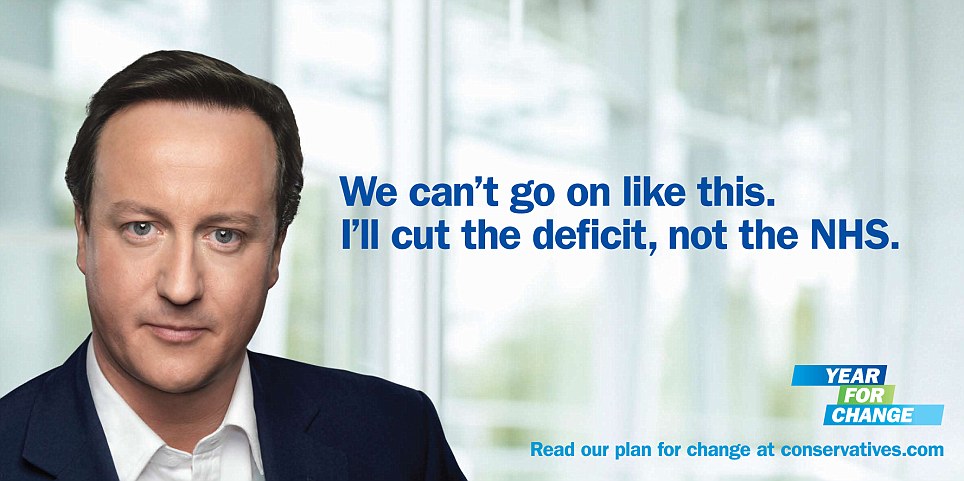
Conservative election poster 2010

A few recent news articles concerning the UK’s Conservative and Liberal-Democrat coalition government – the ConDem’s – brutal attack on the National Health Service.

NHS 63rd Birthday

Happy birthday NHS / Britain / Home – Morning Star


TUC general secretary Brendan Barber said: “Despite some amendments to the controversial NHS reforms, many of the most damaging aspects of the Health and Social Care Bill remain. The changes presented to us by the government after its recent listening exercise amount to little more than smoke and mirrors.

“The government’s proposals go against the very principle of our NHS, in which care is based on need not ability to pay.

“They mean private providers will be able to increase their role in the NHS, simply cherry-picking the most lucrative parts for their own private profit to the detriment of the overwhelming majority of patients.”

Happy 63rd Brithday NHS

Rehana Azam GMB National officer for NHS said “GMB wishes the NHS a happy 63rd birthday today.

The Tory plan is to get the guts of the measures on the statute book and then by stealth break up the National Health Service.

The NHS was designed to be a cradle to the grave health and care service free at the point of use until the Tories in 1990 changed it to be a cradle to nursing home service. That is what people want and that is what politicians should respect and deliver.”

Campaigners celebrate 63 years of NHS – Local news – Worksop Guardian


Spokesperson for Bassetlaw Protecting our People and Services group Ann Donlan said: “Before the NHS they had to pay for medicine, pay for doctors and pay for treatment.”

“Since the NHS came in we have had first class service and an excellent hospital. We are here to remind people of its importance, we do not want to see it privatised again.”

Spokesperson for Bassetlaw Protecting our People and Services group Ann Donlan said: “Before the NHS they had to pay for medicine, pay for doctors and pay for treatment.”

“Since the NHS came in we have had first class service and an excellent hospital. We are here to remind people of its importance, we do not want to see it privatised again.”

Birthday cake and banners at NHS protest over reforms – Health – The Star


Campaign member Andy Turner said: “It is clear that the Department of Health is planning for the Health Bill to go through largely unchanged. It has clearly been a cynical exercise to take the heat out of the situation.

“We are gravely worried that the proposed changes will favour private healthcare providers accountable to shareholders and not patients, promote competition and not co-operation, and lead to drastic reductions in quality of patient care.”

Increased Bureaucracy

Leaked paper says new NHS board with £20bn budget will direct health reforms | Society | The Guardian

A new NHS commissioning board employing 3,500 staff and with a £20bn commissioning budget will oversee the government’s reforms to the health service, according to a leaked Department of Health document.

Labour said the document showed the government was planning to create a new layer of NHS bureaucracy, raising questions about the health secretary Andrew Lansley’s claim to be streamlining the management of the health service.

The document, which carries a warning “confidential draft – not for circulation” – was drawn up by the NHS chief executive, Sir David Nicholson, as he outlined the duties of an independent NHS commissioning board.

Nicholson said the new board will:

• Employ about 3,500 staff. It will have a chair and five non-executive directors. A chief executive will head a team of five executive directors – the four others will be a nursing director, a medical director, a director of commissioning development and a director of finance, performance and operations

• Directly commission £20bn of services and hold about 33,000 contracts for primary care services

• Oversee the new clinical commissioning groups across the country that will take responsibility for £80bn of the NHS budget.

England will be split into four “commissioning sectors” – with London as one of the “distinct” areas, raising questions about whether strategic health authorities are being reconfigured.

Nicholson proposed that the new board should be called NHS England, though he admitted that this might be a step too far.

The chief executive added in his report that his proposals would lead to savings because the board’s 3,500 staff would take over the duties currently performed by 8,000 workers.

Liz Kendall, the shadow health minister, said: “The government is wasting precious NHS resources on its huge re-organisation.

“Their original plan was going to cost at least £2bn. Their new plan will cost even more as the number of NHS organisations balloons from 160 to more than 500.”

Kendall also criticised Simon Burns, the health minister, who told the Commons committee examining the health and social care bill that it was premature to comment on staffing levels.

She added: “Today the minister Simon Burns told me it was ‘premature’ to say how much their new super quango, the NHS commissioning board, will cost and how many staff it will employ.

“Yet we now know from this leaked document it will employ at least 3,500 staff. The government must now come clean and spell out the true costs of their chaotic NHS plans.”

“Massive bureaucracy” increase due to Health Bill » Hospital Dr

The government’s NHS reforms are set to treble the number of statutory NHS organisations, the Royal College of GPs’ chair Dr Clare Gerada warned MPs.

Giving evidence to the Parliamentary Health and Social Care Committee last week, Dr Gerada warned the reforms will send the number of statutory NHS organisations soaring from 163 to 521.

Gerada complained that NHS bureaucracy was being “massively increased”, while the revised bill had become “very incoherent”.

“It is neither liberating nor controlling. It neither allows for GPs to be innovative, nor does it give them tight restraints.”

The RCGP’s tally of new quangos includes 300 commissioning groups, 150 health and wellbeing boards, 50 PCT clusters, 15 clinical senates, four SHA clusters, the National Commissioning Board and the Department of Health.

Gerada said: “We are deeply concerned that commissioning consortia are going to be so bound up in bureaucracy that they will simply not be able to deliver the system leadership required.”

Cuts and related Increased Waiting Times

Managers warn of worsening access to NHS care – Main Section – Yorkshire Post

PATIENT access to NHS care will worsen in coming years as the health service faces “unprecedented” financial pressures, health bosses warn today.

In a survey of nearly 300 chief executives and chairmen, four in 10 say the financial situation facing their organisations is the “worst they had ever experienced” and another 47 per cent say it is “very serious”.

More than two thirds fear the pressures will intensify over the next three years, partly due to the impact of cuts by local councils, and that waiting times will worsen.

In a stark message, NHS Confederation chief executive Mike Farrar will today tell the annual conference of managers in Manchester that key decisions taken in the next 18 months over future health service reforms would determine “if the NHS is a going concern for future organisations to inherit”.

related: BBC News – NHS chiefs warn of rising hospital waiting times Pledges on NHS waiting times in doubt | Society | guardian.co.uk Spending cuts will mean longer waiting times, say NHS managers – UK Politics, UK – The Independent

Lansley

Irritated MPs interrogate Lansley over NHS Bill / Britain / Home – Morning Star

Frazzled MPs spent a frustrating two hours today trying to cajole Health Secretary Andrew Lansley into revealing how much competition will be unleashed in the NHS.

Mr Lansley went round in circles before grudgingly admitting to Lib Dem MP Andrew George that many of the amendments to the Health and Social Care Bill were cosmetic.

Some amendments were introduced to address “misplaced concerns,” while others were to “reflect more accurately” the principles proposed in the Bill, explained the minister.

“Some of them are genuine changes,” he added chirpily in an appearance before the health select committee.

Parrying questions on the changes, he insisted: “It was not recommended to us by the NHS Future Forum that we should depart from the principles of the Bill.”

The forum had said that there was “widespread support” for the measure, he crowed.

Labour MP Valerie Vaz joined West Cornwall Lib Dem Mr George in trying to smoke out the minister over his latest emphasis on giving wide powers to a NHS National Commissioning Board, charged with promoting “integration” and improving quality.

NHS chief executive Sir David Nicholson confessed that the enhanced National Commissioning Board did not actually have any members yet.

“It’s just me at the moment,” he said.

There was a lot of “preparatory work” to do and adverts for a chair and a non-executive director would appear after the summer break.

Playing with words, Mr Lansley declared that NHS regulator Monitor would in future be using competition “as a means to an end” rather than the earlier intention of promoting competition as “an end in itself.”

HealthInvestor – Article: NHS competition rules ‘still open to debate’, admits Lansley

There remains a lack of clarity about how competition law will be applied in the reformed NHS, the health secretary has admitted.

Speaking at a Health Select Committee hearing, Andrew Lansley said the full application of competition law in the health service would be determined gradually by the courts, rather than by his amended Heath and Social Care Bill.

“If you’re trying to establish with certainty what the boundary of the application of competition law is, then it’s a matter of debate and it will be something that will only be determined over time as there are cases brought before the courts,” he said.

At present, EU competition rules only apply to ‘undertakings’, meaning enterprises engaged in ‘economic activities’. This means that while it applies to private providers in the NHS, it tends not to cover public sector bodies. There remains considerable legal debate about what constitutes an ‘economic activity’ in public healthcare provision, especially amid efforts to introduce a genuine internal market within the NHS.

The health minister, giving evidence on the government’s response to the NHS Future Forum report, said clarity on competition law was not contained within his amended Health Bill and would only emerge as providers challenged decisions in the courts.


27/11/13 Having received a takedown notice from the Independent newspaper for a different posting, I have reviewed this article which links to an article at the Independent’s website in order to attempt to ensure conformance with copyright laws.

I consider this posting to comply with copyright laws since
a. Only a small portion of the original article has been quoted satisfying the fair use criteria, and / or
b. This posting satisfies the requirements of a derivative work.

Please be assured that this blog is a non-commercial blog (weblog) which does not feature advertising and has not ever produced any income.

dizzy
Continue ReadingNHS news review

NHS news review

Spread the love

NHS news is dominated by a speech given by David Cameron yesteday. He claims that the NHS must change but that does not justify the privatisation and withdrawal of services that he proposes.

He mentions a crisis of funding. 38 Degrees and UK Uncut are clearly showing how to resolve that issue – by combating tax avoidance by rich tax avoiding Capitalists.

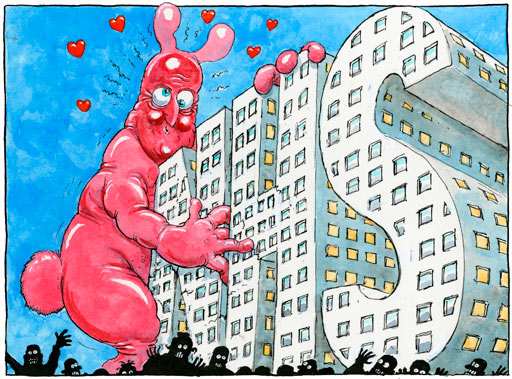
17.05.11: Steve Bell on David Cameron's NHS reforms speech

He engages in “It’s because I love the NHS so much that I want to change it.” emotionality which attracts many comments. I wonder if Craig Oliver was drunk when he came up with that one.

Cameron repeatedly claims that the NHS is safe in his hands BUT the Health and Social Care Bill does away with the government providing a comprehensive health service

and

it has received near total opposition from healthcare professionals. Cameron claims to be willing to listen to doctors and nurses BUT they are calling for the bill to be abandoned.

Many groups and individuals respond to Cameron’s speech.

Conservative election poster 2010

A few recent news articles concerning the UK’s Conservative and Liberal-Democrat coalition government – the ConDem’s – brutal attack on the National Health Service.

My love for the NHS is why I want change… » Hospital Dr

(Text of Cameron’s speech)

PM has still not made case for NHS reforms | News

David Cameron’s speech today on NHS reform has one familiar element: the extent of his personal attachment to the health service.

“It is because I love the NHS so much that I want to change it,” he says. That is an argument familiar from the election campaign, when Mr Cameron emphasised that the NHS was safe in his hands precisely because he had personal experience of its excellence during the tragic illness of his late son, Ivan. Indeed, it underlay the Tories’ commitment not only to exempt health from spending cuts, but to increase its funding.

Few doubt the NHS needs reform and that spending at present levels is unsustainable given the demands of an ageing population and the expansion in expensive new treatments. But accepting the need for reform is not the same thing as welcoming the Government’s health bill. This is a complicated set of proposals in one piece of legislation, which gives GPs more control over spending and commissioning services and at the same time seeks to take out layers of bureaucracy and increase competition. Many people, including health professionals, who would happily give GPs a greater say in the service, baulk at the extension of commercial competition. And Mr Cameron’s decision to “pause” the reforms – but not, as he says today, to stop them – is a measure of the public disquiet about the Bill and its implications.

UNISON Press | Press Releases Front Page

Commenting on David Cameron’s speech on the Health and Social Care Bill, at Ealing Hospital, in London, today (16 May), Christina McAnea, Head of Health at UNISON, which represents more than 450,000 health workers, said:

“David Cameron is taking the ‘national’ out of the health service and turning it into a fragmented, money-spinning operation.

“The Prime Minister is using extreme examples to paint an untrue picture. He admits the NHS is providing the best service it has ever done, with reports saying it is the most efficient and equitable health system.

“Cameron’s call to crack down on waste in the NHS is a smokescreen for a move to a wholesale market, which opens the NHS up to privatisation. The real waste is the time spent on the fatally flawed reforms, which will force NHS patients to the back of a very long queue.

“He talks about having more choice and protecting budgets, but health workers are seeing their jobs axed and wards, services and even entire hospitals lost without any arrangements to protect continuity of patient care.

Unite questions how Cameron’s ‘substantive’ changes to NHS bill are going to happen

David Cameron’s pledge to ensure ‘substantive’ changes to the NHS ‘reform’ bill should be probed to discover what he actually means, Unite, the largest union in the country, said today (Monday 16 May).

Unite said that the deeply flawed Health and Social Care bill should be scrapped and a rtoyal commission set-up to investigate the future of the NHS.

Unite pointed out the discrepancy between the prime minister’s ‘vision’ and the fact that tens of thousands of NHS jobs had been or were going to be lost in the near future. Wards are already closing, waiting lists growing and services being axed or reduced.

Unite national officer for health, Rachael Maskell, said: ”David Cameron in his speech today was long on rhetoric, but short of specifics. This was a PR exercise in verbal gymnastics due to the political pressures he is under, especially from his Liberal Democrat allies.

”David Cameron wants it both ways with the Health and Social Care bill. He said today there will be no privatisation, no ‘cherry picking’ of services by private companies and no up-front costs for care, but we question how the prime minister’s ‘substantive’ changes are going to be incorporated into the legislation.

”The bill is so flawed that it should be scrapped. The whole bill is designed on the premise of Monitor’s role as an economic regulator and the concept of ‘any willing provider’ i.e. private companies. If the prime minister is serious about these changes, it will mean a new bill.

Macmillan Responds To The Prime Minister’s Speech On NHS Reform, UK

Responding to David Cameron’s speech on NHS reform today, Mike Hobday, Head of Policy of Macmillan Cancer Support, said:

“We welcome the Prime Minister’s reassurance that the relevant healthcare professionals will be involved in key decision-making about the commissioning of NHS care and the commitment that patients will receive high-quality and coordinated care, rather than the NHS being subject to an unbridled free market. This is a key safeguard to ensure that care for cancer patients does not suffer under the proposed NHS reforms.

“Cancer is a set of highly complex diseases and GPs tell us that they will need specialist help to commission cancer services. This is why it is vital that cancer networks should continue to be used to inform decision making about the commissioning of cancer services, and why the Government must commit to fund them at least until GP consortia are up and running in 2014.

“We hope the ‘listening exercise’ results in a long-term commitment to clinical networks, and are encouraged by the David Cameron’s comments today that this will be the case.”

BMA Comment On Prime Minister’s Speech On NHS, UK

Commenting on the Prime Minister’s speech on NHS reform in England today (Monday 16 May, 2011), Dr Hamish Meldrum, Chairman of Council at the BMA, said:

“We agree with the Prime Minister that the NHS needs to change. There needs to be greater integration, greater efficiency, and more emphasis on prevention. However, the Health Bill as it is currently written would make these improvements far harder to achieve, leading to a more fragmented health service, with many hospitals at risk of closure. Whilst we welcome his commitment to listening to staff and to taking them with him, most doctors will not feel able to support this Bill unless it is radically amended.”

The Prime Minister also highlighted the fact that alcohol misuse and obesity place significant burdens on the NHS. Dr Meldrum added:

“Unfortunately the government has often ignored the advice of health organisations on how to tackle alcohol misuse and obesity, preferring to listen to and rely on the views of industries which have a vested interest in selling unhealthy products“.

Labour – Cameron’s Reforms Will Leave NHS Fragmented, Taking it Backwards – UK Politics – News on News

John Healey MP, Labour’s Shadow Health Secretary, has hit out at David Cameron’s plans for NHS reform, saying they will leave the service fragmented and take it backwards.

Labour has also released a document on the lack of coherence in the Tory-led Government’s plans and showing the level of concern and opposition to them throughout the NHS.

John Healey said:

“This is the Prime Minister’s third launch of his NHS plans. He’s made his ‘I love the NHS’ speech before but today he said nothing to clear up the confusion and chaos around his ideological, top-down reorganisation. He made the case for change in the NHS, but not for his change.

“David Cameron’s plans will fragment the NHS, with a free market free for all undermining the quality, integration and public accountability of NHS services. As even the Tory-led Health Select Committee has said, the legislation as it stands will make better services and better value for money harder not easier to achieve. It will take the NHS backwards.

“David Cameron talks of his love for the NHS, but he has broken his promise to protect the NHS. If he really wants an NHS with no privatisation, no new charges for patient services and no competition for its own sake, he must make fundamental changes to his NHS plans because his Health Bill allows exactly this.”

Ignore his denials: Cameron, like Blair, wants to turn ‘NHS’ into a kitemark | George Monbiot | Comment is free | The Guardian

The difference between David Cameron and Tony Blair is that Blair was better at disguising his intentions. He would never have announced, for example, the sale of public forests. Instead he might have promised “a world-class forest estate” in which “walker-led beacon-foundation woodlands” would be managed through “partnerships with a plurality of recreational providers”. Ten years later we would discover that our forests had mysteriously fallen into the hands of timber companies, and were being felled in the name of customer choice.

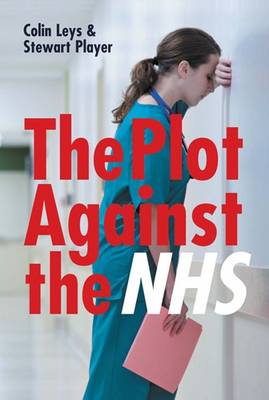
Nor would he have done anything as stupid as this government’s attempt to transform the NHS in one bill. Cameron sought to dig himself out of his hole on Monday, but too late. His claim that “there will be no privatisation … no cherry-picking from private providers” reminds us that privatisation and cherry-picking are the likely outcomes of his bill. Blair would have allowed private interests to keep spreading through the health service as slowly and quietly as dry rot. In their book The Plot Against the NHS, Colin Leys and Stewart Player show that Cameron’s health and social care bill consolidates a plan that has been fermenting for many years.

The Plot Against the NHS #1

The Plot Against the NHS #2


Continue ReadingNHS news review

NHS news review

Spread the love

More NHS news. A group of 42 GPs have supported the Con-Dem government’s NHS ‘reforms’ with a letter to the Telegraph. That’s 42 GPs against the British Medical Association, the Royal College of Nursing, the Royal College of General Practicioners and I’m sure that I’ve missed many… [13/5/11 edit: the Royal College of Midwives, the Liberal-Democrats according to the motion of their spring conference, the Labour Party, UNISON and many concerned, informed poeple and more.]

Conservative election poster 2010

A few recent news articles concerning the UK’s Conservative and Liberal-Democrat coalition government – the ConDem’s – brutal attack on the National Health Service.

GPs defend Lansley’s NHS reforms – News – OnMedica

A group of GPs has spoken out publicly against detractors of the Coalition’s proposed NHS reforms, saying much of the criticism is “noticeably misinformed”. The chairs of consortia covering nearly 1100 practices across England wrote to The Daily Telegraph asking everybody to lend support to Mr Lansley’s reforms.

The lead signatory of the letter is London GP Dr Jonathan Munday, a former Conservative MP and chair of the Victoria Commissioning Consortium – the Westminster group that Andrew Lansley chose to visit a fortnight ago on the first step of his new ‘listening exercise’.

The group has urged the Coalition not to bow to pressure to dilute the reforms in any amendments that it might make to the proposals, pointing out: “Many GP consortia already have a record of improving patient pathways. That innovation should not be constrained.”

The signatories counter the objection that GPs lack the skills needed to commission care effectively, saying this ignores GPs’ “existing history of commissioning”, through fundholding, GP polysystems and practice-based commissioning.

They point out that it also “misunderstands what will happen in the future”, because appropriately qualified staff rather than GPs themselves will be taking on tasks such as keeping books, writing reports and contracts or compiling statistics. They say GPs’ role will be to “offer strategy, direction, clinical insight and local knowledge to the commissioning of health-care in our areas”.

PMQs: David Cameron and Ed Miliband Lock Horns In The Commons on Coalition’s One-Year Anniversary | Politics | Sky News

Mr Miliband blamed the Prime Minister for what he claimed were the “failing” reforms as he insisted the Tories could not be trusted with the NHS.

But Mr Cameron hit back that the coalition was making “significant and substantial” changes to the service and had ring-fenced its funding.

He said Labour was cutting the NHS in Wales, adding: “There’s only one party you can trust on the NHS and it’s the one I lead.”

The Government has put the NHS reforms on “pause” while they conduct extra consultation after widespread criticism of the changes.

MP attacks health plans – Local – The Star

PLANNED changes to the NHS have been slammed by South Yorkshire MP Dan Jarvis.

The Labour member for Barnsley Central attacked proposals by health secretary Andrew Lansley which would allow GPs to commission care, using private providers as well as NHS hospitals.

Mr Jarvis told the House of Commons of the value of the NHS providing care for his late wife during her battle with cancer. He said: “In my family’s darkest days, we saw the true genius of the NHS. While the market can be useful, there are limits to which it can deliver. There’s a reason that Bupa doesn’t do Accident and Emergency. We must never allow an ideological free market agenda to undermine the NHS.”

Opposition to health bill – Health – lep.co.uk

Campaigners have voiced their concern that a Government shake-up could damage the NHS.

The Royal College of GPs have issued a statement criticising the Government’s Health and Social Care Bill saying it risks “unravelling and dismantling the NHS”.

Now opposers in Lancashire have voiced their own fears.

Lancashire GP, Dr David Wrigley, who works in Carnforth, near Lancaster and is also a member of the British Medical Association Council and Keep Our NHS Public, said “I agree with the concerns of the Royal College of GPs.

“The Bill fundamentally threatens our NHS and the services it provides.

“I am most concerned the Bill is essentially a charter and enabling provision for the privatisation and break-up of our NHS.”

NHS centre may be shut – Health – The Star

A SOUTH Yorkshire rehabilitation centre is being threatened with closure as the NHS trust in charge struggles to find the £100,000 a year needed to keep it running in the face of public sector cuts.

A review is now being undertaken by Rotherham NHS Foundation Trust into Park Rehabilitation Centre on Badsley Moor Lane, Rotherham.

A trust spokeswoman said the facility – which provides rehabilitation and therapies for NHS and paying patients – said the running costs each year were ‘over and above the resources available’.

The centre is owned by NHS Rotherham and leased to the trust to provide services such as physiotherapy, occupational therapy and speech and language therapy. Consultation with patients, staff and health partners over the long-term viability of keeping the centre open.

38 Degrees | Blog | Local 38 Degrees members to meet Nick Clegg about NHS in 48 hours

Across the country 38 Degrees members are meeting their local MPs to hand in our Save Our NHS petition. One of those members is Geraldine O’Connor from Sheffield and in 48 hours she is meeting her local MP, Nick Clegg.

Here is her message. Please spread the word and help get as many signatures as possible before Friday.

Dear friend,

My name is Geraldine and, like you, I’m part of 38 Degrees. I live in Sheffield. This Friday, I am going to deliver a copy of the Save Our NHS petition to my local MP – Nick Clegg.

In the next few weeks, Nick Clegg has to decide whether or not to dig his heels in to block dangerous changes to the NHS. This is our chance to put pressure directly on him.

I want to show him that there are hundreds of thousands of people standing behind me urging him to stand up for the NHS. Can you help by adding your name to the petition now?

You can add your name here:
http://www.38degrees.org.uk/save-our-nhs

Join UK Uncut’s Emergency Operation to defend the NHS | Joe Hill | Comment is free | guardian.co.uk

On 28 May UK Uncut will be staging an “Emergency Operation“, transforming high-street bank branches across the country into hospitals, operating theatres and GPs’ surgeries. This day of action is an urgent response to the cuts and privatisation that threaten to wreak our National Health Service. While the health service is being cut, broken up and sold off, the banks that caused the financial crisis have been left virtually untouched. As Andrew Haldene of the Bank of England recently pointed out, our yearly implicit subsidy to the banks is equal to the entire NHS budget. On 28 May we will demand that the government transforms the broken banking system, and not our NHS.

This will be UK Uncut’s first national day of action since 26 March. On that day, half a million people marched through the streets of London against the government’s cuts. UK Uncut staged a sit-in at Fortnum and Masons. Despite being described by the senior police officer present as “nonviolent and sensible“, all 145 protesters were arrested. For them this was, and continues to be, an unpleasant experience. We are no strangers to sit-ins, but it was not fun to sit in a cell for 24 hours, without access to a solicitor, or to have possessions and clothes confiscated indefinitely. These events appear to be part of a worrying pattern of political policing, where protesters are criminalised in order to intimidate.

But we will not be intimidated away from defending our public services, and we will not stop highlighting the injustice of the government’s cuts. We will keep doing what we do best: creative, fun, family-friendly protests. And if there was ever something we all need to stand up for, it’s the NHS. As its founder Nye Bevan said, the NHS will last “as long as there are folk left with the faith to fight for it”.

As private healthcare companies circle like vultures, the government is plotting to cut the NHS and sell off what’s left. Despite a pre-election promise by David Cameron to “cut the deficit, not the NHS”, 50,000 NHS jobs will be lost over the next five years including thousands of doctors, nurses and midwives in a £20bn “efficiency drive”. The Royal College of General Practitioners has warned that the government’s NHS plans jeopardise the principle of universal healthcare, saying that “we are moving headlong into an insurance-type model“. If there is any confusion about what an insurance-type model looks like, simply look across the pond to the United States

Continue ReadingNHS news review

The Plot Against the NHS #1

Spread the love
The plot against the NHS

Selected excerpts from ‘The Plot Against the NHS’ by Colin Leys and Stewart Player. Chapter One is available here. I highly recommend this book available from Merlin Press for £10.

I got my copy yesterday so I have yet to complete it. The book identifies intense lobbying by commercial interests resulting in the privatisation of ancilliary NHS services under Thatcher, covert privatisation of the NHS under Blair’s New Labour administration and Andrew Lansley’s overt privatisation under the current Conservative and Liberal-Democrat coalition government. It draws a picture of the private sector unable to compete with the NHS in terms of cost or quality and the private sector being given excessive, hugely favourable terms. Patricia Hewitt, Alan Milburn and John Reid are identified as covert privateers ‘marketers’ under the Blair administration.

p51

By late 2008 the crisis was at it’s height. Lehmann Brothers was history, Northern Rock had been nationalized along with Lloyds and the Royal Bank of Scotland, and the government’s debt was on course to reach 70 per cent of national income, up from around 40 per cent for most of the decade. In this situation it was obvious that public spending was going to suffer. How would this affect the NHS?

According to the Department of Health, the management consultants McKinsley (where Dr Dash was by now a partner in the company’s London office) were instructed in February 2009 ‘to provide advice on how commissioners might achieve world class NHS productivity to inform the second year of the world class commissioning assurance system and future commissioner development. The advice from McKinsley … was provided in March 2009.’ But the advice McKinsley gave actually tells a different story.

We don’t know what assumptions they were told to make but it looks as if they were told or at least encouraged to assume that NHS spending would remain constant for the next five years, and asked how productivity could be increased to cope with the rise in demand over that time. Their conclusion was that in order to find enough savings to meet the rising cost of providing health care over those years the NHS might have to shed ten per cent of it’s staff. When the press got  hold of the  report in September 2009 there was a furious reaction from the NHS workforce.

Health ministers then said that the report had been rejected, and even then it had been commissioned without their authority.

p54

In October 2010 the coalition government announced that it would continue to raise NHS spending in real terms (based on the general consumer price index) over the next four years – the figure actually claimed was an annual rise of 0.1 per cent. As a result most people outside the NHS assumed that the cuts would now stop. But the reality was different. For one thing, the NHS was told to transfer £2.1 billion to local authorities over the next five years as part of a drive to move patients out of hospitals and into more ‘cost-effective’ social or community care. So the NHS budget was actually being cut. And the NHS’s costs (for drugs, equipment, electricity, etc) would go on rising faster than the general cost of living, so that even if its budget stayed more or less constant it would soon be too small to cover all the bills.

On top of this, people’s healthcare needs (or ‘patient demand’, as today’s policy-makers call patients’ needs) would also go on rising as  people got older, or more obese, or more depressed – and as more of them became unemployed. The economic crisis was thus also a healthcare crisis, in which drastic measures could be presented as being unavoidable, measures of ‘last-resort’ – even if they implied the end of a high-quality health service equally available to all.

Which was pretty much what the new Secretary of State for Health, Andrew Lansley, decided to do, with proposals for yet another NHS reorganization – a reorganization not only un-mentioned in the election campaign, but one that flatly contradicted David Cameron’s pledge not to undertake any more ‘top-down reorganizations’ in the NHS. Everyone noticed, of course: but the coalition’s argument that the financial crisis meant that all previous bets were off proved effective – even if at first most people couldn’t quite see what Lansley was driving at. All comentators agreed in calling his proposals the most important changes in the NHS since it was set up – but what exactly did the changes mean? And were they really so different from what had been covertly planned for ten years or more under New Labour?

p68

By the time of the 2010 election a fairly clear picture of what the future NHS market would be like had emerged amoung health policy insiders. Influenced by a decade of exposure to US policy advice, and especially by the link with Kaiser Permanente, they envisaged an NHS that was already much closer to being a kitemark attached to a wide variety of provider organizations and systems than people outside the policy-making circle realized.

They imagined a radically reduced NHS hospital sector, with the surviving NHS foundation trusts focused intently on financial success. They envisaged the bulk of outpatient care being transferred out of hospitals into local, cheaper settings, which would be privately built and owned (as so many NHS hospitals already were, through PFI), or jointly owned with ‘entrepreneurial’ clinicians. They envisaged a growing number of the remaining NHS hospitals being run by private companies. They imagined specialist clinicians becoming increasingly self-employed, rather than working on a salary for a single foundation trust, and selling their services to a mix of public and private organizations.

They expected a growing proportion of patients with chronic illnesses to have fixed budgets for their care, and they accepted that top-ups, for which insurance companies would provide insurance plans, would become a normal form of co-payment, as they already were for some life-prolonging cancer drugs. They expected PCTs to be using private healthcare corporations to help them commission services in a more sophisticated way, or doing it for them, and so driving foundation trusts to become more focused on economy and driving more work to private providers. Fundamentally, they anticipated a replication of many of the structures and values of US managed care.

No one who was familiar with this imagined future could have been surprised by the contents of Lansley’s White Paper of July 2010, or the Health and Social Care Bill of January 2011. The only people likely to be surprised were the public, with whom the marketizers had chosen not to share their vision.

Continue ReadingThe Plot Against the NHS #1

Condems intend to destroy the NHS

Spread the love
Conservative election poster 2010

The National Health Service (NHS) is regarded fondly by many people in UK. Although not perfect, it is there when people are ill, when they need help and support when they are most vulnerable. The UK Conservative and Liberal-Democrat – ConDem – coalition government intends to abolish the NHS through privatisation while pretending to reform it and give users more control.

The UK has traditionally had a mixed economy – services provided by public and private bodies. The public institutions traditionally provided infrastructure such as health, council housing, transport and postal services.

The role of the public sector has been diminishing in recent decades under successive Conservative governments’ pursuing the evil ideology or dogma of privatisation. The previous openly Conservative government of Thatcher, etc privatised UK’s train service. Tony Blair was a Conservative – acually a Neo-Con or Crypto-Fascist – pretending to be a Labour party politican. He introduced swathes of privatisation into the NHS e.g. he continued the previous administration’s fetish of hugely expensive PFI hospitals, completed the privatisation of the train service and repeatedly tried to privatise the Post Office. The current ConDems government intends to privatise the Post Office and sell publically-owned forests.

Privatised train services in UK are now close to useless. The service is unreliable with extortionate and prohibative prices. Imagine the NHS running to the standards of the UK’s train service if you dare.

There is huge opposition to the ConDems intention to destroy the NHS from health service professionals. Quoted below is a recent article from the Guardian. Please note the links to different groups of health professionals at the end.

Is anyone in favour of Andrew Lansley’s NHS reforms?

Cameron and Lansley are pressing on with their shakeup – undeterred by a broad coalition of opposition

It is the biggest shakeup in the history of the country’s best-loved institution, and a high-stakes political gamble even for a government intent on pushing through radical change. The health secretary Andrew Lansley’s plans to transform the NHS in England have united in opposition doctors, health thinktanks (and the right-of-centre thinktank Civitas), unions representing the 1.4m-strong NHS workforce, health academics, MPs on the health select committee, the NHS’s major employers, and patients’ representatives.

Even David Cameron’s brother-in-law, an NHS cardiologist, thinks the government has got it wrong, the prime minister admitted last week.

Cameron and Lansley are pressing on undeterred. The plans will see England’s 152 primary care trusts and 10 strategic health authorities abolished, and consortiums of GPs commissioning £80bn a year of healthcare. They will be able to opt for treatment from “any willing provider” – NHS, private healthcare or charity – fuelling suspicions that the result will be the privatisation of the NHS.

Hospitals will be forced to compete with each other, and other providers, for patients. Ministers say this is necessary to improve the quality of care and help the NHS become more efficient, so it can solve the riddle of tight budgets at a time of rising demand.

But do the proposals spell, to quote the chair of the Royal College of GPs, “the end of the NHS as we know it”? The Lancet medical journal says that, given the impending “catastrophic breakup”, the Tories’ pre-election claim to be the party of the NHS “seems particularly hollow”.

Here key figures set out their concerns:

GPs

Midwives

Nurses

Hospital doctors

Public health experts

NHS managers

[Ideas are free …]

Continue ReadingCondems intend to destroy the NHS