Limiting warming to 2C is ‘crucial’ to protect pristine Antarctic Peninsula

Spread the love

Original article by Giuliana Viglione republished from Carbon Brief under a CC license

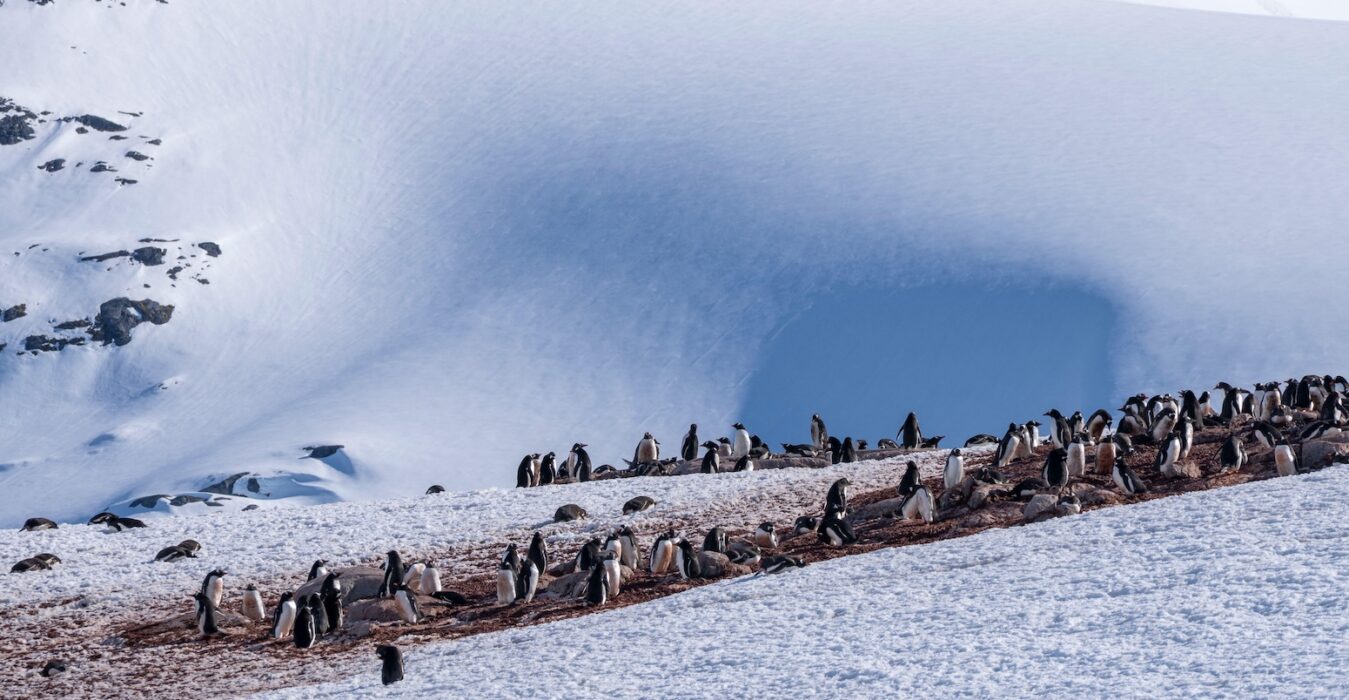
Colony of Gentoo penguins, Antarctica. Credit: Sergio Pitamitz / Alamy Stock Photo. Credit: Sergio Pitamitz / Alamy Stock Photo.

Keeping global warming to less than 2C above pre-industrial temperatures is “crucial” for limiting damage to the Antarctic Peninsula’s unique ecosystems, according to a new study.

The paper, published in Frontiers in Environmental Science, reviews the latest literature on the impacts of warming on Antarctica’s most biodiverse region. 

The Antarctic Peninsula is home to many types of penguins, whales and seals, as well as the continent’s only two flowering plant species.

The study also analyses previously published data and model output to create a fuller picture of the potential futures facing the peninsula under different levels of global warming.

Under a low-emissions scenario that keeps global temperature rise to less than 2C, the Antarctic Peninsula will still face 2.28C of warming by the end of the century, the study says, while higher-emissions futures could push the region’s warming above 5C.

Limiting warming to 2C would avoid the more dramatic impacts associated with higher emissions, such as ice-shelf collapse, increasingly frequent extreme weather events and extinction of some of the peninsula’s native species, according to the paper.

However, warming of 4C would result in “dramatic and irreversible” damages, it adds.

Importantly, the paper shows that the outlook for the peninsula is “dependent on the choices we make now and in the near future”, a researcher not involved in the study tells Carbon Brief.

‘Alternative futures’

The Antarctic Peninsula juts northwards from West Antarctica, stretching towards the tip of South America. 

The region is made up of the main peninsula, which spans around 232,000 square kilometres (km2) and a series of islands and archipelagos that cover another 80,000km2. The mainland peninsula is nearly entirely covered in ice, while its islands – many of which are further north – are around 92% covered. 

Taken as a whole, the Antarctic Peninsula is the most biodiverse region of the icy continent, and a “beautiful, pristine environment”, says Prof Bethan Davies, a glaciologist at Newcastle University, who led the new work.

It hosts many species of penguins and whales, as well as apex predators, such as orcas and leopard seals. Each spring, more than 100m birds nest there to rear their young. It is also home to hundreds of species of moss and lichens, along with the only two flowering plant species on the continent.

The peninsula is also the part of Antarctica that is undergoing the most significant changes due to climate change, according to the Intergovernmental Panel on Climate Change’s (IPCC’s) sixth assessment report

In 2019, a group of researchers published a study on the fate of the Antarctic Peninsula at 1.5C of global warming above pre-industrial temperatures. However, it has since “become apparent” that keeping warming below this limit is no longer in reach, Davies says. 

The team selected three warming scenarios for their study: 

  • a low-emissions scenario, SSP1-2.6
  • a high-emissions scenario characterised by growing nationalism, SSP3-7.0
  • very-high-emissions scenario, SSP5-8.5

SSP1-2.6 represents the “new goal” of keeping warming less than 2C, Davies says.

SSP3-7.0 and SSP5-8.5 represent “alternative futures” – with the former being one that “felt quite relevant” to the current state of the world and the latter being “useful to consider as a high end”, she adds.

For each potential future, the researchers conducted a literature review to assess the changes to different parts of the peninsula’s physical and biological systems. To fill gaps in the published literature, the team also reanalysed existing datasets and results from the Coupled Model Intercomparison Project 6 (CMIP6) group of models developed for the IPCC’s latest assessment cycle

Dr Sammie Buzzard, a glaciologist at the Centre for Polar Observation and Modelling, tells Carbon Brief:

“By choosing three different emissions scenarios, they’ve shown just how much variability there is in the possible future of the Antarctica Peninsula that is dependent on the choices we make now and in the near future.” 

Buzzard, who was not involved in the new study, adds that it “highlights the consequences of this [change] for the glaciers, sea ice and unique wildlife habitats in this region”.

Physical changes

The Antarctic Peninsula is already experiencing climate change, with one record showing sustained warming over nearly a century. The peninsula is also warming more rapidly than the global average. 

For the new study, Davies and her team assess the changes in temperature for the decade 2090-99 across 19 CMIP6 models. 

They find that under the low-emissions scenario, the Antarctic Peninsula is projected to warm by 2.28C compared to pre-industrial temperatures, or about 0.55C above its current level of warming. Under the high- and very-high-emissions scenarios, the peninsula will reach temperatures of 5.22C and 6.10C above pre-industrial levels, respectively.

They also analyse output from 12 sea ice models. 

In each scenario, they find that the western side of the Antarctic Peninsula experiences the largest declines in sea ice concentration during the winter months of June, July and August. For the southern hemisphere’s summertime, it is the eastern side of the peninsula that shows the largest decreases.

The maps below show the projected change in sea-ice concentration around the Antarctic Peninsula for each season (left to right) under low (top), high (middle) and very high (bottom) emissions. Decreasing concentrations are shown in blue and increasing concentrations are shown in red. 
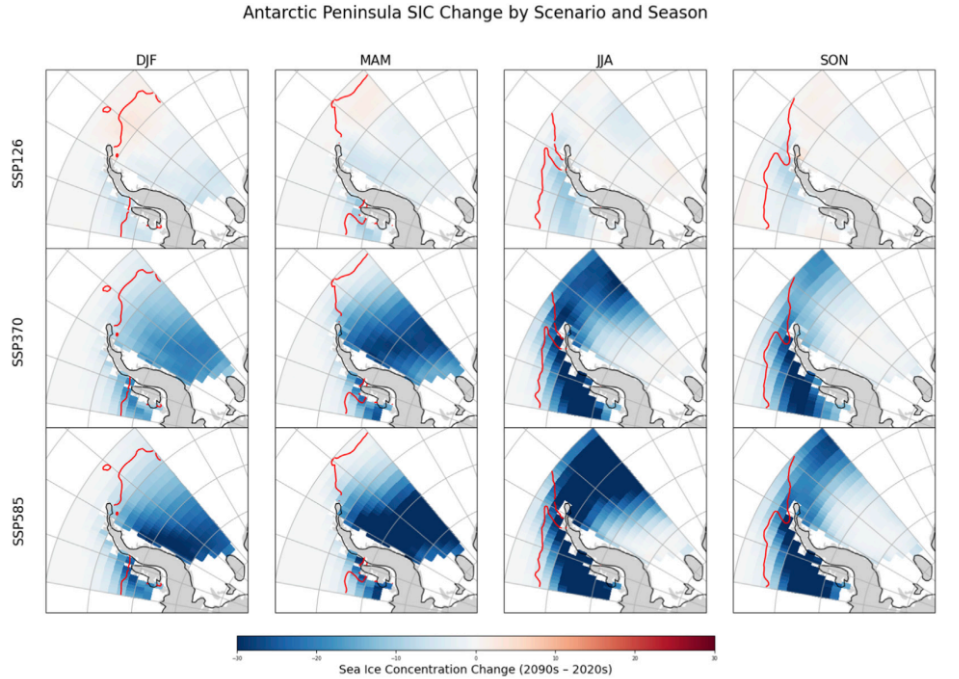
Charts showing the Antarctic peninsula SIC change by scenario and season
Changes in the concentration of sea ice around the Antarctic Peninsula in the 2090s, as compared to the 2020s. Decreases (increases) in sea ice concentration are shown in blue (red). The rows show the different future pathways (top to bottom): SSP1-2.6, SSP3-7.0 and SSP5-8.5. The columns show three-month chunks of the year (left to right): December, January and February; March, April and May; June, July and August; and September, October and November. Source: Davies et al. (2026)

The paper gives a “great overview of the current literature on the Antarctic Peninsula, examining multiple aspects of the region holistically”, Dr Tri Datta, a climate scientist at the Delft University of Technology, tells Carbon Brief.

However, Datta – who was not involved in the study – notes that the coarse resolution of CMIP6 models means that the “most vulnerable regions are too poorly represented to capture important feedbacks”, such as the forming of meltwater ponds on the tops of glaciers, which warm much more than the icy surface around them.

Ecosystem impacts

The study also looks at potential futures for the Antarctic Peninsula’s marine and terrestrial ecosystems – albeit, much more briefly than it examines the physical changes.

This is because modelling ecosystem change is very difficult, Davies explains:

“If you’re going to model an ecosystem, you have to model the climate and the ocean and the ice and how that changes. Exactly how that ecosystem responds to those changes is still beyond most of our Earth system models.”

Still, by looking at trends in the Antarctic over the past several decades, as well as changes that have occurred in other high-latitude regions, the researchers piece together some of the potential impacts of warming.

They conclude that under SSP1, the changes experienced by ecosystems are “uncertain”, but will “likely” be similar to present day – with some terrestrial species, such as its flowering plants, even benefitting from increased habitat area and water availability. 
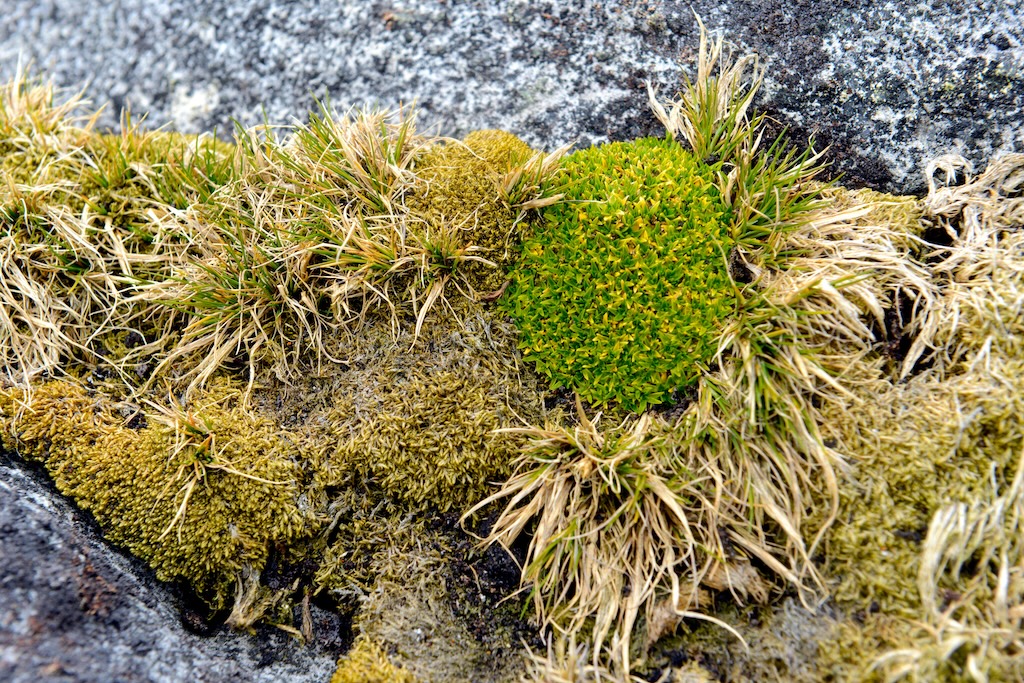
Flowering plants on rock crevices in Antarctica.
Flowering plants on rock crevices in Antarctica. Credit: Colin Harris / era-images / Alamy Stock Photo

However, under higher-emissions scenarios, species will become “increasingly likely” to experience warmer temperatures than they are suited for. 

Other changes that may occur in the very-high-emissions scenario are closely linked to the projected reductions in sea ice. These include the increased spread of invasive alien species, reduced ranges for krill and the displacement of animals unable to tolerate the warmer temperatures by those more able to adapt.

Prof Scott Doney, an oceanographer and biogeochemist at the University of Virginia, notes that some of these changes are already happening. Doney, who was not involved in the study, is part of an ongoing research programme on the Antarctic Peninsula known as the Palmer Long-Term Ecological Research project.

He tells Carbon Brief that Adélie penguins, which are a polar species, have “seen a massive drop in their breeding population” at their research sites. Meanwhile, gentoo penguins – whose range extends into the subpolar regions – “have been quite opportunistic” in colonising those breeding sites.

‘Changes here first’

Antarctica is home to 50 year-round research stations and dozens of summer-only ones, operated by more than 30 countries. 

Around a dozen year-round stations are found on the peninsula and its islands, including the oldest permanent settlement in Antarctica – Argentina’s Base Orcadas, established in 1903 by the Scottish national Antarctic expedition.

The continent is home to commercially important fisheries – particularly krill, which also play a critical role in the Antarctic marine food chain.

Increasingly, the Antarctic Peninsula is also a tourist destination. 

Climate change poses a threat to all of these activities, Davies says.

For example, much of the research infrastructure on the Antarctic Peninsula was “built to assume dry, snowy conditions”, she says. Rain can “cause quite a lot of difficulty”, she adds. 

(In an article published last year, Carbon Brief looked at the causes of rain in sub-zero temperatures in West Antarctica.)

Decreased sea ice cover can impact krill populations. It can also lead to increased ship traffic, as more of the continent becomes accessible throughout more of the year. 

Furthermore, Davies says, the changes occurring on the peninsula will reverberate across Antarctica and around the world. She tells Carbon Brief:

“We’ll see changes here first and those changes will continue to be felt in West Antarctica and continent-wide…What happens in Antarctica doesn’t stay in Antarctica.”

 Davies, B. J. et al. (2026). The Antarctic Peninsula under present day climate and future low, medium-high and very high emissions scenarios, Frontiers in Environmental Science, doi:10.3389/fenvs.2025.1730203.

Original article by Giuliana Viglione republished from Carbon Brief under a CC license

Donald Trump urges you to be a Climate Science denier like him. He says that he makes millions and millions for destroying the planet, Burn, Baby, Burn and Flood, Baby, Flood.
Nigel Farage urges you to ignore facts and reality and be a climate science denier like him and his Deputy Richard Tice. He says that Reform UK has received £Millions and £Millions from the fossil fuel industry to promote climate denial and destroy the planet.
Elon Musk urges you to be a Fascist like him, says that you can ignore facts and reality then.

dizzy: The article discusses of global rises of 4C while humans won’t exist to witness that. It’s also unrealistic to expect limiting warming to 2C, that is so unlikely.
Continue ReadingLimiting warming to 2C is ‘crucial’ to protect pristine Antarctic Peninsula

‘Grim News for the Planet’ as Arctic Sea Ice Hits Record Low

Spread the love

Original article by Julia Conley republished from Common Dreams under Creative Commons (CC BY-NC-ND 3.0).

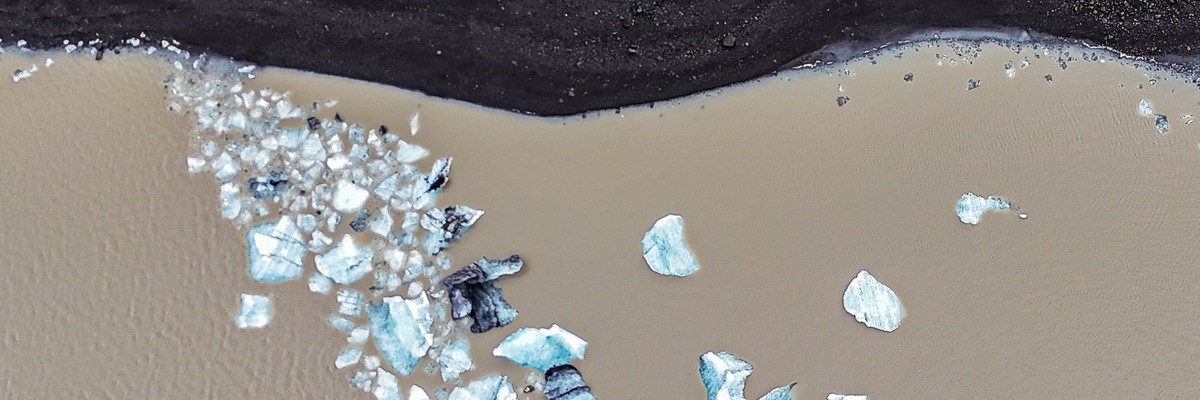
An aerial view shows the Vatnajokull glaciers in Iceland are melting into the ocean or forming lagoons due to global warming and climate change on February 23, 2025. (Photo: Evrim Aydin/Anadolu via Getty Images)

“The environment does not care about politics. Keep spewing greenhouse gases and face the consequences.”

European Union officials said the Copernicus Climate Change Service had issued its latest “stark reminder of why climate action is urgent” when the bloc’s program announced that it observed less sea ice covering the Earth’s oceans last month than at any other point in recorded history.

In the Arctic, sea ice reached its lowest monthly extent on record, at 8% below average, in early February, and it remained below the previous record for the rest of the month.

The oceans were missing an area of ice roughly the size of the United Kingdom last month, according to Copernicus (C3S), and the finding was not an anomaly in recent sea ice observations.

February marked the third consecutive month in which record low sea ice levels for the corresponding month were observed in the Arctic.

C3S reported that in the Antarctic, sea ice levels have rapidly declined in 2025 after appearing to recover to near-record levels in December 2024.

Last month, sea ice near the South Pole reached its fourth-lowest monthly extent, at 26% below average.

C3S said the daily sea ice extent in the Antarctic may have also reached its annual minimum toward the end of the month, which will be confirmed later in March; if confirmed, it would be the second-lowest annual minimum in the satellite record.

“February 2025 continues the streak of record or near-record temperatures observed throughout the last two years,” said Samanatha Burgess, strategic lead for climate at the European Center for Medium-Range Weather Forecasts. “One of the consequences of a warmer world is melting sea ice, and the record or near-record low sea ice cover at both poles has pushed global sea ice cover to an all-time minimum.”

The melting sea ice was recorded as global average temperatures rose 1.59°C (2.8°F) above the pre-industrial average last month, making it the third-warmest February on record.

In Europe, the temperatures that most exceeded averages were recorded last month in parts of Scandinavia, Iceland, and the Alps. Outside of Europe, “temperatures were most above average over large parts of the Arctic.”

The low extent of sea ice will lead to “more solar heat absorbed by the darker oceans,” and “faster warming,” said Simon Oldridge, a climate campaigner.

The loss of sea ice can also lead to the collapse of ocean currents that are crucial for marine life to thrive.

C3S reported on the record-low sea ice levels as campaigners in the U.S. and around the world condemned recent anti-climate actions taken by U.S. President Donald Trump and the Republican Party, including the country’s exit from the Paris climate agreement, the GOP’s passing of a bill to end a federal program aimed at reducing planet-heating methane emissions, and Trump’s push to fast-track fossil fuel projects—as scientists warn that new extractive projects have no place on a pathway to limiting planetary heating and avoiding its worst impacts.

“The environment does not care about politics,” said public health expert Ali Khan. “Keep spewing greenhouse gases and face the consequences.”

Original article by Julia Conley republished from Common Dreams under Creative Commons (CC BY-NC-ND 3.0).

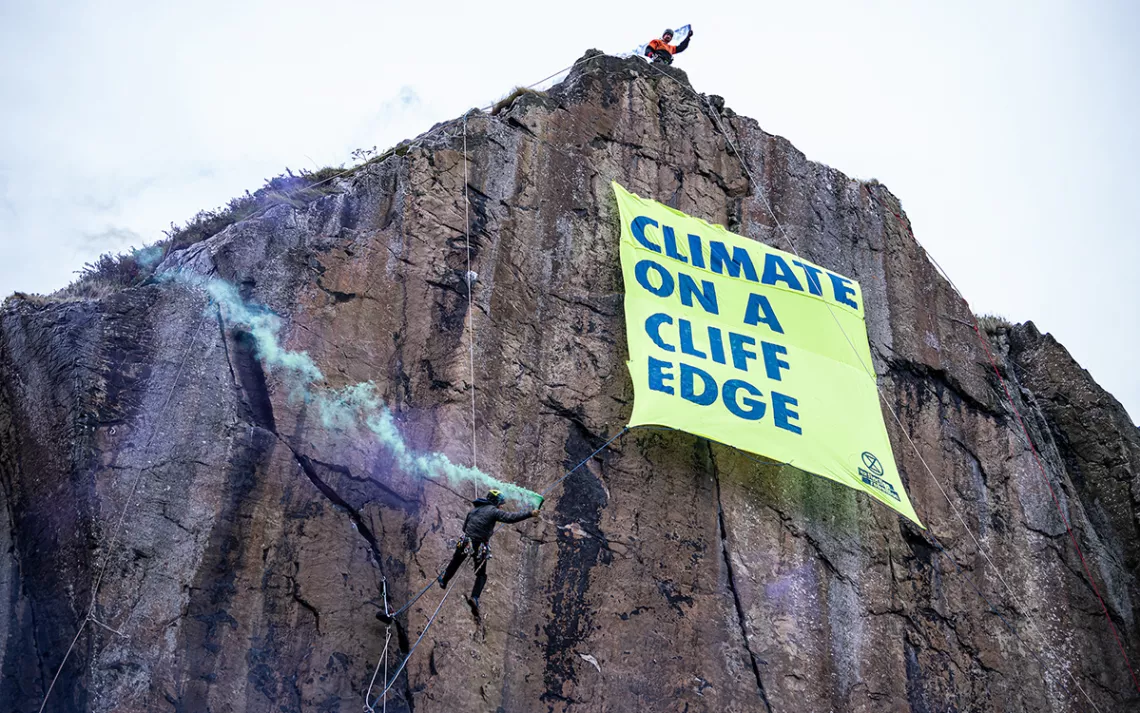
Experienced climbers scale a rock face near the historic Dumbarton castle in Glasgow, releasing a banner that reads “Climate on a Cliff Edge.” One activist, dressed as a globe, symbolically looms near the edge, while another plays the bagpipes on the shores below. | Photo courtesy of Extinction Rebellion and Mark Richards
Neo-Fascist Climate Science Denier Donald Trump says Burn, Baby, Burn.

Continue Reading‘Grim News for the Planet’ as Arctic Sea Ice Hits Record Low

Unveiling the Antarctic ‘plastisphere’, a unique and potentially hazardous new ecosystem – new research

Spread the love

Oleksandr Matsibura/Shutterstock

Pere Monràs i Riera, Universitat de Barcelona and Elisenda Ballesté, Universitat de Barcelona

Antarctica, the world’s most remote, harsh and pristine continent, is not free from marine pollution. Where human activity goes, plastic debris inevitably follows.

What might the early explorers of this icy wilderness think today, upon discovering a continent transformed by permanent fishing activities, research stations, military presence, tourism, and all their environmental impacts? Among these, plastic pollution stands out, as it has created a unique new ecological niche in the ocean.

Once it gets into the water, plastic debris provides surfaces that can be quickly colonised by microbial communities, forming a biofilm. This plastic-borne community is known as the plastisphere, and it poses a serious threat to marine ecosystems, particularly in the cold, understudied waters of the Southern Ocean.

The plastisphere: an emerging threat

As plastic debris drifts through the ocean, the plastisphere develops through typical ecological succession, eventually becoming a complex and specialised microbial community. Plastics not only provide shelter for these microorganisms but also act as a vector, allowing potentially harmful pathogens like Vibrio spp., Escherichia coli, and bacteria carrying antibiotic resistance genes, to spread across marine environments, even reaching remote, untouched areas.

Beyond being a home for microbes, the plastisphere can disrupt the natural balance of ocean life at the microscopic level. These changes don’t stay in the water, as they can spread outward, potentially affecting how the ocean absorbs carbon and produces greenhouse gases. This has consequences for the air we breathe around the world.

However, it’s not all bad news, as bacteria known for their potential to degrade plastics or hydrocarbons – such as Alcanivorax sp., Aestuariicella sp., Marinobacter sp. and Alteromonas sp. – are frequently identified on plastics.

The Antarctic plastisphere under the microscope: bacteria colonizing polystyrene. Author’s own

A hostile research environment

We currently know very little about the plastisphere, especially in the Southern Ocean, where uncovering its dynamics is key to understanding its impacts on one of the planet’s most remote and vulnerable marine environments. For this reason, our recent study sought to investigate the abundance and diversity of microbial communities in the Southern Ocean plastisphere, particularly following the initial colonisation of plastic debris.

Working in Antarctica is not an easy task. Just reaching this continent is a challenge, and once there, scientists have to contend with harsh environmental conditions: freezing temperatures, powerful winds, icebergs, and the constant pressure of limited time to carry out their work. These challenges make every moment in the field both demanding and invaluable.

This is why we approached our study with a controlled and manageable experiment. We set up aquariums filled with seawater collected near the Spanish research station on Livingston Island, South Shetlands. Inside, we placed small, rounded pellets of the three most common types of plastic polluting the sea – polyethylene, polypropylene, and polystyrene. We left them at environmental conditions (around 0 ºC and between 13 – 18 h of sunlight) for 5 weeks, aiming to recreate the most plausible outcomes in the field.

We compared the colonisation of plastics with glass, an inert surface. Samples of plastics and glass were collected periodically to track bacterial colonisation.

Plastisphere dynamics in Antarctica

Studying bacteria means making the invisible visible, so we combined several techniques to get a better picture of the plastisphere. Using scanning electron microscopy, we obtained biofilm images. We combined flow cytometry and bacterial culture to count total cells and colonies, and we sequenced the 16S rRNA gene to identify the succession of bacterial settlers.

This meticulous approach revealed that time was the key driver of change. Microbes quickly colonised the plastic, and within less than two days, bacteria like genus Colwellia were already fixed in the surface, showing a clear progression from initial settlers to a mature diverse biofilm including other genera like Sulfitobacter, Glaciecola or Lewinella.

These species, although also detected in water, show a clear preference for the social life of a biofilm community. Moreover, we did not detect clear differences between the bacterial communities from plastics and glass, suggesting that any stable surface can host these communities.

While similar processes happen in the other oceans, in Antarctica the process seems slower. The region’s lower temperatures slow bacterial development.

Plastic-eating bacteria?

One key discovery was the presence of Oleispira sp. on polypropylene. This bacteria is hydrocarbon-degrading, meaning it belongs to a group of microorganisms that can break down oil and other pollutants.

Their role within the Antarctic plastisphere raises important questions, like whether these kinds of bacteria could mitigate the impacts of plastic pollution. If so, they could be key to the future of Antartica and our oceans.

However, there is still much to be discovered, particularly regarding their potential for bioremediation in extreme environments. Understanding these processes could pave the way for innovative strategies to address the growing challenge of plastic waste in marine ecosystems.

Pere Monràs i Riera, Investigador predoctoral en conservación y gestión de la biodiversidad, Universitat de Barcelona and Elisenda Ballesté, Profesora agregada en Microbiologia, Universitat de Barcelona

This article is republished from The Conversation under a Creative Commons license. Read the original article.

Continue ReadingUnveiling the Antarctic ‘plastisphere’, a unique and potentially hazardous new ecosystem – new research