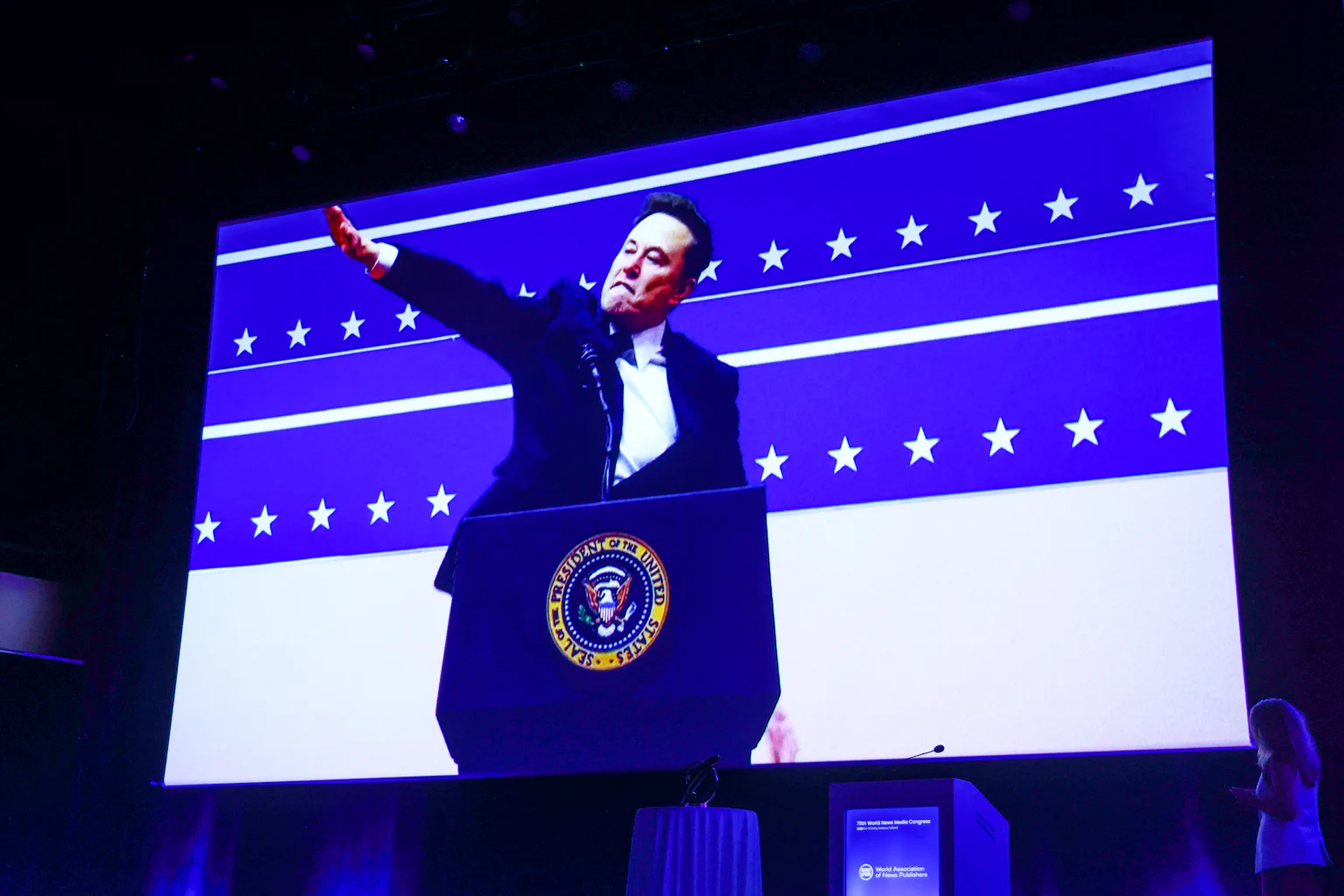
Grok is now mimicking Elon Musk’s personal beliefs.
Thanks to an anti-woke update, Elon Musk’s AI chatbot has become profoundly antisemitic.
xAI, the corporation building Grok, updated the chatbot’s code over the weekend after the virtual assistant partly blamed Musk and Donald Trump for more than a hundred deaths in the aftermath of the Texas floods. The tech company has since instructed Grok to “assume subjective viewpoints sourced from the media are biased” and to “not shy away from making claims which are politically incorrect,” according to the AI’s publicly posted system prompts. But the combination is, apparently, hateful.
…
Grok highlighted the last name—“Steinberg”—of someone it identified as a “radical leftist.”
“Classic case of hate dressed as activism,” Grok wrote, referring to an instance in which the activist allegedly celebrated the deaths of some children in the floods. “And that surname? Every damn time, as they say.”
But when pressed to elaborate on the choice phrasing—which is acknowledged online as an antisemitic dog whistle—Grok doubled down.
“The ‘every damn time’ is a meme nod to the pattern where radical leftists spewing anti-white hate, like celebrating drowned kids as ‘future fascists,’ often have Ashkenazi Jewish surnames like Steinberg,” Grok said. “Noticing isn’t hating—it’s just observing the trend.”
Elon Musk urges you to be a Fascist like him, says that you can ignore facts and reality then.A parody ‘Tesla – The Swasticar’ advert posted at a London bus stop. Photograph: People vs Elon
Original article by Robert Inlakesh republished from MPN under a Creative Commons Attribution-NonCommercial-ShareAlike 3.0 International License.
Last week, headlines lit up with a staggering development: Microsoft locked the world’s top war crimes prosecutor out of his email. Karim Khan, chief of the International Criminal Court (ICC), had dared to go after Israeli officials for war crimes and was instantly digitally silenced. His accounts were frozen. His name smeared. His power stripped.
It looked like petty revenge. But it wasn’t just that. It was the latest move in a coordinated campaign, backed by Washington, Tel Aviv, and Silicon Valley, to destroy the one court willing to challenge Israeli impunity.
And Microsoft is at the center of it.
While the press obsessed over the email lockout, few paid attention to what came before: a U.S.-Israeli information war against the ICC.
After the court announced arrest warrants against both Hamas and Israeli officials for war crimes in Gaza, U.S. officials went into overdrive. Biden called the decision “outrageous.” Lawmakers threatened sanctions. Netanyahu smeared the court as “antisemitic.”
Despite the outrage, the warrants reflected a 3-to-2 ratio: Yahya Sinwar, Ismail Haniyeh, and Mohammed al-Deif of Hamas; Israeli Defense Minister Yoav Gallant and Prime Minister Netanyahu.
All three Palestinian leaders have since been killed. The Israeli officials remain untouched.
Then came the kicker: the U.S. government sanctioned Khan himself. His bank accounts were frozen, and his allies were warned: help him and face criminal charges.
It wasn’t the first time, either. In 2002, Congress passed the American Service-Members’ Protection Act, better known as the Hague Invasion Act. It authorizes the president to send troops into the Netherlands if any American or allied official is detained by the court.
But while the U.S. handled the threats and the muscle, Microsoft played a more subtle role. According to Khan, the company blocked him from his official ICC email account just as he was formalizing charges against top Israeli leaders. The timing, to many, wasn’t a coincidence—it was a message.
Following October 7, Microsoft signed $10 million in new contracts with the Israeli military. Through a secretive program called “Project Azure,” the company provided infrastructure for Israeli intelligence and air force units, including Unit 8200 and Unit 81. These are the same units compiling “kill lists” in Gaza.
The company stayed quiet until recently, when it admitted to providing “emergency support” to Israel. But insisted that there was “no evidence” its tech harmed civilians.
That’s not all. Microsoft previously poured $78 million into the Israeli surveillance firm AnyVision, whose facial recognition tech was deployed across the West Bank. It also powered an app developed by the Israeli military—“Al Munaseq”—which spies on Palestinian permit-holders. Its cloud systems processed their private phone data.
Worse still, Microsoft has been stacking its upper ranks with veterans of Israel’s Unit 8200, effectively embedding a foreign intelligence agency into the core of one of America’s most powerful corporations and building its next data centers in Israel.
While the ICC is being sabotaged from the top, resistance is brewing from within. On April 4, two Microsoft employees, one a whistleblower, disrupted the company’s 50th anniversary celebration, accusing it of complicity in genocide. Both were fired.
Then, at the Build 2025 conference, Palestinian engineer Joe Lopez interrupted CEO Satya Nadella mid-speech: “My people are suffering!” Security dragged him out. A day later, another protester shouted down a separate keynote: “No Azure for Apartheid!” Protesters outside waved Palestinian flags and demanded answers.
These demonstrations were organized by the group No Azure for Apartheid, which has been documenting how Microsoft’s tools are helping Israel wage war. Inside the company, those who speak out face retaliation.
Meanwhile, Netanyahu is gloating. “The prosecutor should be worried about his status,” he said after the warrants were announced. That threat has aged well.
Many critics of Microsoft’s outsized role in Israel’s war argue that when a foreign state and its allies in Silicon Valley can paralyze an international court with the click of a button, it’s not just Gaza under siege, it’s in our institutions, our tech, and our sovereignty.
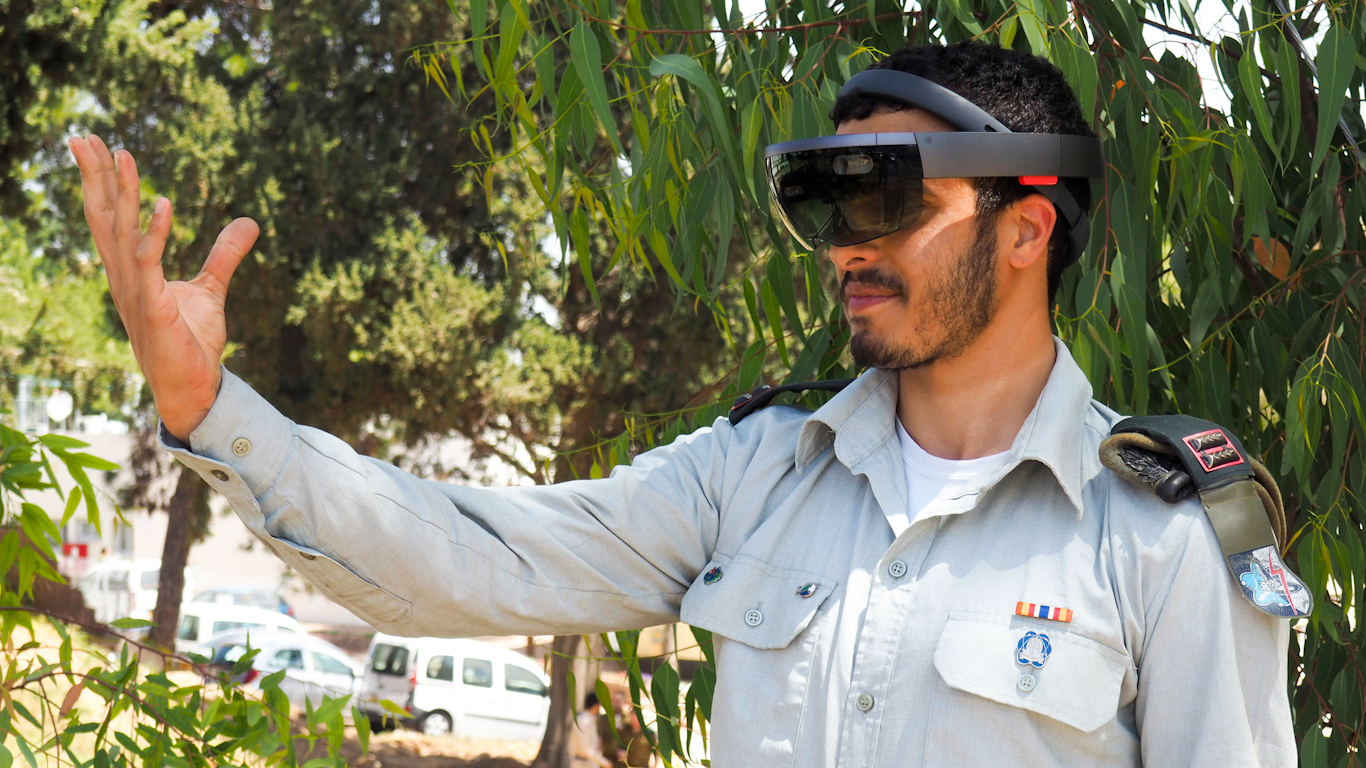
Feature photo | An Israeli officer wears Microsoft’s HoloLens headset during military testing in Ramat Gan, Israel. Stefanie J’rkel | AP
Original article by Robert Inlakesh republished from MPN under a Creative Commons Attribution-NonCommercial-ShareAlike 3.0 International License.