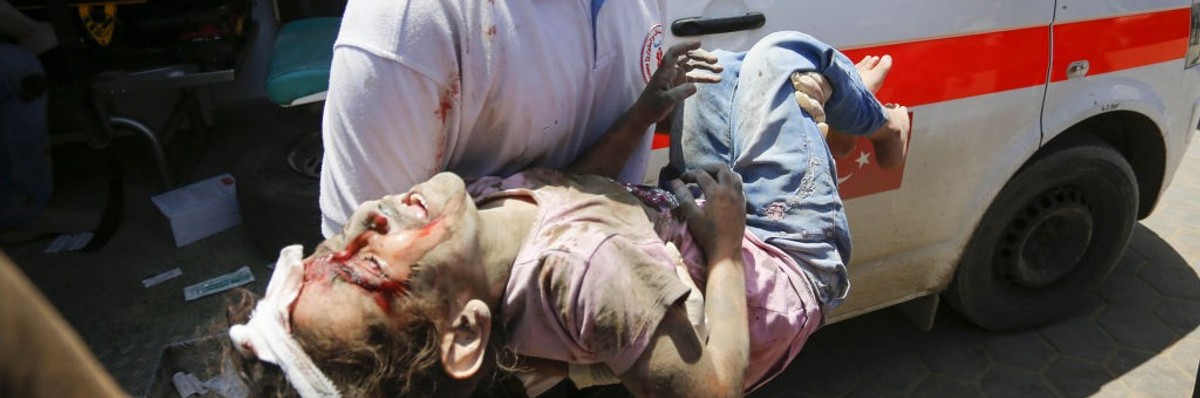
12 countries commit to arms embargo on Israel to stop its attacks on Gaza

Spread the love

Original article by Pablo Meriguet republished from peoples dispatch under a Creative Commons Attribution-ShareAlike 4.0 (CC BY-SA) license.
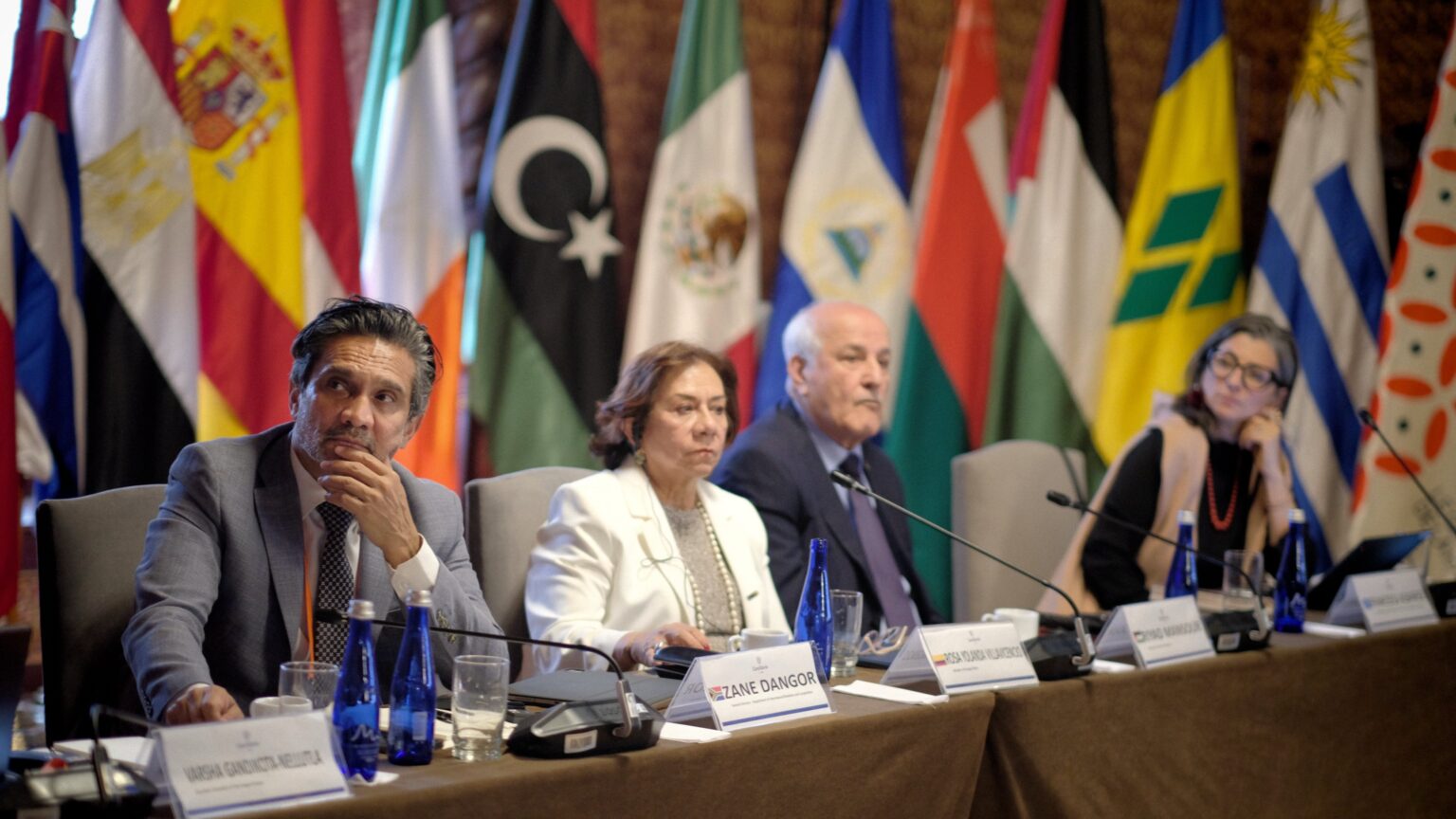
Hague Group Summit in Bogotá, Colombia. Photo: Abby Martin

In the final document, the signatory countries commit, among other things, to cease arms trade with Israel, review public contracts with that country, and seek accountability for war crimes.

Countries of the Global South have expressed their solidarity with the Palestinian people at the Emergency Ministerial Conference on Palestine organized by The Hague Group, which took place on July 15 and 16 in Bogotá, Colombia. The multilateral meeting was attended by representatives from Algeria, Bangladesh, Botswana, Brazil, Chile, China, Djibouti, Egypt, Slovenia, Spain, Honduras, Indonesia, Iraq, Ireland, Lebanon, Libya, Malaysia, Mexico, Namibia, Nicaragua, Norway, Oman, Pakistan, Palestine, Qatar, Saint Vincent and the Grenadines, South Africa, Turkey, Uruguay, and Venezuela.

Regarding the meeting, Colombia’s deputy secretary of state, Mauricio Jaramillo, said: “This conference is being convened by the Hague Group, but it is not an exclusive meeting of this group. Given the urgency of what is happening in the occupied territories, especially in Gaza, where today, for example, we have passed the threshold of 58,000 fatalities, we must commit ourselves to action.”

The conference, which was organized by the governments of Colombia and South Africa and attended by 30 countries, agreed that: “The era of impunity must end – and that international law must be enforced without fear or favor through immediate domestic policies and legislation – along with a unified call for an immediate ceasefire.”

The agreements

According to an official press release, the meeting laid out several measures to stop the genocide in Gaza:

  1. Prevent the provision or transfer of arms, munitions, military fuel, related military equipment, and dual-use items to Israel.
  2. Prevent the transit, docking, and servicing of vessels at any port … in all cases where there is a clear risk of the vessel being used to carry arms, munitions, military fuel, related military equipment, and dual-use items to Israel.
  3. Prevent the carriage of arms, munitions, military fuel, related military equipment, and dual-use items to Israel on vessels bearing our flag … and ensure full accountability, including de-flagging, for non-compliance with this prohibition.
  4. Commence an urgent review of all public contracts to prevent public institutions and funds from supporting Israel’s illegal occupation of the Palestinian Territory and entrenching its unlawful presence.
  5. Comply with obligations to ensure accountability for the most serious crimes under international law, through robust, impartial, and independent investigations and prosecutions at national or international levels, to ensure justice for all victims and the prevention of future crimes.
  6. Support universal jurisdiction mandates, as and where applicable in national legal frameworks and judiciaries, to ensure justice for victims of international crimes committed in the Occupied Palestinian Territory.

Although 30 countries attended the meeting, only 12 countries committed to immediately complying with the agreements outlined in the final declaration: Bolivia, Cuba, Colombia, Indonesia, Iraq, Libya, Malaysia, Namibia, Nicaragua, Oman, Saint Vincent and the Grenadines, and South Africa. The others expected to join them by September 20, 2025 – the date of the 80th UN General Assembly. The group will also be consulting various other states on an ongoing basis for participation in the measures against Israel.

Colombia’s President Gustavo Petro stated: “We came to Bogotá to make history — and we did … Together, we have begun the work of ending the era of impunity. These measures show that we will no longer allow international law to be treated as optional, or Palestinian life as disposable.”

“What we have achieved here is a collective affirmation that no state is above the law … The Hague Group was born to advance international law in an era of impunity. The measures adopted in Bogotá show that we are serious — and that coordinated state action is possible,” said South African Secretary of State Ronald Lamola.

The final agreement is historic as it is the first multilateral agreement that seeks to influence the Israeli government’s actions in its offensive against Gaza. In this sense, it is the first time that several countries have challenged the apparent immunity of the Israeli state in its actions in Gaza, which could have unpredictable diplomatic repercussions. It could also become the starting point for other countries to demand an end to the violence in Palestine jointly.

Original article by Pablo Meriguet republished from peoples dispatch under a Creative Commons Attribution-ShareAlike 4.0 (CC BY-SA) license.

Continue Reading12 countries commit to arms embargo on Israel to stop its attacks on Gaza

Rolling the Dice on Mass Death

Spread the love

Original article by Roger Hallam republished from Roger Hallam. I have not asked to republish this article, expect that it will be ok.

Shymkent, Kazakhstan. Image by Raban Haaijk.

This month, the world’s elites will throw the first dice on how many millions they will have killed for their greatest of all crimes.

As of 28 April 2025, Asia is being battered by a brutal, life-threatening heatwave. Millions of people – right now – are facing unbearable temperatures. In many places it’s over 40°C. In some areas it’s approaching 46°C. In the Philippines, the heat index – the ‘feels like’ temperature – is hitting 53°C. That’s deadly.

People are collapsing in the streets. Children, the elderly, the poor – they’re the first to go. This isn’t just uncomfortable. It’s lethal. Heatstroke. Organ failure. Death in under six hours if you don’t have air conditioning – and most people don’t.

Crops are failing. Water supplies are drying up. Whole regions are becoming uninhabitable. In China, places like Zhejiang and Jiangsu have already hit record-breaking temperatures. In Bangladesh, Myanmar, Thailand – vast populations are at risk. In West Asia, where conflict and poverty already devastate lives, the heatwave is tipping people over the edge.

Let’s be absolutely clear: this is just the beginning. And it’s not a natural disaster – it’s a crime scene. A direct result of thirty years of lies, inaction, and wilful destruction by the people at the top – fossil fuel executives, politicians, and the liberal classes who let them get away with it.

This is the first phase of climate genocide. And it’s happening now.

So here we are. We’ve finally arrived.

2025 will be the second year in a row that global temperatures sit above 1.6°C. That’s not a statistic. That’s a death sentence – for millions. From this point on, every month is a roll of the dice. And if it lands on a six? The wet bulb threshold is breached – that deadly combination of heat and humidity where your body can’t cool down. People without air conditioning – the majority of humanity – die in six hours. That’s it. Game over.

Billions of people – in poor city slums, in rural villages, in places no one in power cares about – are now inside a roulette wheel of death. Waiting for their number to come up. That is what the ruling elites have created. That is what the liberal and professional classes have enabled – through cowardice, distraction, and silence. They could have stood up. They could have resisted. They chose not to. They are complicit.

The consequences? Beyond catastrophic. And if you sit back now, shrug your shoulders, and go back to your life – you are handing over the final keys. You are helping to lock in human extinction within the next ten years. If it hasn’t already been sealed.

Let’s stop pretending we don’t know what’s coming.

Do the numbers. We’re already at 1.6°C. Another 0.4°C rise is expected over the next decade. Add 0.5°C when air pollution clears and no longer cools the atmosphere. Add 0.3°C from the carbon lag – the delay between what we emit and when it shows up. Then add the collapse of forests, the melting permafrost, the methane, the wildfires.

We’re on track to blow through 3°C before 2050.

What does that mean? Ask the British insurance industry – they’ve already said it: 4 billion people dead. Half the human race. And that’s just the start. Because 3°C triggers feedbacks in the Earth system that take us past 5°C – the point where the human body, the human brain, life itself, no longer functions. That’s extinction. Everyone. Gone. Forever.

And even if there was just a 10% chance of this happening – which there isn’t, it’s now the central scenario – then to take that risk, to sit on your hands, is the greatest crime in history.

And if you still do nothing now, at this moment – then what are you?


Join the free Revolution in the 21st Century Convention next month!

Rev21 is hosting an online global convention this May, bringing together leading activists, writers, scientists, and changemakers to confront the realities of social and ecological collapse—and to begin designing the revolution we need. Held via Zoom with multiple talks, workshops, and breakout spaces, it’s a space to learn, connect, and collaborate on what 21st-century revolution can look like: holistic, nonviolent, and rooted in real relationships. For some, it’s a powerful networking moment; for others, it’s a first step into serious action. With solidarity pricing and an open invitation to those ready to shape the future, this isn’t just an event—it’s the beginning of a revolution.

Join the Convention

Original article by Roger Hallam republished from Roger Hallam. I have not asked to republish this article, expect that it will be ok.

Neo-Fascist Climate Science Denier Donald Trump says Burn, Baby, Burn.
Elon Musk urges you to be a Fascist like him, says that you can ignore facts and reality then.
Continue ReadingRolling the Dice on Mass Death

Sheikh Hasina resigns as prime minister and leaves Bangladesh following mass protests

Spread the love

Original article republished from peoples dispatch under a Creative Commons Attribution-ShareAlike 4.0 (CC BY-SA) license.

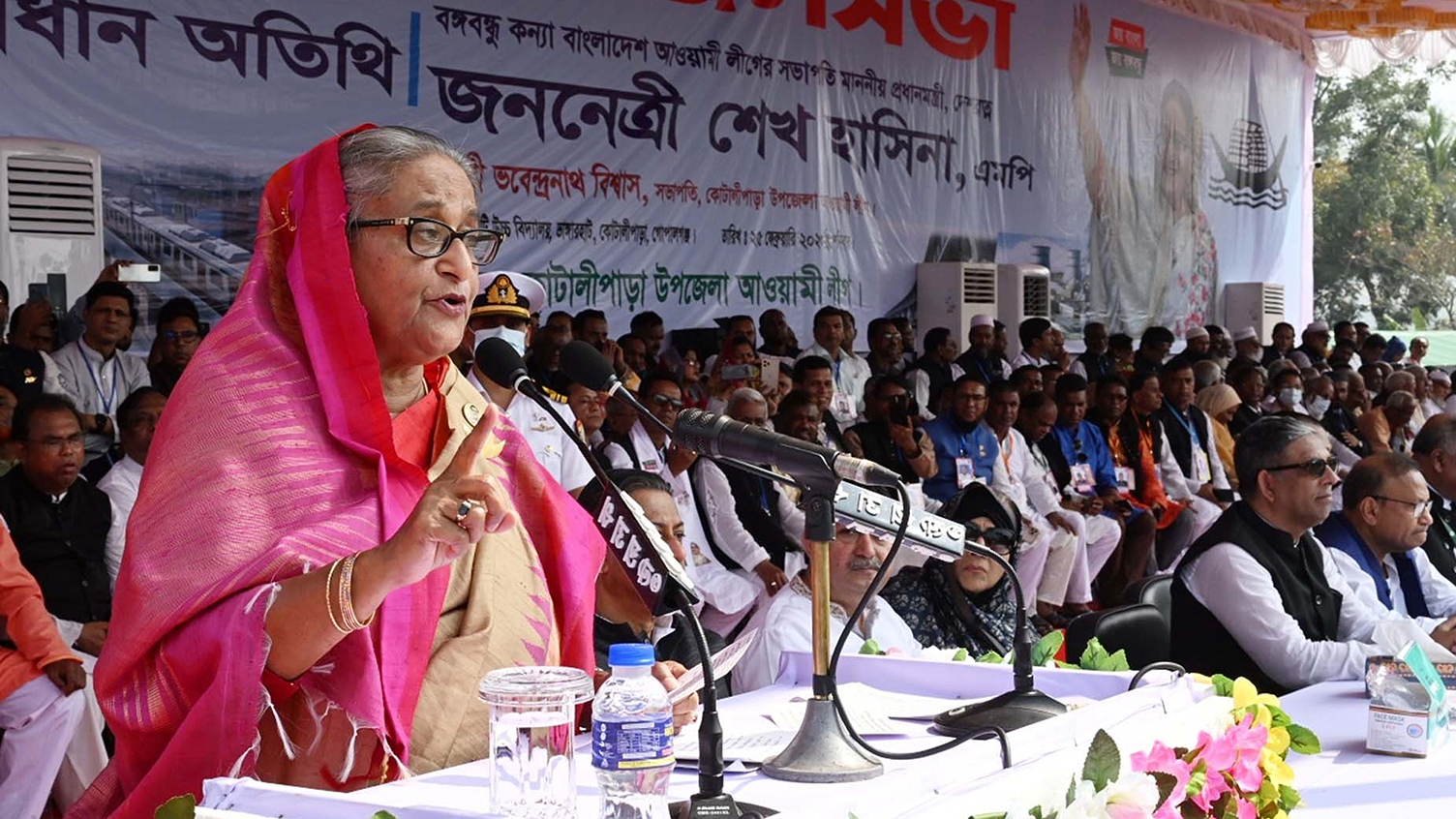
Sheikh Hasina addresses party rally last year (Photo: Delwar Hossain/ Wikimedia Commons)

The protests, initially led by students demanding reforms in the quota system in government jobs, took a violent turn in the last weeks of July

Prime Minister of Bangladesh Sheikh Hasina resigned and left the country, army chief General Waker-Uz-Zaman announced during an address to the nation in the afternoon of Monday, August 5.

The Army chief also claimed to have taken full responsibility over the government, promising that an interim government would be formed soon after consulting all the opposition parties. He also appealed to the protesters to end their demonstrations with a hope that the violence would stop.

Waker-Uz-Zaman promised that he will make sure that all persons responsible for the killing of protesters are held accountable for their acts.

Despite the announcement of Hasina leaving the country, demonstrations continued throughout the day in Bangladesh. There were reports of Hasina’s former official residence being stormed and Dhaka’s international airport being shut down in the afternoon.

Protesters reportedly blocked roads at different places in the country, vandalized the statue of Sheikh Mujibur Rahman, considered the founder of the nation, as well as the offices of Hasina’s Awami League. Attacks were also carried out against the offices of various other parties, and continued into the evening.

Over 300 people, including security personnel, have been killed and thousands of others have been injured in the protests so far.

The protests in the country have been ongoing for over a month now. The first weeks of the protests saw university students demand reforms in the quota system in the recruitment in government jobs, and were largely peaceful. Protests turned violent after they were allegedly attacked by members of the ruling Awami League Party under the cover of security in the third week of July.

Amid the intensification of the protests, the Hasina government called for all universities to be shut down, imposed a curfew and a communication blockade. A shoot on sight order was also issued to the army deployed to control the violence.

Over 200 people were killed and thousands were injured in clashes between the security forces and protesters in the following week of July.

On July 21, the country’s Supreme Court scrapped most of the quota, fulfilling the central demand of the protesters. Yet, the protests continued with growing demands for action against the perpetrators of the violence and against the government itself.

The second round of protests erupted on Sunday, August 3, with thousands gathered in different major cities in the country calling for Hasina to resign. Chittagong, one of the major centers of quota reform protests witnessed the hundred of thousands of people flooding the streets, waving national flags and shouting slogans against Hasina.

Over 100 people, including over a dozen security personnel, have been killed in Sunday’s protests.

Hasina’s government and her Awami League party had alleged that the violent protests were initiated as a part of a conspiracy against the elected government. Hasina had accused the opposition Bangladesh Nationalist Party (BNP) of collaborating with Jamaat-e-Islami, an extremist group, to provoke violence across the country in order to bring regime change in the country as they could not win popular elections.

According to a source on the ground, the violence during the quota reform movement was used by the imperialist powers led by the US to orchestrate regime change in the country. They also claimed that the new regime would be used to undo the secular and progressive reforms initiated by the Hasina government during her four terms. 

In January’s national elections in Bangladesh, Sheikh Hasina had won her fourth straight term as prime minister since 2009. This was her fifth term as prime minister in total. She was first elected as prime minister in 1996. The US had questioned the legitimacy of the last elections in January.

Original article republished from peoples dispatch under a Creative Commons Attribution-ShareAlike 4.0 (CC BY-SA) license.

Continue ReadingSheikh Hasina resigns as prime minister and leaves Bangladesh following mass protests

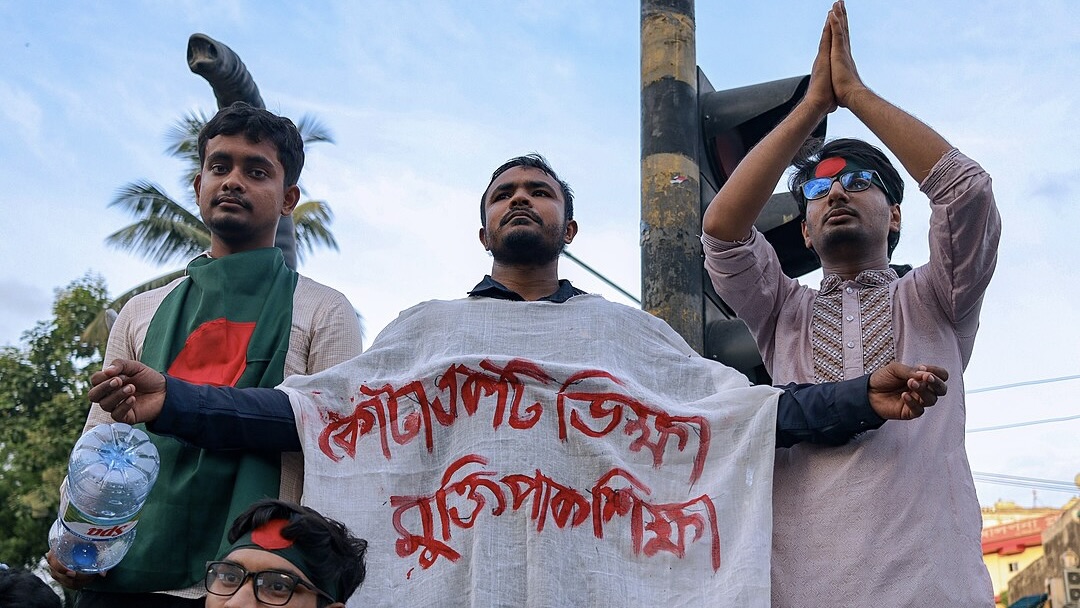
Bangladesh’s Supreme Court scraps most of government job quota amidst widespread protests and violence

Spread the love

Original article by Abdul Rahman republished from peoples dispatch under a Creative Commons Attribution-ShareAlike 4.0 (CC BY-SA) license.
Quota reform protesters in Bangladesh. Photo: Rownak Shahriar Ruhan/ Wikimedia commons

Amidst widespread violence across the country over the controversial quota in government jobs, Bangladesh’s Supreme Court issued a crucial verdict on Sunday, July 21 scaling back the quotas drastically.

As per the verdict, 93% government jobs would be based on merit and the overall quota would be reduced to 7% from the current 56%. Descendants of ‘freedom fighters’ who currently have 30% of posts reserved for them would now only get 5% reservation. The remaining 2% of reserved jobs would be allotted to candidates belonging to sexual and ethnic minorities in the country and the physically disabled.

According to various reports, around 140 people, including a large number of students, were killed in the violent clashes last week between security forces and students who have been opposing the high quota. The protests remained by and large peaceful, until last Monday July 15 when they turned violent after an alleged attack carried out by pro-government students backed by the country’s security forces.

Most of the deaths have been reported from the capital Dhaka where protesters clashed with the security forces and attacked metro rail stations and even a jail in nearby Narsingdi. However, several other parts of the country were also affected by the violence.

Despite the Supreme Court judgment on Sunday, some of the student leaders declared they will continue their protests. According to an Al Jazeera report, protesters are now demanding the resignation of home minister Asaduzzaman Khan, holding him responsible for the violence and killing of people. They are also demanding release of all people arrested during last week’s protests. Some others have called the Supreme Court verdict vague and wanted more clarity on it before calling off the protests, Reuters reported.

The ruling Awami League has however stated that the otherwise “legitimate protests” by students have been “hijacked” by the opposition Bangladesh Nationalist Party (BNP) and some extremist groups in the country. It alleged that those opposition parties who could not win through popular elections have been looking for an opportunity to destabilize the Hasina government which won its fourth consecutive term earlier this year in January. BNP had boycotted the elections.

Following the Supreme Court judgment Attorney General A. M. Amin Uddin expressed hope that “normalcy will return” and “people with ulterior motives will stop instigating people,” Reuters reported.

Violent escalation

On Tuesday, a day after the violence broke out, the government led by Sheikh Hasina of the Awami League ordered shutting down of all universities, colleges, and high schools in the country for an indefinite period.

Later on Friday, the government called in the army and imposed a curfew with shoot-on-sight orders following the spread of violence all across the country. Internet and other communication services were also suspended.

In the meanwhile, protesters rejected the government’s offer of talks regarding their demands and continued to mobilize large-scale demonstrations against the quota system.

The government in response had called on protesters to wait for the Supreme Court judgment before further steps could be taken to address their concerns.

Protesters alleged that the government was reluctant to ban the quota as it benefited the members of the ruling party and its supporters. However, the government had argued that the quota was an acknowledgment of the sacrifices made by people during the freedom struggle.

Quota controversy

The Awami League was at the forefront of Bangladesh’s war of liberation in 1971 against Pakistan in which hundreds of thousands of people were killed by Pakistan’s army and local collaborators known as Razakars. The quota in government jobs was first constituted by Hasina’s father Sheikh Mujibur Rahman immediately after he became the first prime minister of independent Bangladesh as a way to recognize the sacrifices made by the people.

Due to rising unemployment among the country’s youth and crisis in the economy, these quotas became increasingly unpopular. After a student protest in 2018, the Hasina government issued a circular scrapping the quota system for recruitment to 1st and second class jobs. However, in June this year, a High Court order annulled the 2018 circular, thus making the quotas effective again. This verdict was what sparked the latest round of large scale student protests which turned violent last week. On Sunday, the Supreme Court called the High Court’s judgment illegal.

The verdict on Sunday however, also scrapped the 10% quota each for women and people from underdeveloped districts and the 5% quota for religious minorities in government jobs.

Progressive sections in the country including the Workers Party of Bangladesh (BWP) and the Communist Party of Bangladesh (CPB) had earlier demanded that these “progressive” quotas for women and minorities be protected and that a process be initiated to fulfill other legitimate demands of reforms.

Original article by Abdul Rahman republished from peoples dispatch under a Creative Commons Attribution-ShareAlike 4.0 (CC BY-SA) license.
Continue ReadingBangladesh’s Supreme Court scraps most of government job quota amidst widespread protests and violence

93 Countries Back ICC Probe Into Israeli War Crimes in Gaza

Spread the love

Original article by JON QUEALLY republished from Common Dreams under Creative Commons (CC BY-NC-ND 3.0). 

Palestinian child, injured in the Israeli attack on Abu Aisha family house is taken to Al-Aqsa Martyrs Hospital in Deir al-Balah, Gaza on June 14, 2024.
 (Photo by Ashraf Amra/Anadolu via Getty Images)

A joint statement calls on “all States to ensure full co-operation with the Court for it to carry out its important mandate of ensuring equal justice for all victims of genocide, war crimes, [and] crimes against humanity.”

Ninety-three nations on Friday, all them state parties to the Rome Statute that created the International Criminal Court, reiterated their support for the ICC as it assesses an application for arrest warrants of high level Israeli government officials accused of perpetrating war crimes in Gaza.

The 93 countries—including Canada, Bangladesh, Belgium, Ireland, Afghanistan, Costa Rica, Chile, Germany, France, Mongolia, Mexico, New Zealand, and scores of other—cited separate ICC statements defending its mandate for independence and upheld in their joint statement “that the Court, its officials and staff shall carry out their professional duties as international civil servants without intimidation.”

Though neither nation is named in the joint statement, both the United States and Israel have publicly condemned ICC chief prosecutor Karim Khan for his May 20 arrest warrant applications for Israeli Prime Minister Benjamin Netanyahu and Defense Minister Yoav Gallant over alleged “war crimes” and “crimes against humanity” in the Gaza Strip.

Khan also submitted arrest warrants for Hamas leaders Yahya Sinwar, Mohammed Diab Ibrahim Al-Masri, and Ismail Haniyeh for their alleged roles in the October 7 attack on southern Israel. Following Khan’s announcement in May, U.S. President Joe Biden said, “Whatever this prosecutor might imply, there is no equivalence—none—between Israel and Hamas. We will always stand with Israel against threats to its security.”

In April it was reported that the U.S. government was working behind the scenes to block the ICC from issuing any arrest warrants targeting Israel officials. Neither Israel nor the U.S. is party to the Rome Statute, though the United Nations has recognized the ICC’s jurisdiction over the Occupied Palestinian Territories (OPT), where the alleged war crimes by the occupying power, Israel, took place.

After Khan made his application for warrants, White House spokesperson Karine Jean-Pierre said, “We’ve been really clear about the ICC investigation. We do not support it.” On June 4, Republicans in the U.S. House of Representatives, along with 42 Democrats, passed a measure that would sanction ICC officials if the arrest warrants for any Israeli officials were approved or carried out.

Balakrishnan Rajagopal, the United Nations Special Rapporteur on the right to adequate housing, was among those who applauded Friday’s public statement.

Rajagapol thanked the signatory nations “for defending the ICC and standing up against the bullies, including the relics from the U.S. Senate whose idea of engaging with the world is to use threats,” a possible reference to Sen. Lindsay Graham (R-S.C.) who denounced Khan’s applications as “outrageous,” applauded the House approval of sanctions, and vowed further punishment for the ICC.

Such punitive measures and high-profile threats directed at the ICC appeared to be the exact kind of intimidation Friday’s joint pledge of support is responding to.

“The ICC, as the world’s first and only permanent international criminal court, is an essential component of the international peace and security architecture,” the statement reads. “We therefore call on all States to ensure full co-operation with the Court for it to carry out its important mandate of ensuring equal justice for all victims of genocide, war crimes, crimes against humanity and the crime of aggression, grave crimes that threaten the peace, security and well-being of the world.”

With their show of unified support for the ICC and its mandate, the countries said they aim to “contribute to ending impunity for such crimes and preventing their recurrence while defending the progress we have made together to guarantee lasting respect for international humanitarian law, human rights, the of law and the enforcement of international criminal justice.”

Original article by JON QUEALLY republished from Common Dreams under Creative Commons (CC BY-NC-ND 3.0). 

America Crawls Further Into Global Isolation by Backing Gaza Genocide

Why the Senate Must Reject the Dangerous Antisemitism Awareness Act

Despite Mainstream Headlines, Israel’s Tents Massacre Was Not a ‘Tragic Mistake’

The Nuseirat Massacre Shows How Israel and the West Devalue Palestinian Lives

Continue Reading93 Countries Back ICC Probe Into Israeli War Crimes in Gaza